

Start before the room fills. A lounge should already be at its level when the first member walks in, not climbing toward it. Bringing the machine on ahead of opening costs almost nothing and removes the single most visible inconsistency of the day.
Four things change through the day, and only one of them is the machine: occupancy, the air system’s fresh-air fraction and door discipline, the absorbent load the room is carrying, and the adaptation of whoever is judging it.
The honest gap: no consumption rate, no millilitres per hour, no recommended cycle length in minutes and no tank-hours figure is published for Aangan. The only life claim on that machine is weeks between refills on business-hours schedules, and I will not invent the rest for a specification document.
2. Use the scheduling controls, because that is what they are for. Aangan is run by an intelligent PCB with programmable work and pause cycles and daily schedules — it is not an app, it has no Bluetooth and no Wi-Fi, and the programming is done at the unit. Vaayu has run windows of 1h / 4h / 8h / 24h, a choice of days and adjustable intensity, controlled by a Bluetooth app or by the onboard buttons. Different machines, genuinely different control philosophies, and both are scheduling instruments rather than volume knobs.
3. Bring it on before the room fills and take it off before the room empties. The most visible inconsistency in most clubs is the first hour, when the lounge is climbing toward its level while the earliest members are sitting in it. Starting ahead of opening removes that entirely. Ending before close removes the other waste, which is oil going into a room nobody is in — a question of occupancy and scheduling rather than of product.
4. Treat a large lounge as more than one condition. A mezzanine, a terrace door, a bay behind a partition and the corridor mouth are not the same environment at four in the afternoon, whatever the floor plan says. Reason in connected volume and in where the air goes: a closed door is a boundary, an open plan is one volume, and a galleried section holds far more air than its footprint suggests.
5. Set it once, write it down, lock it. The schedule is worth nothing if a steward can change it on a quiet evening. Record the intensity, the run window, the days and the position on paper, turn Vaayu’s key-lock, and keep the key with the master keys. Everything SOSA makes is alcohol-free, phthalate-free, paraben-free, IFRA-compliant and 0 ppm formaldehyde, composed in Pune, and a portion of every order supports girl-child education through Nanhi Kali.

The four things that change while the machine stays exactly where you left it
It is worth being precise about what “inconsistent” describes, because the word is doing a lot of work and the four things underneath it want four different responses. In almost every case the machine is behaving identically at nine and at six; what has changed is the room, the air and the observer. A club that separates these out usually finds that two of them are free to fix and the third is a schedule change rather than a purchase.
 Aangan₹25,999A full lounge is warmer, more humid and olfactorily busier than an empty one. Bodies, coats, hair, the personal fragrance a dozen members are each wearing, coffee arriving from the service point, and the simple fact that thirty people breathing changes the air — all of that competes with a deliberately low ambient fragrance. It also moves air: people walking through a room stir it far more effectively than any diffuser does. The result is that the same setting genuinely reads as lighter when the room is busy, which is exactly when a manager is most likely to be walking through and noticing. The temptation is to raise the level for the busy hour. The consequence is a room that is unbearable at eight the next morning, when it is empty and the same output has nothing to compete with and nowhere to go.
Vaayu₹11,999Fragrance is carried by the room’s own airflow, so whatever the air is doing, the fragrance is doing. Air that leaves the room takes the fragrance with it, and a lounge with its terrace doors propped open for the evening is not a fragrance environment during those hours — it becomes one again the moment they are closed. Meanwhile the air handling is not constant either: a pre-opening purge on full fresh air, a recirculating setting through the middle of the day and a different evening regime will each produce a different room, and none of that appears on any specification the fragrance supplier writes. Recirculation in a closed lounge distributes very evenly and is the best case; full fresh air with doors held open is the worst, and no intensity setting overcomes it.
Aangan₹25,999A full lounge is warmer, more humid and olfactorily busier than an empty one. Bodies, coats, hair, the personal fragrance a dozen members are each wearing, coffee arriving from the service point, and the simple fact that thirty people breathing changes the air — all of that competes with a deliberately low ambient fragrance. It also moves air: people walking through a room stir it far more effectively than any diffuser does. The result is that the same setting genuinely reads as lighter when the room is busy, which is exactly when a manager is most likely to be walking through and noticing. The temptation is to raise the level for the busy hour. The consequence is a room that is unbearable at eight the next morning, when it is empty and the same output has nothing to compete with and nowhere to go.
Vaayu₹11,999Fragrance is carried by the room’s own airflow, so whatever the air is doing, the fragrance is doing. Air that leaves the room takes the fragrance with it, and a lounge with its terrace doors propped open for the evening is not a fragrance environment during those hours — it becomes one again the moment they are closed. Meanwhile the air handling is not constant either: a pre-opening purge on full fresh air, a recirculating setting through the middle of the day and a different evening regime will each produce a different room, and none of that appears on any specification the fragrance supplier writes. Recirculation in a closed lounge distributes very evenly and is the best case; full fresh air with doors held open is the worst, and no intensity setting overcomes it.
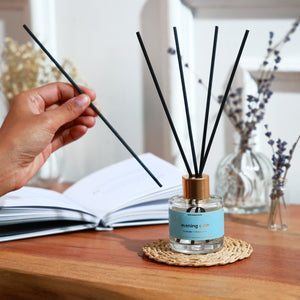
 Evening Calm₹799When a club tells me the lounge is strong in the morning and weak by the afternoon, the first question I ask is who noticed, and where they had been standing. A duty manager who arrives at seven meets the fragrance fresh and then adapts to it over the shift, so their own perception genuinely declines through the day even if the concentration does not. That is an ordinary property of the sense of smell rather than a fault in anybody, but it means the person best placed to walk around the lounge is the person least able to assess it. Members are a far better instrument, because each of them arrives from outside. I treat a report of inconsistency from inside the building as a hypothesis, not as data, and I would not change a setting on the strength of one.
The schedule, written as something a duty manager can actually follow
A club schedule for fragrance should be short enough to fit on one sheet in the duty file and specific enough that two different managers implement it identically. The structure I recommend has four moments in it, and none of them involves changing the intensity. The first is the pre-opening start: the machine comes on before the doors do, so the room is at its level rather than climbing toward it while the earliest members are sitting in it. The second is the daytime hold, which is where a work and pause cycle earns its money — it keeps the average low while renewing the signal, instead of running flat out and letting the concentration drift upward through a closed afternoon. The third is the evening, which in most clubs is the busiest and the most ventilated hour simultaneously, and which usually needs no change at all once the level has been set for it. The fourth is the stop, which should come before the last member leaves rather than after the building is locked.
That last point is worth defending, because it looks like a saving and it is really a quality decision. Oil released into a room nobody is standing in is not a reserve being built up; it is simply oil in an empty room, and in a lounge with the air system off overnight it can also produce the one outcome this cluster is most concerned with — a closed, unventilated room accumulating something by morning. A lounge should be aired before it is fragranced, never the reverse. If the club runs its air handling on full fresh air for an hour before opening, that purge should happen before the fragrance schedule starts, not alongside it.
Two further practicalities. Write the schedule down in the same place the club writes everything else down — the machine position, the intensity setting, the run window, the days, the date it was last changed and the name of the person who changed it. A schedule held in one manager’s head is a schedule that will drift within a season. And agree in advance who is allowed to alter it, which for most clubs should be one named person and nobody else. Vaayu’s key-lock exists precisely for this, and it is the single most useful club feature on the machine; the key belongs with the master keys rather than in a drawer behind the bar.
The working day, condition by condition
What is actually different about a members’ lounge at each part of the day, what a club typically does about it, and what I would do instead. Note that the right-hand column almost never says “increase the intensity”.
| Part of the day | What is different | The usual response | What I would do instead |
|---|---|---|---|
| Before opening ★ | Room empty, air handling purging, nothing competing | Machine off, then switched on at opening | Purge first, then start the fragrance ahead of the doors so the room is at level for the first arrival |
| Mid-morning | Light occupancy, recirculating air, the quietest hour | Judged at this hour and set from it | Do not set from the easiest hour; this is the room at its most flattering |
| Lunch and after | Food service carry-over, more door movement, higher load | Raise the intensity because it “disappears” | Leave it. Food-adjacent hours should be the least fragranced part of the day, not the most |
| Late afternoon | Closed room, warm, air possibly recirculating; concentration can drift up | Nothing, because staff have adapted and cannot perceive it | A work and pause cycle here, so the level holds rather than accumulates |
| Evening peak | Most people, most personal fragrance, most door movement, most ventilation | The hour that prompts the call to the supplier | Set the level for this hour and accept that every other hour will read quieter |
| After close | Empty room, air handling often off, doors shut | Machine left running to “build up” for the morning | Stop before the room empties. Fragrance into an empty, unventilated room is waste at best |
| The gap in this table | No cycle length, duty ratio or consumption rate in millilitres per hour is published for any SOSA machine | Suppliers who give you one are estimating | Commission by observation over a week and record what you settled on |
Cycles and schedules · Aangan₹25,999See it → Run windows · Vaayu₹11,999See it → 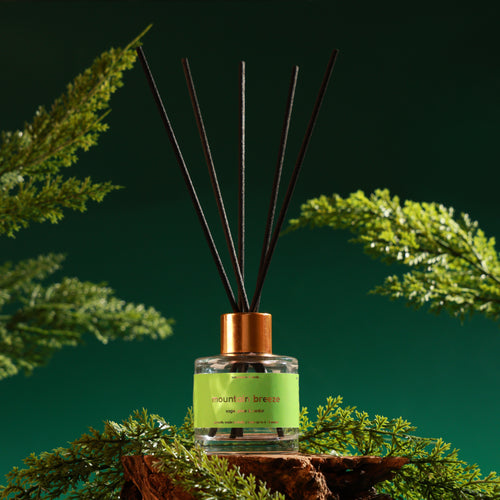 The register, to try · reeds₹849See it →
Why turning it up makes the unevenness worse rather than better
This deserves setting out properly, because it is counter-intuitive and because every club arrives at it independently. Raising the intensity does not flatten the curve; it multiplies it. If the evening reads at four-fifths of the morning, raising the level raises both ends proportionally — the gap between them grows in absolute terms even though the ratio is unchanged. The morning, which was already at the top of the acceptable band, now goes past it, and the club acquires a complaint about the hour that was never the problem. Meanwhile the evening, which is busy and well ventilated, improves only a little, because the thing suppressing it is air change and competition rather than a shortage of output.
There is a second and less obvious cost. A long-dwell room punishes amplitude specifically. Nobody stands in a threshold for three hours, which is why an arrival may be unambiguous; a lounge where members work all afternoon must sit below the level anyone would name, because the same concentration that reads as welcoming in the first fifteen seconds reads as oppressive by the fourth hour. Raising the intensity to cure an evening thinness therefore does its damage to precisely the people the room exists for — the members who stay longest. The people who would have enjoyed the higher setting are the ones passing through, and they are already being looked after by the arrival.
The third cost is commercial and nobody mentions it. A room that has been turned up will eventually generate a complaint, and the way clubs respond to a fragrance complaint is almost never a small adjustment. They switch it off. One member writing to the house committee about a lounge that gives them a headache can retire a machine the club has paid for, and the setting that caused it will have been made in good faith by somebody trying to help. That is the strongest practical argument for the whole of this page: schedule low, lock it, and the installation survives.
The all-day edit — and what is not published, stated twice
What I would do with a large lounge that reads differently at different hours, in order. The first three steps cost nothing, and the final row names the figures that do not exist rather than estimating them for you.
| Step | What it is | Why it works | Cost |
|---|---|---|---|
| 1. Ask the engineer what the air handling does hourly ★ | Fresh-air fraction, recirculation, purge times, evening regime, door discipline | The air system governs where fragrance goes and how fast it leaves; nothing on the machine competes with it | No cost |
| 2. Start before opening, stop before closing | Bring the machine on ahead of the doors, after the fresh-air purge; end it before the room empties | Removes the climbing first hour, and stops oil going into a room nobody is in | No cost |
| 3. Judge only from outside, and only by a named person | Walk out, spend time in different air, come back in through the members’ entrance | Everyone inside the building has adapted and is reporting perception rather than concentration | No cost |
| 4. Programme a work and pause cycle instead of running flat | Aangan’s intelligent PCB holds programmable cycles and daily schedules at the unit | Holds a level through a closed afternoon rather than letting concentration drift upward | ₹25,999 |
| 5. Zone a large lounge by volume, not by plan | A Vaayu per connected volume, up to 1000 m³ ≈ 2,000–3,000 sq ft each, with run windows and day selection | A mezzanine, a partitioned bay and a terrace door are three different conditions all day | ₹11,999 |
| 6. Lock it and record it | Key-lock turned, key with the master keys, setting written in the duty file with a date and a name | A schedule nobody can quietly alter is the only schedule that stays consistent across a season | No extra |
| Do not buy: a second machine for an uneven afternoon | Unevenness through the day is a timetable symptom; unevenness across the floor is a placement symptom. Only the second is ever solved by another unit | The most common unnecessary purchase in this family | Saves ₹11,999 |
| The honest gaps: what is not published | No consumption rate, millilitres per hour, recommended cycle length in minutes, duty ratio, tank-hours figure or air-change rate is published for any SOSA machine. Aangan’s only life claim is weeks between refills on business-hours schedules. No machine count exists as a formula, and no purchasable refill oil is listed for the waterless commercial machines — that fragrance is specified and quoted per property | Said plainly, because a schedule built on an invented number will be wrong in a way nobody can trace | Quoted |
Versailles
The most useful hour I have ever spent on a club installation was not with the general manager. It was with the engineer, in a plant room, going through what the air handling did between opening and close. Everything the club had been describing as a fragrance inconsistency turned out to be an airflow timetable that nobody had thought to mention to the person specifying the fragrance. There was a purge before opening, a change of regime at lunch, and a set of doors that were propped open every evening because the terrace was popular. Three different rooms, one setting, and a manager who had been steadily turning the dial up for months.
We changed nothing about the intensity. We moved the start time earlier, shaped the delivery around the hours the room was actually full, ended it before the last table left, and wrote all of that on a single sheet in the duty file with a name against it. The complaints stopped inside a fortnight, and the club used less oil than it had before.
I tell that story to every club that asks this question, because the instinct to reach for the intensity setting is so strong and so expensive. The dial is the one control that should be touched least. The schedule is the one that should be thought about hardest. Everything we make is composed in Pune, and a part of every order funds a girl’s classroom through Nanhi Kali.
Frequently asked questions
- The pillar: the long-stay register — why the lounge is the hardest room in the club.
- The business lounge register and the minimal room with no soft mass.
- Dosing for the fourth hour and lounge versus lobby.
- The leather-and-wood lounge and continuous low versus bursts.
- Why staff stop smelling it and how to keep a setting where you put it.
- Brand: the SOSA founder story.
SOSA commercial scenting — facts verified August 2026: Vaayu ₹11,999, waterless cold-air nebulising, up to 1000 m³ ≈ 2,000–3,000 sq ft, 400ml refillable sealed tank lasting up to about 90+ days depending on intensity and hours, Bluetooth app plus onboard buttons, run windows of 1h / 4h / 8h / 24h, day selection, adjustable intensity, auto-stop and key-lock, under 38 dB, freestanding, wall-mounted or HVAC-return, DC 12V / 1A at 5W, CE, RoHS and SGS, black and white. Aangan ₹25,999, HVAC or AHU connection or standalone wall-mount or lay-flat, up to 3,000 m³ ≈ 8,000–10,000 sq ft, 800ml reservoir giving weeks between refills on business-hours schedules, under 42 dB, DC 12V at 14W, intelligent PCB with programmable work and pause cycles and daily schedules, metal body 3.9 kg at 284 × 125 × 246 mm, black or white, one-year warranty, imported; it is not app-controlled, has no Bluetooth, and no certifications are published for it. Meenar ₹38,500 is the larger-property option, specified on enquiry; no coverage figure is published for it here, and it should not be assumed to reach further than Aangan. Ultrasonic machines: Sukoon ₹1,899 at 270–320 sq ft with a 500ml tank and 16–18 hours on low, Boond ₹899 with a 300ml tank at up to about 150 sq ft, Megh ₹3,499 with a six-litre tank and around 100 hours of runtime but only about 215 sq ft of coverage. Hotel Collection fragrance oils are water-based and ultrasonic-only at 15ml ₹299, 100ml ₹999 and 300ml ₹1,799, taking three to six drops in the water tank; they are not for reed diffusers and not for the waterless commercial machines. No purchasable refill oil is listed for the waterless commercial machines; that fragrance is specified and quoted per property. SOSA publishes no leather fragrance in any format and no tobacco or smoky fragrance for any diffuser. SOSA sells no air purifier and no dehumidifier, and every SOSA spray is a car perfume rather than an interior product. No SOSA machine offers Wi-Fi, Alexa, Google Assistant, KNX, Crestron, Control4, Modbus, BACnet, an API, a dry contact or any building-management integration; the Aangan HVAC connection is mechanical. Reed diffusers 50ml ₹749–₹849 lasting 6–8 weeks and 130ml ₹1,249–₹1,349 lasting 14–18 weeks, six fibre reeds, alcohol-free, phthalate-free, paraben-free, IFRA-compliant, 0 ppm formaldehyde, heat-stable CCT carrier, refillable glass bottle, tested at 45°C and 85% RH, composed in Pune. No dealer programme, reseller margin, trade price, territory or service contract is published. Free shipping above ₹499. A portion of every order supports girl-child education through Nanhi Kali. SOSA is an independent Indian fragrance house; the Hotel Collection scents are SOSA’s own interpretations inspired by the world’s finest hotels, and SOSA is not affiliated with or endorsed by any hotel brand. Prices subject to change — see the live product pages.