Founder Diaries · Clinics & Medical Centres · Sprays, Reeds and the Machine
By Sonal Sahani · ISIPCA Versailles 11 min read Updated September 2026
Nobody sets out to buy consistency, and it is what almost every clinic actually wants. A waiting hall that smells the same at 9:10, at 13:00 and at 18:45 is a building that reads as looked after; a hall that is noticeable at nine, absent at noon and noticeable again at four reads as a building where somebody keeps doing something. The difference between those two is not the fragrance. It is a timer, one setting that never changes, a lock so that nobody can change it, a refill date in a calendar with a name against it, and one rule about midday. This page is about those five things, because they are the product.
Quick answers — read this first
What consistency is bought with: a scheduled start at T-30m, one intensity setting fixed in the first week, a key-lock so nobody adjusts it, four refill dates in the facilities calendar with one named person against them, and a written rule that nobody turns it up at midday.
The five things that move a level: occupancy, door cycles, the air-conditioning fan speed and setpoint, outdoor humidity in monsoon, and staff adjusting the machine. Only the last is cheap to eliminate, which is what the key-lock is for.
The machine: the
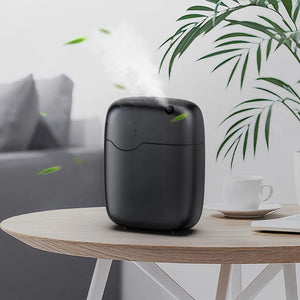
Vaayu at ₹11,999 — waterless, up to 1000 m³, adjustable intensity, 1h/4h/8h/24h timers and app scheduling, under 38 dB, auto-stop, key-lock, and a 400ml tank lasting about seventy-five days on a clinic's opening hours. Clinical rooms stay fragrance-free.
The short answer
Short answer: set the intensity once in the first week by walking in cold each morning, schedule the machine to start thirty minutes before the first appointment and stop with the last, lock the setting, and write the midday rule down. Consistency is an operating procedure with a machine attached, not a property of a fragrance.
The pick: the
Vaayu at ₹11,999 — waterless, up to 1000 m³, adjustable intensity, 1h, 4h, 8h and 24h onboard timers plus Bluetooth app scheduling, under 38 dB, auto-stop and a key-lock, with a 400ml tank lasting about seventy-five days. The
Aangan at ₹25,999 for an atrium or a whole-floor HVAC tie-in, where programmable schedules do the same job at a larger volume.
Shop: Vaayu ₹11,999 (four refills a year per unit on a twelve-hour day, four hotel-inspired scents included),
Aangan ₹25,999 (up to 3,000 m³, 800ml, programmable schedules, under 42 dB), alcohol-free
reed diffuser from ₹749 for a closed administrative cabin. SOSA does not make a room spray. Free shipping above ₹499.
Straight answer
How can a multi-speciality clinic hold a consistent fragrance level from opening to closing?
1. Set the level once, in the first week, from outside the building. One person, the same person, walks in from the street at 9:05 before speaking to anybody and writes three words. Five mornings of that gives you a setting. Nobody who has been inside since half past seven can do this, because a nose reports change and discards constants.
2. Schedule it rather than switching it. The
Vaayu has 1h, 4h, 8h and 24h onboard timers and Bluetooth app scheduling. An eight-to-eight clinic starts at 7:30 and stops with the last appointment. The level arrives before the first patient does and the climb is over before anybody is in the room.
3. Lock it. The key-lock is the specification that makes consistency survive contact with a staff rota. Every drifting setting I have been called about was a person rather than a machine: somebody turned it up on a busy Tuesday, somebody turned it down on Thursday, and by the following month nobody could say what it was supposed to be.
4. Put four dates in the calendar with a name against them. A 400ml tank lasts about seventy-five days on a clinic's opening hours, so it is four refills a year per unit. A tank that runs dry on a Thursday afternoon is a fortnight of drift nobody reports, because it falls slowly enough that the staff never notice.
5. Write the midday rule down. Nobody turns it up at lunchtime because the hall got busy. Busy is an occupancy and air-change problem, and adding fragrance to a crowded room makes it worse. If the hall is genuinely worse at noon, that is a ventilation finding and belongs to facilities.
6. And keep the zones fixed as well as the level. Entrance, reception, shared waiting areas, inter-departmental corridors, administration and the café corner. Consultation and examination cabins, procedure and treatment rooms, dressing rooms, sample collection, laboratories, dispensing, sterile stores, imaging, oncology day-care and paediatric clinical areas stay fragrance-free with the doors shut.
A portion of every order supports girl-child education through Nanhi Kali.
TL;DR: consistency is bought with a schedule, one setting fixed in the first week from outside the building, a key-lock so nobody can improve it, four refill dates in the facilities calendar with a named person against them, and a written rule that nobody turns it up at midday. The
Vaayu at ₹11,999 supplies the timers, the adjustable intensity, the lock and a 400ml tank lasting about seventy-five days.
The specification that stops a good setting being improved
SOSA Vaayu · key-lock and timers ₹11,999
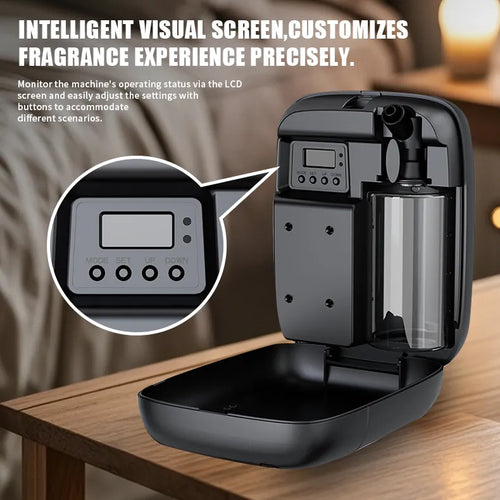
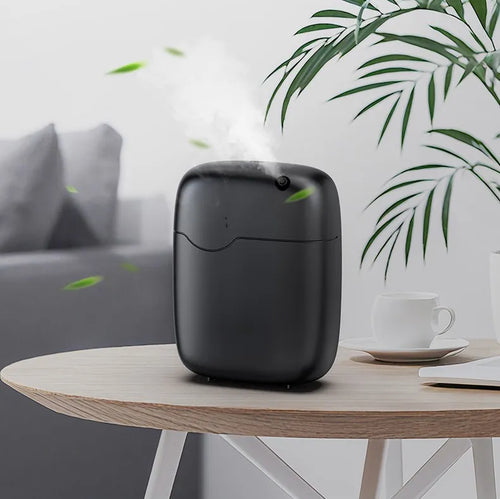
1h, 4h, 8h and 24h onboard timers, Bluetooth app scheduling, adjustable intensity, auto-stop — and a key-lock. Every consistency problem I have been called about in a clinic was a people problem wearing a machine problem's clothes. Somebody turned it up on a Tuesday because the hall was full, somebody else turned it down on Thursday because a colleague complained, and by the following month nobody could say what the setting was supposed to be. The key-lock ends that conversation, and the app means the facilities team can change the schedule from the office without anybody standing at the machine in front of patients. Under 38 dB, so reception can share a wall with a consultation cabin. 0.9 kg, freestanding, wall-mounted or HVAC-mounted.
The five things that move a level during a clinic day
It is worth being precise about what you are up against, because 'the fragrance is inconsistent' is a symptom with five quite different causes and only one of them is cheap to remove. Four of the five are properties of the building and the weather, they move the level by real amounts through the day, and the correct response to all four is to leave the machine alone and let the average hold. The fifth is a person with good intentions, and it does more damage than the other four together. Knowing which you are looking at is most of the work, and it takes a week of three-word notes rather than an instrument.
1
THE FOUR YOU CANNOT CONTROL
Occupancy, doors, the air handling and the monsoon
Take them in the order they bite. Occupancy is the largest. A waiting hall at 9:15 with six people in it and the same hall at 11:30 with forty people and thirty relatives are different rooms: more bodies, more warmth, more moisture, more of everything a person carries in on their clothes, and a fresh-air demand that a well-run air-handling system will meet by pulling harder. A level that is genuinely constant at the machine will therefore be perceived as lower at 11:30, and the honest response is to accept that rather than chase it. Second, door cycles. An entrance sliding door on a busy morning opens every ninety seconds, and each cycle exchanges a slug of air with the street; a propped fire door merges two volumes that were supposed to be separate, and a broken door closer between a café corner and a waiting area will do more to how the hall smells than any setting on any machine. Third, the air handling itself: fan speed, fresh-air damper position and setpoint all move through the day, and an afternoon on high fan is measurably more diluted than a quiet morning on low. And fourth, humidity, which in Pune or Kochi in July is not a detail. Evaporation and dispersion both behave differently at eighty-five per cent relative humidity than at thirty-five, and a building that has held one level all winter will read slightly differently in monsoon. None of those four is a fault. They are the reason the specification is a flat setting rather than a flat perception, and a machine that is not touched will produce a far more consistent year than one that is corrected weekly.
2
THE FIFTH
The person with the good intention, and the lock that ends it
Then the one that actually causes the complaint, and it is never in a brochure.
Somebody turns it up. Usually on a Tuesday, usually because the hall was full, usually with the entirely reasonable thought that a busy room needs more. Then on Thursday a colleague finds it too much and turns it down past where it started, and within a month the setting is a rumour rather than a number. I have walked into clinics where three different people each believed they were the one who maintained the machine, and none of them knew what the other two had done. This is why the key-lock on the
Vaayu is not a convenience feature in a healthcare building; it is the specification that makes everything else on this page possible. A public waiting hall is a room full of people you have never met, several of them bored, several of them small, and a machine anybody can reach is a machine that will be adjusted.
Pair the lock with app control and you have separated two jobs that should never have been the same job: the facilities team can change a schedule from an office, and nobody stands at a machine in front of patients turning a dial. Then write down who is allowed to change the setting — one name, not a department — and what evidence would justify it, which is three consecutive mornings of cold-entry notes rather than one person's Tuesday.
What belongs in a clinic's scenting SOP covers the paperwork, and it fits on one page.
3
THE MIDDAY RULE
Why a busy hall is a ventilation finding rather than a fragrance one
And then the single rule that protects a consistent level better than any hardware.
Nobody turns it up at lunchtime because the room got busy. If a waiting hall is worse at noon, the finding is about air changes and occupancy, and it belongs to facilities rather than to whoever holds the key. Turning fragrance up into a crowded, warm, under-ventilated room does not improve it; it adds another thing to an air that already has too much in it, and it is the shortest route to a patient being able to name your fragrance, which is the one outcome a waiting area should not produce. The honest fixes for a bad noon are unglamorous and they work: check the fresh-air damper is doing what the drawing says, have the extract fans verified rather than assumed, look at whether the queue shape is holding forty people in a space designed for twenty-five, and look at the seating.
And if the hall is worse at six than it was at nine, that is the classic signature of an air-change and occupancy problem wearing a fragrance problem's clothes, and it has a page of its own. The same rule catches the other common error, which is turning the level up because something has started to smell. A persistent smell is information about a dry drain trap, a dressing bin past its collection, an air-conditioning drain pan or a linen route through a public corridor. Find it and fix it rather than covering it: raising the fragrance removes the signal that told housekeeping something was wrong, which in a medical facility is worse than anywhere else.
The two sentences I would have printed and taped inside the machine cupboard: the setting does not change because the room is busy, and it does not change because something smells. Both of those are somebody else's job, and neither of them is fixed here.
The consistency checklist, hour by hour
One clinic day from the night before to close, with what happens at each point, who owns it and what it costs. Everything above the machine row is free, which is deliberate: consistency is mostly a set of habits and only partly a purchase. The last row is the one that undoes all of it.
From the night before to close
What holds a level steady across a twelve-hour clinic day
| When |
What happens |
Who owns it |
Cost |
| T-30m ★ |
The Vaayu starts on its schedule, at the locked setting, and reaches its level before the first appointment |
Nobody. The timer, every day, without being remembered |
₹11,999 once |
| The night before |
Bins out, dressing waste out, mops dried flat rather than left standing in buckets |
Housekeeping, as the closing round |
₹0 |
| T-60m |
Water down every drain trap in every toilet and every unused sink. Windows opened where there are windows |
Housekeeping, as the opening round |
₹0 |
| T-45m |
Air conditioning on, so the building comes to temperature before the first patient rather than with them |
Facilities |
₹0 |
| Midday |
Nothing is adjusted. A busy hall is an occupancy and air-change finding, and it goes to facilities |
One named person, and only that person |
₹0 |
| Close |
The timer stops it with the last appointment. It does not run overnight into an empty building |
The schedule, not a switch by the door |
₹0 |
| Every 75 days |
A 400ml refill, four times a year per unit, on a calendar date with a name against it |
One named person in the facilities calendar |
Refill |
| The thing that breaks it |
Somebody reaching the dial. Without a key-lock, the setting becomes a rumour inside a month |
Prevented rather than managed |
— |
Shop this guide
Consistency, in three products
The SOSA principle
What a clinic is actually buying is not a scent. It is a level that is the same at 9:10, at 13:00 and at 18:45 — and the specifications that deliver that are a timer, a lock and a date in a calendar.
Four of the five things that move a fragrance level through a clinic day belong to the building and the weather. The fifth is a person with a good intention, and it is the only one worth preventing.
One setting, one lock, four dates
Start with the first week, because everything afterwards is defence of a number you set in it. Run the machine at the lowest intensity that does anything at all, and have one person — the same person every morning — walk in from the street at 9:05, before speaking to anybody, and write three words about the entrance. Add a second reading at 13:00 and a third at 18:30, from outside each time if the building allows it. Five days gives fifteen entries, and the pattern in them is worth more than any instrument you could rent. If a note names the fragrance, the setting comes down a step. If the notes are about the building rather than about a smell, the setting is right and it goes into the SOP as a number. Then placement, which holds a level as much as intensity does: three to four metres inside the entrance rather than at the threshold, at the edge of the reception zone rather than in the traffic line, above waist height because a cold-air mist falls rather than rises, and well out of the direct throw of an air-conditioning vent, which strips the light top off a composition and leaves the heavy end standing alone. The Vaayu wall or HVAC mount costs a fitting charge and buys the one thing a specification sheet cannot: the machine is out of reach, and the key-lock covers everybody who is not.
Then the schedule and the supply, which are the two places drift actually enters a well-run building. The Vaayu has 1h, 4h, 8h and 24h onboard timers and Bluetooth app scheduling, and the correct configuration for an eight-to-eight clinic is a schedule starting at 7:30 and stopping with the last appointment — not the 24h setting, which is for buildings that genuinely never close, and a clinic is not one of those. Running the same machine around the clock takes the 400ml tank from about seventy-five days to roughly thirty-seven, which is eight refills a year instead of four and double the fragrance cost to scent an empty building at three in the morning. On supply: put the four refill dates in the facilities calendar on the day the machine is installed, with one name against them, and decide who owns that job before the machine arrives rather than afterwards. A tank that runs dry on a Thursday afternoon produces the least reported failure in this whole category, because the level falls slowly enough that nobody in the building notices it going and the first complaint arrives a fortnight later as a vague sense that things have slipped. Four dates and a name prevents that entirely, and the full opening sequence sits alongside it.
Then the two disciplines that keep the whole arrangement honest over a year. The first is that consistency is not an excuse to stop looking. A level that has to be raised is telling you something, and the correct response is to find out what. If the hall needs more at four in the afternoon than it did at ten, look at occupancy and air changes first; if something specific has started to smell, that is information about a dry drain trap, a dressing bin past its collection, biofilm in an air-conditioning drain pan or a soiled-linen route through a public corridor, and it is to be traced and corrected rather than covered. Raising the setting over a source removes the signal that told housekeeping something was wrong, which in a medical facility is worse than anywhere else. The second is that a consistent level belongs only to the zones it was agreed for. Entrance, reception, shared waiting areas, inter-departmental corridors, administrative rooms, the café corner and staff rooms if the staff want them. Consultation and examination cabins, procedure and treatment rooms, day-care surgery and recovery, dressing rooms, sample-collection rooms, laboratories, pharmacy dispensing, sterile stores, imaging, oncology day-care and paediatric clinical areas stay fragrance-free with the doors shut, and keeping fragrance out of clinical zones while scenting the public areas is a practical question with a practical answer. On the range: the Vaayu runs its own undiluted oil rather than the water-based Hotel Collection bottles and arrives with four hotel-inspired scents; the Aangan at ₹25,999 does the same job up to 3,000 m³ with programmable schedules for a whole floor; the ultrasonic Sukoon at ₹1,899 and Boond at ₹899 hold standing water and belong in one administrative cabin with a named owner; an alcohol-free reed diffuser from ₹749 holds a very steady level but only within about a metre. And SOSA does not make a room spray, which in a page about consistency is almost the point: an aerosol cannot hold a level by design.
Every drifting fragrance level I have been called about turned out to be a person rather than a machine. Which is why the most useful specification on the list is a lock.
— Sonal Sahani, SOSA
The SOSA edit
What consistency actually costs, in the order I would buy it. Four of the six rows are free and two of them are pieces of paper, which is the honest shape of this list. The last row is the format that cannot deliver consistency at all, and we do not make it in any case.
The SOSA edit
Buying a consistent level, in order
| Buy |
What it is |
When it earns its place |
Cost |
| 1. The cold-entry week ★ |
One person, three words, at 9:05, 13:00 and 18:30, from outside, for five days |
First. It produces the number that everything else on this list defends |
₹0 |
| 2. Vaayu with the schedule set |
Waterless, up to 1000 m³, adjustable intensity, 1h/4h/8h/24h timers plus app scheduling, auto-stop, under 38 dB |
Second. Start at T-30m, stop with the last appointment, never the 24h setting in a building that closes |
₹11,999 |
| 3. The key-lock, used |
The lock on the machine plus one written name of the person allowed to change the setting |
Immediately. Without it the setting becomes a rumour within a month of installation |
included |
| 4. Four dates and a name |
A 400ml refill about every 75 days, four times a year per unit, in the facilities calendar |
On installation day, not when the tank runs dry on a Thursday afternoon |
Refill |
| 5. The midday rule, in writing |
One line in the SOP: the setting does not change because the hall is busy, and it does not change because something smells |
From day one. Both of those are findings for somebody else, and neither is fixed at the machine |
₹0 |
| Not in the range: a room spray |
SOSA makes no room spray. The sprays in the range are car perfumes, and an aerosol is a dose that cannot hold a level by design |
Printed because consistency is exactly the thing a spray cannot be bought to provide |
— |
Honest notes for buyers: fragrance in a medical facility is housekeeping and presentation, never treatment. Nothing on this page claims that a fragrance reduces anxiety, aids recovery, improves sleep, cleans or disinfects air, or has any clinical effect whatsoever, because it does not and a diffuser is not an air purifier. Scenting belongs to the entrance, reception, shared waiting areas, inter-departmental corridors and administrative rooms. Consultation and examination rooms, treatment and procedure rooms, day-care surgery, dressing rooms, blood- and sample-collection rooms, laboratories, pharmacy dispensing, sterile stores, imaging rooms, oncology day-care and paediatric clinical areas should be left fragrance-free. A persistent smell is information about a dry drain trap, a bin, a soiled-linen route or an air-conditioning drain pan: find it and fix it rather than covering it. On the machines: the
Vaayu at ₹11,999 is waterless cold-air nebulisation with no standing water tank, covering up to 1000m³ or roughly 2,000–3,000 sq ft, with a 400ml tank lasting about 75 days, Bluetooth app control, 1h/4h/8h/24h timers, under-38dB running, auto-stop and a key-lock for public areas. The
Aangan at ₹25,999 covers up to 3,000m³ and connects to HVAC for a whole floor or an atrium. The ultrasonic
Sukoon,
Boond and
Megh are water-based, hold standing water and add 30–50 ml of water an hour to the air, which makes them suitable for a single administrative cabin with a named person emptying and drying the tank daily, and unsuitable for public clinical property. An alcohol-free
reed diffuser needs 24–72 hours to establish and suits a small lobby rather than a large waiting hall. Candles are not appropriate in a healthcare facility because an open flame is a fire-safety matter. SOSA does not make a room spray. The Hotel Collection scents are SOSA's own interpretations inspired by the world's finest hotels; SOSA is an independent Indian fragrance house, not affiliated with or endorsed by any hotel brand. A portion of every order supports girl-child education through Nanhi Kali.

Four dates in a calendar, one named person
SOSA Vaayu · 400ml ≈ 75 days ₹11,999
A 400ml tank lasts about seventy-five days on a clinic's opening hours, which is four refill visits a year per unit.
Put those four dates in the facilities calendar on the day the machine is installed, with one named person against them, and consistency stops being a matter of anybody remembering. A tank that runs dry on a Thursday afternoon is a fortnight of inconsistency nobody reports, because the level falls slowly enough that the staff never notice it going. Run the same machine around the clock instead and it becomes roughly thirty-seven days and eight refills, which is double the fragrance cost to scent an empty building at three in the morning. Hotel Collection
300ml refills at ₹1,799 are the water-based bottles for the ultrasonic machines; the Vaayu takes its own oil.
A note from Sonal
The clinic that taught me this had spent good money on the right machine and was unhappy with it, and the centre head was fairly sure the product was at fault. We found the setting had been changed eleven times in seven weeks. Three people had access to it, each of them conscientious, none of them talking to the other two, and every one of those eleven changes had been made in response to a single afternoon's impression by somebody who had been breathing that air since half past seven. Nobody had done anything wrong. The arrangement was wrong.
We set it from the street over five mornings, wrote the number on a card, locked it, and put four refill dates in the calendar with the name of the facilities supervisor against them. That clinic has not touched the machine in two years, and the only thing anybody says about the lobby now is that it seems well kept — which is the entire claim I am willing to make and precisely the result I wanted. It is worth saying plainly that consistency is unglamorous to sell. There is no scent on this page to fall in love with, and the specification that matters most is a lock. But a level that is the same in September as it was in March, in a building nobody has to think about, is the thing a clinic is actually paying for, and it is bought with a timer, a number on a card and one name in a calendar.
Everything is made and supported from Pune, and a part of every order funds girl-child education through Nanhi Kali. You get a space that smells like somewhere looked after; a girl gets a classroom. That equation has always felt right to me.
Frequently asked questions
How can a clinic hold a consistent fragrance level from opening to closing?
Set the intensity once in the first week by walking in from the street at 9:05, 13:00 and 18:30 and writing three words each time. Schedule the machine to start thirty minutes before the first appointment and stop with the last. Lock the setting, name one person who may change it, put four refill dates in the calendar, and write the midday rule down.
Should we turn the diffuser up when the waiting hall gets busy at lunchtime?
No, and this is the rule I would put in writing before any other. A busy hall is an occupancy and air-change finding that belongs to facilities. Adding fragrance to a crowded, warm room makes it worse rather than better and is the shortest route to a patient being able to name your fragrance.
How often does a clinic diffuser need refilling, and who should do it?
A 400ml
Vaayu tank lasts about seventy-five days on a clinic's opening hours, so four refills a year per unit. Put those four dates in the facilities calendar on installation day with one named person against them.
Who owns refilling and maintenance is worth settling before the machine arrives rather than after.
Why does the key-lock matter so much in a clinic?
Because consistency fails through people rather than hardware. A machine in a public hall that anybody can reach will be adjusted — up on a busy Tuesday, down on Thursday — and within a month nobody can say what the setting should be. The lock plus app control separates changing a schedule, which facilities can do from an office, from touching a dial in front of patients.
Does a consistent level mean we stop checking for smells in the building?
No, the opposite. A level that needs raising is telling you something. If a specific smell appears, that is information about a dry drain trap, a dressing bin past its collection, an air-conditioning drain pan or a linen route through a public corridor. Find it and fix it rather than covering it, and keep clinical rooms fragrance-free throughout.
The pre-purchase list is here.
The same at 9:10, at 13:00 and at 18:45
A timer, a lock and a date — that is what consistency is made of
The Vaayu is ₹11,999: waterless cold-air nebulisation with no standing water tank, up to 1000 m³ or roughly 2,000–3,000 sq ft, adjustable intensity, a 400ml tank lasting about seventy-five days on a clinic's opening hours, Bluetooth app control with 1h/4h/8h/24h timers, under 38 dB, auto-stop and a key-lock for public areas, supplied with four hotel-inspired fragrances. The Aangan is ₹25,999 for up to 3,000 m³ with programmable schedules. Free shipping above ₹499, and a portion of every order supports girl-child education through Nanhi Kali.
See the Vaayu · ₹11,999 The Aangan · ₹25,999
Continue the read
More from SOSA
Editorial standards & sources
About this guide: Written by Sonal Sahani, ISIPCA Versailles-trained founder and perfumer at SOSA Home & Body, on why consistency rather than fragrance is what a multi-speciality clinic is actually buying, the five things that move a scent level across a twelve-hour clinic day, why four of them should be left alone and the fifth prevented with a key-lock, and how a 400ml tank lasting about seventy-five days becomes four calendar dates and one named person.
Facts verified August 2026: Product facts used in this guide. SOSA Vaayu ₹11,999: waterless cold-air nebulising diffuser, atomises undiluted fragrance oil to a dry residue-free nano-mist with no water reservoir, coverage up to 1000m³ (approximately 2,000–3,000 sq ft), 400ml refillable tank lasting up to about 75 days per fill, Bluetooth app plus onboard control, 1h/4h/8h/24h timer scheduling, adjustable intensity, under 38 dB, DC 12V/1A at 5W, 165 × 80.5 × 215 mm and 0.9 kg, freestanding or wall or HVAC mounted, auto-stop and key-lock, CE, RoHS and SGS certified, supplied with four hotel-inspired fragrances. SOSA Aangan ₹25,999: HVAC-connected or standalone commercial nebulising diffuser, coverage up to 3,000m³ (roughly 8,000–10,000 sq ft), 800ml reservoir, metal body, programmable schedules, under 42 dB. Ultrasonic machines are water-based, hold standing water and consume 30–50 ml of water an hour: Sukoon ₹1,899 (500ml, 270–320 sq ft, 16–18 hours on low, 3–6 drops per tank, steady/2H/4H timers, three 15ml Hotel Collection scents included), Boond ₹899 (300ml), Megh ₹3,499 (6 litres). Hotel Collection water-based fragrance 15ml ₹299, 100ml ₹999, 300ml ₹1,799, Pack of 7 at 15ml ₹1,799 against ₹2,093 bought singly; the Vaayu and Aangan take their own undiluted oil rather than these water-based bottles. Alcohol-free reed diffusers from ₹749, requiring 24–72 hours to reach their working level. Free shipping above ₹499. Coverage arithmetic: cubic metres equal floor area in square feet divided by 10.76 and multiplied by ceiling height in metres, counting only the volumes that are actually scented. This guide makes no medical, therapeutic or clinical claim of any kind for fragrance: a diffuser does not purify, disinfect or clean air, and does not treat, calm or affect any patient or condition. Fragrance is housekeeping and presentation. Clinical areas should be left fragrance-free, and a persistent odour should be traced to its source and corrected rather than covered. SOSA is not affiliated with or endorsed by any hotel brand. Prices subject to change — see the live product pages.