

Non-edible gifts that genuinely work at a festival: good brass or terracotta diyas that will actually be lit, a plant in a proper pot, table linen for the days people eat together, one piece of serveware for a household that hosts, and home fragrance for the room guests arrive in.
What to avoid: another sweet box, another dry fruit tin, decorative idols and showpieces that create permanent shelf duty, and anything that has to match a colour scheme.
Where food still wins: gifting at volume — twenty colleagues, building staff, a client list. A bottle cannot be divided, and for many households food or cash is the more useful gift. Say that plainly rather than pretending otherwise.
2. Non-edible options that hold up. Diyas in brass or terracotta, if they are good enough to be used rather than stored — the ordinary ones get bought by the dozen anyway. A plant in a pot chosen with care, for a household with light. Table linen: a runner, napkins, something that comes out on the day people eat together. One piece of serveware for a family that feeds people, which at a festival is most families. A good torch or an emergency light for a building with power cuts, which is a deeply unglamorous gift that gets used for years.
3. Then the one nobody else will bring. Home fragrance for the room where guests arrive. Festival week is the week the house has been cleaned to within an inch of its life and is about to be full of people, which is the exact moment a hall that smells composed is worth something. It is also, reliably, the only non-edible gift on the counter.
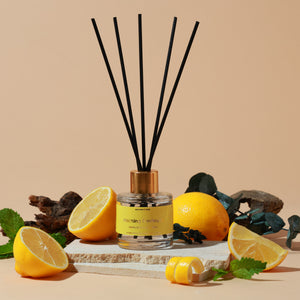
4. Choose it for a room, not for a person. Rose and night jasmine in the entrance. Coffee and vanilla where people sit. Lemon, mint and eucalyptus for a working kitchen — used at the right time, which is not while the cooking is happening.
5. Buy the size that matches how often you see them. A 50ml at ₹749–₹849 runs 6–8 weeks, which carries a Diwali gift comfortably into the new year. A 130ml at ₹1,249–₹1,349 runs 14–18 weeks. A duo at ₹1,498–₹1,598 covers two rooms and reads as considered.
6. And the honest no. If you are gifting at real volume — twenty colleagues, the building staff, a client list — food or cash is very often the better and more useful gift, and a bottle cannot be split. If the household lights incense and camphor every morning of the festival, a diffuser will simply compete with it. If anybody there has said they dislike scented things, or there is a newborn, buy the diyas or the plant.
Composed and handmade in small batches in Pune, and a portion of every order supports girl-child education through Nanhi Kali.

Part one — what volume does to a gift
Ordinary gifting is a one-to-one exchange. Festival gifting is a broadcast, and it changes the physics completely. The same box that would be charming arriving alone on a Tuesday in March becomes an administrative problem arriving fourth on a Saturday in October. Nothing about the gift has changed; the context has. These three cards are what that context actually does.
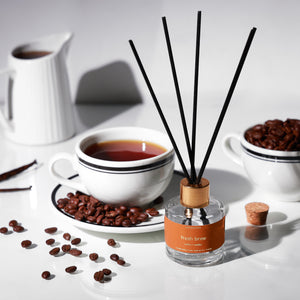
 Fresh Brew₹849 · warmestSweets, dry fruit, chocolates. Between them they account for the overwhelming majority of what moves through Indian homes at Diwali, and the effect is that the fifteenth one is worth considerably less to the recipient than the first — not because anybody is ungrateful, but because a household can only eat so much and only has so many people to pass the rest to. Being non-edible is therefore the cheapest differentiation available to you. You do not need to spend more than everyone else; you need to be in a different category from everyone else. And there is a quieter point underneath it: in almost every one of those homes, somebody is not eating the sweets — sugar came off the list after a check-up, a fast is being kept that week, someone is training. A gift for the house includes them automatically.
Part two — what survives being the fifteenth gift on the counter
Scored from the recipient's side of the exchange rather than the giver's. The column that matters most is the last one, because it is the one nobody thinks about in the shop.
| What you brought | How many of these they got | Where it is by day three | Does it survive being the fifteenth? |
|---|---|---|---|
| Home fragrance for the entrance ★ | Usually none — you will be the only one | Standing on the console, working | Yes. Different category, immediate job, no storage |
| A sweet box | Several | Opened, partly eaten, partly passed on | No — it is the queue |
| A dry fruit tin | Several | In the cupboard behind the last two | No — it keeps, so it waits |
| Good diyas, brass or terracotta | A few | Lit, and kept for next year | Yes, if they are better than the ones sold by the dozen |
| A plant in a proper pot | Rarely more than one | On the balcony, being watered | Yes, for a household that wants the job |
| Table linen or a runner | Almost never | On the table that evening | Yes — but it has to survive their colours |
| A decorative showpiece or idol | A few | Still in its box, awaiting a decision | No — it creates permanent shelf duty |
| A scented candle | Occasionally | Lit once, then put away | Partly — a flame needs supervision in a full house |
| The honest caveat: the top row assumes one household and one gift. If you are gifting thirty people, this table stops applying — food and cash are divisible and a bottle is not, and for building staff and household help a useful gift or an envelope is very often worth more than anything decorative. Use fragrance for the handful of homes you actually walk into. | |||
Garden Bloom · entrancefrom ₹799Shop → 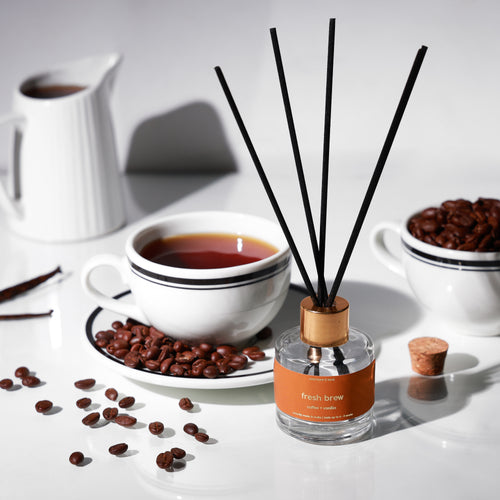 Fresh Brew · living roomfrom ₹849Shop →
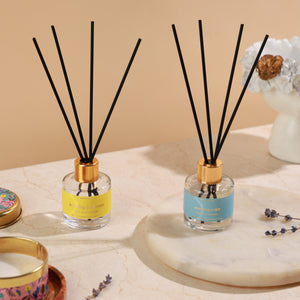
 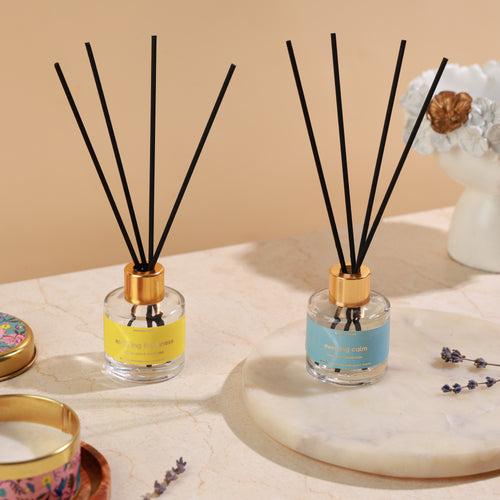 Day & Night duo · two rooms₹1,498Shop →
Part three — when a home fragrance is the wrong festival gift
The first and biggest case is volume itself. If your list runs to twenty or thirty names — the office, the building staff, a set of clients — this is not the category. A bottle cannot be divided, thirty bottles is a completely different budget, and for household help, drivers and building staff a practical gift or an envelope is usually worth considerably more than anything I make. I would rather say that than sell you thirty bottles. Home fragrance belongs to the shorter list: the handful of homes you actually walk into, where you know the hall and can picture where the bottle will stand. And a related honesty — I cannot confirm what bulk or corporate gifting options currently exist, nor can I promise gift wrapping, gift notes or delivery straight to a recipient's address. There is no SOSA gift card either. Check what is offered at checkout instead of planning around any of it.
The second case is a house whose festival already has a smell. Diyas, agarbatti at the shelf, dhoop after the floors are washed, camphor in the evening, marigold at the door — that is a considered, deliberate fragrance and it belongs to the occasion. Adding a rose diffuser to it does not layer; it produces a third thing nobody intended, and the household will quietly move one of them out of the way. If that is the home, either give the diyas and the plant, or give the bottle for a bedroom or a study well away from the puja area and say so when you hand it over. The same goes for the kitchen during festival week: with cooking running all day, fragrance layered over food smells makes a third smell nobody designed. Extractor on, window open for ten minutes, then close the room.
The remaining noes are short. Anybody who has said they dislike scented things, in any words — take it at face value. A home with a newborn, unless the parents have asked. A household where somebody reacts to fragrance, because a room is not something they can opt out of. And a family that already owns two or three diffusers, where a fourth is not a gift but inventory. In every one of those cases, the diyas, the plant, the linen or the serveware are genuinely good gifts and I would give them without a second thought. A gift guide that never says no is an advert.
Part four — the festival edit, by who is receiving it
Festival lists are not one list. They are usually four: the households you visit, the family you owe something proper to, the office, and the people who work in and around your home. Only two of those four are a fragrance list, and here is the whole thing laid out.
| Who is on the list | What to give | Price | Why it works at a festival |
|---|---|---|---|
| The four or five homes you actually visit ★ | Garden Bloom or Fresh Brew 50ml | ₹799–₹849 | Non-edible, no storage, and working in the hall by the time guests arrive |
| Parents or in-laws, where the gift should be visibly more | A 130ml bottle, or a duo set | ₹1,249–₹1,598 | 14–18 weeks a bottle; the duo shows you thought about two rooms |
| A couple in their first festival in a new flat | Day & Night duo | ₹1,498 | New flats smell of paint and new furniture; this is the first thing that helps |
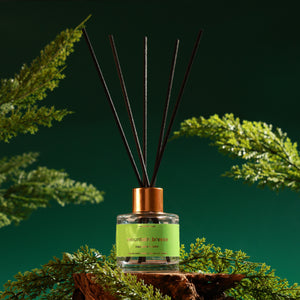
| Someone who has told you they hate scented things | Mountain Breeze, or nothing at all from this category | ₹849 | Dry pine, sage and cedar reads as a material rather than a perfume — but believe them if they meant it |
| Twenty colleagues or a client list | Food. It divides, and this does not | — | The honest limit of the category |
| Building staff, drivers, household help | Something practical, or an envelope | — | Usefulness beats decoration, every time |
| Not a gift | The 300ml oil refill at ₹2,399, or a 15ml Hotel Collection bottle at ₹299 | ₹2,399 · ₹299 | One needs a bottle they own, the other needs an ultrasonic machine |
Versailles
The Diwali I remember most clearly is the one where my mother ran out of surfaces. Boxes on the dining table, boxes on the sideboard, two on the floor by the door because there was genuinely nowhere else. She was delighted by every single one of them and exhausted by all of them together, and she spent the next four days working out who to send which box on to.
Nobody who brought a box was thoughtless. The volume was the problem, and volume is nobody's fault. It is simply what happens when a whole city gifts in the same week. The only lever an individual giver has is category — being the one thing on that table that is not another version of what is already there.
What I would ask you to keep from the food tradition is the generosity of it: a festival gift is for a household, not for a person, and it should be enjoyed by everyone who walks through the door. A fragrance in the hall does that. So does a plant, so do good diyas, so does a runner on the table. Choose whichever you like — just choose the one that is not the sixteenth box. Everything we make is composed and handmade in small batches in Pune, and a portion of every order funds a girl's classroom through Nanhi Kali.
Frequently asked questions
- What to gift someone who does not like mithai — and how to stop a gift being passed on.
- What to gift instead of chocolates and dry fruits — price-matched swaps for hamper season.
- Luxury gifts that are not food or alcohol — for the recipients the two default luxuries exclude.
- The complete non-food gifting guide — this page and the eight around it in one place.
- Brand: the SOSA founder story.
SOSA reed diffuser range & prices (verified August 2026): alcohol-free, phthalate-free, paraben-free and IFRA-compliant compositions on a heat-stable coconut-derived (CCT) carrier, low-VOC, supplied in a refillable glass bottle with six fibre reeds; 50ml lasts 6–8 weeks and 130ml lasts 14–18 weeks. Morning Freshness (Malabar lemon · peppermint · Nilgiri eucalyptus) 50ml ₹749 · 130ml ₹1,249 · 9.0/10; Garden Bloom (British rose · night-blooming jasmine) 50ml ₹799 · 130ml ₹1,299 · 8.9/10; Evening Calm (Kashmir lavender · chamomile) 50ml ₹799 · 130ml ₹1,299 · 8.9/10; Fresh Brew (Coorg coffee · Kerala vanilla) 50ml ₹849 · 130ml ₹1,349 · 9.5/10; Mountain Breeze (Himalayan pine · sage · Indian cedar) 50ml ₹849 · 130ml ₹1,349 · 9.4/10. Reed diffuser refills are oil only — you reuse your own vessel and reeds: 300ml ₹2,399 (roughly 8–11 months) · 500ml ₹3,499 (roughly 14–18 months), about ₹7–8 per ml against ₹15–17 per ml for a 50ml bottle. Duo sets ₹1,498–₹1,598 for 2 × 50ml and ₹2,498–₹2,598 for 2 × 130ml. Strength figures are positions on SOSA’s own internal strength scale, not an industry standard. Replacement reeds are not sold as a separate SKU; SOSA guidance is to refresh reeds every few months. The reed line is separate from the water-based Hotel Collection for ultrasonic machines (15ml ₹299 · 100ml ₹999 · 300ml ₹1,799) and the two are not interchangeable. Diffusers: Boond 300ml ₹899 · Sukoon 500ml ₹1,899 · Megh 6L ₹3,499 · waterless Vaayu ₹11,999. Composed and handmade in small batches in Pune, India; tested through 45°C summer heat and 85% monsoon humidity. Free shipping above ₹499. A portion of every order supports girl-child education through Nanhi Kali. Prices subject to change — see the live product pages.