

The modern equivalent: a SOSA reed diffuser from ₹749 for 50ml — consumable, no cupboard required, 6–8 weeks of use, and no shelf to be found for it afterwards.
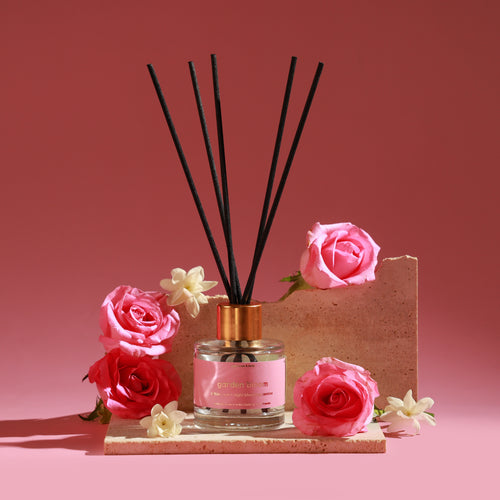
The traditional register, in a modern object: Garden Bloom at ₹799 — rose and night-blooming jasmine, the two scents an Indian home has always been welcomed with, in a format that needs nothing of the new household.
What should not be modernised: the ritual gifts. Where sweets at the door, or a lamp, or a specific object carries a blessing in your family, that is not a gift-selection problem and a diffuser is not an improvement on it.
The honest gap: there is no sandalwood, oud, vetiver or amber reed at SOSA. If the traditional Indian domestic register is what you want, the reed line does not have it, and I would rather say so.
2. Then notice which shortage still exists. Household objects are now abundant, cheap to replace and frequently bought before the move rather than after it. What a new home is short of in 2026 is not plates. It is floor area, shelf space, and the feeling that the flat has stopped being a set of boxes and started being a home.
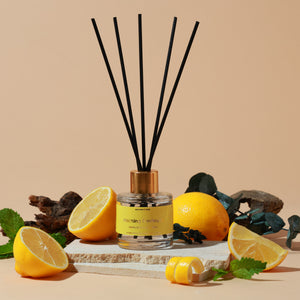
3. So pick a gift that answers the current shortage. A consumable does: it is used up, it never becomes storage, and it changes how a room feels within an hour of arriving. Morning Freshness at ₹749 is the version I recommend for a first flat — Malabar lemon, peppermint and eucalyptus, bright and unfussy.
4. Keep the register of the tradition even as you change the object. Traditional housewarming gifts are for the house rather than for the person, and generous rather than clever. A modern gift should be both of those things too. Garden Bloom at ₹799 — British rose over night-blooming jasmine — is the closest thing we make to the scent an Indian home has traditionally been welcomed with.
5. Do not modernise a ritual. Where sweets at the door, or a lamp, or a specific object is the form a blessing takes in your family, that is not a gifting decision and there is nothing to improve. Bring the traditional thing, and bring the diffuser as well if you like.
Alcohol-free, phthalate-free, IFRA-compliant, composed in Pune. Free shipping above ₹499, and a portion of every order supports girl-child education through Nanhi Kali.
Three traditional gifts, and what each was actually solving
It is worth doing this exercise properly, because the usual version of this article treats tradition as a habit that nobody examined. That is not what happened. Customs around gifting are compressed practical knowledge — they are what a community worked out, over a long time, about what a household in a particular situation genuinely needed. When a custom starts to feel slightly off, the useful question is never "is this outdated" but "which of the original conditions has changed". Here are three, and the third one has not changed at all.
 Morning Freshness₹749Crockery, serving dishes and steel vessels became the standard housewarming and wedding gift because a young household setting up a kitchen used to face a real and expensive gap, and a set of good vessels was both durable and unambiguously needed. It was also a gift that could be given at scale by an extended family without anybody coordinating. The condition that has changed is availability. Most couples now buy their own tableware before the move, in a week, online, in the pattern they actually want. The gift arrives after the problem has been solved — which is why several sets go into a loft rather than a cupboard. That is arithmetic, not ingratitude.
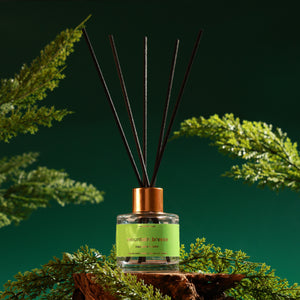
 Mountain Breeze₹849The second traditional strand is the object that marks permanence: a wall clock, a framed piece, a showpiece for the shelf. Its job was to say that this house is settled and will be here for a long time, in an era when interior choices were made once and lived with. The condition that has changed is authorship. A household now expects to choose its own visual language, and a decorative gift quietly asks them to give up one decision and then display the result out of politeness. That is a small social debt rather than a pleasure. A consumable carries no such debt, because there is nothing to keep. Mountain Breeze at ₹849 is the version for a household whose tastes you cannot guess — Himalayan pine, sage and cedar, the least sweet and least gendered register we make.
 Garden Bloom₹799The third strand is different in kind and this is the part most modern-alternatives articles get wrong. Sweets carried to the door, a lamp brought into a new house, the specific object a family has always brought — these were never solving a supply problem, so no change in supply makes them obsolete. They are the form a blessing takes, and the recipient's family is reading from the same script. Substituting something more considered here is not more considered; it is a departure that will be noticed. If you are the elder in this story, bring the traditional thing. Then, if you want to, bring a diffuser too — the two are not in competition, because they are not doing the same job.
What changed — and what did not
Three things moved, and none of them is about taste. The first is supply. A household today can replace almost any object within two days, which removes the original urgency from the traditional gift and moves the whole exercise from filling a gap to adding to a set. That is a much less useful thing to do, and it is the reason a thoughtfully chosen dinner set can land flat: the gap it was aimed at closed before the gift was wrapped.
The second is floor area. Urban Indian homes have got smaller in exactly the decades when household objects got cheaper, which is an awkward combination. A gift that requires permanent storage is competing for a resource the household has less of than their parents did, and the competition is invisible to the giver. This is the single biggest structural change and it is why the "already has everything" complaint is really a storage complaint in disguise. The third is sequence. Many couples now live independently before they marry or move in together, so they arrive at a new home with two sets of most things rather than none, and the housewarming happens after the setting-up rather than during it.
What has not changed is the intent, and this is the part I would defend against anyone. A traditional housewarming gift is generous, it is for the house rather than for the individual, and it is not trying to be clever. Those three qualities are exactly right and a modern alternative should keep all of them. The mistake in most "modern gift" lists is that they swap a generous unclever object for a clever ungenerous one — a novelty, a gadget, something that is mainly a demonstration of the giver's taste. That is not an update of the tradition. It is a different tradition, and a worse one. Change the object; keep the posture.
Traditional gift, original problem, modern equivalent
The mapping, honestly done. Note that this table prints no price for any traditional gift — crockery, linen, clocks and homeware vary enormously by city, material and shop and we have not verified any of those figures. The comparison is made in what each gift was solving and whether that problem still exists, which is the more useful axis anyway. The only prices here are SOSA's.
| Traditional gift | What it originally solved | Does that problem still exist? | Modern equivalent |
|---|---|---|---|
| Dinner set / crockery | A kitchen with nothing to eat off | Rarely — most couples buy their own before the move | Evening Calm 50ml ₹799 — consumable, no shelf needed |
| Steel vessels and serveware | Durable equipment a household could not afford at once | Sometimes — genuinely yes for a first bare kitchen | Buy the vessels if asked; otherwise Morning Freshness ₹749 |
| Wall clock, framed piece, showpiece | A bare house and a need to mark permanence | No — and it now asks the household to display it | Mountain Breeze ₹849 — nothing to hang, nothing to keep |
| Bed linen and household textiles | Expensive basics for a house starting from nothing | Rarely, and sizing and taste make it a difficult guess | Day & Night duo ₹1,498 — two rooms, two registers |
| A large object for the drawing room | Filling a room that had space and little in it | No — urban flats have less floor area, not more | A 130ml reed ₹1,249–₹1,349, 14–18 weeks, vase-sized |
| Sweets, a lamp, the family's ritual object | Nothing practical — it carries a blessing | Unchanged, because supply was never the point | None. Bring the traditional thing. Add a gift if you wish |
Traditional register · Garden Bloom₹799Shop → 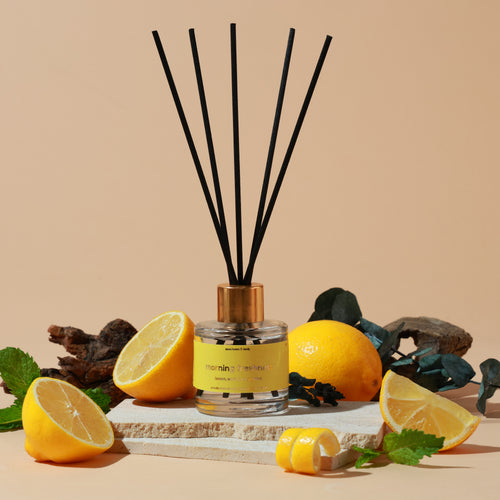 Modern default · Morning Freshness₹749Shop →
  Generous · Warmth & Bloom duo₹1,598Shop →
Modernising the object without abandoning the gesture
The practical version of all this is a short checklist, and it keeps you well away from the two failure modes — the gift that is dated and the gift that is showing off. First, is it for the house or for the person? Traditional housewarming gifts are for the house, which is why they are safe to give to a couple you know unevenly. A home fragrance keeps that property exactly: it is a statement about a room and not about a body, which is why it works between colleagues, in-laws, cousins and neighbours where a personal item would not.
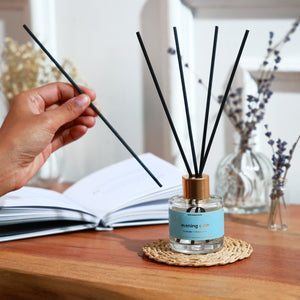
Second, is it generous without being demanding? The traditional gift was substantial and required nothing in return. A modern equivalent should be the same: no assembly, no maintenance, no watering, no socket, nothing to remember. A reed diffuser is unboxed once — six fibre reeds into the bottle, and after that the entire maintenance schedule is flipping the reeds every three to five days for the brighter scents and every five to seven for Garden Bloom. I would rather state that honestly than pretend it is zero effort. Flipping refreshes the throw and slightly shortens the life; leaving them alone lengthens the life and softens the throw. That is the whole instruction manual.
Third, does it read as considered? This is where a modern alternative earns its place. Kabir N. in Chennai bought a batch of Garden Bloom as wedding gifts and reports that every single couple messaged to ask where it was from — the most asked-about gift he has given. That is the quality a traditional gift used to have automatically, because it was obviously needed, and which a modern gift has to earn by being obviously chosen. Scale the tier to the relationship rather than the occasion: one 50ml at ₹749–₹849 for a friend or a colleague, a duo at ₹1,498–₹1,598 for a couple, and two 130ml bottles at ₹2,498–₹2,598 where you would once have given a substantial traditional gift.
The modern housewarming edit — and the honest gap
What I would actually buy, in order, followed by the thing this range does not contain. It matters especially on this page, because the traditional Indian domestic register is sandalwood, oud and agarwood, and if that is the smell in your head then the SOSA reed line is not where you will find it.
| Buy | What it is | When it is the right answer | Price |
|---|---|---|---|
| 1. Garden Bloom 50ml ★ | British rose, night-blooming jasmine, soft musk — 8.9, medium floral | When you want the traditional register in a modern object. 45 days–2 months | ₹799 |
| 2. Morning Freshness 50ml | Malabar lemon, peppermint, eucalyptus — bright, 9.0, 6–8 weeks | A first flat, a young household, anyone working from home | ₹749 |
| 3. Evening Calm 50ml | Kashmir lavender, chamomile, soft musk — 8.9, the softest we make | When you know the household barely at all. No cultural loading | ₹799 |
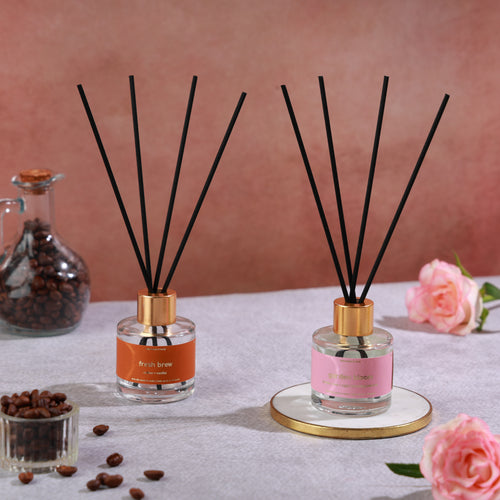
| 4. Warmth & Bloom duo | Two 50ml bottles — the floral and the warm gourmand together | Where you would once have given a substantial traditional gift | ₹1,598 |
| 5. Garden Bloom 130ml | The entryway bottle — 14–18 weeks, for a room above 150 sq ft | A hall or drawing room, where a house is judged in five seconds | ₹1,299 |
| No sandalwood, no oud: the honest gap | There is no sandalwood, oud, vetiver or amber reed diffuser at SOSA, and no hotel-inspired reed. Mountain Breeze is the driest wood the reed line has. Nawaab is a white oud and saffron personal attar — it does not make an oud reed exist | Said plainly, because the traditional register is exactly what this range lacks | ₹849 / ₹399 |
Versailles
My grandmother gave vessels. Every new house in the family got a set of them, and I spent a good part of my twenties finding this quaint, which was a failure of attention on my part rather than a failure of imagination on hers. She was giving the most useful object available to a household that was starting with very little, at a time when replacing a pan was a decision rather than an errand. That is not a sentimental tradition. It is a practical one, and it worked for a long time because the conditions held.
The conditions changed while the custom stayed, which is the ordinary life cycle of every custom. Objects became easy, floor space became hard, and couples started arriving at a new home with two of most things rather than none. So the gift that was once a kindness became, in some houses, a small logistical problem — through nobody's fault, and certainly not through any decline in thoughtfulness.
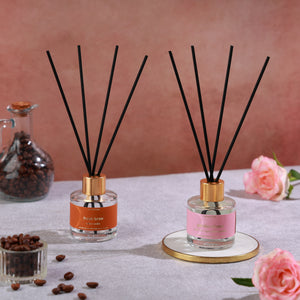
What I try to keep is her posture rather than her shopping list. Give something for the house rather than the person. Give something generous that asks nothing back. Do not be clever at the recipient's expense. A Garden Bloom at ₹799 satisfies all three, and it happens to smell of rose and jasmine, which is what her house smelled of anyway. Everything is composed in Pune, and a part of every order funds a girl's classroom through Nanhi Kali.
Frequently asked questions
- The full answer and Housewarmings — a kitchen holds one dinner set and receives several, and seven categories ranked by what each asks of a flat.
- Weddings and For newlyweds — being distinguishable in a pile of thirty, and how the third dinner set actually happens.
- When they have everything and The head-to-head — has-everything is a storage statement, and two prerequisites you cannot check from outside.
- Small footprint — and the footprint that goes to zero by itself.
- The decision tree — one bottle, no reading.
- The complete homeware guide — every decision in one place.
- Brand: the SOSA founder story.
SOSA reed diffusers — facts verified August 2026: Five scents, all alcohol-free, on a heat-stable CCT (caprylic/capric triglyceride) base, phthalate-free, paraben-free, IFRA-compliant, 0 ppm formaldehyde, six fibre reeds in a refillable glass bottle, composed and made in Pune, India. Morning Freshness (Malabar lemon · peppermint · eucalyptus globulus) 50ml ₹749 · 130ml ₹1,249 · 9.0 on the SOSA strength scale. Evening Calm (Kashmir lavender · chamomile · soft musk) 50ml ₹799 · 130ml ₹1,299 · 8.9, the softest in the range. Garden Bloom (British rose · night-blooming jasmine sambac) 50ml ₹799 · 130ml ₹1,299 · 8.9, with indole held below the fecal threshold so the jasmine stays floral above 30°C. Mountain Breeze (Himalayan pine · sage · Indian cedar) 50ml ₹849 · 130ml ₹1,349 · 9.4. Fresh Brew (Coorg coffee · Kerala vanilla · caramel) 50ml ₹849 · 130ml ₹1,349 · 9.5. Longevity 6–8 weeks on 50ml (Garden Bloom 45 days to two months) and 14–18 weeks on 130ml. Duos: Day & Night ₹1,498, Fresh & Grounded ₹1,548, Warmth & Bloom ₹1,598 (50ml × 2); 130ml × 2 ₹2,498–₹2,598. Refills 300ml ₹2,399. Attar roll-ons ₹379–₹399, including Nawaab (white oud · saffron) ₹399, which is a personal fragrance and not a home product. Climate-tested through 45°C heat and 85% RH monsoon humidity. SOSA does not sell a gift hamper, gift box, curated reed gift set, gift card or room spray, and makes no claim about gift wrap, gift notes, personalisation or delivery timing. The reed line contains no oud, sandalwood, vetiver or amber, and no aquatic, clean-linen or musk-led scent; there is no hotel-inspired reed diffuser. Reed oil and the water-based Hotel Collection are separate products and are not interchangeable. Free shipping above ₹499. SOSA is an independent Indian fragrance house and is not affiliated with or endorsed by any hotel brand. Prices subject to change — see the live product pages.