



Why "sometimes": the smell tracks a cycle. Compressor cycling points at the coil; humid weather points at the coil and pan together; worse after idle days points at the drain.
The habit that helps most: ten minutes of fan-only before every shutdown, so the coil dries instead of sitting wet all night.
2. Because the fins are two millimetres apart and dust gets in there. The mesh filter catches large particles. Fine dust goes through, and lands on wet aluminium where it sticks. Over a season it builds into a deposit deep in the fin pack that you cannot see from the front and cannot reach with a cloth or a spray. This is the single most common reason an otherwise healthy three-year-old unit starts smelling in April: it has never had a proper jet clean.
3. Because the blower wheel lives in the damp part of the casing. Behind the coil sits a long barrel-shaped fan wheel with dozens of narrow blades. It handles the air after it has been chilled and had moisture pulled out of it, so it is in the humid zone, and lint and fine fibre pack into the gaps between the blades. A furred blower both smells and moves less air, which is why a unit with this problem often feels weaker as well as smelling worse. On most split units it is not a part you can clean yourself.
4. Because the drain is a gravity pipe with no trap and no flush. Condensate collects in a shallow plastic pan under the coil and runs out through a pipe that leaves the room through a hole in the wall, sloping downward. Nothing scours that pipe. Algae and sludge accumulate inside it, the flow slows, and water begins to stand in the pan instead of leaving. Standing water a few centimetres from the airflow gives a heavier, flatter, more stagnant smell than coil biofilm, and it is characteristically worse after the room has been unused for a day or two.
5. And the room never gets flushed, which is why it accumulates. A split AC recirculates: room air in, room air out, nothing exchanged with outside. A closed bedroom sits at roughly 0.2–0.5 air changes an hour, so whatever the unit emits stays in the room and concentrates over the evening. Cooling is not airing. Fragrance is not cleaning. Service the unit, air the room, and add a reed diffuser or a Sukoon afterwards as the layer that gives a clean bedroom a character.
Made in India, composed by an ISIPCA Versailles-trained perfumer — and a portion of every order supports girl-child education through Nanhi Kali.
Why a cooling coil is wet by design, not by fault
People are often surprised that dehumidification is not a separate feature of an air conditioner but an unavoidable side effect of how it cools. To pull heat out of air, the coil has to be colder than the air. In an Indian bedroom in May, colder than the air very quickly means colder than the dew point of that air, at which point water stops being vapour and becomes liquid on the nearest cold surface. That surface is your evaporator coil. There is no version of this machine that cools your room without wetting its own coil. Litres of water leave a hard-working split unit through the drain pipe on a humid night, and every drop of it condensed on aluminium fins first.
So the question is never how to stop the coil getting wet — it is how long it stays wet and how much organic material is sitting on it. This is where two things you control make a real difference. The first is the filter: a clean mesh catches lint, hair and larger dust before it reaches the fins, and a filter washed monthly through the season keeps the coil load down substantially. The second is drying time. If you switch the unit off at the wall at midnight with the coil soaked, it stays soaked in a warm dark box until morning. If you run fan-only for ten minutes first, the blower drives most of that moisture off and the coil spends the night nearly dry. Many units have a self-clean or dry mode that does exactly this automatically, and it is worth finding in the manual.
The four wet parts, and how each one behaves
 Step fourFrom ₹849Thin aluminium fins wrapped around copper tubing, packed a couple of millimetres apart to maximise surface area. Below dew point while cooling, therefore streaming with condensation. Fine dust that gets past the mesh lodges between fins and stays there, wet and undisturbed, and biological growth follows. The tell is timing: the smell appears or strengthens when the compressor engages and eases when it cycles off. A spray cannot fix this, because the deposit is centimetres deep inside a fin pack. A jet clean by a technician before the season is what fixes it; ten minutes of fan-only before shutdown is what slows it coming back.
Symptom to cause: which of the four parts is it?
The pattern of when the smell appears is doing most of the diagnostic work here. Note the cycle before you book anything — compressor, weather, or days-since-used.
| What you notice | Most likely cause | How to confirm it | What actually fixes it |
|---|---|---|---|
| Rises when the compressor engages, eases when it cycles off ★ | Biofilm on the evaporator coil being rewetted by fresh condensation | Alternate two minutes of fan-only with two minutes of cooling and compare | A jet clean of the coil before the season; fan-dry ten minutes before every shutdown |
| Present in fan-only too, and the filters were clean | Lint and dust packed into the blower wheel in the damp part of the casing | Remove the filters and shine a torch on the fan blades — grey fur or clean plastic | Blower wheel clean at the next service; it is not a user-serviceable part |
| Heavy, flat, stagnant; worst on the first evening after days away | Standing water in the drain pan because the condensate line has partly blocked | With the unit cooling hard, check the outdoor pipe is running, not dripping | Clear the line; confirm it falls continuously; no dips or upward kinks along the run |
| Much worse in monsoon weeks than in dry heat | Higher condensation load keeping coil, pan and line wetter for longer | Compare a humid week with a dry one at the same thermostat setting | Use dry mode for part of the night; service before monsoon rather than after |
| Musty everywhere in the flat, not just in front of the vent | Room-level damp or a fabric reservoir — the AC is stirring it, not making it | Leave the unit off for a full day and judge the room on returning from outside | Air the flat twice daily; wash bedding and curtains; find whatever is quietly wet |
| Damp patch under the unit, or dark speckling on the wall behind it | A leaking drain and mould growth — a building and health issue, not an odour problem | Torch behind and below the indoor unit and along the drain pipe run | Fix the leak and remove the growth before anything else. Do not fragrance this. |
| If none of these fit: check the unit's age and service history. A split that has never had a proper coil clean is due one at around three years in an Indian city, and most intermittent musty smells at that age resolve on the service visit rather than needing anything cleverer. | |||
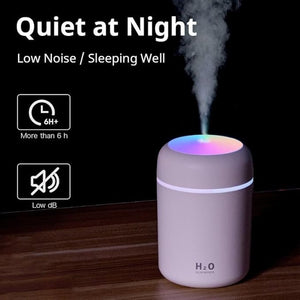
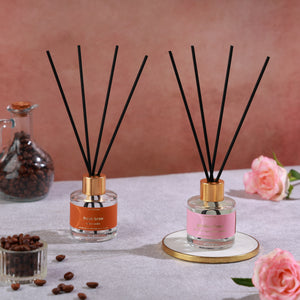
Reeds · always-on roomsFrom ₹749Shop →  Sukoon · when you want a switch₹1,899Shop →
  Hotel Collection · the scentFrom ₹299Shop →
Service, habit, then scent
First, book the service properly and ask for the right things. A standard "AC servicing" visit in most Indian cities means a filter wash and a gas check, which is not what you need. Ask specifically for the evaporator coil to be jet cleaned, the blower wheel to be cleaned, and the condensate drain line to be flushed and checked for fall along its whole run. Book it before the season starts rather than in the middle of the heat, both because you will get an appointment and because the point is to start the summer clean rather than to rescue it in June.
Second, adopt the two habits that keep it clean between services. Wash the mesh filters monthly through the cooling season — under a tap, soft brush, mild soap, dried completely before refitting — and fortnightly if you are on a dusty road. And run the unit on fan-only for the last ten minutes before switching off, so the blower dries the coil rather than leaving it soaked overnight. If your unit has a dry or self-clean mode, that is the same thing automated; find it in the manual and set it. These two habits do more for coil hygiene over a season than anything sold in a can.
Third, air the room, and then scent it. Because the AC exchanges no air at all, open two openings on opposite sides for ten minutes morning and evening — a closed room sits at roughly 0.2–0.5 air changes an hour and the unit does not shift that number. Once the machine is clean and the room is aired, a bedroom is worth giving a character. A reed diffuser from ₹749 runs on capillary action with no electricity and nothing to switch off at 2am; use four reeds rather than six in a cooled room, and place it away from the vent rather than in front of it. If you would rather have scent on demand, the Sukoon at ₹1,899 with three drops of a Hotel Collection scent from ₹299 runs for an hour before bed. Neither of them does anything to a coil, and neither should be asked to.
The order that works
One service booking, two habits, ten minutes of open windows a day — and then, last, the layer you actually buy.
| Step | What to do | When | Cost |
|---|---|---|---|
| 1. Remove the source | Jet clean the coil, clean the blower wheel, flush the condensate line and check its fall — ask for all three by name | Before anything else | ₹0 |
| 2. Move the air | Cross-ventilate ten minutes twice a day; a split AC recirculates and exchanges no outside air at all | Daily, five to ten minutes | ₹0 |
| 3. Deal with what holds it | Wash filters monthly, run fan-only for ten minutes before shutdown, use dry mode on humid nights | Weekly to monthly | ₹0 |
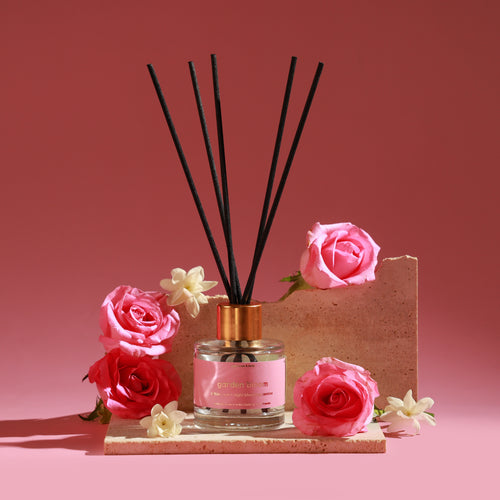
| 4. Then the always-on layer ★ | A SOSA reed diffuser — a quiet permanent background in a cooled bedroom — four reeds, placed away from the vent airflow | 50ml 6-8 weeks · 130ml 14-18 | from ₹749 |
| 5. Or the on-demand layer | Sukoon with a Hotel Collection scent — an hour of scent before bed with a switch; three drops is plenty in a sealed cooled room | Run it when you want it | ₹1,899 |
Versailles
Every year around March I get messages about bedrooms that have started smelling musty, and nearly all of them are about units that have never had a real coil clean. The service most people buy is a filter wash and a gas top-up, and it does not touch the part that smells. Ask for the coil to be jet cleaned, the blower wheel to be cleaned and the drain line to be flushed. Those three words on the booking are worth more than anything on my website.
The habit I would most like to spread is the ten-minute fan-only run before shutdown. It costs nothing, takes no attention once it becomes routine, and it means the coil spends the night dry instead of soaked. Growth needs water and time; you cannot remove the water while the unit is cooling, but you can remove the eight idle hours of it, and that is a large fraction of the problem.
And then scent the room lightly. Air-conditioned bedrooms are sealed, so whatever you put in stays in; they are cool, so evaporation from reeds is slower and steadier. Four reeds of something quiet, placed away from the vent, gives you a room that smells settled rather than perfumed. I would rather sell you a 50ml bottle you use correctly than a 130ml one you put under the airflow. A portion of every order funds a girl's classroom through Nanhi Kali.
Frequently asked questions
- My room smells fine until I switch on the AC — six tests that isolate the unit.
- Can a dirty AC filter make a clean bedroom smell bad? — a month of dust becoming a smell.
- A Mumbai bedroom that smells damp with the AC running — moisture rather than the machine.
- Fragrancing an AC bedroom after the fix — why a cool room needs less, not more.
- Brand: the SOSA founder story.
SOSA products & prices (verified August 2026): Hotel Collection water-based ultrasonic diffuser fragrance 15ml ₹299 · 100ml ₹999 · 300ml ₹1,799 · Pack of 7 (15ml, all fragrances) ₹1,799; refills 100ml from ₹999. Seven scents: The Ritz-Carlton-inspired (white tea · bergamot · cedar), Westin-inspired (white tea · aloe · cedar), 1 Hotels-inspired (cedarwood · vetiver · green leaves), The St. Regis-inspired (amber · violet · woods), Shangri-La-inspired (jasmine · green tea · white tea), Four Seasons-inspired (citrus · floral · sandalwood), W Hotels-inspired (citrus · pepper · amber). Diffusers: Boond 300ml ₹899 · Sukoon 500ml ₹1,899 · Megh 6L ₹3,499. Water-based, phthalate-free, composed to IFRA standards for home diffusion; 3–6 drops per tank. Made in India, Pune. The Hotel Collection scents are SOSA's own interpretations inspired by the world's finest hotels; all hotel names are trademarks of their respective owners and are used only to describe the scent style — SOSA is an independent Indian fragrance house, not affiliated with or endorsed by any hotel brand. Prices and availability subject to change — see the live product pages.