Why Can I Not Smell My Own Home?

Why Can I Not Smell My Own Home?

★ Everyone else can smell your house and you cannot · why that happens, and what to do about itCandle ₹379 · reed ₹749 · Boond ₹899 · Sukoon ₹1,899 · free shipping above ₹499A portion funds girl-child education
★ SOSA · find the cause, then scent the room
Receptors adapt. A constant smell stops being reported within minutes, and inside a fortnight your own home is invisible to you while every visitor still gets the level you set
★ ★ ★ ★ ★
★★★★★
"I had gone from three drops to eight over a year without noticing. A friend told me the truth and I was mortified. Back to three."
Ashwin R. Dose creep
Honest guest
★★★★★
"Came home from ten days away and smelled my own flat for the first time in years. That is the only reliable test there is."
Kavya M. The travel test
Free
★★★★★
"Was told the fix was one honest friend rather than a different product. Slightly annoying, entirely correct."
Bhavna S. Told not to buy
One honest guest
★★★★★
"Alternating two scents rather than running one forever. I notice my own house again and I use less."
Tanmay G. Two 15ml · ₹598
Alternating
★★★★★
"Visitors kept complimenting a scent I could not detect at all. Turns out that is the normal outcome, not a fault."
Reshma A. Understood the cause
Not a fault
★★★★★
"The 2H timer solved it. The room reaches a level and stops, so I am not topping up something I cannot measure."
Vinay K. Sukoon · 2H timer
₹1,899
★★★★★
"I had gone from three drops to eight over a year without noticing. A friend told me the truth and I was mortified. Back to three."
Ashwin R. Dose creep
Honest guest
★★★★★
"Came home from ten days away and smelled my own flat for the first time in years. That is the only reliable test there is."
Kavya M. The travel test
Free
★★★★★
"Was told the fix was one honest friend rather than a different product. Slightly annoying, entirely correct."
Bhavna S. Told not to buy
One honest guest
★★★★★
"Alternating two scents rather than running one forever. I notice my own house again and I use less."
Tanmay G. Two 15ml · ₹598
Alternating
★★★★★
"Visitors kept complimenting a scent I could not detect at all. Turns out that is the normal outcome, not a fault."
Reshma A. Understood the cause
Not a fault
★★★★★
"The 2H timer solved it. The room reaches a level and stops, so I am not topping up something I cannot measure."
Vinay K. Sukoon · 2H timer
₹1,899
Find the source first · two windows for twenty minutes beats any product for a closed smell Fragrance is the finishing layer. It does not remove damp, a dry drain or a loaded sofa Sukoon ₹1,899 · 270–320 sq ft · 16–18 hours per fill · three 15ml scents included


Founder Diaries · Home Fragrance · Nose-Blindness at Home
By Sonal Sahani · ISIPCA Versailles 10 min read Updated August 2026
This is a question about how a nose is built rather than about how a house smells, so it is worth answering properly. You cannot smell your own home because smell is a change-detecting sense, and a smell that has been present for six hours is not change. Two separate systems are involved and they run on different clocks: the receptor cells in the roof of your nose stop signalling within minutes, and your brain stops routing what remains to your attention over days and weeks. Neither of them is broken and neither can be repaired by anything you buy. What follows is what each one is doing, why evolution insisted on both, and the small number of things that genuinely interrupt them.
Quick answers — read this first
Two mechanisms: receptor adaptation, where the sensory cells themselves stop responding to a constant molecule within seconds to minutes; and central habituation, where the brain stops treating a familiar signal as worth reporting, over days to weeks.

Why both exist: smell is a change-detection sense. A constant carries no information about danger, food or anything else, so a nervous system that reported it would be wasting attention on the unchanging.

The useful nuance: adaptation is specific. You go blind to what you are adapted to and nothing else, which is why a visitor's perfume registers instantly in a room whose own smell you cannot assess.

Honest limit: no product returns your nose to your own home.
The short answer
Short answer: because your olfactory system has adapted to it at two levels. The receptor cells desensitise to a constant molecule within seconds to minutes, and the brain habituates to a familiar background over days to weeks. Both are normal functions of a healthy sense of smell rather than faults, and both exist because a nervous system built to detect change has to discard constants.
What breaks it, all free: leave the space entirely for twenty minutes rather than moving to another room; cross-ventilate with two openings on opposite walls for twenty minutes so the background itself changes; sleep a night elsewhere; and ask a visitor, because a second nose is not an approximation of yours but the only un-adapted instrument in the room. Coffee beans do not reset a nose, and no fragrance, spray or machine restores your perception of your own house.
Shop, for what fragrance can honestly do: hold a chosen level whether or not you can perceive it. Hotel Collection scents ₹299 for 15ml, ₹999 for 100ml, ₹1,799 for 300ml at about ₹6 per millilitre, three to six drops per tank; the Sukoon ₹1,899 with steady, 2H and 4H timers and three 15ml scents included; the Boond ₹899. Free shipping above ₹499.
Straight answer
Why can I not smell my own home when everyone else can?
1. Your receptor cells stop responding to a constant molecule. The sensory neurons in the roof of your nose fire hard when a stimulus arrives and then quieten steeply while it persists. This is adaptation, it happens over seconds to minutes, and it is a property of the cell rather than a decision.

2. Your brain then stops passing on what is left. Habituation is the slower, central half: a signal that has proved uninformative for days is no longer routed to your attention. This is the part that takes one to two weeks and the part that makes a whole house disappear.

3. Both exist because a nose is a change detector. A smell that has been in a room for six hours carries no information about danger, food or anything else. Reporting it would spend attention on the unchanging, which is the one thing a nervous system cannot afford.

4. Adaptation is specific, which is the useful part. You lose the smell you are adapted to and nothing else. A new molecule entering the same room registers immediately, which is why a visitor's perfume is perfectly obvious to you in a room whose own background you cannot detect at all.

5. What breaks it is absence, and only absence. Twenty minutes out of the building gives partial recovery, a night away gives more, several days gives you your nose back. Coffee beans do not.

6. And nothing you can buy will restore it. Adaptation happens in your cells and your brain, not in the air, so nothing added to the air undoes it. What a fragrance can do is hold a level you chose deliberately, whether or not you can still perceive it.

A portion of every order supports girl-child education through Nanhi Kali.

TL;DR: two mechanisms are at work: receptor cells desensitise to a constant molecule within minutes, and the brain habituates to a familiar background over one to two weeks. Both exist because smell detects change and a constant carries no information. Adaptation is specific, so a new smell still registers perfectly — and no product restores your nose to your own house.
SOSA Hotel Collection · from ₹299
The honest position of a fragrance company on this question
SOSA Hotel Collection · from ₹299 ₹299
There is no product on this website, or on anybody else's, that returns your own nose to your own home. Adaptation happens in your receptor cells and in your brain, not in the air, so nothing added to the air can undo it. What a fragrance can honestly claim is the opposite service: it gives a room a consistent background at a level you chose deliberately, once, while you could still perceive it — and then holds that level whether or not you can. Three to six drops per tank, per tank rather than per litre, since you are scenting the mist and not the water. 15ml ₹299, 100ml ₹999, 300ml ₹1,799 at about ₹6 per millilitre.

Two systems, two clocks

It helps to know that the thing called nose-blindness is not one process but two, stacked, running at very different speeds. The fast one lives in your nose and is measured in seconds and minutes. The slow one lives in your brain and is measured in days and weeks. They produce similar-looking results — a smell you can no longer detect — but they have different causes, different recovery times and different practical consequences, and almost every confusion about this subject comes from treating them as the same thing. Take them in order, because the order is also the order in which they happen to you every time you walk into a scented room.

1
THE FAST ONE
Receptor adaptation, measured in seconds and minutes
The roof of each nasal cavity carries a patch of tissue about the size of a small stamp, packed with sensory neurons, each of which is tuned to respond to a particular shape of molecule. When a matching molecule arrives, the cell fires hard. When it keeps arriving, the cell's response falls away steeply — within seconds for a strong stimulus, over a few minutes for a modest one — and settles at a small fraction of the original rate even though the molecule is still present at the same concentration. This is adaptation in the strict sense: a property of the sensory cell itself, driven by the signalling machinery inside it, rather than an opinion formed anywhere further up. It is the same behaviour your eyes show when you walk into a dim room and it stops being dim, and your skin shows within a minute of putting on a watch. The important consequence is that the fast system is doing this constantly, to everything, and recovers quickly. Step away from a smell for a few minutes and the receptors resensitise substantially; step away for twenty and a good deal of the response is back. This is the mechanism behind the twenty-minute walk that everybody is told to take, and it explains why the walk works and why it only half works. What it cannot explain is why a home you have lived in for a year is invisible on a Tuesday morning after eight hours of sleep, when the receptors have had every opportunity to recover. Something else is holding that door shut, and it is the second system.
2
THE SLOW ONE
Central habituation, measured in days and weeks
The second half happens after the signal has left your nose. Habituation is the nervous system deciding, over repeated exposure, that a particular pattern is not worth your attention — and it is a learned filter rather than a worn-out cell. The signal is still arriving. It is simply no longer being promoted to the level where you experience it as a smell, in the same way you stop hearing a fridge that has been humming in your kitchen for three years and hear it instantly on the night it stops. This is the mechanism that takes one to two weeks to establish for a new household background, and it is the reason a full night's sleep does not hand your own home back to you. Your receptors reset overnight; your filter did not, because the filter is not tired, it is trained. Two things follow from that and both are practically useful. The first is that undoing central habituation takes days rather than minutes, which is why several days away is qualitatively different from an afternoon out and not merely more of it. The second is that the filter is built around a specific pattern, so it does not generalise: your brain has learned to disregard the exact composition your flat has been producing, and has learned nothing whatever about anything else. That specificity is the single most useful fact in this entire subject, and it is why a room you cannot smell at all will hand you a stranger's perfume the moment they walk into it. Change the composition — swap the scent, air the room properly, cook something unusual — and the filter no longer matches, and the room becomes perceptible again for a while.
3
WHY BOTH EXIST
A change detector cannot afford to report constants
It is worth asking why a system would be built to lose track of its own surroundings, because the answer makes the whole thing feel less like a defect. Smell is, functionally, an early-warning and food-finding sense, and both of those jobs are about difference rather than about level. What matters is that the air has changed since a moment ago — that there is smoke where there was none, that something has spoiled, that a person or an animal is nearby who was not before. A smell that has been present continuously for six hours has already been evaluated, and it has already turned out not to be urgent. Continuing to report it would occupy attention that the next new thing needs, and attention is the scarcest resource a nervous system has. So the design is deliberate and it is the same design everywhere else in your senses: hold on to the changes, discard the constants, and keep the channel clear. The cost of that design is the exact complaint that brings people to this page, and it is a small price for the benefit. A nose that reported your own house at full volume all day would also be a nose with nothing left over for the smell of something burning in the next room. The system is not failing you. It is doing the job it has, and the job was never to keep you entertained by your own hallway.
The comparison I find settles it for most people: you are not deaf to your fridge because your ears have broken. You are not being told about it because nothing about it has changed since yesterday.

What it does to an ordinary day

The same two mechanisms produce a set of everyday effects that most people have noticed without ever connecting them to one another. The third column gives the rough timescale and the fourth is what each one is actually telling you, including the two that are useful rather than merely inconvenient — because a system that discards constants is also a system that hands you anything new with perfect clarity.

Adaptation in daily life
Six familiar things, one mechanism underneath them
What you notice Which system is doing it Roughly how long it takes What it tells you Cost to test
You cannot smell your own home ★ Both — receptors on arrival, then the central filter over a fortnight One to two weeks for a new background to vanish completely The scent has become the smell of the place, which is what a background is for. It is not a fault and it is not fading ₹0
You cannot smell your own perfume after twenty minutes Mostly receptor adaptation, at a high concentration close to your own nose Twenty to thirty minutes for a strong application to drop below notice Nothing has faded. Everybody else in the lift is still receiving it exactly as you applied it ₹0
You cannot smell your own cooking while you cook Receptor adaptation, against a rising stimulus you are standing inside Minutes, and it deepens across the whole session The cook is always the last person in the flat to know that the tadka has reached the bedroom ₹0
A visitor's perfume registers instantly Neither — this is a new pattern, and adaptation is specific Immediate Your nose is working perfectly. It has simply stopped reporting one particular composition ₹0
Your own house smells odd after a holiday Central habituation decaying, plus a flat that has accumulated while shut Three days or more away for a genuine reset The most accurate reading of your own home you will get in a year, and it lasts about thirty seconds ₹0
A scent becomes noticeable again when you change it The learned filter no longer matches the pattern Immediately on the day you switch Why two bottles alternated by the fortnight is more useful than one bottle run forever ₹598 for two 15ml
Shop this guide
What fragrance can honestly do here
The SOSA principle
A nose is a change detector. A smell that has been in the room for six hours carries no information — so the system stops spending attention on it.
Which is also why it hands you a stranger's perfume instantly, in a room whose own background you cannot detect at all. Adaptation is specific, not general.

What breaks it, what does not, and what fragrance can honestly do

Start with what genuinely interrupts adaptation, because the list is short and every item on it is free. Absence is the only real lever. Twenty minutes out of the building resensitises the receptors substantially and gives you a muted but real reading; a night spent elsewhere adds the beginning of central recovery on top of that; three days or more away undoes the learned filter as well and hands you your own home as a stranger would meet it. Those are three different qualities of reading rather than three sizes of the same one, and it is worth knowing which you are taking. Changing the pattern is the second lever: a filter trained on one composition does not match another, so swapping to a different scent makes your own house perceptible again for a while, and so does a genuine air exchange — two openings on opposite or adjacent walls for twenty minutes, which changes the background rather than merely stirring it. Now the things that do not work, since they cost people time and confidence. Coffee beans do not reset a nose; the jar on a perfume counter is a ritual rather than a mechanism, and sniffing a strong new smell mostly adds a second adaptation to the first. Sniffing your own sleeve tells you about your sleeve. Holding your breath and taking a deliberate deep inhale does nothing that ordinary breathing does not, because the receptors are already saturated. And no spray, machine, filter or ioniser restores your perception of a scent you live in, for the plain reason that the change happened in your cells and your brain rather than in the air of your flat.

Then the second nose, which is the instrument this whole subject actually turns on. A visitor is not an approximation of your own judgement. In your own home they are the only un-adapted measuring device available, and their reading is better than anything you can produce yourself. Use them properly: ask in the first minute, before their receptors begin discounting your background too, and ask for a description rather than a verdict. Somebody who visits once a month is a better instrument than somebody who visits twice a week, because frequent visitors partially adapt across visits. And before you take any reading at all, deal with the things that sit underneath a household smell and get blamed on fragrance. Pour a mug of water down every floor drain, basin and unused shower, since the U-bend water seal evaporates in two to four weeks of disuse and the drain then vents sewer gas into the room. Wash what is washable — cushion covers, throws, bedlinen, curtains — because textiles adsorb cooking aerosol and body oils and re-release them for weeks, which is why a room can smell of dinner long after the air has been changed. Leave the washing machine door and detergent drawer open between washes and wipe the rubber gasket dry. None of these is a fragrance decision and all of them change what a guest smells at your door. Fragrance is a finishing layer on air that is already clean and moving. Over a source it does not help; it gives the room two smells rather than one, and the household nose that cannot detect either is the least qualified to judge the result.

Then what a fragrance can honestly claim in a situation like this, which is narrower than most of the category admits and still worth having. It cannot give you back your own house. It can hold a consistent background at a level you chose deliberately, on a day when you could still perceive it, and keep holding it after you cannot. That is the entire proposition, and everything practical follows from taking it seriously. Choose the dose in the first week rather than the fifth, because the first week is when your judgement is still working: the Hotel Collection is composed at three to six drops per tank, and the dose is per tank rather than per litre, since you are scenting the mist and not the water — so a 300ml Boond at ₹899 takes the same drops as a 500ml Sukoon at ₹1,899, and the larger machine buys hours and coverage rather than intensity. Then write the number down and stop revising it. Prefer a finite run to a standing one: the Sukoon gives steady, 2H and 4H timers on a 500ml BPA-free tank rated for 270–320 sq ft, 16–18 hours per fill on low at 30–50 ml/h against 9–12 on high, a 2.4MHz cool-mist plate, a remote, auto shut-off and three 15ml scents of your choice, and a room that rises and falls is a room a nose can still meet. And use the specificity of adaptation deliberately by owning two scents rather than one, at ₹598 for two 15ml, alternated by the fortnight, so the filter never has time to finish learning either. On the constraints: the Hotel Collection is water-based and runs in the Sukoon, the Boond and the Megh at ₹3,499 only, not in a reed diffuser — a separate alcohol-free line with its own scents — and not in the waterless Vaayu at ₹11,999, which takes its own undiluted oil. Rinse the tank between scents and never substitute raw essential or carrier oils, which clog the 2.4MHz plate.

The change did not happen in the air of your flat. It happened in your receptor cells and in your brain — which is why nothing added to the air can undo it.
— Sonal Sahani, SOSA

The SOSA edit

A short table, because most of what helps here is knowledge rather than purchasing. The first four rows cost nothing, the fifth is a machine and the last states the limit of what any fragrance company can honestly offer a reader asking this particular question.

The SOSA edit
Working with a nose that discards constants
Step What it is What it actually does Cost
1. Leave, and come back ★ Twenty minutes out of the building for a partial reading, a night away for a better one, three days for a real one Resensitises receptors quickly and lets the central filter decay slowly. The only lever that genuinely works ₹0
2. Change the pattern Swap the scent, or exchange the air properly with two openings on opposite walls for twenty minutes A filter trained on one composition does not match another, so the room becomes perceptible again ₹0
3. Deal with sources first A mug of water down every trap, washable fabrics washed, the washing machine left open between washes Removes the things a fragrance would otherwise be layered over, which is the commonest cause of a room with two smells ₹0
4. Borrow a nose One visitor, asked in the first minute, for a description rather than a verdict Supplies the only un-adapted reading available in your own home. Nothing on this site replaces it ₹0
5. Two 15ml scents and a timer ₹598 for two bottles alternated by the fortnight, and a machine with steady/2H/4H settings Uses the specificity of adaptation deliberately, and replaces an open-ended level with a repeatable one ₹598 / ₹1,899
The honest limit: no product restores your own nose Adaptation is a change in your receptor cells and your brain, not in the air of the room Said plainly. Anything sold as curing nose-blindness is describing a mechanism that does not exist
Honest notes for buyers: fragrance is the last step, never the first. It layers on air that is already clean and moving, and it will not remove a source — not damp, not a dry drain trap, not a loaded sofa, not a filter that needs washing. Deal with the cause, change the air, then scent the room. On timing: a candle puts scent into a room in fifteen to twenty minutes and a Sukoon reaches a steady level in about twenty, while a reed diffuser needs a day to three days before it is doing its job — the wrong buy for a deadline and the right buy for a room you want to hold one level for months. SOSA does not make a room or linen spray for the home; the sprays in the range are car perfumes. A cool-mist ultrasonic adds 30–50 ml of water an hour to the air, so it is the wrong machine for a room you are trying to dry out. The Hotel Collection is water-based and runs in the Sukoon, Boond and Megh only — not in reeds and not in the waterless Vaayu. Reed diffusers are a separate alcohol-free line with their own scents. Candles must be attended and put out. The Hotel Collection scents are SOSA's own interpretations inspired by the world's finest hotels; SOSA is an independent Indian fragrance house, not affiliated with or endorsed by any hotel brand. A portion of every order supports girl-child education through Nanhi Kali.
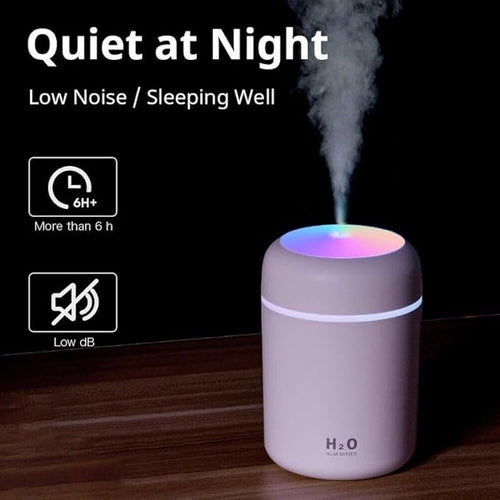
SOSA Boond · 300ml
A second machine, and what specificity buys you
SOSA Boond · 300ml ₹899
A 300ml ultrasonic for a bedroom, a study or a hall, taking the same water-based Hotel Collection bottles at the same three to six drops per tank. The useful fact here is that adaptation is narrow rather than general: you go blind to the composition you live in and to nothing else, which is why a visitor's perfume registers instantly in a room whose own smell you cannot assess at all. Two machines running two different scents in two rooms means every doorway in the flat is a small reset, and you keep some sense of what your own home is doing. It is also less mist per hour than a 500ml machine, which for most bedrooms is the right direction.
SS
ISIPCA
Versailles
A note from Sonal

I like this question more than almost any other I am sent, because the answer is genuinely interesting and because it is the one place where the biology and the commerce point in opposite directions. The honest answer to why you cannot smell your own home is that your nervous system has correctly decided your home is not news, and there is nothing in my catalogue that argues with that. Receptors quieten in minutes. The brain stops forwarding the signal over a fortnight. Both are healthy functions of a working sense of smell, and a perfumer walking into her own flat is as blind to it as anybody else.

What I try to do instead is design around it. If you will only be able to judge a scent for the first week or two, then the first week is when the decision has to be made and written down, and everything afterwards should be built to hold that decision rather than to invite revision. That is why I care so much about timers, which is not an obvious thing for somebody who sells fragrance to care about, and why I keep suggesting two 15ml bottles at ₹598 instead of one larger one. Two scents alternated by the fortnight means the filter never finishes forming, and you get to keep smelling something you paid for. It is a small trick played on your own brain, and it is the only one that works.

Everything is made and supported from Pune, and a part of every order funds girl-child education through Nanhi Kali. You get a home that smells like somewhere you chose; a girl gets a classroom. That equation has always felt right to me.

Frequently asked questions

Why can I not smell my own home but I can smell other people's?
Because adaptation is specific to the composition you have been exposed to. Your receptors and your central filter have both tuned themselves out of your own household background and have learned nothing about anybody else's, so somebody else's flat arrives as a completely new pattern and registers normally.
Is nose-blindness a sign that something is wrong with my sense of smell?
No. It is a sign that your sense of smell is working as designed. Receptor cells stop signalling a constant stimulus and the brain stops forwarding a familiar one, because a smell that has not changed for hours carries no information. A nose that reported constants would have nothing left for new events.
Do coffee beans reset your nose between smells?
Not in any mechanical sense. Sniffing a strong new smell mostly adds a second adaptation to the first. The only reliable reset is time away from the smell you are adapted to: minutes to twenty minutes for receptor recovery, and days for the central filter to decay.
Why can I smell a visitor's perfume in a room I cannot smell at all?
Because their perfume is a new pattern and adaptation does not generalise. Your filter is built around the exact composition your flat produces, so anything outside it arrives at full strength. This is the clearest everyday demonstration that the nose itself is fine.
Is there any product that lets me smell my own home again?
No, and anything advertised that way is describing a mechanism that does not exist. The change is in your cells and your brain rather than in the air. What a fragrance can do is hold a level you set deliberately while you could still perceive it, which is a different and more modest claim.
The mechanism, and the modest claim
Receptors quieten in minutesthe brain stops listening over a fortnight
Hotel Collection scents are ₹299 for 15ml, ₹999 for 100ml and ₹1,799 for 300ml at about ₹6 per millilitre, at three to six drops per tank; two 15ml bottles alternated is ₹598. The Sukoon is ₹1,899 for 270–320 sq ft with steady, 2H and 4H timers and three 15ml scents of your choice included, and the Boond is ₹899 for a second room. Free shipping above ₹499, and a portion of every order supports girl-child education through Nanhi Kali.
Shop the Hotel Collection → See the Sukoon · ₹1,899
Continue the read
More from SOSA
Editorial standards & sources
About this guide: Written by Sonal Sahani, ISIPCA Versailles-trained founder and perfumer at SOSA Home & Body, on the two mechanisms behind nose-blindness — receptor adaptation in the olfactory epithelium over seconds and minutes, and central habituation in the brain over days and weeks — why a change-detecting sense has to discard constants, why adaptation is specific rather than general, and why no product returns a person's nose to their own house.

Facts verified August 2026: Diagnostic facts used in this guide: a closed room accumulates what it cannot exchange, so cross-ventilation needs two openings rather than one; a drain's U-bend water seal evaporates in roughly two to four weeks of disuse and then admits sewer gas, which is corrected by pouring water down the drain; microbial growth in fabric and on surfaces accelerates above about 60% relative humidity, and Indian monsoon indoor humidity commonly runs 80–95%, which is the one situation where ventilating on a wet day can import moisture rather than remove it; an air-conditioner's cold, wet evaporator coil and filter grow biofilm that is blown into the room on start-up; textiles adsorb cooking aerosol and body oils and re-release them for weeks; and olfactory adaptation makes a constant household smell undetectable to its residents within about a fortnight while visitors still perceive it. Timings: a scented candle scents a normal room in roughly 15–20 minutes, a Sukoon ultrasonic diffuser reaches a steady level in about 20 minutes from cold, and a reed diffuser needs roughly 24–72 hours. SOSA products and prices: Sukoon 500ml ₹1,899 (270–320 sq ft, 16–18h on low, 9–12h high, 30–50 ml/h, 2.4MHz cool mist, remote, steady/2H/4H timers, BPA-free, auto shut-off, includes three 15ml Hotel Collection scents of your choice); Boond 300ml ₹899; Megh 6-litre ₹3,499; waterless Vaayu ₹11,999 (up to 1000m³); Aangan ₹25,999. Hotel Collection water-based fragrance 15ml ₹299, 100ml ₹999, 300ml ₹1,799, Pack of 7 at 15ml ₹1,799; dose 3–6 drops per tank. Reed diffusers (separate alcohol-free line): Morning Freshness from ₹749, Garden Bloom and Evening Calm from ₹799, Fresh Brew and Mountain Breeze from ₹849; 130ml from ₹1,249; duos from ₹1,498; 300ml refills ₹2,399. Scented candles: Bookshop 80g ₹379, Amber Rose 130g ₹599 and 220g ₹799, Smoked Oudh 130g ₹449, ceramic jar candles ₹949, Pure Calm wax melt set ₹854. Free shipping above ₹499. SOSA does not make a room or linen spray for the home. The Hotel Collection scents are SOSA's own interpretations; SOSA is not affiliated with or endorsed by any hotel brand. Prices subject to change — see the live product pages.
Torna al blog