

- The direct answer
- Why the pre-counter register has to argue for nothing
- The three qualities that register actually needs
- What customers smell before the counter, by layout
- Getting the handoff right, zone by zone
- What to use before the counter, if anything
- A note from Sonal
- Questions about the pre-counter register
2. This only applies where a zone genuinely qualifies in the first place. If the entrance shares its air with the dining room — no real door, or a door undone by air conditioning or extraction — there is no separate pre-counter register to design; it's already the same air as the counter, and the answer is not to fragrance it at all.
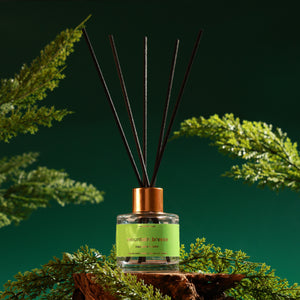
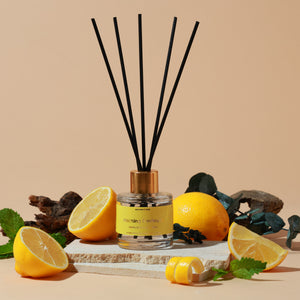
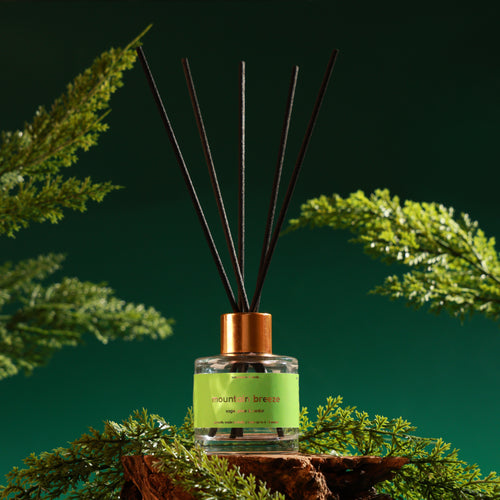
3. Where a zone does qualify, the register should be clean, dry and low — citrus, green or light wood, never warm, sweet or bakery-adjacent. Mountain Breeze and Morning Freshness sit at the right end of this; anything gourmand, and certainly anything coffee-adjacent, sits at the wrong end regardless of how well it's formulated.
4. Intensity matters more here than in almost any other zone in a café. A fragrance a customer can name while walking toward the counter has already done more than its job — the target is a register so light it registers as freshness rather than as a specific, identifiable scent.
5. The best outcome is a handoff, not a contrast. Done well, a customer crosses from a nearly blank entrance into a room where coffee is the first thing their nose actually notices — not a trade between two competing smells, but a clean transition from very little to something specific.
Vaayu's adjustable intensity exists partly for this — the setting that reads correctly in a showroom is usually too strong for a doorway that leads straight to a coffee counter, and turning it down, not up, is the right instinct here.
Why the pre-counter register has to argue for nothing
Most fragrance decisions in a home or an office are made by asking what a space should smell like on its own terms — what character suits the room, what personality it should carry. The pre-counter zone of a café can't be designed that way, because it isn't judged on its own terms. It's judged in relation to what happens next, which is coffee — a genuinely complex, specific, highly recognisable aroma that the customer is seconds away from meeting properly. Anything placed in the air before that moment isn't competing for its own impression; it's setting up the comparison the coffee then has to win.
A fragrance with real character — even a good one, even one with no edible note at all — still gives the customer's nose something specific to register before the coffee does. That's not neutral. A customer who notices citrus, or pine, or anything nameable in the doorway has already spent part of their attention on a smell that isn't the one the café is built around, and the coffee then has to displace that impression rather than simply arrive into it. The honest goal isn't a pleasant competing scent; it's the absence of a competing scent, achieved through restraint rather than through choosing a nicer register.
This is different from the entrance question this cluster has already answered — whether a boundary genuinely exists, and whether it holds. Once that's settled, a second, quieter question remains: given that some fragrance can now sit in that qualifying air, how much of it should actually be there. The answer, consistently, is less than feels satisfying to whoever is setting the intensity dial, because the measure of success here isn't how good the entrance smells in isolation — it's how little the customer can say about it once they've reached the counter. It helps to think of the pre-counter zone as a short, quiet handover rather than a room in its own right: nobody designs the last few steps of a corridor to be the most memorable part of a building, and the same logic applies here — the fragrance decision that matters most in this zone is usually the decision to keep something back, not the decision about which register to choose in the first place.
The three qualities the pre-counter register actually needs
 Morning Freshness₹749Citrus, green tea, light wood, cedar, sage and similar dry, non-edible notes create no comparison risk; vanilla, caramel, bakery, honey, warm spice and anything coffee-adjacent create exactly the comparison this whole cluster warns against, this close to where coffee is actually served.
What customers smell before the counter, by layout
The same question, answered across the layouts this cluster's air-boundary test actually produces — because the honest answer changes completely depending on whether a qualifying zone exists at all.
| Layout | Does a qualifying zone exist? | What should be in the air | What it costs |
| Open-fronted or archway entrance, no real door | No | Nothing added — this is already dining-room air and should be treated that way | ₹0 |
| Door exists but fails the air-movement check (AC or extraction pulling inward) | No, in practice | Nothing added until the airflow is fixed — a fragrance here shares the same air as the counter | ₹0 until the boundary is corrected |
| Small vestibule that passes the full boundary test | Yes | A light, clean, non-edible register at low intensity | Reed diffuser · ₹749–₹849 |
| Larger separated lobby or ground-floor entry that passes the test | Yes | The same clean register, held steady through service | Sukoon · ₹1,899 |
| Several qualifying zones — entrance, washroom, retail — needing one consistent, restrained register | Yes | A single low-intensity register, scheduled to opening hours | Vaayu · ₹11,999 |
| In every row where a zone qualifies, the register is the same idea at a different scale — clean, dry, non-edible and quiet. The variable that actually changes the recommendation is never taste; it's whether the zone is genuinely separated at all. | |||
Mountain Breeze · dry, quiet, non-edible₹849Shop → 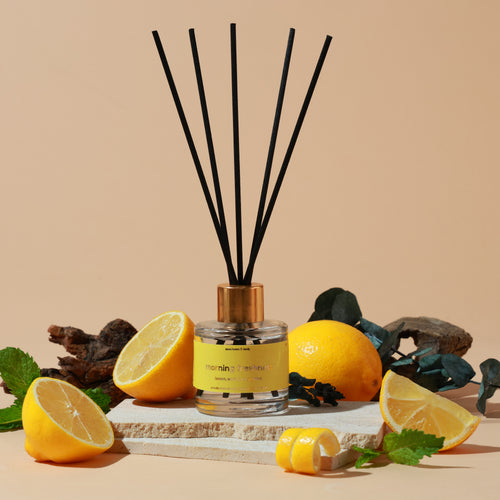 Morning Freshness · bright, brief, forgettable on purpose₹749Shop →
  Vaayu · intensity turned down, not up₹11,999Shop →
Getting the handoff right, zone by zone
Never treat the pre-counter zone as an opportunity to establish a second signature scent for the café — that idea belongs, if anywhere, to a genuinely separate arrival experience discussed elsewhere in this cluster, not to the last few steps before a customer reaches coffee. The closer the air gets to the counter, the less character it should carry, not more.
Sometimes an entrance qualifies for fragrance but the vestibule is short — a metre or two rather than a proper lobby. In that case, intensity should drop further still, and a run window that covers only the hours the boundary genuinely holds is more useful than a stronger fragrance trying to compensate for a shorter distance.
Usually, once the zone is confirmed and the register chosen correctly, the actual dosage question answers itself: set the intensity lower than feels necessary, check it by standing at the threshold and walking toward the counter yourself, and turn it down again if you can still name the smell by the time you reach it. This is one of the few places in a café where the correct instinct really is to under-do it, and where a setting that feels almost too quiet on installation day is usually about right once real customers, real coffee aroma and a running espresso machine are all part of the same air.
What to use before the counter, if anything
Matched to zones that have already passed this cluster's air-boundary test — nothing here is intended for a dining room, a counter, or an entrance that shares its air with either.
| Route | Premises | Why | What it costs |
| Nothing added | No qualifying boundary, or one that fails the air-movement check | The zone already shares its air with the counter, so there is no separate register to design | ₹0 |
| Reed diffuser, Mountain Breeze, light format | A small vestibule under roughly 150 sq ft | A dry, non-edible register that clears quickly and never persists into the dining room | ₹749 |
| Reed diffuser, Morning Freshness, light format | A small entrance wanting a brighter, citrus-led register | Clean and brief, with nothing edible for a customer's nose to register on the way in | ₹749 |
| Sukoon ultrasonic, low and steady | A larger separated lobby, roughly 270–320 sq ft | Holds a consistent, restrained register through service without wall mounting | ₹1,899 |
| Vaayu, lowest intensity, opening-hours run window | Several qualifying zones needing one consistent, held-back register | Adjustable intensity turned down rather than up, scheduled only to hours the boundary holds | ₹11,999 |
Owners often ask me to make their entrance smell 'a bit like the café, but lighter' — a reasonable-sounding brief that usually means, in practice, a diluted version of an edible or coffee-adjacent note. I tell them the same thing every time: the entrance isn't there to preview the café. It's there to get out of the coffee's way.
The setting I turn down most often isn't the wrong fragrance — it's the right fragrance, run a little too generously. A register that would be perfectly judged in a boutique or a spa is usually one or two steps too loud for a doorway that leads to a coffee counter, and the fix is almost always the intensity dial, not the scent itself.
I ask owners to do one simple test before they settle on a setting: walk from the door to the counter yourself, at a normal pace, and notice whether you could describe the smell by the time you arrive. If you can, it's too strong — not wrong, necessarily, just louder than this particular stretch of the café can afford.
Questions about the pre-counter register
- Should the Entrance of a Premium Café Have a Signature Scent? — the broader question this page's restraint principle answers a narrower part of.
- Is the Smell of Fresh Coffee Enough for a Café? — the case for letting coffee do all the work, which this page's handoff depends on.
- How Do I Make My Café Smell Premium Without Covering the Natural Coffee Aroma? — the wider premium-without-competing brief this page's answer sits inside.
- How Do I Create a Premium Arrival Experience for a Café? — the fuller arrival picture, of which scent restraint is one part.
- Brand: the SOSA founder story.
SOSA products & prices (verified September 2026): Reed diffusers 50ml ₹749–₹849 (to 150 sq ft, 6–8 weeks at six reeds) · 130ml ₹1,249–₹1,349 (above 150 sq ft, 14–18 weeks) · reed refill 300ml ₹2,399. Ultrasonic: Boond ₹899 (~150 sq ft) · Sukoon ₹1,899 (270–320 sq ft, ships with three 15ml Hotel Collection fragrances) · Megh ₹3,499 (6L tank, ~100 hrs runtime, ~215 sq ft — a runtime machine, not a coverage upgrade). Waterless cold-air: Safar ₹3,999 (no published coverage figure) · Vaayu ₹11,999 (up to 1000 m³, roughly 2,000–3,000 sq ft; 400ml tank lasting about 90+ days; app and onboard control, 1h/4h/8h/24h run windows, adjustable intensity, key-lock, under 38 dB, freestanding or wall/HVAC mount, 5W, CE/RoHS/SGS) · Aangan ₹25,999 (8,000–10,000 sq ft). Hotel Collection water-based fragrance 15ml ₹299 · 100ml ₹999 · 300ml ₹1,799 is for ultrasonic machines; reed oil and Hotel Collection are not interchangeable. Reed diffusers are alcohol-free, phthalate-free, paraben-free, IFRA-compliant and low VOC, handmade in small batches in Pune. Every purchase funds a girl's education through Nanhi Kali. Prices and availability subject to change — see the live product pages.