
What Actually Makes a Fragrance Read as Expensive Rather Than Just Strong?

What Actually Makes a Fragrance Read as Expensive Rather Than Just Strong?


★ Smoothness · no scratchy top · a dry-down that holds its shapeAdaa ₹379 · Ameeri ₹385 · Nawaab ₹399 · titan solid ₹500A portion funds girl-child education
★ Quiet luxury · what the nose is really grading
Your nose grades texture before it grades volume. Expensive is a texture word.
Loudness and quality are two separate dials. A fragrance can be very loud and very rough, or very quiet and flawless, and the nose has no trouble telling them apart.
The core distinction
Two separate dials
The first thing a nose grades is the top five minutes. A scratchy, thin, slightly screeching opening is the single most reliable tell of a cheap formula.
Where cheapness shows first
The first five minutes
Second tell: a gap. Poor formulas have a hole between the top notes evaporating and the base arriving, and you smell almost nothing for twenty minutes.
The structural tell
Mind the gap
Third tell: shape at hour four. An expensive dry-down is still recognisably the same fragrance. A cheap one has flattened into generic sweetness.
The longevity tell
Shape at hour four
In the SOSA range the woody direction runs through cedarwood and white musk in Adaa, Indian sandalwood in Ameeri, and Mysore sandalwood with white royal oud in Nawaab.
Where the woods are
Three routes
An attar persists rather than projects. If you have been reading projection as quality, an oil will confuse you for the first week and then convert you or not.
The honest caveat
Persists, not projects
Loudness and quality are two separate dials. A fragrance can be very loud and very rough, or very quiet and flawless, and the nose has no trouble telling them apart.
The core distinction
Two separate dials
The first thing a nose grades is the top five minutes. A scratchy, thin, slightly screeching opening is the single most reliable tell of a cheap formula.
Where cheapness shows first
The first five minutes
Second tell: a gap. Poor formulas have a hole between the top notes evaporating and the base arriving, and you smell almost nothing for twenty minutes.
The structural tell
Mind the gap
Third tell: shape at hour four. An expensive dry-down is still recognisably the same fragrance. A cheap one has flattened into generic sweetness.
The longevity tell
Shape at hour four
In the SOSA range the woody direction runs through cedarwood and white musk in Adaa, Indian sandalwood in Ameeri, and Mysore sandalwood with white royal oud in Nawaab.
Where the woods are
Three routes
An attar persists rather than projects. If you have been reading projection as quality, an oil will confuse you for the first week and then convert you or not.
The honest caveat
Persists, not projects
✓ Four woods, not one — cedar, sandalwood, oud and vetiver behave differently ✓ Alcohol-free, DPG-free, dab applicator · 3ml from ₹379 · 6–8 hours on skin ✓ We will tell you when SOSA does not make the wood you are asking for


Founder Diaries · Woody fragrance
By Sonal Sahani · ISIPCA Versailles 11 min read Updated September 2026
Start with the thing nobody says out loud: most people have been using volume as a proxy for quality for their entire fragrance-buying life, and it is a bad proxy. Loudness is cheap to manufacture. A formula can be pushed to fill a lift with about four inexpensive materials and a generous dose of solvent, and it will be noticed from the other end of a corridor. What it will not do is survive close inspection. When somebody smells you at conversation distance and thinks that smells expensive, they are not grading how far it reached. They are grading its texture — and texture is made of raw material quality and nothing else.
Quick answers — read this first
What "expensive" actually means to a nose: smoothness. No scratch, no thinness, no chemical edge in the first five minutes.

Second tell: no gap. The fragrance hands off from top to heart to base without a dead patch where you can smell almost nothing.

Third tell: shape at hour four. An expensive dry-down is still itself. A cheap one has collapsed into generic sweetness.

What it is not: projection. Strength is a separate dial and it is the cheaper one to turn.
The short answer
Short answer: A fragrance reads as expensive when it is smooth, continuous and stable — no scratchy or screeching top, no dead gap between phases, and a dry-down that still has the shape of the original composition after four or five hours. Strength has almost nothing to do with it. Volume is the cheapest property in perfumery to buy; smoothness is the most expensive.
The mechanism: Cheap aroma materials are less pure. They carry trace by-products from synthesis or from distillation that read to the nose as harshness — a thin metallic edge, a plasticky ring, a sharpness behind the intended smell. In a loud composition those edges are masked by sheer volume. In a quiet one they are all you can hear.
Where SOSA sits: In the woody direction the range runs Adaa (cedarwood and white musk under bergamot and green cardamom), Ameeri (Taif rose over Indian sandalwood) and Nawaab (white royal oud, Mysore sandalwood, Kashmir saffron). All three are attars: they persist for six to eight hours rather than projecting. If your definition of expensive includes "noticed across a room", an eau de parfum does that and we will not pretend otherwise.
Straight answer
What is a nose actually detecting when a fragrance smells expensive rather than just strong?
1. Smoothness in the first five minutes — the single most reliable tell. Put any two fragrances on paper and smell them at thirty seconds. The cheaper one will almost always have an edge on it: a thin, bright, slightly screeching quality sitting just behind the intended smell, like a note played very slightly sharp. That edge is not a design decision. It is impurity — trace residues from synthesis, or the harsher fractions of a natural that a better supplier would have removed. Higher-grade materials are more rigorously purified and rectified, and the difference you pay for is almost entirely the absence of things, not the presence of them. This is why "smells expensive" is a texture judgement rather than a smell judgement, and why people reach for words like smooth, rounded, seamless and polished when they try to describe it.

2. Continuity — no gap between the phases. A fragrance is a relay race between volatilities. Light molecules leave first, medium ones next, heavy ones last, and the craft is in making the handovers invisible. Cheap formulas are built at the two ends: a loud citrus-aromatic top to make the sale in the shop, a heavy sweet base to give a longevity claim, and very little in the middle holding them together. The result is a hole. Twenty or thirty minutes in, the top has gone, the base has not properly arrived, and the wearer smells almost nothing. An expensive composition has no such hole, because the middle is where the money went — and the middle is the part that never appears on the marketing.

3. Shape at hour four — does it still know what it is? This is the test that costs nothing and settles almost every argument. Wear the fragrance, forget about it, and come back at hour four. A good composition is recognisably still itself: quieter, warmer, closer to the skin, but with the same identity. A weak one has collapsed into an anonymous sweet-woody residue that could have come out of any bottle on the shelf. Collapse is what cheap smells like in the long run, and it happens because a handful of inexpensive, very tenacious base materials outlive everything above them and end up being the whole fragrance.

4. Coherence — one smell, not a list of notes. There is a difference between a fragrance that smells of bergamot and cardamom and jasmine and cedar, and one that smells of a single thing you cannot take apart. The second is harder to make and is almost always read as more expensive. It requires materials that blend — that share enough of each other's facets to dissolve into one impression rather than sitting in adjacent lanes. Cheaper materials tend to be more one-dimensional, so they stack rather than merge, and the wearer perceives a list.

5. And what is not on the list: projection. Nowhere in any of the above did strength appear. A fragrance can be enormous and rough, or barely there and flawless. Volume is bought with solvent, concentration and a few aggressive high-impact molecules, all of which are cheap. This matters directly if you are considering an attar, because an attar has no alcohol to launch it: a SOSA attar sits close to the skin for six to eight hours instead of filling a room. If projection is the part of expensiveness you actually want, keep your eau de parfum and we will say so plainly.
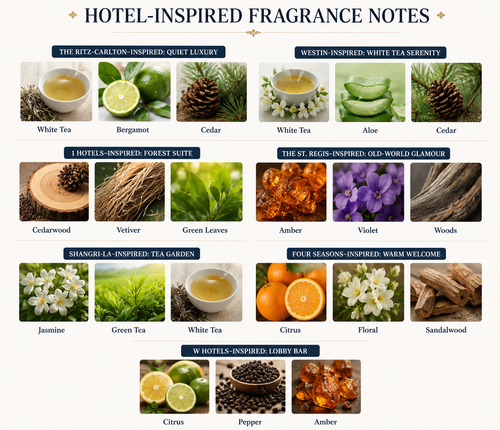
TL;DR: the nose grades quality as texture, not volume. Smoothness in the first five minutes, no dead gap between the phases, a dry-down that still has its shape at hour four, and an impression of one smell rather than a list of notes. Strength is a separate dial and the cheaper one to turn — which is why a quiet attar like Adaa (from ₹379) can read as more expensive than something you can smell from the lift.
SOSA Nawaab attar
Where the material budget went
SOSA Nawaab From ₹399
Nawaab is the clearest demonstration in the range of what raw material grade does to a smell. White royal oud, Mysore sandalwood and Kashmir saffron are the three most expensive things SOSA buys, and the audible result is not loudness — Nawaab is not the loudest attar we make — but smoothness and depth at the fourth hour, which is where cheap woody compositions have already flattened out. 3ml ₹399 · 6ml ₹699 · 12ml ₹1,199, alcohol-free, DPG-free, 6–8 hours on skin, dab applicator.

Why we all learned to read volume as value

The habit is not stupid; it was trained into us by how fragrance is sold. A retail counter is a hostile environment for smelling anything — bright, busy, saturated with competing scent, and offering you roughly ninety seconds with a paper strip. In ninety seconds the only property you can reliably perceive is intensity. Smoothness needs three minutes. Continuity needs half an hour. Shape needs four hours and a life to live while you wait. So the entire industry optimised for the one variable the point of sale can actually transmit, and two generations of buyers learned that the fragrance which reached furthest was the better one.

The reversal happened quietly and is now most of what people mean by quiet luxury in fragrance: a preference for things that reward proximity over things that announce. It is the same instinct that prefers an unbranded coat with good seams to a logo. But it comes with a trap. Quiet is not automatically good, and a great many quiet fragrances are simply weak ones. Low projection with a scratchy opening and a four-hour collapse is not restraint; it is a thin formula. The four tests above exist precisely so that you can tell the difference, because the market is now full of things sold on understatement that have nothing underneath it.

The three decisions if you want your fragrance to read expensive

1
DECISION ONE · WHICH SIGNAL
Decide whether you want to be noticed or inspected
SOSA attarsFour attarsFrom ₹379These are different goals and they pull towards different products. Being noticed is a projection problem: you want alcohol, you want volume, you want an eau de parfum and you should buy one. Being inspected is a texture problem: you want the person who leans in at a meeting or sits beside you at dinner to find something smooth and considered. An attar is built for the second job and is genuinely bad at the first. Six to eight hours, close to the skin, no alcohol to throw it outward. Decide which of the two you are actually shopping for before you spend anything, because no amount of dabbing turns an oil into a room-filler.
Quick test: think of the last time you noticed someone smelling expensive. Were you across a room, or within a metre? That is your answer.
2
DECISION TWO · WHICH TEXTURE
Dry-smooth or creamy-smooth — they are not the same polish
Smoothness has two directions in the woody family and people who mix them up buy the wrong thing. Dry-smooth is cool, pale and unsweet: cedarwood and white musk, the texture of good paper or a pressed shirt. That is Adaa, where cedar and white musk sit in the base under bergamot, green cardamom, neroli, jasmine sambac and magnolia. Creamy-smooth is round, milky and warm: sandalwood, the texture of polished wood rather than cut wood. That is Ameeri beside Taif rose, and Nawaab beside oud and saffron. Both read as expensive. They read as expensive in opposite ways.
Note the gap: if what you want is dry cedar with nothing in front of it, no SOSA attar leads with cedar and no phrasing changes that.
3
DECISION THREE · WHAT YOU WILL PAY FOR
Understand what the money buys in an oil
In an alcohol fragrance, a large share of what is in the bottle is ethanol. In an attar there is none — the concentrate is carried on sandalwood oil and jojoba, so proportionally more of what you are buying is the smell itself. This is why a 3ml attar at ₹379 is not a small bottle of perfume but a different commercial object, and why the material grade shows so nakedly. There is nothing to hide behind: no alcohol flash, no projection, no loud opening. Whatever is in the formula is what you get, at close range, for six to eight hours. That is a good deal when the materials are good and a brutal one when they are not.

The four woods, and which of them can be made to read expensive

"Expensive" lands differently on each of the four woods, and three of the four have a cheap version that is extremely common. Read across, and read the third column, which is where we say what SOSA does not have.

The woody family
Four woods, four different ways of sounding costly
The wood What it actually smells like Where it is in the SOSA range
Sandalwood (creamy wood) ★ creamy, milky, soft-edged, faintly lactonic — the opposite of dry; it rounds everything it is put beside and is the reason a woody fragrance can feel comforting rather than austere Indian sandalwood in Ameeri, beside Taif rose; and Mysore sandalwood in Nawaab, beside white royal oud and Kashmir saffron. It is also the carrier oil under every SOSA attar
Oud / agarwood (dark wood) dense, resinous, animalic at the edges, medicinal in some distillations — the heaviest wood in common use and the one most people either love immediately or find suffocating white royal oud leads Nawaab; a soft oudh sits deep in Ameeri
Cedar (dry wood) dry, pencil-shaving, slightly pencil-box and slightly resinous — the driest of the common woods, with no creaminess and no sweetness of its own a base note in Adaa, sitting under bergamot, cardamom and white musk; and as cedar smoke in the titan and Siren solid perfumes
Woody musk not a wood and not quite a smell — a soft, warm, skin-like diffusion that makes everything above it read cleaner and last longer; "woody musk" means a musk with a dry woody facet rather than a powdery or soapy one white musk with cedarwood in the Adaa base — the closest thing in the range to a clean woody-musk skin scent
Vetiver (rooty, earthy) a grass root rather than a wood at all — earthy, smoky-green, slightly bitter, cooling on skin; grouped with woods because it behaves like one in a composition nothing wearable. SOSA makes a vetiver car perfume and nothing else with vetiver in it. There is no vetiver attar and no vetiver solid
Read the third column before the second. Four of the five entries above are notes SOSA uses, and one is a note SOSA does not make in any wearable form. We would rather lose the sale than sell you a rose-sandalwood attar because you searched for vetiver. Sandalwood and oud are the two woods where material grade is most audible, and they are the two SOSA has actually built on. Cedar is a base note here, not a headline.
Shop this guide
If smoothness rather than strength is what you are after
The SOSA principle
Quality in perfumery is mostly the absence of things — and absence is expensive.
You are not paying for a rarer smell so much as for a cleaner one: the harsh fractions removed, the trace by-products stripped out, the edge taken off. That is why cheapness is heard as scratchiness and quality is heard as smoothness.

How to test a fragrance for quality on your own skin

Test on skin, one product at a time, and give it four hours. Paper tells you about the top and lies about everything else, because paper has no warmth and no oil. Put one dab on the inside of a wrist and nothing else anywhere. Then go about your day. The first five minutes tell you about material smoothness, the half-hour mark tells you whether there is a gap, and hour four tells you whether the composition has a spine. Nothing you can do in a shop substitutes for those four hours.

Ask a second nose, because yours stops working. You adapt to your own scent within roughly twenty minutes — the receptors stop reporting a smell that has not changed. This is the single biggest reason people over-apply and then wonder why colleagues flinch. If you want to know what your fragrance is doing at 4pm, the only reliable instrument is somebody who has just walked up to you. Ask them whether it smells smooth or sharp, not whether they can smell it.

Do not confuse a quiet fragrance with a failed one, or fix it with volume. The instinct when an attar reads soft is to add dabs three, four and five. That does not increase reach; it increases density at close range, and it is how a considered fragrance turns into an imposition in a shared office. One dab is a whisper, two is a sentence. If you genuinely want to be smelled at three metres, buy an eau de parfum — that is the product for that job, and we would rather tell you than sell you the wrong thing.

Volume is the cheapest thing in perfumery to buy. Smoothness is the most expensive — and only one of the two survives being smelled properly.
— Sonal Sahani, SOSA

What to buy

A ladder for the reader who has decided that texture matters more than reach. The last row is the right answer for a real proportion of people who get this far.

The quiet-luxury edit
What to buy if you want smooth rather than loud
Buy What it is Wears Price
Adaa Cedarwood and white musk under a fresh top — the dry-smooth route — cedarwood and white musk under a composed citrus-floral top, the most office-neutral thing in the range 6–8 hours per dab 3ml ₹379
Nawaab ★ White royal oud, Mysore sandalwood, Kashmir saffron — the creamy-smooth route and the clearest demonstration of what material grade does — oud, Mysore sandalwood and saffron, still itself at hour five 6–8 hours per dab 3ml ₹399
Ameeri Taif rose over Indian sandalwood — if warmth rather than coolness is your idea of expensive — Taif rose over Indian sandalwood 6–8 hours per dab 3ml ₹385
titan (solid) Burnt wood, black pepper, cedar smoke — if your version of luxury is dry, smoky and a little severe; a solid balm rather than an attar, and smoky about it from the first second 6–8 hours ₹500
Buy nothing here If what you mean by expensive is "noticed from across the room", buy an eau de parfum instead. An attar persists rather than projects, and no dosage advice will change that physics — telling you so costs us the sale and is still correct Not our sale to make ₹0
Honest notes before you buy: three things before you spend anything. First, “woody” is four different smells wearing one word. Dry woods (cedar) are pale and unsweet; creamy woods (sandalwood) are soft and milky; dark woods (oud) are dense and resinous; and vetiver is not a wood at all but a root that behaves like one. People who say they love woody perfume and then dislike everything we suggest have almost always fallen into the gap between two of those four. Work out which one you mean before you buy, and the purchase gets easy. Second, an attar persists rather than projects. There is no alcohol to launch it, so a SOSA attar sits close to the skin for six to eight hours instead of filling a room — if you want a woody scent noticed from across an office, an eau de parfum does that job better and we will say so. Third, we do not make every wood. There is no vetiver in any SOSA wearable and no cedar-led attar; cedar is a base note in Adaa and cedar smoke in the titan solid. Where the honest answer is that we have nothing for you, that is what the page will say. All SOSA attars are alcohol-free, DPG-free and IFRA-compliant, carried on sandalwood oil and jojoba, hand-blended in Pune, applied with a dab applicator rather than sprayed. Fragrance sensitivity is individual; patch-test if your skin reacts to new products. A portion of every order supports girl-child education through Nanhi Kali.
SOSA Adaa attar
The dry, cool end of the range
SOSA Adaa From ₹379
Adaa is the SOSA attar people mean when they say they want woody but light. Bergamot, green cardamom and neroli on top; jasmine sambac and magnolia through the middle; white musk and cedarwood underneath, which is where the woodiness actually lives. It reads as composed rather than sweet, wears equally on any skin, and is the lightest thing in the range. 3ml ₹379 · 6ml ₹669 · 12ml ₹1,149, alcohol-free and DPG-free, 6–8 hours on skin.
SS
ISIPCA
Versailles
A note from Sonal

The first thing I learned to smell at ISIPCA was not a note. It was the difference between two grades of the same material — the same molecule, one batch cheaper than the other — and how the cheaper one had a faint hard edge behind it that you could not un-hear once somebody had pointed it out. That edge is what most people are reacting to when they say a perfume smells cheap, and they are almost never able to name it, because it is not a smell so much as a roughness in one.

It also taught me why quiet compositions are the difficult ones. If a formula is loud, a rough material can be buried; there is so much happening that nothing is examined. In something restrained there is nowhere for it to go. When I was working on Adaa — which is the lightest thing I make and the one that has to survive being smelled at close range in an air-conditioned office — every material in it had to be clean enough to stand alone, because at that volume each one effectively does.

What I would say to anyone chasing the expensive impression: stop testing in shops and start testing at hour four. It costs nothing, it needs no expertise, and it will reorganise your opinion of half of what you own. Three millilitres is ₹379 and a week of wearing settles more than a month of reading. A portion of every order funds a girl's classroom through Nanhi Kali.

Frequently asked questions

What makes a fragrance smell expensive?
Smoothness rather than strength. A nose grades quality as texture: no scratchy or thin edge in the first five minutes, no dead gap between the top notes leaving and the base arriving, and a dry-down that still has the shape of the original composition at hour four. Volume is the cheapest property in perfumery to manufacture, which is why loud and expensive are not the same thing.
Why do cheap perfumes smell scratchy at the start?
Because less refined aroma materials carry trace by-products — residues from synthesis, or the harsher fractions of a natural that better rectification would have removed. Those read to the nose as a thin, bright, slightly metallic edge behind the intended smell. In a loud formula sheer volume masks them. In a quiet one there is nothing to hide behind, so you hear every one of them.
Does a quiet fragrance mean a weak formula?
Not necessarily, and this is the trap in quiet luxury. Low projection is a design choice about format and dosage; low quality is a fact about materials. They are independent. A restrained fragrance with a smooth opening and a dry-down that holds its shape for six hours is a good formula. A restrained fragrance with a sharp opening that collapses at hour three is simply thin.
Do SOSA attars project like an eau de parfum?
No. There is no alcohol in a SOSA attar, so nothing launches the scent away from the skin. It sits close and stays there for six to eight hours, longer on warm or oily skin. If you want a fragrance noticed from across a room, an alcohol-based eau de parfum does that job properly and an attar does not. What an oil gives you instead is longevity, control and nothing to hide rough materials behind.
Which SOSA woody attar best demonstrates material quality?
Nawaab (3ml ₹399), because it is built on the three most expensive raw materials in the range — white royal oud, Mysore sandalwood and Kashmir saffron — and the audible result is depth at hour four rather than loudness at minute one. If you want the same smoothness in a cooler, drier register, Adaa at ₹379 does it with cedarwood and white musk instead.
If texture matters more than reach
Expensive is smooth, not loud — and the two dials are completely separate
SOSA attars hand-blended in Pune by an ISIPCA Versailles-trained perfumer: Adaa from ₹379 with cedarwood and white musk in the base, Ameeri from ₹385 on Taif rose and Indian sandalwood, Nawaab from ₹399 on white royal oud, Mysore sandalwood and Kashmir saffron. The titan solid perfume at ₹500 for burnt wood and cedar smoke. Alcohol-free, DPG-free, IFRA-compliant, dab applicator, 6–8 hours on skin. An attar persists rather than projects — if you want reach, buy a spray.
Shop SOSA attars → Pack of 3 from ₹1,055
Continue the read
More on quiet luxury and the woody family
Editorial standards & sources
About this guide: Written by Sonal Sahani, ISIPCA Versailles-trained founder and perfumer at SOSA Home & Body, on the woody fragrance family and what the SOSA range does and does not contain within it. Note descriptions and wear-time are SOSA’s own for the stated products; how any fragrance performs varies with skin chemistry, temperature and humidity. Fragrance sensitivity is individual and this is general guidance, not medical advice.

SOSA products & prices (verified September 2026): Attars (concentrated perfume oil, alcohol-free, DPG-free, IFRA-compliant, dab applicator): Adaa 3ml ₹379 · 6ml ₹669 · 12ml ₹1,149; Ameeri 3ml ₹385 · 6ml ₹679 · 12ml ₹1,165; Mastani 3ml ₹389 · 6ml ₹685 · 12ml ₹1,179; Nawaab 3ml ₹399 · 6ml ₹699 · 12ml ₹1,199; Pack of 3 (Ameeri, Nawaab, Mastani) 3ml ₹1,055 · 6ml ₹1,859 · 12ml ₹3,189. Solid body perfumes (15g balm): Sway ₹459 · Sterling ₹469 · Velour ₹479 · Lust ₹479 · Desire ₹489 · Siren ₹489 · titan ₹500 · Fire ₹509 · Storm ₹529. Carried on sandalwood oil and jojoba, hand-blended in Pune by an ISIPCA Versailles-trained perfumer; 6–8 hours on skin, longer on warm or oily skin. Fragrance sensitivity is individual — patch-test if your skin reacts to new products. Prices and availability subject to change — see the live product pages.
Torna al blog