

The bigger culprit is sun, not breeze. Glass concentrates afternoon light, the oil warms, warm oil is thinner, thin oil climbs and evaporates faster. Direct sun is among the fastest ways to empty a bottle we see.
Aspect decides how bad it is. West and south-west sills are the worst in an Indian flat; north-facing sills are usually survivable. The hours of direct light matter more than the size of the window.
Where to move it: two feet inward onto an inner wall, waist to chest height, on a tray — reed oil marks wood and stone — near a doorway where people passing stir the air a few times an hour.
2. Heat changes the smell as well as the timeline. A composition is built as a balance between materials of different volatility. Push the whole system harder with heat and the brighter, lighter parts leave ahead of the rest, so the bottle reads sharp at first and then flat and base-heavy sooner than it should. Our heat-stable CCT base is chosen to hold composition rather than turn acrid at 45°C, which is a real protection against spoiling — it is not a protection against speed.
3. The draught is the second problem, not the first. When the window is open, moving air strips the saturated layer from the reeds and carries the fragrance outside. That is genuinely costly, but it stops when you shut the window. The sun does not stop when you shut the window — which is why a closed sunny sill still ruins bottles.
4. Aspect and hours of light decide how severe it is. A west or south-west sill taking two or three hours of hard afternoon light is the worst placement in most Indian flats. A north-facing sill in a shaded room is often fine. Put your hand on the glass at four in the afternoon in April; that is the whole diagnostic.
5. Move it two feet, not two rooms. An inner wall, a console or a bookshelf at roughly waist to chest height, out of the light path, several feet clear of an AC vent or fan, near a doorway where people pass. Stand it on a tray — reed oil marks wood and stone, and a sill is exactly where that ring goes unnoticed until it is permanent.
Composed and handmade in small batches in Pune, and a portion of every order supports girl-child education through Nanhi Kali.
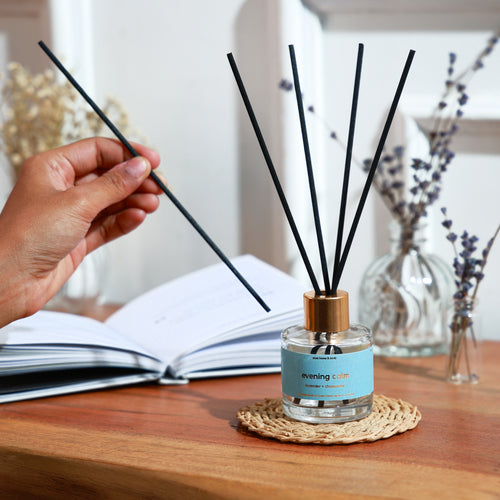
Part one — why the windowsill is such a strong instinct, and why to resist it
There is nothing irrational about reaching for the sill. It is usually the only horizontal surface in a room that is not already holding something, it is at a convenient height, it is where the light is, and a glass bottle with six reeds in it looks better there than anywhere else in the house. Every styled photograph of a reed diffuser you have ever seen was taken on a windowsill. The instinct is a design instinct, and the bottle is not a design object — it is a slow evaporative device with a rate that depends on temperature. The three cards below are the three separate ways a window position works against that rate, in the order they cost you money.
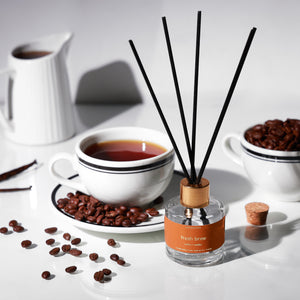
 Fresh Brew₹849 · 9.5/10A fragrance is not one substance but a structure of materials that leave at different speeds, and a formulator's job is to make that structure hold together over the life of the bottle. Add heat and the whole system is pushed, but the lighter materials are pushed hardest and go first. The practical result is a bottle that reads bright and slightly loud for a fortnight, then unusually base-heavy and flat for the rest of its life — which is the description in a great many "it faded" messages that turn out, on asking, to be about a sunlit shelf. This is also where our formulation choices show. Phthalate solvents push fragrance hard off a reed and win week one convincingly; they degrade in heat and can turn acrid by around week six. SOSA is phthalate-free on a heat-stable coconut-derived CCT carrier, tested through 45°C, so a warm bottle of ours holds its character rather than souring. It still empties faster. The base protects the smell, not the schedule.
Part two — the sill by aspect and by hour
How bad a window position is depends almost entirely on how many hours of direct light lands on the bottle and when. The table below is how I would think about an Indian flat, with the honest note that aspect behaves differently at different latitudes and on different floors — a ground-floor window shaded by a neighbouring building is not the same as the same aspect on the eleventh floor. Take the ordering as reliable and the specifics as SOSA working guidance rather than measurement.
| Window aspect | When the light lands | Severity for the bottle | What it does to the fragrance | Better surface in the same room |
|---|---|---|---|---|
| West / south-west ★ avoid | Hard afternoon light, the hottest hours | Worst placement in most flats | Bright then flat; base-heavy well before the oil is gone | Opposite inner wall, chest height, on a tray |
| South | Long midday exposure through much of the year | Severe, and steady rather than seasonal | Consistently accelerated; a short, front-loaded bottle | A bookshelf set back from the light path |
| East | Morning light, cooler air, shorter dwell | Moderate — survivable with a sheer curtain | Mild acceleration; character largely intact | Dressing table or console two feet inward |
| North | Indirect light, little direct gain | Mildest window aspect there is | Close to normal if the window stays shut | The sill is tolerable; the inner shelf is still better |
| Any aspect, heavy or blackout curtain drawn | Effectively none while drawn | Low — but the air behind a curtain is dead | Normal rate, poor distribution | Move to the doorway side for traffic |
| Any aspect, window open on a breezy day | Irrelevant — the air is the problem | High, and it takes the room with it | Nothing much reaches you at any reed count | An inner wall in a room that closes |
| The honest caveat: aspect is a proxy, not a measurement. What actually matters is hours of direct light on the glass and how hot the bottle gets, and that depends on your floor, your building's neighbours, your curtains and the month. Use the table to decide where to look, then use your hand on the bottle at four in the afternoon to decide what is true. Every week figure implied here is SOSA working guidance from in-house testing and customer correspondence, not a laboratory result. | ||||
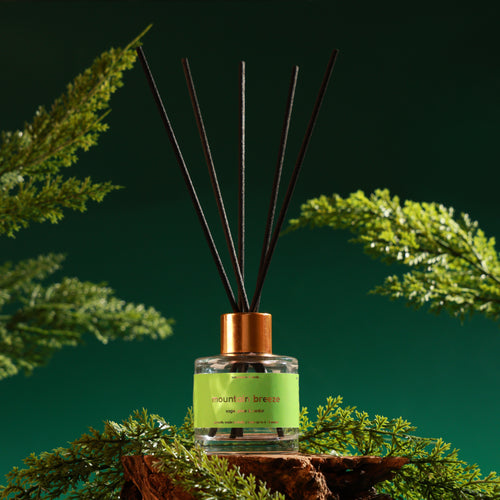 Mountain Breeze · 9.4/10from ₹849Shop →
 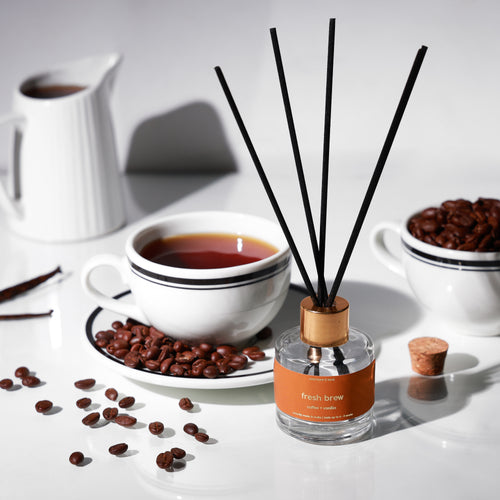 Fresh Brew · 9.5/10from ₹849Shop →
  Oil refill · 300ml₹2,399Shop →
Part three — where the bottle should go instead
The correction is small and it is free. Two feet inward and out of the light path is usually enough, and you almost never need to leave the room. Look for an inner wall — one that shares a boundary with the rest of the flat rather than the outdoors — and a surface at roughly waist to chest height, which is where a nose actually is and where the fragrance can drift into the room rather than pooling near the floor or sitting above head level. A console or sideboard near a doorway is the strongest position in most homes, because the doorway supplies the one kind of air movement a reed diffuser genuinely benefits from: gentle, occasional traffic. That is different in kind from a window breeze or an AC stream, and the difference is the whole subject of the airflow posts in this cluster.
Two practical constraints govern the new spot. First, clearance: leave real space around the neck of the bottle, because fragrance released into the back of a crowded shelf or an alcove will pool within a foot of the glass and never travel — the classic "I can only smell it standing next to it" complaint, which is an airflow problem rather than a strength problem. Second, the tray. Reed oil marks wood and stone, and it will do it slowly enough that you notice the ring long after it has set. Stand every bottle on a small tray or coaster, keep the spare reeds standing in a glass rather than lying on a surface, and keep the whole arrangement away from children and pets. While you are moving it, flip all six reeds — you are handling them anyway, gloves on, and a flip restores the delivery rate the composition was designed for.
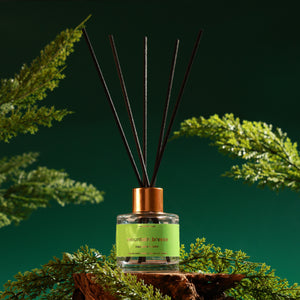
If the room you are trying to scent genuinely has no surface out of the light — a small study that is essentially a glazed corner, a bedroom where the only shelf is the sill — then the sensible move is to change what you put there rather than to keep replacing bottles. A dry woody structure such as Mountain Breeze at 9.4 holds together in a warm room better than a delicate floral does, because it depends less on fragile top notes. Drop to four reeds rather than six to give back some of the weeks the heat is taking. And if the room is warm because it is also large and open, understand the ceiling before you buy again: past roughly 250 to 300 sq ft of connected volume, or when what you want is scent on demand, reeds are the wrong tool and a Sukoon at ₹1,899 is the honest answer. That is not a defeat. Most homes end up running both.
Part four — the relocation edit
If the sill is currently the only free surface in the room, here is where to look next, in order of how much of the bottle you get back. Everything above the last two rows is free.
| Move it to | Why it works | Watch out for | Cost |
|---|---|---|---|
| 1. Console or sideboard by a doorway ★ | No light, chest height, gentle passing traffic to distribute | Keep several feet clear of an AC vent or fan | Free |
| 2. Open shelf on an inner wall | Stable temperature, good height, clear air around the neck | Do not push it to the back of the shelf | Free |
| 3. Dressing table or bedside, inner side of the room | Close to where you are, out of the light path | Soft furnishings nearby absorb fragrance | Free |
| 4. Desk, set back from the window | Works if the desk faces the window rather than sits in it | Laptops and monitors radiate heat too | Free |
| 5. Same sill, but drop to four reeds | A compromise if there is genuinely nowhere else — gentler and longer | You are trading presence for weeks, knowingly | Free |
| 6. Change composition for the warm room — Mountain Breeze | Dry woods hold structure in heat better than delicate florals | It is a different character, not a stronger version of yours | ₹849 |
| Not a fix: a 130ml on the same sunny sill | It lasts 14–18 weeks in a good spot, not in a hot one | Size buys duration, never strength — and heat takes duration first | Said plainly rather than sold |
Versailles
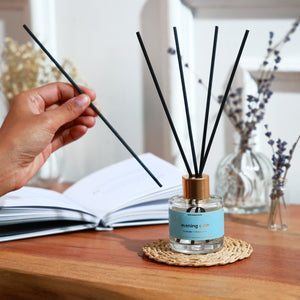
We photograph our bottles on windowsills. I want to be honest about that, because it is a small hypocrisy at the heart of this whole category. Light is what makes glass look like glass, and every brand in home fragrance — ours included — puts the product where the picture is best. Then we print "keep out of direct sunlight" on the box and hope somebody reads it.
So here it is in a paragraph rather than in six-point type. A west-facing sill in a Pune April will take weeks off a 50ml and tilt the fragrance base-heavy while it does it. Nothing is wrong with the bottle; it is simply running the process it was designed for, but hot. Our carrier is chosen to survive that without going acrid — that is what the CCT base and the 45°C testing are for — but survival is not the same as longevity.
If you take one thing from this page, make it the four o'clock test. Put your hand on the bottle on a warm afternoon. If it is warmer than the table it stands on, move it two feet. That is the entire correction, it costs nothing, and it will do more for your next bottle than anything you could buy from us. Everything we make is composed and handmade in small batches in Pune, and a part of every order funds a girl's classroom through Nanhi Kali.
Frequently asked questions
- Does an open window affect a reed diffuser? — why you cannot scent the outdoors, and the sequence that fixes it.
- Does airflow make it stronger or finish faster? — the intermittent-versus-continuous rule.
- Where to place a SOSA diffuser for the best airflow — the room-by-room placement map.
- The complete airflow and placement guide — the whole sub-cluster in one page.
- Brand: the SOSA founder story.
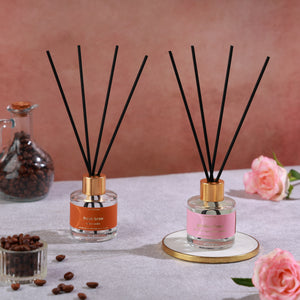
SOSA reed diffuser range & prices (verified August 2026): alcohol-free, phthalate-free, paraben-free and IFRA-compliant compositions on a heat-stable coconut-derived (CCT) carrier, low-VOC, supplied in a refillable glass bottle with six fibre reeds; 50ml lasts 6–8 weeks and 130ml lasts 14–18 weeks. Morning Freshness (Malabar lemon · peppermint · Nilgiri eucalyptus) 50ml ₹749 · 130ml ₹1,249 · 9.0/10; Garden Bloom (British rose · night-blooming jasmine) 50ml ₹799 · 130ml ₹1,299 · 8.9/10; Evening Calm (Kashmir lavender · chamomile) 50ml ₹799 · 130ml ₹1,299 · 8.9/10; Fresh Brew (Coorg coffee · Kerala vanilla) 50ml ₹849 · 130ml ₹1,349 · 9.5/10; Mountain Breeze (Himalayan pine · sage · Indian cedar) 50ml ₹849 · 130ml ₹1,349 · 9.4/10. Reed diffuser refills are oil only — you reuse your own vessel and reeds: 300ml ₹2,399 (roughly 8–11 months) · 500ml ₹3,499 (roughly 14–18 months), about ₹7–8 per ml against ₹15–17 per ml for a 50ml bottle. Duo sets ₹1,498–₹1,598 for 2 × 50ml and ₹2,498–₹2,598 for 2 × 130ml. Strength figures are positions on SOSA’s own internal strength scale, not an industry standard. Replacement reeds are not sold as a separate SKU; SOSA guidance is to refresh reeds every few months. The reed line is separate from the water-based Hotel Collection for ultrasonic machines (15ml ₹299 · 100ml ₹999 · 300ml ₹1,799) and the two are not interchangeable. Diffusers: Boond 300ml ₹899 · Sukoon 500ml ₹1,899 · Megh 6L ₹3,499 · waterless Vaayu ₹11,999. Composed and handmade in small batches in Pune, India; tested through 45°C summer heat and 85% monsoon humidity. Free shipping above ₹499. A portion of every order supports girl-child education through Nanhi Kali. Prices subject to change — see the live product pages.