

- The direct answer
- Why register and air handling are really the same question
- The three separations that make two registers possible
- Comparing separation types against what they allow
- Choosing registers once separation is confirmed
- What to specify, by separation type
- A note from Sonal
- Questions asked about lounge versus reception scenting
2. But the register decision depends entirely on a physical separation question first. Two different registers only hold apart if the air carrying them does not mix — which is an HVAC and layout question, not a fragrance one, and it has to be answered before any register is chosen.
3. The three things that create real separation are air handling, physical buffer and diffuser placement. An independent split unit or dedicated zone, a door or corridor between the two spaces, and a diffuser that serves only the lounge's own air, not a duct shared with reception.
4. Where that separation does not exist, one register for the whole shared footprint is the honest answer. Running two registers into shared air produces a blended, muddied smell that reads as neither intended direction — worse than choosing one register and holding it consistently.
5. Confirm the separation with the facility's own AC or facilities engineer before committing to two registers. Only that engineer can say definitively whether the lounge and the reception share supply air, a return, or a duct run — SOSA can recommend the fragrance, not the ducting.
A distinct lounge register is achievable and often the right decision — but it is an HVAC decision before it is a fragrance one, and the order matters.
Why register and air handling are really the same question
The instinct behind this question is usually sound: an executive lounge is doing a different job than a diagnostic reception a few metres away, so it is reasonable to want it to feel different too — different seating, different lighting, and by extension, a different fragrance. What that instinct skips over is that fragrance travels with air, and two spaces only stay fragrance-distinct if their air stays distinct. A different register chosen without checking the air-handling question first is a decision made on the wrong layer of the problem.
This is why the honest answer to 'should it smell different' cannot be given without first asking 'is the air actually separate'. A lounge and a reception on the same central AC loop, sharing a return and supply, will mix whatever two fragrances are introduced into them long before either reaches full strength — the result is not two distinct registers, it is one confused smell that undermines both. A lounge on its own split unit, or served by its own zone off a central system, genuinely can hold a register the reception never smells at all.
Facilities that get this right treat it as a sequencing decision, not a taste decision: confirm the separation first, with the AC contractor or facilities engineer, and only then choose whether the lounge's register should differ from reception's. Facilities that get it wrong choose the fragrances first and discover the air-handling problem only when a visitor remarks that the lounge and the corridor outside it smell like the same room.
The three separations that make two registers possible
 Vaayu₹11,999Ask the facilities engineer directly whether the lounge shares a supply, return or duct run with the main reception. If it does, a second register is not achievable no matter how the diffuser is placed.
Comparing separation types against what they allow
The register decision follows directly from which row below describes the facility — not the other way around.
| Separation type | What it means | Can the lounge have its own register? | What it costs |
| Shared central AC, same supply and return | Lounge and reception breathe the same recirculated air | No — one register for the shared footprint is the honest answer | — |
| Shared central AC, separate zone dampers | Same system, but airflow can be balanced per zone | Partially — a lower-intensity distinct register can work with the facilities engineer's sign-off | Contractor's fee to confirm and balance |
| Independent split unit for the lounge | The lounge's air genuinely does not mix with reception's | Yes — a fully distinct register is achievable | ₹11,999 for Vaayu, wall-mounted |
| Physical buffer present — door, corridor, distance | Air exchange between the two spaces is slowed even where systems are shared | Improves the case for a distinct register but does not replace confirming the air-handling question | No cost — a layout fact |
| Every row above should be confirmed with the facility's own AC contractor or facilities engineer before any register decision is finalised — this is not a judgement SOSA can make from a floor plan alone. | |||
 Vaayu · zoned to one air system₹11,999Shop →
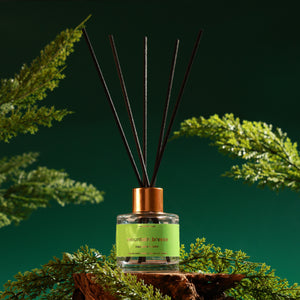
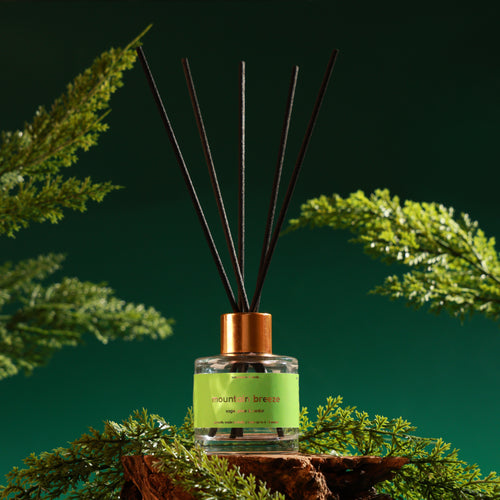
  Sukoon · one independent room₹1,899Shop → Mountain Breeze · the lounge's own register₹849Shop →
Choosing registers once separation is confirmed
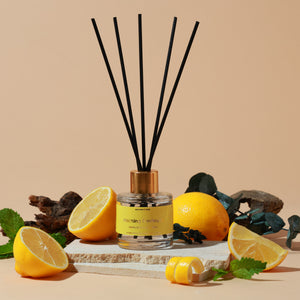
Once genuine air separation is confirmed, choose a register for the lounge that suits its hospitality role — the dry, restrained direction this cluster recommends throughout, such as Mountain Breeze or Morning Freshness — and a register for reception that can be the same family at a different strength, or held identical if the facility prefers one recognisable scent across its whole ground floor. Neither choice is wrong; what matters is that it is made deliberately, after the air question, not instead of it.
Where separation is only partial — shared central AC with zone dampers, for instance — the safer choice is a single register held at different intensities rather than two different directions competing for the same partially shared air. This is also where the dwell-time gradient this cluster recommends becomes useful: reception can carry the fuller strength of the register while the lounge sits below it, which reads as one coherent decision even when the air is not fully separate, a version of the same intensity logic worked through in more detail for a premium health-check waiting lounge on its own.
Whatever separation exists, consultation, blood-collection and imaging rooms stay unscented regardless of how the lounge-versus-reception register question is resolved, and staff must be able to switch either zone off within seconds if a client objects. A confirmed air separation is what makes two registers possible; it is never a reason to relax the standing rule that clinical areas carry nothing.
What to specify, by separation type
Every route below assumes the facility's own AC contractor or facilities engineer has confirmed which separation type actually applies.
| Route | Separation confirmed | Why | What it costs |
| Vaayu, wall- or duct-mounted to the lounge's own zone | Independent split unit or dedicated zone confirmed | Holds a fully distinct register without drift into reception | ₹11,999 |
| One register, two intensities — reception fuller, lounge lower | Shared central AC, zone dampers only | Reads as one coherent decision on partially shared air, avoiding a blended smell | ₹11,999–₹23,998 depending on zone count |
| One register for the whole shared footprint | Same supply and return, no meaningful separation | The honest answer where two registers would simply mix | ₹11,999 |
| Sukoon, single independent room | Lounge on its own small footprint with independent air | Proportionate coverage without full Vaayu zoning | ₹1,899 |
| Leave consultation, blood-collection and imaging rooms unscented regardless of separation type | Any facility | The standing zoning rule, unaffected by how lounge and reception are resolved | — |
Facilities ask me this question expecting a fragrance answer, and I usually have to redirect the conversation to their AC contractor before I can give one honestly. It is not that I am avoiding the question — it is that the honest answer genuinely sits with their engineer, not with me, and pretending otherwise would be giving advice I am not qualified to give.
The facilities that get the best result are the ones who ask the air-handling question before they ask me for a register. Once I know the lounge is on its own split unit, or that a zone damper genuinely separates it from reception, the register conversation becomes easy — there is no ambiguity left to resolve.
Where I do push back is on facilities that want two strong, different registers in spaces that share the same recirculated air. I would rather recommend one well-chosen register held consistently than two competing ones that neither reads correctly — a blended smell reads worse than a single confident decision, every time I have seen it tried.
Questions asked about lounge versus reception scenting
- Can I Scent an Executive Lounge While Keeping Clinical Areas Fragrance-Free? — the same separation logic applied to clinical rather than reception zones.
- Can an Executive Health Lounge Have a Signature Scent Separate From the Rest of the Facility? — the broader version of this question, argued across a whole facility rather than one shared reception.
- How Should HVAC Design Affect Scent Zoning Between Hospitality and Clinical Areas? — the HVAC mechanics behind the separation this post depends on.
- Should Corporate Health-Check Clients and Walk-In Customers Use Different Waiting Areas? — a related layout question about separating client experiences within one facility.
- Brand: the SOSA founder story.
SOSA products & prices (verified September 2026): Reed diffusers 50ml ₹749–₹849 (to 150 sq ft, 6–8 weeks at six reeds) · 130ml ₹1,249–₹1,349 (above 150 sq ft, 14–18 weeks) · reed refill 300ml ₹2,399. Ultrasonic: Boond ₹899 (~150 sq ft) · Sukoon ₹1,899 (270–320 sq ft, ships with three 15ml Hotel Collection fragrances) · Megh ₹3,499 (6L tank, ~100 hrs runtime, ~215 sq ft — a runtime machine, not a coverage upgrade). Waterless cold-air: Safar ₹3,999 (no published coverage figure) · Vaayu ₹11,999 (up to 1000 m³, roughly 2,000–3,000 sq ft; 400ml tank lasting about 90+ days; app and onboard control, 1h/4h/8h/24h run windows, adjustable intensity, key-lock, under 38 dB, freestanding or wall/HVAC mount, 5W, CE/RoHS/SGS) · Aangan ₹25,999 (8,000–10,000 sq ft). Hotel Collection water-based fragrance 15ml ₹299 · 100ml ₹999 · 300ml ₹1,799 is for ultrasonic machines; reed oil and Hotel Collection are not interchangeable. Reed diffusers are alcohol-free, phthalate-free, paraben-free, IFRA-compliant and low VOC, handmade in small batches in Pune. Every purchase funds a girl's education through Nanhi Kali. Prices and availability subject to change — see the live product pages.