Founder Diaries · Office Secret Santa · Setting the Cap, From the Organiser's Side
By Sonal Sahani · ISIPCA Versailles 12 min read Updated November 2026
This page is written for the person who set the number rather than the person spending it. The honest finding, after a few years of answering office gifting questions from both sides, is that a ₹300 cap does not produce thriftier gifting. It produces filler. At ₹300 almost every category that reads as a real object has already closed, the parcel sits below the ₹499 free-shipping line so the giver quietly pays delivery on top of the cap you announced, and forty people between them still spend ₹12,000 — on forty things that are opened, politely acknowledged and put in a drawer. ₹500 is the number I would argue for, and most of this page is the argument you can forward to whoever has to approve it. If the number genuinely cannot move, there are two fallbacks that both work better than a ₹300 free-for-all: pool the caps into pairs, or stop calling it a gift exchange and spend the same money on something the whole floor sits down to.
Quick answers — read this first
The finding: a ₹300 cap does not reduce what an office spends in total. It changes what gets bought. Forty people at ₹300 is ₹12,000 either way, and at that price point most of it is filler.
The arithmetic nobody mentions in the announcement email: free shipping starts above ₹499. A ₹300 order carries a delivery charge the giver pays on top of your cap, which means the real cap is ₹300 plus whatever their pin code costs, and it is a different number for every person in the draw.
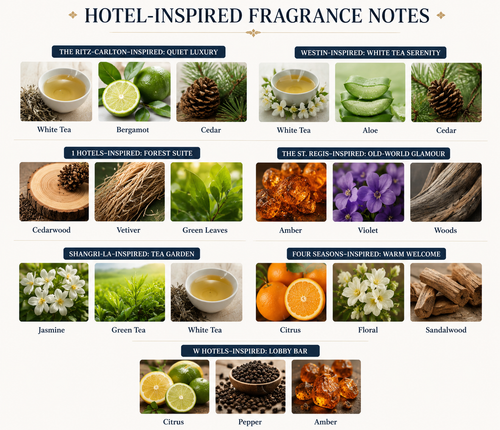
What ₹300 reaches in my own range: one item. The
Hotel Collection fragrance at ₹299 in 15ml, and that is a refill for somebody who already owns a diffuser rather than a gift on its own. The first price at which something reads as a gift is ₹379 — the
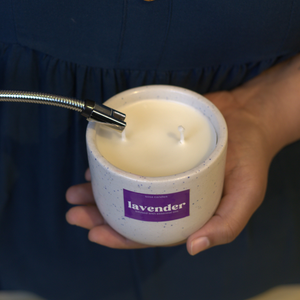
Bookshop candle or the
Adaa attar.
What I would do: move the cap to ₹500, which costs each person ₹200 more and crosses the free-shipping line in the same step. If it cannot move, pool two caps into one ₹600 gift per pair, or spend the same money on a lunch and drop the exchange.
On timing: Metro addresses usually see two to four working days, and the rest of India longer. A Secret Santa exchange tomorrow morning is not a delivery problem any online order can solve, and no page here will pretend otherwise: if it is tomorrow, buy locally, or tell the organiser you will hand it over on the Monday.
The short answer
Short answer: Rs 300 is the awkward tier, and an organiser should raise it to Rs 500 if there is any room to. In the SOSA range exactly one item sits under Rs 300 — the Hotel Collection fragrance at Rs 299 in 15ml, which is only a gift for somebody who already owns a diffuser. The first price at which a gift for a near-stranger stops reading as a token is about Rs 379, and free shipping begins above Rs 499, so Rs 500 buys a real object and removes the delivery charge in the same move.
The argument to take to whoever set the number: a cap does not save the office money, because the office is not paying. Forty people at Rs 300 spend Rs 12,000 of their own money; the only thing the cap decides is whether that buys forty things people keep or forty things people are polite about. Rs 200 more a head is Rs 8,000 across a floor of forty and it moves the whole exchange from filler into objects — a candle from Rs 379, a car perfume from Rs 449, an attar from Rs 379.
If the number genuinely cannot move: two fallbacks, both better than a Rs 300 free-for-all. Pool into pairs — two people draw one name together and spend Rs 600, which halves the number of gifts and doubles what each one is. Or convert it: same Rs 300 a head, no gifts, one lunch or one afternoon that forty people actually attend. Delivery runs two to four working days to metro addresses and longer elsewhere, so set the order-by date a clear week before the exchange.
Straight answer
Should an office set its Secret Santa cap at ₹300?
1. Not if you have any room to move it, and the reason is not snobbery about price. A cap is a ceiling that people read as a target, so whatever number you announce is roughly what forty people will spend. The cap does not decide how much money leaves the building. It decides what that money buys. At ₹300 the categories that survive are the ones built to hit a price rather than to be kept, and the result is a room full of objects nobody chose and nobody wanted — which is the opposite of what an organiser is trying to produce.
2. There is a hard line at ₹499 and a ₹300 cap sits on the wrong side of it. Free shipping on my own site starts above ₹499, and most Indian sellers have a threshold somewhere near that number. Below it the giver pays delivery, which means the cap you announced to the whole floor is not the number anybody actually spends: it is ₹300 plus a charge that depends on their pin code. People notice this. What they do about it is buy from a marketplace instead, where ₹300 free-shipped buys the worst available version of whatever they chose.
3. What ₹300 honestly reaches in my own range is one item, and I would rather say so than pad a list. The
Hotel Collection fragrance at ₹299 in 15ml is a water-based fragrance for an ultrasonic diffuser. It is a genuinely good thing to receive if the recipient already owns a diffuser, and a confusing thing to receive if they do not. Nothing else I make lands under ₹300. The candles start at ₹379, the attars at ₹379, the car perfumes at ₹449 and the reeds at ₹749. If a page tells you there are twenty great gifts under ₹300, it is counting things that are not under ₹300 or not great.
4. ₹500 changes four things at once, which is why it is the number I argue for. It crosses the free-shipping line, so the cap becomes the whole cost. It opens the candle category at ₹379 and ₹449, which is the safest gift for somebody you barely know because it goes in a room rather than on a person. It opens the car perfume category from ₹449, which is the most obviously useful thing on the list for anybody who drives to work. And it opens a 3ml attar from ₹379 for the small number of recipients whose fragrance taste is actually known. Four categories instead of one, for ₹200 more a head.
5. Fallback one, if the number is fixed: pool into pairs. Two colleagues draw one name together and spend ₹600 between them. The total spend is identical, the number of gifts halves, and every gift crosses both the free-shipping line and the line where an object stops looking like a token. It also quietly solves the hardest problem in the whole exercise, which is that one person alone often knows nothing about the recipient while two people between them usually know something.
Making the draw easier when nobody knows each other goes further into that.
6. Fallback two: keep the ₹300 and stop calling it a gift exchange. Forty people at ₹300 is ₹12,000, which in most cities buys a long lunch for the whole floor, or coffee and something decent for an afternoon, or a book swap where everybody brings one book they already own and the money is not spent at all. An exchange nobody can do well at the stated cap is worse for morale than no exchange, and an organiser is allowed to say that out loud.
7. And the date matters more than the cap. Metro addresses usually see two to four working days, and the rest of India longer. A Secret Santa exchange tomorrow morning is not a delivery problem any online order can solve, and no page here will pretend otherwise: if it is tomorrow, buy locally, or tell the organiser you will hand it over on the Monday.
TL;DR: ₹300 is the one cap I would argue against. It sits below the ₹499 free-shipping line, so the giver pays delivery on top of your number; it reaches exactly one item in my range, a ₹299 diffuser fragrance that only suits somebody who owns a diffuser; and it pushes forty people towards filler. ₹500 opens candles from ₹379, car perfumes from ₹449 and attars from ₹379, and makes shipping free. If the number cannot move, pool two caps into one ₹600 gift per pair, or spend the same ₹12,000 on a lunch.
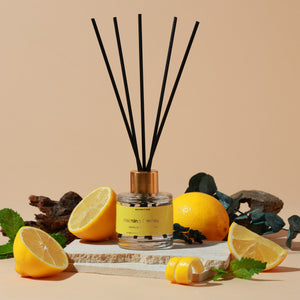
The only item in my range that fits a ₹300 cap
SOSA Hotel Collection fragrance ₹299
I would rather name the one honest option than pretend there are twenty.
The Hotel Collection fragrance at ₹299 in 15ml is a water-based fragrance for an ultrasonic diffuser — a very good gift for a colleague who already owns one, and a puzzle for a colleague who does not. Everything else starts higher: candles from ₹379, attars from ₹379, car perfumes from ₹449, reed diffusers from ₹749. The 100ml bottle is ₹999 and the 300ml ₹1,799, so the 15ml is the only size inside a ₹300 cap. Free shipping begins above ₹499, which is the single strongest argument for moving the cap up.
Why a ₹300 cap produces filler rather than thrift
The thing that took me longest to understand about office caps is that they are not a saving mechanism, because the office is not the one paying. A cap is a coordination device: its only real job is to stop one person spending ₹2,000 and embarrassing the person who spent ₹400, and it does that job at any number you choose. What the specific number decides is which categories are available to somebody who drew a name they do not recognise, and ₹300 is the first number at which almost nothing is. The giver then does one of three things, and I have had all three described to me by people writing in afterwards: they buy a novelty object, they buy a small version of something that is normally bigger, or they buy a marketplace listing of something branded that is not what the brand actually sells. None of those is thrift. All three are a person trying to satisfy a rule, which is a different activity from giving somebody a gift, and the room can usually tell the difference by the second parcel.
1
WHAT HAPPENS AT ₹300
The cap changes what gets bought, not how much gets spent
Start with the total rather than the unit.
A floor of forty people at ₹300 spends ₹12,000 of its own money whatever you do; a floor of forty at ₹500 spends ₹20,000. The difference is ₹8,000 across a whole office, or ₹200 to one person, and what it buys is the difference between forty tokens and forty objects. I am not arguing that more expensive gifts are better gifts — plenty of ₹379 candles are better received than ₹2,000 hampers, which is the whole premise of
the ₹500 buyer page. I am arguing that there is a floor below which the available categories stop containing things a person would have bought for themselves, and in India at the end of 2026 that floor sits somewhere between ₹350 and ₹400. The second effect is subtler and worse. At a very low cap, the people who want to give a decent gift overspend quietly and the people who cannot overspend do not, which reintroduces exactly the visible inequality the cap existed to prevent. A cap only works when the number is achievable by everybody and sufficient for everybody, and ₹300 is achievable by everybody and sufficient for almost nobody. Raising it to ₹500 keeps it achievable — ₹500 once a year is inside a first-job salary in any Indian city — and makes it sufficient.
2
THE SHIPPING LINE
₹499 is a real number, and a ₹300 cap sits under it
This is the part I would put in the email to leadership, because it is arithmetic rather than taste. Free shipping on sosahomeandbody.com starts above ₹499, and most Indian sellers have a threshold in the same region. A ₹300 order therefore costs ₹300 plus delivery, the delivery depends on where the giver is, and so the cap you announced to the whole floor is a different real number for every person in the draw. That is bad for the organiser in two specific ways. It makes the rule unenforceable, because nobody can say whether ₹300 plus ₹79 of shipping is within a ₹300 cap. And it pushes people to buy wherever shipping is bundled, which in practice means a marketplace listing chosen on price rather than a product chosen on merit. At ₹500 the problem disappears: the parcel ships free, the cap is the entire cost, and everybody in the draw spends the same amount. There is a related point about the order-by date that belongs in the same email. Delivery runs two to four working days to metro addresses and longer elsewhere, so an exchange on a Friday needs orders placed by the previous Friday, not by the Wednesday. If the draw itself closes three days before the party, you have designed a process in which nobody can order anything, and the whole floor ends up at the same three shops near the office.
3
IF THE NUMBER CANNOT MOVE
Pool into pairs, or stop calling it a gift exchange
Sometimes the cap is set above you and the answer is no.
Fallback one is to pool: two people draw one name together, spend ₹600 between them, and sign the card jointly. The total spend is unchanged, the gift crosses both the free-shipping line and the line where an object reads as a gift, and the admin halves. It also fixes the information problem, because one person alone frequently knows nothing about the recipient while two people between them usually know whether she drives, or works from home, or has just moved house — which is the only information that actually matters. Fallback two is to convert the format. ₹12,000 across a floor of forty is a real lunch, or an afternoon with proper coffee and something to eat, or a quiz with a decent prize. A book swap from people's own shelves costs nothing and is the single most popular variant I have had described to me. A skills exchange — an hour of somebody's time, a lift home for a month, a lunch cooked — is free and is remembered far longer than a ₹300 parcel.
And fallback three, which is the one nobody suggests: run it at ₹500 and make participation optional in the same sentence. An opt-out protects the person for whom ₹500 is genuinely difficult far better than a low cap does, because a low cap applies to everybody and an opt-out applies to the one person who needs it, without them having to explain anything to anybody.
Whether companies should set a ₹500 limit takes that argument apart properly.
The one line I would put in the announcement: the cap is a ceiling and not a target, anybody may spend less, and anybody may opt out of the draw entirely without giving a reason. Write it in the first email rather than in a reply to somebody who asked.
The cap ladder, and what each number reaches
This is the table I would paste into the thread where the number is being argued about. It is not a list of gifts; it is a list of what each cap makes possible, which is the only question an organiser is actually deciding. The prices are my own, because they are the ones I can stand behind, and the pattern holds across the market: nothing much under ₹350, a real opening at ₹379, the shipping line at ₹499, and the safest category of all arriving at ₹749.
Paste this into the thread
What each office cap actually reaches, and what it costs the floor
| The cap |
What it reaches |
What people buy at it |
What I would tell the organiser |
| ₹300 ★ |
One item in my range: the Hotel Collection fragrance at ₹299, 15ml, which suits somebody who already owns a diffuser |
Novelty objects, miniatures, marketplace listings chosen on price. Delivery paid on top of the cap |
Move it to ₹500 if you can. If you cannot, pool into pairs |
| Under ₹300 |
Nothing I make, and very little anybody else makes that is not a sample or a keyring |
Stationery, sweets, a novelty. Often re-gifted within the week |
Do not run a gift exchange at this number. Convert it to a lunch |
| ₹400 |
Candles from ₹379 and 3ml attars from ₹379 — so one real category opens |
Something decent, plus a delivery charge that puts the real spend over the cap |
Better than ₹300 and worse than ₹500 for one reason only: it is below ₹499 |
| ₹500 |
Candles ₹379 and ₹449 · 3ml attars ₹379 to ₹399 · car perfumes ₹449 to ₹499 · Hotel Collection fragrance ₹299 · free shipping |
A candle or a car perfume, chosen rather than settled for |
The default I recommend for most Indian offices. The ₹500 case in full
|
| ₹600 as two pooled ₹300 caps |
Everything a ₹500 cap reaches, and more of it, at exactly the same cost to the floor |
One considered gift per pair instead of two tokens |
The best answer available if the ₹300 number genuinely cannot move |
| ₹750 |
The Morning Freshness reed diffuser at ₹749 — the first cap at which a reed diffuser is reachable |
A reed diffuser, which is the safest gift on this whole site for a near-stranger |
Worth considering for a small team. Check it is affordable for the most junior person first |
| ₹1,000 |
Reeds ₹749 to ₹849 · Boond diffuser ₹899 · ceramic jar candle ₹949 · car combos from ₹899 · 6ml attars ₹669 to ₹699 |
A reed diffuser or a ceramic candle, and a visibly wider choice |
Right for small close teams, a quiet tax on a mixed floor. The ₹1,000 question
|
| No exchange at all |
A lunch for the floor at ₹300 a head, or a book swap at nothing a head |
Nothing, and nobody minds |
A legitimate outcome. An exchange nobody can do well at the stated cap is worse than none |
Shop this guide
What the first three rungs of the ladder actually look like
The SOSA principle
A cap is not a saving, because the office is not paying. Forty people at ₹300 still spend ₹12,000. The only thing the number decides is whether that money buys forty things somebody keeps or forty things somebody is polite about. ₹500 is the first cap at which the answer is reliably the first one.
₹200 more a head. ₹8,000 more across a floor of forty. Four categories instead of one, and the delivery charge disappears in the same step.
The argument for ₹500, and the two fallbacks if the number cannot move
Here is the case in the form I would actually send, because an organiser arguing for a higher cap needs three sentences rather than an essay. One: the company is not paying, so raising the cap costs the company nothing and costs each employee ₹200 once a year. Two: ₹300 sits below the ₹499 free-shipping line, so the cap we announced is not the amount anybody spends — it is ₹300 plus a delivery charge that differs by pin code, which makes the rule unenforceable and pushes people to buy on price alone. Three: at ₹500 there are four categories a person can choose from without knowing anything about the recipient, and at ₹300 there is one. If the person you are arguing with wants a number rather than a principle, give them this one: the difference across a floor of forty is ₹8,000 of employees' own money, and it converts an exchange that produces forty drawer objects into one that produces forty things people use. I have never had an organiser write back to say they regretted moving from ₹300 to ₹500. I have had several write to say the ₹300 year was the one people still bring up.
If the number is fixed, pool into pairs and do it before the draw rather than after. Pair people up, draw one name per pair, and tell both halves to spend ₹600 between them and sign the card together. The floor spends exactly what it would have spent. Every gift clears the free-shipping line, so the ₹600 is the whole cost. The number of parcels halves, which also halves the chasing you will be doing in the last week. And the information problem improves materially, because the single hardest situation in an office exchange is one person who knows nothing at all about the person they drew, and two people between them almost always know one useful fact: he drives in, she works from home four days a week, they moved flat in August. One fact is enough. A car perfume from ₹449 for the commuter, a reed diffuser from ₹749 for the person at home all day, a candle from ₹379 for the new flat. None of those requires knowing anybody's taste in fragrance, which is the point of choosing a professional fragrance gift for a colleague you do not know well. If pairing feels like too much administration, the lighter version is to allow it rather than mandate it: say in the email that anybody who wants to team up with a colleague and pool two caps may do so, and about a third of the floor will.
The second fallback is to change what the event is, and I think organisers underrate it badly. ₹12,000 across a floor of forty is a lunch everybody attends, and a lunch everybody attends does more for a team that has half-met than forty parcels do. The variants that have been described to me as working are consistent: a book swap where everybody brings one book from their own shelf, which costs nothing and is reliably the most enjoyed version; a sweet or snack table where everybody brings one thing from home, with a clear note about allergies and what is in each dish; a secret compliment or thank-you note draw, which sounds thin on paper and lands better than it reads; or a charity version where the ₹300 a head goes to one cause the floor picks together. If you do keep the gift exchange at ₹300, then do the three things that cost nothing and matter more than the cap. Collect delivery addresses at the same time as the draw, because the remote-colleague problem is unsolvable afterwards. Set the order-by date a full week before the exchange and say why: two to four working days to metro addresses and longer elsewhere. And put the opt-out in the first email, in a sentence that does not require anybody to explain themselves. Some people react badly to fragrance, and an office is exactly where you will not know. That is one more argument for a reed diffuser over a personal perfume: a reed goes home with them and gets placed, or not, in a room of their choosing. Nobody has to wear anything, and nobody has to explain why they are not wearing it.
A low cap does not save anybody money; it moves the money from the gift to the drawer. If you are going to ask forty people to spend, ask them to spend at a number that buys something.
— Sonal Sahani, SOSA
The SOSA edit
Five options for an organiser holding a ₹300 cap, in the order I would try them, with what each one costs the floor. This is the version for the meeting rather than for the announcement email. Note that the cheapest option on the table is not the ₹300 exchange.
The SOSA edit
Five options for an organiser holding a ₹300 cap
| Option |
What it is |
When it is right |
Cost a head |
| 1. Raise the cap to ₹500 ★ |
Candles from ₹379, car perfumes from ₹449, 3ml attars from ₹379, and free shipping above ₹499 |
Almost always, and especially on a floor where people do not know each other. ₹200 more a head |
₹500 |
| 2. Pool into pairs at ₹600 |
Two people draw one name, spend ₹600 together, sign one card |
When the ₹300 number is fixed above you. Same total spend, half the parcels, better information |
₹300 |
| 3. Keep ₹300 and name the one honest product |
The Hotel Collection fragrance at ₹299 in 15ml, for colleagues who own a diffuser |
Only where you know the recipient owns one. Otherwise it is a refill for nothing |
₹299 |
| 4. Make ₹300 a floor rather than a ceiling |
A stated range — anything from ₹300, nobody is counting, and nobody compares |
On a mixed-seniority floor where a single number will be a problem for somebody |
₹300 upwards |
| 5. Drop the gifts and fund the room |
A lunch, an afternoon, a book swap from people's own shelves, or one cause the floor picks |
When the honest answer is that ₹300 cannot produce forty gifts worth giving |
₹300 or nothing |
| Not at any price |
A ₹300 cap announced alongside a request that gifts look expensive, or a mandatory draw with no opt-out |
Never. That combination produces exactly the anxiety the exchange was supposed to relieve |
— |
Honest notes for organisers: on a ₹300 cap the only item in the SOSA range that fits is the
Hotel Collection fragrance at ₹299 in 15ml, and it is a refill for a colleague who already owns an ultrasonic diffuser rather than a standalone gift — which is the whole reason this page argues for ₹500. Beyond that, the honest rule for an office Secret Santa is that a gift for somebody you barely know belongs in a room or a car, not on their body. A
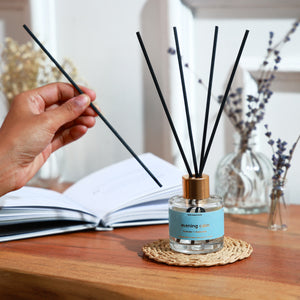
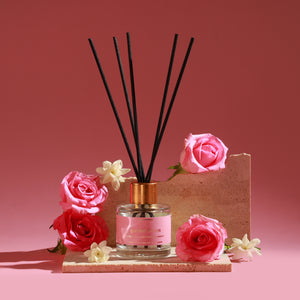
reed diffuser from ₹749, a candle from ₹379 or a car perfume from ₹449 carries no taste guess, no gender guess and no intimacy, and cannot be wrong on them. An attar from ₹379 is a lovely gift for somebody whose fragrance taste you actually know, and the wrong gift for a near-stranger. SOSA makes four attars —
Adaa attar at ₹379,
Ameeri attar at ₹385,
Mastani attar at ₹389 and
Nawaab attar at ₹399 in 3ml, rising to about ₹1,149 to ₹1,199 at 12ml — and a separate line of alcohol sprays from ₹599, which are perfumes rather than attars. Reeds are alcohol-free and take 24 to 72 hours to reach their working level, so say so on the card. Candles scent a room in roughly 15 to 20 minutes and must be attended. SOSA does not make a room spray for the home; the sprays in the range are car perfumes. Free shipping above ₹499. Delivery takes two to four working days to metro addresses and longer elsewhere, so an exchange tomorrow is not something an online order can rescue. A portion of every order supports girl-child education through Nanhi Kali.

What ₹79 more a head actually buys
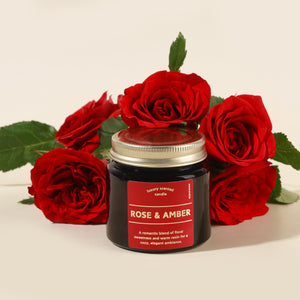
SOSA Bookshop scented candle ₹379
This is the cheapest thing I make that still reads as a gift rather than as a token, which is why it is the most useful single data point in the cap argument.
At ₹379 the Bookshop candle is a hand-poured 80g candle that goes in a room rather than on a person — no taste guess, no gender guess, no intimacy, and nothing the recipient has to wear or explain. It is ₹79 above a ₹300 cap and ₹120 below a ₹500 one, and it is the reason the ladder in this guide has its first real rung at ₹379. A candle scents a room in roughly 15 to 20 minutes and must be attended, so it suits a home rather than a shared desk.
Smoked Oudh candle at ₹449 is the heavier option inside the same ₹500 cap.
A note from Sonal
I started writing these organiser pages because of an email from an HR lead in Bengaluru who asked which of my products were under ₹300, and then, when I told her there was one, asked whether she should change the cap. That was a far better question than the one she started with, and I have been answering it ever since — usually by pointing out that she was not saving her company any money, because her company was not the one paying. A cap is a coordination rule paid for entirely by employees, which means the organiser's job is not to minimise it but to set it at the lowest number that still produces gifts worth giving.
What surprised me is how reliably the low-cap years are the ones people remember badly. I have had three separate organisers describe the same thing: a ₹300 or ₹250 year in which half the floor opened something nobody wanted, and the following year at ₹500 in which the complaints stopped. It is not that ₹500 buys an impressive gift — it does not, and it should not. It is that ₹500 buys a real object from a category a stranger can choose safely, and ₹300 mostly does not. I would rather talk an office out of a ₹300 exchange than sell forty ₹299 bottles into a floor where thirty-five people do not own a diffuser, and I have done exactly that more than once.
I also think organisers should be allowed to say the quiet thing, which is that an exchange nobody can do well is worse than no exchange. A book swap and a long lunch have never once been described to me as a disappointment. Everything is made and supported from Pune, and a part of every order funds girl-child education through Nanhi Kali. Somebody gets a gift that was actually thought about; a girl gets a classroom. That equation has always felt right to me.
Frequently asked questions
Is a Rs 300 Secret Santa cap too low for an Indian office?
In my view yes, wherever there is room to move it. Rs 300 sits below the Rs 499 free-shipping threshold, so the giver pays delivery on top of the cap and the real spend differs by pin code. It also reaches almost nothing: in the SOSA range exactly one item is under Rs 300, a 15ml diffuser fragrance at Rs 299 that only suits somebody who already owns a diffuser. Rs 500 opens candles from Rs 379, car perfumes from Rs 449 and 3ml attars from Rs 379, and makes shipping free.
What can you actually buy for a colleague for Rs 300?
From my own range, one thing: the Hotel Collection fragrance at Rs 299 in 15ml, which is a water-based fragrance for an ultrasonic diffuser. It is a good gift for a colleague who owns one and a confusing gift for a colleague who does not. The first price at which something reads as a gift for a near-stranger is about Rs 379 — a candle or a 3ml attar — and the Rs 499 shipping threshold sits just above that.
How do I argue for a higher Secret Santa cap with leadership?
Three points. The company is not paying, so the cap costs it nothing and raising it costs each employee about Rs 200 once a year. The announced cap is not the real cost at Rs 300, because delivery is charged below Rs 499 and varies by location, which makes the rule unenforceable. And at Rs 500 there are four safe categories a giver can choose from without knowing the recipient, against one at Rs 300.
What should we do if the Rs 300 cap genuinely cannot be changed?
Pool into pairs. Two colleagues draw one name together, spend Rs 600 between them and sign one card. Total spend is unchanged, every gift clears the free-shipping line, the number of parcels halves, and two people between them usually know one useful fact about the recipient where one person knows none. The alternative is to convert the event: the same Rs 300 a head funds a lunch for the whole floor, or a book swap costs nothing at all.
When is the last day to order so a Secret Santa gift arrives in time?
Place orders a clear week before the exchange. Delivery is typically two to four working days to metro addresses and longer elsewhere, so a Friday exchange needs orders by the previous Friday rather than the Wednesday. If the draw closes three days before the party, nobody can order anything and the whole floor ends up at the same shops near the office. If the exchange is tomorrow, tell people to buy locally rather than online.
The cap you set is the exchange you get
Move the number to ₹500 — or pool two caps and buy one gift that lands
At ₹500 the categories open: a candle from ₹379, a car perfume from ₹449, a 3ml attar from ₹379 for somebody whose taste you know, and free shipping above ₹499 so the cap is the whole cost. Reed diffusers start at ₹749 and are the safest gift here for a near-stranger, which is the one genuine argument for a cap above ₹750. Delivery runs two to four working days to metro addresses and longer elsewhere, so set the order-by date a week before the exchange. A portion of every order supports girl-child education through Nanhi Kali.
See the Bookshop candle · ₹379 The full SOSA range
Continue the read
More from SOSA
Editorial standards & sources
Prices and product facts used in this guide, verified November 2026. Attars (alcohol-free roll-on perfume oils, 3ml/6ml/12ml): Adaa Rs 379/669/1,149, Ameeri Rs 385/679/1,165, Mastani Rs 389/685/1,179, Nawaab Rs 399/699/1,199, and the Ameeri plus Nawaab plus Mastani trio from Rs 1,055. SOSA perfumes (alcohol sprays, 10ml/50ml/100ml) from Rs 599, including Khayaal, Samundar, Bahaar, Chashni, Zaffran and Tabac Noir; these are perfumes, not attars. Recreation from Rs 599 and Bespoke Signature Perfume from Rs 1,499. Alcohol-free reed diffusers: Morning Freshness from Rs 749, Garden Bloom and Evening Calm from Rs 799, Fresh Brew and Mountain Breeze from Rs 849, the Warmth and Bloom duo Rs 1,598; a reed diffuser takes 24 to 72 hours to reach its working level. Scented candles from Rs 379, Smoked Oudh Rs 449, Amber Rose Rs 599, ceramic jar Rs 949; a candle scents a room in roughly 15 to 20 minutes and must be attended. Car perfumes from Rs 449 in spray and hanging formats, combos from Rs 899. Ultrasonic diffusers: Boond Rs 899, Sukoon Rs 1,899, Megh Rs 3,499. Safar waterless car diffuser Rs 3,999. Hotel Collection fragrance 15ml Rs 299, 100ml Rs 999, 300ml Rs 1,799. Free shipping above Rs 499. Delivery is typically two to four working days to metro addresses and longer elsewhere, so a same-day or next-day exchange cannot be met by an online order. This guide makes no claim that a fragrance changes anybody's mood, health or performance. Prices subject to change - see the live product pages.

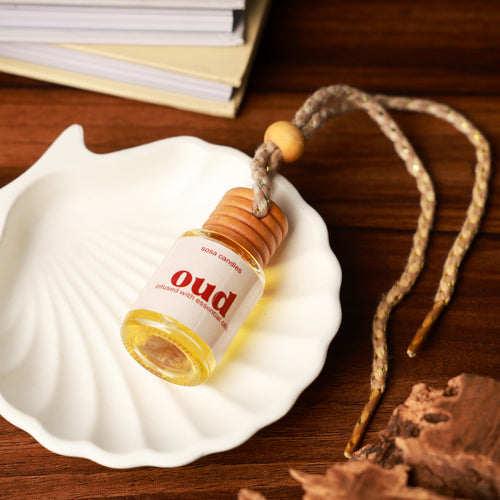 Car perfumes · the ₹500 rungfrom ₹449Shop →