




The split: fan-only mode runs the blower without chilling the coil. Smell present = dry deposits (filter, blower). Smell absent = the wet coil.
The exclusion: if it still smells with the AC off for a whole day, the unit was never the cause and you are back to bedding, curtains and ventilation.
2. Split dry from wet with fan-only mode. Set the unit to fan mode with cooling disabled, so the blower runs but the compressor does not. Nothing gets chilled, so nothing condenses. Three minutes is enough. Smell present means you are smelling dry deposits — a loaded filter or a furred blower wheel. Smell absent, then returning as soon as cooling starts, means you are smelling growth on the wet coil being rewetted. This one test halves the search.
3. Take the filters out and smell them directly. Lift the front cover, slide the mesh panels out, and hold one to your nose away from the unit. This is the most under-used test in the whole exercise because the answer is usually unambiguous. A month-old filter in an Indian bedroom carries a grey felt of dust, lint, hair and skin flakes, and it sits in front of a coil that is dripping, so it is never dry. If the filter alone smells like the room does when the AC runs, you have found it, and the fix is a tap and a soft brush.
4. Check where the condensate is going. While the unit is cooling, go and look at the outdoor end of the drain pipe. Water should be running out of it steadily. If it is only dripping, or not running at all, and yet the unit is clearly cooling, water is standing somewhere it should not be — usually in the shallow pan under the coil. Standing water gives a heavier, more stagnant smell than coil biofilm, and it is often worse after the unit has sat idle for a day.
5. Then decide, and put fragrance last. Filter smells: wash it. Fan-only clean but cooling smells: book a coil service. Blower visibly furred through the louvres: add it to the same booking. Drain not running: clear the line. Only when the airflow path is clean and the room has been aired properly does a reed diffuser or a Sukoon make sense — as the layer that gives a neutral room a character, not as anything that acts on the original smell.
Made in India, composed by an ISIPCA Versailles-trained perfumer — and a portion of every order supports girl-child education through Nanhi Kali.
Why isolating the unit beats guessing at the room
Household smells are usually diagnosed badly because people start with a hypothesis and then clean things until it goes away, which teaches them nothing and often costs a weekend. Your situation is better than that. You have an odour with a switch, which means you can turn it on and off at will and run controlled comparisons in your own bedroom. That is a genuine luxury in odour diagnosis, and it deserves to be used properly: change one variable, observe, change the next. Cleaning three things at once is the fastest way to fix the problem and still not know what it was — which matters, because you will need to know when it comes back next season.
The path itself is short and worth picturing. Room air is drawn in through the grille at the top of the indoor unit. It passes through washable mesh filters. It crosses the evaporator coil, a block of thin aluminium fins held below the dew point of your room air, where it loses heat and gives up moisture as condensation. A barrel-shaped blower wheel then throws it out through the louvres at the front. The water that condensed runs into a shallow plastic pan and out through a pipe that leaves via the wall, by gravity, with no trap and no flush. Five components, all inside one plastic box on your wall, and four of them are routinely wet or dusty or both. Nothing about a smell coming out of that assembly is mysterious.
The six tests, in the order that saves you the most work
 Step fourFrom ₹749Test one: a full day with the unit off. If the room is genuinely fine, the AC is the source and everything below applies. If it is not, stop reading about coils and go and look at your bedding, your curtains and how often the room is aired. Test two: fan-only mode, cooling off, three minutes, standing a metre in front of the vent. The blower runs and the coil stays warm, so nothing new condenses. Smell present tells you the cause is dry — filter or blower. Smell absent, returning the moment cooling engages, tells you the cause is the wet coil. Do these before you clean anything at all.
Symptom to cause: matching your test results
Run the tests first, then find your combination of results here. The confirmation column is what stops you paying for a coil service when a two-minute filter wash was the answer.
| What you notice | Most likely cause | How to confirm it | What actually fixes it |
|---|---|---|---|
| Fan-only smells, cooling smells about the same ★ | Dry deposits — a loaded mesh filter, most often | Take the filters out and smell one directly, away from the unit | Wash under a tap with a soft brush, dry fully, refit; repeat monthly |
| Fan-only is clean, smell starts when the compressor engages | Biofilm on the wet evaporator coil being rewetted by condensation | Alternate two minutes fan-only and two minutes cooling, twice, and compare | A professional coil clean; fan-dry for ten minutes before every shutdown |
| Filter looks clean, blower gaps look furred grey through the louvres | Dust and lint packed into the blower wheel, downstream of everything | Shine a torch into the housing with the filters removed | Add a blower wheel clean to the next service — not a user job on most splits |
| Heavier, flatter, stagnant note; worse after a day unused | Standing water in the drain pan from a partly blocked condensate line | Check the outdoor end of the drain pipe while the unit is cooling hard | Clear the line and confirm it falls continuously along its whole run |
| Room still smells wrong after a full day with the AC off | The AC was never the source — it was only moving air past one | Use the room normally for a day with the unit off and judge on returning from outside | Air the room properly twice a day; wash bedding and curtains; check for wet traps |
| Damp patch, blistered paint or dark speckling near the unit or the pipe | A leak and mould growth — a building and health issue, not an odour problem | Look under and behind the indoor unit and along the drain pipe run with a torch | Trace the water, fix it, remove the growth. Do not fragrance this. |
| If none of these fit: note the exact number of seconds between switching on and the smell arriving. Under ten seconds is nearly always a slug of stale air from inside the casing. Two or three minutes in, building steadily, points at the coil going properly cold and wet. | |||
Reeds · always-on roomsFrom ₹749Shop →  Sukoon · when you want a switch₹1,899Shop →
  Hotel Collection · the scentFrom ₹299Shop →
What to do with each result
If the filter is the answer, this is a ten-minute job and it is the most common outcome. Slide both mesh panels out, rinse under a running tap from the clean side outward so the dust is pushed off rather than through, work gently with a soft brush and a little mild soap, rinse again, and then dry them completely before they go back. A damp filter refitted into a cold unit is a better home for growth than the dirty one you removed. Put a monthly reminder on your phone for the cooling season; fortnightly if you live on a main road or anywhere with construction nearby.
If fan-only was clean and cooling was not, book the service and change one habit in the meantime. Growth in the fin pack is not reachable from the front, whatever a spray can claims, because the fins are packed millimetres apart and the deposit is between them. A proper jet clean with the drain correctly routed, once before the season, is what fixes it. The habit that slows it coming back is simple: run the unit on fan-only for the last ten minutes before you switch off, so the coil dries rather than sitting wet for eight hours in a warm room. If the drain test failed too, get the line cleared at the same visit.
And if the AC turned out to be innocent, you are back to the ordinary diagnosis — which is good news, because it is free. Cross-ventilate for ten minutes twice a day, because the AC exchanges no air at all and a closed room sits at roughly 0.2–0.5 air changes an hour. Wash bedding weekly and curtains seasonally, since textiles absorb odour and release it slowly for days. Check the wet traps: unused drains, the washing-machine gasket, damp cloths folded rather than dried. Once the room is genuinely clean and dry, a reed diffuser from ₹749 gives it a permanent quiet character with nothing to operate, or the Sukoon at ₹1,899 with a Hotel Collection scent from ₹299 gives you a switch. Either way, place it out of the vent's airflow.
The order that works
The tests cost nothing and the two most likely fixes cost nothing either. The purchase is genuinely worth making, and it is genuinely fourth.
| Step | What to do | When | Cost |
|---|---|---|---|
| 1. Remove the source | Run the six tests, wash the filters, clear the drain line, book a coil and blower clean if fan-only came back clean | Before anything else | ₹0 |
| 2. Move the air | Cross-ventilate ten minutes twice a day — the AC recirculates and exchanges no outside air whatsoever | Daily, five to ten minutes | ₹0 |
| 3. Deal with what holds it | Fan-dry the coil for ten minutes before shutdown; wash bedding weekly; wash filters monthly through the season | Weekly to monthly | ₹0 |
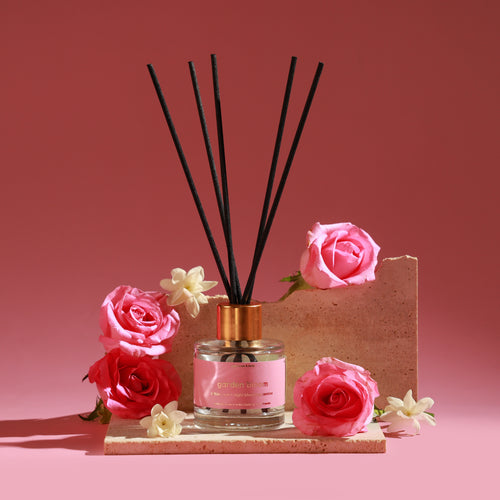
| 4. Then the always-on layer ★ | A SOSA reed diffuser — a settled background in a room that is now neutral — placed away from the vent, four reeds in a bedroom | 50ml 6-8 weeks · 130ml 14-18 | from ₹749 |
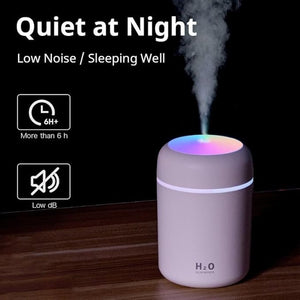
| 5. Or the on-demand layer | Sukoon with a Hotel Collection scent — scent on demand in a living room or study; roughly 270–320 sq ft of coverage from one machine | Run it when you want it | ₹1,899 |
Versailles
I like this question because the person asking it has already done the hard part without knowing it. You noticed a correlation. Most people never get that far with a household smell — they clean, it comes back, they clean again. You have an odour you can switch on and off, which means you can test it properly, and nothing I sell is remotely as useful to you as three minutes in fan-only mode.
The mistake I would like to talk you out of is buying an AC odour spray, and there are plenty of them. They are fragrance in an aerosol, and they are being asked to act on growth that is sitting between aluminium fins two millimetres apart, several centimetres deep, behind a filter. The fragrance reaches the front face of the coil and the growth stays exactly where it was. You end up with two smells arriving on the same air stream, which is worse than one.
When the unit is clean, come back and scent the room properly — and do not put the bottle under the vent, which is the other thing people try. Away from the airflow, on a stable surface, four reeds rather than six in a bedroom. That gives you a room that smells of something you chose rather than something you tolerated. A portion of every order funds a girl's classroom through Nanhi Kali.
Frequently asked questions
- Why does my split AC sometimes smell musty? — coil, blower, pan and drain line.
- Can a dirty AC filter make a clean bedroom smell bad? — a month of dust becoming a smell.
- A clean bedroom that smells strange with the AC on — what cleaning never reaches.
- Should I put a reed diffuser near the AC? — the honest answer, and the right placement.
- Brand: the SOSA founder story.
SOSA products & prices (verified August 2026): Hotel Collection water-based ultrasonic diffuser fragrance 15ml ₹299 · 100ml ₹999 · 300ml ₹1,799 · Pack of 7 (15ml, all fragrances) ₹1,799; refills 100ml from ₹999. Seven scents: The Ritz-Carlton-inspired (white tea · bergamot · cedar), Westin-inspired (white tea · aloe · cedar), 1 Hotels-inspired (cedarwood · vetiver · green leaves), The St. Regis-inspired (amber · violet · woods), Shangri-La-inspired (jasmine · green tea · white tea), Four Seasons-inspired (citrus · floral · sandalwood), W Hotels-inspired (citrus · pepper · amber). Diffusers: Boond 300ml ₹899 · Sukoon 500ml ₹1,899 · Megh 6L ₹3,499. Water-based, phthalate-free, composed to IFRA standards for home diffusion; 3–6 drops per tank. Made in India, Pune. The Hotel Collection scents are SOSA's own interpretations inspired by the world's finest hotels; all hotel names are trademarks of their respective owners and are used only to describe the scent style — SOSA is an independent Indian fragrance house, not affiliated with or endorsed by any hotel brand. Prices and availability subject to change — see the live product pages.