
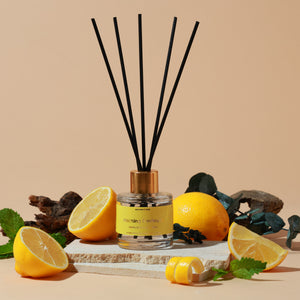
 Current bottle ₹749 Genuinely large room ₹1,249
 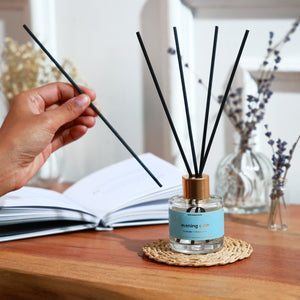 Evening rooms ₹799
 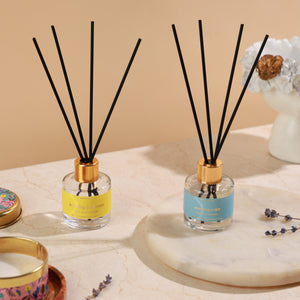 Two scents ₹1,498
 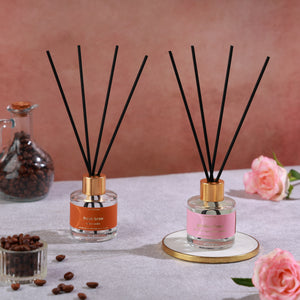 Keep it running ₹2,399
What also moves the needle: the room genuinely warms through the afternoon, which speeds evaporation, and an evening AC or fan then strips scent off the reeds faster than it rebuilds — a real hour-to-hour dip that has nothing to do with adaptation.
What not to do: do not add reeds and do not buy a second bottle. That raises consumption, makes the morning louder, and does nothing for a nose that has already adapted.
2. Temperature and airflow cycling through the day. A room genuinely warms through the afternoon, which raises evaporation off the reeds, and then an AC or ceiling fan coming on in the evening strips that scent layer off faster than it rebuilds. Scent throw honestly does vary hour to hour, and an evening dip can be real even in a bottle that is working exactly as it should.
3. Morning ventilation adds to the illusion. Many households open a window first thing. The incoming air moves scent off the reeds in a short burst that reads as "strong", and then the room closes up for the day and that burst has nowhere to go and nothing to replace it.
4. The reeds may simply need a flip. Fibre reeds draw oil from one saturated end. Flip them and watch what happens: if the evening throw comes back for two or three days and then fades again, the reeds are working and just need that habit. If flipping stops helping at all, the reeds — not the oil in the bottle — are finished.
5. Only after all four checks does a product question exist. If the room is honestly above 150 sq ft, a 50ml bottle is under-specified for it and a 130ml at ₹1,249–₹1,349, running 14–18 weeks, is the correct size — not a second 50ml alongside the first.
Buying a stronger bottle is the wrong response to nose-blindness: it makes the room strong for guests and leaves you exactly where you started. Alcohol-free, IFRA-compliant, composed by an ISIPCA Versailles-trained perfumer and handmade in small batches in Pune.
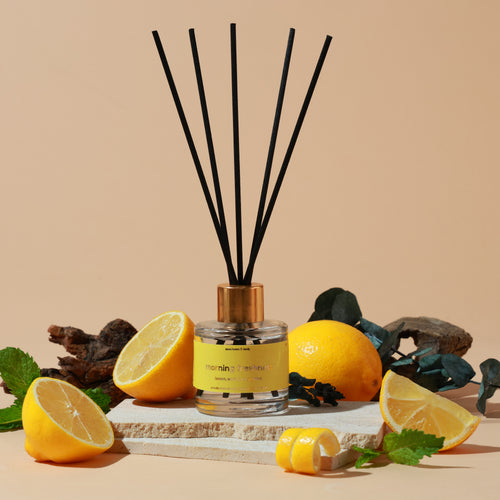
Why the same bottle reads loud at 8am and silent at 8pm
Your nose does not measure a scent the way a scale measures weight. It measures change. Olfactory receptors fire hardest at the first exposure to a smell and then progressively stop firing on a signal that stays constant — a mechanism called olfactory adaptation, and it has nothing to do with the strength of what is in the air. Walk in at 8am from a stairwell or a car and your receptors have been resting; the contrast against that rested baseline is large and reads as loud. Stay in the same room until 8pm, breathing the same unchanging air the whole time, and there has been no contrast to register for hours — your nose has, correctly, stopped telling you about a smell that is not new information. This is the single most common reason behind "it stopped smelling after a few days" complaints generally, and it is also, hour for hour, exactly what produces a morning-loud, evening-quiet day.
Meanwhile the diffuser itself has done nothing dramatic. Fractionated coconut oil climbs six fibre reeds by capillary action and evaporates off the exposed ends at a rate set mostly by temperature and airflow, not by the clock. There is no reservoir that empties by lunch and refills overnight — the reeds are wicking at roughly the same pace at 8pm as they were at 8am, adjusted only for the room's real physical conditions. So the two things people assume must be connected — a loud morning and a quiet evening — are largely unrelated. One is a property of your nose over the last twelve hours. The other is a near-constant physical process in the glass. It only feels like cause and effect because they share a clock.
The reason this is worth stating plainly rather than leaving as a footnote is that the instinct it produces — buy something stronger — is precisely the wrong instinct. A stronger scent, a second bottle or extra reeds all raise the concentration a rested nose meets on arrival, which means the morning gets louder while the evening, governed by adaptation rather than concentration, barely moves. You end up with a room that overwhelms a guest at the door and still reads as nothing to you by dinner. The honest fix addresses where you meet the scent, not how much of it exists.
The three things actually happening across your day
 Morning Freshness 50ml₹749This is the mechanism behind the great majority of "it faded" complaints, and it is by far the largest cause of a morning-strong, evening-quiet pattern specifically. You arrive in the morning with a nose that has been resting in different air — outside, another room, sleep — and the contrast against that rested baseline is what you are calling "strong". By evening you have logged hours of exposure to a scent profile that has not changed, and your receptors have stopped reporting it. Nothing about the diffuser explains this swing; your exposure history does.
What you're noticing, matched to the likely cause
Most people reading this fall into the first four rows below, and the honest fix for all four costs nothing. Only the last row is a genuine product decision, and it depends on a measurement, not a feeling.
| What you're noticing | Likely cause | The test | The fix |
|---|---|---|---|
| Same pattern every single day, weekdays and weekends alike ★ | Olfactory adaptation | Leave for 2 hours and walk back in, or ask someone arriving fresh | None — reposition to the threshold, ₹0 |
| Dip lines up with the AC or evening fan switching on | Airflow stripping the reeds | Check whether the fade tracks the AC schedule, not the clock | Move off the vent path, ₹0 |
| Loudest right after morning windows open, then settles | Morning ventilation burst | Fade should start as windows close, not hours later | Nothing to fix — this is expected, ₹0 |
| Flipping brings the evening throw back for 2–3 days | Reeds saturated on one end, still working | Flip and count the days before it fades again | Flip every 3–5 days, ₹0 |
| Flipping stops helping at all, though oil remains in the bottle | Reeds finished, not the oil | Fresh reeds in the same oil should draw again | Note it for the next refill — not urgent, ₹0 |
| Room is honestly 200+ sq ft and even the morning throw is thin | 50ml under-specified for the room | Measure the room, don't estimate it | 130ml is the correct size, ₹1,249–₹1,349 |
| Note on the order: read this table top to bottom, not bottom to top. Almost everyone lands in the first four rows. Jumping straight to a bigger bottle before doing the two-hour test is how people end up with two diffusers and the same evening silence. | |||
Morning Freshness · the bottle you likely have50ml ₹749Shop → Morning Freshness · if the room is genuinely large130ml ₹1,249Shop → 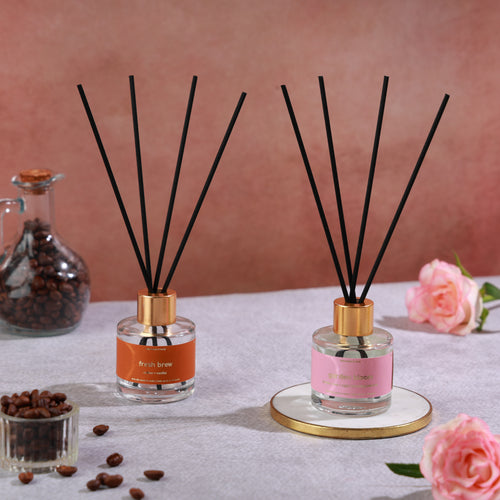 Refill · keep the same bottle running300ml ₹2,399Shop →
Reeds, placement and the routine that actually helps
Do not add reeds to fight the evening dip. It is the single most common overcorrection, and it works against you twice over: more reeds raise consumption, so the same ₹749 bottle now runs closer to six weeks than eight, and more reeds also raise the concentration a rested nose meets on arrival — which means the morning gets louder while the evening, governed by adaptation rather than by how much oil is in the air, barely changes. You end up spending more to make the one time of day that was already working even stronger, and the time of day you actually wanted fixed is untouched.
Move the bottle to the threshold of the room instead — the console or shelf nearest the door, not the far wall or the centre of the room. The reasoning is the same reasoning behind the two-hour test: you register scent most strongly at the moment of contrast, which for most people is the moment they cross into a room. A bottle sitting deep inside a space you are already standing in when you notice it has missed that moment entirely. A bottle you pass on the way in gives your nose the one thing that reliably breaks adaptation — a fresh point of entry — every single time you walk through the door, evening included.
Then keep the maintenance habit that actually matters: flip every fibre reed, saturated end up, every three to five days. This is the whole routine, and it is the difference between a bottle that reads consistent for its full six to eight weeks and one that seems to fade permanently after a fortnight. Give any change seventy-two hours before judging it — the first evening after a flip or a move is not representative, because the reeds are still re-equilibrating. And keep the bottle out of a direct AC or fan blast — roughly 300mm clear of a vent or windowsill is enough to stop airflow stripping the scent layer faster than it can rebuild, which is the real, non-adaptation half of the evening dip.
What it actually costs to do this properly
The free fixes cost exactly what they sound like — nothing. The only genuine spending decision in this whole diagnosis is whether your room is honestly above 150 sq ft, and the arithmetic below is worked by hand so you can see what each route costs per week rather than take it on faith.
| Route | What you do | Reeds · life | Cost per week |
|---|---|---|---|
| Reposition only ★ | Move the existing bottle to the threshold, no purchase | Unchanged | ₹0 |
| Current bottle, six reeds | Any 50ml — Morning Freshness ₹749, Evening Calm ₹799 or Fresh Brew ₹849, run at six reeds, 6–8 weeks | Six · 6–8 wks | ₹94–142 |
| Same bottle, three reeds | Drop to three reeds — softer throw, 10–14 weeks instead of 6–8 | Three · 10–14 wks | ₹53–85 |
| A second bottle (not recommended) | A second 50ml alongside the first, both at six reeds, running concurrently | Six + six | ₹187–284 combined, adaptation unchanged |
| 130ml, room genuinely >150 sq ft | Morning Freshness 130ml ₹1,249 or the ₹1,349 scents, six reeds, 14–18 weeks | Six · 14–18 wks | ₹69–96 |
Versailles
This question comes to us almost daily, usually worded as a complaint: "it worked for the first hour and then nothing." What I have learned training a nose at ISIPCA is that the nose is designed to do exactly this, and it is not a flaw to be engineered around. A constant smell is, biologically, uninteresting information — your receptors are built to notice change, not to keep re-reporting a note that has not moved. That is not your diffuser failing you. That is your nose doing its job correctly.
The instinct to fix this with a bigger bottle is one I understand completely, because it feels like doing something. But it treats the wrong variable. Concentration is not your problem — exposure time is. A second bottle or a heavier hand on the reeds simply raises the volume on a signal your nose has already decided to stop hearing, while making the room louder for the one person who has not been sitting in it all day: your guest at the door.
So before anything is bought, I would ask you to do the two-hour test. Leave, come back, and notice what is actually there. Most people who write to us about a fading diffuser come back a week later to say they moved the bottle three feet and never mention it again — which is, honestly, the outcome I would rather have than a sale. Every purchase we do make funds a girl's education through Nanhi Kali, but I would still rather you spend nothing than spend it on the wrong fix.
Frequently asked questions
- Why can I only smell my reed diffuser when I walk past it? — the dead-air version of the same nose problem.
- I want my home to smell good when I enter but I become nose-blind after — what should I do? — placement fixes that fight adaptation directly.
- My bathroom reed diffuser smelled great for three days and then vanished — why? — when the room, not the nose, is the cause.
- Why does my reed diffuser stop smelling after a few days in Mumbai's weather? — the humidity layer on top of adaptation.
- Brand: the SOSA founder story.
SOSA products & prices (verified August 2026): Scented candles from ₹379 (small, ~15–18 hrs) · candle duos ₹664 (~30–36 hrs) · wax melts ₹474 · woodenwick and ceramic jar candles ₹949. Reed diffusers: Morning Freshness 50ml ₹749 · 130ml ₹1,249 · Evening Calm 50ml ₹799 · 130ml ₹1,299 · Garden Bloom 50ml ₹799 · 130ml ₹1,299 · Fresh Brew 50ml ₹849 · 130ml ₹1,349 · Mountain Breeze 50ml ₹849 · 130ml ₹1,349; six fibre reeds and refillable glass with every bottle, 50ml lasts 6–8 weeks at six reeds and longer at three, 130ml 14–18 weeks. Reed duo sets 2 × 50ml ₹1,498–₹1,598 · 2 × 130ml ₹2,498–₹2,598. Reed refills 300ml ₹2,399 · 500ml ₹3,499. Ultrasonic diffusers: Boond ₹899 (USB) · Sukoon ₹1,899 (ships with three 15ml fragrances) · Megh ₹3,499; Hotel Collection water-based fragrance 15ml ₹299 · 100ml ₹999 · 300ml ₹1,799 — a fragrance for a machine, not a standalone product. Reed oil and the water-based Hotel Collection are not interchangeable. Alcohol-free, phthalate-free, paraben-free, IFRA-compliant; composed and handmade in small batches in Pune. Every purchase funds a girl's education through Nanhi Kali. Prices and availability subject to change — see the live product pages.