

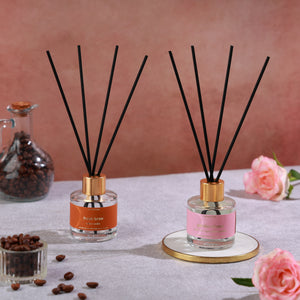
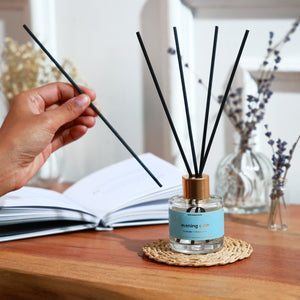

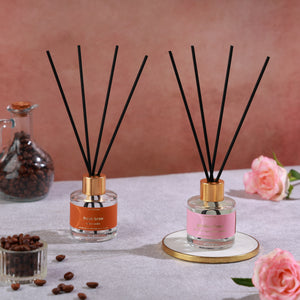
The one technical fact that decides everything: real jasmine contains indole, which reads living and floral below a certain concentration and frankly unpleasant above it — and which mobilises with heat. Indian rooms cross that threshold routinely. In Garden Bloom the indole is held deliberately below the threshold, which is why the flower is still a flower above 30°C rather than something you quietly move to the balcony.
The honest gaps, in full: there is no tuberose, no gardenia, no ylang-ylang, no magnolia, no champa or frangipani, no orange blossom and no jasmine-solo scent in the SOSA reed line. Six flowers are the white-floral canon; we make one of them. Nearest honest answers: for the big creamy whites, the sambac inside Garden Bloom at a much lower volume — a substitution, not a match. For a greener, lighter, tea-like jasmine, the Shangri-La-inspired scent in the Hotel Collection at ₹299, which is water-based and goes only in an ultrasonic machine. For soft rather than white-floral, Evening Calm at ₹799. There is no hotel-inspired reed diffuser.
Rooms: hall and drawing room 130ml on six reeds — commit and never rotate. Bedroom 50ml on three reeds and never six. Living room 130ml, and five reeds often beats six. Bathroom 50ml on two reeds, at which it runs close to three months.
2. Understand the clock before you choose a room. Sambac is night-blooming. It is the only flower in this range that has an hour, it peaks after dark, and every recommendation in these ten pages is downstream of that one fact — which rooms it belongs in, which hours it earns its keep, and how much of it you should be running. A jasmine in a room nobody uses in the evening is a jasmine wasted.
3. Understand the indole before you judge the price. Jasmine's warmth and jasmine's failure are the same molecule. Indole reads living, warm and floral below a threshold and distinctly unpleasant above it, it mobilises with heat, and Indian rooms cross that threshold routinely between March and June. A jasmine sold in India is therefore a bet on formulation restraint, not a bet on flower quality. In Garden Bloom the indole is held below the threshold on purpose.
4. The gaps are large and I would rather say so now. No tuberose, no gardenia, no ylang-ylang, no magnolia, no champa or frangipani, no orange blossom, and no jasmine-solo scent in any bottle or any size. Six flowers make up the white-floral canon; we make one of them properly rather than making thin versions of all six. If a specific one of those is the smell in your head, the nearest honest register is named for each of them further down.
5. Size by the room and set the volume with the reeds. 50ml up to about 150 sq ft, 130ml above it. Hall and drawing room: 130ml, six reeds, and never rotate. Bedroom: 50ml, three reeds, never six. Living room: 130ml, and five reeds often beats six, because an overdosed jasmine reads as staged rather than as generous. Bathroom: 50ml on two reeds, where it runs close to three months. Flip every five to seven days — and flip the morning of an evening you are hosting.
Alcohol-free, phthalate-free, paraben-free, IFRA-compliant, 0 ppm formaldehyde, six fibre reeds in a refillable glass bottle, composed in Pune. Free shipping above ₹499, and a portion of every order supports girl-child education through Nanhi Kali.
Part one — the principle: two sentences hold this entire family
Nine pages of writing about jasmine reduce to two facts, and every practical instruction in this guide is an application of one or the other. Here is the first. Jasmine is the only flower in this range with a clock. Jasminum sambac is night-blooming — the plant opens its flowers after sunset and releases the bulk of its volatiles in the hours after dark, which is why mogra is picked in the evening, why a garland is bought on the way home rather than on the way out, and why every childhood memory of jasmine in this country is a memory of a terrace at nine at night rather than of a garden at eleven in the morning. A rose has no such hour. A cedar has no such hour. Jasmine does, and it is not a poetic claim — it is the reason the flower exists in the form it does, because its pollinators are nocturnal. Everything in these ten pages is downstream of that single fact: which rooms you should put it in, because a jasmine belongs where you are between seven and eleven at night; which hours it is actually earning its price in, which is not the ones you are at work; and which dose, because a flower with an evening peak needs less of itself running all day than a flower without one. This is the argument that opens the page on a jasmine home and it is the argument that makes the bedroom page possible at all, since jasmine is the one flower whose clock matches the room it is being put in.
Here is the second, and it is the less flattering one. Jasmine's warmth and jasmine's failure are the same molecule. Real jasmine contains indole. Indole is what makes a jasmine smell alive rather than drawn — it is the warm, waxy, faintly animal quality underneath the flower, and without it you have a jasmine-shaped outline with nothing inside it. But indole is concentration-dependent in a way very few aroma materials are: below a certain level it reads as living and floral, and above that level it stops reading as flower altogether and starts reading as something distinctly unpleasant, a register perfumers describe with a word I will leave off this page. And the threshold is not fixed by the bottle alone, because indole mobilises with heat. A formulation that sits comfortably below the line at 22°C in an air-conditioned showroom can be sitting well above it at 36°C in a shut Chennai bedroom in May. Indian rooms cross that threshold routinely, which is why so many people in this country have a specific memory of a jasmine product that was lovely in January and frankly wrong by April. The consequence for a buyer is the sentence I would most like you to take away from this page: a jasmine sold in India is a bet on formulation restraint rather than a bet on flower quality. Better material does not save you. Less of it, held deliberately under the line, does. That is the whole subject of the India page, and it is the one technical argument no other family in this plan gets to make.
Put the two together and you have the shape of the family. The clock tells you where and when a jasmine is worth having; the indole threshold tells you why a good one costs what it costs and why a cheap one fails in a predictable month rather than at random. Between them they also explain the two complaints we receive about jasmine, which are not the same complaint at all. A jasmine that disappeared is usually a jasmine bought for the wrong hours — running hard through an empty flat all day and exhausted by the evening, when the flower was finally due to do its work. A jasmine that turned is a formulation that was never held far enough below the line to survive an Indian April. The first is a placement problem and free to fix. The second cannot be fixed at home at any price, which is why the rest of this page spends so long on a decision that happens before the bottle is filled.
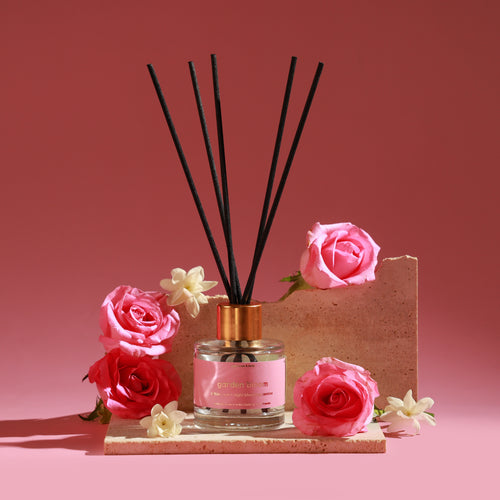
 Garden Bloom₹799Every other scent we make is indifferent to the hour. Garden Bloom is not, because the flower at its centre is not. That is why the composition has a British rose in it doing the daylight work — green, structured, faintly peppery, entirely comfortable at eleven in the morning — while the sambac carries the evening. It is also why a jasmine is wasted in a room whose life happens before lunch: a home office, a breakfast kitchen, a bathroom used mostly at seven in the morning. Put it where you are after dark. A hall you come home through, a drawing room you sit in, a bedroom at eleven at night.
 Warmth & Bloom₹1,598Indole is not an impurity and it is not a shortcut — it is the reason a real jasmine smells like a living flower instead of a drawing of one. It is also strictly dose-dependent, and it mobilises with heat, so the same bottle sits on different sides of the line in February and in May. In Garden Bloom it is held deliberately below the threshold, which is a restraint rather than a flourish and costs us the loudest version of the flower. It is the single decision in this bottle I would defend hardest, because it converts a seasonal product into one you can keep in a Chennai flat in May.
 Evening Calm₹799A restrained formula on a bad base still fails, just more slowly. Most reed diffusers sit on DPG, which is cheap and which cracks above roughly 40°C — that is the mechanism behind a diffuser going sour, bitter or acrid in a Delhi May, and it is a separate failure from the indole one, which is why some jasmines manage to go wrong twice. Every SOSA reed sits on a heat-stable CCT base — caprylic/capric triglyceride, coconut-derived — tested through a 45°C heat soak and 85% RH monsoon humidity. The reeds are fibre rather than rattan, because rattan clogs in Indian humidity and produces the fade-then-nothing pattern people blame on the oil. If white flowers are too much for you altogether, Evening Calm at ₹799 is the softest thing we make at 8.9.
Part two — what SOSA actually has for a jasmine buyer, and the five white flowers it does not
Five scents is the entire reed line. There is no sixth, no seasonal edition and no exclusive, and exactly one of the five contains jasmine. Garden Bloom — real night-blooming Jasminum sambac (mogra), British rose, soft musk drydown, ₹799 for 50ml and ₹1,299 for 130ml, 8.9 on the SOSA strength scale and a medium floral, 45 days to two months on the small bottle and 14–18 weeks on the large one, rated 4.9 across 138 verified buyers, six fibre reeds in a refillable glass bottle. Its own product title on our store is Jasmine & Mogra Reed Diffuser India — Real Sambac, and each of those words is doing work. Real because the flower is a genuine sambac rather than a jasmine accord assembled from cheaper materials. Mogra because that is the name the flower actually has in the houses it is going into. India because the formulation decision that matters most in it — the indole restraint — is a decision made for Indian rooms and would be an unnecessary sacrifice anywhere with a temperate May.
The construction deserves its own paragraph, because it is the family's argument made physical. The British rose is the garden-rose register rather than the rose-flavoured-cleaner one: green, structured, faintly peppery and slightly metallic, the smell of a rose in a garden at eleven in the morning. It carries the daylight. The night-blooming sambac is warmer, waxier, heavier and later, and it gives the composition an evening. The soft musk drydown underneath both is what stops the two flowers separating into a bouquet with two halves and instead holds them as one object. And I want to say this plainly, because readers arrive at this page looking for jasmine and skim past the rose: there is no jasmine-solo scent at SOSA, Garden Bloom is a composition, and the rose is load-bearing. Take it out and you do not get a purer jasmine. You get a flower with nothing to do for eleven hours of the day, running at a dose that has to be high enough to register at nine in the morning — which is exactly the dose that crosses the indole line at four in the afternoon in April. The rose is what allows the jasmine to be restrained. If a soliflore jasmine is genuinely what you want, buy one from somebody who makes one, and be honest with yourself about which month you bought it in.
Sambac versus grandiflorum is the distinction that separates a jasmine buyer who will be happy from one who will be puzzled, and it is the whole opening of the India page. Two species dominate perfumery and they are genuinely different flowers wearing one English word. Jasminum sambac — mogra in the north, mallige in the south — is the night-blooming shrub whose small waxy flowers go into garlands, temples and hair. It smells heady, warm, waxy, faintly green, with a full body and a short, dense throw. Jasminum grandiflorum — Spanish jasmine, Catalan jasmine, chameli — is the larger-flowered climber that most of Western fine perfumery is built on, and it reads greener, more tea-like, lighter and fruitier, with more lift and less body. Neither is better. But if your idea of jasmine was formed by a garland rather than by a French perfume, and you buy a grandiflorum-led product, you will find it correct and thin and you will not know why. Garden Bloom is sambac. That is not a marketing preference, it is the answer to the question whose memory of jasmine is this bottle for.
Now the white-floral canon, because "white floral" is a category people search for without knowing which member of it they mean. There are six major white florals in perfumery: jasmine, tuberose, gardenia, orange blossom, ylang-ylang and magnolia — with champa or frangipani standing beside magnolia as the Indian member of that register. They share a family resemblance — creamy, heady, indolic, opulent, all of them capable of dominating a room — and they are not remotely interchangeable in practice. Tuberose is the biggest and the most narcotic, with a green-rubbery top most people either adore or cannot be near. Gardenia is creamy and peachy with a mushroom-like quality underneath that is much harder to make convincing than anyone expects. Orange blossom sits between a flower and a citrus and is sold under four different names that mean four different materials. Ylang-ylang has a banana-solar sweetness that reads as suntan oil to half the people who smell it. Magnolia is the lemony, fresh one, and champa is the warm, milky, faintly fruity Indian cousin. SOSA makes one of the six. We make jasmine, we make it as sambac, and we make it properly — and the alternative, which a great many houses take, is to make thin versions of all six and let the label do the work. The white florals page takes each of the six apart in turn; the summary is below.
| White floral | What it actually smells like | Does SOSA make it? | The nearest honest thing |
|---|---|---|---|
| 1. Jasmine (sambac) | Heady, waxy, warm, faintly green — night-blooming, with a short dense throw. The garland flower | Yes — the only one | Garden Bloom ₹799 / ₹1,299, indole held below the threshold |
| 2. Tuberose | The biggest white floral there is — creamy, narcotic, with a green-rubbery top. It does not scale down politely | No | The sambac inside Garden Bloom at a much lower volume — a smaller, drier, more wearable relative. A substitution, not a match |
| 3. Gardenia | Creamy and peachy with a mushroom-like quality underneath, which is the part cheap versions never get | No | Again the sambac in Garden Bloom ₹799. The creamy-lactonic half is simply not in the range |
| 4. Orange blossom | Half flower, half citrus. Sold under four names — neroli, orange flower, petitgrain, orange blossom — that are four different materials | No | Garden Bloom ₹799 for the white-floral warmth people usually mean; the Ritz-Carlton-inspired Hotel Collection ₹299 is the only bergamot in the house, and it is ultrasonic only |
| 5. Ylang-ylang | Banana-solar, sweet, faintly medicinal — reads as suntan oil to about half the people who smell it | No | Nothing. There is no honest substitute in this range and I will not point you at one |
| 6. Magnolia / champa | Magnolia is the lemony, fresh white floral; champa and frangipani are the warm, milky, faintly fruity Indian relatives | No | For champa, the sambac in Garden Bloom ₹799 is the nearest register. For magnolia's lemon lift there is nothing floral — Morning Freshness ₹749 has the lemon and none of the flower |
And here is the whole reed line ranked for somebody who came looking for jasmine, which means four of the five rows are honest labels rather than recommendations. This is the same table that closes the decision-tree page, laid flat instead of taken one branch at a time.
| Scent | Real note profile | Strength | How white-floral it really is | Best room | Longevity | 50ml / 130ml |
|---|---|---|---|---|---|---|
| 1. Garden Bloom ★ | British rose · night-blooming jasmine (sambac/mogra) · soft musk drydown | 8.9 · medium floral | The only jasmine and the only white floral in the range. A composition, not a solo — the rose is load-bearing, and the indole is held below the threshold so it stays floral above 30°C | Hall, drawing room, living room, bedroom on three reeds | 45 days–2 months / 14–18 wks | ₹799 / ₹1,299 |
| 2. Evening Calm | Kashmir lavender · chamomile · soft musk drydown | 8.9 · the softest in the range | Not a white floral — a herbal-floral. The honest answer for a reader who wants soft rather than white, and for anyone who finds jasmine a lot at 2am | Bedside, guest room, evening bath | 6–8 wks / 14–18 wks | ₹799 / ₹1,299 |
| 3. Morning Freshness | Malabar lemon (cold-pressed) · peppermint · eucalyptus globulus | 9.0 · mild-medium, bright | Not a floral at all — a citrus. It is here because it is the one scent that belongs next to a kitchen, which is exactly where a jasmine does not | Bathroom, kitchen, home office | 6–8 wks / 14–18 wks | ₹749 / ₹1,249 |
| 4. Mountain Breeze | Himalayan pine · sage · Indian cedar | 9.4 · deep woody, the deepest woody | Not a floral and the deliberate opposite of one — the bottle for the person in the house who says "smells like a flower shop" as a complaint | Bedroom, study, yoga room | 6–8 wks / 14–18 wks | ₹849 / ₹1,349 |
| 5. Fresh Brew | Coorg coffee · Kerala vanilla · soft caramel | 9.5 · warm gourmand, the deepest in the range | Not a floral — a warm gourmand. Worth knowing because it is boxed with Garden Bloom in the Warmth & Bloom duo ₹1,598 — jasmine through one doorway, coffee and vanilla through the next | Living room, study, winter | 6–8 wks / 14–18 wks | ₹849 / ₹1,349 |
One refusal belongs here rather than in the gap table, because it is asked more often than any other. There is no hotel-inspired jasmine reed diffuser, and there is no hotel-inspired reed diffuser of any kind. Not because we have not got round to it: the two products are physically different. Our seven hotel-inspired fragrances are water-based and ultrasonic-only, reed oil cannot go into a machine, and water-based scent cannot go into a reed bottle. That is not interchangeable in either direction and never will be. What is true, and more interesting, is that the reed people most often describe as hotel-like is this one, unprompted and in their own words — "Put the 130ml in our entryway. Three different guests asked which hotel it reminded them of. That's the win for me." — Ritu K., Delhi. If you want the actual green-tea-and-white-flower hotel register rather than the effect, that is the Shangri-La-inspired scent in the Hotel Collection — jasmine, green tea, white tea — at ₹299 for 15ml, which is a lighter and considerably greener jasmine than ours and needs a machine. SOSA is an independent Indian brand with no affiliation to any hotel group.
Real sambac · Garden Bloom₹799Shop → 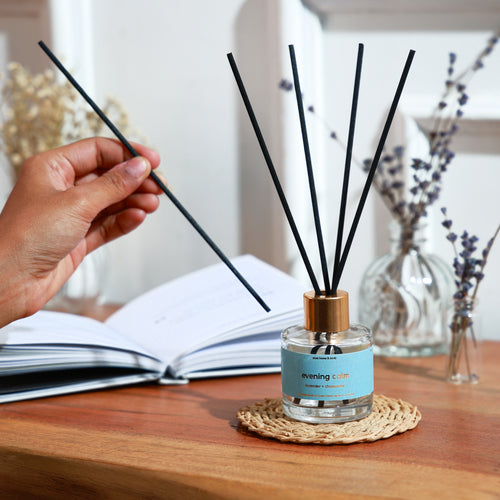 Soft, not white · Evening Calm₹799Shop →
 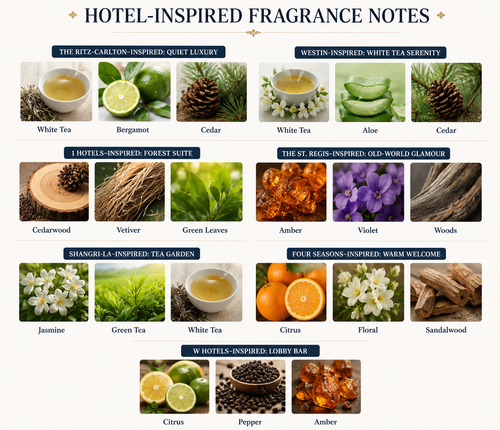 Greener jasmine · ultrasonic only₹299Shop →
Part three — rooms, reeds and sizes, drawn from four pages of this cluster
More jasmines disappoint for being wrong in a room than for being the wrong bottle, and the fix is nearly always free. Here is the room-by-room position as it stands after writing separate pages on a jasmine home, bedrooms, living rooms and sophisticated white florals, compressed into the settings I would actually use.
The hall and the drawing room are where jasmine belongs, and they are the two places in the house where I would tell you to commit and never rotate. This is the branch the whole-home page turns on, and it follows directly from the clock. A hall is a room nobody occupies for more than forty seconds at a time, which is exactly the condition a heady flower is best under — it is met rather than lived in, so it never has the chance to become wallpaper. A drawing room is the room you take people into after seven in the evening, which is the hour the sambac was waiting for. So: Garden Bloom 130ml at ₹1,299 with all six reeds, on a console in the hall, 14–18 weeks a bottle. And then, unusually for me, do not change it. A signature works by repetition — a hall that smells the same every time somebody walks through it becomes a thing people remember about your home, and a hall that smells different every eight weeks is a series of pleasant surprises nobody attaches to you. Rotate the bedroom if you like. Never rotate the hall.
The bedroom takes three reeds and never six, and jasmine's night-blooming clock is the one real argument for putting a floral in a bedroom at all. I am, in general, against florals near a pillow, and the bedroom page spends most of its length explaining why: you are downwind of the bottle for eight unbroken hours with a nose that has nothing else to do, and an Indian bedroom is either sealed and hot or sealed and air-conditioned, neither of which is neutral. Heat expands a floral and expands the indolic part of it first, so a setting that was lovely at eleven at night can be oppressive at four in the morning in a shut room in May. Jasmine is the exception, and it is the exception for one reason only: it is the one flower whose clock matches the room. A rose in a bedroom is a flower doing its best work at an hour you are not there. A sambac peaks in exactly the hours the room is used. So — three reeds, never six, a 50ml at ₹799, because the room is almost certainly under 150 sq ft. If three is still a lot, the honest answer is not less Garden Bloom but a different scent: Evening Calm at ₹799, the softest thing we make at 8.9, rated 4.9 from 164 verified buyers with 97% saying they would recommend it — the highest agreement figure in the range.
The living room works only if the kitchen has a door, and five reeds often beats six. The first half is structural rather than a preference: Indian cooking smells — tadka, fried onion, ginger-garlic, mustard seed, ghee — are warm, oily and heavy, and they sit in the same register as a white floral, so a jasmine placed next to them does not layer, it argues and it loses, and what you get is a room that smells vaguely of sweet dinner. Citrus is the only family that survives kitchen adjacency, which is why Morning Freshness appears in a jasmine guide at all. If your living room has a door between it and the kitchen, Garden Bloom 130ml at ₹1,299 is superb there, and it produces exactly the effect Karan D. in Gurugram describes: "Our living room used to smell like whatever we cooked. Now it smells like a quiet luxury hotel even after Sunday biryani." The second half is the finding from the living-room page, and it is the most useful sentence in it. The living room is the only room where a stranger forms an opinion about your fragrance — bedrooms and bathrooms are private, halls are passed through in seconds, but a guest sits in a living room for two hours with nothing to do but notice. And an overdosed jasmine, in that setting, does not read as generous. It reads as staged. Five reeds instead of six is a small reduction with a disproportionate effect: enough presence that the room is clearly scented, not so much that it announces having been prepared for you. There is also a ceiling regardless: above roughly 250–300 sq ft of open-plan living-dining, one reed bottle cannot carry the volume whatever is in it.
A bathroom does not dilute a white floral — it amplifies one, which is why two reeds is the setting. A bathroom is small, warm and, after a shower, at very high humidity, and all three of those raise the effective intensity of a fragrance rather than lowering it: warm damp air carries aromatic molecules considerably better than dry air, and the room is a fraction of the volume of any other. The reed count that was gentle in a bedroom is overwhelming here. Two reeds in a 40–60 sq ft bathroom, and at that count a 50ml of Garden Bloom at ₹799 runs close to three months rather than 45 days to two months — a little under ₹9 a day for a permanently scented bathroom, against roughly ₹13 a day at six reeds. It is also, and this is the practical point, the cheapest possible way to find out whether you actually like a white floral in your own house rather than on a shop counter, because it is the room where you will meet the flower briefly and often instead of constantly.
| Room | Bottle | Reeds | Scent | What actually happens |
|---|---|---|---|---|
| Hall / entryway | 130ml | 6 | Garden Bloom ₹1,299 | Where jasmine belongs. Met rather than lived in, so it never becomes wallpaper. 14–18 weeks. Commit and never rotate — a hall is a signature |
| Drawing room | 130ml | 6 | Garden Bloom ₹1,299 | The room you use after seven, which is the hour the sambac was waiting for. The clock and the room agree |
| Living room — kitchen has a door | 130ml | 5, not 6 | Garden Bloom ₹1,299 | The only room a stranger forms an opinion in. Six reeds can read as staged; five reads as a home that happens to smell good |
| Living room — open kitchen, no door | 130ml | 6 | Morning Freshness ₹1,249, jasmine moved to the hall | A white floral does not layer with tadka, it argues and loses. Citrus is the only family that survives kitchen adjacency |
| Bedroom (up to 150 sq ft) | 50ml | 3 — never 6 | Garden Bloom ₹799 | The one floral whose clock matches the room. Eight hours downwind with an undistracted nose, so three reeds and no more |
| Bedroom — if three reeds is still a lot | 50ml | 3 | Evening Calm ₹799 | The honest answer is a softer scent, not less of a strong one. 8.9, the softest we make, 4.9 from 164 verified buyers |
| Bathroom (40–60 sq ft) | 50ml | 2 | Garden Bloom ₹799 | A small damp room amplifies rather than dilutes. Two reeds runs close to three months — a little under ₹9 a day, and the cheapest way to find out if white florals suit you |
| Whole flat | Two 50ml | 6 and 3 | Warmth & Bloom duo ₹1,598 | Jasmine through one doorway, coffee and vanilla through the next. A home that smells identical everywhere is edited out within a week. ₹2,598 for 130ml × 2 |
| Open-plan above ~250–300 sq ft | Two 130ml, or a machine | 6 each | Two bottles at opposite ends, or the Sukoon ₹1,899 | The reed's honest ceiling. It is not underpowered, it is unpowered, by design |
Four settings-level rules sit underneath that table. Size by the room: a 50ml suits anything up to about 150 sq ft — bathroom, bedroom, home office — and a 130ml suits anything above it, with 130ml plus all six reeds being the setting for a hall or a room around 200 sq ft. Reed count is the volume dial, and almost nobody uses it as one: six is full strength, five is the living-room setting, three is a bedroom, two is a bathroom, and changing the count is free and fixes most complaints in either direction long before you conclude a scent is wrong. Flip the reeds every five to seven days for Garden Bloom — a slower cadence than the bright scents want, because the flowers are heavier and the wick clogs less quickly — and each flip gives you a lift you did not pay for. And here is the small trick that belongs specifically to this family and that I use myself: flip the reeds on the morning of an evening you are hosting. A flip produces its strongest lift in the first few hours and then settles over the day into something a little fuller than before, so a morning flip means your guests arrive into a hall at the top of its curve rather than at the bottom. Flipping an hour before people arrive does the opposite — it is loud, obvious and, again, reads as staged.
The fourth rule is the one I would print on the box if I could, and it is specific to this bottle. A running split AC strips the rose and leaves you with the sambac and the musk. Moving air accelerates evaporation and it takes the lightest molecules first, which in Garden Bloom is the green, structured, faintly peppery top of the British rose. Put the bottle directly under a vent and within days you are living with a warmer, heavier, more indolic version of the fragrance than the one you chose — the second half of the composition, concentrated. Nothing has gone wrong with the bottle; one of its two flowers has been pulled out of it at several times its intended rate. And since the entire reason the sambac can be restrained is that the rose is carrying the other eleven hours, losing the rose is not a small thing in this particular composition. So place it across the room from the AC unit, and never on a windowsill in direct sun. Otherwise put it where air already travels on its own — a hall console, near a doorway, in the path people actually walk — and if a room seems weak, move the bottle three metres before you decide the scent is wrong.
Part four — the complete jasmine and white floral edit, in buying order, and the honest gaps
Here is the whole range as it applies to somebody who came looking for jasmine, in the order I would actually buy it, ending with the row I care most about. The decision-tree page takes this one branch at a time; this is the same conclusion laid flat. Start at ₹799 with one 50ml in the bathroom on two reeds, because that settles the question of whether a white floral suits your house over three months at a little under ₹9 a day. Move to the 130ml when the room is genuinely above 150 sq ft, which in practice means the hall or the drawing room. Add a second register when the flat rather than the room is the problem. Come to a refill once Garden Bloom is clearly the one you keep going back to.
One idea from the page on sophisticated white florals belongs here, because it changes what people buy more than any table does. Elegance in a white floral is subtraction, not addition. What separates a white floral that reads as expensive from one that reads as cheap is almost never that the expensive one contains more — it is that somebody removed things. Less indole. Less sweetness. No fruit propping up the flower. A drydown that is a soft musk rather than a vanilla. Fewer reeds in the bottle than the box allows. The reason this matters commercially is that subtraction is invisible on a label and addition is not, so the whole market is pushed towards adding, and the buyer is left comparing note lists in which the worse product looks richer. It also connects the two halves of this page: the indole restraint in part one is an act of subtraction, and the five-reed living-room setting in part three is the same act performed at home for free. And it explains the three separate complaints that all arrive wearing one word, which is the subject of the not-too-sweet page: when somebody says a jasmine is too sweet they may mean it is sugared, or that it is too indolic, or simply that there is too much of it in the room — a formulation problem, a formulation problem, and a reed-count problem, of which only the last one is free to fix.
| Buy | What it is | When it is the right answer | Price |
|---|---|---|---|
| 1. Garden Bloom 50ml ★ | Real night-blooming Jasminum sambac (mogra), British rose, soft musk drydown — 8.9, medium floral, the only jasmine in the reed line, 45 days to two months, indole held below the threshold | First, for everyone in this family. Put it in the bathroom on two reeds and it runs close to three months while you decide | ₹799 |
| 2. Garden Bloom 130ml | The large bottle, 14–18 weeks, all six reeds | The hall and the drawing room, which is where a night-blooming flower belongs. Five reeds rather than six in a living room. Commit and do not rotate | ₹1,299 |
| 3. Evening Calm 50ml | Kashmir lavender, chamomile, soft musk drydown — 8.9, the softest thing we make, 4.9 from 164 verified buyers, 97% would recommend | If what you actually want is soft rather than white — a bedside, a guest room, or any night when three reeds of jasmine is still more flower than you want at 2am | ₹799 |
| 4. Warmth & Bloom duo | Garden Bloom + Fresh Brew, 50ml × 2 — the white floral and the warm gourmand | Scenting a flat rather than a room. Jasmine in the hall, coffee-vanilla through the next doorway, so neither gets edited out. ₹2,598 for 130ml × 2 | ₹1,598 |
| 5. 300ml refill | Tops up the bottle and the reeds you already own, in any of the five scents | Once Garden Bloom is clearly the one you keep going back to. 500ml is ₹3,499 | ₹2,399 |
| Not a reed at all: the Sukoon | Ultrasonic, 500ml, rated 270–320 sq ft, 16–18 hours on low, three 15ml Hotel Collection scents included | A large open-plan living-dining, or if what you want is the Shangri-La-inspired jasmine-green-tea-white-tea register rather than a sambac. Boond ₹899 for under 150 sq ft | ₹1,899 |
| The honest gaps: every white flower we do not make | No tuberose. No gardenia. No ylang-ylang. No magnolia. No champa or frangipani. No orange blossom or neroli. And no jasmine-solo scent — the sambac here is composed with a rose on purpose and the rose is load-bearing. There is also no hotel-inspired reed diffuser at all, because the Hotel Collection is water-based and ultrasonic-only | Nearest register, one at a time: tuberose and gardenia → the sambac inside Garden Bloom ₹799, same family held at far lower volume, a substitution rather than a match. Champa and frangipani → the same sambac, and it is genuinely close. Magnolia → nothing floral; Morning Freshness ₹749 has the lemon lift and none of the flower. Orange blossom → Garden Bloom for the white-floral warmth people usually mean, and the Ritz-Carlton-inspired Hotel Collection ₹299 for the only bergamot in the house. Ylang-ylang → nothing, and I will not point you at a substitute. A greener, lighter, tea-like jasmine → Shangri-La-inspired Hotel Collection ₹299 on an ultrasonic. Soft rather than white → Evening Calm ₹799 | ₹799 / ₹749 / ₹299 |
Part four, continued — when a reed is the right tool for a jasmine, and the two times it is not
This cluster is about reed diffusers, so it is worth saying plainly when the format itself is correct, because for a night-blooming flower the format decides a good deal. A reed diffuser is the right tool when you want fragrance to be permanent and unattended. No socket, no motor, no water to top up, no timer, nothing to switch on and nothing to remember — which is why it wins outright in a hall, where there is rarely a spare socket and never anywhere sensible to put a machine, and in a bathroom, where nothing electrical should be near a wet floor anyway. It adds no humidity, which matters in a monsoon month and matters twice in the small damp room this family keeps recommending. It is silent and there is no light to switch off at bedtime. And the argument that belongs specifically to jasmine: a reed runs through the night, which is precisely when this flower is working. A machine that shuts off after six hours, or that you switch off when you go to bed, switches the sambac off at the start of its own hours. A reed does not. It is also the format that most reliably produces the hotel effect, because what a hotel lobby actually has is not a powerful smell but an unwavering one, present at exactly the same level every time you walk in — a machine cycles and a reed does not. That is why both of the hotel-mentioning reviews in this family are about a reed bottle in a room people walk through. The trade you are making is power: a reed has no fan and moves only on the air a room already has.
That trade produces exactly two situations where I would talk you out of a reed, and in both the answer is the same product. The first is a large open-plan living-dining space above roughly 250 to 300 sq ft, where one bottle cannot carry the volume whatever is in it — use two 130ml bottles at opposite ends of the space, or use a machine. The second is if what you specifically want is the green-tea-and-white-flower hotel register rather than a sambac, in which case no reed in our range will give it to you, because our seven hotel-inspired fragrances are water-based and ultrasonic-only by formulation. In both cases the honest recommendation is the Sukoon at ₹1,899 — a 500ml ultrasonic rated for 270–320 sq ft, running 16 to 18 hours on low, with three 15ml Hotel Collection scents included in the box. On the jasmine side of that collection the one to look at is the Shangri-La-inspired scent — jasmine, green tea, white tea — at ₹299 for 15ml, which is a lighter, greener, more tea-like jasmine than ours and the only other jasmine in the house. If the room is under 150 sq ft, the Boond at ₹899 does the same job at 300ml for about six hours, USB-powered, with a night light. Hotel Collection oils are ₹299 for 15ml, ₹999 for 100ml, ₹1,799 for 300ml and ₹1,799 for the pack of seven. Reed oil cannot go into either machine, water-based scent cannot go into a reed bottle, and SOSA is independent and not affiliated with any hotel brand.

Versailles
Reading these ten pages back to back, the thing I notice is how much of the family is about one decision made before the bottle was ever filled. Jasmine is the flower we are asked for more than any other in India, and it is the flower where the temptation to overdo it is strongest — and those two facts are the same fact. Demand pulls a formula upwards. Everybody who writes to us about jasmine has a version of it in their head that is enormous, because their reference is not a fragrance at all, it is a garland at close range or a terrace at nine at night with the plant three feet away. Meeting that memory is easy. You add more sambac and more indole and you get a bottle that smells, on a shop counter in January, exactly like the thing they remember. It is the most commercially rewarding mistake available in this category.
The reason we did not is April. The same bottle that is triumphant in January is over the line by the middle of March in most of this country, and the person who wrote to us delighted writes again three months later to say something has gone wrong with it. Nothing has gone wrong with it. It was always going to do that, and the seller knew, or should have. So the restraint in Garden Bloom is not modesty and it is not a cost saving — it costs us the loudest version of the flower, and it costs us the shop-counter moment. What it buys is a jasmine that is the same jasmine in May as in December, which is the only version worth owning in a house rather than in a shop.
The rose is the other half of that decision, and it is the part people skip past. A jasmine that has to carry all fourteen hours of a day on its own has to be dosed for eleven in the morning, and a dose calibrated for eleven in the morning is a dose that will be sitting well above the line by four in the afternoon in April. Putting a British garden rose in front of the sambac is what makes the restraint possible — the rose takes the daylight, and the flower with the clock is left free to do the hours it was actually built for. That is why there is no jasmine-solo bottle here and why there will not be one. It is not that we could not make one. It is that I do not know how to make one that is honest in an Indian summer.
So the summing-up is short. If you want jasmine, buy Garden Bloom at ₹799, put it in the bathroom on two reeds for three months to find out, and then put the 130ml in your hall and leave it there for good. If you want a white flower we do not make — a tuberose, a gardenia, an ylang-ylang, a magnolia, a champa, an orange blossom — I hope this page told you so quickly enough to be useful, because a page that sends a reader away better informed and empty-handed has done its job. If you want a lighter, greener jasmine, that is a machine and the Shangri-La-inspired scent at ₹299, and I would rather say that than sell you a reed with a hotel's name on it, which is a thing we will never do. Everything is composed and made in Pune, and a part of every order funds a girl's classroom through Nanhi Kali — which is the one number on this page I would like to grow fastest.
Frequently asked questions
- Jasmine in India and A jasmine home — sambac versus grandiflorum and the indole threshold, and why jasmine is an evening flower.
- Bedrooms and Living rooms — the one flower whose clock matches the room, and the only fragrance a stranger forms an opinion about.
- White florals and Sophisticated white florals — the six, the one we make, and why elegance is subtraction.
- Not too sweet and Jasmine versus the other florals — three complaints wearing one word, and a straight comparison.
- The decision tree — one bottle, no reading, if you want an answer rather than an argument.
- Brand: the SOSA founder story.
SOSA reed diffusers — facts verified August 2026: Five scents, all alcohol-free, on a heat-stable CCT (caprylic/capric triglyceride, coconut-derived) base rather than DPG, phthalate-free, paraben-free, IFRA-compliant, 0 ppm formaldehyde, six fibre reeds in a refillable glass bottle, composed and made in Pune, India. Garden Bloom (British rose · night-blooming jasmine, sambac/mogra · soft musk drydown) 50ml ₹799 · 130ml ₹1,299 · 8.9 on the SOSA strength scale, a medium floral · 4.9 from 138 verified buyers · 45 days to two months on the 50ml and 14–18 weeks on the 130ml, with indole held below the fecal threshold so the jasmine stays floral above 30°C. Evening Calm (Kashmir lavender · chamomile · soft musk drydown) 50ml ₹799 · 130ml ₹1,299 · 8.9, the softest in the range · 4.9 from 164 verified buyers, 97% would recommend. Morning Freshness (Malabar lemon, cold-pressed · peppermint · eucalyptus globulus) 50ml ₹749 · 130ml ₹1,249 · 9.0. Mountain Breeze (Himalayan pine · sage · Indian cedar) 50ml ₹849 · 130ml ₹1,349 · 9.4, the deepest woody. Fresh Brew (Coorg coffee · Kerala vanilla · soft caramel) 50ml ₹849 · 130ml ₹1,349 · 9.5, the deepest in the range. Longevity 6–8 weeks on 50ml and 14–18 weeks on 130ml at six reeds; two or three reeds in a 50 sq ft bathroom makes a 50ml last nearly three months. Sizing: 50ml suits rooms up to about 150 sq ft, 130ml above that, and 130ml with all six reeds for a roughly 200 sq ft room. Reed flip cadence every five to seven days for Garden Bloom and every three to five for Morning Freshness. Running cost approximately ₹13 a day for a Garden Bloom or Morning Freshness 50ml and ₹15 a day for Evening Calm, Mountain Breeze and Fresh Brew. Duos: Day & Night ₹1,498, Fresh & Grounded ₹1,548, Warmth & Bloom ₹1,598 for 50ml × 2; ₹2,498, ₹2,548 and ₹2,598 respectively for 130ml × 2. Refills 300ml ₹2,399 · 500ml ₹3,499. Climate-tested through 45°C heat soak and 85% RH monsoon humidity. Ultrasonic machines, a separate product line: Sukoon ₹1,899 (500ml, 270–320 sq ft, 16–18 hours on low, three 15ml scents included) and Boond ₹899 (300ml, up to 150 sq ft, about 6 hours, USB, night light); Hotel Collection fragrance 15ml ₹299 · 100ml ₹999 · 300ml ₹1,799 · pack of seven ₹1,799. The reed line contains no tuberose, gardenia, ylang-ylang, magnolia, champa, frangipani or orange blossom, no jasmine-solo scent, and no oud, sandalwood, vetiver or amber, and no musk as a lead note — soft musk appears only as a drydown in Garden Bloom and Evening Calm; where this guide is asked for one of those it says so rather than stretching the nearest scent to cover it. Reed diffuser oil and the water-based Hotel Collection are separate products and are not interchangeable in either direction, and there is no hotel-inspired reed diffuser. SOSA Home & Body is an independent Indian brand and is not affiliated with any hotel brand. Free shipping above ₹499. A portion of every order supports girl-child education through Nanhi Kali. Prices subject to change — see the live product pages.