




Cooler, more minimal version? The The Ritz-Carlton-inspired Quiet Luxury.
The real skill: timing. Extraction first, then fragrance. Nothing in any range covers a tadka, and trying is what makes a good room smell cheap.
2. Sequence it around the kitchen. An open kitchen is the defining feature of the contemporary Indian flat and no diffuser competes with a tadka. Run the chimney or open the windows for fifteen minutes after cooking, let the room clear, then run four drops for forty minutes. Fragrance layered directly onto cooking smells combines with them rather than replacing them.
3. Leave the incense its own hour. If a diya or agarbatti is lit at dusk, that is a deliberate scent with meaning attached, and a diffuser running through it is simply two fragrances arguing. Run the machine in the afternoon or later in the evening instead. This is a scheduling question, not a compatibility problem.
4. Dose in the middle of the range: four drops. Contemporary Indian living rooms tend to be large and open — which pushes the dose up — but also genuinely textiled, with cotton upholstery, dhurries, cushions and often long curtains, which pulls it back down. Four on a Sukoon is the honest middle.
5. Protect the marble and the teak. Ultrasonic mist is water. Kota, marble and polished teak all mark, and Indian hard water leaves a visible white residue. Stand the machine on a brass tray or a ceramic dish and use filtered water.
Made in India, composed by an ISIPCA Versailles-trained perfumer — and a portion of every order supports girl-child education through Nanhi Kali.

A room that already smells of something
The contemporary Indian living room is a genuine hybrid and it is worth describing accurately, because the fragrance decision falls out of the description. The furniture is modern in line but frequently made of teak, sheesham or rosewood; there is usually brass somewhere — a lamp, a handle, an urli, an heirloom; the textiles are cotton, handloom, block-print or ikat rather than velvet; the floor is often stone, and the kitchen is open to the room because that is how flats are planned now. Each of those materials has a faint smell of its own, and the room has habits as well: cooking twice a day, incense or a diya at dusk in many homes, flowers at the entrance. The air in this room is already composed, and usually with more intention than the furniture was.
So the useful question is not what smells nice, it is what will coexist. A cool white-tea scent is a beautiful thing and in this room it tends to read as though it arrived from a different building — it has nothing to say to teak, brass and cumin. A creamy sandalwood-and-citrus does two jobs at once: the sandalwood is congruent with the materials and with a scent memory that most Indian households already carry, and the citrus is the part that reads clean against the residual warmth of cooking without pretending to erase it. That distinction matters. Nothing masks a tadka — not this range, not any range — and a fragrance run over an unaired kitchen combines with it into exactly the muddled smell that makes a well-finished room feel careless. Ventilation is the fragrance decision that comes first.
The three decisions in a contemporary Indian living room
 Hotel CollectionFrom ₹299Contemporary Indian covers a wide range. Where teak or sheesham, brass, cotton and stone are doing the work, the room is warm and tactile and Four Seasons-inspired Warm Welcome is the match. Where the version is cooler — pale walls, grey stone, minimal joinery, one or two heirloom pieces as accents — The Ritz-Carlton-inspired Quiet Luxury fits better, and 1 Hotels-inspired Forest Suite where dark rosewood leads and you want a dry green edge rather than more warmth. The related, more traditional room is worked through in the traditional Indian interior piece.
The contemporary Indian palette
Which of the seven belongs in a contemporary Indian living room, judged against the room's materials and its existing scent life rather than against notes alone. A 15ml at ₹299 in your own room beats any table, including this one.
| Scent | Notes | Character | Best for |
|---|---|---|---|
|
Four Seasons-inspired ★ Warm Welcome |
Citrus · floral · sandalwood | Gracious, creamy-warm | Teak or sheesham, brass, cotton and block-print; stone floors; open kitchens |
|
The Ritz-Carlton-inspired Quiet Luxury |
White tea · bergamot · cedar | Polished, cool, expensive-clean | The cooler, more minimal version — pale walls, grey stone, few heirlooms |
|
1 Hotels-inspired Forest Suite |
Cedarwood · vetiver · green leaves | Dry, green, grounded | Rosewood-led rooms, jaali screens, courtyards and heavy planting |
|
Shangri-La-inspired Tea Garden |
Jasmine · green tea · white tea | Green-floral, garden | Balcony-facing rooms with mogra, tulsi or a lot of greenery |
| Not in this family, for reference: Westin-inspired White Tea Serenity and W Hotels-inspired Lobby Bar are cool and light, and tend to read as though they belong to a different building; The St. Regis-inspired Old-World Glamour is plush and after-dark, which suits a formal drawing room more than a family living room. See all seven. | |||
Hotel Collection · the matchFrom ₹299Shop →  Sukoon · the living room₹1,899Shop →
 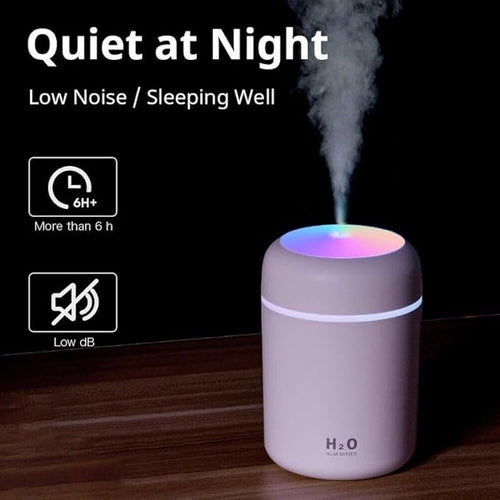 Boond · bedrooms and puja corner₹899Shop →
Dose, timing, and a caution worth taking seriously
Four drops on a Sukoon is the working figure for a contemporary Indian living room of 250 to 320 sq ft with a stone floor, cotton upholstery and a dhurrie. Five if the room is largely stone and glass with little fabric, or if it is open to a dining area as well. Three if it is heavily textiled with long curtains and a thick rug. A long living-dining wants two Sukoons at ₹3,798 rather than one machine on a higher setting; a Boond at ₹899 suits the bedrooms and a small puja corner at one to two drops.
Timing is where this room differs from every other in the series. Build the day around three fixed points. After cooking: extraction and ventilation for fifteen minutes, then the diffuser. Before guests: a full forty-minute run finishing as they arrive, because bodies and clothing absorb fragrance and a room dosed to feel right when empty reads thinner when full. Around the evening lamp or agarbatti: leave a clear hour either side. Placement is ordinary — a metre up, clear air around it, away from the kitchen threshold and out of the fan or AC draught, which will otherwise carry the whole output to one wall.
The caution, which Indian homes meet in a particular form: ultrasonic mist is water, and most of urban India has hard water. Settling mist leaves spots on marble and Kota, a bloom on polished teak and rosewood, and mineral residue dries as a fine white dust that is very visible on dark stone and brass. Stand the machine on a brass tray, ceramic dish or coaster rather than directly on the console, use filtered water, wipe around it occasionally, and keep the mist away from art, leather and silk cushions.
What to buy
The scent follows the materials; the machine follows the plan. In most Indian flats the living room is connected to the dining area and the kitchen, which is an argument for two smaller machines rather than one large one.
| Buy | What it is | Why here | Price |
|---|---|---|---|
| Test first ★ | Three 15ml testers — Warm Welcome, Quiet Luxury, Forest Suite | Warm, cool and dry-green against your own teak and brass | 3 × ₹299 = ₹897 |
| The machine | Sukoon 500ml — 270–320 sq ft, remote, timers, 3 × 15ml included | One living room at four drops, run after the kitchen is aired | ₹1,899 |
| Living-dining | Two Sukoons, one per zone | The standard open plan, where one machine cannot reach both | 2 × ₹1,899 = ₹3,798 |
| Bedrooms | Boond 300ml — up to 150 sq ft | One to two drops, and small enough for a corner shelf | ₹899 |
| The one you keep | 100ml refill at ₹999, or 300ml at ₹1,799 (~₹6/ml) | Daily four-drop sessions without reordering every month | from ₹999 |
Versailles
I trained in Versailles and I came home to Pune, and the thing I had to unlearn fastest was the assumption that a living room is a neutral container. In most Indian homes it is not. It is the busiest room in the house, it is attached to a kitchen doing serious work, and in many families it holds a small daily ritual as well.
That is why I am wary of advice that treats cooking or incense as contamination. They are not problems, they are the house. A fragrance that only works when nothing else is happening is not much use in an Indian flat, and a fragrance sold as covering a tadka is selling you something that does not exist. Sandalwood earns its place here because it agrees with the materials and with a memory most of us already have.
So: air the room, then scent it. Four drops, forty minutes, an hour clear of the evening lamp, a tray under the machine and filtered water because our water is hard. And buy a 15ml at ₹299 before anything bigger — your own teak will decide faster than I can. A portion of every order funds a girl's classroom through Nanhi Kali.
Frequently asked questions
- Best fragrance for a traditional Indian home — the older, more ornamented cousin of this room.
- Best fragrance for a living room with wooden furniture — when teak and rosewood lead.
- What makes a living room smell expensive? — the signals, named honestly.
- The complete living room fragrance guide — every style, palette and material.
- Brand: the SOSA founder story.
SOSA products & prices (verified August 2026): Hotel Collection water-based ultrasonic diffuser fragrance 15ml ₹299 · 100ml ₹999 · 300ml ₹1,799 · Pack of 7 (15ml, all fragrances) ₹1,799; refills 100ml from ₹999. Seven scents: The Ritz-Carlton-inspired (white tea · bergamot · cedar), Westin-inspired (white tea · aloe · cedar), 1 Hotels-inspired (cedarwood · vetiver · green leaves), The St. Regis-inspired (amber · violet · woods), Shangri-La-inspired (jasmine · green tea · white tea), Four Seasons-inspired (citrus · floral · sandalwood), W Hotels-inspired (citrus · pepper · amber). Diffusers: Boond 300ml ₹899 · Sukoon 500ml ₹1,899 · Megh 6L ₹3,499. Water-based, phthalate-free, composed to IFRA standards for home diffusion; 3–6 drops per tank. Made in India, Pune. The Hotel Collection scents are SOSA's own interpretations inspired by the world's finest hotels; all hotel names are trademarks of their respective owners and are used only to describe the scent style — SOSA is an independent Indian fragrance house, not affiliated with or endorsed by any hotel brand. Prices and availability subject to change — see the live product pages.