

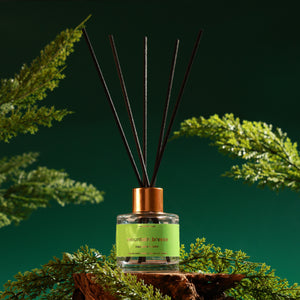

Why it is a register answer, not a scent answer: a composition dosed very low is mostly its heart and base, because the lightest materials leave first — so a fragrance chosen at full strength can be unrecognisable when quiet. Dry registers such as lemon, bergamot, tea and vetiver keep their outline; sweet and powdery accords flatten into “perfume” with no identity. For your brief, that difference is the entire decision.
The part people get wrong: set it for the person getting in, not the person who has been in it since nine in the morning. Perceived strength comes from the step between where somebody was and where they now are, and a client coming out of a lobby makes a far bigger step than you do.
The thing that is not fragrance at all: half of “clean” is the absence of stale air and sources. Food, a gym bag, damp mats, wet umbrellas, luggage behind a folded third row — the cargo area shares the cabin's air, so a wet boot reaches every row. A fragrance over a source produces a mixture, and a client reads a mixture as concealment.
The honest gap: no coverage figure of any kind is published for Safar, so nothing here doses by cabin size; and SOSA publishes no fleet, trade or bulk arrangement at all — if this is three vehicles rather than one, there is no programme to point you at and the only honest route is the contact page.
- The straight answer, in five parts
- Why “clean, not perfumed” is a register decision
- The client arrives fresh and takes the cabin as one step
- The published families against your actual brief
- Write the setting down, and say who may change it
- What I would do, in order — and the gaps
- A note from Sonal
- FAQs
2. Citrus can be quiet and still be a choice. At low concentration a composition is mostly its heart and base, because the smallest and fastest materials go first. That is why a fragrance picked at full strength from a bottle can be unrecognisable in a cabin an hour later. Dry, structured registers — lemon, bergamot, tea, cedar, vetiver — keep their outline through that reduction. Sweet, creamy and powdery ones do not; they soften into a generic impression of perfume, which is the exact failure your brief is written to avoid.
3. Citrus also reads as cleanliness rather than as fragrance, and that is a real distinction. A passenger meeting a quiet lemon in a tidy cabin does not usually think “this car is scented”; they think the car is well kept. The same passenger meeting a warm, sweet or floral accord at the same strength is far more likely to identify it as a product decision — because those registers are what they smell at a counter. Nothing about this is a performance ranking. It is about what a given register is associated with.
4. Now the part that matters more than the family: set it for the client, not for yourself. Perceived strength is created by the step between two spaces rather than by the absolute level in either. You get in at nine and stay there; by eleven your nose has stopped reporting a steady level entirely. Your client comes out of an office, crosses a few metres of outside air and gets in with a completely fresh instrument. Those are two different experiences of one cabin, and only one of them is the client's. You are structurally the worst judge in the vehicle, and the fix is to be judged rather than to judge.
5. And accept that a good part of “clean” is not fragrance at all. A client takes the whole cabin as one impression: the upholstery, the conditioner used on it, whatever was eaten in it yesterday, the driver's own perfume and the fragrance, arriving together as a single step. Clear the sources first, keep the air fresh, and then let a low citrus sit on top of a cabin that is genuinely clean. Alcohol-free where applicable, phthalate-free, paraben-free, IFRA-compliant, composed in Pune. Free shipping above ₹499, and a portion of every order supports girl-child education through Nanhi Kali.

Why “clean, not perfumed” is a register decision
The sentence in your question is doing more work than it looks. Clean and perfumed are not two strengths of the same thing; they are two different impressions, and which one you land on is decided by register and level together. Get either wrong and the other cannot rescue it. A heavy citrus is still perfumed. A quiet vanilla is still unmistakably a product. What you want is the narrow overlap: a register associated with cleanliness, running at a level nobody thinks to name.
 Malabar Lemon₹1,049This is the piece of perfumery that is genuinely useful to a buyer and almost never explained at the point of sale. Reduce the concentration of any composition far enough and you are left mostly with its heart and base, because the lightest materials are the first to be lost. Some structures tolerate that beautifully: a lemon, a bergamot, a tea, a cedar, a vetiver all keep a recognisable outline when they are barely present. Others collapse. A sweet or powdery accord dosed very low does not become a subtle version of itself — it becomes a vague smell of perfume with no identity at all, which is the single most common complaint I hear from owners of client cars, usually phrased as “it just smells like a car freshener now”. They had chosen well and dosed sensibly; the register simply could not do what they asked.
 Safar₹3,999I want to be precise about the status of this claim, because I spend a lot of this cluster objecting to stereotypes and I am about to use one. That citrus reads as clean is an association, not a measurement. It is widely and consistently held, it is the reason the register appears in every cleaning product most of us have ever used, and for your brief it is genuinely useful — but it is a fact about people rather than a fact about molecules. A warm woody at the same low level is not performing worse; it is simply more likely to be identified as a fragrance decision, because that is where people meet warm woody accords. If what you want is for nobody to notice that a decision was made, the association is the thing you are buying.
 Safar₹3,999The majority of the impression you are chasing is produced before any fragrance is involved, and this is the step I would not let anybody skip in a vehicle used professionally. Food and takeaway, a gym bag in a footwell, wet umbrellas or raincoats, mats that have not dried, cargo carpet, luggage pushed in behind a folded third row — those are odour sources, and because the cargo area shares the cabin's air, something damp in the boot arrives in every row including the one your client is sitting in. A pleasant smell laid over an unpleasant one does not replace it; it produces a mixture, and a mixture is routinely judged more harshly than the original was, because it reads as concealment. That is a bad impression to give a client, and it is entirely avoidable. Deal with the source, keep the air moving, and let the fragrance be the last thin layer rather than the correction.
The client arrives fresh and takes the cabin as one step
Now the honest part, and the reason this page exists separately from the general citrus pages. A client-facing vehicle has two quite different occupants, and the fragrance has to be set for the one who is in it least. You, or your driver, are in that cabin from early morning. Your client is in it for twenty-five minutes, once, having just walked out of a building with a nose that has had nothing to adapt to. Those two people genuinely smell different intensities in the same seat-row — dwell time, position relative to the vents, head height and recent exposure all differ, and none of that is anybody's imagination.
Which means the instinct to adjust by feel is the thing most likely to spoil the cabin. By mid-morning the level you set at eight reads as nearly nothing to you, and the entirely natural response is to add. Your client then arrives into the sum of the morning's corrections. The discipline is to set the level once, by evidence, and then to stop re-deciding it. The evidence is simple to collect and costs nothing: leave the vehicle, spend long enough outside for your own reading to reset, and get back in as a visitor does — or better, send somebody who has not been involved to open the door and watch their face before they are polite about it. If you want to be rigorous, do it from a building rather than from the kerb, because the step your client makes starts indoors.
A second asymmetry is worth naming because it changes what you buy. A space somebody walks through and a space somebody sits still in want different doses, and the mistake is almost always to set the sitting space at the walking-through level. Your client is sitting still. A cabin pitched for the first impression of arrival will be over-dosed by minute fifteen of a real journey through traffic. So dose for the end of the trip rather than the beginning of it, which in practice means the mild scent-throw format or the lowest speed on a timer, and accept that the opening will feel understated to you. That understatement is what the brief asked for.
| Register | What is published for a car | At a low level, does it stay itself | Fit for a client cabin | Price |
|---|---|---|---|---|
| Citrus ★ | Lemon in either form; Malabar Lemon as a waterless oil for Safar | Yes — dry and structured, keeps its outline when quiet | The closest thing to a default. Reads as clean rather than as a product | ₹499 · oil ₹1,049 / ₹1,849 |
| Fresh, green and minty | Icy Mint in either form; Sage & Cedar as a waterless oil | Yes, and it is the most neutral character in the range | Equally defensible. Mint's lift is front-loaded, so dose for the cabin rather than the first breath | ₹489 · oil ₹1,049 / ₹1,849 |
| Woody | Sandalwood and Vetiver (Khus) in either form; Mysore Sandalwood, Mahogany and Vetiver as waterless oils | A dry vetiver or cedar does; a sweet creamy sandalwood is harder to keep quiet | Legitimate and often excellent — but check what the trim and the conditioner already contribute before adding the same direction | ₹479 · ₹509 · oil ₹1,049 / ₹1,849 |
| Aquatic and marine | Sea Breeze in either form | Reasonably — it holds an airy outline when low | Good for the clean impression, provided the cabin is genuinely dry. It is a scent choice, not a damp remedy | ₹509 |
| Floral and lavender | Jasmine and Lavender in either form; Mysore Orange Blossom spray only; White Jasmine, Japanese Cherry Blossom and Neelakurinji as waterless oils | Less reliably — several of these soften into a general impression of perfume at low doses | Possible at a very restrained level, but harder to keep on the clean side of your brief | ₹449 · ₹479 · ₹549 / ₹1,499 · oil ₹1,049 / ₹1,849 |
| The honest gaps | No coverage figure is published for Safar in any unit, and no fleet, trade or bulk arrangement is published for client vehicles | Not applicable — neither figure exists to quote | Said plainly. Size the dose by exposure and by a fresh passenger's reaction, and send multi-vehicle questions to the contact page | Not published |
The setting · Safar₹3,999See it → 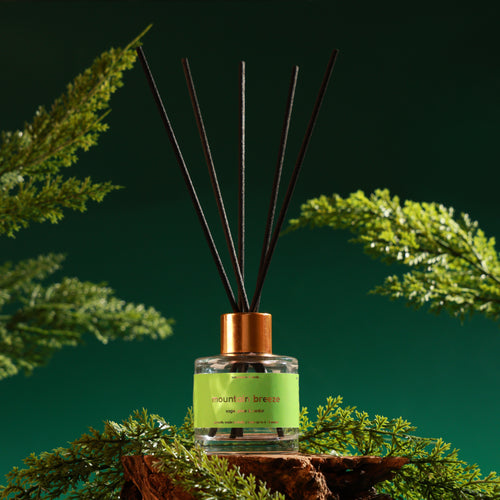 The oil · Malabar Lemon₹1,049See it →
  Several cars · ask usContactWrite to us →
Write the setting down, and say who may change it
This is the recommendation that sounds bureaucratic and saves the most trouble, and it applies the moment a vehicle is used for work rather than only for yourself. A fragrance is only a system when it is written down: which scent, where the source sits, what level or speed, on what schedule, when it gets refilled, and — the part everybody omits — one named person who owns the decision. In a car there is no key-lock to protect a setting the way a commercial machine has, so the protection has to be procedural. If you have a driver, or share the vehicle, the rule is simply that nobody adjusts the level by feel, because by mid-morning everybody in that cabin has lost the ability to feel it accurately.
What goes on the card is short. The scent and the format: Lemon ₹499 in “Hanging (Mild scent-throw)”, or Safar running Malabar Lemon on speed one with the one-hour shut-off. Where the source lives, which for a client cabin means away from faces and out of the direct path of the vents rather than wherever it is most convenient to reach. When it is topped up — hanging units are 12ml and the Car Hanging Freshener Refills are 15 ML at ₹399–₹449, so the cadence is predictable even though no consumption rate is published. And the list of things that must not be in the vehicle when a client is collected. That last line does more for your brief than any of the others.
Two honest limits before you plan around the hardware. No coverage figure of any kind is published for Safar — not floor area, not volume, nothing about rows — so nobody, including me, can tell you what it covers in your vehicle. What is published is a dial you can write down: 3 speed settings described as light to intense, a 1 / 2 / 3-hour auto shut-off, and up to 10 hrs continuous or 30 hrs intermittent per charge from a 2000 mAh lithium cell on Type-C. For a repeatable professional setting that is actually more useful than a coverage number would be. And if this is a small fleet rather than one car, I have nothing to offer in the way of a programme: no dealer arrangement, trade price, minimum order, lead time or bulk rate is published at all, so the honest answer is to describe the vehicles and the usage at the contact page rather than to be quoted a tier that does not exist.
What I would do, in order — and the gaps
For a vehicle that carries clients, the first two steps are worth more than the purchase, and the last row is what I would stop you from buying in an attempt to signal care.
| Step | What it is | Why it comes here | Cost |
|---|---|---|---|
| 1. Make the cabin genuinely clean and dry first ★ | No food, no gym bag, no damp mats, nothing wet in the boot, and a vehicle that has been aired rather than merely closed | Because a client reads the sources before the composition, the boot shares the cabin's air, and a fragrance over a source reads as concealment | No purchase |
| 2. Choose a register that survives being quiet | Citrus or a dry fresh green. Judge candidates at the level you intend to run, not at full strength | A low dose strips a composition back to its heart and base, and only structured registers keep an identity through that | No purchase |
| 3. Lemon ₹499 in the mild scent-throw | “Hanging (Mild scent-throw)” as a continuous low source, rather than “Spray (Strong scent-throw)” applied before a pick-up — identical price | A peak just before arrival is the most common client-cabin mistake. A steady low plateau is what reads as clean | ₹499 · 15 ML refills ₹399–₹449 |
| 4. Safar if you want the setting to be exact | Speed one with the one-hour shut-off, running Malabar Lemon, placed away from faces | It is the only published SOSA car format with a dial, which is what makes a written, repeatable setting possible at all | ₹3,999 · ₹4,499 · oil ₹1,049 / ₹1,849 |
| 5. Have somebody else judge it, then write it down | A colleague who has not been in the vehicle opens the door and reacts. Record scent, placement, level, schedule, refill cadence and who owns the setting | Whoever has been in the cabin longest is the worst instrument in it, and there is no key-lock in a car — so the protection has to be a written rule | No purchase |
| What not to buy: a stronger scent-throw to signal effort | Moving to the strong scent-throw, or applying a generous spray minutes before collecting someone, in order to make the care visible | Said plainly because it inverts the brief. Any composition pushed too high flattens into one impression, and that flattening is what a passenger calls an air freshener. Spray and hanging cost the same, so this buys a different scent-throw and not a better product | Spend nothing |
Versailles
The best-smelling client car I have ever been collected in had almost no fragrance in it. I remember being slightly annoyed, professionally, because I had been invited to comment on it and there was very little to comment on. What there was instead was an absence — no lunch, no damp, no cleaning product still announcing itself, nothing in the boot, and a cabin that had clearly been opened up before anybody arrived. Somewhere under all that there was a thin dry citrus, well placed, running quietly. I only identified it on the way back.
That is the whole brief you have written, achieved in the order that actually works. The owner had not chosen a cleverer scent than everybody else; he had simply removed everything that competes with one, and then had the confidence to run the fragrance at a level he could barely detect himself. When I asked him how he had settled on it, he said his office manager had opened the car door and told him the truth, twice, and he had turned it down both times.
I think about that whenever somebody asks me to make a vehicle smell expensive. The answer is nearly always subtraction, and the only instrument worth trusting is somebody who has just walked in from outside. Set it for your client, write the setting on a card so that nobody improves it on your behalf, and judge it by the face of the person opening the door rather than by what you can smell from the seat you have been in since morning. Everything we make is composed in Pune, and a part of every order funds a girl's classroom through Nanhi Kali.
Frequently asked questions
- Freshness without a heavy cabin scent — the same brief for a private cabin, answered by the format first.
- Citrus as a premium signature — and why the woody-equals-luxury idea is an association rather than a fact.
- When you do not know everyone's preferences — the social case for citrus, stated honestly as a social one.
- Genuinely weak, or simply familiar and bright at the start, softer later — the two pages on judging your own cabin.
- Four hours against twenty minutes and judging a vehicle that has stood in the sun.
- Alone in the week, a full vehicle at the weekend — one scent, two settings.
- The pillar page for this family — every variable resolved into one method.
- Brand: the SOSA founder story.
SOSA car scenting — facts verified August 2026: the published spray and hanging range is nine scents — Jasmine ₹449, Lavender ₹479, Sandalwood ₹479, Icy Mint ₹489, Lemon ₹499, Sea Breeze ₹509, Vetiver (Khus) ₹509, Oud Car Perfume (Assam Oudh) ₹509 and Mysore Orange Blossom ₹549 for 10 ML or ₹1,499 for 50 ML, the last of which is spray only with no hanging form. The published product option is “Car freshener form” with the values “Spray (Strong scent-throw)” and “Hanging (Mild scent-throw)” at the same price on every scent, plus “50 ML Car Perfume Spray” at ₹1,499; hanging units are 12ml and the Car Hanging Freshener Refills are 15 ML at ₹399–₹449; the Car Perfume Sprays Discovery Set is ₹699–₹899 for trios and ₹2,999 for a pack of 9. SOSA publishes no coffee car fragrance and no gourmand car spray or hanging unit of any kind. SOSA Safar waterless car perfume diffuser: ₹3,999 for the three house trios and ₹4,499 for the three hotel-inspired trios, 3 speed settings described as light to intense, a 1 / 2 / 3-hour auto shut-off, up to 10 hrs continuous and up to 30 hrs intermittent per charge, 2000 mAh rechargeable lithium, Type-C USB with cable included, fully cordless, approximately 6.9 cm, 20 ml bottle, cold diffusion of pure undiluted oil with no water, no heat and no residue, supplied with diffuser, 20ml bottle, Type-C cable and manual, imported; the published wording is aroma only — does not humidify, which is a statement about what it adds and not a claim about drying a cabin or correcting damp. No coverage figure of any kind is published for Safar, in floor area, in volume or in seating rows, and none is estimated here; three “Refill” values appear in its option list with no live variant and no price, so none of those is buyable. Waterless nebuliser refills are shared with Vaayu and sold in grams at 100 gm and 300 gm across sixteen scents: Vetiver, Neelakurinji, Malabar Lemon, Sage & Cedar, Mahogany, Japanese Cherry Blossom, White Jasmine, Tobacco Vanilla and Mysore Sandalwood at ₹1,049 / ₹1,849, and seven hotel-inspired interpretations at ₹1,099 / ₹1,899. That refill range contains no oud and no lavender, so either of those in a vehicle runs only as a spray or a hanging unit. No adaptation time in minutes is published anywhere, no consumption rate, air-change rate or fan-speed figure is published, and no test result, measured figure or conclusion is reported here, because no such experiment has been run — where this page invites a cabin to be judged by somebody else it describes the protocol only. SOSA publishes no claim that any fragrance improves concentration, keeps a person alert, reduces stress, aids sleep or alters a mood, and makes no health, air-quality, VOC or mould claim; SOSA sells no car air purifier, no dehumidifier and no room spray of any kind — every SOSA spray is a car perfume. No vehicle-safety or driving advice is offered on this page. No dealer programme, reseller arrangement, trade price, minimum order, lead time or bulk rate exists for client or fleet vehicles; commercial enquiries are answered individually through the contact page. All fragrances are alcohol-free where applicable, phthalate-free, paraben-free and IFRA-compliant, composed in Pune. Free shipping above ₹499. A portion of every order supports girl-child education through Nanhi Kali. SOSA is an independent Indian fragrance house; the hotel-inspired scents are SOSA's own interpretations and SOSA is not affiliated with or endorsed by any hotel brand. Prices subject to change — see the live product pages.