
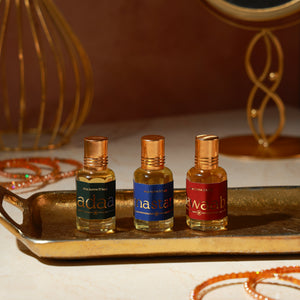
- The direct answer
- Why night-blooming jasmine and jasmine sambac are not the same flower
- The three decisions a jasmine lover actually needs to make
- Matching your jasmine memory to the right SOSA attar
- How much to put on, and how often
- What to buy first, and what to add later
- A note from Sonal
- Questions from jasmine-perfume lovers
2. The jasmine you already wear tells you which bottle is yours. If the jasmine perfumes you love read heavy, warm and a little dark — the ones people describe as 'intense' or 'sultry' — that's night-blooming jasmine territory, and Mastani is the honest match. If your jasmine favourites read fresh, green and almost citrus-adjacent, that's jasmine sambac territory, and Adaa is the honest match.
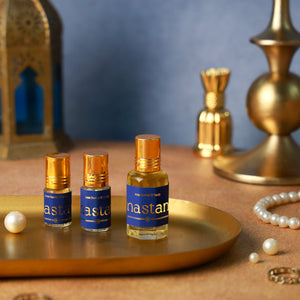
3. Mastani doesn't offer jasmine alone — it pairs it with Damask rose over oudh. The jasmine leads, but it isn't solo; rose sits alongside it and oudh sits underneath both, which deepens the whole accord rather than isolating the jasmine the way a single-note jasmine attar would.
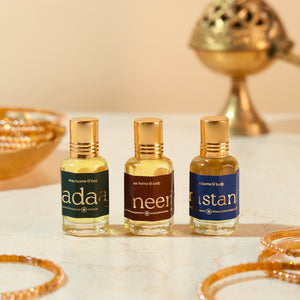
4. Adaa doesn't offer jasmine alone either — it sits with bergamot, green cardamom and white musk. The jasmine sambac here reads as one bright element inside a cooler, citrus-and-spice accord, which is exactly what keeps it from tipping into the heaviness that night-blooming jasmine leans toward.
5. Start at 3 ml on both, if you genuinely can't tell yet which jasmine is yours. ₹379 and ₹389 side by side on skin will settle the question faster than any note list can — the two jasmines are different enough that most noses know within a single wearing.
If jasmine is the flower you already trust yourself in, the real decision isn't whether this range has jasmine — it does, twice — it's which of the two jasmines is the one you've actually been wearing all along.
Why night-blooming jasmine and jasmine sambac are not the same flower
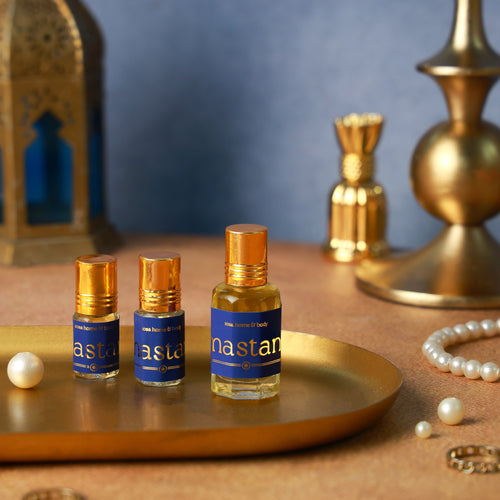
Perfumery treats 'jasmine' as a single word covering several genuinely different flowers, and a jasmine lover who has worn more than one jasmine perfume already knows this in their body even if they've never had the botanical names for it. Night-blooming jasmine — the kind used in Mastani — has the heady, slightly animalic character that gives jasmine its reputation as one of perfumery's most narcotic florals. It's the jasmine behind the perfumes people call 'sultry' or 'intense,' the one that can feel almost too much in a small room and exactly right in an evening one. It blooms specifically after dark, which is where its name comes from, and a lot of its character is tied to that — a flower built to be smelled at night, not one that simply happens to be worn then.
Jasmine sambac — the kind used in Adaa — is a different plant altogether, and it smells different for a real botanical reason, not a stylistic one. It leans green and slightly fruity, with a cleaner, more tea-like facet that reads bright rather than dark. It's the jasmine behind the perfumes people describe as fresh or daytime-appropriate, and it carries almost none of night-blooming jasmine's heaviness, even though both flowers share the same English name on a note list. It's also the jasmine most often used in actual tea scenting, which is a useful reference point if you've ever caught that specific bright, slightly fruity note in a cup of jasmine tea and wondered what it was.
This is exactly why a jasmine lover can't shop this range on the word 'jasmine' alone. Mastani puts night-blooming jasmine next to Damask rose over oudh, which deepens the heady character further. Adaa puts jasmine sambac next to bergamot, green cardamom and white musk, which keeps the bright character bright. Two real jasmines, styled to stay true to what each one actually is, rather than smoothed into one compromise floral. Neither is a 'better' jasmine than the other — they're simply doing different jobs, the way a jasmine lover's own collection probably already reflects without them having named it that way before.
The three decisions a jasmine lover actually needs to make
 Mastani₹389If the jasmine perfumes you already love read intense, warm and a touch dark, that's night-blooming jasmine and Mastani; if they read fresh, green and citrus-adjacent, that's jasmine sambac and Adaa.
Matching your jasmine memory to the right SOSA attar
Not every jasmine memory is the same jasmine. This lines up the specific character against the attar that actually carries it, honestly, inside a four-attar range — because 'I love jasmine' can describe two people who would genuinely disagree about which bottle on this page is theirs.
| If your jasmine reads… | The attar | Why it fits | What's genuinely different about it |
| Heady, indolic, a little narcotic | Mastani | Night-blooming jasmine sits with Damask rose over oudh, keeping the heady character intact rather than softening it | Two florals working together, not a single isolated jasmine note |
| Bright, green, almost tea-like | Adaa | Jasmine sambac sits with bergamot, green cardamom and white musk, which keeps the jasmine's fresh side forward | A cooler, citrus-lit setting rather than a warm, resinous one |
| You genuinely love both kinds, depending on the day | Mastani and Adaa together | Trying both at 3 ml each is cheaper and more honest than guessing which jasmine you 'really' prefer from a note list | ₹379 + ₹389 for two genuinely different jasmine experiences |
| Jasmine alongside rose specifically, not alone | Mastani | Damask rose shares the lead with night-blooming jasmine rather than sitting in the background | Closer to a floral-oud reading than a single-flower one |
| A single-note jasmine attar with nothing else in it | Not offered in this range as a standalone bottle — both Mastani and Adaa build jasmine into a fuller accord rather than isolating it, which is worth knowing before you buy on the word 'jasmine' alone. |
Mastani · night-blooming jasmine, heady₹389Shop → 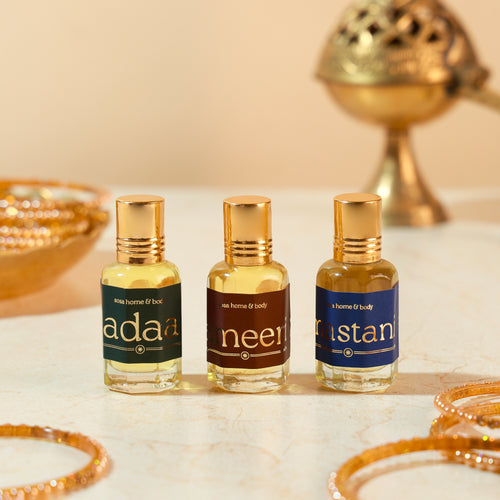 Adaa · jasmine sambac, bright and clean₹379Shop →
 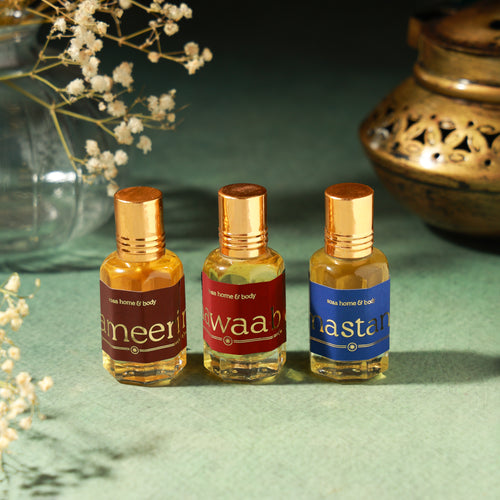 The trio · add the rose-and-wood route too₹1,055Shop →
How much to put on, and how often
Never judge Mastani's night-blooming jasmine by how it smells in the first sixty seconds on a test strip — indolic florals often open stronger than they settle, and a fair read needs skin and a little time, not a quick sniff off the cap.
Sometimes the honest move on a first wear of Mastani is a single, light pass at one pulse point rather than several, precisely because its jasmine is heady enough that more isn't automatically better on a first test.
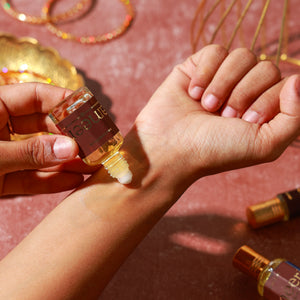
Usually, with Adaa, one light pass at the wrist and one at the inner elbow, from a 3 ml roll-on, is enough to spend a full day finding out whether jasmine sambac's brightness is the jasmine you were actually chasing.
What to buy first, and what to add later
Matched to which jasmine you already recognise in your own memory, and how sure you are about it.
| Route | Best for | Why | What it costs |
| Mastani, 3 ml | A heady, indolic-leaning jasmine lover | Night-blooming jasmine and Damask rose over oudh — the deepest, most night-suited jasmine here | ₹389 |
| Adaa, 3 ml | A bright, green jasmine sambac lover | Jasmine sambac over bergamot, green cardamom and white musk — the lightest, most daylight-suited jasmine here | ₹379 |
| Both, 3 ml each | Genuinely unsure which jasmine is yours | Two real jasmines, side by side on skin, cheaper than guessing wrong on a larger bottle | ₹768 total |
| Mastani, 6 ml or 12 ml | Once the 3 ml has confirmed night-blooming jasmine is your register | The same heady jasmine-and-rose profile, sized for regular wear | ₹685 / ₹1,179 |
| The Attar Trio | A jasmine lover who also wants to test the rose-and-wood route | Ameeri, Nawaab and Mastani in one order, cheaper than three single bottles | ₹1,055 |
Jasmine is the post I know I'll be judged on most carefully, and I say that without any anxiety about it — a real jasmine lover has usually smelled enough jasmine to catch a vague answer immediately. That's exactly why I won't collapse night-blooming jasmine and jasmine sambac into one generic 'jasmine' description just because they share a name.
I trained on both, and I still find them genuinely different materials to work with, not two versions of the same idea. Night-blooming jasmine has a weight and an animalic undertone that jasmine sambac simply doesn't carry, and jasmine sambac has a green, tea-like lift that night-blooming jasmine doesn't reach for. Mastani and Adaa were built to stay honest to each one rather than to split the difference — I'd rather offer two real jasmines than one flattened average of both.
If you already know which jasmine perfumes you've loved in the past, you probably already know which of these two is yours before you've even opened the bottle. If you don't, a pair of 3 ml bottles, worn on separate days, will tell you faster and more honestly than I can from here.
Questions from jasmine-perfume lovers
- I Love Floral Perfumes — Which Attar Should I Try First? — the three honest floral routes this range offers, jasmine included.
- I Love Tuberose and White Florals — Which Attar Family Should I Explore? — the honest bridge for a white-floral lover, and where the overlap with jasmine ends.
- I Love Orange Blossom and Clean White Flowers — Which Attar Would Suit Me? — how Adaa's jasmine sambac answers a nearby white-floral craving.
- Which SOSA Attar Should a Floral-Perfume Lover Try? — this series's short, direct wrap-up for the same reader.
- Brand: the SOSA founder story.
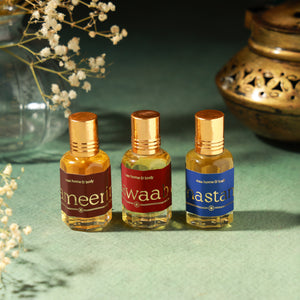
SOSA attars & prices (verified September 2026): All four are alcohol-free roll-on attars in 3 ml, 6 ml and 12 ml. Adaa (bergamot, green cardamom, jasmine sambac, white musk) ₹379 · ₹669 · ₹1,149. Ameeri (Taif rose, Indian sandalwood, Persian saffron, soft oudh) ₹385 · ₹679 · ₹1,165. Mastani (night-blooming jasmine, Damask rose, oudh) ₹389 · ₹685 · ₹1,179. Nawaab (white royal oud, Mysore sandalwood, Kashmir saffron) ₹399 · ₹699 · ₹1,199. The Ameeri + Nawaab + Mastani trio is ₹1,055 · ₹1,859 · ₹3,189. Prices are the live store prices at the time of writing.