


Your three usage patterns, resolved in order. 1 — The ninety minutes alone: a long, nearly sealed exposure with nobody to consult, so the ceiling is your own enjoyment and you can run whatever you like; dose for the final stretch rather than the first five minutes, because a closed cabin accumulates. 2 — Six people at weekends: this is the binding constraint and it should set the ceiling for the whole car, because it is a consent question rather than a taste one, and the third row is furthest from the controls and nearest the cargo area. 3 — All day in an outdoor car park: not a dose question at all. A cabin that has stood closed in the sun delivers a great deal in the first minute, so judge intensity only once the cabin has reached normal conditions, and never add more on opening a hot car.
Which pattern binds: the weekend. Set the level for six people aboard, accept that your solo ninety minutes will be quieter than it could be, and treat the weekday as the place where you have headroom rather than as the brief. The reverse error is far more expensive, because you cannot perceive the ceiling yourself.
The four families, on their merits, with what is published for each. Citrus — Lemon ₹499, spray or hanging; Malabar Lemon as a waterless oil for Safar. Aquatic — Sea Breeze ₹509, spray or hanging only, because there is nothing marine among the waterless oils at all. Woody — Sandalwood ₹479 and Vetiver (Khus) ₹509, plus Mysore Sandalwood, Mahogany and Vetiver as waterless oils. Oud — Oud Car Perfume (Assam Oudh) ₹509, spray or hanging; there is no oud among the waterless oils either, so for aquatic and oud the dial is the format choice rather than a machine setting.
The dial, and why it is free. Under the published option “Car freshener form” SOSA publishes two values, “Spray (Strong scent-throw)” and “Hanging (Mild scent-throw)”, and they cost the same on every scent — so the spray is a different scent-throw rather than an upgrade tier, and the quieter setting your weekends need costs nothing. Safar ₹3,999 or ₹4,499 adds 3 speed settings described as light to intense and a 1 / 2 / 3-hour auto shut-off, which is the only published way to hold two levels in one car — but only for the families whose oils exist.
The honest gaps. No coverage figure of any kind is published for any SOSA car format, so nothing here sizes your cabin with a number and no seasonal or temperature setting is published either. And for two of your four families the machine is simply not an option, which is a limitation worth knowing before you spend ₹3,999.
- The straight answer, in five parts
- Your three usage patterns, taken one at a time
- Why weather is the weakest of your four inputs
- The four families against your three patterns
- The thing you did not ask: the weekend sets the ceiling
- The whole decision in buying order — and the gaps
- A note from Sonal
- FAQs
2. Pattern one — ninety minutes alone, during the week. This is an exposure problem, and it argues down rather than up. Ninety minutes with the climate recirculating is a long time in a nearly sealed volume, and the mechanism that matters is accumulation: air that leaves takes the fragrance with it, and a closed cabin gives it almost nowhere to go, so the level is highest at the end of your drive rather than at the beginning. Total exposure decides the dose, not cabin size — so set the level for the last stretch and not the first five minutes. There is a second effect that compounds it and that almost nobody is told about: a composition running quietly or running for a long time delivers mostly its heart and base, because the top notes are the first thing lost. Across ninety sealed minutes you will be living with the floor of your fragrance rather than its roof. That is a reason to prefer a direction with a legible structure when it is quiet, which I will come back to, and it is the reason a bottle sniff in a shop tells you almost nothing about minute eighty. The good news about this pattern is that you are alone in it, so there is no ceiling beyond your own enjoyment, and you may ignore every convention in existence.
3. Pattern two — six people at weekends. This is a consent problem, and it is the one that binds. When you are the only occupant, the level is a matter of taste. When five other people are aboard, your preference becomes a decision you have made on their behalf, and that is a different kind of decision answered with a level rather than with a change of family. The part that makes it difficult is that you cannot perceive the ceiling yourself. The nose reports change rather than constancy, so an unvarying fragrance stops being reported while it is still physically arriving — and you are nearest the source, longest exposed and the only occupant who can adjust anything, which makes you the worst instrument in the vehicle. That is not a failure of attention and no amount of care corrects it. Two people in the same cabin genuinely perceive different intensities, because dwell time, seat height, position relative to the airflow and recent exposure all differ — so when the front row says it is barely there and the third row says it is a lot, those are two accurate reports rather than an argument. Ask whoever gets in the open question “what does the car smell like?” rather than “is it too strong?”, which invites politeness and produces nothing you can use. And give the third row a vote, because it is furthest from the controls, usually holds the youngest passengers, and sits next to the cargo area.
4. Pattern three — all day in an outdoor car park. This is a judging condition, and it is not a dose at all. Here is where I want to be most emphatic, because this is the pattern owners misread. A cabin that has stood closed in the sun for hours is warm, and a warm cabin releases more of everything in it — the fragrance, the trim, the upholstery, whatever was spilled in it last month. So the first breath on opening is both strong and unrepresentative. Judge intensity only after the cabin has reached normal conditions, and never add more before it has, because adding at the hottest moment guarantees an excessive front seat for the rest of the journey. The second reason has nothing to do with the car and everything to do with you: perceived strength is set by the step between two spaces rather than by the absolute level in either. Walking out of an air-conditioned office into a hot car park and then into a hot cabin is a completely different step from walking out of your house on a Saturday morning, which is why the same setting can seem excessive on Tuesday and almost absent on Sunday. Your parking pattern therefore tells you when to form an opinion, not how much to use.
5. Which pattern binds, and the two gaps you should know before you spend. The weekend binds. Set the car for six people and treat your solo ninety minutes as the pattern with headroom rather than as the brief, because a level that is slightly too quiet on a weekday costs you a little pleasure, while a level that is too much on a weekend costs you the goodwill of five other people and you will be the last to find out. If the gap between the two genuinely bothers you, that is the precise circumstance in which an adjustable format earns its money. And the gaps: there is nothing marine among the waterless oils and no oud among them either, so if your preference lands on aquatic or oud, the machine cannot run it and your dial is the published format choice plus placement. ⛔ No coverage figure of any kind is published for any SOSA car format — no floor area, no volume, no occupant count — and beyond Safar's published runtime of up to 10 hrs continuous or up to 30 hrs intermittent per charge, no consumption rate, longevity figure, air-change rate, fan-speed guidance, per-row concentration or adaptation time in minutes is published anywhere, and none is invented here. No SOSA experiment or measurement of any of this has been run, so no result, figure or conclusion appears on this page. No claim is published that any fragrance improves alertness or concentration, reduces stress, aids sleep or lifts a mood, and SOSA sells no car air purifier, no dehumidifier and no odour-removing product of any kind. Everything is alcohol-free where applicable, phthalate-free, paraben-free and IFRA-compliant, composed in Pune. Free shipping above ₹499, and a portion of every order supports girl-child education through Nanhi Kali. SOSA is independent and not affiliated with any hotel brand.

Your three usage patterns, taken one at a time
Your question contains three facts about your week, and the reason it is hard to answer in a sentence is that the three pull in different directions. One of them argues the level down, one of them sets a hard ceiling, and one of them is not about the level at all. Owners generally handle the first two badly because they handle them together, and they handle the third badly because it is the loudest of the three and therefore feels like the most important. Here is each one on its own terms, with the published mechanism that answers it.
 Any single₹449–₹549Ninety minutes is long, and the cabin is closed, so this is the pattern that decides your dose. Total exposure decides the dose rather than cabin size, so set the level for your final stretch and not for your first five minutes. The mechanism is simple and counter-intuitive: a nearly sealed cabin accumulates rather than exchanges, because air that leaves takes the fragrance with it and a closed car gives it almost nowhere to go. Whatever is pleasant at minute three is therefore at its most present at minute eighty-five, with your nose the least able to report it. The second effect is about character rather than quantity. A composition that is running quietly or running for a long time is mostly its heart and base, because the top notes go first — so your ninety minutes delivers the floor of the fragrance, not the roof. That is why I would steer you, within whichever family you choose, towards the drier and more structured member of it: dry, structured registers — a clean citrus, a vetiver, a cedar, a green herbal — keep a legible outline at low concentration, while sweet and powdery ones lose their shape and read as a vague smell of perfume. And the liberating part: you are alone, so there is no ceiling here beyond your own pleasure. If oud is what you love, this is the pattern in which oud is entirely yours.
 Hanging form₹449–₹509Six people is not a larger version of one person; it is a different question. Alone, the right level is whatever you enjoy. With five others aboard, the right level is the highest one the least enthusiastic passenger would not think to remark on — and that is a point only they can identify, because the nose reports change rather than constancy and you are the occupant least able to judge. So the method is procedural rather than perceptual. Ask an open question of whoever gets in, in the first minute or two, and record the exact word they use. “Fresh” and “clean” are the answers you want. An ingredient name means the cabin reads as perfumed; “strong” means you are above the ceiling, whatever your own nose says. Give the third row a vote, and weight it. It is furthest from the controls, often carries the youngest passengers, and sits against the cargo area — and the cargo area shares cabin air with all three rows, so anything damp or forgotten behind a folded row reaches the front seat as surely as the back. And when the front says faint while the back says a lot, that is airflow distribution rather than output: check the climate mode, whether the rear zone is running, the fan and which rows are occupied, before you change anything about the fragrance.
 Safar₹3,999Nine hours standing closed in the sun changes what you smell on opening, and changes nothing about what the right level is. A warm cabin releases more of everything in it — your fragrance, the trim, the seat material, anything absorbed by the carpet — so the opening breath is both unusually loud and unusually mixed. Two consequences follow, and they are the whole of this pattern. First: never judge then. Open the doors, let the cabin exchange its air, drive with the climate system doing its work, and form your opinion once conditions are normal, because that is also when your passengers will form theirs. Second: never add then. The instinct to top up at the hottest moment is strong and it is exactly wrong; it guarantees a front seat that is excessive for the rest of the journey, and because the level you are correcting was never the real level, the correction has no basis. There is a perceptual reason beyond the physics, too. Perceived strength is set by the step between two spaces rather than by the absolute level in either — coming out of a cool office into a hot car park and then into a hot cabin is a steep step, and the same setting will read quite differently when you walk out of your own front door on a Saturday. So the parking pattern tells you when your opinion is worth having, and that is genuinely all it does.
Why weather is the weakest of your four inputs
You have offered me weather as the organising principle, and I want to decline it carefully rather than dismissively, because the convention you are reaching for is real and it is not stupid. People have paired bright citrus with heat and dense woods with cold for as long as perfumery has existed, and if you enjoy that rhythm there is nothing wrong with following it. What I will not do is tell you it is a performance fact, because it is not. “Citrus for summer” and “oud for winter” are aesthetic associations — genuinely pleasant ones, with cultural weight behind them — and they describe a taste rather than a mechanism. Interior colour has no bearing on fragrance performance either, and nor does trim level or body style; what does bear on it is airflow, exposure time, the cleaning and interior-care products in the cabin, and what the cabin already smells of.
The deeper problem is that “weather” is not one variable. Season in a car is temperature × humidity × ventilation × parking × passenger behaviour, and your own question demonstrates it: you have given me a hot month, an outdoor car park and two different passenger loads, and those are three of the five already. Each of the five acts on how much, not on which. Temperature raises release, so a hot cabin presents more of whatever is in it. Humidity changes how a composition is perceived rather than what is in it, so the same fragrance reads heavier in a damp month than in a dry conditioned one. Ventilation decides whether your cabin accumulates or exchanges — windows down on a mild evening is a different problem from recirculating air on a hot afternoon. Parking decides your opening conditions. And passenger behaviour decides the ceiling. Notice that every one of those is an argument for turning something down in July rather than for buying a different family in July.
There is also a practical argument against family-by-season that has nothing to do with principle. Changing family twice a year means owning two fragrances, judging two levels, and establishing twice as many habits, in a vehicle where nothing can store a setting. Changing level means owning one fragrance and knowing one thing about it. For a reader with three usage patterns and one car, the simplest system that covers all three is one character with two levels — and the published range gives you the two levels for nothing, because the format values cost the same. I would far rather you spent your attention on the weekend ceiling and the boot than on a seasonal rotation whose main effect is to reset your own familiarity twice a year.
Where the convention does have a real foothold is in what a direction does when it is quiet, and that is worth separating from the weather story. Dry, structured registers keep their outline at low concentration, while sweet and powdery ones lose their shape as the level falls. That is a genuine technical fact and it bites precisely where your weekends live — a full car at a conservative level. It is not a seasonal argument; it is a dose argument that happens to favour the drier member of whichever neighbourhood you like. Within your four families: a clean citrus, a vetiver, a cedar-leaning wood and a transparent marine all hold their shape well when quiet. A dense oud holds its shape superbly but has very little headroom, so it is the family where the level has to be chosen with the most care. None of that is a reason to switch family in July. It is a reason to choose the dry member of your family and run it all year.
| Family, and what is published for a car | Across your ninety sealed solo minutes | With six people aboard at the weekend | Your dial, and the honest caveat |
|---|---|---|---|
| Citrus — Lemon ₹499, spray or hanging ★ | Leads with its brightest part and settles into its structure, so expect a different fragrance at minute eighty than at minute three — that is character, not fading | The most socially forgiving of your four, because it reads as clean rather than as perfumed and rarely provokes a comment | Format, plus Malabar Lemon as a waterless oil if you buy the machine. The caveat: it is the family most likely to feel absent to you while others still notice it |
| Aquatic — Sea Breeze ₹509, spray or hanging | Holds a transparent outline when quiet, which suits a long sealed drive better than its reputation suggests | Reads airy and impersonal, which is an advantage with mixed company and a mild disadvantage if you want the car to feel characterful | Format only. There is nothing marine among the waterless oils, so the machine cannot run this family at all — do not buy it for aquatic |
| Woody — Sandalwood ₹479, Vetiver (Khus) ₹509 | Accumulates quietly rather than announcing itself, so a level that is right at minute ten can be a lot at minute ninety without anything having changed | Works at a conservative level; the risk is density rather than loudness, especially if the interior already smells warm | Format, plus Mysore Sandalwood, Mahogany or Vetiver as waterless oils. The caveat: a leatherette interior with a scented conditioner on it is already running a woody accord for free |
| Oud — Oud Car Perfume (Assam Oudh) ₹509 | Superb structure when quiet and the most rewarding of the four across a long drive, provided the level was set before the drive rather than during it | The least headroom of your four. It is defensible with six aboard only at a genuinely restrained level, confirmed by somebody else | Format and placement only, because there is no oud among the waterless oils. A machine bought for oud would be ₹3,999 spent on a family it cannot run |
| What weather changes about the four rows above | The amount, and nothing else. Heat raises release; humidity makes the same composition read heavier | Nothing. Your passengers are the constraint in every month of the year | Go quieter in a hot, humid, closed-up month with exactly the same scent. No seasonal or temperature setting is published anywhere in the range |
| What your outdoor parking changes | Your opening conditions, and therefore when your judgement is valid. Not the dose | Nothing, beyond making the first minutes of a Saturday morning drive unrepresentative for everybody | Ventilate, drive, judge once conditions are normal. Never add on opening a hot cabin |
| — The honest gap in this table | No figure anywhere. No coverage figure of any kind is published for any SOSA car format, and no adaptation time in minutes exists | No test result either: no SOSA experiment of this kind has been run, so every test below is a protocol rather than a finding | For aquatic and oud the machine is simply not available, which is the most expensive thing on this page to get wrong |
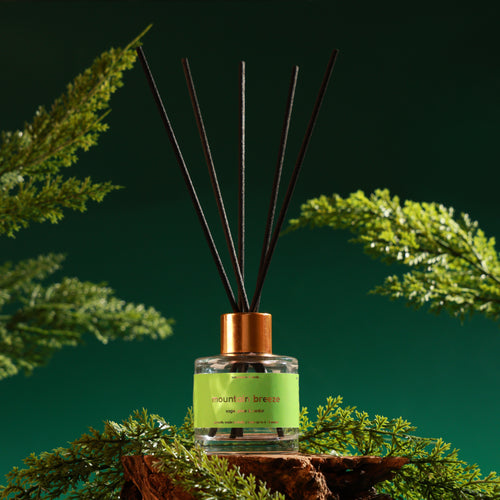 Your direction · the character₹449–₹549See it → Hanging form · the ceiling₹449–₹509See it →
 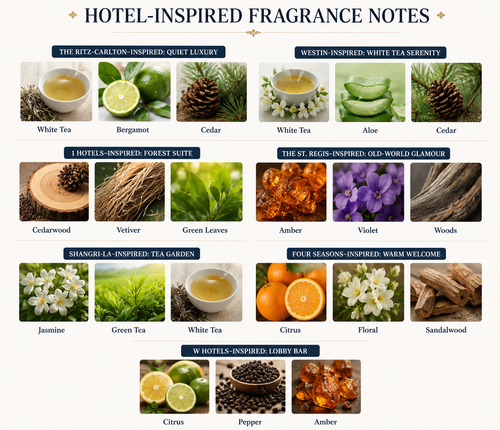 Safar · two levels, one car₹3,999See it →
The thing you did not ask: the weekend sets the ceiling, and the weekday is where you have room
Now the part of the answer your question does not reach for, and the part I would most like you to act on. You have two occupancy patterns and one car, and there is only one order in which they can be resolved: the weekend sets the ceiling, and the weekday inherits whatever headroom is left. Owners almost always do it the other way round, and the reason is entirely understandable. The ninety minutes alone is where you notice the fragrance, where you adjust it, where you decide you like it and where you decide it has gone quiet. It is five days a week of attention against one day of consequences, so the car ends up tuned by the person least affected by the tuning. Then Saturday arrives with five other people in it, nobody says anything because nobody wants to be difficult, and the level stays where it is for a year.
The asymmetry of the two errors is what settles it. If you set the car for the weekend and your weekday commute is a little quieter than you would have liked, you have lost a small amount of private pleasure and you are the only person affected. If you set the car for the weekday and your weekend is a little much, five other people are affected, in a vehicle they cannot leave, for several hours, and the one person who cannot detect the problem is the one holding the dial. Those are not symmetrical outcomes, so they do not deserve symmetrical treatment. Set for six, enjoy the headroom when you are alone, and let the ninety minutes be the pattern that is slightly under-served rather than the pattern that sets the rule.
There is a second, subtler reason, and it is the one that persuades the owners who resist the first. The weekday is also the pattern in which your own judgement is least reliable, so letting it set the rule compounds the error. Ninety sealed minutes a day, five days a week, in the seat nearest the source, is the most thoroughly adapted position available in the vehicle. You cannot judge a cabin you are sitting in; the only valid assessment is to leave it, spend long enough outside for your sense to reset, and come back in as a visitor does. On a weekday you never do that — you get in at home and get out at work. On a Saturday, five people do exactly that, all at once, and they are the only reliable instruments you own. So the weekend is not merely the constraint; it is also your measurement, which is a second reason to build the car around it.
What to do with that in practice, concretely. Set the level on a weekend journey, with the car loaded as it usually is, and set it from somebody else's report rather than your own. Ask the open question in the first minutes, record the words, and give the third row the deciding vote. Then write the answer down — the scent, the published form, where the source sits, the replacement date, and who is allowed to change any of it. A fragrance only behaves consistently when it is a decision rather than a habit, and in a car there is nothing to enforce it with: no SOSA car format publishes an app, a schedule, a stored preset or a lock of any kind. The written line is the whole of the control and it costs nothing. And if the gap between your weekday appetite and your weekend ceiling is genuinely wide — if the level that satisfies you alone is plainly more than five people want — that is the one circumstance in which an adjustable format is worth ₹3,999 rather than a luxury, because it is the only published way to hold two answers in one vehicle. Just check first that the family you have chosen has an oil, because two of your four do not.
The whole decision in buying order — and the gaps
This is the order I would write it in for your car specifically: three patterns, one character, two levels, and a note in your phone. Four of the seven steps cost nothing, the character costs ₹449 to ₹549, and the last row is everything SOSA does not publish.
| Step | What it is | Why it comes here in the order | Cost |
|---|---|---|---|
| 1. Clear the cabin before you choose anything ★ | Food and takeaway packaging, sports kit, wet umbrellas and raincoats, third-row mats, cargo carpet and anything behind a folded third row. Doors and tailgate open until the cabin genuinely exchanges its air, then clean and dry the soft surfaces | Because fragrance adds and never subtracts, because a pleasant odour added to an unpleasant one is reliably judged worse than the original was, and because the cargo area shares cabin air with all three rows | No purchase |
| 2. Choose the character by preference, not by month | Lemon ₹499 for citrus, Sea Breeze ₹509 for aquatic, Sandalwood ₹479 or Vetiver (Khus) ₹509 for woody, Oud Car Perfume (Assam Oudh) ₹509 for oud. Or hold a shortlist with the Car Perfume Sprays Discovery Set ₹699–₹899, or ₹2,999 for the pack of nine | Because preference is a legitimate answer and seasonal pairings are aesthetic conventions rather than performance facts — one signature scent all year at an adjusted intensity is a recommendable scheme and the simplest one for three patterns | ₹449–₹549 |
| 3. Take the quiet published form, which costs nothing extra | The published value “Hanging (Mild scent-throw)” rather than “Spray (Strong scent-throw)” under the option “Car freshener form”, at the same price per scent. Hanging units are 12ml; 15 ML hanging refills ₹399–₹449 | Because the format is the intensity dial and neither value is an upgrade on the other, and because a steady quiet source is a plateau while a strong one used in bursts is a peak — and people call peaks too strong even at an identical daily total | Included |
| 4. Fix the placement, and stop at one source | One unit towards the middle of the occupied cabin, out of the direct path of a vent and away from the nearest occupied face. Never a second unit, whatever the size of the interior | Because a bigger cabin needs the fragrance put somewhere else rather than more of it, and because two passive sources make two concentrations with a trough between them that somebody will sit in | No purchase |
| 5. Set the level on a weekend, from somebody else's report ★ | The car loaded as it usually is, the open question “what does the car smell like?” asked of each person in the first minutes, the exact words recorded, and the third row given the deciding vote | Because the weekend is both the binding constraint and your only reliable measurement — the nose reports change rather than constancy, so the driver is the worst instrument in the vehicle and five fresh arrivals are the best | No purchase |
| 6. Judge nothing on opening a hot cabin, and write the answer down | Ventilate, drive, let conditions normalise, then form an opinion. Then one written line: the scent, the form, the position, the level, the replacement date and the one person who may change any of it | Because a warm cabin releases more of everything and the opening breath is the least representative moment of your week — and because nothing in the SOSA car range can store or enforce a setting | No purchase |
| 7. Buy the dial only if your two patterns are genuinely far apart | Safar ₹3,999 for the house trios or ₹4,499 for the hotel-inspired ones: 3 speed settings described as light to intense, a 1 / 2 / 3-hour auto shut-off, up to 10 hrs continuous or up to 30 hrs intermittent per charge, 2000 mAh lithium over Type-C with cable included, fully cordless, approximately 6.9 cm for a cup-holder, a 20 ml bottle you fill yourself, cold diffusion of pure undiluted oil with no water, no heat and no residue | Because it is the only published SOSA car format with a settable level and a timer, which is how one vehicle holds a quiet weekend and a generous weekday without becoming two purchases. Oils are sold by weight at 100 gm ₹1,049 or 300 gm ₹1,849 for the nine house scents, and ₹1,099 or ₹1,899 for the seven hotel-inspired ones | ₹3,999 |
| The honest gaps: two of your four families cannot use the machine, and no sizing figure exists | There is nothing marine among the waterless oils and no oud among them either, and no lavender, so for aquatic and oud the published format and your placement are the only dial and the ₹3,999 should stay unspent. No coverage figure of any kind is published for any SOSA car format — no floor area, no volume, no occupant count — and beyond the published runtime there is no consumption rate, longevity figure, air-change rate, per-row concentration, fan-speed guidance or adaptation time in minutes anywhere in the range. No seasonal, temperature or humidity setting is published either. No app, schedule, stored preset or lock exists on any SOSA car format, and three values marked “Refill” appear in the diffuser's own option list with no live variant and no price, so none of those is buyable. Rose is not published as a car fragrance in any format. SOSA publishes no coffee car fragrance and no gourmand car spray or hanging unit of any kind. No SOSA experiment or measurement of any of this has been run, so no result, figure or conclusion is reported. And SOSA sells no car air purifier, no dehumidifier and no odour-removing product, so step one has nothing attached to it | Said plainly, because a page that lists only what it can sell you is a catalogue rather than an answer | Not published |
Versailles
Questions of this shape are my favourite ones to receive, because the person asking has already done the hard part. You have noticed that your car has three different lives, which is more than most owners ever articulate, and you have noticed that the usual advice does not cover any of them. What I would gently take away from you is the idea that the sky is one of the inputs. Heat and humidity are real and they change the amount of fragrance a cabin presents, but they do not have opinions about which direction you should enjoy, and the convention that they do is a very old habit of the trade rather than a finding.
The thing I would press hardest on is the weekend. I have had this conversation dozens of times and it almost always ends the same way: the owner has been setting the car on the drive they take alone, because that is the drive they are thinking about fragrance on, and then nobody in the family ever quite says anything on Saturday. Politeness is a very effective way of keeping a problem in place for a year. So make the weekend the measurement as well as the limit. Ask an open question, write down the word somebody actually uses, and let the back of the car decide. If you do only one thing from this page, do that one, and notice that it is free.
And the honest part, which I would rather say than have you discover after a purchase. If your preference turns out to be aquatic or oud, the diffuser is not your answer, because there is no marine oil and no oud oil in the waterless range. I would rather tell you that now than sell you a machine that cannot run the thing you love. In those two cases the whole of your control is the published form, where your source sits in the cabin, and somebody else's nose on a Saturday morning — which is, in fairness, most of the control that matters in any car. Everything we make is composed in Pune, and a part of every order funds a girl's classroom through Nanhi Kali.
Frequently asked questions
- Keep the scent, cut the level — and the precise conditions under which a second product is the better answer instead.
- Eight hours against forty-five minutes — the adaptation gap, and the procedural fix for a car that cannot lock a setting.
- Moisture first, fragrance second — why no stronger rainy-season perfume exists, and the overnight test that finds the source.
- A beverage and an accord at once — two sources of one smell, and the direction SOSA does not publish for a cabin.
- Three scent sources stacked — leatherette, trim conditioner and a car perfume, and how to simplify back down to one.
- One fragrance, all year — the same argument as this page, stated at full length as a year-round scheme.
- Duration, company and mood — what to do once you own more than one, and why that beats a seasonal rule.
- Preference first, then the format — the order a recommendation should be built in, and the honest note that none is published yet.
- All ten variables, in order — the summary page for the whole series, ending on format rather than on a scent name.
- Brand: the SOSA founder story.
SOSA car scenting — facts verified August 2026: the published car scents are Jasmine ₹449, Lavender ₹479, Sandalwood ₹479, Icy Mint ₹489, Lemon ₹499, Vetiver (Khus) ₹509, Sea Breeze ₹509 and Oud Car Perfume (Assam Oudh) ₹509, each offered under the published option “Car freshener form” with the two published values “Spray (Strong scent-throw)” and “Hanging (Mild scent-throw)” at the same price on every scent, so the spray is a different scent-throw rather than an upgrade tier and neither form has a setting, a timer, a schedule, an app, a stored preset or a lock of any kind. Mysore Orange Blossom is ₹549 for 10 ML and ₹1,499 for 50 ML and is spray-only with no hanging format. The 50 ML Car Perfume Spray is ₹1,499. The Car Perfume Sprays Discovery Set is ₹699–₹899 for trios and ₹2,999 for a pack of nine. Hanging units are 12ml and the 15 ML Car Hanging Freshener Refills are ₹399–₹449. Rose is not published as a car fragrance in any format, and the published floral directions for a car are Jasmine, Mysore Orange Blossom, and White Jasmine, Japanese Cherry Blossom and Neelakurinji as waterless oils. SOSA Safar waterless car perfume diffuser, ₹3,999 for the three house trios and ₹4,499 for the three hotel-inspired trios, 3 speed settings described as light to intense, a 1 / 2 / 3-hour auto shut-off, up to 10 hrs continuous and up to 30 hrs intermittent per charge, 2000 mAh rechargeable lithium, Type-C USB with cable included, fully cordless, approximately 6.9 cm so that it fits a cup-holder, 20 ml bottle, cold diffusion of pure undiluted oil with no water, no heat and no residue, supplied with diffuser, 20ml bottle, Type-C cable and manual, imported; its published wording is aroma only, which means it does not humidify, and that states what the machine adds to a cabin rather than claiming that it dries one or corrects damp. No coverage figure of any kind is published for it — no floor area, no volume and no occupant count — no numeric intensity scale is published for its three speeds, no app, Bluetooth, scheduling, stored preset or key-lock is published for it or for any other SOSA car format, and three values marked “Refill” appear in its own option list with no live variant and no price, so none of those is buyable. The waterless oils are shared with the larger Vaayu machine and sold by weight rather than by volume in two sizes: ₹1,049 or ₹1,849 for Vetiver, Neelakurinji, Malabar Lemon, Sage & Cedar, Mahogany, Japanese Cherry Blossom, White Jasmine, Tobacco Vanilla and Mysore Sandalwood, and ₹1,099 or ₹1,899 for the seven hotel-inspired interpretations. There is nothing marine among those oils, and there is no oud and no lavender among them either, so a reader who wants one of those three directions in a car should take the spray or the hanging unit and treat the format as the only dial. SOSA publishes no coffee car fragrance and no gourmand car spray or hanging unit of any kind; the only warm-sweet direction reachable in a cabin is Tobacco Vanilla through that diffuser, and coffee exists on the store only as a reed diffuser, a candle and wax melts, none of which is a car product. Thick undiluted essential oils are not recommended in a waterless nebuliser because they clog the fine nozzle over time. No seasonal setting, temperature guidance, humidity figure or interior-colour guidance is published anywhere, and beyond the published runtime of up to 10 hrs continuous and up to 30 hrs intermittent per charge, no coverage figure, consumption rate, longevity figure, air-change rate, fan-setting recommendation, per-row concentration, occupant-count guidance or adaptation time in minutes is published anywhere in the range, and none is given here. SOSA publishes no claim that any fragrance reduces stress, relieves anxiety, improves sleep, calms anybody, lifts a mood, improves concentration or improves alertness, and makes no health, air-quality, VOC, allergy or mould claim; SOSA sells no car air purifier, no dehumidifier, no odour-removing, odour-absorbing or odour-destroying product and no room spray of any kind — every SOSA spray is a car perfume. No vehicle-safety or driving guidance is offered on any SOSA page. No dealer programme, trade price, minimum order or bulk rate exists; commercial enquiries are answered individually through the contact page. All fragrances are alcohol-free where applicable, phthalate-free, paraben-free and IFRA-compliant, composed in Pune. Free shipping above ₹499. A portion of every order supports girl-child education through Nanhi Kali. SOSA is an independent Indian fragrance house; the hotel-inspired scents are SOSA’s own interpretations and SOSA is not affiliated with or endorsed by any hotel brand. Prices subject to change — see the live product pages.