


Where do I start if I've never thought about this? Start with the fundamentals - clean, well-lit, uncluttered, well-staffed. Then add the missing sensory layers one at a time, scent usually being the cheapest and most neglected. Don't gild a space that isn't right first.
Is multi-sensory design just for big showrooms? No. A small store can be fully multi-sensory too - it just needs smaller tools, like a Sukoon (₹1,799) for scent and thoughtful lighting. The principle scales down as well as up.

2. Decide the one story. Before touching any sense, define the feeling you want - for electronics it is usually 'clean, modern, premium, considered'. Every sensory choice then has a test: does it say that?
3. Build the visual and tactile layers. Good product lighting, uncluttered sightlines, and hands-on demo stations where customers can touch and try. Touch is your killer advantage over online - design for it.
4. Add sound and scent as the mood layers. Low, modern, unobtrusive audio and a clean, congruent scent set the emotional register the visual and tactile layers sit inside. Scent is usually the missing one.
5. Make it coherent, consistent and safe. Every channel must agree, run every trading hour, and respect the stock - so deliver scent waterless with a scheduled SOSA Vaayu, or an Aangan across a large ducted floor.
Made in India; a portion of every order supports girl-child education through Nanhi Kali.
Why a showroom should engage every sense
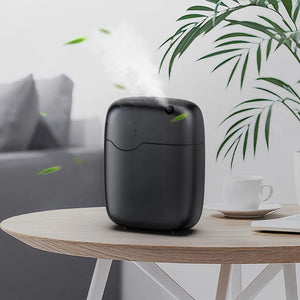
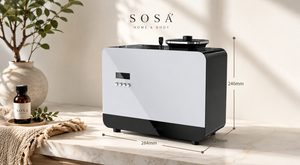
 Vaayu · scheduled₹11,999 The only thing a showroom offers that a website cannot is a full-sensory encounter with the product and the space. Online is sight alone, mediated through a screen. A showroom can let a customer feel a keyboard, hear a speaker, see a panel in real light and stand in an atmosphere - and the more of those senses you engage deliberately, the more the visit justifies itself over scrolling at home. Multi-sensory design is not a luxury; it is the core argument for physical retail's existence. The Vaayu covers the sense most showrooms forget.
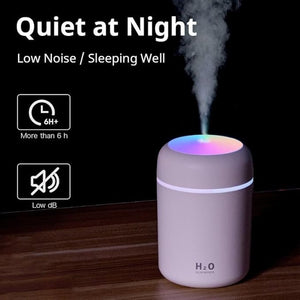
 Boond · billing₹799 Of all the senses, touch is the one online can never fake - the weight of a laptop, the click of a keyboard, the feel of a phone in the hand. A multi-sensory showroom designs for touch deliberately: accessible demo units, working displays, room to try. This is where the sale is often won, because trying is believing. Scent and sound set the mood, lighting reveals the product, but touch is what closes - so build the whole experience around letting people handle the stock. Keep those demo units dry with waterless scenting nearby.
 Hotel CollectionFrom ₹299 Most showrooms handle sight and touch and stop there. Smell is the sense left to chance - which means it is usually the one dragging the experience down, carrying the AC, the street, or stale air. Adding a clean, congruent scent completes the sensory picture and lifts everything else, because the brain fuses all the channels into one impression and a neglected channel weakens the whole. It is typically the cheapest remaining upgrade with the most headroom. Audition blends from the Hotel Collection (from ₹299).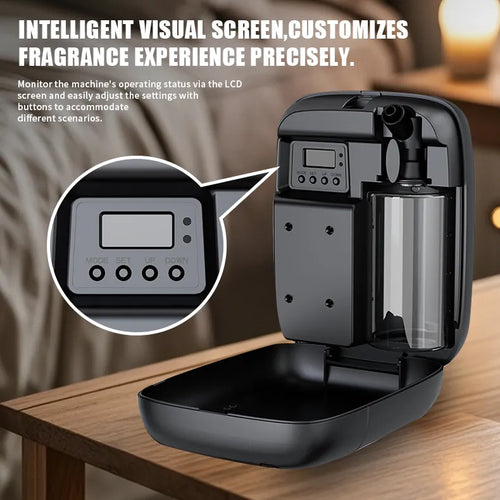
Building it step by step, without overspending
You do not build a multi-sensory showroom all at once, and you certainly don't start with the expensive theatrics. Start with the fundamentals, because no amount of sensory design survives a dirty, poorly-lit, cluttered floor - fragrance crowns good air and never substitutes for it, and the same is true of every other channel. Get clean, bright, uncluttered and well-staffed first. That is the foundation everything else sits on.
Then add the layers in order of return. Lighting and layout usually come first and many stores have them. Hands-on demo stations are next, because touch is your killer channel against online. Sound is a cheap mood layer. And scent, almost always the neglected one, is typically the highest-return addition precisely because so few competitors bother - a single scheduled, waterless machine transforms the sense that was previously dragging the experience down. Add them one at a time, check each is congruent with the others, and you build a coherent whole without ever overspending on a single gimmick.
The four-sense build, as a checklist
Work down the list and give each sense a test to pass. A multi-sensory showroom is one where every row is a yes - and they all say the same thing.
| Sense | How to build it | The test it must pass |
|---|---|---|
| Sight | Warm-clean lighting, uncluttered sightlines, product-first displays | Does the product look its best and the room look composed? |
| Touch | Accessible, working demo units with room to try | Can a customer actually pick it up and use it? |
| Sound | Low, modern, unobtrusive audio; quiet demo zones | Can two people hold a conversation easily? |
| Smell | Clean, congruent, barely-there scent, delivered waterless | Does the air feel composed without announcing itself? |
| Coherence | One story across all four, consistent every hour | Do all four channels say the same thing? |
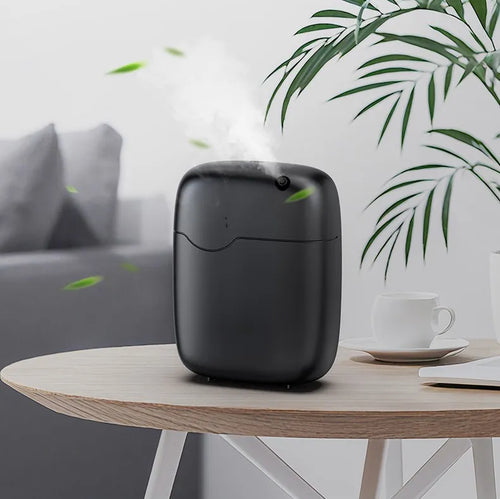 SOSA Vaayu · Display floor₹11,999See details →
  Sukoon 500ml · Small stores₹1,799See details →
 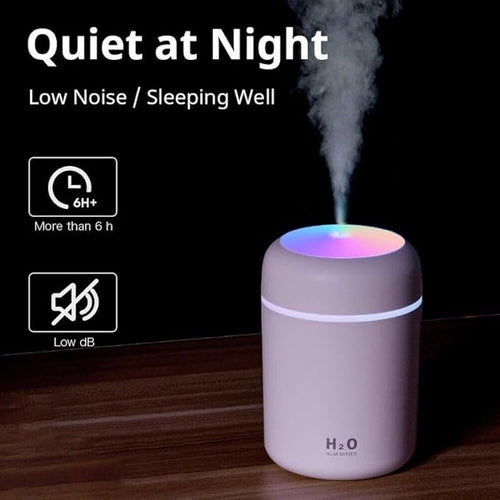 Boond 300ml · Billing corner₹799See details →

The SOSA commercial edit
Whichever kind of electronics business you run, the system logic is the same: one signature, sized to the space, scheduled so it never depends on a staff member's memory, and waterless wherever it runs near stock. The Hotel Collection blends - SOSA's own interpretations of the world's finest hotel scents - run across the range, and everything is supported from Pune. A portion of every order supports girl-child education through Nanhi Kali.
| System | Best for | Why it works | Price |
|---|---|---|---|
| Boond (300ml) | Billing corners, waiting areas, small counters | Small ultrasonic unit for the zones that need a trace, not a signature | ₹799 |
| Sukoon (500ml) + Hotel Collection | Small single-room stores | The entry system - enough for a compact shop floor, water-based | ₹1,799 + ₹299 |
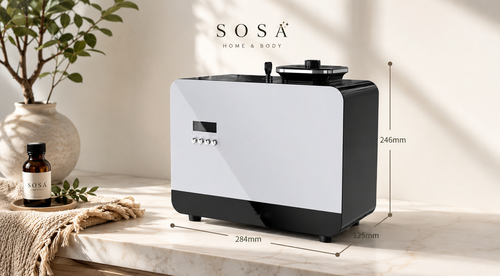
| SOSA Vaayu ★ | Showroom floors & demo zones to ~1000m³ | Waterless cold-air nebulising, Bluetooth app + 1/4/8/24h timers, under 38 dB - waterless is what makes it right near stock | ₹11,999 |
| SOSA Aangan | Large showrooms 8,000-10,000 sq ft | HVAC nebulising - one signature through the whole customer floor, hidden in the plant room | ₹25,999 |
| Hotel Collection refills | Every system's running cost | 100ml / 300ml - SOSA's interpretations of the world's finest hotel scents | from ₹999 |
Versailles
Frequently asked questions
Facts verified August 2026: Ambient scent research consistently associates pleasant, congruent scenting with longer dwell time, improved venue evaluations and stronger brand recall at moderate effect sizes; congruence and gentle intensity outperform strong scenting in replicated studies, and no scent effect survives unclean or poorly ventilated premises. Olfactory memory is unusually durable, which is the mechanism behind signature retail scents. The principal risk to electronic equipment from diffusion is added moisture and residue rather than fragrance itself, which is the basis of this range's waterless recommendation. SOSA systems: Boond 300ml (₹799) and Sukoon 500ml (₹1,799) ultrasonic units run the water-based Hotel Collection fragrance (from ₹299; refills 100ml ₹999); SOSA Vaayu (₹11,999) is a waterless cold-air nebulising machine, up to 1000m³, 400ml tank, Bluetooth app and 1/4/8/24h timers, under 38 dB; SOSA Aangan (₹25,999) is an HVAC nebulising system covering up to 3,000m³ (roughly 8,000-10,000 sq ft). The Hotel Collection scents are SOSA's own interpretations; SOSA is independent and not affiliated with any hotel brand. Prices and availability are subject to change - see the live product pages.