


SOSA has nothing that fixes this. No dehumidifier, no air purifier, no neutraliser, no room spray — every SOSA spray is a car perfume. Anybody selling you scent as a damp solution is selling you the wrong category.
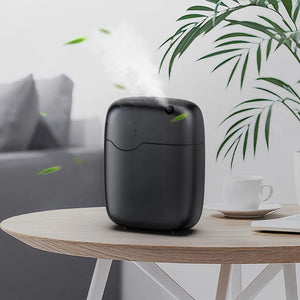
Do not run an ultrasonic diffuser in monsoon if your complaint is mustiness. Boond ₹899, Sukoon ₹1,899 and Megh ₹3,499 all add humidity by design. That is fine in a dry room in a dry season and wrong here.
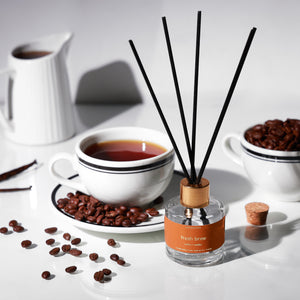
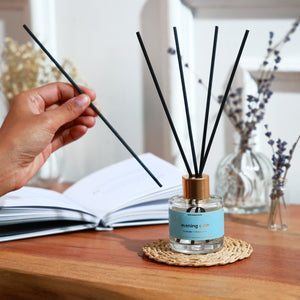
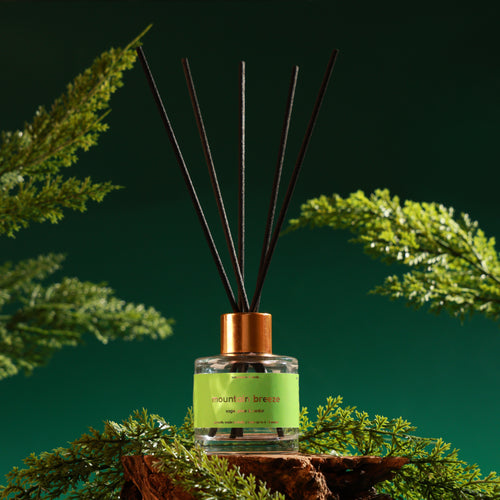
The formats that add no moisture are reeds and waterless. A reed diffuser at ₹749–₹1,349 is passive and dry; a Vaayu at ₹11,999 is waterless cold-air nebulisation. Neither removes anything either — they simply do not make the humidity worse.
2. SOSA sells nothing for it, and I want that in the first few lines rather than the last. No dehumidifier, no air purifier, no neutraliser, no odour remover, no room spray. If a supplier offers you a scenting solution to a damp problem, ask them what mechanism removes the moisture. There is not one.
3. Walk the building in the order damp hides. External walls behind cupboards, notice boards and framed certificates. The ceiling void above the waiting area, especially under a flat roof or a terrace. The air-conditioning condensate tray and its drain. Under-sink cabinets and the wash area. Carpet and rug edges and the underside of upholstered seating. Cardboard record storage. The back corridor and the store cupboard nobody opens.
4. Handle the monsoon-specific inputs at the door. Wet umbrellas, wet footwear and wet clothing walk in all day and are the reason a clinic can be dry in April and musty in July with no building fault at all. A stand outside the door, a genuine absorbent mat inside it, and a rota for lifting the water off the floor rather than spreading it.
5. Get air moving through the damp spaces specifically. Cupboards open, store doors open, a fan into the corridor for an hour a day. Damp materials dry to moving air and stay damp in still air, and still air is exactly what a cupboard is.
6. Do not run an ultrasonic diffuser through the season if mustiness is your complaint. Boond at ₹899, Sukoon at ₹1,899 and Megh at ₹3,499 all put water vapour into the room. That is what an ultrasonic is. In monsoon it is the wrong direction and I would rather lose those sales than pretend otherwise.
7. If you find damp in the fabric of the building, it belongs to a surveyor and possibly your landlord. Rising damp, a failed waterproofing layer, a leaking terrace or a cracked drain are building matters, and nothing on this page is advice about any of them.
8. Come back to the fragrance question after the season, with a dry building. Then it is a small decision — one source, arrival zone only, dry and unsweet, two or three of six reeds. Nothing goes past the consultation door in any format at any level: examination rooms, diagnostics, consultation cabins, the procedure suite and any post-operative area stay fragrance-free, and that boundary is the practice's clinical judgement. Nothing here is medical, clinical, ventilation, building or regulatory advice. Composed and made in small batches in Pune, and a portion of every order supports girl-child education through Nanhi Kali.
Part one — why this is a water problem wearing a smell
Every musty building I have ever been asked about turned out to have water in it, and in almost every case somebody in the practice already half knew where. The smell is a symptom with a physical address, which is unusually good news — it means there is something specific to find rather than a vague quality to be improved. Three things follow.
 Sukoon 500ml₹1,899 · adds humidityAn ultrasonic diffuser breaks water and water-based fragrance into a cool mist and blows it into the room. Adding humidity is not a side effect of that mechanism; it is the mechanism, and in a dry room in a dry month it is often welcome. In a clinic that already smells musty in July it is the last thing you want, and a machine of this type run for eight or nine hours a day through a monsoon is contributing moisture to a building whose complaint is moisture. Megh at ₹3,499 is the one to be most careful with, because it holds 6 litres and runs roughly 100 hours a fill — and while people assume the price and the tank make it the bigger machine, it covers only about 215 sq ft, which is less than a Sukoon's 270–320. It is a runtime and humidity machine and never a coverage upgrade, which makes it precisely the wrong instrument here on both counts. If you own one of these already, the recommendation for the season is simply to leave it off. That costs nothing and it is genuinely the advice I would give a friend.
Part two — where the water hides in a clinic building
Eight places to look, in the order I would look, with what each tends to smell like, how to confirm it and who owns the fix. The final column exists to be read as a column rather than as eight separate answers.
| Where to look | What it tends to smell like | How to confirm it | Who owns the fix | What fragrance changes |
|---|---|---|---|---|
| External wall behind a cupboard or notice board ★ | Mineral, earthy, cold — strongest at knee height and behind furniture | Pull the furniture out; look for tide marks, bubbling paint or a cold patch | A surveyor, and your landlord if you lease | Nothing at all |
| Ceiling void above the waiting area | Musty and diffuse, hard to localise, worse after heavy rain | Lift one tile and smell the void separately from the room | Building maintenance; a roof or terrace question | Nothing at all |
| Condensate tray and drain of the indoor unit | Damp and slightly stagnant, arriving when the cooling starts | Note whether the smell appears with the compressor | Your air-conditioning maintenance contractor | Nothing — and an ultrasonic here adds moisture to a wet tray's room |
| Under-sink cabinet and the wash area | Sour-damp, contained, obvious once the door is open | Open it and smell inside, away from the room | A plumber, then a habit of leaving the door ajar | Nothing at all |
| Carpet and rug edges, and seating foam | Dull, warm, textile — worst where wet footwear lands | Kneel at the entrance mat and at the first row of chairs | Deep cleaning, and hard flooring at the next refit | Nothing at all |
| Cardboard record and stationery storage | Papery-musty, strongest inside the cupboard | Smell one box on its own, outside the store | The practice — sealed plastic boxes, off the floor, off external walls | Nothing at all |
| The back corridor and the store nobody opens | Closed and musty, unchanged all day because the air never moves | Open the door and stand in it for ten seconds first thing | The practice — a door left ajar and a fan for an hour a day | Nothing at all |
| The entrance itself, on rainy days only | Wet fabric and wet footwear; comes and goes with the weather | Compare a wet week against a dry one — this is the seasonal-input signature | The practice — umbrella stand outside, absorbent matting inside | Nothing at all |
| The honest caveat: the final column reads the same on every row because that is the mechanism. A diffuser adds a scent to the air; it does not clean, purify, filter, dry, dehumidify, neutralise or freshen it, and it removes no damp or musty smell. SOSA sells no dehumidifier, no air purifier, no odour neutraliser and no room spray — every SOSA spray is a car perfume. Rising damp, waterproofing, roofing, plumbing, drainage and air-handling are building and engineering matters for a surveyor, a plumber or your maintenance contractor, and if you lease, for your landlord; nothing on this page is medical, clinical, ventilation, building, infection-control or regulatory advice. No claim is made in either direction about how any patient or member of staff perceives, tolerates or responds to fragrance, to damp or to mould, and no SOSA product or setting is described as safe or unsafe for any group. Some people are sensitive to airborne fragrance, which is why the clinical pathway — examination rooms, diagnostics, consultation cabins, the procedure suite and any post-operative area — stays fragrance-free at all times, and why a fragrance-free seat must genuinely exist wherever fragrance is used. | ||||
Mountain Breeze · no water involved₹849Shop → 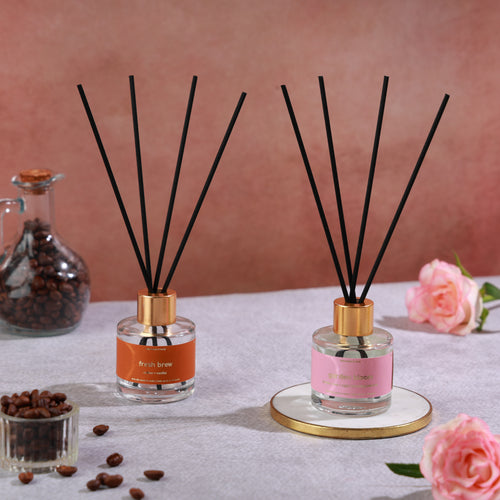 Oil refill · ₹8.00 a millilitre₹2,399Shop →
 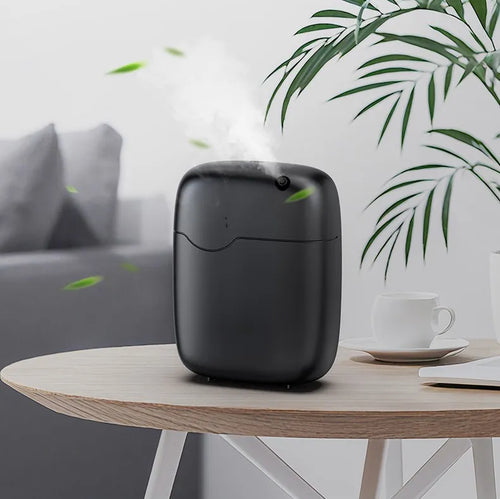 Vaayu · waterless, large zones only₹11,999Shop →
Part three — what SOSA does not sell, said plainly
I would rather list the absences than let a reader infer a capability we do not have. SOSA does not sell a dehumidifier. SOSA does not sell an air purifier, an air filter, an ioniser, an ozone device, an enzymatic treatment, a mould product, a desiccant, a damp-proofing service or a room spray. The catalogue is reed diffusers, ultrasonic diffusers, a waterless cold-air machine, commercial nebulising units, candles, wax melts, some ceramics and a car diffuser. Not one of those has a mechanism that removes water from air or from a material, and the two categories that get closest in people's imaginations — the machines — are the ones that either add water outright or, in the waterless case, simply do nothing to it. So if the problem you are solving is a musty clinic in July, there is no product page on my site that belongs in your search results, and I would rather write that sentence than have you find it out at ₹3,499.
The reason this matters more here than on any other page in this family is that damp genuinely is the case where a scent purchase can leave a practice worse off in a way it can measure. An ultrasonic machine running eight hours a day through a monsoon in a room that is already struggling with moisture is not neutral — it is a contribution, from a device you bought to help. That is an outcome I take seriously enough to put in a heading. If you already own a Boond, a Sukoon or a Megh, the recommendation for the wet months is to switch it off, empty the tank and leave it dry until the season turns; nothing is wasted, the machine keeps, and you can go back to it in October. If you do not own one, do not buy one now on the strength of a monsoon complaint — buy it, if you ever do, in a dry month for a dry room, and size it to the arrival zone rather than to the clinic. And if somebody tells you a diffuser will help with mould or damp, treat that as a reason to stop the conversation rather than to negotiate the price.
What you can legitimately do with fragrance, once the building is dry, is small and worth stating so that this page does not end in a dead end. After the season, in a dry reception, one low source in the arrival zone is an ordinary and defensible decision — and monsoon-relevant design is one of the few places I will defend a specific product detail. SOSA reeds are fibre rather than rattan precisely because rattan's pores clog in Indian humidity, and the compositions are tested through 85% monsoon humidity as well as 45°C heat, which is why they behave predictably in a Kochi or Guwahati July rather than sulking. That is a durability claim about the product, not a claim about your room. Set it low — two or three of six reeds — put it at the far end of the arrival zone, away from the corridor to consultation, and ask your reception staff a fortnight later whether they would keep it. They breathe that air for eight or nine hours a day. A practice is judged on competence, and the arrival zone should read as considered, never as scented.
Part four — what each rupee actually does, and which way it moves humidity
Nine things a practice might spend on during a musty monsoon, what each addresses, whether SOSA sells it, and which direction it moves the moisture. The fourth column is the one that makes this table different from every other buying guide you will read this season.
| What you might spend on | What it actually addresses | Does SOSA sell it | Direction it moves humidity | Honest verdict |
|---|---|---|---|---|
| Finding and drying the source ★ | The cause. Everything else on this table is downstream of it | No | Down, permanently | Do this first. Often costs nothing but attention and a fortnight |
| Umbrella stand outside, absorbent matting inside | The seasonal input — water arriving on people rather than through walls | No | Down, on wet days specifically | The cheapest genuinely effective purchase in this whole family |
| Sealed plastic boxes for records, off the floor and off external walls | Cardboard, which absorbs and holds and then releases | No | Down, locally and permanently | Unglamorous and it works. Also protects the records |
| A dehumidifier | The airborne moisture itself, within one room | No — SOSA does not sell one | Down | Legitimate, and you must buy it from somebody who actually makes them |
| Air-conditioning service, condensate tray and drain | A standing-water source inside your own equipment | No | Down | Ask your maintenance contractor. Not a fragrance decision at any point |
| Waterproofing, damp-proofing or a roof repair | Water entering the fabric of the building | No | Down, and it is the only permanent answer for a fabric fault | A surveyor's job, and your landlord's problem if you lease |
| An ultrasonic diffuser — Boond ₹899, Sukoon ₹1,899, Megh ₹3,499 | Nothing here. It adds a scent and adds water vapour | Yes | Up — this is the mechanism, not a fault | No, not this season. Megh is also ~215 sq ft, less than a Sukoon — a runtime and humidity machine, never a coverage upgrade |
| A reed diffuser — ₹749–₹1,349, refills 300ml ₹2,399 or 500ml ₹3,499 | Adds a scent to the arrival zone. Removes nothing | Yes | Neutral — passive oil diffusion, no water | Fine once the building is dry. ₹2,399 ÷ 300 = ₹8.00 a millilitre on refill against ₹849 ÷ 50 = ₹16.98 for a bottle |
| A waterless Vaayu at ₹11,999 | Adds a scent across a large arrival zone. Removes nothing | Yes | Neutral — cold-air nebulisation of undiluted oil, no water | Only past roughly 320 sq ft of connected arrival zone, freestanding, never HVAC-mounted, and only after confirming refill supply |
Versailles
A consultant on the Konkan coast wrote to me in the middle of a bad July. Her waiting room had turned musty, she had a six-litre machine running from nine to seven, and she wanted to know whether a stronger fragrance would carry over it. She had been running that machine daily for two months.
The first thing I told her was to switch it off, empty the tank and leave it dry until October. It is an ultrasonic; it works by putting water into the air, and she had been adding moisture to a building whose complaint was moisture, eight hours a day, with a device she had bought to help. She had not been told that when she bought it, and I do not think it had occurred to anybody in the chain. It should have.
Then we did the walk. The waiting room was not the problem. Her old records were in cardboard boxes stacked against the external wall of a store room that shared a wall with the corridor, and that store had not been opened in five weeks. Sealed boxes, off the floor, a fan into the corridor for an hour a day, and the smell was gone in about ten days. She bought a reed diffuser in November, one bottle, three reeds, and told me the room finally smelled of the thing she had chosen rather than the thing she had been fighting. Composed and made in small batches in Pune, and a part of every order funds a girl's classroom through Nanhi Kali.
Frequently asked questions
- Will a scent machine fix a damp smell in an older building? — the companion page, and the answer is no.
- When to fix ventilation, moisture or cleaning instead of increasing fragrance — the decision rule for this whole family.
- How to find the source of a persistent odour and why a sealed clinic smells closed.
- Should you cover a disinfectant smell with fragrance? — the other page here that recommends buying nothing.
- Brand: the SOSA founder story.
SOSA range, specifications and prices used in this guide (verified August 2026): Vaayu ₹11,999 — waterless cold-air nebulisation of undiluted fragrance oil; no water, no heat, no added humidity, no white mineral dust. Coverage up to 1000 m³, about 2,000–3,000 sq ft. 400ml refillable tank lasting roughly 90+ days at a mid setting. Bluetooth app plus onboard controls, 1h / 4h / 8h / 24h run windows, day selection, adjustable intensity, auto-stop and key-lock. Under 38 dB. DC 12V / 1A, 5W. Freestanding or wall / HVAC mount. CE, RoHS and SGS certified. SOSA does not currently sell a separate Vaayu cold-air refill oil; the 400ml supplied in the box is the fragrance available at the time of writing, so a practice planning continuous or multi-site use should confirm current refill availability with SOSA before committing. The water-based Hotel Collection is made for ultrasonic machines and must not be used in a Vaayu. Other machines: Boond 300ml ₹899 (~150 sq ft, ultrasonic) · Sukoon 500ml ₹1,899 (270–320 sq ft, 16–18 hours on low, remote and steady/2H/4H timers, three 15ml fragrances included, ultrasonic) · Megh 6L ₹3,499 (~215 sq ft — a runtime and humidity machine that covers less than a Sukoon, never a coverage upgrade) · Safar ₹3,999 (waterless cold diffusion, cordless, 20ml, about 6.9cm, three speeds, 1/2/3-hour auto-off — sold as a car and travel diffuser, personal-scale only; SOSA publishes no coverage figure for it) · Aangan ₹25,999 (HVAC nebulising, ~8,000–10,000 sq ft) · Meenar ₹38,500 (commercial HVAC, 12,000–18,000 sq ft). Water-based Hotel Collection for ultrasonic machines: 15ml ₹299 · 100ml ₹999 · 300ml ₹1,799 · pack of seven ₹1,799; scents are inspired by the atmosphere of well-known hotels — SOSA is an independent Indian brand and is not affiliated with, endorsed by or supplying any hotel group. Reed diffusers ₹749–₹1,349 (50ml 6–8 weeks, 130ml 14–18 weeks, six fibre reeds, no 100ml size; replacement reeds are not sold separately). Reed oil cannot be used in an ultrasonic machine and Hotel Collection oil cannot be used in reeds. SOSA sells no room spray or home spray — every SOSA spray is a car perfume. Nothing in this guide is medical, clinical or safety advice. A fragrance diffuser adds a scent to the air. It does not clean, purify, filter, sanitise or disinfect air, does not remove or neutralise disinfectant, damp or occupancy smells, and has no effect on comfort, anxiety, waiting time, recovery or any clinical outcome. Some people are sensitive to airborne fragrance, which is why this guide recommends that examination rooms, diagnostic areas, consultation cabins, procedure suites and post-operative areas remain fragrance-free, that a fragrance-free seating option always exist, and that a diffuser is never mounted into shared HVAC in a clinical building. Decisions about clinical policy, ventilation standards, infection control and patient suitability rest entirely with the practice and its clinicians. A persistent stale, damp or disinfectant smell is a ventilation, moisture or cleaning problem — SOSA sells no dehumidifier and no air purifier, and fragrance should never be used to cover one. Coverage, runtime and longevity figures are manufacturer specifications and typical ranges, not guarantees, and vary with room volume, ceiling height, air exchange, occupancy and season. SOSA publishes no commercial or bulk pricing, no corporate account, no annual maintenance contract, no installation service, no stated warranty term and no multi-location programme; warranty length, spare parts, servicing and app platform availability are unconfirmed, and larger or multi-site enquiries should go through the contact page before any commitment. Composed and made in small batches in Pune, India. Free shipping above ₹499. A portion of every order supports girl-child education through Nanhi Kali. Prices subject to change — see the live product pages.