


Across several sites? Same scent, same machine, same schedule in each branch. For whole centres, an Aangan at ₹25,999 on the ducting.
Strong or subtle? Subtle. A luxury signature is noticed, not announced — a light trace in treatment rooms with a Boond at ₹799.
2. It travels between sites. The same note on the same machine makes every branch feel like the same brand — an Aangan at ₹25,999 for whole centres.
3. It lives in memory. Scent is wired to recall, so the brand keeps working long after the guest leaves.
4. It reads as luxury through restraint. Noticed, not announced — a light, therapist-adjustable trace in treatment rooms with a Boond at ₹799.
5. It expresses a real brand. A signature dresses genuine service; it cannot invent it. And a portion of every order supports girl-child education through Nanhi Kali.
A logo for the nose
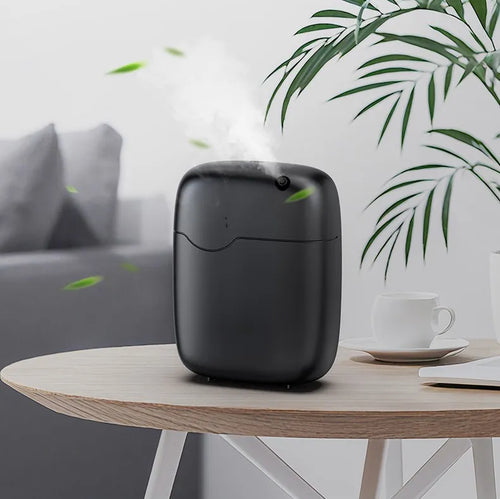
A brand is a promise a guest recognises. Most of the tools we use to build one speak to the eye — the mark, the palette, the typeface, the interiors — and they work only when the guest is looking at them. But a luxury spa has one channel that reaches the guest whether or not they are looking, and reaches the part of the brain least interested in words and most interested in feeling. That channel is scent, and a well-chosen signature is best understood not as decoration but as a logo the nose can read.
Like a logo, a signature scent does two jobs at once. It identifies: a guest who has met your note before recognises your brand the instant they step in, often before they have consciously registered where they are. And it travels: the same note carried faithfully across your reception, your second location, your resort outpost, tells the guest that all of these are one brand, one standard, one promise. A logo you print; a scent you diffuse. Both are brand assets. Only one of them keeps working while the guest’s eyes are closed on the table.
Why scent brands so well
One signature, many sites
The place a scent brand earns its keep most visibly is the multi-site group. When a guest who loves your flagship visits your second location and feels, before they can explain why, that they are somewhere familiar and trusted — that is the signature doing brand work no printed asset could. The trick is consistency, and consistency across sites is a discipline: the same fragrance, run on the same waterless system, scheduled identically through the app so it opens and closes with each branch at the same strength. A brand note that is strong in one location and faint in another is not a brand note; it is an accident.
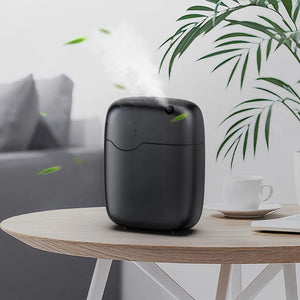
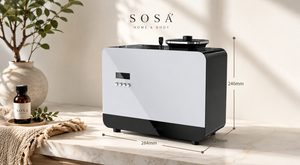
Match the hardware to the site. A single reception or lounge is served by a Sukoon at ₹1,799 or, better for long daily runs, a Vaayu at ₹11,999 in each branch. A whole wellness centre wants the brand note moving through the ducting alongside its air, which is the work of an Aangan at ₹25,999 for 8,000–10,000 sq ft, or a Meenar at ₹38,500 for a flagship of 12,000–18,000 sq ft. The rule is the same at every scale: one signature, held identical, so the brand is recognised by the nose before it is read by the eye.
| Brand asset | The visual logo | The scent signature |
|---|---|---|
| Sense | Sight — needs looking | Smell — needs only air |
| When it works | When seen | Continuously, from the threshold |
| Memory | Recognised | Recognised and re-felt |
| Across sites | Printed the same | Diffused the same on a Vaayu |
| Copyable? | Easily | Not from a photograph |
SOSA Vaayu — per site₹11,999Shop → 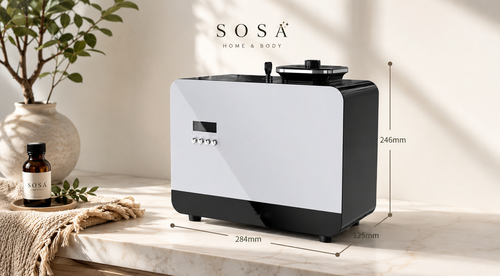 SOSA Aangan — whole centre₹25,999Shop →
  Hotel Collection scentsfrom ₹299Shop →
Choosing a scent worthy of the brand
A brand signature is chosen the way you would choose a logo: deliberately, against the character of the brand, and then kept. Begin from what your brand already says. An Ayurvedic house wants grounding naturals — sandalwood, vetiver — congruent with its tradition, without tipping into heavy incense. A bright modern day spa wants clean white tea, bergamot or neroli. A beauty-led spa may want restrained florals. The note should feel like an inevitable extension of the brand, not a fashionable add-on.
Then audition rather than assume. Take two Hotel Collection candidates at ₹299 each, run one for a fortnight and the other for the next, and ask your team and your regulars which one feels like the brand. Once chosen, protect it as you would your logo: do not redraw it every season. A signature swapped quarterly never becomes a brand asset, because the guest never has time to attach it to you. The equity is built entirely from repetition, so the discipline of keeping the note is the whole of the strategy.
What a brand scent can’t do
Let me be candid, because branding invites overstatement. A signature scent is a genuine brand asset, but its commercial effect — on recall, on recognition across sites, on perceived quality — is real and moderate, not transformative. It expresses a brand; it cannot manufacture one. If the service is cold, the rooms unclean, the treatments forgettable, then a beautiful signature simply brands a disappointment more memorably. The brand is built first from what you actually do — skilled hands, spotless and ventilated rooms, genuine warmth — and the scent is the layer that makes the real thing recognisable and durable.
And luxury branding demands restraint. A brand signature is noticed, never announced: full front-of-house on a Vaayu, a light and therapist-adjustable trace in treatment rooms on a Boond at ₹799 so a face-down guest is never troubled, and clean, ventilated air in wet and heat areas where humidity would distort it. Post honestly that front-of-house is lightly scented and treatment areas kept low, air the premises daily, respect allergies, and take the first “too strong” comment seriously. A brand that over-scents does not read as luxury; it reads as a brand that mistook volume for confidence.
The SOSA commercial edit
Choose the system that lets you run one brand signature, consistently, at the right level for each zone and each site. Front-of-house wants the Vaayu; treatment rooms want the quiet Boond; a whole centre wants the Aangan carrying the brand note through the ducts.
| System | Best for | Why it works | Price |
|---|---|---|---|
| Boond | A light trace in treatment rooms | Low, therapist-adjustable output; luxury restraint | ₹799 |
| Sukoon + Hotel Collection | A single reception or lounge | Compact front-of-house signature; ultrasonic, water-based | ₹1,799 |
| SOSA Vaayu ★ | One brand signature per site, front-of-house | Waterless, app + timer, under 38dB — identical across branches | ₹11,999 |
| SOSA Aangan | The brand note across a whole centre | HVAC nebulising, 8,000–10,000 sq ft, intensity-zoned | ₹25,999 |
| Refills | Running cost | 100ml / 300ml Hotel Collection refills | from ₹999 |
Versailles
A spa group I worked with had spent beautifully on a new logo and still felt, in their words, “like three different places.” We changed nothing visual. We gave all three branches one signature, held identical, and within months guests were describing the second location as feeling “just like” the first. The nose recognised the brand before the eye did.
That is what I want owners to understand: a signature is not a finishing touch, it is a brand asset — the only one that travels with the guest out of the door and stays with them.
We make and support these signatures from Pune. Your brand earns a mark the nose can read; a girl earns a classroom through Nanhi Kali.
Frequently asked questions
Facts verified August 2026: ambient scent has a real but moderate effect on brand recall, recognition and perceived quality; congruence and consistency beat intensity; and no signature brands an unclean or poorly run premises. SOSA system specs and prices — Boond ₹799, Sukoon ₹1,799, Vaayu ₹11,999, Aangan ₹25,999, Meenar ₹38,500, Hotel Collection from ₹299, refills from ₹999. The Hotel Collection scents are SOSA’s own interpretations inspired by the world’s finest hotels; SOSA is an independent Indian fragrance house, not affiliated with or endorsed by any hotel brand. Prices subject to change.