



Why the spa reading happens: lavender has two halves. The dry, herbal, faintly camphoraceous side is structured, slightly green and reads as clean. The soft powdery-sweet side is the one that carries every association with treatment rooms, linen sprays and massage oil, and it is the half that comes forward when the dose goes up. Raising the level does not make lavender more present; it changes which lavender you are smelling.
The part almost nobody checks: what else in your vehicle is already scented. Leather and upholstery conditioners, interior-care products, cabin cleaners and your own perfume frequently run a soft, sweet, soapy accord for free. Lavender on top of that is two soft-sweet things at once, and the nose reads the duplication as density — which is the spa impression arriving from a source you never counted.
Peaks, not averages: a short burst of high output and a steady low level can deliver the same total fragrance across a day, and people call the first one too strong. A spray applied on entry is a peak. A hanging unit is a plateau. For a signature you live with every day, the plateau is the right shape, and SOSA’s published labels make the choice explicit under the option “Car freshener form”.
The honest gap, said here and again below: the cleanest way to hold a plateau would be a machine at its lowest continuous setting, and it is not available here. There is no lavender oil among the sixteen waterless scents, so Safar cannot run lavender and the format choice is your whole dial. SOSA also publishes no claim that lavender reduces stress, improves sleep or has any calming effect, so this page makes none — the subject here is register, not benefit.
- The straight answer, in five parts
- Where the spa reading actually comes from
- Keeping it dry: the clean-linen setting
- Clean linen against treatment room, variable by variable
- What an everyday signature is worth, and what changing it costs
- What I would do, in order — and the gaps
- A note from Sonal
- FAQs
2. It has two halves, and the dose decides which one you get. This is the mechanism, and it is worth understanding because it generalises. A composition dosed very low is mostly its heart and base, since the lightest materials leave first; and dry, structured registers keep their outline when there is very little of them present, while soft and powdery ones lose their shape. Lavender spans both. The herbaceous, slightly camphoraceous, almost green-stem part of it is structured and legible at a whisper. The powdery, soft-sweet, faintly humid part is the one that calls up treatment rooms — and the more material you put in the air, the more of that half you are putting there. Raising the level does not give you more lavender. It gives you a different lavender.
3. The pairing does at least as much work as the dose, and nobody checks it. Walk through what is already scented in your vehicle before you add anything. Leather and upholstery conditioners very often carry a sweet, soapy or vanilla direction. Interior-care sprays and dashboard products do the same. Cabin cleaners leave something behind. Your own perfume, worn daily in a shut car, is a continuous contribution. Any of those plus lavender is two soft things running at once, and the nose reads duplication as density rather than as complexity. That density is the spa impression, and it has arrived from a source you never counted as fragrance. Switching your conditioner to an unscented product changes a cabin more than switching the perfume does.
4. For a signature you live in daily, aim for a plateau rather than peaks. Here is a mechanism people find genuinely surprising. A machine or a spray delivering a short burst of high output, and a quiet source running steadily, can put the same amount of fragrance into a day — and people describe the first arrangement as too strong while describing the second as pleasant. Peaks are what get remarked upon; plateaus are what get lived with. A spray applied on entry is a peak by design, which is exactly right if you want a cabin to greet a guest. A hanging unit is a plateau by design, which is exactly right for a scent you want to stop thinking about. “Hanging (Mild scent-throw)” is not a weaker spray. It is a different shape of exposure, and for an everyday signature it is the better shape.
5. So specify it low, dry and alone — and know what this family cannot give you. Lavender ₹479 is the entire published lavender car range, in the two values of the option “Car freshener form”, namely “Spray (Strong scent-throw)” and “Hanging (Mild scent-throw)”, at an identical price, so the spray is a different scent-throw and not an upgrade. The 15 ML Car Hanging Freshener Refill is ₹429 for this scent. The ideal instrument for a deliberate plateau would be a diffuser held at its lowest continuous setting, and there is no lavender oil among the sixteen waterless scents, so that is unavailable here. Everything SOSA composes is alcohol-free where applicable, phthalate-free, paraben-free and IFRA-compliant, composed in Pune by an ISIPCA Versailles-trained perfumer. Free shipping above ₹499, and a portion of every order supports girl-child education through Nanhi Kali.

Where the spa reading actually comes from
Two things built the association, and only one of them is about the material. The cultural half is simple: for thirty years lavender has been the default scent of linen sprays, treatment rooms, massage oils and hotel bathroom amenities, so a very large number of people have met it almost exclusively in those settings. That is not a property of the plant; it is a property of where the plant has been put. The material half is more interesting, and it is the half you can do something about. Lavender is genuinely two-sided, and the side that dominates depends on how much of it is in the air. Most people asking this question have only ever encountered the loud version, because the loud version is what a treatment room is designed to deliver and what a cheap car freshener delivers by accident. They have never met the quiet one, which smells dry, herbal and faintly green, and reads as cleanliness rather than as treatment.
 SpecifyFreeA composition dosed very low is mostly its heart and its base, because the lightest and most volatile materials disappear from the air first. That has a consequence people rarely anticipate: a fragrance chosen at full strength can be close to unrecognisable when it is running quietly, and a fragrance chosen quiet can be unrecognisable when it is loud. Dry, structured registers — herbal, woody, tea-like, resinous — keep a legible outline at very low concentration. Soft and powdery ones go shapeless and read as a vague smell of perfume. Lavender holds a foot in each camp, which is why it is so often misjudged. Keep it low and the aromatic herbal structure leads: dry, slightly camphoraceous, a little green, closer to a good shaving soap than to a candle. Push it and the powdery soft-sweet half comes up and brings every treatment-room association with it. The dial is not a volume control on one smell. It is a selector between two.
 Safar₹3,999This is the mechanism I wish were better known, because it explains most complaints about car fragrance. A source running quietly all day produces a plateau; a high output delivered in short bursts produces peaks — and people describe peaks as too strong even when the total amount of fragrance across the day is identical. The nose reports change rather than steadiness, so a peak is an event and a plateau is a condition. For a cabin you want to be impressed by once, peaks are correct, which is why a spray on entry works beautifully before a guest arrives. For a cabin you want to live in every day without thinking about it, the plateau is correct, because a signature should be something people notice they have missed rather than something they notice arriving. SOSA’s own labels make this choosable in a way almost no other brand does: “Spray (Strong scent-throw)” and “Hanging (Mild scent-throw)” under the option “Car freshener form”, at the same ₹479, so the shape of the exposure is a free choice rather than a price tier.
 Oils₹1,049Here is the audit I would run before changing anything you have bought on purpose. Leather and leatherette conditioners, interior-care sprays, dashboard dressings, upholstery cleaners and fabric fresheners are almost all scented, and the direction they most often take is soft, soapy, sweet or vanillic. A warm, soft interior treatment is effectively running its own accord for free, and adding a soft fragrance on top duplicates it rather than complementing it — the nose reads the duplicate as density. Add your own perfume, worn every day in a shut cabin and transferring quietly to the upholstery, and you may have three soft-sweet things running where you believed there was one. This is almost always the hidden author of a spa cabin, and it is free to fix: move to an unscented conditioner, let the vehicle air for a few days, and only then judge what the lavender is doing. Soft mass — upholstery, carpet, headlining — absorbs and re-releases, so give it time rather than a verdict.
Keeping it dry: the clean-linen setting
If I were writing the specification for the cabin you have described, it would be three lines long and mostly free. One source, the mild published form, placed low and well back; nothing else in the vehicle scented; and no top-ups. The placement matters more than people credit, because distance from the source does the moderating that a volume control would otherwise do. Low and back means the fragrance reaches you as a thin, even presence carried by the cabin’s own airflow rather than as a concentrated zone near your face. High and forward is how a modest product ends up reading as a strong one, and it is also how the powdery half of lavender gets amplified, since a concentrated zone is by definition a high-dose zone and high dose selects the sweeter half.
The no-top-ups rule is the one that gets broken, and it breaks for an understandable reason. You will stop noticing your own signature, and the day you stop noticing it you will want to add to it. The nose reports change rather than constancy, so a steady plateau becomes the background smell of your car while arriving in exactly the same quantity it always did. Nothing has faded. You have simply become a resident rather than a visitor. A spray applied on top of a working hanging unit converts your plateau into a peak and your clean-linen cabin into the treatment room you were trying to avoid, in one movement. If you want to experience your own signature properly again, the free method is better than the additive one: run the car unscented for a few days and then put the same unit back. It will arrive as a new fragrance, because you will have become a visitor to it again.
I should state plainly what this page is not claiming, since lavender attracts it more than anything else in the range. SOSA publishes no claim that lavender reduces stress, improves sleep, produces a calming effect or delivers any aromatherapy or therapeutic benefit, and I am not going to make one here. This page is about register — whether your cabin reads as clean linen or as a treatment room — and register is an aesthetic property that I can discuss honestly. What a fragrance does to a person is not something SOSA has published anything about, and I would be suspicious of any fragrance house that offered you such a claim about one accord while selling you eight others. The reason to choose lavender is that you like the way a dry herbal cabin smells. That is a complete reason and it needs no support.
If you want to find your own line between the two registers, run it as a protocol rather than a guess. Over two weeks, record the form in use, the exact placement, whether your interior-care product is scented or not, whether you were wearing perfume, the climate mode, and the words anybody used unprompted about the cabin — particularly whether they reached for “clean” or for “spa”. Change one variable per week, not per day, because soft mass holds and re-releases and a cabin needs time to settle after a change. That is a protocol and I will describe it in as much detail as you like; what I will not give you is a result, because no such experiment has been run at SOSA and what the test tells you will be particular to your vehicle, your products and your passengers. Two weeks of honest notes will locate your line better than any general rule.
| The variable | Clean-linen setting | What pushes it towards the spa reading | Cost |
|---|---|---|---|
| The dose ★ | Low. The dry, herbal, faintly green structure leads and reads as cleanliness rather than treatment. “Hanging (Mild scent-throw)” is the published form for it | Raising the level, which brings the powdery soft-sweet half forward. More material is not more lavender; it is a different lavender | Lavender ₹479 |
| The shape of the exposure | A plateau: one quiet source running steadily, so the cabin is a condition rather than an event | Peaks: a burst on entry, or a spray added to a unit already working. Peaks get remarked upon even when the daily total is the same | Free |
| Placement | Low and well back, letting distance and the cabin’s own airflow do the moderating | High and forward near faces or vents, which creates a concentrated high-dose zone and therefore selects the sweeter half | Free |
| What else is scented | Nothing. Unscented conditioner, unscented interior care, one fragrance source in the vehicle | A sweet or soapy leather conditioner, a scented dashboard product, daily perfume transferring to upholstery — duplication read as density | No purchase |
| Number of sources | One. A single quiet source gives an even presence across the cabin | Two. Two passive sources make two concentrations with a thin region between them, and somebody is always sitting in one of the three | Free |
| Your own adaptation | Accepted. You are supposed to stop noticing a signature; your passengers will not | Corrected. Topping up because you have stopped noticing is the single commonest route from clean linen to treatment room | Free |
| The variable you cannot set in this family | A machine held at its lowest continuous speed, which is the purest plateau available anywhere in the range | There is no lavender oil among the sixteen waterless scents, so Safar’s 3 speed settings cannot be applied to lavender and no continuous low output for it exists at any price | Not published |
 Low, dry and aloneFreeWrite to us → Safar · a plateau, and no lavender oil₹3,999See it →
 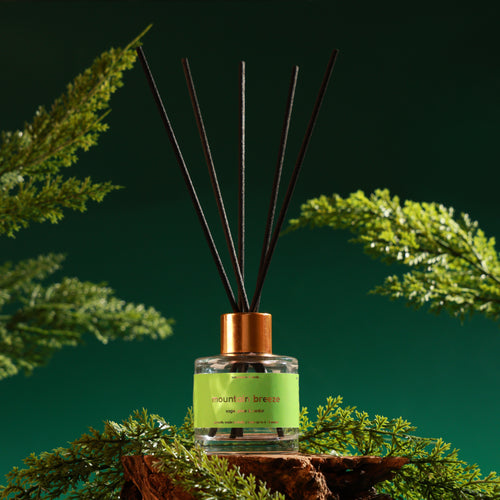 The sixteen oils · none lavender₹1,049See it →
What an everyday signature is worth, and what changing it costs
There is a reason to settle this properly rather than keep experimenting, and it is not about money. The real cost of changing a signature scent arrives years later, when the people around you have bonded to it. In commercial work this is the most underestimated line in any brief: a property that changes its fragrance after five years does not simply introduce a new smell, it removes something a great many regular visitors had quietly attached to the place, and the complaints are disproportionate to anything the specification would predict. A family car is a smaller version of the same thing. The people who ride with you twice a week will stop registering a steady cabin scent within days and would only notice its absence — which is precisely the sign that it has become yours. That is worth protecting, and it is why I would rather you spent a fortnight getting the level right than a year rotating bottles.
It is also worth saying that the everyday brief and the occasional brief are different, and that owning both forms of one scent is a legitimate and cheap way to serve them. The plateau is for the car you drive to work. The peak is for the evening you are collecting somebody you want the cabin to impress. Both forms of Lavender are ₹479, so this is not an upgrade path, it is two shapes of the same fragrance, and the decision is simply which of them is in the vehicle today. What I would avoid is running them together, because a spray on top of a working hanging unit is not a bright version of your signature, it is an unplanned level with no one in charge of it. If you buy both, keep the spray out of the car on ordinary days, and write that down if more than one person drives.
A word about the stereotype itself, since the question contains one. “Lavender smells like a spa” is an aesthetic association, not a performance fact, and it belongs in the same box as “SUVs should smell woody”, “citrus is for summer” and “oud is for winter”. Associations of that kind are real, they are widely shared, and they are worth knowing about precisely because your passengers carry them too. But they describe where a material has been used, not what it can do, and they are not binding on you. Interior colour has no bearing on how a fragrance performs either, whatever you may have read; airflow, exposure time, cleaning products and interior-care products do. My job is to make the choice you already like work at the right intensity, not to talk you into the choice the convention recommends.
And before any of it, deal with whatever the cabin already contains, because an everyday vehicle accumulates. Odour and moisture sources come before every fragrance decision. Gym bags, food and takeaway, wet umbrellas in door bins, damp third-row mats and anything loaded wet behind a folded third row are all sources, and the cargo area shares cabin air with the rest of the vehicle, so something in the boot reaches all three rows. Adding a pleasant smell to an unpleasant one produces a mixture, and the mixture is usually judged worse than the original fault because it reads as concealment — and a soft, sweet-leaning mixture is the most spa-like outcome of all. SOSA sells no car air purifier and no dehumidifier, and nothing in the range addresses damp. Clear it, air it, then set the fragrance.
What I would do, in order — and the gaps
Here is the order I would work in for an everyday lavender cabin that must not read as a treatment room, arranged so that the free changes come before any purchase. The last row is the limitation I would want you to know before you spend ₹3,999 expecting a continuous low setting for this family.
| Step | What it is | Why it comes here | Cost |
|---|---|---|---|
| 1. Audit what is already scented ★ | Move to an unscented leather or upholstery conditioner and unscented interior care, clear gym bags and food, and air the vehicle for a few days | A soft, sweet or soapy treatment is running its own accord for free, and lavender on top of it duplicates rather than complements — which the nose reads as density, and density is the spa impression | No purchase |
| 2. Buy the plateau, not the peak | Lavender ₹479 in “Hanging (Mild scent-throw)” under the option “Car freshener form”, with the 15 ML Car Hanging Freshener Refill at ₹429 later | A quiet steady source is a condition rather than an event, and peaks are what get remarked upon even when the daily total is identical. Both forms are ₹479, so this is a shape choice and not a saving | ₹479 |
| 3. Place it low and well back, one source only | Away from head height and the front vents, with nothing else scented running alongside it in the cabin | Distance does the moderating that a volume control would otherwise do, and a concentrated zone near a face is a high-dose zone, which selects the sweeter half of the accord | Free |
| 4. Accept that you will stop noticing it | No top-ups, no spray added to a working unit, and no correction on the day the cabin seems quieter than you remember | Your nose reports change rather than constancy, so a signature becoming invisible to you is the system working. Correcting it is the commonest route back to the treatment-room reading | Free |
| 5. Reset yourself instead of adding | Run the car unscented for a few days once in a while, then put the same unit back and meet it again properly | Perceived strength comes from the step between two states, so the step is what a top-up was really offering you — and this version of it is free and does not disturb the level | Free |
| The honest gaps: no lavender oil for a continuous low setting, and no figures to quote | There is no lavender among the sixteen waterless scents, so Safar’s 3 speed settings cannot be applied to this family and the lowest-continuous-speed plateau this page recommends is unavailable for lavender at any price. No consumption rate, no hours-of-longevity figure for a hanging unit, no adaptation time in minutes and no coverage figure of any kind is published | Said plainly because a signature-scent page is exactly where an invented longevity figure would be most convenient, and because no such experiment has been run | Not published |
Versailles
Lavender is the most misrepresented material I work with, and the misrepresentation is entirely a matter of dose. In Versailles we were made to smell materials across a range rather than at one strength, and lavender was one of the demonstrations, because what it does between a trace and a flood is not a change of volume but a change of identity. At the very bottom it is dry, herbaceous, a little camphoraceous, almost like a stem snapped between your fingers — closer to a barber’s soap than to anything you would call floral. Push it and the powdery, rounder half rises and takes the whole composition with it. Two smells, one ingredient, and almost everybody has only ever been introduced to the second one.
So when somebody tells me they like lavender but do not want a spa, I do not reach for a different family. I ask what else is in their cabin, and often enough we find the real author of the problem is a leather conditioner with a sweet soapy accord in it, or a dashboard spray, or a perfume worn daily in a shut car and quietly accumulating in the upholstery. I have changed a client’s conditioner, left their fragrance entirely alone, and had the complaint disappear. It is not glamorous advice and nobody sells anything on the back of it, which is probably why it is so rarely given.
The two things I would ask of you, then, are these. Judge the accord at the level you intend to live with rather than from a bottle, because the bottle is showing you the loud half of a scent you plan to keep quiet. And accept that you will stop noticing your own signature, because that is the signature working rather than failing — your passengers will go on registering it, which is the whole point of having one. Hold me to the honest limitation too: there is no lavender oil for the machine with the three speeds, so the published format choice at ₹479 either way is the dial, and placement is the rest of it. Everything we make is composed in Pune, and a part of every order funds a girl’s classroom through Nanhi Kali.
Frequently asked questions
- The client test over a real week — the protocol for finding your restrained level, with the verdict taken from a passenger.
- Why softness is the specification — the case for a quieter profile on a long drive, rather than against it.
- The claims this family attracts and why you stop noticing it.
- Several passengers, five hours — the most conservative setting in the family, and the arithmetic behind it.
- Twenty minutes against six hours — why the same signature needs two different readings.
- A car several people drive and adjusting by journey and feedback.
- The pillar page for this family — long journeys, shared passengers, cabin volume, intensity and adaptation in one order of operations.
- Brand: the SOSA founder story.
SOSA car scenting — facts verified August 2026: the published lavender option for a car is Lavender ₹479 in the spray and hanging range, and that is the whole lavender range for a car. The published product option is “Car freshener form” with the values “Spray (Strong scent-throw)” and “Hanging (Mild scent-throw)” at the same price on every scent, plus “50 ML Car Perfume Spray” at ₹1,499; hanging units are 12ml and the Car Hanging Freshener Refills are 15 ML at ₹399–₹449, which is ₹429 for this scent; the Car Perfume Sprays Discovery Set is ₹699–₹899 for trios and ₹2,999 for a pack of 9. The wider spray and hanging range is nine scents — Jasmine ₹449, Lavender ₹479, Sandalwood ₹479, Icy Mint ₹489, Lemon ₹499, Sea Breeze ₹509, Vetiver (Khus) ₹509, Oud Car Perfume (Assam Oudh) ₹509 and Mysore Orange Blossom ₹549 for 10 ML or ₹1,499 for 50 ML, the last of which is spray only with no hanging form. SOSA publishes no coffee car fragrance and no gourmand car spray or hanging unit. SOSA Safar waterless car perfume diffuser: ₹3,999 for the three house trios and ₹4,499 for the three hotel-inspired trios, 3 speed settings described as light to intense, a 1 / 2 / 3-hour auto shut-off, up to 10 hrs continuous and up to 30 hrs intermittent per charge, 2000 mAh rechargeable lithium, Type-C USB with cable included, fully cordless, approximately 6.9 cm, 20 ml bottle, cold diffusion of pure undiluted oil with no water, no heat and no residue, supplied with diffuser, 20ml bottle, Type-C cable and manual, imported; the published wording is aroma only — does not humidify, which states what the machine adds to a cabin and is not a claim that it dries a cabin or corrects damp. No coverage figure of any kind is published for Safar — no floor area, no volume and no passenger count — and three “Refill” values appear in its option list with no live variant and no price, so none of those is buyable. Waterless nebuliser oils are shared with Vaayu and sold in grams at 100 gm and 300 gm across sixteen scents: Vetiver, Neelakurinji, Malabar Lemon, Sage & Cedar, Mahogany, Japanese Cherry Blossom, White Jasmine, Tobacco Vanilla and Mysore Sandalwood at ₹1,049 / ₹1,849, and seven hotel-inspired interpretations at ₹1,099 / ₹1,899. That range contains no lavender, no oud and nothing marine, so this family cannot be run on the Safar machine at all and the published format choice is its only intensity dial. Beyond the published Safar runtime of up to 10 hrs continuous and up to 30 hrs intermittent per charge, no consumption rate, longevity figure, air-change rate or adaptation time in minutes is published anywhere in the range. SOSA publishes no claim that any fragrance reduces stress, relieves anxiety, improves sleep, calms a person, lifts a mood, improves concentration or keeps a driver alert, and makes no health, air-quality or VOC claim; SOSA sells no car air purifier, no dehumidifier and no room spray of any kind — every SOSA spray is a car perfume. No vehicle-safety or driving guidance is offered on any SOSA page. No dealer programme, trade price, minimum order or bulk rate exists; commercial enquiries are answered individually through the contact page. All fragrances are alcohol-free where applicable, phthalate-free, paraben-free and IFRA-compliant, composed in Pune. Free shipping above ₹499. A portion of every order supports girl-child education through Nanhi Kali. SOSA is an independent Indian fragrance house; the hotel-inspired scents are SOSA’s own interpretations and SOSA is not affiliated with or endorsed by any hotel brand. Prices subject to change — see the live product pages.