Founder Diaries · Clinics & Medical Centres · The Diagnostic Laboratory
By Sonal Sahani · ISIPCA Versailles 12 min read Updated November 2026
A diagnostic laboratory inside a clinic is left unscented, and in my experience the lab lead has usually said so before anybody thinks to ask me. There are three honest arguments and I would make them in this order. The first is the pre-analytical phase: I am not going to tell you that a diffuser spoils a sample, because I do not know that and nobody has shown it, but you could never demonstrate that it did not, and when a result is queried that is the end of the discussion. The second is that a lab's air is already a controlled and documented thing, with volatile reagents named in that documentation, and a fragrance is an undeclared volatile in a room whose volatile inventory somebody signs. The third is the one people miss: a technician's nose is a first-line alarm for a failed fridge seal, a spill behind a bench or a motor beginning to burn, and you do not want that alarm competing with anything. The boundary is the sample-reception hatch. Inside it, nothing. Outside it, the waiting seats are public space and can be scented like any other part of your front of house.
Quick answers — read this first
The answer: the laboratory stays unscented - the accessioning bench, the main benches, the reagent and solvent store, the cold room and fridge bank, and the lab's own sluice. The boundary is the sample-reception hatch, and the seats outside it are public.
The three arguments, in order: you could never demonstrate that an added airborne variable did not affect a pre-analytical sample · the lab's air profile is already controlled and documented and its volatiles are named in that document · a technician's nose is a first-line alarm for a failed fridge seal, a spill or a burning motor.
Free, and you can start this morning: a mug of water down the lab sink trap and the floor gulley every morning · the solvent and xylene discard taken out daily rather than when the bottle is full · the shutter on the hatch closed between transactions instead of wedged · the reagent cupboard door left open to the room's extract rather than shut on a warm cupboard.
Small purchases: a lidded solvent discard bin from about ₹1,500 · a marked jug about ₹250 · a door closer or hatch catch from ₹500 · a smoke pencil about ₹400.
Outside the hatch, optional: the
Vaayu at ₹11,999 for the sample-reception waiting and the corridor, on low, opening hours only. No clinical claim of any kind, and a diffuser is not an air purifier.
The short answer
Short answer: a diagnostic laboratory inside a clinic should be left unscented, and there are three honest reasons rather than one. First, the pre-analytical phase: nobody has shown that a diffuser spoils a sample and I will not claim it, but if a result is ever queried you could never demonstrate that an undocumented airborne variable in the room did not contribute, and that is enough on its own. Second, a laboratory's air profile is already controlled and documented, and its volatile reagents - xylene, formalin, alcohols, acetic acid - are named in that documentation; a fragrance is an undeclared volatile in a room whose volatile inventory somebody signs. Third, and most often missed, a technician's nose is a first-line alarm for a failed fridge seal, a spill behind a bench or a motor starting to burn, and that alarm should not be competing with anything.
The order, and why: make the pre-analytical argument first, because it needs no chemistry and it ends the conversation with anybody who owns a result. Make the documentation argument second, because it is the one your quality system already agrees with and it turns a judgement call into a line in a controlled document. Make the nose argument third, because it is the one that persuades the technicians themselves rather than the management, and it is the reason a lab lead will defend the policy once you have gone. The boundary that follows from all three is the sample-reception hatch: inside is laboratory, outside is public.
The last line, costed, and it sits outside the hatch: the
Vaayu at Rs 11,999 for the sample-reception waiting seats and the corridor that leads to them - waterless cold-air nebulisation with no standing water tank, up to 1000 m3, a 400ml fill lasting about seventy-five days, app control with 1h/4h/8h/24h timers, under 38 dB, auto-stop and a key-lock for public areas. The
Aangan at Rs 25,999 for a large integrated centre or an atrium. An alcohol-free
reed diffuser from Rs 749 for the lab's administrative cabin, if the staff there want it. Free shipping above Rs 499. No clinical, therapeutic or air-cleaning claim is made anywhere on this page.
Straight answer
Why should a diagnostic laboratory inside a clinic be left unscented, and where exactly is the line?
1. The pre-analytical phase, and the fact that you could never demonstrate a negative. This is the argument I lead with, and it has to be made carefully, because the dishonest version of it is everywhere. I am not telling you that a nebulised fragrance spoils a specimen. I do not know that, nobody has shown it to me, and a supplier who claims it is making up a mechanism in order to sound responsible. The honest form is the reverse and it is much stronger. A sample sits in your accessioning area, on a bench, in a rack, sometimes with a cap that has been off for a moment, for the part of its life that is least controlled and most often implicated when something goes wrong. If a result is ever queried - a drifting internal quality-control value, one anomalous result in a batch, a clinician who does not believe a number, an assessor asking you to describe the pre-analytical environment - then the one thing in that room that was never specified, never documented and never validated is the fragrance. You cannot prove it did nothing. Nobody can prove a negative about an uncontrolled variable they introduced for presentation reasons. That alone finishes the conversation, and it finishes it without anybody having to make a claim they cannot support.
2. The lab's air profile is already a controlled, documented thing. This is the argument that your own quality system will make for you if you let it. A laboratory does not have ordinary room air and it is not treated as though it does. There is an air-change rate, often a pressure regime, usually a fume hood with a face velocity that gets checked, and there is a list of volatiles that are known to be present and are there on purpose: xylene and the clearing agents in histology, formalin, methanol and the alcohols, acetic acid, the solvents in a staining line. Those are on an inventory, they have exposure considerations attached, and somebody signs the document they sit in. A fragrance introduced into that room is an undeclared volatile mixture in a space whose volatile mixture is a controlled document. It is not that the fragrance is dangerous at the concentrations involved - that is not my claim either. It is that it does not belong in a room where the air is a specification, and the person who maintains that specification has every right to refuse it without giving any further reason.
3. The technician's nose, which is the argument people miss. Walk into a working lab and ask the senior technician what they have caught by smell, and you will get a list. The warm, faintly sweet note of media and reagents beginning to thaw, which is how a failing fridge or freezer seal announces itself long before anybody reads the log. The sharp hit of a xylene or a formalin bottle that has cracked or been left open behind a bench where nobody can see it. The hot-varnish, electrical smell of a centrifuge or a stirrer motor on its way out, which is the one that matters most and the one with the shortest useful warning. A dry trap on the lab's own sink or floor gulley. Every one of those is a first-line alarm attached to a person who is in the room twelve hours a day, and it is the cheapest monitoring system in your building. Putting a continuous background smell into that room does not disable the alarm, and I am not going to claim that it does. It gives it something to compete with, and it changes the baseline that the alarm is measured against, which is the same problem in a quieter coat.
4. The boundary, and it is a physical object. Draw the line at the sample-reception hatch, because it is a thing you can point at. Inside the hatch is laboratory: accessioning, the main benches, the reagent and solvent store, the fume hood, the cold room and fridge bank, the discard area, the lab's own sluice. All of it unscented, doors and shutter shut. Outside the hatch is front of house: the waiting seats where patients sit with a request form, the corridor, the lift lobby, reception. That is ordinary public space and it can be scented exactly like the rest of your public areas.
The blood- and sample-collection room is a separate question with its own answer, and the answer there is also no.
5. And then the machine, outside the hatch. If you want it, the
Vaayu is ₹11,999 - waterless cold-air nebulisation with no standing water tank, up to 1000 m³, a 400ml fill lasting about seventy-five days, app control and 1h/4h/8h/24h timers, under 38 dB, auto-stop and a key-lock for public areas. Site it in the waiting area rather than at the hatch, pointed away from it, on one low setting for the opening hours, and keep the shutter closed between transactions. It is housekeeping and presentation and nothing else: no clinical effect, no air cleaning, and a diffuser is not an air purifier. A portion of every order supports girl-child education through Nanhi Kali.
TL;DR: three arguments. You could never demonstrate an added airborne variable did not affect a pre-analytical sample; the lab's air profile is already documented and its volatiles are named in it; and a technician's nose is a first-line alarm for a fridge seal, a spill or a burning motor. The boundary is the sample-reception hatch. Inside, nothing. Outside, the seats are public and the
Vaayu is ₹11,999.
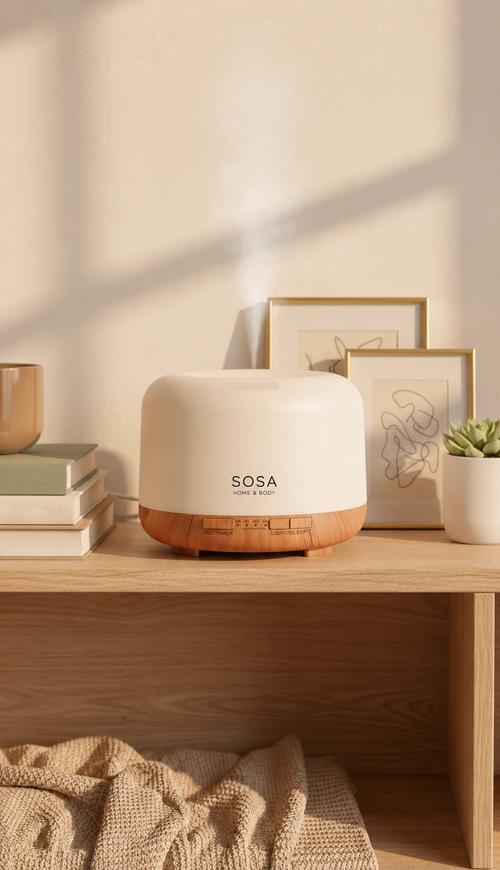
Where the line falls in a clinic with a lab in it
SOSA commercial scenting from ₹899
The laboratory gets nothing from me, and I would rather write that down than find a way around it.
Inside the sample-reception hatch - accessioning, the benches, the reagent store, the fume hood, the cold room and the discard area - stays unscented with its doors shut. Outside the hatch, the waiting seats and the corridor are ordinary public space. That is where the only SOSA product on this page goes: the
Vaayu at ₹11,999, the
Aangan at ₹25,999 for a large integrated centre or an atrium, and an alcohol-free
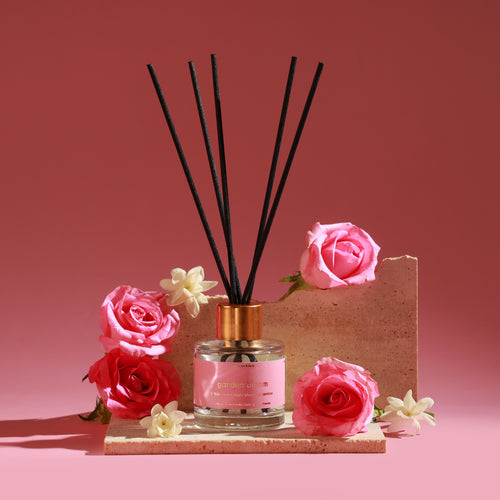
reed diffuser from ₹749 for the lab's administrative cabin if the staff there want it. Free shipping above ₹499.
The three arguments, and the free work
I want to be careful about how the first of these three arguments is phrased, because the careless version is the most common piece of dishonesty in my industry. Nobody has demonstrated that a room diffuser degrades a diagnostic specimen, and if I tell you it does I am inventing a mechanism to make a sales position sound like a safety position. What is true, and what is enough, is that you could never demonstrate it did not. That asymmetry is the whole of argument one, and it is worth understanding that it is a documentation argument rather than a chemistry one: labs do not run on proof that nothing went wrong, they run on being able to describe the conditions a sample was handled in. An undeclared airborne additive makes that description incomplete, and an incomplete description is a problem the first time somebody queries a number. The second argument is the one your quality system already agrees with, and the third is the one that convinces the people who actually work in the room. After the three arguments there is a practical section, because a lab that smells is usually a lab with four small, free, fixable things wrong with it - and then the boundary, which is a hatch you can put your hand on, and the siting of a machine outside it. If you need the internal and patient-facing wording for all of this, that page has the sentences.
1
ARGUMENTS ONE AND TWO
The sample you could never clear, and an air profile that is already a document
Argument one is the pre-analytical phase, and the honest form of it is a negative you cannot prove. The pre-analytical phase is where most laboratory error lives, and everybody who runs a lab knows it: collection, labelling, transport, the time a sample waits at accessioning, the temperature it waited at, whether a cap was fully seated. It is the least controlled part of the process and the first place anybody looks when a result is questioned. Into that space somebody proposes to introduce a continuous nebulised mixture of volatile aromatic materials, for reasons that are entirely about how the room feels to visitors. I am not claiming an interaction. I am pointing out that you have added a variable you did not specify, cannot quantify at the bench, do not log, and cannot switch off retrospectively; and that the moment a quality-control chart drifts or a clinician disputes a value, you are being asked to account for the conditions in that room and you have an answer with a hole in it. No laboratory should accept that trade for presentation, and in practice none that I have spoken to has even wanted to.
Argument two is that the air in a lab is already a controlled and documented thing, and its volatiles are named. This is the argument that costs you nothing to make because your own system has already made it. A lab has an air-change rate, frequently a pressure relationship with the corridor, often a fume hood whose face velocity is measured on a schedule, and a list of the volatile materials it uses on purpose - the clearing agents and xylene in histology, formalin for fixation, methanol and the alcohols, acetic acid, the solvents in a staining line, the fixatives in cytology. Those materials appear on an inventory with handling and exposure considerations attached, in a document that a named person owns and signs. Adding a fragrance to that room adds an undeclared volatile mixture to a space whose volatile mixture is the subject of a controlled document, and the person who owns that document can decline it on that ground alone without needing to argue about concentrations or effects. That is not an obstacle to be worked around. It is the system behaving exactly as intended, and
a clinic's scenting SOP should record the exclusion in one line so the question does not have to be reopened every time somebody new joins procurement.
2
ARGUMENT THREE
A technician's nose is a first-line alarm, and it should not be competing with anything
Argument three is the one that gets left out of every version of this discussion I have read, and it is the one that persuades the people in the room. A senior technician who has worked twelve-hour days in the same lab for six years has a calibrated baseline for what that room smells of, and they use it constantly without describing it as monitoring. Four examples, all of which I have been told about by the people they happened to.
A failed fridge or freezer seal. The first sign is not the log and not the alarm, which may be set wide or may have been silenced at some point by somebody who was tired of it; the first sign is a warm, faintly sweet smell of reagents and media that have begun to come up to room temperature, noticed by somebody walking past a door that should feel cold. That warning can arrive hours before a temperature excursion is formally recorded, and hours is the difference between moving a rack and discarding one.
A spill or a cracked bottle out of sight. Solvent and fixative bottles live behind benches, under sinks and inside cupboards, and a bottle that has cracked or been left unseated announces itself by smell long before anybody sees the puddle.
A motor beginning to fail. The hot-varnish, scorched-insulation smell of a centrifuge, a stirrer or an analyser's pump on its way out is the most valuable of the four and the one with the shortest warning window, and in a building full of electrical equipment running all day it is the smell you least want anybody to hesitate over.
And the lab's own drain. A dry sink trap or floor gulley puts sewer gas into the room, and the technician will notice it before any system does. Now consider what a continuous scented background does to all four. I am not going to tell you it disables them, because that would be a claim about perception that I cannot support. What it does is give each of them something to be noticed against, and shift the baseline that the person has spent six years building. The useful question to ask your own senior technician is simply whether they have ever caught something by nose. If the answer is yes, which it will be, the policy writes itself, and
the sensitivity and exclusions page covers the same logic for patients rather than staff.
3
THE BOUNDARY, AND THE FREE WORK
The hatch is the line, the seats outside it are public, and four free things fix a lab that smells
The boundary is the sample-reception hatch, and I recommend it precisely because it is a physical object rather than a principle. Zoning policies that depend on people remembering a rule decay; a policy that depends on a shutter and two door closers does not. Inside the hatch is laboratory and gets nothing: accessioning and the receipt bench, the main benches, the reagent and solvent store, the fume hood and its run, the cold room and the fridge and freezer bank, the discard and waste-holding area, and the lab's own sink and sluice. Outside the hatch is front of house: the seats where patients sit with a request form, the corridor that brings them there, the lift lobby, the reception run. Those are ordinary public spaces and can be scented exactly as the rest of your public areas are, which is one low setting for the opening hours. Two pieces of discipline make the line hold. The shutter is closed between transactions rather than wedged up for convenience, because a hatch held open is not a boundary, it is a serving window into a controlled room. And the machine goes in the waiting area rather than at the counter, pointed away from the hatch, with the whole volume of the waiting space between it and the opening. A smoke pencil at about ₹400 held at the hatch line with the shutter down and the machine running settles any disagreement in five seconds. And then the free work, because a lab that smells is almost never a lab that needs fragrance. Four things, in the order I would check them. The trap round: a mug of water down the lab's sink trap and every floor gulley each morning, including the gulley nobody uses, because four weeks without water dries a trap and opens the soil stack into the room. A marked jug is about ₹250 and the round takes ninety seconds. The solvent discard: xylene, alcohol and fixative discard taken out of the lab daily rather than when the container is full, in a lidded bin that actually closes, from about ₹1,500. The reagent store: a warm cupboard full of solvent bottles with no air in it is a source every time the door opens, and the correction is an extract grille, a louvred door, or at minimum not storing volatiles in the warmest closed cupboard in the room. And the hood: if the fume hood's face velocity has not been checked this year, that is a question for your own lab engineer and it is a safety matter well beyond anything to do with smell. None of those four is mine to own, and all four are cheaper than a machine.
The one line I would put in the SOP: no fragrance product of any kind is used inside the laboratory envelope, the boundary being the sample-reception hatch, which stays closed between transactions - and the waiting seats outside the hatch are treated as public area.
Across the hatch, space by space
The same decision written out as a boundary rather than as a rule, which is how it survives a change of staff. Print it, put it in the lab's own file as well as facilities', and note that everything on the laboratory side of the hatch is a no and costs nothing.
Print this
One hatch, two regimes, and the reason against each line
| Space |
Public or laboratory |
Scented |
Why |
| The waiting seats outside the hatch ★ |
Public |
Yes, one low setting, opening hours |
Ordinary front of house. Patients sit here with a request form and nothing clinical happens. Machine at the far side, pointed away from the hatch |
| The corridor, lift lobby and reception run |
Public |
Yes |
Part of the same public volume. The shared waiting area page covers the sizing and the single-setting rule |
| Lab administration, report printing, the office with a door |
Administrative |
Yes, if the staff there want it |
No samples, no reagents, and a door that closes. An alcohol-free reed diffuser from ₹749 is usually the right scale for one cabin |
| The hatch counter and shutter |
The boundary itself |
No, and nothing pointed at it |
A hatch held open with a wedge is not a boundary, it is a serving window into a controlled room. Closed between transactions |
| Accessioning and the sample-receipt bench |
Laboratory |
No |
The pre-analytical phase. You could never demonstrate that an undocumented airborne variable did not contribute to a queried result |
| The main benches — haematology, biochemistry, microbiology, histology |
Laboratory |
No |
The air profile is controlled and documented and its volatiles are named in that document. A fragrance is an undeclared addition to it |
| The reagent and solvent store, fume hood and discard area |
Laboratory |
No |
Xylene, formalin, alcohols and fixatives are there on purpose and on an inventory. A spill or a cracked bottle is caught by nose first |
| The cold room, fridge and freezer bank, and the lab's own sluice |
Laboratory |
No |
A failing seal announces itself as a warm, sweetish smell before any log does, and a dry trap announces itself the same way. The full fragrance-free list
|
Shop this guide
What goes on the public side of the hatch
The SOSA principle
The strongest argument for leaving a lab unscented is not that fragrance does something to a sample. It is that you could never demonstrate it did not, and a lab runs on being able to describe the conditions a sample was handled in. The second strongest is that a technician's nose is the cheapest monitoring system in the building.
A failed fridge seal, a cracked formalin bottle behind a bench, a centrifuge motor on its way out. Three alarms, one nose, and nothing competing with it.
The discard bin, the trap round, and the seats outside
Do the free work first and give it a fortnight, because a lab that smells is almost always a lab with four small things wrong with it rather than a lab that needs a machine outside its door. Week one: the mug of water down the lab's sink trap and every floor gulley each morning, and the solvent and fixative discard leaving the room daily rather than when the container fills. Week two: the reagent store given some air, and the hatch shutter closed between transactions instead of wedged. Ask the senior technician to tell you at the end of each week what the room smelled of and when, because they have a six-year baseline and you do not, and their account of an intermittent smell at eleven in the morning is worth more than a month of complaint forms. What is usually left after a fortnight is one of three much smaller things: a specific location that still smells, which is a tracing job; a question about air changes rather than odour, which belongs to your lab engineer; or nothing at all, in which case the only decision outstanding is about the seats on the public side of the hatch, and that is a presentation choice rather than a repair.
Two things about the small purchases, and both of them exist to keep a free routine alive after the person who understood it moves on. The first is the lidded solvent discard bin at about ₹1,500. It is not a cleaning product and it is not a safety upgrade in itself; it is the thing that makes a daily discard round possible without a half-full open container standing in the corner of a lab until Friday. Pair it with the marked jug at about ₹250 for the trap round, and you have covered the two commonest sources in a diagnostic lab for under ₹2,000. The second is that the hatch needs hardware rather than willpower. A shutter that is heavy, awkward or has nowhere to rest gets wedged up by the second week, and then the boundary on which this entire page depends has quietly stopped existing. A catch, a counterweight or a closer from about ₹500 is what makes the policy survive a busy morning. Put one name against the trap round, one against the discard round and one against the hatch, with dates, and have whoever opens the lab initial them for the first month. I have watched the same ₹250 jug end a complaint in one clinic and change nothing in another, and the difference was entirely whether somebody was checking.
And then the machine, on the public side of the hatch, in the detail somebody signing a purchase order will want. The Vaayu is ₹11,999 and the argument for it in a clinic is a housekeeping argument rather than a clinical one: waterless cold-air nebulisation, so there is no standing water tank to be emptied, rinsed and dried every day by a named person in a building that runs twelve hours. If that person does not exist, do not buy a water tank at all, which is what rules the ultrasonic Sukoon at ₹1,899, Boond at ₹899 and Megh at ₹3,499 out of public clinical property; those three remain honest for a single administrative cabin where one person owns the daily routine, and the Sukoon arrives with three 15ml Hotel Collection scents included. Coverage up to 1000 m³ with the sum done properly - floor area divided by 10.76, multiplied by ceiling height, counting only the volumes a door closes. In a clinic with a laboratory in it that arithmetic usually removes a larger share of the plan than people expect, because the whole lab envelope comes out along with the consultation and treatment rooms, and a facility quoted two machines frequently needs one. A 400ml fill lasts about seventy-five days, so four refills a year, and a 300ml refill keeps procurement simple. For a medical facility the bottle should be the lightest thing in the box, and the rule to hold it to is that a patient should not be able to tell you what the fragrance is, only that the place did not smell of anything unpleasant. Public areas only: entrance, reception, the sample-reception waiting seats, shared and departmental waiting, inter-departmental corridors, lift lobbies, administration and the café corner. The laboratory envelope, consultation and examination rooms, treatment and procedure rooms, day-care surgery, dressing rooms, sample-collection rooms, dispensing, sterile stores, imaging, oncology day-care and paediatric clinical areas stay fragrance-free with their doors shut.
I will not tell a lab that a diffuser ruins a sample, because nobody has shown me that it does. I will tell them they could never prove it did not, and in a laboratory that is the stronger sentence of the two.
— Sonal Sahani, SOSA
The SOSA edit
The same page compressed into tiers for a budget meeting. Four tiers before a rupee goes on fragrance, the fifth on the public side of the hatch, and the sixth is the row that does not move whatever anybody quotes you.
The SOSA edit
Four tiers inside the hatch, and one outside it
| Tier |
What is in it |
When it earns its place |
Cost |
| 1. The trap and discard rounds ★ |
A mug of water down the lab's sink trap and every floor gulley each morning, and the solvent, xylene and fixative discard leaving the room daily rather than when the container fills |
This morning. No quotation and no purchase order, and between them most of what a lab is actually smelling of |
₹0 |
| 2. The hatch discipline |
The shutter closed between transactions rather than wedged, and a catch, counterweight or closer so it stays that way on a busy morning |
Today for the rule, this week for the hardware. The boundary this whole page depends on is a physical object |
From ₹500 |
| 3. The two containers |
A lidded solvent discard bin that actually closes, and a marked jug for the trap round, with one name and one date against each |
This week. Both exist to keep a free routine alive after the person who understood it moves on |
About ₹1,750 |
| 4. The lab engineer's list |
Fume-hood face velocity checked on schedule, an extract grille or louvred door on the reagent store, and the lab's air-change rate confirmed against its own specification |
This quarter, and it belongs to your lab engineer and quality lead rather than to me. It is a safety matter well beyond smell |
₹3,500–₹45,000 |
| 5. Vaayu — the public side only |
Waterless, no standing water tank, up to 1000 m³, 400ml lasting about 75 days, app and timers, under 38 dB, key-lock, four scents included. Waiting seats and corridor |
Only after the four tiers above, and only outside the hatch. One low setting, opening hours, pointed away from the counter |
₹11,999 |
| Not on the list at any price |
Any fragrance product inside the laboratory envelope - accessioning, the benches, the reagent and solvent store, the fume-hood run, the cold room and fridge bank, the discard area, the lab's sluice |
Never. The zoning page explains how to hold the line, and SOSA does not make a room spray |
— |
Honest notes for buyers: this page recommends that you buy nothing for the room in its title and makes no claim that fragrance affects a specimen, a reagent or a result - the argument is that an undocumented airborne variable in a pre-analytical area cannot be shown not to have contributed, which is a documentation point rather than a chemical one. Laboratory air changes, pressure regimes, fume-hood performance, the volatile inventory and the handling of samples and reagents belong to your own laboratory and quality leads, and nothing here is laboratory or infection-control advice. On fragrance itself, fragrance in a medical facility is housekeeping and presentation, never treatment. Nothing here claims that a fragrance reduces anxiety, aids recovery, improves sleep, cleans or disinfects air, or has any clinical effect whatsoever, because it does not and a diffuser is not an air purifier. Scenting belongs to the entrance, reception, shared waiting areas, inter-departmental corridors and administrative rooms. Consultation and examination rooms, treatment and procedure rooms, day-care surgery, dressing rooms, blood- and sample-collection rooms, laboratories, pharmacy dispensing, sterile stores, imaging rooms, oncology day-care and paediatric clinical areas should be left fragrance-free. A persistent smell is information about a dry drain trap, a bin, a soiled-linen route or an air-conditioning drain pan: find it and fix it rather than covering it. On the machines: the
Vaayu at ₹11,999 is waterless cold-air nebulisation with no standing water tank, covering up to 1000m³ or roughly 2,000–3,000 sq ft, with a 400ml tank lasting about 75 days, app control, 1h/4h/8h/24h timers, under-38dB running, auto-stop and a key-lock for public areas. The
Aangan at ₹25,999 covers up to 3,000m³ and connects to HVAC for a whole floor or an atrium. The ultrasonic
Sukoon,
Boond and
Megh are water-based, hold standing water and add 30–50 ml of water an hour to the air, which suits a single administrative cabin with a named person emptying and drying the tank daily and is unsuitable for public clinical property. An alcohol-free
reed diffuser needs 24–72 hours to establish and suits a small lobby rather than a large waiting hall. Candles are not appropriate in a healthcare facility because an open flame is a fire-safety matter. SOSA does not make a room spray. The Hotel Collection scents are SOSA's own interpretations inspired by the world's finest hotels; SOSA is an independent Indian fragrance house, not affiliated with or endorsed by any hotel brand. A portion of every order supports girl-child education through Nanhi Kali.
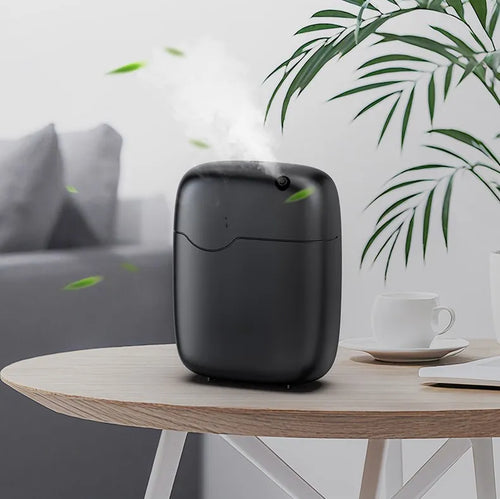
Outside the hatch, and only outside it
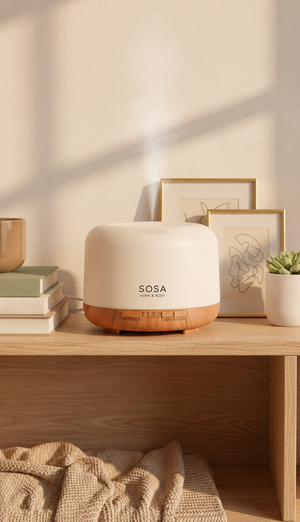
SOSA Vaayu ₹11,999
The laboratory side of the hatch gets nothing from me at any price, and the four corrections that actually fix a lab smell are free or close to it. This is the only item on the page SOSA sells, and it belongs in the sample-reception waiting area and the corridor that leads to it, sited at the far side and pointed away from the counter with the shutter closed between transactions. Waterless cold-air nebulisation with no standing water tank, up to 1000 cubic metres, a 400ml fill lasting about seventy-five days, app control with 1h/4h/8h/24h timers, under 38 dB, auto-stop, key-lock, four hotel-inspired scents included. Housekeeping and presentation, no clinical effect of any kind.
A note from Sonal
The first lab that turned me down did it before I had opened my mouth, and the quality lead was entirely right. I had been asked by the owner of a diagnostic centre in Hyderabad to look at the whole ground floor, and when we reached the hatch she said, without any heat in it, that nothing was going anywhere near her pre-analytical area and that she did not propose to argue about it. I asked what she would say if somebody pushed, and her answer has stayed with me: that she could not prove it mattered and she could not prove it did not, and that in her job the second half of that sentence was the only half that counted. I have used her phrasing in every conversation since, because it is both more honest and more effective than anything I would have come up with on my own.
What I have had to learn is to resist the temptation to dress the argument up as chemistry. It would be easy, and it would sell well, to say that aromatic volatiles interfere with a sample or an analyser, and I have read vendor material that says more or less exactly that. It is not something I can support, and inventing a mechanism in order to sound responsible is still inventing a mechanism. The real arguments are plainer and they hold up better. You cannot describe the conditions a sample was handled in if you added something you did not document. The air in a lab is already a specification with named volatiles in it. And the technician standing at the bench has a nose that has caught a failing freezer seal, a cracked formalin bottle and a centrifuge motor starting to burn, which makes it the cheapest alarm in the building and the last thing I want to give something to compete with.
Nearly every lab I have spoken to had already reached this conclusion without me, and the only thing they wanted was one line they could put in a document and stop being asked about. Everything is made and supported from Pune, and a part of every order funds girl-child education through Nanhi Kali. You get a space that smells like somewhere looked after; a girl gets a classroom. That equation has always felt right to me.
Frequently asked questions
Why should a diagnostic laboratory inside a clinic be left unscented?
Three reasons, in the order I would use them. The pre-analytical phase: nobody has shown that a diffuser affects a sample and I am not claiming it, but you could never demonstrate that an undocumented airborne variable in the room did not contribute to a queried result, and a laboratory runs on being able to describe the conditions a sample was handled in. The lab's air profile is already controlled and documented, and its volatile reagents are named in that documentation, so a fragrance is an undeclared addition to a controlled specification. And a technician's nose is a first-line alarm for a failed fridge seal, a spill or a burning motor.
Does a diffuser actually contaminate or spoil a sample?
I do not know that it does, nobody has shown me evidence that it does, and any supplier who tells you otherwise is inventing a mechanism to make a sales position sound like a safety position. The honest argument is the reverse one and it is stronger. If a result is ever queried, or an assessor asks you to describe the pre-analytical environment, you cannot prove that something you introduced for presentation reasons, never specified and never logged, did nothing. You cannot prove a negative about an uncontrolled variable, and that is enough on its own.
Can we scent the waiting seats outside the sample-reception hatch?
Yes. The hatch is the boundary and the seats outside it are ordinary front of house, no different from your main reception. Put the machine at the far side of the waiting area rather than at the counter, pointed away from the hatch, on one low setting for the opening hours, and keep the shutter closed between transactions so the boundary is a physical thing rather than a rule people have to remember. A smoke pencil held at the hatch line with the shutter down settles any disagreement about carryover in a few seconds.
Our lab smells of something and it is not the reagents. What is it usually?
Four things, and all four are free or close to it. A dry trap on the lab's own sink or a floor gulley that has had no water through it for weeks, which opens the soil stack into the room. Solvent, xylene and fixative discard standing in an open or half-closed container until it is full rather than leaving daily. A warm reagent cupboard with no air in it, which is a source every time the door opens. And a cracked or unseated bottle out of sight behind a bench. Ask the senior technician before you ask anybody else, because they have the baseline.
Our lab lead has already refused. Is she right, and what should the SOP say?
She is right, and in my experience the lab lead reaches this conclusion before anybody thinks to ask a supplier. One line is usually all the document needs: no fragrance product of any kind is used inside the laboratory envelope, the boundary being the sample-reception hatch, which is kept closed between transactions, and the waiting seats outside the hatch are treated as public area. Recording it once stops the question being reopened every time somebody new joins procurement.
Four free tiers, then the public side
Water the traps and move the discard — and the room in this title still gets nothing from me
The Vaayu is ₹11,999 and it stands outside the hatch: waterless cold-air nebulisation with no standing water tank, up to 1000 m³ or roughly 2,000–3,000 sq ft, a 400ml tank lasting about seventy-five days for four refills a year, Bluetooth app control with 1h/4h/8h/24h timers, under 38 dB, auto-stop and a key-lock for public areas, supplied with four hotel-inspired fragrances. The Aangan is ₹25,999 for 8,000–10,000 sq ft, and alcohol-free reeds from ₹749 suit the lab's administrative cabin. Free shipping above ₹499, and a portion of every order supports girl-child education through Nanhi Kali.
See the Vaayu · ₹11,999 All commercial scenting
Continue the read
More from SOSA
Editorial standards & sources
Product facts used in this guide. SOSA Vaayu Rs 11,999: waterless cold-air nebulising diffuser, no water reservoir, coverage up to 1000m3 (approximately 2,000-3,000 sq ft), 400ml refillable tank lasting up to about 75 days per fill, Bluetooth app plus onboard control, 1h/4h/8h/24h timer scheduling, adjustable intensity, under 38 dB, DC 12V/1A at 5W, 165 x 80.5 x 215 mm and 0.9 kg, freestanding or wall or HVAC mounted, auto-stop and key-lock, CE, RoHS and SGS certified, supplied with four hotel-inspired fragrances. SOSA Aangan Rs 25,999: HVAC-connected or standalone commercial nebulising diffuser, coverage up to 3,000m3 (roughly 8,000-10,000 sq ft), 800ml reservoir, metal body, programmable schedules, under 42 dB. Ultrasonic machines are water-based, hold standing water and consume 30-50 ml of water an hour: Sukoon Rs 1,899 (500ml, 270-320 sq ft, 16-18 hours on low, three 15ml Hotel Collection scents included), Boond Rs 899 (300ml), Megh Rs 3,499 (6 litres). Hotel Collection water-based fragrance 15ml Rs 299, 100ml Rs 999, 300ml Rs 1,799. Alcohol-free reed diffusers from Rs 749, requiring 24-72 hours to reach their working level. Free shipping above Rs 499. Coverage arithmetic: cubic metres equal floor area in square feet divided by 10.76 and multiplied by ceiling height in metres, counting only the volumes that are actually scented. This guide makes no medical, therapeutic or clinical claim of any kind for fragrance: a diffuser does not purify, disinfect or clean air, and does not treat, calm or affect any patient or condition. Fragrance is housekeeping and presentation. Clinical areas should be left fragrance-free, and a persistent odour should be traced to its source and corrected rather than covered. SOSA is not affiliated with or endorsed by any hotel brand. Prices subject to change - see the live product pages.

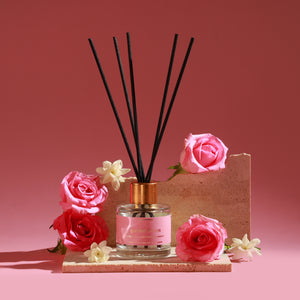
 Reeds · the lab's admin cabinfrom ₹749Shop →