Founder Diaries · Clinics & Medical Centres · Dressing Waste, Linen Routes & Trolleys
By Sonal Sahani · ISIPCA Versailles 12 min read Updated November 2026
It is almost never the corridor, and in my experience it is not usually the dressing room either. It is four clocks. The bin clock, the linen clock, the trolley clock and the door clock — and every single one of them is free to change. This is the page on this site where the correction costs the least and the complaint disappears the fastest, and it is also the one where I have the least to sell you. The first thing to do takes ninety seconds and costs nothing: stand in that corridor at ten in the morning, two in the afternoon and six in the evening. If the smell is the same at all three, you are looking for a continuous source and the dry drain gulley in the sluice next door is the first candidate. If it is clearly worse at one of the three, you are looking at a schedule, and a schedule is the easiest thing in a clinic to change.
Quick answers — read this first
Free, and you can change all of it at tomorrow's handover: dressing-waste bins emptied twice a day at a named hour and on demand after any large dressing, rather than once at close of play · every bin lidded, foot-operated, liner filled to two-thirds so the lid actually shuts · the bin moved away from the door and onto the extract side of the room · soiled linen in closed bags, on a route that does not cross a public corridor, run in the quiet half-hour rather than at eleven · a marked holding point for trolleys that is not in a public corridor, and a rule that a trolley is either moving or behind a door · the dressing-room door unpropped and its stool removed.
Under ₹2,000 each: a foot-operated lidded bin from about ₹300 to ₹900 · a lidded linen trolley or a set of closable bags · a door closer from about ₹500 · a wipeable bench instead of the fabric one outside the door.
One contractor line: an extract fan in the dressing room, interlocked to the light with a run-on timer, at ₹3,500 to ₹8,000, so the room stops exporting its air into your corridor.
And fragrance: not in this corridor until the four clocks are right. After that, the public corridor at one low level, with the dressing room itself left fragrance-free.
The short answer
Short answer: the corridor outside a dressing room smells because of four things that are all free to correct — dressing waste left in a lidded-in-name-only bin until the end of an eleven-hour day, a soiled-linen route that crosses a public corridor, a waste or linen trolley parked in that corridor for forty minutes while somebody does something else, and a dressing-room door that is either propped open or shut on a room with no extract so it pushes its air out every time it moves. Stand in the corridor at ten, two and six: the same smell at all three means a continuous source, and a worse hour means a schedule.
The order, and why: the bin first, because dressing waste in a corridor at thirty degrees becomes a source within hours rather than days, and because changing a collection time needs nobody's permission. Then the trolley, which is the commonest single finding and which nobody counts as a source because in their mental model it is moving. Then the linen route, which is a timing change before it is a layout change. Then the door and the extract, which is the only line on the page with a cost. Fragrance is after all four, and not in this corridor at all until they are done.
The last line, costed: after the four clocks, the
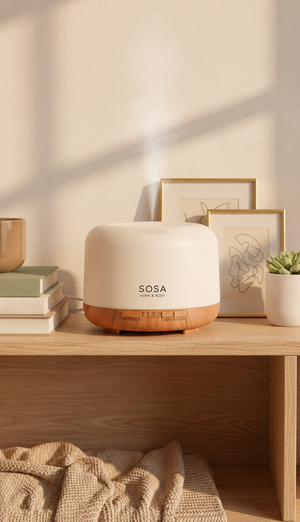
Vaayu at Rs 11,999 holds the public corridor at one low background through the opening hours — waterless with no standing water tank, up to 1000 m³, 400ml lasting about seventy-five days, app and 1h/4h/8h/24h timers, under 38 dB, key-lock. The dressing room itself stays fragrance-free, as does every clinical room with its door shut. An alcohol-free
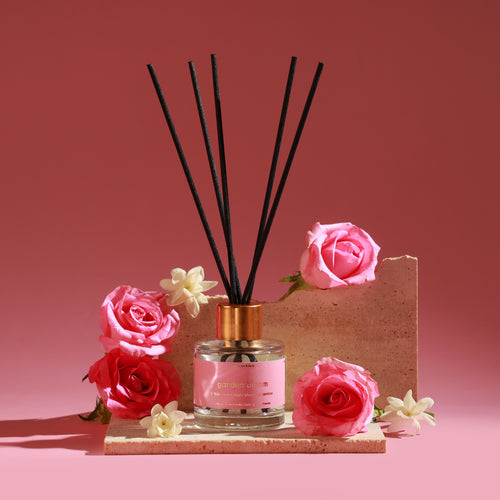
reed diffuser from Rs 749 suits an administrative cabin rather than this corridor. Free shipping above Rs 499.
Straight answer
Why does the corridor outside the dressing room in our clinic smell, and what do I change first?
1. Walk it at three fixed hours first, because ninety seconds of information decides the rest of the page. Stand in the corridor at ten in the morning, two in the afternoon and six in the evening, and write one line each time. The same smell at all three hours means a continuous source, and the first place to look is the floor gulley in the sluice or dirty utility next door, which in a modern clinic nothing ever discharges into and whose water seal evaporates in two to four weeks —
the drain-trap page covers that properly. A smell clearly worse at one of the three hours means a schedule, and a schedule is the cheapest thing in a clinic to change.
2. The bin clock, which is the commonest cause and costs nothing. Dressing waste is soiled dressings, gauze, cotton, adhesive and exudate, and in a corridor at thirty degrees that becomes a source within hours, not days. The default in most clinics is that the bin lives in or beside the dressing room and is emptied at the end of the day, which means nine to eleven hours of accumulation. Change it to twice a day at a named hour — one o'clock and close — plus on demand after any large dressing, with one named person and a sheet on the wall. Then look at the bin itself: a foot pedal that has gone stiff so it is propped open, a liner overfilled so the lid will not shut, or a lid taken off entirely to make the job easier. A bin with no lid in a corridor with people walking past it is an open source. And move it away from the door, onto the extract side of the room, so the corridor does not receive it every time the door opens.
3. The trolley clock, which is the one nobody counts. This is the single most frequent finding I have in clinic corridors, and it is invisible because everybody's mental model of a trolley is that it is moving. A waste or linen trolley is wheeled out of the dressing room, parked in the corridor for a minute while the porter does something else, and stands there for forty minutes at the busiest hour of the day, four feet from the seating. Give trolleys a marked holding point that is not in a public corridor, and write one rule: a trolley is either moving or behind a door. That is free, it takes one line at a handover, and it has resolved more corridor complaints for me than anything else on this list.
4. The linen clock, which is a timing change before it is a layout change. Gowns, sheets and couch covers in open or half-closed bags, carried twenty metres down a public corridor three or four times a day, leave a trail and occasionally get put down. Closed bags, a trolley with a lid, and ideally a route that does not cross a public corridor at all. Where the layout gives you no alternative — and in a converted flat or an upper-floor polyclinic it frequently does not — then change the hour instead: move the run to the quiet half-hour between your peaks rather than eleven in the morning, and never leave a bag in a service lobby over a weekend.
5. The door clock, and the only line here that costs money. A dressing-room door propped open with a stool between patients for convenience puts the room's air into the corridor all day; a door shut on a room with no mechanical extract does the same thing in a burst every time it opens, because the room is at positive pressure. Remove the stool, fit a door closer at about ₹500, and get an extract fan into that room, interlocked to the light switch with a ten to twenty minute run-on, at ₹3,500 to ₹8,000. Then hold a tissue at the closed door gap: the air should be moving into the room, not out of it. While you are there, replace the fabric bench outside the door with something wipeable at the next refit.
6. And fragrance, which does not belong in this corridor yet. A diffuser running in a corridor whose bin schedule has not changed is the clearest example of masking I can give you, because the smell is the only thing telling housekeeping that the schedule is wrong. Once the four clocks are right, the
Vaayu at ₹11,999 holds the public corridor at one low background through the opening hours, which is presentation and housekeeping with no clinical effect of any kind. The dressing room itself stays fragrance-free. A portion of every order supports girl-child education through Nanhi Kali.
TL;DR: four clocks, all free. The bin emptied twice a day at a named hour with a lid that shuts and the bin moved off the door. The trolley either moving or behind a door, never parked in a public corridor. The linen run closed and moved to the quiet half-hour. The dressing-room door unpropped, closed and extracted. Walk the corridor at ten, two and six first: same smell at all three means a source, worse at one means a schedule.
The cheapest page on this site, and the fastest result
SOSA commercial scenting from ₹899
I have very little to sell on this one and it would be dishonest to pretend otherwise.
Four clocks: the bin emptied twice a day with a lid that shuts, the trolley either moving or behind a door, the linen run closed and rescheduled, and the dressing-room door unpropped. All four are free, all four change at tomorrow's handover, and in most clinics they are the entire complaint. The one costed line is an extract fan at ₹3,500 to ₹8,000 so the room stops exporting its air. After that, the
Vaayu at ₹11,999 holds the public corridor at a low background, the dressing room stays fragrance-free, and an alcohol-free
reed diffuser from ₹749 belongs in an admin cabin rather than here. Free shipping above ₹499.
The four clocks, and all four are free
I have called them clocks rather than causes because in every one of these four cases the object is fine and the hour is wrong, and that distinction matters when you are explaining it to the people who will have to do it differently. Nobody in your clinic is doing anything careless. A bin emptied at the end of the day is being emptied; a trolley parked in the corridor is being moved somewhere; a linen bag carried at eleven is being taken to the laundry. The work is happening, and it is happening at the wrong time or on the wrong line, which is a scheduling conversation rather than a performance one. I would put all four on one sheet, with one named person and one hour against each, and read it out at a morning handover rather than emailing it, because a schedule change that is spoken survives and one that is filed does not. If you also run a physiotherapy department off the same corridor, the towel and couch-cover rota belongs on the same sheet and the physiotherapy page has it.
1
CLOCKS ONE AND TWO
The dressing-waste bin, and the trolley parked for forty minutes
Clock one is the bin, and the hour is almost always wrong rather than the bin being wrong. Dressing waste means soiled dressings, gauze, cotton wool, adhesive and exudate, and the thing to understand about it is the timescale: in a corridor at thirty degrees it becomes a source within hours, not days, which is why a bin that is perfectly acceptable at eleven in the morning is a complaint by five in the afternoon. The default arrangement in most clinics is a bin in or beside the dressing room, emptied at the end of the day, which is nine to eleven hours of accumulation in your warmest months. The schedule I would write is twice a day at named hours — one o'clock and at close — plus on demand after any large or heavily exuding dressing, with one named person and a tick sheet on the wall rather than a verbal understanding. Then look at the bin itself, properly, because three things go wrong with it and all three are free to spot: a foot pedal that has stiffened so somebody props the lid open, a liner too small or filled past two-thirds so the lid cannot shut, and a lid removed altogether because it was making the job slower. A lidless bin in a corridor where people walk past is an open source with air moving over it all day. And then move it: a bin beside the door hands the corridor its contents every time the door swings, so put it on the far side of the room and on the extract side if the room has extract. Clock two is the trolley, and it is the finding I make most often. A waste or linen trolley is taken out of the dressing room, parked in the corridor for what is genuinely intended to be a minute, and is still there forty minutes later because the person pushing it was called to do something else. Nobody counts it as a source, because in everybody's mental model a trolley is in motion. Mark a holding point that is not in a public corridor, write the rule that a trolley is either moving or behind a door, and say it out loud at the handover. It costs nothing and it works within a day.
2
CLOCK THREE
The soiled-linen route, and the hour it runs
Clock three is the route, and it is a timing change before it is a layout change. Gowns, bed sheets, couch covers and towels from a dressing room and a procedure room are carried to a collection point, and in most Indian clinic layouts that journey crosses a public corridor because there is no second corridor to use. Three things make it a smell rather than a transfer: bags that are open or only half closed, a journey of twenty metres or more past seated patients, and the bag being put down somewhere on the way. The first is free to correct and the most effective: linen goes into a closed bag, in a trolley with a lid, and the bag is tied before it leaves the room rather than at the collection point. Lidded linen trolleys and closable bags are a small purchase and worth making. The second is sometimes a layout problem you cannot solve this year, and when that is true, change the hour instead — move the run into the quiet half-hour between your two peaks, so the journey happens when the corridor has four people in it rather than twenty-four. The third is a rule: a linen bag is never put down in a public area, and never left in a service lobby on a Friday evening, which is the single worst habit in Indian clinic housekeeping and produces a Monday morning that nothing can fix.
While the sheet is out, add the two neighbours of this corridor that get blamed for it. The sluice or dirty utility next door almost always has a floor gulley that nothing has discharged into since the fit-out, and a dry gulley admits drain air directly into the room and then into your corridor; a mug of water down it daily is free and
the toilets page explains the mechanism. And the cleaning store, if it opens onto the same corridor, is holding wet mop heads behind a closed door, which is a source in its own right.
3
CLOCK FOUR, AND THEN THE LAST LINE
The door, the extract, and the one thing here I sell
Clock four is the door, and it is the only part of this page with a cost attached. A dressing-room door propped open with a stool between patients — which is done for good reasons, because the room is hot and the next patient is waiting — puts that room's air into the public corridor continuously. A door shut on a room that has no mechanical extract does the same thing in bursts, because the room is at a slight positive pressure and every opening pushes a volume of its air out. The test is five seconds and free: hold a tissue at the gap of the closed door, and the air should be moving into the room. If the tissue is pushed away from the door, that room is exporting. The corrections are a door closer at about ₹500 and the stool removed, then an extract fan in the dressing room interlocked to the light switch with a ten to twenty minute run-on timer, at ₹3,500 to ₹8,000 including the electrician — and a 10 to 12mm undercut left clear under the door so the fan has replacement air to draw, which
the room-by-room map sets out in full. The fabric bench outside the door is the other thing to change at the next refit: soft furniture in the one corridor in your building most likely to receive an odour is a choice you can simply stop making, and wipeable perforated seating costs roughly the same money.
And then the last line, which I will keep short because it is small here. Once the four clocks are right, the
Vaayu at ₹11,999 holds the public corridor at one low, unremarkable background through the opening hours: waterless cold-air nebulisation with no standing water tank, up to 1000 m³, 400ml lasting about seventy-five days, app plus 1h/4h/8h/24h timers, under 38 dB, auto-stop and a key-lock. The dressing room itself is fragrance-free, because it is a room where a patient undresses and because a clinician needs to be able to notice what a room smells of.
What the corridor between departments should smell like is the page for the scenting decision once the housekeeping is right.
The instruction I would read out at the handover: the bin at one o'clock and at close, and the trolley either moving or behind a door. If those two change tomorrow, do not spend anything else for a fortnight.
The ninety-second walk, hour by hour
Start with the walk, because it tells you which half of the table you are in. Then the four clocks with what is usually wrong, who changes it and what it costs. Print it and take it to the morning handover rather than emailing it, and note that seven of the eight rows are free or nearly so.
Print this
Four clocks, one extract fan, and a corridor that stops smelling
| What you are looking at |
What is usually wrong |
Who changes it |
Cost |
| The walk, at ten, two and six ★ |
Nobody has done it. The same smell at all three hours means a continuous source; clearly worse at one hour means a schedule, and that single fact decides everything below |
You, with a pen, ninety seconds three times in a day |
₹0 |
| 1. The bin clock |
Dressing waste emptied once, at the end of a nine to eleven hour day, in a corridor at thirty degrees where it becomes a source within hours |
Housekeeping supervisor: one o'clock and at close, plus on demand after any large dressing, on a tick sheet |
₹0 |
| 1b. The bin itself |
A stiff foot pedal so the lid is propped, a liner filled past two-thirds so the lid will not shut, or the lid removed to make the job faster. And the bin standing beside the door |
Facilities: a foot-operated lidded bin, the right liner size, and the bin moved to the far side of the room |
₹300–₹900 each |
| 2. The trolley clock |
A waste or linen trolley parked in the public corridor for forty minutes because the person pushing it was called away. The commonest finding of all |
Housekeeping: a marked holding point out of the corridor, and the rule that a trolley is either moving or behind a door |
₹0 |
| 3. The linen clock |
Open or half-closed bags carried twenty metres across a public corridor at eleven in the morning, and occasionally put down on the way |
Housekeeping: closed bags tied in the room, a lidded trolley, and the run moved to the quiet half-hour |
₹0, plus a lidded trolley |
| 4. The door clock |
The dressing-room door propped with a stool, or shut on a room with no extract so it pushes its air out every time it opens |
Facilities: remove the stool, a door closer, and a tissue test at the closed-door gap |
About ₹500 |
| 4b. The extract |
No mechanical extract in the dressing room at all, so it sits at positive pressure and exports into the corridor continuously |
Contractor, with a date: an extract fan interlocked to the light with a run-on timer, and the door undercut left clear |
₹3,500–₹8,000 |
| Never |
A diffuser in this corridor while the bin is still emptied once a day, or any scenting inside the dressing room itself |
Nobody. The smell is the signal that the schedule is wrong, and a dressing room is a room where a patient undresses |
— |
Shop this guide
After the four clocks, and for the public corridor only
The SOSA principle
Nobody in your clinic is being careless. The bin is emptied, the trolley is moved, the linen is taken. It is happening at the wrong hour, which is a schedule conversation rather than a performance one. Four clocks, all free, and I have almost nothing to sell on this page.
The trolley is the finding I make most often, because in everybody's mental model a trolley is moving, and this one has been standing in the corridor for forty minutes.
The bin, the extract fan, and why I have little to sell here
Change all four clocks at one handover and then leave it alone for a fortnight, because this is the fastest-acting page in the cluster and you want to see what it does on its own. Tomorrow morning: the bin at one o'clock and at close with a named person and a tick sheet, the trolley rule read out loud, the linen run moved to the quiet half-hour with bags tied in the room, and the stool taken away from the dressing-room door. This afternoon: a tissue at the closed-door gap of the dressing room, the sluice and the dirty utility, and a mug of water down the floor gulley in each of them. Then walk the corridor again at ten, two and six at the end of week two and compare it with the first walk. In the clinics I have done this with, the corridor is either clear or very nearly clear at that point, and what is left is a specific location you can stand in front of, which is a much better problem than the one you started with. If it has not moved at all, you have a continuous source rather than a schedule, and the gulley, the pan connector behind the nearest toilet and the drain-trap list are where I would go next.
On the money, which is unusually little. A foot-operated lidded bin is ₹300 to ₹900 and the right liner size costs nothing; a lidded linen trolley or a set of properly closable bags is a small purchase worth making once; a door closer is about ₹500; and the one real line is an extract fan in the dressing room, interlocked to the light with a ten to twenty minute run-on timer, at ₹3,500 to ₹8,000 including the electrician. That fan is the best value in this whole page, because it changes the room from one that exports its air into your corridor to one that pulls air in from it, and because it keeps working after the staff who understood the four clocks have moved on. The one deferred item is the fabric bench outside the dressing-room door, which I would replace with wipeable perforated seating at the next refit rather than specially — it is roughly the same money at the time of buying, and it stops you absorbing an odour into the largest soft surface in the one corridor most likely to receive one. Everything else here is a line on a handover sheet. Put one name and one hour against each, and tell your nursing lead the sheet exists, because the bin clock belongs to them as much as to housekeeping.
And then the fragrance part, which is genuinely small on this page. I would not put a machine in this corridor until the four clocks are right, and I would say so if you called. A diffuser running over a bin schedule that has not changed is the clearest case of masking in the whole cluster: the smell is the only thing telling housekeeping the hour is wrong, and removing the signal leaves you with a corridor that quietly gets worse behind a pleasant background. Once the clocks are right, the Vaayu at ₹11,999 is a public-corridor machine: waterless cold-air nebulisation with no standing water tank, so nobody has to empty and dry a reservoir daily in a building running twelve hours; up to 1000 m³, with the sum done as area divided by 10.76 multiplied by ceiling height and counting only the volumes a door closes; a 400ml fill lasting about seventy-five days, so four refills a year; app plus 1h/4h/8h/24h timers; under 38 dB; auto-stop; and a key-lock, which is why it can stand where patients walk. The dressing room itself stays fragrance-free, along with consultation and examination rooms, treatment and procedure rooms, day-care surgery, sample collection, laboratories, dispensing, sterile stores, imaging, oncology day-care and paediatric clinical areas, all with their doors shut. An alcohol-free reed diffuser from ₹749 is right for an administrative cabin and wrong for this corridor, because a glass bottle of oil at reach height in a circulation route is a spill risk before it is anything else. And SOSA does not make a room spray, which on this page is a relief rather than a limitation.
The bin is emptied, the trolley is moved, the linen is taken away. Everything is being done. It is being done at five o'clock, and the complaint happens at four.
— Sonal Sahani, SOSA
The SOSA edit
The four clocks plus the one costed line, compressed into tiers for a handover rather than a budget meeting. Four of the five tiers are free or nearly free, and the only SOSA product in the table is in the fifth and is for the public corridor rather than for the room.
The SOSA edit
Four free clocks, one fan, and then the optional line
| Tier |
What is in it |
When it earns its place |
Cost |
| 1. The bin and the trolley ★ |
Dressing waste at one o'clock and at close plus on demand, a lid that actually shuts, the bin moved off the door, and a trolley that is either moving or behind a door |
Tomorrow's handover. Between them this is most of the complaint |
₹0 |
| 2. The linen and the gulley |
Bags tied in the room, a lidded trolley, the run moved to the quiet half-hour, and a mug of water down the gulley in the sluice next door every morning |
Tomorrow as well. The gulley is free and is the commonest continuous source |
₹0 |
| 3. The bins and the door |
Foot-operated lidded bins, the right liner size, a door closer on the dressing-room door and the propping stool removed |
This week. Small purchases that make the free clocks survive a change of staff |
₹300–₹900 each |
| 4. The extract fan |
An extract fan in the dressing room, interlocked to the light with a run-on timer, with the door undercut left clear so it has replacement air |
This quarter, with a contractor and a date. The best value on the page |
₹3,500–₹8,000 |
| 5. Vaayu — the public corridor only |
Waterless, no standing water tank, up to 1000 m³, 400ml lasting about 75 days, app and timers, under 38 dB, key-lock. The dressing room stays fragrance-free |
Only after the four clocks. The corridor scenting question in full |
₹11,999 |
| Not on the list at any price |
A diffuser in this corridor while the bin is still emptied once a day, a gel block on the wall, or any scenting inside the dressing room |
Never. The free work comes first, and SOSA does not make a room spray |
— |
Honest notes for buyers: this page is about collection hours, routes and doors, which is housekeeping. It is not biomedical waste guidance: the segregation, colour coding, containment and disposal of clinical and dressing waste are governed by your own waste rules and by your infection-control lead, and nothing here changes what goes into which bin or where it goes afterwards. This page concerns only the hours in between. On fragrance itself, fragrance in a medical facility is housekeeping and presentation, never treatment. Nothing here claims that a fragrance reduces anxiety, aids recovery, improves sleep, cleans or disinfects air, or has any clinical effect whatsoever, because it does not and a diffuser is not an air purifier. Scenting belongs to the entrance, reception, shared waiting areas, inter-departmental corridors and administrative rooms. Consultation and examination rooms, treatment and procedure rooms, day-care surgery, dressing rooms, blood- and sample-collection rooms, laboratories, pharmacy dispensing, sterile stores, imaging rooms, oncology day-care and paediatric clinical areas should be left fragrance-free. A persistent smell is information about a dry drain trap, a bin, a soiled-linen route or an air-conditioning drain pan: find it and fix it rather than covering it. On the machines: the
Vaayu at ₹11,999 is waterless cold-air nebulisation with no standing water tank, covering up to 1000m³ or roughly 2,000–3,000 sq ft, with a 400ml tank lasting about 75 days, app control, 1h/4h/8h/24h timers, under-38dB running, auto-stop and a key-lock for public areas. The
Aangan at ₹25,999 covers up to 3,000m³ and connects to HVAC for a whole floor or an atrium. The ultrasonic
Sukoon,
Boond and
Megh are water-based, hold standing water and add 30–50 ml of water an hour to the air, which suits a single administrative cabin with a named person emptying and drying the tank daily and is unsuitable for public clinical property. An alcohol-free
reed diffuser needs 24–72 hours to establish and suits a small lobby rather than a large waiting hall. Candles are not appropriate in a healthcare facility because an open flame is a fire-safety matter. SOSA does not make a room spray. The Hotel Collection scents are SOSA's own interpretations inspired by the world's finest hotels; SOSA is an independent Indian fragrance house, not affiliated with or endorsed by any hotel brand. A portion of every order supports girl-child education through Nanhi Kali.
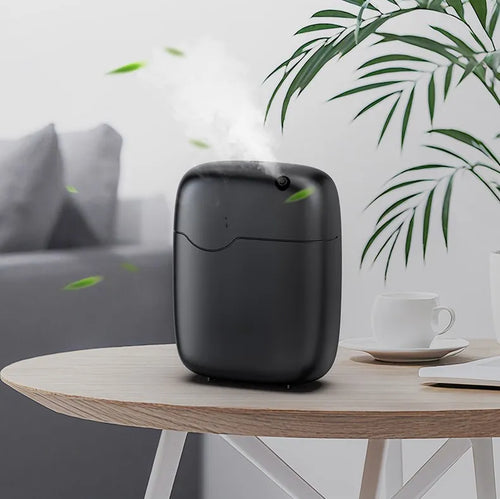
For the public corridor, and only after the four clocks
SOSA Vaayu ₹11,999
This is the cheapest problem in the cluster to solve and I have almost nothing to sell on it, which is worth saying plainly. Four clocks are free, the extract fan is a few thousand rupees, and a diffuser running over an unchanged bin schedule simply removes the signal that told housekeeping the hour was wrong. Once the clocks are right, this holds the public corridor at one low background through the opening hours: waterless cold-air nebulisation with no standing water tank, up to 1000 cubic metres, a 400ml fill lasting about seventy-five days, app control with timers, under 38 dB, auto-stop, key-lock. The dressing room itself stays fragrance-free.
A note from Sonal
A doctor in Kanpur described this corridor to me in some detail over about twenty minutes, and had already decided it was a ventilation problem, which was reasonable. I asked what time the dressing bin was emptied and she said at the end of the day, which is what everybody says, and then she said something I have quoted ever since: that she had walked past that bin four hundred times and had never once thought of it as a thing with a clock on it. They moved to one o'clock and at close, and she wrote to me eleven days later to say the corridor was fine and she felt slightly foolish, which she should not have, because nobody had ever told her.
The trolley is the finding I make most often and the one I now ask about first. Somebody wheels it out, parks it for a minute, gets called to do something else, and it stands in a public corridor for forty minutes at the busiest hour of the day. It does not register as a source to anybody, because in everybody's head a trolley is moving, including the head of the person who parked it. One marked holding point and one sentence at a handover fixes it, permanently, for nothing. I have stopped being embarrassed that this is the advice, even though it is not perfumery and it does not sell anything: it is the most useful thing I know about that corridor, and a page that sent you to buy a machine instead would be a worse page.
If you only ever do the four clocks on this page and never buy anything from me at all, I will consider it to have done its job. Everything is made and supported from Pune, and a part of every order funds girl-child education through Nanhi Kali. You get a space that smells like somewhere looked after; a girl gets a classroom. That equation has always felt right to me.
Frequently asked questions
Why does the corridor outside our dressing room smell when the dressing room itself is clean?
Because the source is usually in the corridor rather than in the room: a dressing-waste bin emptied once at the end of a nine to eleven hour day, a waste or linen trolley parked there while somebody was called away, a linen bag carried open across it, or the room pushing its own air out every time the door opens because it has no extract. Walk the corridor at ten, two and six and write one line each time. The same smell at all three hours means a continuous source; clearly worse at one hour means a schedule.
How often should a dressing-waste bin be emptied in a clinic?
Twice a day at named hours, plus on demand after any large or heavily exuding dressing, with one named person and a tick sheet rather than a verbal understanding. Dressing waste in a corridor at thirty degrees becomes a source within hours rather than days, which is why a bin that is fine at eleven is a complaint by five. Check the lid actually shuts, keep the liner to two-thirds, and move the bin off the door and onto the extract side of the room.
What is the most common thing people miss in this corridor?
A trolley parked for forty minutes. It is taken out of the room, left in the corridor for what was genuinely meant to be a minute, and then the person pushing it is called away. Nobody counts it as a source because in everybody's mental model a trolley is moving. A marked holding point that is not in a public corridor, plus one rule read out at the handover that a trolley is either moving or behind a door, fixes it for nothing and within a day.
Does the dressing room need an extract fan?
It is the one line on this page I would spend money on. Without mechanical extract the room sits at a slight positive pressure and pushes a volume of its own air into the public corridor every time the door opens, and a door propped open with a stool does it continuously. An extract fan interlocked to the light switch with a ten to twenty minute run-on timer is three and a half to eight thousand rupees including the electrician, and the door undercut must be left clear so the fan has replacement air to draw.
Should we put a diffuser in that corridor?
Not until the four clocks are right, and then only in the public corridor rather than in the dressing room. A machine running over a bin schedule that has not changed removes the one signal telling housekeeping the hour is wrong, and the corridor then gets quietly worse behind a pleasant background. Once the schedule, the trolley rule, the linen route and the door are sorted out, a low steady background in the public corridor is a presentation decision, and the dressing room stays fragrance-free because it is a room where a patient undresses.
Four clocks, then this
Change the bin hour and the trolley rule tomorrow — and many clinics never need the rest of this page
The Vaayu is ₹11,999: waterless cold-air nebulisation with no standing water tank, up to 1000 m³ or roughly 2,000–3,000 sq ft, a 400ml tank lasting about seventy-five days for four refills a year, Bluetooth app control with 1h/4h/8h/24h timers, under 38 dB, auto-stop and a key-lock for public areas, supplied with four hotel-inspired fragrances. It is for the public corridor, not for the dressing room. Free shipping above ₹499, and a portion of every order supports girl-child education through Nanhi Kali.
See the Vaayu · ₹11,999 All commercial scenting
Continue the read
More from SOSA
Editorial standards & sources
Product facts used in this guide. SOSA Vaayu Rs 11,999: waterless cold-air nebulising diffuser, no water reservoir, coverage up to 1000m3 (approximately 2,000-3,000 sq ft), 400ml refillable tank lasting up to about 75 days per fill, Bluetooth app plus onboard control, 1h/4h/8h/24h timer scheduling, adjustable intensity, under 38 dB, DC 12V/1A at 5W, 165 x 80.5 x 215 mm and 0.9 kg, freestanding or wall or HVAC mounted, auto-stop and key-lock, CE, RoHS and SGS certified, supplied with four hotel-inspired fragrances. SOSA Aangan Rs 25,999: HVAC-connected or standalone commercial nebulising diffuser, coverage up to 3,000m3 (roughly 8,000-10,000 sq ft), 800ml reservoir, metal body, programmable schedules, under 42 dB. Ultrasonic machines are water-based, hold standing water and consume 30-50 ml of water an hour: Sukoon Rs 1,899 (500ml, 270-320 sq ft, 16-18 hours on low, three 15ml Hotel Collection scents included), Boond Rs 899 (300ml), Megh Rs 3,499 (6 litres). Hotel Collection water-based fragrance 15ml Rs 299, 100ml Rs 999, 300ml Rs 1,799. Alcohol-free reed diffusers from Rs 749, requiring 24-72 hours to reach their working level. Free shipping above Rs 499. Coverage arithmetic: cubic metres equal floor area in square feet divided by 10.76 and multiplied by ceiling height in metres, counting only the volumes that are actually scented. This guide makes no medical, therapeutic or clinical claim of any kind for fragrance: a diffuser does not purify, disinfect or clean air, and does not treat, calm or affect any patient or condition. Fragrance is housekeeping and presentation. Clinical areas should be left fragrance-free, and a persistent odour should be traced to its source and corrected rather than covered. SOSA is not affiliated with or endorsed by any hotel brand. Prices subject to change - see the live product pages.


 Reeds · an admin cabinfrom ₹749Shop →