





Where it actually is: the top of the fridge, the underside and inside of the chimney hood, cabinet doors above the hob, the wall behind, the ceiling, light fittings and the tiles above eye level. Not the counter, which is the one surface that gets wiped daily.
The method: hot water with a degreasing detergent, worked top-down so what you loosen falls onto surfaces you have not yet done, with the chimney filters soaked separately in hot water and washing soda. SOSA does not make a degreaser and this page recommends buying one.
2. The smell is age, not quantity. A fresh oil film barely smells. Over weeks it reacts with oxygen and breaks down into aldehydes and short-chain acids, and that is the stale rancid note. The thinnest films on the warmest surfaces turn first.
3. Use hot water and a degreasing detergent, not a spray-and-wipe. Fat softens with heat and a surfactant is what lifts it. Cold water does effectively nothing to a fat film, which is why the last clean did not work.
4. Work top-down, in order. Ceiling and the tops of cupboards, then walls and tiles, then the outside and underside of the hood, then cupboard fronts, then the counter, then the floor. Everything you loosen falls, so cleaning upward means doing it twice.
5. Take the chimney filters out and soak them. Mesh filters go into near-boiling water with a few spoons of washing soda for twenty to thirty minutes, then a brush and a rinse. A clogged filter is both a smell source and the reason your extraction has quietly weakened.
6. Then fragrance, and honestly: SOSA does not sell the degreaser this page recommends. Buy one from your shop. Afterwards a Sukoon at ₹1,899 with four drops of a Hotel Collection scent at ₹299 has a genuinely clean room to work in.
A portion of every order supports girl-child education through Nanhi Kali.

The film you have never looked at
Go and stand in your kitchen and put your finger on the top of the fridge, or on the edge of the light fitting, or on the tiles two feet above the hob. What comes away is not dust. It is dust suspended in a thin, tacky layer of oil, and that layer is the reason the room smells the way it does after you have spent an hour cleaning the parts of it you can see. Nobody is careless here. The surfaces that carry this film are, almost without exception, the surfaces that are above eye level, behind something, or underneath something, and human beings clean what they look at. The film has been accumulating quietly for as long as you have lived there.
The surfaces, ranked by how rarely they are cleaned
Ranked by loading rather than by visibility, which is the whole point of the page. The right-hand column is the order to do them in, and it is top to bottom for the reason given above. Everything here costs the price of a degreasing detergent and an afternoon.
| Surface | Why oil lands there | How often it is actually cleaned | What to use | Order |
|---|---|---|---|---|
| Chimney filters and the inside of the hood ★ | Directly in the plume for the whole session, every session | Very often never. This is usually the largest oil deposit in the home | Filters out, soaked in near-boiling water with washing soda for 20–30 minutes, brushed and dried | Separately, first |
| Ceiling and the tops of cupboards | Fine droplets stay airborne and rise with convection off the hob | Never, in most kitchens | Hot water with degreasing detergent on a cloth over a flat mop head | 1 |
| Tiles and wall above eye level | The wall behind the hob receives both splatter and drifting aerosol | The lower half is wiped; the upper half is not | Hot water and degreaser, rinsed rather than left to dry sticky | 2 |
| Top of the fridge and the microwave | A warm surface has a rising boundary layer bringing air to it continuously | Rarely, and it is often the worst-smelling single spot | Degreaser, then a second pass — the film here is usually thick | 3 |
| Light fittings and the shade | Warm, and directly in the room's convection. Heat and light also speed the oxidation | Almost never, and the heat makes what is there turn faster | Switched off and cool, then degreaser on a cloth. Dry fully | 4 |
| Cupboard doors above the hob | In the direct path of anything thrown sideways from a pan wider than the burner | The handles are wiped; the panels are not | Hot water and degreaser, top edge and inner lip included | 5 |
| The counter | Splatter, which falls within a foot or so of the pan | Every single day | Whatever you already use. It was never the problem | Last |
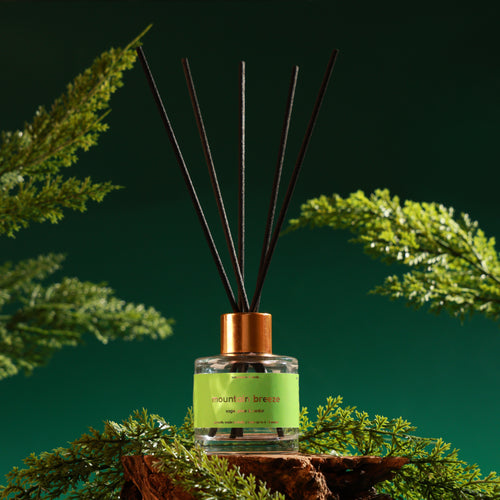
The method, top-down, and what comes after it
Give it an afternoon rather than an hour, and start by taking the filters out, because they need to soak while you do everything else. Mesh or baffle filters into a sink or a large vessel of near-boiling water with three or four spoons of washing soda, twenty to thirty minutes, then a stiff brush along the grain of the mesh, a hot rinse and — this part matters — a full dry before they go back, because a damp filter reinstalled into a warm hood is its own problem. While they soak, do the ceiling and the tops of the cupboards. Wrap a cloth around a flat mop head, work in sections, and change the cloth when it stops picking anything up rather than when it looks dirty. Then the walls and the tiles from the top down, then the hood itself outside and underneath, then the cupboard doors including the top edge and the inner lip, then the fridge and the microwave tops, then the light fitting once it is cool, then the appliances, then the counter, then the sink, then the floor. Two openings on opposite or adjacent walls open throughout, because you are putting a lot of loosened material and detergent aerosol into the air, and twenty minutes of genuine cross-draught at the end is what clears it. If any of this raises the question of how strong your extraction actually is, that is the right question and it has its own page.
Then a word about what to expect afterwards, because people are sometimes disappointed on the evening of the clean itself. A kitchen smells worse during and immediately after a deep degrease than it did before you started, and this is normal rather than a sign of failure. You have taken a film that was sitting still and disturbed it, warmed it, wetted it and put a share of it into the air, along with the detergent. Give it the twenty minutes of cross-ventilation, leave the room for an hour, and judge it in the morning rather than at nine at night. The second thing to expect is that the improvement is not evenly distributed. If you do the counter and the tiles and skip the ceiling and the hood, you will get perhaps half the benefit and conclude the theory was wrong. The surfaces with the heaviest loading are the ones with the least visible dirt on them, which is genuinely counterintuitive and is why this job gets left undone for years. And the maintenance interval that keeps you out of this afternoon again: filters degreased monthly, the hood underside and the tiles above the hob wiped weekly while they are still warm from cooking — warm is the easiest time to remove a fresh film and takes seconds rather than the afternoon you have just spent — and the ceiling, the tops of the cupboards and the light fittings twice a year. In an open kitchen, add the top of whatever furniture stands nearest the hob, because the aerosol does not recognise the boundary between the two rooms.
Then fragrance, which now has something to work with. Until this afternoon a scent in this kitchen was being asked to sit on top of an oxidised oil film, and it would have given you a rancid note with a fragrance beside it — two smells, and the reader who tries that concludes the fragrance was poor. On a clean room it is a different proposition entirely. The dose in a kitchen or a kitchen-adjacent living room is four drops in the tank, three if the flat is small or the space unusually well sealed, and the dose is per tank rather than per litre since you are scenting the mist and not the water — so a 300ml Boond at ₹899 takes the same four drops as a 500ml Sukoon at ₹1,899, and the larger machine buys hours and coverage rather than intensity. The Sukoon gives 16–18 hours per fill on low at 30–50 ml/h against 9–12 on high, with a 2.4MHz cool-mist plate, a remote, auto shut-off and steady, 2H and 4H timers, and it arrives with three 15ml Hotel Collection scents of your choice. On which scent: choose something dry. Nothing in the seven is sweet and black pepper is the only spice material in any of them, which in this room is deliberate — the 1 Hotels-inspired Forest Suite at ₹299 is cedarwood, vetiver and green leaves and sits at a completely different address in the nose from food. If you would rather have no machine and no routine, Mountain Breeze from ₹849 is Himalayan pine, sage and cedar in the alcohol-free reed line, holding one level for months once it has had its twenty-four to seventy-two hours. And the honest closing note: the product that actually solves the problem in this title is a degreasing detergent, SOSA does not make one, and no diffuser, candle or reed will remove a film from a ceiling.
The SOSA edit
In working order for an afternoon, with the price attached to each step. Five of the seven rows cost nothing beyond a detergent, and the row that names what SOSA does not make is the most useful one on the page.
| Do | What it is | Why it is in this position | Cost |
|---|---|---|---|
| 1. A degreasing detergent ★ | Any kitchen degreaser, used in water as hot as gloves allow — or hot water with washing soda | Fat releases with heat and a surfactant and does nothing in cold water. SOSA does not make one; buy one | Not sold here |
| 2. Filters out and soaking | Mesh or baffle filters in near-boiling water with washing soda, 20–30 minutes, brushed and dried fully | The heaviest oil deposit in most homes, and the reason extraction has quietly weakened | ₹0 |
| 3. Top-down, in that order | Ceiling and cupboard tops, walls and tiles, hood, cupboard doors, appliances, counter, floor | Everything you loosen falls. Cleaning upward means doing the whole room twice | ₹0 |
| 4. The surfaces nobody names | Top of the fridge and microwave, light fittings, the top edge of the door frame, tiles above eye level | Warm, well-lit surfaces turn rancid fastest, and they are the ones never wiped | ₹0 |
| 5. Twenty minutes of exchange | Two openings on opposite or adjacent walls, during and after | A deep degrease puts loosened material into the air. Judge the room in the morning, not that evening | ₹0 |
| 6. Sukoon and Hotel Collection 15ml | 500ml for 270–320 sq ft with steady/2H/4H timers and three scents included; four drops per tank | Now the room is clean, a scent has a surface to sit on. Forest Suite sits nowhere near food | ₹1,899 + ₹299 |
| 7. Mountain Breeze reed | Himalayan pine, sage and cedar, alcohol-free, no plug and nothing to switch on | If you want one unchanging level rather than a routine. Allow 24 to 72 hours before judging it | from ₹849 |

Versailles
This is the page in the group where I have to send you to somebody else's shop, and I would rather do that than write around it. The thing that removes an oxidised oil film is hot water and a detergent built to lift fat. SOSA makes diffusers, fragrance for them, alcohol-free reeds, candles and wax melts, and not one of those will take a film off a ceiling. If I implied otherwise you would buy something, be disappointed, blame the scent and never come back, which is a bad outcome for both of us and a worse one for your kitchen.
What I can tell you is where to look, because I have been in enough kitchens to know that people clean what they can see and the film is almost entirely above the line of sight. Put your finger on the top of your fridge. Take the chimney filters out — most people have never once done it — and look at what comes off them in hot water and soda. Then work downward, give it an afternoon, expect the room to smell worse that evening and better in the morning, and keep the filters on a monthly rhythm so you never repeat the afternoon. After all of that, if you want the kitchen to smell of cedar and vetiver at eight o'clock rather than of nothing, that is a real thing to want and I will happily sell it to you. Just not as a substitute for the afternoon.
Everything is made and supported from Pune, and a part of every order funds girl-child education through Nanhi Kali. You get a home that smells like somewhere you chose; a girl gets a classroom. That equation has always felt right to me.
Frequently asked questions
- Does my kitchen chimney actually remove cooking smells? — the filters you have just washed, and what else decides whether extraction works.
- Why the kitchen smells worse after I clean it and why a deep clean stops working within a week — the two things this afternoon raises.
- Why a 1BHK smells of food despite a chimney — where the aerosol on your ceiling came from in the first place.
- The complete order in which to fix a home that smells of cooking — the pillar guide for this group.
- Brand: the SOSA founder story.
Facts verified August 2026: Diagnostic facts used in this guide: a closed room accumulates what it cannot exchange, so cross-ventilation needs two openings rather than one; a drain's U-bend water seal evaporates in roughly two to four weeks of disuse and then admits sewer gas, which is corrected by pouring water down the drain; microbial growth in fabric and on surfaces accelerates above about 60% relative humidity, and Indian monsoon indoor humidity commonly runs 80–95%, which is the one situation where ventilating on a wet day can import moisture rather than remove it; an air-conditioner's cold, wet evaporator coil and filter grow biofilm that is blown into the room on start-up; textiles adsorb cooking aerosol and body oils and re-release them for weeks; and olfactory adaptation makes a constant household smell undetectable to its residents within about a fortnight while visitors still perceive it. Timings: a scented candle scents a normal room in roughly 15–20 minutes, a Sukoon ultrasonic diffuser reaches a steady level in about 20 minutes from cold, and a reed diffuser needs roughly 24–72 hours. SOSA products and prices: Sukoon 500ml ₹1,899 (270–320 sq ft, 16–18h on low, 9–12h high, 30–50 ml/h, 2.4MHz cool mist, remote, steady/2H/4H timers, BPA-free, auto shut-off, includes three 15ml Hotel Collection scents of your choice); Boond 300ml ₹899; Megh 6-litre ₹3,499; waterless Vaayu ₹11,999 (up to 1000m³); Aangan ₹25,999. Hotel Collection water-based fragrance 15ml ₹299, 100ml ₹999, 300ml ₹1,799, Pack of 7 at 15ml ₹1,799; dose 3–6 drops per tank. Reed diffusers (separate alcohol-free line): Morning Freshness from ₹749, Garden Bloom and Evening Calm from ₹799, Fresh Brew and Mountain Breeze from ₹849; 130ml from ₹1,249; duos from ₹1,498; 300ml refills ₹2,399. Scented candles: Bookshop 80g ₹379, Amber Rose 130g ₹599 and 220g ₹799, Smoked Oudh 130g ₹449, ceramic jar candles ₹949, Pure Calm wax melt set ₹854. Free shipping above ₹499. SOSA does not make a room or linen spray for the home. The Hotel Collection scents are SOSA's own interpretations; SOSA is not affiliated with or endorsed by any hotel brand. Prices subject to change — see the live product pages.