Why Does My House Smell of Tadka Hours After I Finished Cooking?

Why Does My House Smell of Tadka Hours After I Finished Cooking?

★ Indian cooking, small flats and the smell that is still there at eleven · the order that actually worksCandle ₹379 · reed ₹749 · Boond ₹899 · Sukoon ₹1,899 · free shipping above ₹499A portion funds girl-child education
★ SOSA · find the cause, then scent the room
Extraction while you cook, ten minutes after, a door shut and the air changed — and only then anything with a scent in it
★ ★ ★ ★ ★
★★★★★
"Chimney on only while cooking was my mistake. Ten minutes afterwards was the whole difference, and it cost nothing."
Meghna K. Free fix · extraction
1BHK, Mumbai
★★★★★
"Fish for two days. Learned it was aerosol landing on fabric rather than air, washed what I could, and it went in an afternoon."
Joseph A. Fabric, not air
Kochi
★★★★★
"Asked straight out whether a diffuser would cover tadka. Was told no, and told why. I bought one anyway, for afterwards, and it is the right way round."
Preeti N. Honest answer
Told the truth
★★★★★
"Open kitchen, so containment was never going to work. Switched to a dry scent that sits somewhere completely different from food. That was the trick."
Rahul V. Forest Suite ₹299
Open kitchen
★★★★★
"Bedroom door shut during cooking. One sentence, free, and my clothes stopped smelling of dinner."
Shalini D. Free fix · shut the door
2BHK, Pune
★★★★★
"Sukoon on the 4H timer from six, not at eight when everyone arrives. The flat has already got there by then."
Imran H. Sukoon · 4H timer
₹1,899
★★★★★
"Chimney on only while cooking was my mistake. Ten minutes afterwards was the whole difference, and it cost nothing."
Meghna K. Free fix · extraction
1BHK, Mumbai
★★★★★
"Fish for two days. Learned it was aerosol landing on fabric rather than air, washed what I could, and it went in an afternoon."
Joseph A. Fabric, not air
Kochi
★★★★★
"Asked straight out whether a diffuser would cover tadka. Was told no, and told why. I bought one anyway, for afterwards, and it is the right way round."
Preeti N. Honest answer
Told the truth
★★★★★
"Open kitchen, so containment was never going to work. Switched to a dry scent that sits somewhere completely different from food. That was the trick."
Rahul V. Forest Suite ₹299
Open kitchen
★★★★★
"Bedroom door shut during cooking. One sentence, free, and my clothes stopped smelling of dinner."
Shalini D. Free fix · shut the door
2BHK, Pune
★★★★★
"Sukoon on the 4H timer from six, not at eight when everyone arrives. The flat has already got there by then."
Imran H. Sukoon · 4H timer
₹1,899
Find the source first · two windows for twenty minutes beats any product for a closed smell Fragrance is the finishing layer. It does not remove damp, a dry drain or a loaded sofa Sukoon ₹1,899 · 270–320 sq ft · 16–18 hours per fill · three 15ml scents included


Founder Diaries · Home Fragrance · Why Your Home Smells of Cooking
By Sonal Sahani · ISIPCA Versailles 10 min read Updated August 2026
Because it is supposed to. A tadka is, in physical terms, one of the most efficient devices for putting aroma into air that exists in any domestic kitchen anywhere: hot fat at frying temperature pulls the volatile compounds out of cumin, mustard seed, curry leaf, hing and dried chilli all at once, and releases them into the room in about thirty seconds. A tempering is not a cooking smell that got out of hand. It is an announcement, and every grandmother who has ever timed one for the moment the guests arrive understood exactly what she was doing. The question worth answering is not how to stop it — it is how to make it a scent rather than a residue.
Quick answers — read this first
Why it is so strong: hot fat is a solvent for exactly the aromatic compounds in whole spices, and at tempering temperature it extracts and releases them in seconds rather than minutes.

Why it lasts: the release is over in half a minute but the room's air has not moved, and hing's sulphur compounds and chilli's irritants both hang about far longer than the cumin does.

The five free fixes: extraction on high before the seeds go in; the tadka pan on a back burner; a lid within reach; a window open on the far side for make-up air; and ten minutes of run-on after the hob is off.

Then: a dry scent, afterwards. Black pepper is the only spice material in the Hotel Collection, which in this house is the point.
The short answer
Short answer: because a tadka is a deliberate flash extraction. Hot fat strips the aromatics out of whole spices in about thirty seconds and puts them into the room at once, and if the extraction was not already running at that moment, all of it is now in your flat rather than outside it.
The free fixes, in order: hood on high before the seeds go in, not when you hear them pop; the tadka pan on a back burner where the capture zone is strongest; a lid within arm's reach; a window open on the far side of the flat so the fan has replacement air to work with; and the hood left running for ten minutes after the hob goes off.
Then, on cleared air: the Hotel Collection at ₹299 for 15ml, three to six drops per tank — and nothing in the seven is a cooking spice. The Sukoon is ₹1,899 with steady, 2H and 4H timers and three 15ml scents included, and the Bookshop candle is ₹379 with scent in a room in fifteen to twenty minutes. Free shipping above ₹499.
Straight answer
Why does a tadka fill the house for hours when it only took thirty seconds to make?
1. Because those thirty seconds are an extraction, and a very good one. Fat at tempering temperature is an excellent solvent for the aromatic compounds held in whole spices, and the same heat that dissolves them immediately drives them off as vapour and fine aerosol. Nothing else in home cooking releases so much aroma so fast.

2. So extraction has to be running before the seeds go in, not after you hear them. By the time mustard seeds are popping, the release is already half over. A hood switched on at that moment is clearing the tail of an event whose head is now in the sitting room.

3. The pan is small and is almost always on a front burner, which is where a hood is weakest. You stand over a tadka because it takes seconds and burns in one. Move it back one ring and you have moved it into the strongest part of the capture zone, which costs nothing and is the largest single improvement available.

4. Two of the ingredients outlast the rest. Hing is a sulphur-bearing resin and its compounds are detectable at very low concentrations for a long time; dried chilli in hot oil aerosolises an irritant that makes people cough in the next room and settles slowly. Cumin is the smell you notice and hing is the smell that is still there.

5. Then ten minutes of run-on and twenty of cross-ventilation, and it is done. After which a scent is a pleasure rather than an argument — and a home that smells faintly of good food was never the problem in the first place.

A portion of every order supports girl-child education through Nanhi Kali.
TL;DR: a tadka is a deliberate flash extraction — hot fat pulling the aromatics out of cumin, mustard, curry leaf and hing and releasing them in about thirty seconds — so the extraction has to be running before the seeds go in rather than after. Back burner, lid ready, a window for make-up air and ten minutes of run-on, and the fragrance comes afterwards.
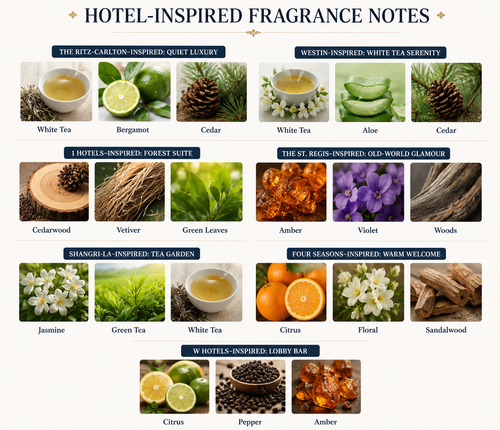
SOSA Hotel Collection · 15ml
Seven scents, and not one of them is a cooking spice
SOSA Hotel Collection · 15ml ₹299 / 15ml
White tea, bergamot and cedar; white tea, aloe and cedar; cedarwood, vetiver and green leaves; amber, violet and woods; jasmine, green tea and white tea; citrus, soft florals and sandalwood; citrus, pepper and amber. Black pepper is the only spice material in the seven, and there is no cumin, no mustard, no cinnamon, no clove, no cardamom and no saffron in the Hotel Collection or in the alcohol-free reed line. In a house where a tadka happens four evenings a week, that is a specification rather than a shortfall: the kitchen already owns the spice register, and a machine offering a thinner version of it has nowhere to stand.

What a tadka actually is, in thirty seconds

It is worth describing the process properly, because once you can see it as a piece of equipment the corrections become obvious. Whole spices hold their aromatic compounds locked inside cell structures, largely unavailable at room temperature — which is why a jar of cumin seeds smells of very little until you disturb it. Fat at tempering temperature does two things at once: it is an excellent solvent for exactly those compounds, so it strips them out of the seed within seconds, and it is hot enough to drive a large share of them straight off the surface as vapour and fine aerosol. Extract and release, in one operation, in about half a minute. There is no other step in Indian cooking with that profile, and there is no other step that so completely fills a building.

1
THE MECHANISM
Fat as a solvent, heat as a pump, and thirty seconds as the whole event
So the sequence, in the order it happens. The oil or ghee goes up past the temperature at which spices bloom; the seeds go in; within a few seconds the mustard begins to pop, which is the seed coat failing and its contents meeting hot fat directly; the cumin darkens and releases its aldehyde, which is the note you smell from the corridor; the curry leaves hit the oil and lose most of their volatile terpenes instantly, in that brief crackle that is the best sound in Indian cooking; and the hing dissolves and releases sulphur compounds that are detectable in the low parts per billion. All of that happens before you have counted to thirty. Compare it with a dal simmering for forty minutes, which releases a far larger total mass of aroma but spreads it thinly across a long window and mostly upward into a hood that has plenty of time to catch it. A tadka delivers its entire output in a burst, at high velocity, from a shallow pan, at the moment you are leaning over it. That is why it reaches the far end of a flat in seconds and why the neighbours know what you are making. It is also why every correction on this page is about timing rather than about power: there is no fan large enough to catch, retrospectively, something that was over before it started.
2
THE TWO THAT OUTSTAY
Hing keeps going, and chilli in hot oil is an irritant
Two ingredients behave differently from the rest and they are the reason the smell is still around at eleven. The first is asafoetida. Hing is a resin whose characteristic compounds contain sulphur, and sulphur compounds are among the most detectable materials the human nose deals with — perceptible at concentrations far below what you would need of a cumin note to notice it. A pinch is a very small amount of material and a very large amount of smell, and it adsorbs onto surfaces and re-releases like everything else, at a level that stays above threshold for far longer. If your flat smells of tempering the next morning and you cannot work out why, given that you used half a teaspoon of seeds, the answer is usually the hing. The second is dried chilli, and this one is not really a smell problem at all. Chilli in hot oil aerosolises capsaicin, which is not an odorant but an irritant: it acts on the trigeminal nerve rather than the olfactory receptors, which is why the reaction it produces is a cough and a stinging in the eyes and throat rather than a smell you can describe. It also settles slowly, and in a small kitchen with no airflow it can make a room genuinely unpleasant to stand in for a good while after the cooking is done. Two consequences worth acting on: get real airflow going before you put chilli into hot oil, and do not lean over the pan while you do it. Neither costs anything and both are ignored daily, mine included, until the coughing starts.
3
THE CORRECTIONS
Five things, all free, and the order they belong in
Which gives a short, specific list. One: extraction on high before the pan is hot, and certainly before the seeds go in. This is worth more than the other four together, because it is the only one that acts during the release rather than after it. Treat high as the normal setting for a tempering rather than as something reserved for emergencies. Two: move the tadka pan to a back burner. The front of a hob is the weakest part of any hood's reach, and a tadka pan is small, light and trivially easy to move, unlike a full kadhai — this is the cheapest real improvement on the list. Three: have the lid in your hand. A tempering makes its noise and then continues to release for a minute or two afterwards; the moment the seeds have finished popping and the leaves have stopped crackling, a lid keeps the remainder in the pan until it goes into the dal, which is where you wanted it anyway. Four: open a window on the far side of the flat. A fan that cannot get replacement air into the building cannot move its rated volume out of it, so a sealed flat quietly throttles its own extraction; a hand's width of opening somewhere distant is enough. Five: leave the hood running for ten minutes after the hob goes off, because the pan, the oil on the hob surround and the canopy above are all still hot and still releasing. Then two openings for twenty minutes, and the evening is finished.
What the five are worth, honestly: the timing of the fan is most of it, the back burner is most of the rest, and the lid, the window and the run-on are what turn a good result into a finished one.

The five free corrections, and what each is worth

Everything in this table costs nothing. The second column is what the correction physically does, the third is the mistake it replaces, and the fourth is my honest estimate of how much of the problem it removes on a normal tempering in a normal Indian kitchen. Nothing here needs a new appliance.

Five corrections, no money
What each free fix does about a tadka, and how much it is worth
The correction What it does The mistake it replaces Roughly what it is worth
1. Hood on high before the seeds go in ★ Puts the capture in place before the release rather than after it Switching the hood on when you hear the mustard popping, by which point half the event is already in the flat The largest single item on the list. More than the other four together
2. The tadka pan on a back burner Moves a thirty-second release into the strongest part of the hood's reach Tempering on the front ring because you are standing over it, which is the weakest part of the capture zone Most of what is left after the timing is corrected
3. A lid within arm's reach Keeps the tail of the release in the pan, where you wanted it, until it goes into the dish Leaving the pan open on the hob while you fetch the dal, releasing the last minute into the room Noticeable, and it improves the food as well
4. A window open on the far side Gives the extractor make-up air, so the fan moves something close to its rated volume A sealed flat with every window shut, quietly throttling its own extraction while the fan sounds busy Larger than people expect, and it costs one hand's width of opening
5. Ten minutes of run-on Removes the tail released by the hot pan, the hot oil film and the warm canopy after the flame is out Switching the hood off with the burner, leaving the entire post-cooking release in the kitchen The difference between a smell at nine and no smell at nine
Then: two openings, twenty minutes Turns the flat's air over several times before any of it has settled onto fabric Airing at bedtime, by which point most of the depositing has already happened Finishes the job the five above started
Shop this guide
For the hour after the run-on, not the minute during
The SOSA principle
A tadka is designed to fill a house. The goal is not a flat that never smells of cooking — it is a flat that smells of cooking while you cook, and of itself an hour later.
Thirty seconds of release, ten minutes of run-on and twenty of cross-draught. The whole method is about timing, because there is no fan large enough to catch something retrospectively.

The evening, the run-on, and where a scent belongs

Put the whole evening in order and it takes no extra effort at all, only a different sequence. Hood on high before the pan goes down; tadka pan on a back ring; lid in reach; a window a hand's width open somewhere far from the kitchen; cook; hood running for ten minutes after the hob goes off; then two openings on opposite or adjacent walls for twenty minutes. Serve and eat during that twenty minutes rather than waiting for it, because food is at its best straight away and the flat is airing perfectly well without supervision. Then shut the windows. That is the entire free method, and in most flats it is the difference between a tempering you can still smell at bedtime and one you cannot. Two additional habits are worth adopting in a household where a tadka happens several times a week. The first is to shut the bedroom and wardrobe doors before you start — a wardrobe is a small unventilated room full of fabric, and anything that gets in comes back out onto you for a fortnight; the bedroom page in this group covers the paths in detail. The second is to change out of what you cooked in and put it in the wash rather than back on a hook. Cotton holds a tempering exceptionally well, and a great many people who believe their sitting room smells of dinner are actually smelling the kurta hanging on the back of the door.

Then the extraction itself, because a tadka is the test that finds out whether yours is doing anything. If you can run a full tempering with the hood on high and smell almost nothing at the far end of the flat, your extraction is working. If you can smell it clearly in the next room within seconds, something in the installation is wrong and no amount of fragrance will compensate for it. The usual causes are a recirculating unit whose carbon cartridge has never been replaced, a grease filter that has not been degreased in a year, a hood mounted too high or narrower than the hob, or a duct that terminates inside a false ceiling rather than outside the building; the chimney page in this group goes through how to identify each of those, and the 1BHK page covers what even a good hood cannot physically catch. I would rather send you to check a filter than sell you a bottle, because the filter is the thing standing between your flat and the outside air and the bottle is not. One honest limit: even a perfect installation does not catch everything from a tempering, because some of that release goes sideways and outward rather than upward, at speed, from a shallow pan. That is not a fault in the machine and it is not a fault in you. It is what the technique is.

Then fragrance, which on this page belongs at the end and in a specific register. Once the run-on and the cross-draught are done, the air in the flat is genuinely clean, and a scent put into clean air is a character rather than a cover. The Sukoon at ₹1,899 reaches a steady level in about twenty minutes from cold, gives 16–18 hours per fill on low at 30–50 ml/h against 9–12 on high, and has steady, 2H and 4H timers, a 2.4MHz cool-mist plate, a remote, auto shut-off and three 15ml Hotel Collection scents of your choice included; set the 2H timer to start when the windows are shut again rather than while the tadka is in progress. The Hotel Collection is water-based, ultrasonic only, and dosed at three to six drops per tank — per tank rather than per litre, so a Boond at ₹899 takes the same drops as the larger machine. If you want scent in a room tonight with nothing to install, the Bookshop candle at ₹379 does it in fifteen to twenty minutes and must be attended and put out; a reed diffuser is the wrong purchase for tonight because it needs twenty-four to seventy-two hours to establish, and the right one for a hall you want holding a level for months. On what to choose: nothing warm and nothing spiced. There is no cumin, cinnamon, clove, cardamom or saffron anywhere in the Hotel Collection or the alcohol-free reed line, and black pepper is the only spice material in the seven — which in a house where a tadka happens four evenings a week is precisely why a diffuser can run at all. And expect to stop noticing your own flat within a fortnight; ask one honest guest rather than adding drops.

There is no extractor large enough to catch a smell retrospectively. A tadka is over in thirty seconds, so the fan has to be winning before it starts.
— Sonal Sahani, SOSA

The SOSA edit

In working order for a household that tempers several times a week. Five free corrections first, because they are worth more than anything below them, and the last row states what the range does not contain — which on this particular page is the reason it works.

The SOSA edit
Living well with a tadka, in working order
Do this What it is Why it matters here Cost
1. Extraction on high, first ★ Hood running before the pan is hot and for ten minutes after the hob goes off The release lasts thirty seconds. Capture has to be in place before it, because nothing catches it afterwards ₹0
2. Back burner, lid, far window The tadka pan moved one ring back, a lid in reach, and a hand's width of opening across the flat for make-up air The front of the hob is the weakest part of the capture zone, and a fan with no replacement air moves a fraction of its rating ₹0
3. Two openings, twenty minutes Cross-ventilation immediately after the hob goes off, while you eat It removes the load before it deposits on fabric. Airing at bedtime is too late to prevent anything ₹0
4. Doors shut, and the kurta into the wash Bedroom and wardrobe doors closed before you start; what you cooked in goes to the laundry rather than back on a hook Cotton holds a tempering for a fortnight, and a wardrobe is a small unventilated room full of fabric ₹0
5. Hotel Collection 15ml on the Sukoon Three to six drops per tank on cleared air, 2H timer, twenty minutes from cold to a steady level A scent on clean air is a character. The same scent during a tempering is an argument with dinner ₹299 / ₹1,899
6. Bookshop candle if it has to be tonight 80g, roughly 15–18 hours of burn, scent in a room in fifteen to twenty minutes, attended and put out The fastest thing SOSA makes, for the evening you have already aired and simply want to finish well ₹379
Not in the seven: cumin, cinnamon, clove, cardamom or saffron Black pepper is the only spice material in the Hotel Collection, and there is none of the above in the reed line either Printed rather than implied. In a house that tempers four nights a week, that absence is the whole reason a diffuser works
Honest notes for buyers: fragrance is the last step, never the first. It layers on air that is already clean and moving, and it will not remove a source — not damp, not a dry drain trap, not a loaded sofa, not a filter that needs washing. Deal with the cause, change the air, then scent the room. On timing: a candle puts scent into a room in fifteen to twenty minutes and a Sukoon reaches a steady level in about twenty, while a reed diffuser needs a day to three days before it is doing its job — the wrong buy for a deadline and the right buy for a room you want to hold one level for months. SOSA does not make a room or linen spray for the home; the sprays in the range are car perfumes. A cool-mist ultrasonic adds 30–50 ml of water an hour to the air, so it is the wrong machine for a room you are trying to dry out. The Hotel Collection is water-based and runs in the Sukoon, Boond and Megh only — not in reeds and not in the waterless Vaayu. Reed diffusers are a separate alcohol-free line with their own scents. Candles must be attended and put out. The Hotel Collection scents are SOSA's own interpretations inspired by the world's finest hotels; SOSA is an independent Indian fragrance house, not affiliated with or endorsed by any hotel brand. A portion of every order supports girl-child education through Nanhi Kali.
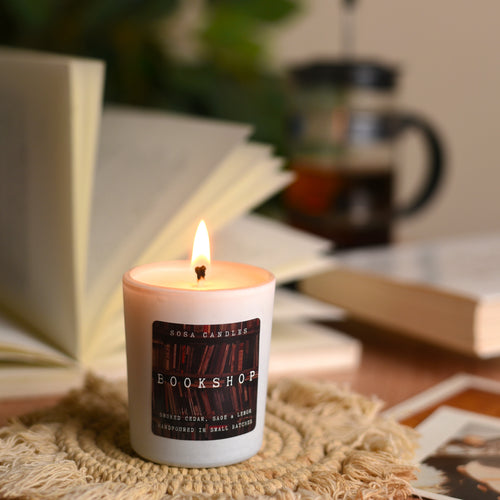
SOSA Bookshop candle · 80g
For the evening after, when the run-on has finished
SOSA Bookshop candle · 80g ₹379
A hand-poured jar candle that puts scent into a normal room in fifteen to twenty minutes, which makes it the fastest thing SOSA sells and the right object for an evening that has already been aired. It must be attended and put out, it adds no water to the air, and it is not an air cleaner — a flame does not remove a cooking smell and I am not going to suggest that it does. Light it once the hood has stopped and the windows have been shut again, and it is a pleasant end to the evening rather than an argument with it. Amber Rose is ₹599 for 130g at roughly 25–30 hours if you want something longer-burning.
SS
ISIPCA
Versailles
A note from Sonal

I want to be careful about the tone of this page, because a great many people arrive at it slightly embarrassed, and they should not be. A tadka is not a mistake to be managed. It is the single most effective piece of aroma engineering in domestic cooking anywhere in the world, and it works by doing exactly the thing this article is describing as a problem. Hot fat, whole spices, thirty seconds, and a building that knows what is for dinner. I make fragrance for a living and I have never designed anything that fills a space that efficiently.

So the goal is not a flat that never smells of cooking. That flat would tell you something rather sad about the people in it. The goal is a flat that smells of cooking while you are cooking and of itself an hour later, and the distance between those two states is a fan switched on early, a pan moved one ring back, a lid, an open window somewhere far away and ten minutes of patience. All of it free. Then, when the air has genuinely turned over, put something dry and quiet into the room and let the evening finish properly. That is the whole recommendation, and the bottle at ₹299 is the smallest part of it.

Everything is made and supported from Pune, and a part of every order funds girl-child education through Nanhi Kali. You get a home that smells like somewhere you chose; a girl gets a classroom. That equation has always felt right to me.

Frequently asked questions

Why does a tadka smell so much stronger than the rest of the cooking?
Because it is a flash extraction. Fat at tempering temperature is an excellent solvent for the aromatic compounds locked in whole spices and is simultaneously hot enough to drive them off as vapour and fine aerosol, so the entire release happens in about thirty seconds at high velocity from a shallow pan.
When should I switch the chimney on for a tadka?
Before the pan is hot, and certainly before the seeds go in — on high rather than low. By the time you can hear mustard seeds popping, half the release has already happened, and no extractor can catch a smell retrospectively. Leave it running for ten minutes after the hob goes off.
Which part of a tadka lasts the longest?
Asafoetida, usually. Hing's characteristic compounds contain sulphur and are detectable at very low concentrations, so a pinch produces a smell that stays above threshold long after the cumin has gone. Dried chilli in hot oil is the other one, and it acts as an irritant rather than as an odour.
Will a diffuser cover the smell of tempering?
No, and I would not sell you one on that basis. Fragrance adds a second smell to a room that already has a strong one, and the nose separates them rather than blending them. Extraction, a back burner and twenty minutes of cross-ventilation do the removing; a scent goes in afterwards.
Is it bad if my house smells faintly of Indian food?
Not in the least. A home that smells faintly of good cooking an hour after dinner is a home somebody eats well in. The thing worth fixing is a flat that still smells of last Tuesday, which is a fabric and ventilation problem rather than a cooking one.
Thirty seconds of cooking, ten minutes of run-on
A tadka is meant to fill a housethe trick is what happens in the next half hour
Once the run-on and the cross-draught are done: the Hotel Collection is ₹299 for 15ml, ₹999 for 100ml and ₹1,799 for 300ml at about ₹6 per millilitre, at three to six drops per tank, and black pepper is the only spice material in the seven. The Sukoon is ₹1,899 for 270–320 sq ft with steady, 2H and 4H timers and three 15ml scents of your choice included; the Bookshop candle is ₹379. Free shipping above ₹499, and a portion of every order supports girl-child education through Nanhi Kali.
See the seven scents · ₹299 See the Sukoon · ₹1,899
Continue the read
More from SOSA
Editorial standards & sources
About this guide: Written by Sonal Sahani, ISIPCA Versailles-trained founder and perfumer at SOSA Home & Body, on why a tadka is a deliberate flash extraction rather than an accident — hot fat acting as a solvent for the aromatics in cumin, mustard seed, curry leaf, hing and dried chilli and releasing them in about thirty seconds — why asafoetida and chilli outlast the rest, and the five free corrections that turn a tempering into a scent rather than a residue.

Facts verified August 2026: Diagnostic facts used in this guide: a closed room accumulates what it cannot exchange, so cross-ventilation needs two openings rather than one; a drain's U-bend water seal evaporates in roughly two to four weeks of disuse and then admits sewer gas, which is corrected by pouring water down the drain; microbial growth in fabric and on surfaces accelerates above about 60% relative humidity, and Indian monsoon indoor humidity commonly runs 80–95%, which is the one situation where ventilating on a wet day can import moisture rather than remove it; an air-conditioner's cold, wet evaporator coil and filter grow biofilm that is blown into the room on start-up; textiles adsorb cooking aerosol and body oils and re-release them for weeks; and olfactory adaptation makes a constant household smell undetectable to its residents within about a fortnight while visitors still perceive it. Timings: a scented candle scents a normal room in roughly 15–20 minutes, a Sukoon ultrasonic diffuser reaches a steady level in about 20 minutes from cold, and a reed diffuser needs roughly 24–72 hours. SOSA products and prices: Sukoon 500ml ₹1,899 (270–320 sq ft, 16–18h on low, 9–12h high, 30–50 ml/h, 2.4MHz cool mist, remote, steady/2H/4H timers, BPA-free, auto shut-off, includes three 15ml Hotel Collection scents of your choice); Boond 300ml ₹899; Megh 6-litre ₹3,499; waterless Vaayu ₹11,999 (up to 1000m³); Aangan ₹25,999. Hotel Collection water-based fragrance 15ml ₹299, 100ml ₹999, 300ml ₹1,799, Pack of 7 at 15ml ₹1,799; dose 3–6 drops per tank. Reed diffusers (separate alcohol-free line): Morning Freshness from ₹749, Garden Bloom and Evening Calm from ₹799, Fresh Brew and Mountain Breeze from ₹849; 130ml from ₹1,249; duos from ₹1,498; 300ml refills ₹2,399. Scented candles: Bookshop 80g ₹379, Amber Rose 130g ₹599 and 220g ₹799, Smoked Oudh 130g ₹449, ceramic jar candles ₹949, Pure Calm wax melt set ₹854. Free shipping above ₹499. SOSA does not make a room or linen spray for the home. The Hotel Collection scents are SOSA's own interpretations; SOSA is not affiliated with or endorsed by any hotel brand. Prices subject to change — see the live product pages.
Zurück zum Blog