


Why Do I Keep Adding More Drops to My Diffuser?

Why Do I Keep Adding More Drops to My Diffuser?

★ Everyone else can smell your house and you cannot · why that happens, and what to do about itCandle ₹379 · reed ₹749 · Boond ₹899 · Sukoon ₹1,899 · free shipping above ₹499A portion funds girl-child education
★ SOSA · find the cause, then scent the room
Receptors adapt. A constant smell stops being reported within minutes, and inside a fortnight your own home is invisible to you while every visitor still gets the level you set
★ ★ ★ ★ ★
★★★★★
"I had gone from three drops to eight over a year without noticing. A friend told me the truth and I was mortified. Back to three."
Ashwin R. Dose creep
Honest guest
★★★★★
"Came home from ten days away and smelled my own flat for the first time in years. That is the only reliable test there is."
Kavya M. The travel test
Free
★★★★★
"Was told the fix was one honest friend rather than a different product. Slightly annoying, entirely correct."
Bhavna S. Told not to buy
One honest guest
★★★★★
"Alternating two scents rather than running one forever. I notice my own house again and I use less."
Tanmay G. Two 15ml · ₹598
Alternating
★★★★★
"Visitors kept complimenting a scent I could not detect at all. Turns out that is the normal outcome, not a fault."
Reshma A. Understood the cause
Not a fault
★★★★★
"The 2H timer solved it. The room reaches a level and stops, so I am not topping up something I cannot measure."
Vinay K. Sukoon · 2H timer
₹1,899
★★★★★
"I had gone from three drops to eight over a year without noticing. A friend told me the truth and I was mortified. Back to three."
Ashwin R. Dose creep
Honest guest
★★★★★
"Came home from ten days away and smelled my own flat for the first time in years. That is the only reliable test there is."
Kavya M. The travel test
Free
★★★★★
"Was told the fix was one honest friend rather than a different product. Slightly annoying, entirely correct."
Bhavna S. Told not to buy
One honest guest
★★★★★
"Alternating two scents rather than running one forever. I notice my own house again and I use less."
Tanmay G. Two 15ml · ₹598
Alternating
★★★★★
"Visitors kept complimenting a scent I could not detect at all. Turns out that is the normal outcome, not a fault."
Reshma A. Understood the cause
Not a fault
★★★★★
"The 2H timer solved it. The room reaches a level and stops, so I am not topping up something I cannot measure."
Vinay K. Sukoon · 2H timer
₹1,899
Find the source first · two windows for twenty minutes beats any product for a closed smell Fragrance is the finishing layer. It does not remove damp, a dry drain or a loaded sofa Sukoon ₹1,899 · 270–320 sq ft · 16–18 hours per fill · three 15ml scents included


Founder Diaries · Home Fragrance · Nose-Blindness at Home
By Sonal Sahani · ISIPCA Versailles 10 min read Updated August 2026
You are not doing anything foolish, and it is worth saying that before anything else, because a great many people arrive at this question slightly embarrassed. Everybody who lives with a home fragrance drifts upwards, for the same reason and on roughly the same schedule, and the reason is not a lack of discipline. It is that your nose stops reporting a constant smell, and the only sensation adaptation can ever produce is the sensation of not quite enough. There is no evening on which a scent feels too strong to you and you decide to pour less. So the number goes one way. Here is the loop in detail, and the two free things that stop it.
Quick answers — read this first
The loop: three drops is lovely; within a fortnight you cannot detect it; three now feels like nothing, so you use four; four works for a fortnight. Repeat. The dose can rise and has no mechanism for falling.

Why it only turns one way: the correction signal — smelling it as too strong — is the one signal adaptation guarantees you will never receive at home. It belongs to visitors.

The two fixes, both free: a written dose you follow rather than a judgement you remake, and a timer, because an intermittent exposure lets receptors recover and report again.

The arithmetic: a 15ml bottle is roughly 300 drops — about a hundred tank fills at three drops and about fifty at six.
The short answer
Short answer: because adaptation removes your ability to perceive a constant scent within about a fortnight, and the feeling it leaves behind is always not enough. A dose managed by how the room feels can only ever climb, because the sensation that would make you reduce it is the one your own nose can no longer produce.
The fix: stop deciding the dose in the room. Write the number, the setting and the date on the bottle and follow it. Then use a timer — the Sukoon at ₹1,899 has steady, 2H and 4H settings — because an intermittent exposure allows partial recovery in the gaps, while a continuous one does not.
Shop: the Hotel Collection is ₹299 for 15ml at three to six drops per tank, ₹999 for 100ml and ₹1,799 for 300ml at about ₹6 per millilitre. A 15ml bottle is roughly 300 drops: about a hundred tank fills at three drops and about fifty at six. The Sukoon is ₹1,899 with three 15ml scents included and the Boond is ₹899. Free shipping above ₹499.
Straight answer
Why do I keep adding more drops to my diffuser?
1. Because your nose stops reporting the scent, and the only feeling that leaves behind is shortage. Receptors adapt to a constant stimulus and your brain filters what it has learned to expect. Within a fortnight the room reads as neutral to you while the concentration in the air has not changed by a fraction.

2. So the correction only ever points one way. There is no evening on which three drops feels like too much and you decide on two. That sensation — the room being over-scented — is available to everybody who visits you and to nobody who lives there.

3. The step is always small, which is why it never feels like a decision. Three to four is not a change of mind. Four to five, six weeks later, is not either. Nobody doubles a dose. People add one, eight times, over a year.

4. The first fix is free: write the dose down and follow it rather than deciding it. The scent, the number of drops, the timer setting and the date, in pen on the bottle. A dose is a setting to be followed, not a judgement to be remade every few days with a broken instrument.

5. The second fix is a timer, and it is about perception rather than economy. Receptors recover in the gaps, so an exposure that stops and restarts keeps being noticed in a way a continuous one cannot. Two hours from seven, then off, is a better arrangement for your nose than fourteen hours of steady.

A portion of every order supports girl-child education through Nanhi Kali.

TL;DR: because adaptation only ever produces the feeling of too little. Three drops stops being perceptible within a fortnight, four feels like the fix, and there is never an evening when a scent feels too strong and you decide to use less. A written dose and a timer are the two free things that stop it.
Hotel Collection · 15ml and 300ml
The arithmetic that makes the ratchet visible
Hotel Collection · 15ml and 300ml ₹299 / ₹1,799
A drop is around five hundredths of a millilitre, so a 15ml bottle at ₹299 holds roughly three hundred of them. At three drops per tank that is about a hundred fills. At six it is about fifty. The dose did not feel like it doubled, because it never doubled on any single day — but the bottle knows, and the bottle is the only instrument in your house that has not adapted to anything. The 300ml 300ml refill at ₹1,799 works out at about ₹6 per millilitre against roughly ₹20 for the 15ml, which is genuine value for a scent that has settled — and no value at all for one whose dose is still climbing.

The loop, described exactly

It is worth setting the sequence out step by step, because when people see it written down they usually recognise their own year in it, and recognising it is most of the cure. Nothing in the loop is a mistake. Each individual step is a reasonable response to the evidence available at the time, which is exactly what makes it so difficult to notice from inside. The problem is not any single decision. It is that the decisions can only accumulate in one direction, and nothing in ordinary domestic life ever pushes back the other way.

1
THE SEQUENCE
Three drops, a fortnight, and one more drop that feels like nothing
Here is how it actually goes, in the order it happens. Day one: you set three drops, switch the machine on, and the room is exactly right. You are delighted, and you should be — three drops in a bedroom or four in a sitting room is what the Hotel Collection is composed for. Day three: still lovely, though you notice it less on the way in. Day seven: you are aware of it when you think about it and not otherwise. Day twelve: you come home, stand in the hall, and there is nothing. Not a faint version, not a trace — the room reads as ordinary air. At this point the concentration in your flat is precisely what it was on day one, and the machine is putting out the same 30 to 50 millilitres an hour it always did. What has changed is that your receptors have stopped signalling a stimulus that never varies, and your brain has folded the scent into its model of what your home is like, so it no longer reaches attention. None of that is available to you as information. What is available is a hall that smells of nothing. So you do the sensible thing with the evidence in front of you: next tank, four drops. And it works. It genuinely works, for a while, because four drops against a nose adapted to three is a change, and change is the only thing a nose reports. For a few days the room is back. Then the same fortnight happens to four, and to five, and to six. Nobody ever doubles a dose in one go. They add one, on eight separate reasonable evenings, across a year, and by the following summer the flat is running at twice what its owner chose, and its owner is the only person in it who does not know.
2
WHY IT ONLY TURNS ONE WAY
The signal that would make you reduce belongs to other people
Now the structural reason it never self-corrects, which is the part worth actually understanding. A control loop needs a signal in both directions. Yours has only one. Adaptation produces exactly one sensation — the absence of a smell — and that sensation has precisely one obvious remedy. The opposite sensation, the room being too much, is a perception that requires an unadapted nose, and by definition you do not have one for your own home. It is not that you are bad at noticing when you have gone too far. It is that noticing is not physiologically available to you at any dose you are likely to reach. A flat can be running at six drops in a small bedroom, transferring onto coats, and announcing itself in the corridor outside, and the household inside it will still experience a room that smells faintly of nothing much. The correction signal exists, but it is held by visitors, and visitors will not deliver it — nobody tells a host that their home is too strong, because there is no polite form of that sentence. What they do instead is open a window, or say oh, that is strong in the first minute and then never mention it again. So the loop runs unopposed until somebody is either rude, or asked. That is the whole mechanism, and it explains something people find puzzling: dose creep is worst in exactly the households that care most. Somebody indifferent to how their home smells never reaches for the dropper. It is the person who chose the scent deliberately, who wants the flat to be welcoming, who tops it up before guests arrive, who ends up furthest from where they started. Attentiveness is the accelerant, which is why this page is not a scolding.
The other explanation worth ruling out before you add anything: sometimes output really has dropped. A 2.4MHz misting plate filmed with old fragrance produces visibly less mist, and a tank that has never been rinsed between scents will do it faster. Wipe the plate, rinse the tank, and see whether the machine was the problem rather than the dose.
3
THE TWO THINGS THAT BREAK IT
A number you follow, and an exposure that stops
Both fixes are free, and between them they remove the two conditions the loop depends on. The first is to stop making the dose a judgement at all. Nobody re-decides an oven temperature by smelling the kitchen; they use the number in the recipe, because the number was arrived at when there was information available. Your dose is the same: it was chosen in week one, when your nose still worked on your own home, and that judgement was better than every judgement you will make about it afterwards. So write it down — the scent, the drops, the timer setting and the date, in pen on the bottle where you cannot avoid seeing it while you pour. From then on the pour is compliance rather than assessment. It sounds small. It is the single most effective thing in this cluster, because it converts an unanswerable question into one you have already answered. The second is to make the exposure intermittent rather than continuous, and this is a perception argument before it is a value-for-money one. Olfactory receptors recover when the stimulus is removed — a break of half an hour restores a good deal, and several hours restores most of it — so a scent that runs for two hours and then stops meets a partly recovered nose the next time it starts. A scent that runs all day meets a nose that has had no opportunity to recover at any point since it began. The practical effect is that a timed room is a room you can still occasionally perceive, and a continuously scented room is one you are guaranteed to lose. That is why the 2H setting on a Sukoon matters more here than the tank size or the coverage figure. Two hours from seven gives an evening a rise and a fall, leaves the room pleasant long after the mist has stopped, uses a third of the fragrance, and — the part that actually matters — leaves you with something to notice tomorrow.

A year of it, fortnight by fortnight

The same flat and the same bottle, tracked across a year of adjusting by feel. The third column is what the room is actually doing, which is the column nobody in the house has access to. Nothing here requires carelessness — every step in the second column is a reasonable response to the first — and the bottom row is where a great many homes are sitting right now.

The ratchet
What a dose managed by feel does over twelve months
When What you perceive What you do What the room is actually at What a visitor gets
Week one ★ Exactly right. This is the only week your judgement of your own home is any good Nothing. Write the number and the date on the bottle now, while the information still exists Three drops per tank — what the fragrance is composed for A room that smells looked after
Week two Noticeably less, and only when you think about it Nothing yet. This is adaptation arriving on schedule, not a fault in the bottle Three drops. Unchanged The same room as week one
Week three Nothing at all in the hall. The flat reads as ordinary air Add one drop. Entirely reasonable given the evidence, and the first turn of the ratchet Four drops Slightly more than they got in week one
Month two Back to nothing after a fortnight of four working well Add one more. Still not a decision that feels like anything Five drops A flat that is now clearly scented from the doorway
Month five Nothing, and a suspicion that the scent has weakened in the bottle Add one, and consider buying a different fragrance Six drops — the top of the composed range Intensity language in the first minute
Month twelve Nothing, reliably, and a bottle that empties twice as fast Somebody finally says something, or a window gets opened Eight or more, at twice the fragrance cost A window opened without comment
Shop this guide
The two things that stop it, and what they cost
The SOSA principle
There is no evening on which a scent feels too strong and you decide to use less. That is the whole reason the number can only go up.
A loop with one signal is not a loop. It is a ratchet, and the only way to stop it is to take the decision out of the room and put it on the bottle.

The written dose, the timer, and the arithmetic

Start with the number itself, because a written dose is only useful if what you wrote is right. The Hotel Collection is composed at three to six drops per tank, and the dose is per tank rather than per litre — you are scenting the mist and not the water — so a 300ml Boond at ₹899 takes the same three drops as a 500ml Sukoon at ₹1,899, and a six-litre Megh at ₹3,499 takes the same again. A larger machine buys hours and coverage, never intensity. Three drops is right for a bedroom, a study, a bathroom or a small hall; four for a sitting room; five for a genuinely large space; six is the ceiling of the composition rather than a normal setting. Set that number in the first week, while your judgement of your own home is still worth something, and write it on the bottle with the date and the timer setting beside it. If you are reading this having already climbed, the way down is not to halve it overnight. Drop by one, hold for a fortnight, then drop again, and stop when a visitor's description of the room matches what you intended. You will not be able to perceive the reductions — that is precisely the condition you are in — so the fortnight is not for your benefit but for the evidence. And rinse the tank and wipe the misting plate before you conclude anything, because a plate filmed with old fragrance genuinely does produce less mist, and that is the one case where the room really has got quieter.

Then the timer, and the arithmetic that makes the whole thing visible. The Sukoon at ₹1,899 gives steady, 2H and 4H settings on a 500ml BPA-free tank rated for 270–320 sq ft, 16–18 hours per fill on low at 30–50 ml/h against 9–12 on high, with a 2.4MHz cool-mist plate, a remote, auto shut-off and three 15ml scents of your choice included. Run it for two hours in the evening rather than all day. The room reaches a level and then falls slowly away from it, which is what a room in a hotel is doing when you walk into it and think it smells expensive. Now the numbers, because they make an invisible drift visible. A drop is around five hundredths of a millilitre, so a 15ml bottle at ₹299 holds roughly three hundred drops. At three drops per tank that is about a hundred fills. At six it is about fifty. So the honest test of whether you have drifted is not a memory of what the room used to smell like — it is how long a bottle lasts. If a 15ml used to see you through four months of the same running hours and now goes in two, the dose has doubled, whatever the room feels like. Write the date on the bottle when you open it and again when it empties; two of those and you have an instrument in your house that has not adapted to anything. The 100ml at ₹999 is about ₹10 per millilitre and the 300ml 300ml refill at ₹1,799 about ₹6 against roughly ₹20 for the 15ml — real value for a scent whose dose has settled, and no value at all for one still climbing, since a larger bottle simply removes the one signal you had.

Then the free half, the constraints, and the thing we would actually prefer. Before you add anything, rule out the room rather than the bottle, because a scent frequently seems to have faded when what has really happened is that the flat acquired something to compete with. A closed room does not stop producing smell, it stops removing it: two openings on opposite or adjacent walls for twenty minutes is exchange, one window ajar is not. A U-bend water seal evaporates in two to four weeks of disuse, so a mug of water down every floor drain, basin and unused shower removes a sharp background that a fragrance was being asked to shout over. Cushion covers, throws and curtains through the wash take out the cooking aerosol and body oils that fabric re-releases for weeks. An AC filter washed every two to four weeks in season stops a cold wet coil blowing biofilm into the room on start-up. Each of those makes a room read cleaner than an extra drop does, and none of them costs anything. On the constraints: the Hotel Collection is water-based and runs in the Sukoon, Boond and Megh only. It does not go into a reed diffuser, a separate alcohol-free line with its own scents that needs 24 to 72 hours to establish, and it does not go into the waterless Vaayu at ₹11,999, which takes its own undiluted oil. Never substitute raw essential or carrier oils, which clog the 2.4MHz plate. SOSA does not make a room or linen spray for the home. And the commercially inconvenient truth, which I would rather print than not: we would genuinely rather you ran three drops for a year than six for six months. The second customer buys more fragrance and likes their home less, and only one of those two facts is good for us.

Nobody doubles a dose. They add one drop, eight times, on eight reasonable evenings, across a year.
— Sonal Sahani, SOSA

The SOSA edit

What to do about a dose that has been climbing, in order. Four of the five steps cost nothing, and the one that does not is bought for a timer rather than for a tank. The last row is what the loop makes people buy, and it is the purchase that removes the last piece of evidence they had.

The SOSA edit
Stopping the ratchet, in order
Step What it is Why it comes here Cost
1. Write the dose on the bottle ★ Scent, drops, timer setting and date, in pen, where you will see it while pouring First. It converts a judgement you cannot make into a setting you can follow ₹0
2. Rinse the tank and wipe the misting plate A film of old fragrance on a 2.4MHz plate genuinely reduces output Second, because this is the one situation where the room really has got quieter and a drop is not the answer ₹0
3. Air the room and check the usual sources Two openings for twenty minutes; a mug of water down every unused drain; washable fabric through a cycle Third. A scent that seems to have faded is often a room that has acquired competition ₹0
4. Date the bottle, and count A 15ml is about three hundred drops — roughly a hundred tank fills at three, about fifty at six Fourth. The only instrument in your house that has not adapted to anything is the bottle ₹0
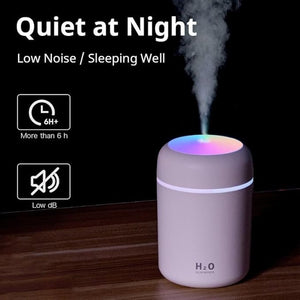
5. A machine with timers Steady, 2H and 4H settings, 500ml, 270–320 sq ft, three 15ml scents included Fifth, and bought for the 2H setting. An intermittent exposure lets receptors recover; a continuous one cannot ₹1,899
Not the answer: a 300ml refill of a climbing dose ₹1,799 for 300ml at about ₹6 per millilitre, bought while the number is still moving Excellent value for a settled dose and a mistake for an unsettled one — it removes the signal that a bottle emptying fast gives you
Honest notes for buyers: fragrance is the last step, never the first. It layers on air that is already clean and moving, and it will not remove a source — not damp, not a dry drain trap, not a loaded sofa, not a filter that needs washing. Deal with the cause, change the air, then scent the room. On timing: a candle puts scent into a room in fifteen to twenty minutes and a Sukoon reaches a steady level in about twenty, while a reed diffuser needs a day to three days before it is doing its job — the wrong buy for a deadline and the right buy for a room you want to hold one level for months. SOSA does not make a room or linen spray for the home; the sprays in the range are car perfumes. A cool-mist ultrasonic adds 30–50 ml of water an hour to the air, so it is the wrong machine for a room you are trying to dry out. The Hotel Collection is water-based and runs in the Sukoon, Boond and Megh only — not in reeds and not in the waterless Vaayu. Reed diffusers are a separate alcohol-free line with their own scents. Candles must be attended and put out. The Hotel Collection scents are SOSA's own interpretations inspired by the world's finest hotels; SOSA is an independent Indian fragrance house, not affiliated with or endorsed by any hotel brand. A portion of every order supports girl-child education through Nanhi Kali.
SOSA Sukoon · steady, 2H and 4H timers
Why a scent that stops is a scent you can still perceive
SOSA Sukoon · steady, 2H and 4H timers ₹1,899
Steady, 2H and 4H timers on a 500ml BPA-free tank, 270–320 sq ft, 16–18 hours per fill on low at 30–50 ml/h against 9–12 on high, a 2.4MHz cool-mist plate, a remote and auto shut-off, with three 15ml Hotel Collection scents included. The 2H timer is a perception setting before it is an economy setting. Receptors that are given a gap recover in it, so an intermittent exposure keeps being noticed in a way a continuous one cannot. Two hours from seven gives the room a rise and a fall and gives you a nose that is partly naive when the machine next starts. Fourteen unbroken hours gives you a flat line and no way of reading it.
SS
ISIPCA
Versailles
A note from Sonal

I want to be careful about the tone of this one, because the people who write to me about it are usually apologising, and there is nothing to apologise for. Every single person who lives with a home fragrance does this, including me, and including me while knowing precisely why it happens. I have stood in my own kitchen with a bottle I composed, unable to smell a thing, thinking quite seriously that the batch must be weak. It was not weak. I had simply been in the room since Tuesday.

So the advice is mechanical rather than moral, because willpower is not the missing ingredient. Take the decision out of the room. Write the number on the bottle in the first week and follow it afterwards, and set the machine to stop, so that the scent has a rise and a fall instead of a plateau. Those two things cost nothing and they do the whole job. And since I sell the fragrance, let me put the commercial position plainly: we would rather you ran three drops for a year than six for six months. The customer at six buys twice as much from us and enjoys their home less, and I have never once thought that was a trade worth having. A 15ml bottle at ₹299 is about three hundred drops. Make them last.

Everything is made and supported from Pune, and a part of every order funds girl-child education through Nanhi Kali. You get a home that smells like somewhere you chose; a girl gets a classroom. That equation has always felt right to me.

Frequently asked questions

Why do I keep needing more drops in my diffuser?
You do not need more; you have stopped being able to perceive what is there. Receptors stop reporting a constant smell and the brain filters what it expects, so within about a fortnight the room reads as neutral while the concentration in the air is unchanged. The feeling of shortage is the adaptation itself.
How many drops should I actually use?
Three per tank in a bedroom, study, bathroom or small hall, four in a sitting room, five in a genuinely large space. The Hotel Collection is composed at three to six drops per tank and the dose is per tank rather than per litre, so a 300ml Boond takes the same drops as a 500ml Sukoon.
How can I tell whether my dose has crept up without noticing?
Count instead of smelling. A 15ml bottle is roughly three hundred drops — about a hundred tank fills at three drops and about fifty at six. If a bottle that used to last four months now lasts two at the same running hours, the dose has doubled regardless of how the room feels.
Does using a timer really help, or is it just to save fragrance?
Both, and the perception argument is the stronger one. Olfactory receptors recover when a stimulus stops, so a scent that runs for two hours and then stops meets a partly recovered nose next time. A machine running all day gives your nose no opportunity to recover at any point.
My diffuser seems weaker than it used to be. Is it the fragrance?
Check the machine before the bottle. A 2.4MHz misting plate filmed with old fragrance produces visibly less mist, and a tank never rinsed between scents films faster. Wipe the plate and rinse the tank. If output is unchanged, what altered is your nose rather than the machine.
Three drops for a year, not six for six months
Write the number downand set the machine to stop
The Hotel Collection is ₹299 for 15ml — roughly three hundred drops, about a hundred tank fills at three — with 100ml at ₹999 and 300ml at ₹1,799, about ₹6 per millilitre. The Sukoon is ₹1,899 for 270–320 sq ft with steady, 2H and 4H timers, 16–18 hours per fill on low and three 15ml scents of your choice included; the Boond is ₹899. Free shipping above ₹499, and a portion of every order supports girl-child education through Nanhi Kali.
See the Sukoon · ₹1,899 Hotel Collection · from ₹299
Continue the read
More from SOSA
Editorial standards & sources
About this guide: Written by Sonal Sahani, ISIPCA Versailles-trained founder and perfumer at SOSA Home & Body, on why everybody who lives with a home fragrance ends up adding drops to it — the fortnightly loop set out step by step, why a dose managed by feel can only climb because the sensation that would make you reduce it belongs to visitors, why a written dose and an intermittent timer break the loop where willpower does not, and the arithmetic of a 15ml bottle at about three hundred drops.

Facts verified August 2026: Diagnostic facts used in this guide: a closed room accumulates what it cannot exchange, so cross-ventilation needs two openings rather than one; a drain's U-bend water seal evaporates in roughly two to four weeks of disuse and then admits sewer gas, which is corrected by pouring water down the drain; microbial growth in fabric and on surfaces accelerates above about 60% relative humidity, and Indian monsoon indoor humidity commonly runs 80–95%, which is the one situation where ventilating on a wet day can import moisture rather than remove it; an air-conditioner's cold, wet evaporator coil and filter grow biofilm that is blown into the room on start-up; textiles adsorb cooking aerosol and body oils and re-release them for weeks; and olfactory adaptation makes a constant household smell undetectable to its residents within about a fortnight while visitors still perceive it. Timings: a scented candle scents a normal room in roughly 15–20 minutes, a Sukoon ultrasonic diffuser reaches a steady level in about 20 minutes from cold, and a reed diffuser needs roughly 24–72 hours. SOSA products and prices: Sukoon 500ml ₹1,899 (270–320 sq ft, 16–18h on low, 9–12h high, 30–50 ml/h, 2.4MHz cool mist, remote, steady/2H/4H timers, BPA-free, auto shut-off, includes three 15ml Hotel Collection scents of your choice); Boond 300ml ₹899; Megh 6-litre ₹3,499; waterless Vaayu ₹11,999 (up to 1000m³); Aangan ₹25,999. Hotel Collection water-based fragrance 15ml ₹299, 100ml ₹999, 300ml ₹1,799, Pack of 7 at 15ml ₹1,799; dose 3–6 drops per tank. Reed diffusers (separate alcohol-free line): Morning Freshness from ₹749, Garden Bloom and Evening Calm from ₹799, Fresh Brew and Mountain Breeze from ₹849; 130ml from ₹1,249; duos from ₹1,498; 300ml refills ₹2,399. Scented candles: Bookshop 80g ₹379, Amber Rose 130g ₹599 and 220g ₹799, Smoked Oudh 130g ₹449, ceramic jar candles ₹949, Pure Calm wax melt set ₹854. Free shipping above ₹499. SOSA does not make a room or linen spray for the home. The Hotel Collection scents are SOSA's own interpretations; SOSA is not affiliated with or endorsed by any hotel brand. Prices subject to change — see the live product pages.
Zurück zum Blog
