Founder Diaries · Clinics & Medical Centres · Named Owner, Named Deputy
By Sonal Sahani · ISIPCA Versailles 13 min read Updated November 2026
The answer is one person by name and a second person by name, written into the procedure rather than agreed in a meeting, and the reason I insist on it before quoting anybody is that a task owned by a department is owned by nobody. But the more useful part of this page is the arithmetic, because the question “who refills it” has two completely different answers depending on what you bought. A waterless machine on a 400ml fill that lasts about seventy-five days is four refill events a year, five if you run seven days a week, each of which can be moved by a few days without any consequence at all. A machine with a water tank in a facility open twelve hours a day is a daily empty, rinse and dry at close and a refill at opening — two attendances a day across roughly three hundred and ten opening days, which is somewhere around six hundred and twenty operations a year, before you count the weekly descale. Four dated tasks and six hundred daily ones are not the same job with different labels. They are different jobs, and only one of them survives the week the named person is on leave.
Quick answers — read this first
The two names, and where they go: the named owner is the facilities manager, or in a smaller clinic the centre manager — the person who already holds a budget line and a maintenance calendar. The named deputy is a second individual, not a department and not “whoever is on duty”. Both names go into the ownership clause of the scenting procedure, with the review date.
The one-page SOP has the clause written out.
What the owner actually does, on a waterless machine: four refill events a year, dated in the refill log at commissioning, each taking a few minutes at waist height. One annual walk of the boundary to re-verify the setting. That is the whole job. Nothing is switched on or off by hand, because the timer does it.
What housekeeping does, daily, as part of a round it already walks: confirm the machine is running, the key-lock is engaged, the outlet is unobstructed, the fill is above a quarter and there is no leak. Five seconds and a tick on the opening check sheet, at T-60m with the drain-trap round.
What a water tank does to that: an empty, rinse and dry at close and a refill at opening, every single day — about six hundred and twenty operations a year at twelve hours a day, six days a week. That is honest for one administrative cabin with one owner who never travels. It is not honest for a public waiting hall, and it is the first clause to collapse when the owner takes a fortnight off.
The short answer
Short answer: one named individual owns the machine and a second named individual deputises, both written into the scenting procedure rather than agreed verbally. The owner should be the facilities manager, or the centre manager in a smaller clinic, because they already hold a budget line and a maintenance calendar. The daily visual check is delegated to the housekeeping supervisor as part of the existing opening round. A department is not an owner. On a waterless machine the owner's actual task is four refill events a year, dated in the refill log at commissioning, plus one annual re-verification of the setting.
The arithmetic that decides the job: a 400ml waterless fill lasts about 75 days at clinic opening hours, so four refill events a year, or five if the facility runs seven days a week, each movable by several days without consequence. A machine holding standing water needs emptying, rinsing and drying at close and refilling at opening, which is two attendances a day across roughly 310 opening days, or in the region of 620 operations a year, plus a weekly descale. Those are not the same job described differently.
The leave week, and the equipment that survives it: name the deputy in the same clause as the owner and write the four refill dates in the log at commissioning, so a fortnight's absence moves a dated task rather than dropping a daily one. Vaayu Rs 11,999 - waterless, no reservoir, up to 1000 m3, 400ml for about 75 days, app plus 1h/4h/8h/24h timers, under 38 dB, auto-stop, key-lock. Water-tank ultrasonics - Sukoon Rs 1,899, Boond Rs 899, Megh Rs 3,499 - add 30-50 ml of water an hour and suit one administrative cabin only. Free shipping above Rs 499.
Straight answer
Who should be responsible for refilling and maintaining a clinic's scent diffuser?
1. One named individual, and a second named individual as deputy, both written into the procedure. Not Facilities. Not Housekeeping. Not “the duty supervisor”. Two names, in the ownership clause of the scenting procedure, next to the review date. The failure mode of a departmental owner is not the one people expect: the refill does not get missed, because the machine simply stops and somebody notices within a day. What lapses is the daily check, and that is how a blocked outlet, a slow seep around the fill cap or a key-lock left open after a refill goes unobserved for a month.
2. The owner should be the facilities manager, or in a smaller clinic the centre manager. The reason is that the owner needs three things that housekeeping does not usually hold: a budget line to buy the refill from, a maintenance calendar with dates on it, and the authority to be the only person who changes the setting.
That last one is the real content of ownership. The refill is a ten-minute task four times a year; being the only person permitted to touch the intensity is a year-round responsibility, and it is the one that keeps the installation at the level you commissioned it at. The procedure clause that says so should name the owner as the sole person who may act on a request to increase the setting.
3. The daily check is delegated to housekeeping, because housekeeping is already walking past it. At T-60 minutes, when the opening round is watering every drain trap and unused gulley, add five seconds and five checks: is it running, is the key-lock engaged, is the outlet unobstructed, is the fill above a quarter, is there any leak or residue on the shelf. One tick on the opening sheet. This is a genuinely free addition because it is inside a round that already exists, and it is the only part of the whole job that happens every day.
4. On a waterless machine, the owner's task is four events a year and nothing else. A 400ml fill lasts about seventy-five days at clinic opening hours, so four refill dates per machine per year, five if you are open seven days a week. Write all four dates in the refill log at commissioning rather than reacting when the level drops. Each one is a few minutes at waist height if the machine is sited at 1.8 to 2.2 metres as it should be. Add one annual walk of the boundary to confirm the fragrance is still perceptible two metres inside the entrance and still not perceptible at the nearest clinical-room door.
That is the entire maintenance burden: four dated refills, one annual verification, and a daily tick that belongs to somebody else's round.5. On a machine with a water tank, the same question has a six-hundred-operation answer, and you should know the number before you buy. Standing water in a facility running twelve hours a day is not a quarterly task; it is a daily one. At close: empty the tank, rinse it, dry it, leave it open. At opening: refill with fresh water and dose the oil. That is two attendances a day. Across roughly three hundred and ten opening days a year it comes to something in the region of six hundred and twenty operations, plus a weekly descale in most Indian water.
An ultrasonic machine also adds thirty to fifty millilitres of water an hour to the air, which is a humidity consideration in a monsoon climate rather than a smell one. The
Sukoon at ₹1,899, the
Boond at ₹899 and the
Megh at ₹3,499 are honest machines for a single administrative cabin where one person owns that routine and is there to do it. They are the wrong specification for a public waiting hall, and
the standing-water question is the page to read before anybody is persuaded otherwise.
6. And the test I apply before quoting anything: name the person out loud. If a clinic cannot tell me the name of the individual who will hold this, I do not sell a water tank for a public area, because I know what happens to it. If the answer is a name and the follow-up question - who covers the week she is on leave - also gets a name, then either machine can be specified honestly, and the choice goes back to coverage, siting and
which of the two machines the volume sum points to.
A portion of every order supports girl-child education through Nanhi Kali.
TL;DR: one name and one deputy, written into the procedure, not a department. The owner should be facilities or the centre manager, because ownership is really about being the only person permitted to change the setting. The daily five-second check belongs to housekeeping's existing opening round. A waterless machine is four dated refill events a year; a water tank is about six hundred and twenty operations a year and should not go in a public area.
Four dated tasks a year, and one name against them
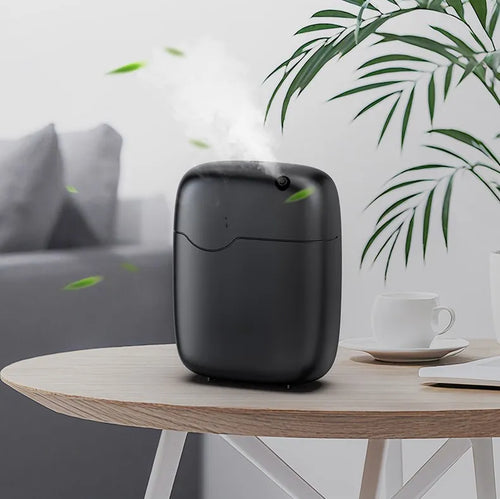
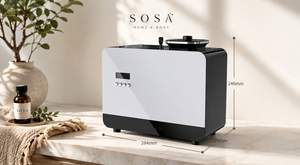
SOSA Vaayu ₹11,999
Waterless cold-air nebulisation with no standing water tank, which is the single reason the ownership clause in a clinic's procedure is four lines long instead of a daily routine. A 400ml fill lasts about seventy-five days, so four refill dates a year are written into the log at commissioning and each one can move by several days without consequence. Up to 1000 m³, app plus 1h/4h/8h/24h timers so nothing is switched by hand, under 38 dB, auto-stop, and a key-lock so the setting the owner commissioned is the setting a patient meets six months later.
The procedure that holds it all together is one page.
The two names, and the job each of them actually holds
Write the ownership clause before you write anything else, because the rest of a scenting procedure is a description of tasks and this is the sentence that gives them to somebody. Two individuals by name: a named owner who holds the refill, the setting and the annual verification, and a named deputy who holds all three in the owner's absence. Then one delegated line: the daily visual check belongs to the housekeeping supervisor as part of the existing opening round. That is three people, one of whom is doing five seconds of work a day inside a round she already walks, one of whom is doing four dated tasks a year, and one of whom is doing nothing at all until somebody takes leave. It is the smallest ownership structure I know of that does not collapse, and the test of it is not the refill - the refill announces itself when the machine stops - but the five checks on the daily sheet, which nobody will notice the absence of until something has been seeping onto a shelf in a public waiting hall for three weeks. A clinic that cannot fill in both names should not buy a machine with a water tank in it, and should think hard about whether it wants a machine at all this quarter.
1
THE TWO NAMES
Who should be the owner, who should be the deputy, and what each of them is actually holding
The owner should be the facilities manager, or in a clinic small enough not to have one, the centre manager. Not the housekeeping supervisor, and the reason is not seniority — it is that the owner needs a budget line to buy the refill from, a maintenance calendar to put four dates in, and the standing to be the only person in the building permitted to change the intensity setting. A housekeeping supervisor can perfectly well perform a refill, and often does; what she cannot usefully hold is the authority to refuse a request from a consultant to turn it up, which is the part of ownership that actually gets tested. The deputy should be a named individual, which in practice means the person who already covers the owner's other duties during leave — an assistant facilities officer, an operations executive, the centre manager if the owner is the facilities manager. Not “the duty supervisor” and not a department: a deputy whose name is a rota is a deputy who will discover the task on a Monday morning from a sheet. Write both names in the procedure, and write them in pencil in the sense that they are reviewed annually with the document, because the single most common cause of an abandoned scenting routine is that the person who owned it left the organisation and nobody updated clause thirteen. Then the delegated line, which is the only daily element: the housekeeping supervisor adds five checks to the opening round at T-60 minutes, alongside watering the drain traps, and signs for them. That delegation is free because the round already exists and the machine is already on the route.
2
THE TASK, COUNTED
Four to five events a year against roughly six hundred and twenty, and the difference is the water
This is the part of the question most facilities teams have never had put to them as a number.
Waterless, on a 400ml fill lasting about seventy-five days at clinic opening hours: four refill events a year per machine, or five if the facility runs seven days a week. Each event is opening a cap, pouring undiluted oil, re-engaging the key-lock and signing the log — a few minutes at waist height if the machine is sited at 1.8 to 2.2 metres. Each event can be moved by several days in either direction without any consequence whatsoever, which is precisely why it survives contact with leave, festivals and a busy audit week. Add one annual walk of the boundary to re-verify the setting, and the owner's year is five attendances.
A water tank, in a facility open twelve hours a day, six days a week: at close, empty the tank, rinse it, dry it and leave it open; at opening, refill with fresh water and dose the oil. Two attendances a day. Roughly three hundred and ten opening days. That is in the region of six hundred and twenty operations a year, plus a descale most weeks in Indian water. None of this is an argument about infection control and I am not going to dress it up as one — it is a housekeeping argument about how many times a year a human being has to attend a machine, and it is the only specification difference on this page that changes the job rather than the price. An ultrasonic also puts thirty to fifty millilitres of water an hour into the air, which in a monsoon month is a humidity question your
damp page covers properly. The honest conclusion: a tank is right for one administrative cabin with one person who is always there, and wrong for a public waiting hall.
3
THE LEAVE WEEK
What happens in the fortnight the named person is away, and how to make it uneventful
Test the structure against a fortnight's absence, because that is the event that finds every weakness in it. With a waterless machine and four dates in the log, a fortnight's leave moves one dated task, or more often does not interact with it at all. The timer keeps running the schedule. Housekeeping keeps ticking the opening sheet because that round does not depend on the owner being in the building. The only thing that is genuinely unavailable for two weeks is the authority to change the setting, and the correct behaviour in that fortnight is that nobody changes it, which is what you wanted anyway. With a water tank, the same fortnight is twenty-eight operations that have to be performed by somebody who was not trained to perform them, in a public area, in a building where the person who would have noticed a half-dried tank is on a train. What I have watched happen, more than once: the rinse stops first, then the drying, then the tank is simply topped up rather than emptied, and by the end of the second week there is standing water in a public waiting hall that nobody has emptied for ten days. That is a housekeeping failure sitting in the most visible room in the facility, and the machine that caused it cost ₹1,899. Write the handover as two lines in the procedure instead: on commissioning, the deputy performs one refill under the owner's supervision, and the four dates in the log are visible to both of them. That is the whole contingency plan, it takes ten minutes once, and it is the difference between a procedure and a hope.
The instruction I would give a facility manager: before you sign the order, say the two names out loud and then say who covers the second one. If the second name does not exist, buy the waterless machine, or buy nothing this quarter and spend the money on
the list that costs nothing instead.
The task, counted, for each kind of machine
The same job on two different machines, with the annual operation count in the right-hand columns. The last column is the one to settle before the purchase order, not after it.
Print this
Who does what, how often, and what it comes to in a year
| The task |
A waterless Vaayu |
A water-tank ultrasonic |
Who it lands on |
| Refill ★ |
400ml of undiluted oil, about every 75 days. Four dated events a year, five if open seven days |
Fresh water and oil every opening, because yesterday's water does not stay |
Named owner, or named deputy during leave. Signed in the refill log |
| Empty, rinse and dry |
Does not apply. There is no reservoir to empty |
Every close of business: empty, rinse, dry, leave open. One attendance a day |
Named owner. In practice this is the task that lapses first |
| Daily visual check |
Running · key-lock engaged · outlet clear · level above a quarter · no leak. Five seconds |
The same five, plus confirming the tank was actually emptied and dried last night |
Housekeeping supervisor, inside the existing T-60m opening round |
| Descale or deposit removal |
No water, so no scale. Wipe the outlet at the refill |
Most weeks in Indian water, and it is a visible job in a public area |
Named owner. An extra fifty-odd operations a year |
| Switching on and off |
Nobody. The 1h/4h/8h/24h timer runs the schedule and stops at close |
Nobody, if a timer is fitted. In practice somebody does it by hand |
Facilities sets the timer once. Clause six of the SOP
|
| Changing the intensity |
Owner only, key-lock engaged the rest of the time |
Owner only, and most ultrasonics have no lock at all in a public area |
The named owner, as the sole authority. This is the real content of ownership |
| Operations a year, counted |
Four or five refills, one annual verification, plus a daily tick on an existing round |
About 620 attendances at twelve hours a day, six days a week, before the descale |
The reason a tank belongs in one admin cabin and not in a waiting hall |
| Never |
A machine bought with no name against it, or a tank in a public area because it was the cheapest line on the quotation |
Never. Standing water in a clinic is a housekeeping argument and it is sufficient
|
— |
Shop this guide
Four dated tasks, the refill they draw on, and the cabin exception
The SOSA principle
A task owned by a department is owned by nobody. Two names in the procedure, and the daily check delegated to a round that already exists. Then count the operations: four a year against six hundred and twenty is not a preference, it is a different job.
The refill announces itself when the machine stops. The daily check does not, which is why it is the one that needs a signature.
The week the named person is on leave
I want to spend a paragraph on why a department cannot own this, because it sounds like pedantry and it is not. When a procedure says the task belongs to Facilities, what happens in practice is that the refill still gets done — the machine stops, somebody reports it, a person is found, the oil is poured. The refill is self-announcing and therefore self-correcting. What is not self-announcing is the daily check, and the specific items on it that only matter when they go wrong: a key-lock left disengaged after the last refill, an outlet obstructed by a vase somebody moved onto the shelf, a slow seep around the fill cap, a fill level that has dropped faster than seventy-five days because the setting was raised in May and nobody logged it. Each of those is invisible for weeks under departmental ownership and each is caught in five seconds by a named person with a sheet. This is the same principle as the drain-trap round on the free list: the free, boring, daily, signed-for item is the one that does the work, and the expensive item is the one that gets the attention. Write one name. Then write a second name for the fortnight the first one is away. Then review both when you review the procedure, because the commonest reason a scenting routine quietly dies is that the owner changed job and clause thirteen did not.
The second thing worth saying is about where ownership should sit, because there is usually an argument about it and it is settled by looking at what ownership actually consists of. Three components: buying the refill, which needs a budget line; holding four dates, which needs a maintenance calendar; and being the only person permitted to change the intensity, which needs the standing to say no to a consultant who wants it stronger. The first two point at facilities. The third one points at facilities very firmly indeed, because a housekeeping supervisor asked by a senior clinician to turn the fragrance up is not in a position to decline, and she should not be put in that position. So the owner is the facilities manager, or the centre manager in a clinic that does not have one, and the daily check is delegated downward to the person whose round already passes the machine. The one role I would keep entirely out of the ownership clause is marketing or brand, even in a group where brand chose the fragrance. Choosing the scent and owning the machine are different jobs, and the budget-line argument explains why mixing them is how a facilities item acquires claims it should not have.
And then the leave week, costed, because this is where the equipment choice stops being abstract. On a waterless machine the fortnight is uneventful: the timer runs, housekeeping ticks the sheet, one dated refill may move by a week, and nobody has the authority to change the setting, which is the correct state of affairs in the owner's absence. The whole contingency plan is two lines in the procedure — the deputy performs one refill under supervision at commissioning, and both names can see the four dates in the log. On a water tank the same fortnight is twenty-eight operations transferred to somebody untrained, in your most visible room, and the sequence of decay is always the same: the drying goes, then the rinse, then the tank is topped up instead of emptied. I have been called about exactly that situation and the honest advice was to remove the machine from the public area and put it in the admin cabin where it belonged in the first place. On cost: the Vaayu is ₹11,999, four 300ml refills a year at ₹1,799 are about ₹7,200, and 5 W over a twelve-hour day across roughly three hundred and ten days is some eighteen kilowatt-hours or about ₹150 — so roughly ₹19,000 in year one and ₹7,350 thereafter, with a labour content of five attendances. The Sukoon at ₹1,899 looks like a saving of ten thousand rupees until you price six hundred and twenty attendances of somebody's time, at which point it is the most expensive machine on the page. Which machine suits a facility open twelve hours a day reaches the same conclusion from the other direction.
Say the name out loud, and then say who covers the week she is on leave. If the second name does not exist, the honest specification is the machine with no tank in it — or nothing at all this quarter.
— Sonal Sahani, SOSA
The SOSA edit
The ownership structure as five roles plus the one arrangement that should never be written down, with what each role holds and how often it is exercised.
The SOSA edit
Five roles, and the one arrangement that fails
| Role |
What they hold |
How often |
If they are absent |
| 1. The named owner ★ |
The refill, the four dates, the annual verification of the setting, and sole authority to change the intensity |
Four or five attendances a year, plus one boundary walk |
The named deputy, and the setting is not changed at all until the owner returns |
| 2. The named deputy |
The same three things, in the owner's absence only. Performs one supervised refill at commissioning so the first one is not the live one |
Usually nothing. One refill a year at most |
Escalate to the quality lead and defer the refill. A dated task can move by days |
| 3. The housekeeping supervisor |
The daily visual check: running, key-lock engaged, outlet clear, level above a quarter, no leak or residue |
Daily, inside the existing T-60m opening round, with a signature |
Whoever walks the opening round that day. The round has a sheet, so the task transfers |
| 4. The quality lead |
The excluded-room list, the veto register and the annual review of the procedure with the owner |
Annually, and whenever a veto is entered |
The medical director. Clause eleven of the SOP
|
| 5. Brand or the centre head |
Choosing which fragrance, once, from the four supplied in the box. Nothing else |
Once, and again only at an annual review |
Nobody. An unchosen fragrance stays as it is, which is harmless |
| Never written down |
“Facilities”, “housekeeping” or “the duty supervisor” as the owner; a water tank in a public area with no named person; or a rota in place of a deputy |
Never. A rota is not a name and a department is not a person |
— |
Honest notes for buyers: on this page specifically, the operation counts are arithmetic from the machines' own specifications and a clinic's own opening hours rather than any claim about outcomes — a 400ml waterless fill lasting about seventy-five days gives four to five refill events a year, while a tank emptied, rinsed, dried and refilled across roughly three hundred and ten opening days gives something in the region of six hundred and twenty attendances. In general, fragrance in a medical facility is housekeeping and presentation, never treatment. Nothing here claims that a fragrance reduces anxiety, aids recovery, improves sleep, cleans or disinfects air, or has any clinical effect whatsoever, because it does not and a diffuser is not an air purifier. Scenting belongs to the entrance, reception, shared waiting areas, inter-departmental corridors and administrative rooms. Consultation and examination rooms, treatment and procedure rooms, day-care surgery, dressing rooms, blood- and sample-collection rooms, laboratories, pharmacy dispensing, sterile stores, imaging rooms, oncology day-care and paediatric clinical areas should be left fragrance-free. A persistent smell is information about a dry drain trap, a bin, a soiled-linen route or an air-conditioning drain pan: find it and fix it rather than covering it. On the machines: the
Vaayu at ₹11,999 is waterless cold-air nebulisation with no standing water tank, covering up to 1000m³ or roughly 2,000–3,000 sq ft, with a 400ml tank lasting about 75 days, app control, 1h/4h/8h/24h timers, under-38dB running, auto-stop and a key-lock for public areas. The
Aangan at ₹25,999 covers up to 3,000m³ and connects to HVAC for a whole floor or an atrium. The ultrasonic
Sukoon,
Boond and
Megh are water-based, hold standing water and add 30–50 ml of water an hour to the air, which suits a single administrative cabin with a named person emptying and drying the tank daily and is unsuitable for public clinical property. An alcohol-free
reed diffuser needs 24–72 hours to establish and suits a small lobby rather than a large waiting hall. Candles are not appropriate in a healthcare facility because an open flame is a fire-safety matter. SOSA does not make a room spray. The Hotel Collection scents are SOSA's own interpretations inspired by the world's finest hotels; SOSA is an independent Indian fragrance house, not affiliated with or endorsed by any hotel brand. A portion of every order supports girl-child education through Nanhi Kali.
The machine the ownership clause can actually survive
SOSA Vaayu ₹11,999
Waterless cold-air nebulisation with no standing water tank, so there is nothing to empty, rinse or dry and the owner's year is four dated refill events plus one verification walk. Up to 1000 m³, 400ml lasting about seventy-five days, app plus 1h/4h/8h/24h timers so nothing is switched by hand, under 38 dB, auto-stop, key-lock so the intensity stays where the owner set it. The specification that matters here is not coverage. It is that a fortnight's leave moves a dated task instead of dropping a daily one.
A note from Sonal
I started asking for a name because of a machine I sold into a polyclinic in Surat and had to advise them to move six months later. It was an ultrasonic, it was in a waiting area, the clinic had been enthusiastic, and the person who had been emptying and drying the tank every evening had moved to another branch. Nobody had been named, so nobody inherited it. By the time I visited, the tank was being topped up rather than emptied and had not been dried in some weeks, and the clinic's own housekeeping lead told me, politely and correctly, that she had never been told it was hers. Nothing dramatic came of it. We moved the machine to the administration cabin, where it has been fine ever since, and the waiting hall got a waterless unit with four dates in a log. But I had sold a daily task to a building that had no name to put against it, and that was my error rather than theirs.
Since then the question comes before the quotation, and it has changed what I sell more than any other question I ask. If a clinic can give me one name and a second name for the leave week, I will quote either kind of machine on its merits. If it cannot, I do not quote a water tank for a public area at all, which has cost me the easy ₹1,899 and ₹899 sales that used to be the simplest orders of the week. What I would say to a facility manager reading this is that the arithmetic is the whole argument and it is not mine — it is your own opening hours. Four events a year against six hundred and twenty is not a product comparison, it is a staffing decision, and the machine is only the thing that determines which of the two you have signed up for. Whether any of it is worth the cost is the page to read beside this one, and the order a clinic should spend in is the one I would read first.
Everything is made and supported from Pune, and a part of every order funds girl-child education through Nanhi Kali. You get a space that smells like somewhere looked after; a girl gets a classroom. That equation has always felt right to me.
Frequently asked questions
Who should be responsible for refilling and maintaining a clinic's scent diffuser?
One named individual, with a second named individual as deputy, both written into the ownership clause of the scenting procedure. The owner should be the facilities manager, or the centre manager in a smaller clinic, because ownership needs a budget line, a maintenance calendar and the standing to be the only person permitted to change the intensity setting. The daily five-second visual check is delegated to the housekeeping supervisor as part of the opening round. A department is not an owner and a rota is not a deputy.
How much work is it to maintain a waterless diffuser in a clinic?
Four refill events a year per machine, or five if the facility is open seven days a week, because a 400ml fill lasts about seventy-five days at clinic opening hours. Write all four dates into the refill log at commissioning. Each event takes a few minutes at waist height if the machine is sited at 1.8 to 2.2 metres. Add one annual walk of the boundary to confirm the setting, and a five-second daily check inside housekeeping's existing opening round. That is the whole burden.
How many operations a year does a water-tank diffuser actually create?
In a facility open twelve hours a day, six days a week, it is an empty, rinse and dry at close and a refill at opening, so two attendances a day across roughly three hundred and ten opening days - in the region of six hundred and twenty operations a year, plus a descale most weeks in Indian water. That is honest for a single administrative cabin with one person who is always there to do it, and it is the wrong specification for a public waiting hall.
What happens in the week the named owner is on leave?
On a waterless machine, very little: the timer keeps running the schedule, housekeeping keeps signing the opening sheet, one dated refill may move by a few days, and nobody has the authority to change the setting, which is the correct state of affairs. On a water tank, a fortnight is about twenty-eight operations transferred to somebody untrained, and the usual sequence is that the drying stops, then the rinse, then the tank is topped up instead of emptied. Name the deputy and have them perform one supervised refill at commissioning.
Should the person who chooses the fragrance also own the machine?
No, and keeping them separate is deliberate. Choosing which of the four supplied scents a facility uses is a one-off decision that brand or the centre head can reasonably make. Owning the machine means holding the budget line, the four dates and the sole authority to refuse a request to turn it up. Mixing the two is how a facilities item starts being described in the language of a campaign, which is the point at which it acquires claims it should not have.
One name, one deputy, four dates
Say both names out loud before you sign the order — and if the second one does not exist, buy the machine with no tank in it
The Vaayu is ₹11,999: waterless cold-air nebulisation with no standing water tank, up to 1000 m³ or roughly 2,000–3,000 sq ft, a 400ml tank lasting about seventy-five days for four refills a year, Bluetooth app control with 1h/4h/8h/24h timers, under 38 dB, auto-stop and a key-lock for public areas, supplied with four hotel-inspired fragrances. The ultrasonic Sukoon at ₹1,899, Boond at ₹899 and Megh at ₹3,499 are water-based, hold standing water and suit a single administrative cabin with a named owner. Free shipping above ₹499, and a portion of every order supports girl-child education through Nanhi Kali.
See the Vaayu · ₹11,999 All commercial scenting
Continue the read
More from SOSA
Editorial standards & sources
Product facts used in this guide. SOSA Vaayu Rs 11,999: waterless cold-air nebulising diffuser, no water reservoir, coverage up to 1000m3 (approximately 2,000-3,000 sq ft), 400ml refillable tank lasting up to about 75 days per fill, Bluetooth app plus onboard control, 1h/4h/8h/24h timer scheduling, adjustable intensity, under 38 dB, DC 12V/1A at 5W, 165 x 80.5 x 215 mm and 0.9 kg, freestanding or wall or HVAC mounted, auto-stop and key-lock, CE, RoHS and SGS certified, supplied with four hotel-inspired fragrances. SOSA Aangan Rs 25,999: HVAC-connected or standalone commercial nebulising diffuser, coverage up to 3,000m3 (roughly 8,000-10,000 sq ft), 800ml reservoir, metal body, programmable schedules, under 42 dB. Ultrasonic machines are water-based, hold standing water and consume 30-50 ml of water an hour: Sukoon Rs 1,899 (500ml, 270-320 sq ft, 16-18 hours on low, three 15ml Hotel Collection scents included), Boond Rs 899 (300ml), Megh Rs 3,499 (6 litres). Hotel Collection water-based fragrance 15ml Rs 299, 100ml Rs 999, 300ml Rs 1,799. Alcohol-free reed diffusers from Rs 749, requiring 24-72 hours to reach their working level. Free shipping above Rs 499. Coverage arithmetic: cubic metres equal floor area in square feet divided by 10.76 and multiplied by ceiling height in metres, counting only the volumes that are actually scented. This guide makes no medical, therapeutic or clinical claim of any kind for fragrance: a diffuser does not purify, disinfect or clean air, and does not treat, calm or affect any patient or condition. Fragrance is housekeeping and presentation. Clinical areas should be left fragrance-free, and a persistent odour should be traced to its source and corrected rather than covered. SOSA is not affiliated with or endorsed by any hotel brand. Prices subject to change - see the live product pages.



 Refills · four a year₹1,799Shop →
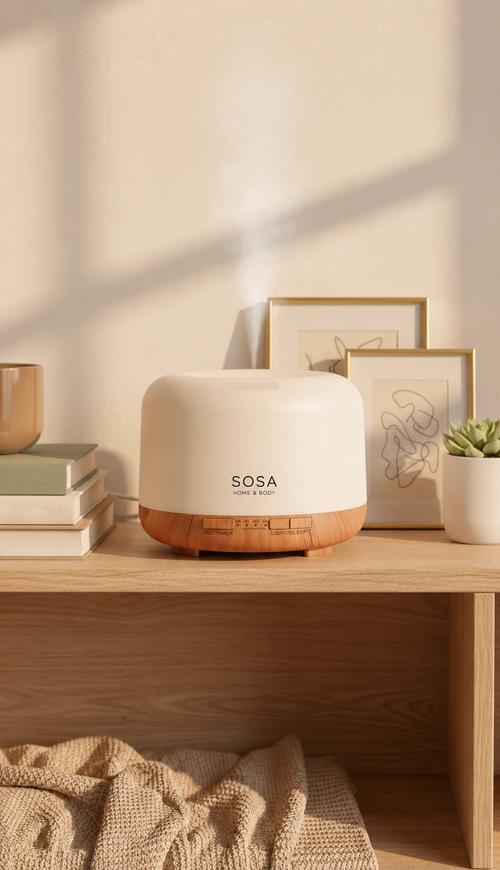 Sukoon · one admin cabin₹1,899Shop →