



The close second? The Westin-inspired White Tea Serenity — cool, tea-led and almost as dry.
The one you will be tempted by: the Four Seasons-inspired Warm Welcome. It is the crowd-pleaser and it is the sweetest thing here. Do not.
2. The close second: Westin-inspired White Tea Serenity. White tea, aloe and cedar. Cool rather than dry, and the tea accord carries the faintest hay-like softness that a very sensitive nose might read as a hint of sweetness. For most sweet-haters it passes easily; for the most militant it is a shade rounder than Forest Suite.
3. Learn the six sweet flags. Vanilla and vanillin. Tonka bean, which appears as coumarin and smells of almond and cut hay. Benzoin and most commercial amber accords, which are built on resins plus vanilla. Heavy white florals — tuberose, ylang-ylang, orange blossom, indolic jasmine. Any fruit note. And, more quietly, creamy woods such as sandalwood and the candied facet of violet.
4. The dose: two to three drops, and rinse the tank. Sweetness is dose-dependent, and cumulative: a trace of yesterday's amber in an unrinsed tank will sweeten today's cedar. Run it on a Sukoon (₹1,899).
5. What to avoid. The Four Seasons-inspired Warm Welcome — citrus over floral over creamy sandalwood — is the sweetest thing in the range and also the most universally liked, which is exactly why you will be tempted. The St. Regis-inspired Old-World Glamour, built on amber and violet, is the other one to rule out.
Made in India, composed by an ISIPCA Versailles-trained perfumer — and a portion of every order supports girl-child education through Nanhi Kali.

What actually makes a fragrance smell sweet
People who say they hate sweet scents are almost never objecting to sugar, because there is no sugar in perfume. They are objecting to a small group of materials that the nose has learned to associate with food. Vanillin is the obvious one. Coumarin — sold as tonka bean — is next, and it is everywhere, because it smells of almonds and cut hay and makes almost anything more likeable. Benzoin and labdanum sit under most things labelled amber, and that word is the single biggest trap on a home fragrance label: amber is not a note, it is a resin-plus-vanilla accord, and it is sweet by construction. Then the heavy white florals — tuberose, ylang-ylang, orange blossom, the indolic side of jasmine — which carry a honeyed quality that reads as sweetness even to people who would swear they only dislike gourmands. Then any fruit note. And two quiet ones that catch people out: creamy sandalwood, which is not sweet but behaves as though it is, and the ionones behind violet, which have a candied facet.
Here is why this matters more in your house than on your wrist. Your taste in fragrance was formed by perfumes you wear, and a perfume is smelled at a few centimetres on warm skin for a couple of hours; a diffuser is smelled at three metres in moving air, and it keeps producing for as long as it is switched on. A sweet material on skin is warmed, absorbed and gone. The same material in a room accumulates on soft furnishings, sits in still air near the ceiling and greets you again when you walk back in four hours later. That is why a perfume you find merely a bit sweet can be genuinely unbearable as a home scent — and why the translation from what you wear to what you diffuse is not a straight line. If you dislike sweetness on skin, assume you will dislike it roughly twice as much at home, and choose accordingly.
The three dry routes, and who each is for
All seven, audited honestly for sweetness
This is the table I would want if I hated sweet scents: all seven, with the sweet material named where there is one, unsoftened. Some of these are genuinely not for you, and saying so is more useful than selling you a bottle you will resent.
| Scent | Notes | Character | Best for |
|---|---|---|---|
|
1 Hotels-inspired ★ Forest Suite |
Cedarwood · vetiver · green leaves | Bone dry — cedar, roots, crushed leaves. No sweet material at all | The default answer for anyone who dislikes sweetness; safe to buy in 300ml unsmelled |
|
Westin-inspired White Tea Serenity |
White tea · aloe · cedar | Cool and watery — the faintest hay softness from the tea accord | A shared home, or anyone who wants dry without austere |
|
The Ritz-Carlton-inspired Quiet Luxury |
White tea · bergamot · cedar | Dry with a bitter-citrus lift from bergamot; no resin underneath | Rooms people see; a slightly more polished non-sweet choice |
|
Shangri-La-inspired Tea Garden |
Jasmine · green tea · white tea | Green tea keeps it dry, but jasmine brings a honeyed floral facet | Only if your objection is to gourmand sweetness rather than floral sweetness |
|
W Hotels-inspired Lobby Bar |
Citrus · pepper · amber | Citrus and pepper are dry, but the amber base is a sweet accord | Tolerable for an hour in a big room; not a sweet-hater's daily scent |
| Not in this family, for reference: The St. Regis-inspired Old-World Glamour is amber and violet — resin sweetness plus a candied ionone facet, and the clearest no of the seven; Four Seasons-inspired Warm Welcome puts floral over creamy sandalwood and is the sweetest thing in the range, which is precisely why it is the one everyone recommends to you. See all seven. | |||
Hotel Collection · the dry pickFrom ₹299Shop →  Sukoon · the full room₹1,899Shop →
  Boond · small spaces₹899Shop →
How much to use, and where to put it
Two to three drops per tank, which is the lower end of the three-to-six guidance, and there is a specific reason for it beyond thrift. Dryness is a proportion, not a fixed property. Vetiver at low concentration reads as earthy and clean; pushed hard it reads as thick and faintly sweet, because at high intensity the nose registers its rooty base rather than its green top. Every dry material has that tipping point.
Placement does the rest. Sweetness pools — heavy molecules settle and linger in still corners, which is why a room can smell fine at the door and cloying next to the sofa. Put the diffuser where air is moving: near a fan path, a doorway or an air-conditioning throw, and off the floor. Run it in bursts rather than continuously — forty minutes on a Sukoon at ₹1,899 will scent a living room for three or four hours.
Three housekeeping notes matter especially here. Rinse the tank whenever you change scent — sweet residues are the most persistent, and a film of amber will quietly ruin a cedar. Use filtered water in hard-water cities, because scale on the plate dulls sharp green top notes first and leaves you with the base, which is the sweeter half of any blend. And never put raw essential oils in an ultrasonic diffuser: they are too viscous to atomise, they foul the plate, and the dose is uncontrolled — the opposite of what you want when precision is the point.
Which diffuser to run it in
A dry scent is thinner in the air than a sweet one — resins hang about, cedar and vetiver disperse. The machine therefore matters more here, because under-powering a dry blend tempts you into over-dropping it.
| Diffuser | Best for | Drops | Price |
|---|---|---|---|
|
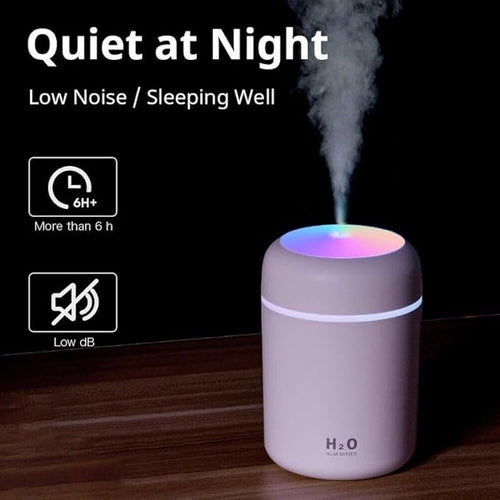
Boond 300ml, USB, night light |
A study, a bedside, a small bathroom or a walk-in wardrobe | 2–3 drops | ₹899 |
|
Sukoon ★ 500ml, remote, mood light |
The living room, a bedroom or a home office — the default | 3–4 drops | ₹1,899 |
|
Megh 6 litre, large tank |
An open-plan floor, a stairwell, or a double-height living area | 5–6 drops | ₹3,499 |
| Hotel Collection 15ml | Finding out which of the five non-sweet options is genuinely yours | Many fills | ₹299 |
| Refills · 100ml & 300ml | The one that survived the audit — the real running cost | Months of use | from ₹999 |
Versailles
Sweetness is the cheapest tool a perfumer has. Add a little vanillin to almost any accord and more people will say they like it. That is why so much of the home fragrance on Indian shelves smells faintly of dessert — not laziness so much as a rational response to what sells, repeated until it became the default idea of a nice-smelling room.
Forest Suite was composed against that default. No resin, no vanillin, no fruit, no white floral — which meant it had to be interesting on structure alone, and structure is harder than sweetness. The vetiver does most of the work. It is a difficult material, bitter and earthy and not immediately charming, and it is why people either love this one on the first evening or find it too serious. I would rather it divide opinion than flatter everybody.
Buy the 15ml at ₹299 first, even though I am confident about this one. What I cannot know from Pune is how dry your rooms are, how much you cook, or whether your objection is to gourmands or to florals — and those change the answer. If you cannot decide, the pack of seven 15ml bottles at ₹1,799 settles it in a fortnight. A portion of every order funds a girl's schooling through Nanhi Kali.
Frequently asked questions
- Best Hotel Collection fragrance if you love woody scents — the three things woody can mean.
- Best Hotel Collection fragrance if you love musky scents — the other side of this argument.
- Best non-sweet fragrance for your whole home — the same brief, applied floor by floor.
- Which Hotel Collection fragrance should you buy? — the complete selection guide.
- Brand: the SOSA founder story.
SOSA products & prices (verified August 2026): Hotel Collection water-based ultrasonic diffuser fragrance 15ml ₹299 · 100ml ₹999 · 300ml ₹1,799 · Pack of 7 (15ml, all fragrances) ₹1,799; refills 100ml from ₹999. Seven scents: The Ritz-Carlton-inspired (white tea · bergamot · cedar), Westin-inspired (white tea · aloe · cedar), 1 Hotels-inspired (cedarwood · vetiver · green leaves), The St. Regis-inspired (amber · violet · woods), Shangri-La-inspired (jasmine · green tea · white tea), Four Seasons-inspired (citrus · floral · sandalwood), W Hotels-inspired (citrus · pepper · amber). Diffusers: Boond 300ml ₹899 · Sukoon 500ml ₹1,899 · Megh 6L ₹3,499. Water-based, phthalate-free, composed to IFRA standards for home diffusion; 3–6 drops per tank. Made in India, Pune. The Hotel Collection scents are SOSA's own interpretations inspired by the world's finest hotels; all hotel names are trademarks of their respective owners and are used only to describe the scent style — SOSA is an independent Indian fragrance house, not affiliated with or endorsed by any hotel brand. Prices and availability subject to change — see the live product pages.