


What Home Fragrance Works With Diwali Incense Without Creating Too Many Competing Smells?

What Home Fragrance Works With Diwali Incense Without Creating Too Many Competing Smells?

★ Diwali with a full house · cooking, diyas, incense and eight peopleCandle ₹379 · reed ₹749 · Boond ₹899 · Sukoon ₹1,899 · free shipping above ₹499A portion funds girl-child education
★ SOSA · when people are coming over
During Diwali your home already has plenty of smells doing plenty of work. The question is not what to add — it is where there is any room left
★ ★ ★ ★ ★
★★★★★
"Eight of us in a 2BHK for a week. The honest advice was to use less than normal, not more, because the house was already full of mithai and incense."
Nalini P. Diwali, 8 guests
Less than normal
★★★★★
"Diyas, cooking and agarbatti all going at once. Told me to leave the living room alone and only scent the bedrooms. Completely right."
Rohit A. Diwali, Mumbai
Bedrooms only
★★★★★
"Guest room had been shut for months and relatives arrived the next day. Aired it all day, changed everything, then a candle an hour before. Fine."
Sunita M. Overnight prep
Air all day
★★★★★
"The entrance is where it matters during Diwali — people are in and out constantly. One thing by the door did more than four things inside."
Karan J. Diwali entrance, Delhi
The door only
★★★★★
"We cook triple during Diwali week. Extractor and windows carried it; the fragrance just stopped the living room feeling like a kitchen."
Lata S. Diwali cooking, Pune
Airflow led
★★★★★
"Wanted festive without being overpowering in a small flat. Warm and low, in one room, was the answer rather than everywhere at once."
Vikas T. Small home, Diwali
One room, warm
★★★★★
"Eight of us in a 2BHK for a week. The honest advice was to use less than normal, not more, because the house was already full of mithai and incense."
Nalini P. Diwali, 8 guests
Less than normal
★★★★★
"Diyas, cooking and agarbatti all going at once. Told me to leave the living room alone and only scent the bedrooms. Completely right."
Rohit A. Diwali, Mumbai
Bedrooms only
★★★★★
"Guest room had been shut for months and relatives arrived the next day. Aired it all day, changed everything, then a candle an hour before. Fine."
Sunita M. Overnight prep
Air all day
★★★★★
"The entrance is where it matters during Diwali — people are in and out constantly. One thing by the door did more than four things inside."
Karan J. Diwali entrance, Delhi
The door only
★★★★★
"We cook triple during Diwali week. Extractor and windows carried it; the fragrance just stopped the living room feeling like a kitchen."
Lata S. Diwali cooking, Pune
Airflow led
★★★★★
"Wanted festive without being overpowering in a small flat. Warm and low, in one room, was the answer rather than everywhere at once."
Vikas T. Small home, Diwali
One room, warm
Candle: scent in the room in 15–20 minutes · Sukoon: about 20 minutes from cold A reed diffuser needs 24–72 hours — the wrong buy when guests arrive tonight Ventilate first · fragrance is the finishing layer, never the cover-up


Founder Diaries · Home Fragrance · Diwali
By Sonal Sahani · ISIPCA Versailles 11 min read Updated August 2026
The mistake in this question is hidden inside the word with. An agarbatti is not a fragrance in the sense a bottle is a fragrance — it is a small controlled fire, and what reaches your nose is combustion products carried on visible smoke, with the sandalwood, resins and floral oils riding on top. No cool-mist diffuser in the world produces anything of that kind, which means the two are not alternatives and were never going to blend. What you can do is arrange them so they are not standing in the same place in the nose, and the arrangement is simpler than most people expect: choose something dry, green and cool such as the 1 Hotels-inspired Forest Suite at ₹299, use two or three drops rather than four, and put it in a different room from where the incense is burning.
Quick answers — read this first
The rule: do not compete in the same register. Anything sandalwood, amber, resinous or floral will muddle with agarbatti, because those are the materials the incense is already made of.

The pick: the 1 Hotels-inspired Forest Suite — cedarwood, vetiver and green leaves, ₹299 for 15ml — or the Ritz-Carlton-inspired Quiet Luxury (white tea, bergamot, cedar, ₹299), at two or three drops rather than four.

The free answer that works best: separate them in space. Incense in the puja corner, the diffuser in a different room, and nothing at all in the room where both would meet. It costs nothing and it is the cleanest solution there is.
The short answer
Short answer: something dry, green and cool, at a lower dose than usual, in a different room. The 1 Hotels-inspired Forest Suite from the Hotel Collection — cedarwood, vetiver and green leaves, ₹299 for 15ml — at two or three drops. Incense is smoke as much as it is scent, so nothing you buy will blend with it. The goal is coexistence, not harmony.
The pick: the 1 Hotels-inspired Forest Suite (₹299) as the first choice; the Ritz-Carlton-inspired Quiet Luxury (white tea, bergamot, cedar, ₹299) if your flat has no spare room and you need something that clears quickly instead; and the Westin-inspired White Tea Serenity (white tea, aloe, cedar, ₹299) if you want the lightest option in the collection.
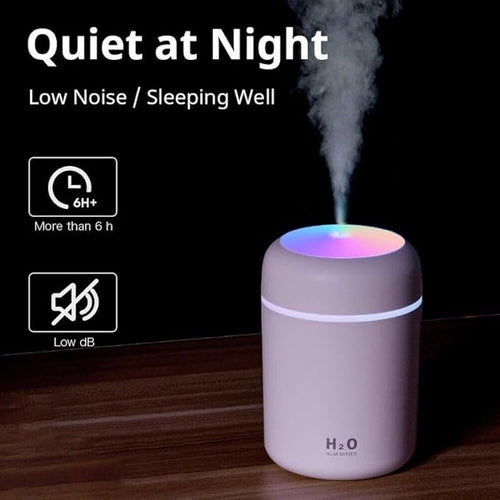
Shop: the Hotel Collection at ₹299 for 15ml, ₹999 for 100ml and ₹1,799 for 300ml at about ₹6 per millilitre. The Boond is ₹899 for a single room and the Sukoon is ₹1,899 for 270–320 sq ft with steady, 2H and 4H timers and three 15ml scents of your choice included. Free shipping above ₹499.
Straight answer
What home fragrance can I use alongside Diwali incense without the house smelling of too many things at once?
1. Understand first that the two are not the same category of thing. An agarbatti burns. What arrives at your nose is combustion — smoke, particulates, the smell of something being consumed — with sandalwood, halmaddi resin and floral oils carried on it. A cool ultrasonic mist is water at room temperature with fragrance suspended in it. There is no dose at which one becomes the other, and no bottle that will harmonise with a fire.

2. So the rule is not to compete in the same register. Agarbatti is already sandalwood, already resinous, frequently already floral. Anything you add from those families will not layer, it will muddle, because your nose cannot separate two claims on the same material. Anything dry, green or cool sits beside it instead, at a different address, and the two read as two things.

3. Which makes the bottle the 1 Hotels-inspired Forest Suite at ₹299 for 15ml. Cedarwood, earthy vetiver and green leaves — the driest thing in the range and the least resinous. The Ritz-Carlton-inspired Quiet Luxury at ₹299, white tea, bergamot and cedar, is the second answer and the better one in a small flat.

4. Two or three drops, not four, and not five. The Hotel Collection is composed at three to six drops per tank and this is the week to sit at the bottom of that range. You are adding a quiet second line to a room that already has a loud first one, and a loud second line produces exactly the confusion you are writing to avoid.

5. Better still, separate them in space rather than in composition. Incense in the puja corner or the hall; the diffuser in a bedroom or a study on the other side of the flat; nothing at all in the room where the two would meet. Distance is free, it works better than any bottle, and I would rather you spent nothing and got this right.

6. And on many evenings the honest answer is to use nothing at all. On the night itself the incense is the point. Let it have the room. A house that smells of one deliberate thing is worth more than a house smelling of two careful ones.

A portion of every order supports girl-child education through Nanhi Kali.

TL;DR: incense is combustion plus resin, so nothing from a bottle will blend with it — the rule is to avoid its register entirely. Sandalwood, amber, resinous and floral muddle; dry, green and cool coexist. Use the 1 Hotels-inspired Forest Suite at ₹299 at two or three drops, in a different room, and on the festival evening itself let the agarbatti have the house to itself.
1 Hotels-inspired · Forest Suite
The bottle that does not argue with an agarbatti
1 Hotels-inspired · Forest Suite ₹299 / 15ml
Cedarwood, earthy vetiver and green leaves — the driest and least sweetened of the seven, and the only one I would put anywhere near a room where incense is burning. Agarbatti is built on sandalwood, resins and floral oils carried on smoke, and those are exactly the materials a diffuser must not repeat if you want two smells instead of one confused one. Green leaf and vetiver occupy a different address in the nose entirely: cool, bitter, vegetal, nothing resinous about them. Two or three drops, in the next room rather than the same one. ₹299 for 15ml, ₹999 for 100ml, ₹1,799 for 300ml at about ₹6 per millilitre.

What an agarbatti actually puts into a room

Almost every answer to this question online treats incense as though it were simply a strong perfume, and then advises you to pick a fragrance that pairs with it the way two perfumes might pair on skin. That advice is built on a category error. An agarbatti is a smouldering stick of charcoal, bamboo, wood powder and binder that has been dipped in aromatic oils, and roughly half of what you smell when one is burning is the burning itself. Smoke has a smell of its own, entirely independent of what was dipped in what, and it is a heavy, particulate, clinging smell that settles into fabric and stays for a day afterwards. Understanding this changes every recommendation that follows, and it is the reason this page spends its first thousand words on the incense rather than on a bottle.

1
THE MATERIAL
Half combustion, half sandalwood and resin — and neither half is anything a diffuser makes
Take an ordinary Indian agarbatti apart and you are looking at a bamboo splint, a paste of charcoal and wood powder, a binder — traditionally halmaddi, the resin of the Ailanthus tree, which is itself sweetly aromatic — and a dip of fragrance oil that is very often sandalwood, sometimes rose, mogra or champa, sometimes an oud-adjacent resin blend. When you light it, three separate things happen at once: the aromatic oils volatilise and reach you as scent, the wood and charcoal produce combustion smell and visible particulate smoke, and the resin binder softens and adds its own sweet balsamic note. That combination is dense, warm, sweet-resinous and physically present in a way that a cool mist has no mechanism to reproduce. A 2.4MHz plate turns water into a fine suspension at room temperature and pushes it out at 30 to 50 millilitres an hour. There is no heat, no combustion, no particulate, no smoke. Which means the honest framing is not diffuser versus incense and certainly not diffuser plus incense, but diffuser beside incense — two unrelated events sharing a building. Once you accept that, you stop looking for a bottle that complements agarbatti, because none exists, and you start looking for one that stays out of its way. That is a solvable problem.
2
THE RULE
Do not compete in the same register — sandalwood, amber, resin and floral all muddle
Here is the principle, and it is portable to any brand you buy from. Two smells that occupy the same family in the nose do not layer. They interfere. Your nose is very good at separating a lemon from a cedar because those are different addresses; it is very bad at separating one sandalwood from another sandalwood, because it has no way to tell which claim belongs to which source and simply merges them into a single muddled impression that is worse than either. And an agarbatti has already claimed a great deal of territory: sandalwood, resins, balsams, sweetness, warmth and — in the mogra and rose sticks that are everywhere during Diwali — heady white floral as well. So the entire list of materials to avoid writes itself. No sandalwood. No amber. No resin, no balsam, nothing sweet, nothing heady-floral. Which rules out, from this range, the Four Seasons-inspired Warm Welcome with its sandalwood, the St. Regis-inspired with its amber, and the Shangri-La-inspired Tea Garden with its jasmine. What is left is the cool and the dry, and that is not a consolation list. Green leaf, vetiver, white tea, bergamot and cedar sit at a completely different address from smouldering resin, and two smells at different addresses read as two smells rather than as a mess. The 1 Hotels-inspired Forest Suite at ₹299 — cedarwood, vetiver and green leaves — is the driest thing SOSA makes and the first answer here. The Ritz-Carlton-inspired Quiet Luxury at ₹299 is the second.
3
THE BETTER ANSWER
Separate them in space, not in composition — and it costs nothing
Now the part that is free, and better than anything on this page you could pay for. The cleanest solution to two competing smells is not a cleverer choice of second smell. It is putting them in different rooms. An Indian flat is not one volume, whatever the estate agent said. Even a 2BHK with an open kitchen has a puja corner or a hall where the diyas and the agarbatti live, a sitting room next to it, and one or two bedrooms with doors that shut. Put the incense where it belongs and where it is meant to be — the puja space, the entrance, wherever it has always gone in your family — and put the diffuser two rooms away, in the bedroom or the study, at two drops on low. The room in between gets nothing at all, and it will smell faintly of both, which is fine, because faint is the operative word. What you are avoiding is the situation where a machine and a burning stick are eleven feet apart and both at full strength, which is where the complaint in this question actually comes from. A Boond at ₹899 is the sensible second machine for exactly this — 300ml, one room, the same three to six drops per tank, since you are scenting the mist and not the water. And on the festival evening itself, when the whole family is in the sitting room, the arrangement I would use is nothing running anywhere.
The test that settles it in ten seconds, before you spend anything: stand in the doorway between the two rooms. If you can name both smells separately, the arrangement is working. If you can only name a vague warm sweetness, they have merged, and the fix is distance or fewer drops rather than a different bottle.

The seven scents, ranked for a house with incense in it

All seven Hotel Collection scents with their real note profiles, ranked by one criterion only: how far each sits from the register an agarbatti already occupies. The third column names the actual conflict or the actual distance, which is the whole subject of this page. Three of the seven should not be run in a house burning incense and the table says which rather than leaving you to work it out on the night.

Ranked for coexisting with agarbatti
How far each of the seven sits from what incense already occupies
Scent Notes Distance from the incense register For a Diwali week with agarbatti 15ml
1 Hotels-inspired · Forest Suite ★ Cedarwood · vetiver · green leaves The furthest of the seven — bitter vetiver and green leaf share no material and no family with smouldering resin The pick. Two or three drops on low, in a different room from where the stick is burning ₹299
The Ritz-Carlton-inspired · Quiet Luxury White tea · bergamot · cedar Cool and quick to clear, which here is the specification — it is not still in the air an hour later The better answer in a 1BHK or any flat with no spare room. Two drops, and switch it off before the agarbatti is lit ₹299
Westin-inspired · White Tea Serenity White tea · aloe · cedar The lightest of the seven and the least assertive — it never gets close enough to anything to argue Sensible in a bedroom on the other side of the flat. Two drops. Will be entirely lost anywhere near the incense ₹299
W Hotels-inspired · Lobby Bar Citrus · pepper · amber Partial conflict. The citrus and pepper are clear of it; the amber underneath is not Workable at two drops in a room where the incense does not reach, and not worth the risk anywhere else ₹299
Four Seasons-inspired · Warm Welcome Citrus · floral · sandalwood Direct conflict. Sandalwood is the single most common agarbatti material, and two sandalwoods merge into one confusion Leave it out this week. It is an excellent entrance scent in the fifty-one weeks when nothing is burning ₹299
The St. Regis-inspired & Shangri-La-inspired Amber · violet · woods / jasmine · green tea · white tea Direct conflict twice over — resinous amber against resinous smoke, and jasmine against the mogra sticks The two to put away until the week is over. Both are heavy, both stay for hours, and both are already in the room ₹299 each
Shop this guide
Coexisting with incense, in three products
The SOSA principle
An agarbatti is a small fire with sandalwood on it. Nothing you buy in a bottle is going to blend with a fire — so stop trying, and get out of its way instead.
Two smells at the same address merge into one muddle. Two smells at different addresses read as two smells. Dry, green and cool is a different address from smouldering resin, and distance is a different address again.

Two drops, the next room, and the evening you use nothing

Start with the dose, because this is one of the very few pages in the series where I would take the number below three. The Hotel Collection is composed at three to six drops per tank, and in a house with incense burning in it I would run two or three, which is deliberately at or under the bottom of the range. The reasoning is not caution for its own sake. A room with an agarbatti in it already has a strong, complex, unmistakable first line running through it, and what you are adding is a second, quieter line meant to keep the rest of the flat from smelling only of smoke. A second line at full volume is not a second line; it is a competitor, and the outcome is the muddle in the title of this article. The dose is per tank rather than per litre, since you are scenting the mist and not the water, so a 300ml Boond at ₹899 takes the same two drops as a 500ml Sukoon at ₹1,899 — the larger machine buys hours and coverage rather than intensity, which is the single most common misunderstanding I correct by email. Then the run length, which matters more here than the drops do. Use the timers. The Sukoon gives 16–18 hours per fill on low at 30–50 ml/h against 9–12 on high, with a 2.4MHz cool-mist plate, a remote, auto shut-off, a BPA-free tank and steady, 2H and 4H timers, and three 15ml scents of your choice arrive with it. Two hours in the morning, before anybody has lit anything, is the best window of the whole day: the flat has been aired, the cooking has not started, the sticks are not yet burning, and a light dry scent has the house to itself for the only time it will get it.

Then placement and sequence, which for this particular problem do most of the work. The order that works is air first, diffuser second, incense third, and never the reverse. Open two windows on opposite walls for twenty minutes in the morning so yesterday's smoke actually leaves the flat rather than being layered over — smoke particulate settles into curtains, cushion covers and rugs, and a room that smells of stale agarbatti at eleven in the morning is a room that needed a cross-draught, not a bottle. Then run the diffuser in the bedroom or study while the front of the house is still unscented. Then light the sticks in the evening where they belong. On distance: the two sources want to be as far apart as your flat allows, with at least one doorway and preferably a shut door between them, and the diffuser should never be in the same room as the puja space or in the corridor connecting the two. The usual placement rules still apply and one of them matters much more this week: keep the machine out of the direct path of a fan or an air-conditioning vent. A draught does not merely move scent around, it strips the light top off a composition and leaves the heavier end standing alone, and in a flat with incense in it a ceiling fan on medium will carry smoke straight into your carefully chosen dry green bottle and undo the entire arrangement. Waist height or above, at the edge of the room, and away from the fabrics that are already collecting smoke.

Then the constraints, and the recommendation most brands would not print. On many Diwali evenings the right amount of bought fragrance is none. The night itself is the one occasion in the Indian year when the smell of a home is genuinely, deliberately being made by the household — ghee, mithai, marigold, the oil in the diyas, the agarbatti — and adding a manufactured scent underneath all of that is not sophistication. It is noise. Switch everything off, let the incense have the room, and put the diffuser back to work the next morning when the flat is being aired and there is a job for it to do. That is a better week for your house and a cheaper one for you, and I would rather say it than sell you a fourth bottle. On the practical constraints: the Hotel Collection is water-based and runs in the Sukoon, the Boond and the Megh at ₹3,499 only. It does not go into a reed diffuser, which is a separate alcohol-free line with its own scents, and it does not go into the waterless Vaayu at ₹11,999, which takes its own undiluted oil. Never put a raw essential or carrier oil into an ultrasonic machine — it clogs the 2.4MHz plate — and rinse the tank when you change scent, which during this week you may well do twice. Buy the 15ml at ₹299 before the 300ml 300ml refill at ₹1,799, and note that reeds are the wrong instrument for this particular problem entirely: a reed cannot be switched off on the evening you want silence, and an evening of silence is the main recommendation on this page.

Two smells at the same address merge into one muddle. Two smells in two different rooms are simply two smells, and that arrangement is free.
— Sonal Sahani, SOSA

The SOSA edit

In buying order for a house that will have agarbatti burning in it for a week. It is a deliberately short list, and the last two rows are the ones I would most like you to read: three scents in this range should be left in the cupboard until the incense is finished, and there are evenings where the correct purchase is nothing.

The SOSA edit
A house with incense in it, in buying order
Buy What it is When it earns its place Price
1. 1 Hotels-inspired 15ml Cedarwood, earthy vetiver and green leaves — the driest and least resinous of the seven First. Two or three drops on low, in a room the incense does not reach, mornings rather than evenings ₹299
2. Ritz-Carlton-inspired 15ml White tea, bergamot and clean cedar — cool, polished and quick to clear In a 1BHK or any flat with no spare room, where a scent that leaves quickly is worth more than one that lasts ₹299
3. Boond or Sukoon 300ml for one room, or 500ml for 270–320 sq ft with steady/2H/4H timers and three 15ml scents included The Boond if you already own a machine and want a second one at the far end of the flat. Buy either for the timer ₹899 / ₹1,899
4. Westin-inspired 15ml White tea, aloe and cedar — the lightest and least assertive scent in the collection In a bedroom well away from the puja space, at two drops, if even the Forest Suite feels like too much this week ₹299
Leave out this week: sandalwood, amber and jasmine The Four Seasons-inspired, the St. Regis-inspired and the Shangri-La-inspired all share material with what is already burning Not a fault in the scents. They are simply the three that will merge with an agarbatti instead of standing beside it
The free option: nothing at all Distance between the two sources, twenty minutes of cross-ventilation in the morning, and no machine running in the evening On the festival night itself. The incense is the point that evening, and a house that smells of one deliberate thing is enough ₹0
Honest notes for buyers: fragrance is the last step, not the first — it layers on air that is already clean and moving, and it will not cover cooking, damp or a room that has been shut for weeks. Timing matters as much as product: a candle scents a room in fifteen to twenty minutes and a Sukoon in about twenty, which is why both work when people are arriving tonight, while a reed diffuser needs a day to three days before it is doing its job properly — it is the wrong buy for a deadline and the right buy for a room you want to hold a steady scent for months. SOSA does not make a room spray for the home; the sprays in the range are formulated and sized for a car. The Hotel Collection is water-based and runs in the Sukoon, Boond and Megh only — not in reeds, and not in the waterless Vaayu. Reed diffusers are a separate alcohol-free line with their own scents. Candles must be attended and put out before guests leave a room unattended. The Hotel Collection scents are SOSA's own interpretations inspired by the world's finest hotels; SOSA is an independent Indian fragrance house, not affiliated with or endorsed by any hotel brand. A portion of every order supports girl-child education through Nanhi Kali.
The Ritz-Carlton-inspired · Quiet Luxury
The cooler alternative, for a flat with no spare room
The Ritz-Carlton-inspired · Quiet Luxury ₹299 / 15ml
White tea, bright bergamot and clean cedar — cool, polished and quick to clear, which for once is the specification rather than a weakness. A scent that disperses fast is a scent that is not still sitting in the air an hour later arguing with the incense you lit in the meantime. In a one-bedroom flat where the diya thali and the diffuser are eleven feet apart, the bottle that leaves quickly is worth more than the bottle that lasts. Two drops, on the 2H timer, switched off before the agarbatti is lit. ₹299 for 15ml, ₹999 for 100ml, ₹1,799 for 300ml.
SS
ISIPCA
Versailles
A note from Sonal

I get this question every October and it is almost always phrased as a search for the right partner scent, as though there were a bottle somewhere that would take an agarbatti by the hand. There is not, and the reason is that incense is not really a perfume — it is a fire. Roughly half of what you smell when a stick is burning is combustion: wood powder, charcoal and resin being consumed, which produces both smell and particulate smoke. The other half is the oil it was dipped in, and in this country that oil is sandalwood far more often than it is anything else. A cool-mist machine makes none of that. It suspends water at room temperature. Asking the two to blend is asking a stream and a bonfire to blend.

So my advice is unglamorous and it works. Choose something that shares no material with the incense — dry, green, cool, nothing resinous and nothing sweet — use two drops instead of four, and put it in a different room. Forest Suite at ₹299 is the bottle: cedarwood, vetiver and green leaves, the driest thing I make. And then, on the evening itself, switch it off. Diwali night is one of the few times in the year when an Indian home is producing a smell that is entirely its own and entirely intentional, and I have never once walked into a house on that evening and thought it needed a diffuser going in the corner. Let the agarbatti have the room. Start again in the morning, with the windows open.

Everything is made and supported from Pune, and a part of every order funds girl-child education through Nanhi Kali. You get a home that smells like somewhere you chose; a girl gets a classroom. That equation has always felt right to me.

Frequently asked questions

Which SOSA fragrance works best alongside Diwali incense?
The 1 Hotels-inspired Forest Suite at ₹299 for 15ml — cedarwood, vetiver and green leaves. It is the driest and least resinous scent in the Hotel Collection, so it shares no material with an agarbatti and reads as a separate thing rather than merging. Two or three drops, in a different room.
Why do sandalwood home fragrances clash with incense?
Because sandalwood is the most common agarbatti material in India, and your nose cannot separate two claims on the same material — it merges them into one muddled impression. The same applies to amber against resinous smoke, and to jasmine against mogra sticks.
Can I run a diffuser in the same room as burning incense?
You can, but it is the worst version of the arrangement. Put at least one doorway and preferably a shut door between them. Separation in space is free, works better than any bottle, and is the single most useful thing in this article.
How many drops should I use during a week with incense burning?
Two or three rather than four. The Hotel Collection is composed at three to six drops per tank and this is the week to sit at or below the bottom of that range, because the room already has a strong first line running through it and a loud second line produces confusion.
Should I use any home fragrance at all on Diwali night itself?
Often not. The evening's smell is being made by ghee, mithai, marigold, diyas and incense, all of it deliberate. Switching the diffuser off and letting the agarbatti have the room is a better result than anything you can add to it, and it costs nothing.
Beside the incense, not against it
Dry, green and two rooms awayand switched off on the night itself
The Hotel Collection is ₹299 for 15ml, ₹999 for 100ml and ₹1,799 for 300ml at about ₹6 per millilitre; the Pack of 7 at 15ml is ₹1,799 against ₹2,093 for seven singles, a saving of ₹294. The Boond is ₹899 for a single room and the Sukoon is ₹1,899 for 270–320 sq ft with steady, 2H and 4H timers and three 15ml scents of your choice included. Free shipping above ₹499, and a portion of every order supports girl-child education through Nanhi Kali.
Shop the Hotel Collection → See the Boond · ₹899
Continue the read
More from SOSA
Editorial standards & sources
About this guide: Written by Sonal Sahani, ISIPCA Versailles-trained founder and perfumer at SOSA Home & Body, on what an agarbatti physically puts into a room — combustion products and particulate smoke as well as sandalwood, halmaddi resin and floral oils — why no cool-mist diffuser produces anything of that kind and the two therefore cannot blend, which fragrance families merge with incense and which sit beside it, and why separating the two sources in space is a better and cheaper answer than any bottle.

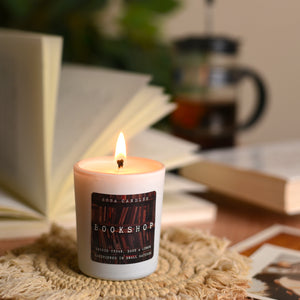
Facts verified August 2026: Timings in this guide: a scented candle puts noticeable fragrance into a normal room in roughly 15–20 minutes; a Sukoon ultrasonic diffuser reaches a steady level in about 20 minutes from cold; a reed diffuser needs roughly 24–72 hours for the oil to travel the reeds and the room to settle, so it is not a same-day solution. SOSA products and prices: Sukoon 500ml ultrasonic diffuser ₹1,899 (270–320 sq ft, 16–18h on low, 9–12h high, 30–50 ml/h, 2.4MHz cool mist, 7-colour LED, remote, steady/2H/4H timers, BPA-free, auto shut-off, includes three 15ml Hotel Collection scents of your choice); Boond 300ml ₹899; Megh 6-litre ₹3,499; waterless Vaayu ₹11,999 (up to 1000m³); Aangan ₹25,999; Meenar ₹38,500. Hotel Collection water-based fragrance 15ml ₹299, 100ml ₹999, 300ml ₹1,799, Pack of 7 at 15ml ₹1,799 / 100ml ₹5,999 / 300ml ₹10,799; dose 3–6 drops per tank. Reed diffusers (separate alcohol-free line): Morning Freshness from ₹749, Garden Bloom and Evening Calm from ₹799, Fresh Brew and Mountain Breeze from ₹849; 130ml from ₹1,249; duos from ₹1,498; 300ml refills ₹2,399. Scented candles: Bookshop 80g ₹379 (~15–18 hours), Bookshop + Cozy Corner ₹664 (~30–36 hours), Amber Rose 130g ₹599 (~25–30 hours) and 220g ₹799 (~40–50 hours), ceramic jar candles ₹949, Pure Calm wax melt set ₹854. Free shipping above ₹499. SOSA does not make a room or linen spray for the home — the sprays in the range are car perfumes. The Hotel Collection scents are SOSA's own interpretations; SOSA is not affiliated with or endorsed by any hotel brand. Prices subject to change — see the live product pages.
Zurück zum Blog