

The variable is dose more often than composition. The same dry, low note runs differently in a family practice and in a premium vision centre — three reeds against six, or the lowest machine setting against the second. Register is carried by intensity at least as much as by the bottle.
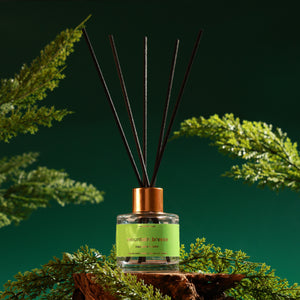
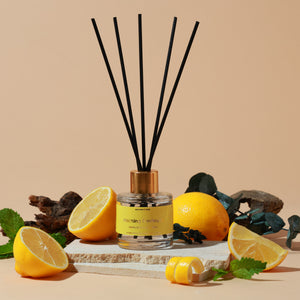
Two products cover most practices. Mountain Breeze ₹849 or Morning Freshness ₹749 under about 150 sq ft of arrival zone; a Sukoon ₹1,899 from 150–320 sq ft where the practice wants a level it can schedule and lock.
"Nothing" is a legitimate positioning answer. A practice whose whole identity is clinical austerity is entitled to an unscented reception, and several of the practices that write to me should choose exactly that. Fragrance adds a scent to the air; it has no clinical, comfort or commercial effect.
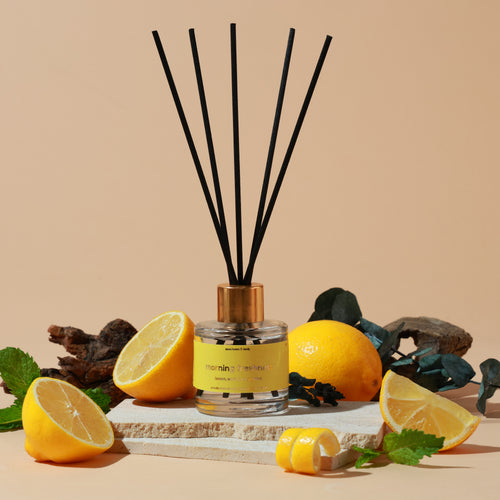
2. Family and general ophthalmology: bright and familiar. Morning Freshness at ₹749 — Malabar lemon, peppermint, Nilgiri eucalyptus — at four reeds rather than six. Unremarkable is the objective. A family practice's positioning is approachability, and an obviously composed scent works against that.
3. Premium vision, refractive and cataract centres: dry and restrained. Mountain Breeze at ₹849, or the same restraint through a Sukoon at ₹1,899 on its lowest setting. Premium in a medical building is expressed by having less, not more — the opposite of how premium works in retail.
4. The dose carries as much of the positioning as the bottle. Two practices can run the same composition and read entirely differently because one uses three reeds and the other six. Before changing scent, change intensity; it is free and it is usually the actual problem.
5. Where you have an optical section, that is a second register in one building. Use one scent at two intensities rather than two scents — and only where the optical area's air does not reach the clinical corridor. Two compositions on one air path become one muddled composition at the seam.
6. Some positionings say buy nothing. A hospital-affiliated department, a very high-volume clinic with a small reception, a practice with a large paediatric caseload, or one whose identity is deliberately austere: unscented is the correct finish, not an incomplete one.
Composed and made in small batches in Pune, and a portion of every order supports girl-child education through Nanhi Kali.
Part one — reading your own positioning
Most owners know their positioning perfectly well and have never had to describe it in sensory terms. These three questions get you there in about ten minutes, and they matter more than any note list.
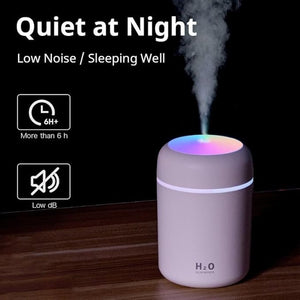
 Boond 300ml₹899 · ~150 sq ftA refractive centre seeing twelve patients a day with long consultations is a different room from a general clinic seeing sixty with short ones. A full room warms, absorbs and moves air; a quiet one does none of those, so the same setting produces two different results. High occupancy also means more competing input — clothing, footwear, wet umbrellas in monsoon — which is not a fragrance problem to solve but is a reason to run lower rather than higher, because layering more scent onto a loaded room makes it heavier, never cleaner. For a small, busy arrival zone under about 150 sq ft, a Boond at ₹899 is the sized machine, with one caveat worth knowing before you buy: it has a colour night light, which most clinics will want switched off, and being ultrasonic it adds a little humidity to the room.
Part two — six positionings, six registers
The same narrow band of notes, read against six kinds of practice. Note how often the answer is a change of intensity rather than a change of bottle — and how often it is nothing.
| Practice positioning | What the building already says | Register that agrees | What would jar |
|---|---|---|---|
| Premium vision / refractive centre ★ | Precision, few patients, considered materials | Dry woody, very low — Mountain Breeze at three or four reeds | Anything warm, sweet or obviously composed |
| Neighbourhood family ophthalmology | Approachability, wide age range, high familiarity | Bright and unremarkable — Morning Freshness, four reeds | A luxury-retail register; it reads as borrowed |
| Hospital-affiliated eye department | Institutional systems, shared corridors, shared air | None. Shared air paths make the boundary unholdable | Any scenting at all, and especially anything ducted |
| High-volume clinic, sixty-plus patients a day | Throughput, full seating, heavy occupancy load | Very low or nothing until ventilation is confirmed | Raising the setting because the room feels loaded |
| Optical-led hybrid, retail at the front | Two registers in one building, retail and clinical | One scent at two intensities, if optical has its own air path | Two different compositions meeting in a corridor |
| Single-consultant rooms, appointment only | Quiet, low occupancy, long consultations | A reed bottle at three reeds, or nothing at all | A commercial machine; it is audible and oversized here |
| The honest caveat: these are judgements about ambience register, not about clinical suitability, and no product here is described as appropriate or inappropriate for any patient group. Whether to scent at all in your building — given your caseload, ventilation and protocols — is a decision for the practice and its clinicians. Every row concerns reception and waiting only. | |||
Morning Freshness · family practice, four reeds₹749Shop → 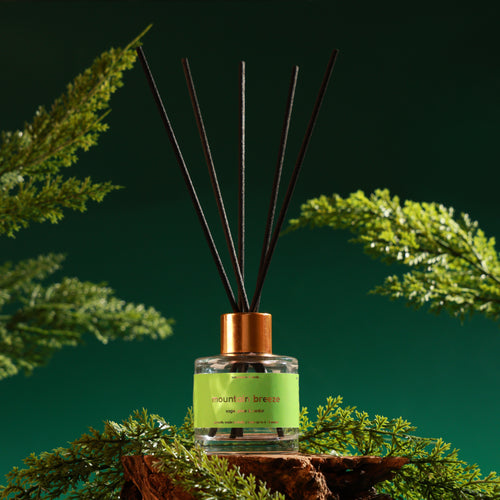 Mountain Breeze · premium centre, three reeds₹849Shop →
  Sukoon · when the level must be schedulable₹1,899Shop →
Part three — when the positioning says scent nothing
Some practices are positioned in a way that makes an unscented reception the correct finish rather than an unfinished one, and I would rather name them than let a page like this imply that every building needs a bottle. The clearest is a hospital-affiliated department. Shared corridors and shared air handling mean the boundary between hospitality and clinical space cannot be held physically, and a boundary that cannot be held should not be attempted. The second is a very high-volume clinic with a small reception: heavy occupancy already loads the air, and adding a composition on top of that makes the room heavier rather than fresher. Deal with ventilation first, then decide — and often the decision after ventilation is that nothing more is needed.
The third is a practice whose entire identity is clinical austerity, which is a perfectly strong position and one that several excellent refractive centres hold deliberately. If your interior is white, spare and precise by intent, an unscented reception is part of that intent. The fourth is a large paediatric caseload, where I would decline the sale. And there is a general condition attached to every practice that does go ahead: there must be somewhere in reception that the fragrance does not reach, and staff who know where it is. Some people are sensitive to airborne fragrance — that is the reason the clinical pathway stays clear and the reason that seat exists. SOSA makes no claim about who is affected, and any decision about an individual patient is the practice's and its clinicians' alone.
One planning point for centres that think in terms of brand rather than of one bottle. A positioning expressed through scent only works if it is the same on every visit, which makes supply a positioning question. SOSA does not currently sell a separate cold-air refill oil for the Vaayu; the 400ml supplied in the box, roughly ninety days or more at a mid setting, is the whole supply available at the time of writing, and the water-based Hotel Collection — which is inspired by the atmosphere of well-known hotels, from an independent Indian brand unaffiliated with any hotel group — is made for ultrasonic machines and must never be used in a Vaayu. Confirm current refill availability through the contact page before a practice commits. There is also no published bulk pricing, corporate account, installation service, maintenance contract or stated warranty term; where you would reasonably expect one of those to exist, ask rather than assume.
Part four — what to specify for your practice
Positioning on the left, specification on the right. Note how many rows change intensity rather than composition, and that two of them buy nothing.
| Your practice | Arrival zone | What I would specify | The honest note |
|---|---|---|---|
| Premium vision centre, appointment-led ★ | 120–180 sq ft | Mountain Breeze 130ml, three reeds, ₹1,349 | Restraint is the premium signal here, not intensity |
| Family ophthalmology, mixed ages | 150–250 sq ft | Morning Freshness 130ml, four reeds, ₹1,249 | Familiar and unremarkable beats distinctive in this room |
| Either of the above, but you want a setting you can lock | 150–320 sq ft | Sukoon ₹1,899, lowest intensity, 4H timer | Ultrasonic, so it adds a little humidity to the room |
| Small consultant rooms, low footfall | Under 150 sq ft | Boond ₹899, or a reed bottle at three reeds | The Boond has a colour night light most clinics will switch off |
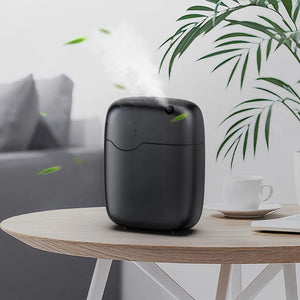
| Large centre, one connected public area | 320–800 sq ft | Vaayu ₹11,999, freestanding, scheduled, key-lock on | Under 38 dB — but confirm refill supply before committing |
| Hospital-affiliated department | Shared corridors and air handling | Nothing | A boundary you cannot hold should not be attempted |
| High-volume clinic, small reception, heavy occupancy | Under 200 sq ft, full all day | Nothing until ventilation is confirmed | A loaded room gets heavier with scent, not fresher |
Versailles
The request I get most often from a new eye care centre is for something that will make the reception feel expensive. It is an honest request and it contains a misunderstanding. In retail, premium is expressed by adding; in a medical building it is expressed by removing. The most convincing receptions I have been sent photographs of are the ones with the least going on in them, and their air is the same — present, low, and impossible to describe afterwards.
So when a practice asks me which of my bottles is the luxurious one, I usually answer with a number of reeds instead. Three rather than six changes a room more than swapping one composition for another, and it costs nothing. It is not a satisfying answer to give someone who has arrived ready to spend, but it is the true one.
I would rather a practice bought a ₹749 bottle that agreed with its building than a ₹11,999 machine that argued with it. The second one gets noticed, and being noticed is the failure condition for ambience in a clinic. Made in Pune in small batches, and a part of every order funds a girl's classroom through Nanhi Kali.
Frequently asked questions
- What should a premium eye clinic smell like? — the zone answer, first.
- The reception note — chosen for the fortieth minute, with one outright rejection.
- Fresh, green, woody or neutral? and what to fix before fragrance.
- Should a practice have a signature fragrance? — supply first.
- Brand: the SOSA founder story.
SOSA range, specifications and prices used in this guide (verified August 2026): Vaayu ₹11,999 — waterless cold-air nebulisation of undiluted fragrance oil; no water, no heat, no added humidity, no white mineral dust. Coverage up to 1000 m³, about 2,000–3,000 sq ft. 400ml refillable tank lasting roughly 90+ days at a mid setting. Bluetooth app plus onboard controls, 1h / 4h / 8h / 24h run windows, day selection, adjustable intensity, auto-stop and key-lock. Under 38 dB. DC 12V / 1A, 5W. Freestanding or wall / HVAC mount. CE, RoHS and SGS certified. SOSA does not currently sell a separate Vaayu cold-air refill oil; the 400ml supplied in the box is the fragrance available at the time of writing, so a practice planning continuous or multi-site use should confirm current refill availability with SOSA before committing. The water-based Hotel Collection is made for ultrasonic machines and must not be used in a Vaayu. Other machines: Boond 300ml ₹899 (~150 sq ft, ultrasonic) · Sukoon 500ml ₹1,899 (270–320 sq ft, 16–18 hours on low, remote and steady/2H/4H timers, three 15ml fragrances included, ultrasonic) · Megh 6L ₹3,499 (~215 sq ft — a runtime and humidity machine that covers less than a Sukoon, never a coverage upgrade) · Safar ₹3,999 (waterless cold diffusion, cordless, 20ml, about 6.9cm, three speeds, 1/2/3-hour auto-off — sold as a car and travel diffuser, personal-scale only; SOSA publishes no coverage figure for it) · Aangan ₹25,999 (HVAC nebulising, ~8,000–10,000 sq ft) · Meenar ₹38,500 (commercial HVAC, 12,000–18,000 sq ft). Water-based Hotel Collection for ultrasonic machines: 15ml ₹299 · 100ml ₹999 · 300ml ₹1,799 · pack of seven ₹1,799; scents are inspired by the atmosphere of well-known hotels — SOSA is an independent Indian brand and is not affiliated with, endorsed by or supplying any hotel group. Reed diffusers ₹749–₹1,349 (50ml 6–8 weeks, 130ml 14–18 weeks, six fibre reeds, no 100ml size; replacement reeds are not sold separately). Reed oil cannot be used in an ultrasonic machine and Hotel Collection oil cannot be used in reeds. SOSA sells no room spray or home spray — every SOSA spray is a car perfume. Nothing in this guide is medical, clinical or safety advice. A fragrance diffuser adds a scent to the air. It does not clean, purify, filter, sanitise or disinfect air, does not remove or neutralise disinfectant, damp or occupancy smells, and has no effect on comfort, anxiety, waiting time, recovery or any clinical outcome. Some people are sensitive to airborne fragrance, which is why this guide recommends that examination rooms, diagnostic areas, consultation cabins, procedure suites and post-operative areas remain fragrance-free, that a fragrance-free seating option always exist, and that a diffuser is never mounted into shared HVAC in a clinical building. Decisions about clinical policy, ventilation standards, infection control and patient suitability rest entirely with the practice and its clinicians. A persistent stale, damp or disinfectant smell is a ventilation, moisture or cleaning problem — SOSA sells no dehumidifier and no air purifier, and fragrance should never be used to cover one. Coverage, runtime and longevity figures are manufacturer specifications and typical ranges, not guarantees, and vary with room volume, ceiling height, air exchange, occupancy and season. SOSA publishes no commercial or bulk pricing, no corporate account, no annual maintenance contract, no installation service, no stated warranty term and no multi-location programme; warranty length, spare parts, servicing and app platform availability are unconfirmed, and larger or multi-site enquiries should go through the contact page before any commitment. Composed and made in small batches in Pune, India. Free shipping above ₹499. A portion of every order supports girl-child education through Nanhi Kali. Prices subject to change — see the live product pages.