Founder Diaries · Clinics & Medical Centres · Four Branches, One City
By Sonal Sahani · ISIPCA Versailles 14 min read Updated November 2026
Yes, the same scent, and the reason is not branding. It is that a patient and a consultant both move between your branches. A woman registered at your Baner clinic is referred to your Kothrud clinic for an ultrasound and comes back to Baner for the report. A visiting cardiologist consults at two of your four sites in the same week. A receptionist covers a colleague's leave across town on a Thursday. For all three of those people your four clinics are one organisation, and four different smells read as four separate practices held together by a logo. That is the whole of the argument, and it is a presentation argument rather than a clinical one. What matters far more than agreeing to it is the operational detail underneath it: one named oil, one target level, one zone list, one schedule, one page of SOP, one purchase order, one named owner per site and one person at group level who owns the standard. Without those, four branches do not have one scent. They have four opinions about the same bottle.
Quick answers — read this first
Standardise first, and it costs ₹0: the daily drain-trap round, bin collection times with lids, the public-floor wash hour and the air-conditioning drain pan in the maintenance scope, on the same signed sheet at all four branches with one name against each line. Four branches running the same scent over four different housekeeping standards do not smell the same — the weakest branch reads as your fragrance plus its own problem, and you will have standardised a problem.
What a single scent actually requires, in order: one named fragrance ordered once for all four branches, not four similar ones. One target level, defined as a patient being unable to tell you what the fragrance is. One zone list, identical at every site: entrance, reception, shared waiting, inter-departmental corridors, lift lobbies, administration, the café corner. One fragrance-free list, identical and with no local exceptions. One timer schedule per branch, set once in the app and written down. One page of SOP. One named owner per site and one owner of the standard at group level. One review date in the calendar.
What is not standardised: the machine count. A 1,200 sq ft branch and a 6,000 sq ft branch need different numbers of units, because the count comes from each branch's own volume sum. Same oil, same target, different counts.
The purchase, costed: four
Vaayu units at ₹11,999 each is ₹47,996 on one purchase order, twenty 400ml fills a year, about eight litres of oil annually — which is the one point where the per-litre price is genuinely negotiable, so ask for it at eight litres rather than at two. Free shipping above ₹499, prices subject to change.
The short answer
Short answer: yes, the same scent across all four, and the reason is that patients and consultants move between your branches - a referral between two sites, a visiting specialist consulting at two of them in a week, a receptionist covering leave across town. Four different smells read as four separate practices. It is a presentation argument, not a clinical one, and nothing here claims fragrance affects any patient. What makes it real is operational: one named oil, one target level, one zone list, one schedule, one page of SOP, one purchase order, one named owner per site and one owner of the standard at group level.
Standardise the housekeeping before the scent, and it costs Rs 0: the daily drain-trap round, bins on a named collection time with lids, the public-floor wash hour and the air-conditioning drain pan written into the maintenance scope, on the same signed sheet at all four sites. Four branches running one fragrance over four different housekeeping standards do not smell the same - the weakest branch reads as the fragrance plus its own problem. A chain that skips this is standardising a problem rather than a standard.
What is standardised and what is not: the oil, the target level, the zone list, the fragrance-free list and the SOP are identical at every branch. The machine count is not, because it comes from each branch's own volume sum - square feet divided by 10.76, times ceiling height, counting only volumes a door closes. Four branches on one Vaayu each is Rs 47,996 on a single purchase order, twenty 400ml fills a year and about eight litres of oil. Vaayu Rs 11,999 up to 1000m3, Aangan Rs 25,999 up to 3,000m3. Free shipping above Rs 499.
Straight answer
We run four clinics in the same city — should they all smell the same?
1. Yes, and the reason is movement rather than marketing. Your patients move between your branches because you refer them: a registration at one site, a diagnostic at another, a report read back at the first. Your consultants move between them because that is how a visiting-specialist roster works, and a physician who consults at two of your clinics in a week notices the difference between them more sharply than any patient does, because noticing what a room smells of is part of her training. Your own staff move between them to cover leave. To all of those people the four sites are one organisation, and four different backgrounds read as four separate practices sharing a name.
2. It is a presentation argument and I am not going to dress it up as anything more. A facility that smells looked after reads as one, and four facilities that smell the same read as one organisation that looks after all four. That is the claim. It does not reduce anxiety, it does not improve anybody's experience in a way I can evidence, it does not move a satisfaction score and it does not increase footfall or retention. I have no study to offer on any of those and no percentage to quote you, and if a supplier offers your board one, ask which study it came from.
3. Before you standardise the scent, standardise the housekeeping, and this part is free. Four branches running the same fragrance over four different housekeeping standards do not smell the same. The best-run branch smells of nothing in particular, and the worst-run one smells of your fragrance plus a dry drain trap on the second floor — which is worse than either on its own, because now the problem is wearing your standard. Put the trap round, the bin collection times, the wash hour and the drain-pan scope on the same signed sheet at all four sites, with one name against each line, and run it for a month before a single machine is ordered.
The free list is the long version.
4. What a single scent actually consists of, operationally. One named fragrance, ordered once, for all four — not four similar ones chosen by four centre heads. One target level, defined by a test rather than a dial: a patient should not be able to tell you what the fragrance is, only that the place did not smell of anything unpleasant. One zone list, identical at every branch. One fragrance-free list, identical, with no local exceptions. One timer schedule per branch, following that branch's opening hours. One page of SOP. One named owner per site, plus one person at group level who owns the standard itself. And one review date in the calendar.
The SOP page is what that looks like written down.
5. What you do not standardise, and this trips up good procurement teams. The machine count. A 1,200 sq ft branch with a small reception and a 6,000 sq ft branch over two floors need different numbers of units, because the count comes from each branch's own volume sum — square feet divided by 10.76, multiplied by ceiling height, counting only the volumes a closed door bounds and removing every clinical room entirely. Same oil, same target, different counts.
The per-volume count is the arithmetic. Nor do you standardise the setting as a number: a 400 m³ lobby and a 900 m³ lobby on identical settings will not read identically, so the setting is whatever hits the target level in that volume, recorded per site.
6. The purchase, and the one decision to make at group level rather than four times. Four
Vaayu units at ₹11,999 is ₹47,996 on a single purchase order — waterless with no standing water tank, up to 1000 m³ each, 400ml lasting about seventy-five days, app plus 1h/4h/8h/24h timers so one facilities person sets four schedules without travelling, under 38 dB, auto-stop and a key-lock. Twenty fills a year across the group is about eight litres of oil, which is the only genuinely negotiable line in the whole thing, so ask for the per-litre price at eight litres rather than at two.
The full-year cost page builds the sheet.
A portion of every order supports girl-child education through Nanhi Kali.
TL;DR: yes, same scent, because patients and consultants move between branches and four smells read as four practices. Standardise the free housekeeping first or you will standardise a problem. Then one oil, one target level, one zone list, one SOP, one purchase order at ₹47,996 for four
Vaayu units, one named owner per site and one owner of the standard. The machine count is per branch, not per group.
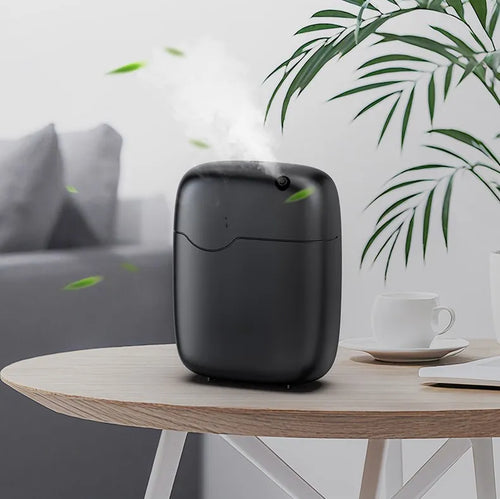
Four branches, one specification
SOSA Vaayu ₹11,999
Four units on one purchase order is ₹47,996. Waterless cold-air nebulisation with no standing water tank, so no branch needs a person to empty and dry a reservoir daily. Up to 1000 m³ each. A 400ml fill lasting about seventy-five days, so four to five fills a year per site. Bluetooth app plus 1h/4h/8h/24h timers, which is how one facilities person sets four branch schedules without getting in a car. Under 38 dB, auto-stop, and a key-lock so a centre head cannot quietly turn one branch up. Same oil, same target level, counts per branch from each branch's own volume sum.
Standardise the housekeeping before you standardise the scent
This is the part of the answer that costs nothing and the part that decides whether the rest of it works, so it goes first. A group that rolls one fragrance across four branches without first levelling the housekeeping has not created a standard. It has created a uniform layer over four different buildings, and the branch with the dry drain trap on the second floor now smells of your fragrance and a drain, which is a worse result than the drain alone because the problem is now wearing your name. The four free fixes are the same four at every site: a mug of water down every floor gully, sluice, unused basin and barely used toilet sixty minutes before opening, by a named person with a sheet to sign; dressing-waste and sharps bins on a named collection time with lids that close, never staged in a public corridor; the public-area floor washed in the quiet half-hour between the two peaks rather than at either of them, with a neutral cleaner specified for public floors and the strong concentrate kept for clinical ones; and the air-conditioning drain pan, condensate line and blower wheel named in the maintenance scope rather than left inside a generic visit. Run them identically at all four for a month, with the same sheet and the same wording, and compare the four sheets at the end of it. The branch whose sheet is complete and whose building still has a smell is the branch with an actual source, and that is a facilities job rather than a fragrance one.
1
WHY THE SAME
The people who actually notice, and what they notice
I want to be specific about who the beneficiary of consistency is, because “brand experience” is not an answer a medical director will accept.
The first is your referred patient. A chain of four clinics in one city exists partly so that a diagnostic at one site serves a consultation at another, which means a meaningful share of your patients see two of your buildings inside a fortnight. If one of them smells of nothing in particular and the other smells of disinfectant from ten in the morning, they have not experienced one organisation. The second, and the one I would put in the board paper, is your visiting consultant. A physician who takes clinics at two of your sites is professionally trained to notice what a room and a patient smell of, she has no particular loyalty to any one branch, and she will form a view about how well each building is run partly on that basis. The third is your own staff, who move between branches to cover leave and who calibrate their own standards against what they find when they arrive.
None of this is a claim about effect on a patient. It is a claim about what a building communicates about its own management, which is the only claim fragrance can carry in a medical facility. The signature-scent question is the same argument asked of a single centre.
2
WHAT GETS STANDARDISED
Eight things, and six of them are free
The standard is a document before it is a product, and most of it costs nothing.
One: the oil — a single named fragrance, chosen once at group level and ordered once, rather than four similar ones. Two: the target level, defined as a test rather than a number — a patient should not be able to tell you what the fragrance is, only that the place did not smell of anything unpleasant. Three: the zone list, identical at every branch — entrance, reception and registration, shared and departmental waiting areas, inter-departmental corridors, lift and stair lobbies, administration, the café corner, and staff rooms if the staff want it. Four: the fragrance-free list, identical and with no local exceptions — consultation and examination rooms, treatment and procedure rooms, day-care surgery, dressing rooms, blood and sample collection, laboratories, pharmacy dispensing, sterile stores, imaging, oncology day-care and paediatric clinical areas. Five: the schedule — the timers follow each branch's own opening hours, set once in the app, stopping at close, with nobody turning anything up at midday because the hall got busy. Six: the SOP, one page. Seven: a named owner at each site, and one person at group level who owns the standard rather than the machines. Eight: a review date.
Six of those eight are writing rather than spending, and
the fragrance-free list in full plus
the departmental version are what to hold them against.
3
WHAT DOES NOT
The machine count, the setting number, and one branch that may get nothing
Three things should vary between branches, and a group that standardises them anyway will get a worse result than one that does not.
First, the machine count. It comes from each branch's own volume sum: square feet divided by 10.76, multiplied by ceiling height in metres, counting only the public volumes a closed door bounds, with every clinical room removed from the sum entirely. A 1,200 sq ft branch with a reception and a twelve-seat waiting area might be 180 m³ of public volume; a 6,000 sq ft branch over two floors is usually two volumes and two machines. Four branches is not automatically four machines, and it is not automatically one each. Second, the setting. A 400 m³ lobby and a 900 m³ lobby running the same intensity do not read the same, so the setting is whatever hits the target level in that volume, measured by walking in from outside and recorded per site in the SOP.
Third, and this is the one nobody expects: a branch may correctly have no public scenting at all and still be fully compliant with the standard. A predominantly paediatric site, or one whose main public area is a 120 m³ lift lobby, or one where oncology day-care sits off the main waiting area, should be fragrance-free in public as a decision rather than as an oversight — written into the same document, with the reason next to it. A standard that cannot accommodate that is not a standard, it is a rollout, and
holding a consistent level is about the target rather than the dial.
The instruction I would give a group operations lead: write the standard as one page before you raise the purchase order, and make the last line of it a named person at group level. Four sites with four owners and nobody owning the standard produces four slightly different standards inside a year, which is where you started.
What gets standardised, and what does not
The left-hand column is the standard. The right-hand column is what it costs, and it is worth noticing how much of the page is free. Anything not in this table is a local decision made from that branch's own volume sum, and anything in it is a group decision made once.
Print this
Four branches, one standard — eight lines, six of them free
| What is standardised |
What it means in practice |
Who owns it |
Cost |
| The housekeeping, first ★ |
The trap round, bin collection times with lids, the wash hour and the AC drain-pan scope, on the same signed sheet at all four sites with one name per line |
Housekeeping at each site, with group operations comparing the four sheets monthly |
₹0 |
| The oil |
One named fragrance, chosen once at group level and ordered once for all four. Not four similar ones chosen locally |
Group procurement, on one purchase order |
≈8 litres a year for four |
| The target level |
A patient should not be able to tell you what the fragrance is, only that the place did not smell of anything unpleasant. Tested by walking in from outside |
Group facilities, recorded per site |
₹0 |
| The zone list |
Entrance, reception, shared and departmental waiting, inter-departmental corridors, lift lobbies, administration, the café corner. Identical at every branch |
Group facilities with the medical director |
₹0 |
| The fragrance-free list |
Consultation, examination, treatment and procedure rooms, day-care surgery, dressing, collection, laboratory, dispensing, sterile stores, imaging, oncology, paediatric clinical areas. No local exceptions |
Medical director. The list in full
|
₹0 |
| The schedule and the SOP |
Timers following each branch's opening hours, set once in the app, stopping at close. One page of SOP covering zones, setting, owner, refill and review |
Facilities per site, from one group template. What goes in it
|
₹0 |
| Not standardised: the machine count |
Each branch's own volume sum — square feet ÷ 10.76 × ceiling height, counting only public volumes a door closes. Four branches is not automatically four machines |
Facilities, per branch. Per volume, not per floor
|
₹11,999 per volume |
| Never |
A “similar” scent at one branch because the first choice was out of stock, a centre head selecting locally, or one site turning the setting up because its hall got busy |
Nobody. Busy is a ventilation question, and turning fragrance up makes it worse |
— |
Shop this guide
Four units, one oil order, and the large-branch exception
The SOSA principle
Yes, the same scent — because a referred patient and a visiting consultant both see two of your four buildings in the same fortnight. But standardise the housekeeping first. Four branches running one fragrance over four different housekeeping standards have standardised a problem, not a standard.
One oil, one target level, one zone list, one SOP, one owner per site and one owner of the standard. Six of those eight lines are writing rather than spending.
The purchase order, the standard and the named owner
Consolidating the purchase is worth doing for three reasons and only three, and none of them is a discount. The first is that the specification goes through once. Four Vaayu units at ₹11,999 on one purchase order is ₹47,996, with one scent, one target level and one zone list attached to it — instead of four centre heads each making a reasonable local decision and the group discovering in month five that it owns three fragrances and a reed diffuser. The second is the oil. Twenty 400ml fills a year across four branches is about eight litres, and that is the only genuinely negotiable line in this whole subject, so ask for the price per 400ml fill and per litre at eight litres rather than at two, with a minimum order quantity, a lead time and a validity date, on a letterhead. One scheduled annual delivery into one store, drawn down by four sites, also ends the commonest operational failure in a chain, which is a branch running empty because nobody at that branch was watching the stock. The third is that it puts the whole thing in one budget line. Facilities, alongside housekeeping and the maintenance contract, at a group run rate somewhere around ₹48,000 to ₹80,000 a year depending on the oil quotation — and the budget-line argument is why that line matters more than the number in it.
Then the governance, which is the half of this that fails. Name one person at each site and one person at group level, and make them different roles rather than the same role twice. The site owner does the physical work: five refill visits a year at ten minutes each, a two-minute wipe weekly, and a line on the housekeeping sheet. The group owner owns the standard rather than the machines: the oil specification, the target level, the zone list, the SOP template and the review date, and the authority to tell a centre head that the setting is not a local decision. Without the second role, the standard decays in a predictable way and on a predictable timetable. A housekeeping supervisor leaves in April and the new one does not know the trap round is daily. A centre head has a complaint in July and turns the setting up, which produces two more complaints. The first-choice oil is out of stock in September and somebody sensible orders a similar one. By the following March the group has four branches that each smell slightly different and a document nobody has read since it was written, and the refill-ownership page is the detail of how to prevent the first of those three. The review date is the cheapest control on the page: one calendar entry a year at which somebody walks into all four receptions from outside, in the same week, and writes one line about each.
And the honest caveat, which belongs in the budget paper rather than in a footnote. If your four branches currently have four different housekeeping standards, a single fragrance across them will not produce a single impression, and buying it first will cost you ₹47,996 to discover that. The weakest branch will read as your fragrance plus whatever that branch's actual problem is, and because the fragrance is now the group standard, the problem has been promoted. So the sequence in the paper should be: level the free housekeeping at all four sites for a month on an identical sheet, compare the four sheets, fix whatever source the comparison exposes, and then raise the order. That sequence costs nothing and delays the purchase by four to six weeks. The second caveat is about scope: a branch may correctly end up with no public scenting at all — a predominantly paediatric site, one where oncology day-care sits off the main waiting area, or one whose public area is a 120 m³ lift lobby — and that should be written into the standard with the reason beside it rather than treated as a gap to fill later. A standard that cannot say “not here, and here is why” is a rollout. The chain-signature page is the same question asked as a branding decision, and the four-polyclinic worked example costs a specific version of it end to end.
A referred patient sees two of your four buildings in the same fortnight, and a visiting consultant sees two of them in the same week. That is the whole argument for one scent — and it is worth nothing until the housekeeping at all four sites is on the same sheet.
— Sonal Sahani, SOSA
The SOSA edit
The same decision as five tiers in the order a group operations meeting works through them. Three of the five cost nothing, which is the point of the ordering.
The SOSA edit
Level it, write it, then buy it once
| Tier |
What is in it |
When it earns its place |
Cost |
| 1. Level the housekeeping ★ |
The trap round, bin collection times with lids, the wash hour and the AC drain-pan scope, on an identical signed sheet at all four sites for a month, then compare the four sheets |
Before any order. One fragrance over four housekeeping standards standardises a problem |
₹0 |
| 2. Write the standard |
One oil, one target level, one zone list, one fragrance-free list, one schedule rule, one named owner per site and one owner of the standard at group level, one review date |
Immediately after the month. What belongs in the SOP
|
₹0 |
| 3. Count per branch |
Each branch's own volume sum — square feet divided by 10.76, times ceiling height, counting only public volumes a door closes, clinical rooms removed entirely |
Before the order. Four branches is not automatically four machines |
₹0 |
| 4. Vaayu × 4 — one order |
Waterless, no standing water tank, up to 1000 m³ each, 400ml ≈ 75 days, app and 1h/4h/8h/24h timers so one person sets four schedules, under 38 dB, auto-stop, key-lock |
One purchase order, one specification, four named site owners |
₹47,996 for four |
| 5. One annual oil order |
Twenty 400ml fills a year, about eight litres. Price per fill and per litre at eight litres, with MOQ, lead time and a validity date, on a letterhead |
At the same time as the machines. The full-year sum
|
Quote at volume |
| Not at any price |
A substitute scent at one branch, a local choice by a centre head, a setting turned up because a hall got busy, or a claim that any of this affects a patient |
Never. Busy is a ventilation problem, and no study is being quoted here because there is none worth quoting |
— |
Honest notes for buyers: on this page specifically, the case for one scent across four branches is a presentation case and nothing more — a facility that smells looked after reads as one, and four that smell the same read as one organisation. No claim is made or implied that this affects any patient, any outcome, any satisfaction score or any revenue figure, and no percentage or study is relied on. A group whose four branches have different housekeeping standards would be standardising a problem, so level the free housekeeping first. In general, fragrance in a medical facility is housekeeping and presentation, never treatment. Nothing here claims that a fragrance reduces anxiety, aids recovery, improves sleep, cleans or disinfects air, or has any clinical effect whatsoever, because it does not and a diffuser is not an air purifier. Scenting belongs to the entrance, reception, shared waiting areas, inter-departmental corridors and administrative rooms. Consultation and examination rooms, treatment and procedure rooms, day-care surgery, dressing rooms, blood- and sample-collection rooms, laboratories, pharmacy dispensing, sterile stores, imaging rooms, oncology day-care and paediatric clinical areas should be left fragrance-free. A persistent smell is information about a dry drain trap, a bin, a soiled-linen route or an air-conditioning drain pan: find it and fix it rather than covering it. On the machines: the
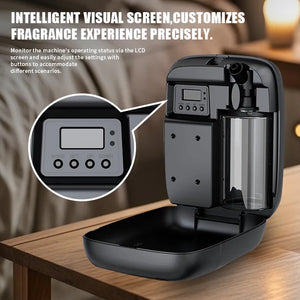
Vaayu at ₹11,999 is waterless cold-air nebulisation with no standing water tank, covering up to 1000m³ or roughly 2,000–3,000 sq ft, with a 400ml tank lasting about 75 days, app control, 1h/4h/8h/24h timers, under-38dB running, auto-stop and a key-lock for public areas. The
Aangan at ₹25,999 covers up to 3,000m³ and connects to HVAC for a whole floor or an atrium. The ultrasonic
Sukoon,
Boond and
Megh are water-based, hold standing water and add 30–50 ml of water an hour to the air, which suits a single administrative cabin with a named person emptying and drying the tank daily and is unsuitable for public clinical property. An alcohol-free
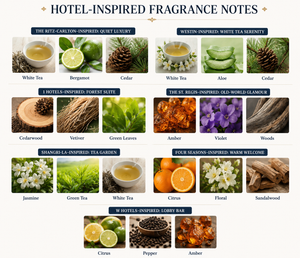
reed diffuser needs 24–72 hours to establish and suits a small lobby rather than a large waiting hall. Candles are not appropriate in a healthcare facility because an open flame is a fire-safety matter. SOSA does not make a room spray. The Hotel Collection scents are SOSA's own interpretations inspired by the world's finest hotels; SOSA is an independent Indian fragrance house, not affiliated with or endorsed by any hotel brand. A portion of every order supports girl-child education through Nanhi Kali.
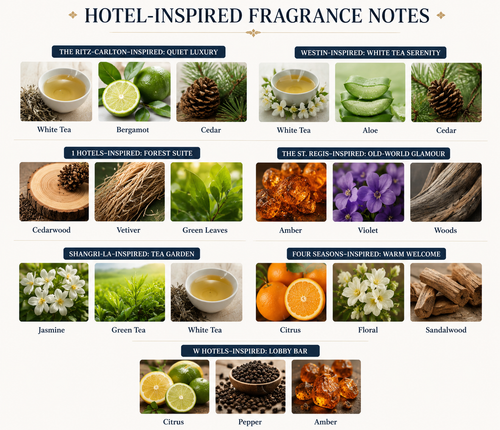
One oil, one order, four branches
SOSA fragrance refills from ₹999
Four branches on one
Vaayu each run twenty 400ml fills a year, which is about eight litres of oil annually.
That is the one genuinely negotiable line in a four-branch scheme, so ask for the price per 400ml fill and per litre at eight litres rather than at two, with a minimum order quantity, a lead time and a validity date on a letterhead. One scheduled annual delivery into one store, drawn down by four sites, also ends the commonest operational failure in a chain: a branch running empty because nobody there was watching the stock. Free shipping above ₹499, prices subject to change.
A note from Sonal
The conversation that taught me how to answer this came from a group operations lead in Delhi who had already rolled one fragrance across four clinics and was unhappy with the result. She had done everything a brand consultant would have told her to do: one scent, four identical machines, the same bottle delivered to all four sites. And three of the four were fine, and the fourth smelled of her fragrance and something else, which she described to me as the fragrance having gone wrong at that branch. It had not gone wrong. The branch had a dressing-waste bin being staged in a service lobby off the main corridor on Friday afternoons, and the fragrance had simply made the problem legible by giving it something to sit against. We fixed the collection time. The branch matched the others inside a fortnight, and nothing about the machine or the oil changed.
What I took from it is the sequence, and it is the only thing I would insist on if a group asked me for one piece of advice. Level the free housekeeping at every site on an identical sheet, run it a month, compare the sheets, and only then order. Four branches running one fragrance over four different housekeeping standards have not standardised a standard — they have standardised a problem, and the branch with the problem now has your group's name on it. The second thing I would insist on is the role nobody creates: somebody at group level who owns the standard rather than the machines, with the authority to tell a centre head that the setting is not a local decision. Without that role, four sites drift in four directions within a year through nothing worse than staff turnover and good intentions.
The third thing is smaller and I mention it because it comes up in every one of these conversations. A branch may correctly end up with no public scenting at all, and that should be written into the standard with the reason beside it rather than left as a gap somebody fills later. Everything is made and supported from Pune, and a part of every order funds girl-child education through Nanhi Kali. You get a space that smells like somewhere looked after; a girl gets a classroom. That equation has always felt right to me.
Frequently asked questions
We run four clinics in the same city - should they all smell the same?
Yes, and the reason is movement rather than branding. You refer patients between your own sites, so a meaningful share of them see two of your buildings inside a fortnight. Visiting consultants take clinics at more than one branch in the same week and are professionally trained to notice what a room smells of. Your own staff cover leave across town. To all of them the four sites are one organisation, and four different backgrounds read as four separate practices sharing a name. It is a presentation argument, not a clinical one.
What exactly has to be the same, and what can differ?
The same at every branch: the named oil, the target level, the zone list, the fragrance-free list, the schedule rule and the SOP. Different by branch: the machine count, which comes from each site's own volume sum, and the intensity setting, which is whatever hits the target level in that volume. Four branches is not automatically four machines - a 1,200 sq ft site and a 6,000 sq ft site over two floors need different counts, and a branch may correctly have none at all.
Should we standardise the fragrance before or after the housekeeping?
After, always, and this is the part worth delaying the order for. Four branches running one fragrance over four different housekeeping standards do not smell the same: the weakest site reads as your fragrance plus its own problem, which is a worse result than the problem alone because the fragrance is now the group standard. Put the trap round, the bin collection times, the wash hour and the drain-pan scope on an identical signed sheet at all four sites, run it a month, compare the sheets, and fix whatever the comparison exposes first.
What does it cost to do four branches?
Four Vaayu units at Rs 11,999 each is Rs 47,996 of capital on one purchase order, with four hotel-inspired scents included per machine so the trial period costs nothing. Running it is twenty 400ml fills a year across the group, about eight litres of oil, plus roughly Rs 220 of electricity and under three hours of housekeeping time per site. Ask for the oil price per fill and per litre at eight litres with a validity date, because that is the only negotiable line. Prices change - check the live product pages.
Who should own this across four sites?
Two different roles. One named person at each site does the physical work - five refill visits a year at about ten minutes each and a two-minute wipe weekly, on the existing housekeeping sheet. One person at group level owns the standard rather than the machines: the oil specification, the target level, the zone list, the SOP template, the annual review date, and the authority to tell a centre head that the setting is not a local decision. Without the second role, four sites drift apart within a year.
One standard, four sites
Level the housekeeping, then buy it once — one oil, one target, one owner of the standard
Four Vaayu units on one purchase order is ₹47,996: waterless cold-air nebulisation with no standing water tank, up to 1000 m³ each or roughly 2,000–3,000 sq ft, a 400ml tank lasting about seventy-five days, Bluetooth app control with 1h/4h/8h/24h timers so one facilities person sets four branch schedules, under 38 dB, auto-stop and a key-lock, each supplied with four hotel-inspired fragrances. Twenty fills a year across four branches is about eight litres of oil, which is where the per-litre price is negotiable. The Aangan is ₹25,999 for a larger branch up to 3,000 m³. Free shipping above ₹499, prices subject to change, and a portion of every order supports girl-child education through Nanhi Kali.
See the Vaayu · ₹11,999 See the refills
Continue the read
More from SOSA
Editorial standards & sources
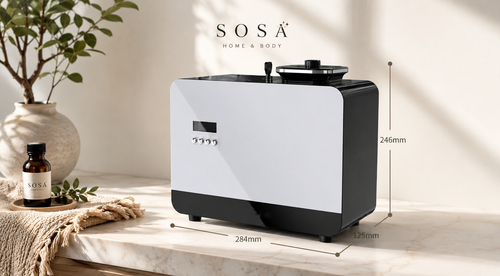
Product facts used in this guide. SOSA Vaayu Rs 11,999: waterless cold-air nebulising diffuser, no water reservoir, coverage up to 1000m3 (approximately 2,000-3,000 sq ft), 400ml refillable tank lasting up to about 75 days per fill, Bluetooth app plus onboard control, 1h/4h/8h/24h timer scheduling, adjustable intensity, under 38 dB, DC 12V/1A at 5W, 165 x 80.5 x 215 mm and 0.9 kg, freestanding or wall or HVAC mounted, auto-stop and key-lock, CE, RoHS and SGS certified, supplied with four hotel-inspired fragrances. SOSA Aangan Rs 25,999: HVAC-connected or standalone commercial nebulising diffuser, coverage up to 3,000m3 (roughly 8,000-10,000 sq ft), 800ml reservoir, metal body, programmable schedules, under 42 dB. Ultrasonic machines are water-based, hold standing water and consume 30-50 ml of water an hour: Sukoon Rs 1,899 (500ml, 270-320 sq ft, 16-18 hours on low, three 15ml Hotel Collection scents included), Boond Rs 899 (300ml), Megh Rs 3,499 (6 litres). Hotel Collection water-based fragrance 15ml Rs 299, 100ml Rs 999, 300ml Rs 1,799. Alcohol-free reed diffusers from Rs 749, requiring 24-72 hours to reach their working level. Free shipping above Rs 499. Coverage arithmetic: cubic metres equal floor area in square feet divided by 10.76 and multiplied by ceiling height in metres, counting only the volumes that are actually scented. This guide makes no medical, therapeutic or clinical claim of any kind for fragrance: a diffuser does not purify, disinfect or clean air, and does not treat, calm or affect any patient or condition. Fragrance is housekeeping and presentation. Clinical areas should be left fragrance-free, and a persistent odour should be traced to its source and corrected rather than covered. SOSA is not affiliated with or endorsed by any hotel brand. Prices subject to change - see the live product pages.

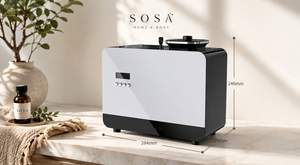
 Aangan · the large branch₹25,999Shop →