
We Fry Food Before Guests Arrive — How Long Should We Ventilate Before Using Home Fragrance?

We Fry Food Before Guests Arrive — How Long Should We Ventilate Before Using Home Fragrance?

★ Hosting dinner · cooking smells, open kitchens and the hour before people arriveCandle ₹379 · reed ₹749 · Boond ₹899 · Sukoon ₹1,899 · free shipping above ₹499A portion funds girl-child education
★ SOSA · when people are coming over
You cannot fragrance your way out of a fried-onion kitchen. You can, however, clear it and then put something clean on top — and the timing is the recipe
★ ★ ★ ★ ★
★★★★★
"Biryani for eight and I was panicking about the smell. Extractor through cooking, windows wide for twenty minutes, then the diffuser. The living room was completely clear by the time they sat down."
Nandini R. Dinner party, Hyderabad
Air, then scent
★★★★★
"My kitchen opens into the living room. Told me to keep fragrance out of the dining area entirely while people eat, which I had never considered. It was right."
Imran Q. Open kitchen, Mumbai
Nothing at the table
★★★★★
"The bit that helped: turn it on an hour before, off when guests arrive. The room holds it and nothing competes with the food."
Shalini D. Hosts often, Pune
On early, off at 8
★★★★★
"Twelve people in a small 2BHK. The advice was less fragrance, more airflow — the room was going to get warm regardless. Completely correct."
Gaurav L. 12 guests, Delhi
Less, not more
★★★★★
"Same scent at the entrance and the living room so the flat reads as one place. Small thing, made it feel considered."
Ritika S. Entrance + living, Bengaluru
One signature
★★★★★
"Frying happens. Twenty minutes of proper cross-ventilation afterwards does more than any product, and then the product actually works."
Harish M. Fried food, Chennai
Cross-ventilate
★★★★★
"Biryani for eight and I was panicking about the smell. Extractor through cooking, windows wide for twenty minutes, then the diffuser. The living room was completely clear by the time they sat down."
Nandini R. Dinner party, Hyderabad
Air, then scent
★★★★★
"My kitchen opens into the living room. Told me to keep fragrance out of the dining area entirely while people eat, which I had never considered. It was right."
Imran Q. Open kitchen, Mumbai
Nothing at the table
★★★★★
"The bit that helped: turn it on an hour before, off when guests arrive. The room holds it and nothing competes with the food."
Shalini D. Hosts often, Pune
On early, off at 8
★★★★★
"Twelve people in a small 2BHK. The advice was less fragrance, more airflow — the room was going to get warm regardless. Completely correct."
Gaurav L. 12 guests, Delhi
Less, not more
★★★★★
"Same scent at the entrance and the living room so the flat reads as one place. Small thing, made it feel considered."
Ritika S. Entrance + living, Bengaluru
One signature
★★★★★
"Frying happens. Twenty minutes of proper cross-ventilation afterwards does more than any product, and then the product actually works."
Harish M. Fried food, Chennai
Cross-ventilate
Candle: scent in the room in 15–20 minutes · Sukoon: about 20 minutes from cold A reed diffuser needs 24–72 hours — the wrong buy when guests arrive tonight Ventilate first · fragrance is the finishing layer, never the cover-up


Founder Diaries · Home Fragrance · Hosting Dinner
By Sonal Sahani · ISIPCA Versailles 11 min read Updated August 2026
Twenty minutes, with two openings on opposite sides of the flat and the extraction still running. That clears the airborne part of a fry-up, and the airborne part is only about half the problem. Frying is different from every other kind of cooking because hot oil does not just release vapour, it aerosolises: fine droplets of oil carrying the whole smell of the food, suspended in the air, which stay up for a while and then land on the walls, the ceiling, the curtains and whatever you are wearing. That deposited fraction is why fried food outlasts the frying by hours, and it needs a cloth rather than a window. Fragrance goes on after both, roughly ninety minutes before anybody arrives.
Quick answers — read this first
The number: twenty minutes of genuine cross-ventilation — two openings on opposite sides, both fully open, extraction running throughout the frying and for ten minutes after it. That is what the airborne fraction needs.

The part airing will not fix: frying aerosolises oil. Fine droplets land on the hob wall, the ceiling above it, the curtain, the tea towel and your clothes, and they keep releasing smell for hours. Wipe the wall, change the tea towel, change your shirt.

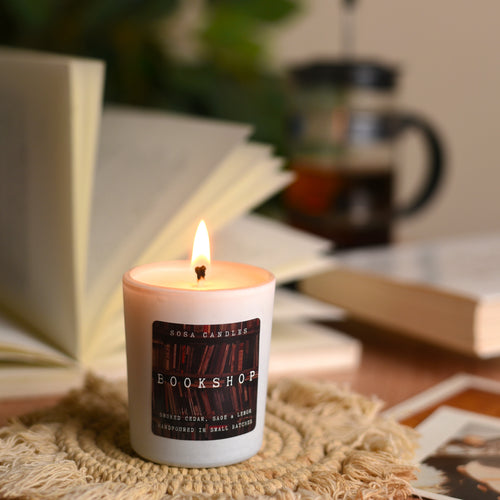
Then fragrance, about ninety minutes before guests: a Bookshop candle at ₹379 in 15–20 minutes, or the Sukoon at ₹1,899, about twenty minutes from cold, on a 2H timer.

Do not start fragrance early. Scent released into air that still carries suspended oil binds to the droplets and lands with them, and the result smells worse than either would alone.
The short answer
Short answer: twenty minutes minimum, with two openings on opposite walls and the extraction running through the frying and for ten minutes afterwards. If you fried early in the day, add a wipe-down of the hob wall and a change of tea towel, because the deposited oil is not something ventilation can reach. Then fragrance, about ninety minutes before guests arrive.
The pick: the Sukoon at ₹1,899 reaches a steady level in about twenty minutes from cold, covers 270–320 sq ft and has steady, 2H and 4H timers, so it can be started after the airing and set to stop before dinner. For tonight only, a Bookshop candle at ₹379 gives scent in 15–20 minutes. A reed diffuser needs 24–72 hours and is the wrong buy for a deadline.
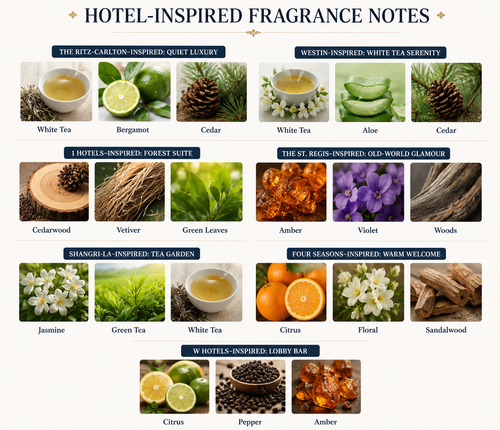
Shop: the Sukoon at ₹1,899 with three 15ml Hotel Collection scents included, the Boond at ₹899 and the Megh at ₹3,499 for open-plan; Hotel Collection scents at ₹299 for 15ml, ₹999 for 100ml and ₹1,799 for 300ml at about ₹6 per millilitre; candles from ₹379. Free shipping above ₹499.
Straight answer
How long should we ventilate after frying before using home fragrance?
1. Twenty minutes, with two openings, and not one minute of it with a single window. Two openings on opposite sides of the flat give you a current through the volume; one opening gives you slow diffusion across a boundary, which is a completely different and much weaker process. Twenty minutes of the first beats two hours of the second.

2. Run the extraction through the whole of the frying and for ten minutes after the oil is off the heat. Oil continues to smoke and release for several minutes after the flame is out, and the kadhai sitting on a hot hob is still a source. Ten minutes of running an extraction over a cooling pan is one of the cheapest wins available.

3. Understand that half of it is not in the air at all. Frying aerosolises oil into fine droplets that carry the smell of the food and then settle on the hob wall, the ceiling above it, the curtain, the tea towel and your clothes. No amount of airing removes deposited oil. That fraction is why the flat still smells of pakoras four hours later.

4. So if you fried early in the day, wipe the hob wall and change the tea towel. Warm water with a little dishwashing liquid, the wall behind and above the hob, the front of the extraction hood, and the cloth that has been hanging beside all of it. Change your shirt too, because fabric holds this better than paint does.

5. Then fragrance, about ninety minutes before people arrive, on air that is already clear. A Bookshop candle at ₹379 needs 15 to 20 minutes; the Sukoon at ₹1,899 needs about twenty from cold and can be set on a 2H timer so it stops before dinner is served. A reed diffuser needs 24 to 72 hours and will not help tonight.

6. Do not start the fragrance whilst the oil aerosol is still suspended. Fragrance released into air carrying oil droplets partitions into them and settles with them, and what you end up with smells worse than the frying did on its own.

A portion of every order supports girl-child education through Nanhi Kali.

TL;DR: twenty minutes of real cross-ventilation with two openings, extraction running throughout the frying and ten minutes after — that handles the airborne half. The other half is oil that has landed on your walls and clothes and needs a cloth. Then fragrance, ninety minutes before guests: a candle at ₹379 or the Sukoon at ₹1,899 on a 2H timer.
SOSA Sukoon
Started after the airing, stopped before the food
SOSA Sukoon ₹1,899
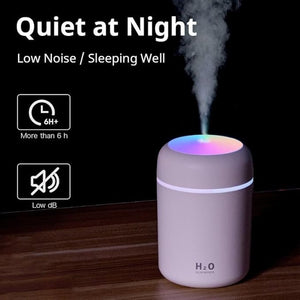
About twenty minutes from cold to a steady level, 500ml BPA-free tank, 270–320 sq ft, 16–18 hours per fill on low at 30–50 ml/h against 9–12 on high, 2.4MHz cool mist, remote, auto shut-off, 7-colour LED and steady, 2H and 4H timers — with three 15ml Hotel Collection scents of your choice included. On a frying night the twenty-minute figure is the useful one: it means you can wait until the flat is genuinely clear and still have the room at its level before the doorbell. Set the 2H timer when you start it and the machine will have stopped itself by the time anybody sits down to eat.

Why frying behaves differently from every other kind of cooking

A pot of dal simmering releases water vapour carrying dissolved aromatics, and when that vapour cools and the air changes, the smell goes with it. Frying does something else entirely: oil at 170 to 190 degrees throws off a fine aerosol — microscopic droplets of oil, thrown up by boiling moisture in the food, each one carrying the full smell of whatever is in the pan — and an aerosol does not behave like a vapour. It stays suspended for a while because the droplets are small enough that air resistance beats gravity, it travels wherever the air travels, and then it lands. On the wall behind the hob, the ceiling above it, the top of the fridge, the curtain, the sofa in the next room and the shirt you are wearing. That landing is the whole reason a fry-up outlasts the frying, and it is also why ventilation, which is the correct first answer, is only half of one.

1
THE AIRBORNE FRACTION
Twenty minutes, two openings, and why one window is not ventilation
Take the half that airing does fix, because it is the half you can do something about immediately and the numbers are worth knowing. A normal Indian flat with two openings on opposite sides, both fully open, will exchange its entire volume of air several times over in twenty minutes even with no wind to speak of, because you have created a path rather than a gap. With a single window open, the same flat might manage a fraction of that in an hour, since air can only move in and out through the same opening by slow diffusion and a weak thermal exchange. This is the single most misunderstood thing in domestic ventilation and it is why so many people conclude that airing does not work: they have never actually done it. Two openings, on opposite sides, both wide. If the flat only has windows on one wall, the front door propped open onto a corridor for ten of the twenty minutes will do it, or a bathroom exhaust running as the outlet whilst a window acts as the inlet. Run the kitchen extraction through the entire time you are frying and for ten minutes after the pan comes off the heat, because a kadhai of hot oil standing on a cooling hob is still emitting. The single biggest improvement most households can make costs nothing: use the back burner rather than the front one. A hood's capture zone is generous directly beneath it and collapses at the front edge, so the same pan moved eighteen inches back is often the difference between an extracted fry-up and a distributed one.
2
THE DEPOSITED FRACTION
Oil has landed on your walls, and no window reaches it
Then the half nobody mentions, and the reason your flat still smells of frying at seven when you aired it properly at four. The aerosol that did not get extracted has landed, and deposited oil is a reservoir: it holds aroma molecules, it releases them slowly, and it does so faster when the room is warm — which is exactly what a flat full of guests becomes. Airing does not touch it. Fragrance does not touch it either, and running a diffuser against it produces a room that smells of two things instead of one. The fix is mechanical and it takes ten minutes: warm water with a little dishwashing liquid, and a wipe of the wall behind the hob, the wall to its side, the front and underside of the extraction hood, the top of the fridge if it stands near the cooking, and any tiled or painted surface within about a metre and a half of the pan. Then the textiles, which hold this far better than paint does — change the tea towel, take down the kitchen curtain if you fried heavily, and change the shirt you cooked in, because you will otherwise be carrying the smell around your own party all evening. If you fried at two in the afternoon for an eight o'clock dinner, this wipe-down matters more than anything else on the page, because the airborne fraction is long gone and the deposited fraction is all that is left. It is the least appealing advice I give and it is the advice that most reliably works.
3
THE SEQUENCING MISTAKE
Fragrance started too early binds to the oil still in the air
And then the error that turns a manageable evening into an unpleasant one, which I want to state plainly because it is counter-intuitive and it is common. Do not start the fragrance whilst the oil aerosol is still suspended. Fragrance materials are largely lipophilic — they dissolve into oil far more readily than into water — so scent released into air that is still carrying fine oil droplets partitions into those droplets, travels with them, and lands with them on your surfaces. Two things follow. The first is that you lose the fragrance, since a scent adsorbed onto a wall is not doing anything for the room. The second and worse outcome is that the two become a single compound smell rather than two separate ones, and that combination — cedar and fried onion arriving together as one impression — is genuinely worse than either would have been alone. It is also much more persistent, because it is now bound to a deposit rather than floating free. This is the real reason for the ordering rule that runs through every article we publish: ventilate first, fragrance last, and never overlap them. The gap between the two is not fussiness. It is the difference between a scent that sits in the air where you want it and a scent that is now part of your kitchen wall. Ten minutes of settling after you close the windows, then start the machine.
The timing I would actually write on a fridge door: extraction through the frying and ten minutes after. Windows wide, two of them, twenty minutes. Close up, wipe the hob wall, ten minutes of nothing at all. Then fragrance, ninety minutes before the doorbell.

The two fractions: what twenty minutes clears and what it cannot

The most useful way to think about a fry-up is as two separate problems that need two different tools. This table separates them, and the third and fourth columns are the ones to act on — what clears each fraction, and what people commonly try instead that does not work.

Two problems, two tools
The airborne half and the deposited half of a fry-up
The fraction Where it is What clears it What does not
Airborne aerosol and vapour ★ Suspended in the air of the kitchen and whatever rooms the air reached Twenty minutes of cross-ventilation with two openings, extraction running throughout and ten minutes after One window. A closed flat. Any fragrance product whatsoever
Deposited oil film Landed on the hob wall, the ceiling above it, the hood, the top of the fridge Warm water and dishwashing liquid, ten minutes with a cloth, within about a metre and a half of the pan Airing, at any duration. It is not in the air
Oil in textiles The tea towel, the kitchen curtain, the shirt you cooked in, a cushion in the next room Washing. Change the towel and the shirt before guests arrive; the curtain if you fried heavily Spraying fabric. There is no SOSA room or linen spray for the home
Oil in the extraction filter The baffle or mesh filter, warm, in the airstream, releasing back into the room Hot water, dishwashing liquid, a twenty-minute soak, dried fully. Ideally the day before Running the fan harder. A loaded filter chokes airflow and recirculates
Fragrance Added to air that is already clear, roughly ninety minutes before people arrive The Sukoon at ₹1,899, about 20 minutes from cold, 2H timer; or a candle at ₹379 in 15–20 minutes Starting it during or straight after frying, which binds it to the oil
A reed diffuser Nowhere near ready. 24–72 hours to travel the reeds and settle the room Nothing you can do tonight. It is a purchase for the ordinary weeks, from ₹749 Buying it this afternoon and expecting it by eight
Shop this guide
After the wipe-down, in three products
The SOSA principle
Ventilation removes the half of a fry-up that is still in the air. The other half is on your walls. One of those needs a window and the other needs a cloth, and no bottle addresses either.
Fragrance materials dissolve into oil more readily than into water, so a scent started whilst the aerosol is still suspended does not perfume the room — it binds to the droplets and lands with them.

The ninety-minute rule, and why starting fragrance early makes it worse

Work backwards from the doorbell, because on a frying night the order is everything and the individual steps are easy. Ninety minutes before guests arrive, the fragrance goes on — not two hours, not fifteen minutes. Ninety is the figure I have arrived at over a lot of evenings, and the reasoning is specific. It is long enough for a Sukoon at ₹1,899 to reach its steady level, which takes about twenty minutes from cold, and then for the room to distribute that level evenly rather than having a bright patch near the machine and nothing at the far wall. It is also long enough for the air to have been closed and settled for ten minutes beforehand, so nothing is still moving fast enough to strip the composition. And it is short enough that you have not been running a machine for three hours into a room that will shortly fill with warm bodies, each of whom raises the temperature and therefore the perceived intensity of everything in the air. Set the 2H timer rather than leaving it on steady. Started at half past six for an eight o'clock dinner, the machine has done its work and switched itself off before the first course, which is exactly what you want. If you own no diffuser and people are close, a Bookshop candle at ₹379 puts scent into a cleared room in fifteen to twenty minutes; light it at the far end of the sitting room, and put it out before you serve. The detailed version of this clock is in the page on when to switch the machine on.

Then the dose, which after frying is lower than you would expect, for a reason that surprises people. Three drops, not five. Air that has just been through twenty minutes of cross-ventilation is unusually clean and unusually still, and a low dose carries much further in it than the same dose does in a flat that has been closed all day. The Hotel Collection is composed at three to six drops per tank and the dose is per tank rather than per litre, since you are scenting the mist and not the water — so a 300ml Boond at ₹899 takes the same three drops as a 500ml Sukoon, and the larger machine buys you hours and coverage rather than intensity. Rinse the tank when you change scent. Never substitute raw essential or carrier oils, which clog the 2.4MHz misting plate. The Hotel Collection is water-based and runs in the Sukoon, the Boond and the Megh at ₹3,499 for a genuinely open-plan flat; it does not go into a reed diffuser, which is a separate alcohol-free line with its own scents, and it does not go into the waterless Vaayu at ₹11,999. Placement: the far end of the sitting room, waist height or above, never in the kitchen and never in a doorway. A machine in a doorway sits in the one place air is moving fastest, which strips the top off a composition and leaves the heavy end standing alone.

Then the two constraints that decide whether any of this survives contact with a real evening. The first is that you cannot judge your own flat after frying in it. Two hours over a kadhai recalibrates your nose completely: you will under-read the fried smell because you have habituated to it, and over-read the fragrance because it is the newest thing in the room. The instinct that produces is to add drops, which is the wrong direction on every occasion. Walk out of the front door, stand on the landing for three or four minutes, and come back in — that is the closest thing to a stranger's nose that you have access to, and it costs nothing. The second constraint is that fragrance genuinely cannot fix a source, and after frying there are usually three sources still active in the kitchen: the oil you are planning to strain and reuse, the bin with the batter and the peelings in it, and the sink of pans in water. All three release continuously, all three will still be releasing at nine o'clock, and scenting the flat around them makes them read as concealed rather than as absent, which is the worse impression by some distance. Take the bin down before you start the fragrance. Cover the strained oil. Put the pans in the machine or fill them with hot water and shut the kitchen door. Then, and genuinely only then, the bottle has a job it can do.

Twenty minutes of open windows takes the fry-up out of your air. It does not take it off your ceiling, and it certainly does not take it off the shirt you cooked in.
— Sonal Sahani, SOSA

The SOSA edit

In buying order for a household that fries before guests arrive, with the free work stated at the top because on a frying night it accounts for most of the result. The final row is the product that will disappoint you if you buy it this afternoon and delight you if you buy it next week.

The SOSA edit
Frying before guests, in buying order
Buy What it is When it earns its place Price
0. Twenty minutes and a cloth ★ Two openings, extraction through and ten minutes after, then a wipe of the hob wall and a clean tea towel Before anything below. It handles both fractions, and nothing on this list handles either ₹0
1. Sukoon + three 15ml scents 500ml, 270–320 sq ft, about 20 minutes from cold, 16–18h on low, steady/2H/4H timers, three scents included Started ninety minutes before guests, set on 2H so it stops before the food comes out ₹1,899
2. Hotel Collection 15ml Water-based ultrasonic fragrance, seven scents, three to six drops per tank — three after airing, not five The scent itself. ₹999 at 100ml and ₹1,799 at 300ml at about ₹6 per millilitre once you know which ₹299
3. Bookshop candle 80g Around 15–18 hours of burn, fragrance in a cleared room in 15–20 minutes If the frying overran and guests are twenty minutes away. Attended, and out before you eat ₹379
4. Boond or Megh 300ml for a smaller room; six litres for a genuinely open-plan flat where the frying reaches everywhere A second zone, or the honest answer when there is no kitchen door to close ₹899 / ₹3,499
Not for tonight: a reed diffuser Alcohol-free reeds from ₹749, holding a low steady scent for months without electricity 24–72 hours to reach the room. Right for the ordinary weeks between dinners, wrong for a deadline from ₹749
Honest notes for buyers: fragrance is the last step, not the first — it layers on air that is already clean and moving, and it will not cover cooking, damp or a room that has been shut for weeks. Timing matters as much as product: a candle scents a room in fifteen to twenty minutes and a Sukoon in about twenty, which is why both work when people are arriving tonight, while a reed diffuser needs a day to three days before it is doing its job properly — it is the wrong buy for a deadline and the right buy for a room you want to hold a steady scent for months. SOSA does not make a room spray for the home; the sprays in the range are formulated and sized for a car. The Hotel Collection is water-based and runs in the Sukoon, Boond and Megh only — not in reeds, and not in the waterless Vaayu. Reed diffusers are a separate alcohol-free line with their own scents. Candles must be attended and put out before guests leave a room unattended. The Hotel Collection scents are SOSA's own interpretations inspired by the world's finest hotels; SOSA is an independent Indian fragrance house, not affiliated with or endorsed by any hotel brand. A portion of every order supports girl-child education through Nanhi Kali.
SOSA Hotel Collection
Three drops, and rinse the tank before you change scent
SOSA Hotel Collection ₹299 / 15ml
Seven water-based hotel-inspired scents for ultrasonic diffusers, dosed at three to six drops per tank — per tank rather than per litre, since you are scenting the mist and not the water. After frying, three drops rather than five: air that has just been cleared is unusually receptive, and a room that was aired twenty minutes ago will carry a low dose further than the same room on an ordinary evening. ₹299 for 15ml, ₹999 for 100ml, ₹1,799 for 300ml at about ₹6 per millilitre, and the Pack of 7 at 15ml is ₹1,799 against ₹2,093 singly. Never put raw essential or carrier oils into an ultrasonic machine.
SS
ISIPCA
Versailles
A note from Sonal

The question I get asked about frying is nearly always some version of 'which product will get rid of it', and my answer disappoints people for about a minute and then relieves them. Nothing gets rid of it. Twenty minutes of two open windows removes what is floating, and a cloth removes what has landed, and between them they do the entire job — after which a bottle can do the small, pleasant thing a bottle is for. I would rather sell somebody a ₹379 candle they use correctly than a ₹1,899 machine they run against a wall of settled oil and then quietly resent.

The part I care most about is the sequencing, because it is where good intentions actually go wrong. People switch the diffuser on whilst the kadhai is still hot, reasoning that the sooner the fragrance starts the better, and they produce the one outcome nobody wants: a scent bound into the oil, landed on the wall, and now permanent. Wait. Air the flat properly, close it up, let it stand for ten minutes with nothing happening at all, and then start. That gap of ten quiet minutes is the most valuable and least expensive thing in this article, and it is the one instruction I would keep if I had to delete every other line.

Everything is made and supported from Pune, and a part of every order funds girl-child education through Nanhi Kali. You get a home that smells like somewhere you chose; a girl gets a classroom. That equation has always felt right to me.

Frequently asked questions

How long should I ventilate after frying before using home fragrance?
Twenty minutes minimum, with two openings on opposite sides of the flat and the extraction running through the frying and for ten minutes after. Then close up, let the room settle for ten minutes, and start the fragrance about ninety minutes before guests arrive.
Why does fried food smell last so much longer than other cooking?
Because frying aerosolises oil. Fine droplets carrying the smell of the food stay suspended, then land on the hob wall, the ceiling, the curtain, the tea towel and your clothes, where they keep releasing for hours. Ventilation clears the airborne fraction; the deposited fraction needs wiping and washing.
Can I run a diffuser while I am frying to stay ahead of the smell?
No, and it makes things worse. Fragrance materials dissolve into oil more readily than into water, so scent released into air still carrying oil droplets binds to them and lands with them. You lose the fragrance and gain a combined smell that is more persistent than either alone.
What should I clean if I fried early in the day?
The wall behind and beside the hob, the front and underside of the extraction hood, and the top of the fridge if it stands nearby — warm water and a little dishwashing liquid, about ten minutes. Then change the tea towel and the shirt you cooked in. Textiles hold fried-oil smell better than paint does.
Is a candle or a diffuser better after frying?
Both work, on already-clear air. A Bookshop candle at ₹379 gives fragrance in 15 to 20 minutes and suits a one-off. The Sukoon at ₹1,899 takes about twenty minutes from cold, covers 270–320 sq ft, has 2H and 4H timers and includes three 15ml scents, which suits a household that fries often.
After the windows, and after the cloth
Twenty minutes of airthen ninety minutes before the doorbell
The Sukoon is ₹1,899 for a 500ml tank, 270–320 sq ft, about twenty minutes from cold, 16 to 18 hours per fill on low, steady, 2H and 4H timers, and three 15ml Hotel Collection scents of your choice. The Boond is ₹899 and the Megh ₹3,499 for open-plan. Hotel Collection scents are ₹299 for 15ml, ₹999 for 100ml and ₹1,799 for 300ml at about ₹6 per millilitre, three to six drops per tank. Candles from ₹379. Free shipping above ₹499, and a portion of every order supports girl-child education through Nanhi Kali.
See the Sukoon · ₹1,899 Hotel Collection from ₹299
Continue the read
More from SOSA
Editorial standards & sources
About this guide: Written by Sonal Sahani, ISIPCA Versailles-trained founder and perfumer at SOSA Home & Body, on why frying aerosolises oil rather than simply releasing vapour, why that splits the problem into an airborne fraction that twenty minutes of cross-ventilation clears and a deposited fraction that only a cloth reaches, why fragrance started too early binds to suspended oil and becomes more persistent, and where the ninety-minute rule comes from.

Facts verified August 2026: Timings in this guide: a scented candle puts noticeable fragrance into a normal room in roughly 15–20 minutes; a Sukoon ultrasonic diffuser reaches a steady level in about 20 minutes from cold; a reed diffuser needs roughly 24–72 hours for the oil to travel the reeds and the room to settle, so it is not a same-day solution. SOSA products and prices: Sukoon 500ml ultrasonic diffuser ₹1,899 (270–320 sq ft, 16–18h on low, 9–12h high, 30–50 ml/h, 2.4MHz cool mist, 7-colour LED, remote, steady/2H/4H timers, BPA-free, auto shut-off, includes three 15ml Hotel Collection scents of your choice); Boond 300ml ₹899; Megh 6-litre ₹3,499; waterless Vaayu ₹11,999 (up to 1000m³); Aangan ₹25,999; Meenar ₹38,500. Hotel Collection water-based fragrance 15ml ₹299, 100ml ₹999, 300ml ₹1,799, Pack of 7 at 15ml ₹1,799 / 100ml ₹5,999 / 300ml ₹10,799; dose 3–6 drops per tank. Reed diffusers (separate alcohol-free line): Morning Freshness from ₹749, Garden Bloom and Evening Calm from ₹799, Fresh Brew and Mountain Breeze from ₹849; 130ml from ₹1,249; duos from ₹1,498; 300ml refills ₹2,399. Scented candles: Bookshop 80g ₹379 (~15–18 hours), Bookshop + Cozy Corner ₹664 (~30–36 hours), Amber Rose 130g ₹599 (~25–30 hours) and 220g ₹799 (~40–50 hours), ceramic jar candles ₹949, Pure Calm wax melt set ₹854. Free shipping above ₹499. SOSA does not make a room or linen spray for the home — the sprays in the range are car perfumes. The Hotel Collection scents are SOSA's own interpretations; SOSA is not affiliated with or endorsed by any hotel brand. Prices subject to change — see the live product pages.
Zurück zum Blog