Founder Diaries · Clinics & Medical Centres · Claims, Wording & What You May Safely Say
By Sonal Sahani · ISIPCA Versailles 13 min read Updated November 2026
This is the page I would want if I were your medical director, so I have written it as wording rather than as argument. A claim is not decided by what you believe you are saying; it is decided by what a reasonable patient would understand you to be asserting, and in a healthcare building your own authority does most of the work. The same sentence from a hotel is marketing and from a clinic is an implied clinical statement, because the patient has already accepted that the people in this building know things about health that they do not. So the way to scent a medical centre without making a health claim is not to be careful in conversation. It is to fix the wording in advance, in five places — the purchase order, the procedure document, the staff induction, the front desk and, if you sign it at all, the sign — and to circulate a short list of sentences that nobody in the building uses. Below is that wording, written out so that it can be copied straight into your own documents, together with the list of sentences to retire and one test to put to any supplier, including me. The test is simple: ask for the claim in writing, on letterhead, addressed by name to your medical director, signed by whoever at that company is accountable for it, with the evidence appended. What happens next tells you everything you need to know about the product.
Quick answers — read this first
The internal sentence, for the purchase order, the asset register and the procedure: “Ambient fragrance, public areas only. Housekeeping and presentation. No clinical, therapeutic, air-treatment or air-purification claim is made or implied. Clinical areas are maintained fragrance-free. Any clinician may have any zone switched off without giving a reason.”
The patient-facing sentence, for the front desk: “It is a light fragrance we run in the entrance and waiting areas as part of our housekeeping. The consultation and treatment rooms are kept fragrance-free, and we can seat you away from it or switch it off if you would prefer.”
The staff induction line, read out rather than emailed: “We run a light fragrance in the public areas. It is housekeeping, like the floor polish and the flowers. It is not a treatment and it does nothing to a patient. If anybody asks, say that. If anybody objects, we move them or turn it off.”
The signage line, if you sign it at all: “Fragrance is used in this reception area. Clinical rooms are fragrance-free. Please tell the desk if you would prefer to be seated away from it.” No benefit on the sign, ever.
The vendor test: ask for the claim in writing, on letterhead, addressed to your medical director by name, signed, with the evidence appended.
Then watch what happens.
The short answer
Short answer: describe it internally as a housekeeping and presentation consumable — “ambient fragrance, public areas only; housekeeping and presentation; no clinical, therapeutic or air-treatment claim is made or implied; clinical areas fragrance-free” — and describe it to patients in one sentence that states what it is, where it is not, and that it can be switched off. Never attach a benefit to it in either register. A claim is judged by what a reasonable patient understands you to be asserting, and in a clinic your own authority makes a soft sentence into a clinical one.
The order, and why: write the internal wording first, because the purchase order and the budget line decide what the thing is before anybody speaks to a patient — classify it under facilities and housekeeping consumables, not patient experience or marketing, and the temptation to attach a benefit largely disappears. Then the procedure, then the induction line, then the front-desk sentence, then the signage decision, which for most clinics is not to sign it. Circulate the never-list last, as one page, because a prohibition is only useful once the permitted sentences exist.
The last line, costed: every item on this page is free except the machine. The
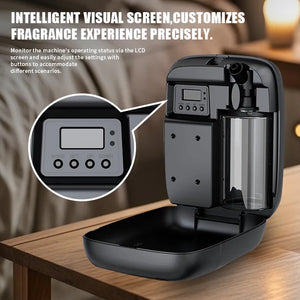
Vaayu at Rs 11,999 — waterless cold-air nebulisation with no standing water tank, up to 1000 m³, a 400ml fill lasting about seventy-five days, app control with 1h/4h/8h/24h timers, under 38 dB, auto-stop and a key-lock for public areas. The
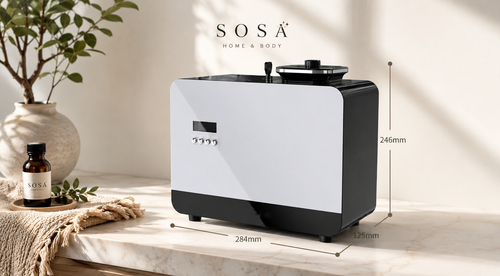
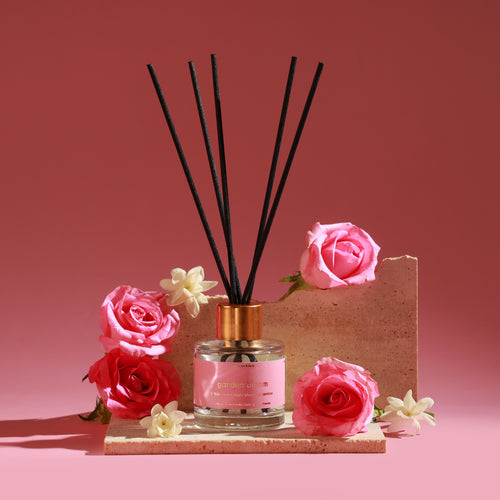
Aangan at Rs 25,999 for an atrium or a whole floor. Alcohol-free reeds from Rs 749 for an administrative cabin. Free shipping above Rs 499. SOSA claims no medical, therapeutic or air-treatment effect for any of it, and a diffuser is not an air purifier.
Straight answer
How should a medical centre describe professional scenting internally and to patients without making a health claim?
1. Start by classifying it, because the classification writes most of the wording for you. On the purchase order, in the asset register and in the budget, it is a facilities and housekeeping consumable: “Ambient fragrance, public areas only. Housekeeping and presentation.” Not patient experience. Not patient comfort. Not wellbeing. The moment it sits in a patient-facing budget line, somebody downstream feels obliged to justify it in patient-facing terms, and that is where claims are born — not in a brochure, but in a budget code.
Whether this is a facilities cost or a patient-experience cost looks at the same question from the finance side and reaches the same place.
2. Fix the internal sentence and put it in four documents. The sentence I would use, verbatim:
“Ambient fragrance, public areas only. Housekeeping and presentation. No clinical, therapeutic, air-treatment or air-purification claim is made or implied. Clinical areas are maintained fragrance-free. Any clinician may have any zone switched off without giving a reason, and the request is recorded rather than reviewed.” That goes on the purchase order, in the asset register entry for the machine, at the head of the scenting page of your standard operating procedure, and in the minute of whichever meeting approved it. Four copies of one sentence, and your medical director has signed all four.
3. Fix the patient-facing sentence, and make it one sentence. The front desk will be asked this perhaps twice a month, usually pleasantly, and the answer should not be improvised. The sentence I would train:
“It is a light fragrance we run in the entrance and waiting areas as part of our housekeeping. The consultation and treatment rooms are kept fragrance-free, and we can seat you away from it or switch it off if you would prefer.” Three facts and an offer: what it is, where it is not, and that the patient has a say. No benefit, no reassurance, no explanation of why fragrance is nice.
What to say to a patient who asks about the fragrance works through the variants, including the version for somebody who is annoyed rather than curious.
4. Fix the induction line, and have it read out rather than emailed. One line, spoken, in the induction for every new joiner from a consultant to a housekeeping attendant:
“We run a light fragrance in the public areas. It is housekeeping, like the floor polish and the flowers. It is not a treatment and it does nothing to a patient. If anybody asks, say that. If anybody objects, we move them or turn it off. Any clinician can have it switched off in any zone without giving a reason.” The reason it is spoken is that staff invent claims out of kindness, not out of marketing: a receptionist who wants to be helpful to a nervous patient will reach for a comforting sentence, and the only reliable way to stop that is to give her a better one first and to say it out loud.
5. Decide about signage, and for most clinics the decision is not to. If you do sign it — and there is a reasonable case where you have regular fragrance-sensitive attenders — the line is:
“Fragrance is used in this reception area. Clinical rooms are fragrance-free. Please tell the desk if you would prefer to be seated away from it.” Nothing else. A sign that adds a purpose is a claim with a frame around it and a brass fixing, and it is the single easiest thing for somebody to photograph.
How to decide where to scent when patients have asthma or fragrance sensitivity is the page to read before you choose between signing and not signing.
6. Then retire the sentences, and then test your supplier. The never-list is in the next section and it is shorter than people expect, because almost all of it reduces to one rule: never assert an effect on a person, a condition or the air. And then the test, which I would apply to every supplier including me.
Ask for the claim in writing, on company letterhead, addressed by name to your medical director, signed by whoever at that company is accountable for it, with the evidence appended, and say that you will keep it on file with the purchase. In my experience there are three outcomes and no fourth: the claim is quietly withdrawn in conversation, a glossy document arrives with no author and no evidence, or nothing arrives at all.
A portion of every order supports girl-child education through Nanhi Kali.
TL;DR: classify it as a facilities and housekeeping consumable, then fix five sentences — the internal sentence for the purchase order, register, procedure and minute; the one-sentence front-desk answer; the spoken induction line; the signage line if you sign at all; and the never-list. Never assert an effect on a person, a condition or the air. Then ask every supplier for their claim in writing, on letterhead, addressed to your medical director, with the evidence appended.
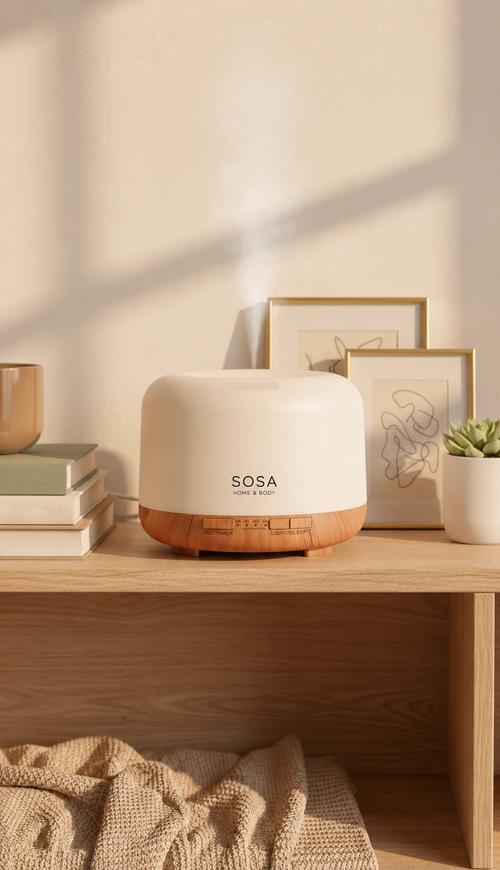
What the wording has to cover, in order
SOSA commercial scenting from ₹899
Five documents and one list, and every one of them is free.
The purchase order and the asset register say what the thing is. The procedure says where it runs and who can switch it off. The induction says what staff may tell a patient. The front desk has one sentence. The sign, if there is one, carries no benefit at all. And the never-list retires every sentence that asserts an effect on a person, a condition or the air. The only costed line is the hardware: the
Vaayu at ₹11,999, the
Aangan at ₹25,999 for an atrium or a whole floor, and an alcohol-free
reed diffuser from ₹749 for an administrative cabin. SOSA makes no clinical, therapeutic or air-treatment claim for any of them. Free shipping above ₹499.
The five places the wording lives, and all five are free
The reason to write all of this down before you buy anything is that a claim is almost never made deliberately. It is made by a kind receptionist trying to settle a nervous patient, by a branch manager filling in a social media post on a Friday, by a junior buyer copying a supplier's own product description into a purchase order, and by a well-meaning sign ordered six months after the machine arrived. Not one of those four people is trying to assert a clinical effect; all four of them will, unless somebody has already given them the sentence to use instead. So the work here is prohibition plus substitution, and the substitution half matters more. A never-list circulated on its own produces silence at the front desk, and silence at the front desk produces improvisation. Give people the permitted sentence first and the prohibited ones second, and the problem mostly disappears. How a clinic can use fragrance without making medical claims is the principle behind this page; what follows is the wording.
1
THE EXACT INTERNAL WORDING
The purchase order, the asset register, the procedure and the minute
The sentence, verbatim, for all four: “Ambient fragrance, public areas only. Housekeeping and presentation. No clinical, therapeutic, air-treatment or air-purification claim is made or implied. Clinical areas are maintained fragrance-free. Any clinician may have any zone switched off without giving a reason, and the request is recorded rather than reviewed.” On the purchase order it goes in the description field, not in a note, because the description is what gets copied forward into the asset register and the invoice. On the asset register the entry reads: machine, location, zone reference to the signed plan, intensity as a numeral, named owner, refill cadence, and that sentence. In the procedure it heads the page, above the operational lines. In the minute of the meeting that approved it, it is the resolution.
And the budget line is the quiet decision that protects all four: classify it under facilities, with housekeeping consumables, and not under patient experience, patient comfort, marketing or any heading with a patient in it. I have watched this one choice do more work than any amount of training. A facilities consumable does not need a justification in patient terms, so nobody writes one; a patient-experience line invites a sentence about what the patient experiences, and that sentence is a claim. The other internal document worth fixing is the vendor comparison, if your procurement team keeps one: the columns should be coverage in cubic metres, noise, water tank or no water tank, timer and app control, lockability, refill interval, cost per year and certification, and there should be no column at all for benefit.
How a procurement team should evaluate a scenting system sets that sheet out. If a supplier's own brochure contains a therapeutic or air-cleaning claim, the correct internal handling is to note it in the comparison, exclude the claim from your own documents, and ask for it in writing — which is the test at the end of this page.
2
THE PATIENT-FACING SENTENCE, THE INDUCTION LINE AND THE SIGN
What the desk says, what induction says, and what the sign does not say
The front desk, one sentence, trained and not improvised: “It is a light fragrance we run in the entrance and waiting areas as part of our housekeeping. The consultation and treatment rooms are kept fragrance-free, and we can seat you away from it or switch it off if you would prefer.” It contains three facts and one offer and no reassurance, and the offer is the part that makes it safe: a patient who is told they have a say stops needing an explanation. The shorter version, for a busy counter: “It is part of our housekeeping, and the clinical rooms are fragrance-free.” And the version for somebody who is not curious but unhappy: “I am sorry — I will turn it off now and seat you at the far end. Thank you for telling us.” Nobody at the desk should be defending the decision; the desk's job is to act on an objection, not to justify a purchase, and the staff who have that made explicit to them handle it far better. The induction line, read out in the induction and not sent by email: “We run a light fragrance in the public areas. It is housekeeping, like the floor polish and the flowers. It is not a treatment and it does nothing to a patient. If anybody asks, say that. If anybody objects, we move them or turn it off. Any clinician can have it switched off in any zone without giving a reason.” Read it to consultants, nurses, technicians, front office, housekeeping and security alike, because security and housekeeping are the two groups most often asked questions in corridors and least often briefed. The signage line, and the prior decision not to sign: most clinics should not put up a sign, because a sign draws attention to the one thing you have gone to some trouble to keep unremarkable. Where there is a real case — regular attenders who are fragrance-sensitive, a department whose patients you know by name — the line is “Fragrance is used in this reception area. Clinical rooms are fragrance-free. Please tell the desk if you would prefer to be seated away from it.” and nothing more. No purpose, no benefit, no adjective about the atmosphere. A sign that says a fragrance is used is information. A sign that says why is a claim in a frame, screwed to a wall, at eye height, in a building full of phone cameras.
3
THE SENTENCES NEVER TO USE, AND THE VENDOR TEST
One page of prohibitions, and one letter that settles the supplier question
Retire these, in every register: internal documents, the front desk, your website, your brochure, your social posts and your staff WhatsApp group. “Calming”, “relaxing” and “soothing” — each asserts an effect on a person, and in a clinic the assertion lands as clinical. “Reduces anxiety”, “helps patients relax before a procedure”, “eases nerves” — direct clinical claims, and the worst of them because they are aimed at exactly the patient least able to evaluate them. “Aromatherapy” — it names a therapy, so using it is claiming one. “Wellness” and “spa” — borrowed authority with no definition behind it, and in a medical building a word with no definition is a word a complainant will define for you. “Purifies the air”, “air purification”, “cleans the air”, “freshens the air” used to mean treatment — a diffuser adds a small quantity of fragrance material to air and removes nothing from it, so a diffuser is not an air purifier and this sentence is simply false. “Antibacterial”, “antimicrobial”, “disinfects”, “sanitises”, “kills germs”, “hospital grade” — all of these move you into a regulated product category you are not in. “Hygienic” applied to the fragrance itself. “Helps children feel less afraid”. “Aids recovery”, “improves sleep”, “helps patients breathe easier”. “Therapeutic grade” of an oil, which means nothing and sounds as though it means a great deal. “Clinically proven” of anything at all. And the soft ones that are the same claim in a better coat: “patients feel calmer the moment they walk in”, “takes the edge off a long wait”, “a stress-free environment”. The permitted substitutions are short: “the building smells of nothing in particular”, “it smells looked after”, “it is part of our housekeeping”, “presentation”. That is the whole permitted vocabulary and it is enough. Then the vendor test, and apply it to me as readily as to anyone. Write, on your own letterhead: “Thank you for your presentation on [date]. You stated that [their exact words]. Our medical director is [name]. Please send that statement on your company letterhead, addressed to [him/her], signed by whoever at your company is accountable for it, with the evidence you rely on appended. We will keep it on file with the purchase.” Send it by email and ask for a signed scan. Three things happen and I have never seen a fourth: the claim is withdrawn in a phone call, usually described as a misunderstanding; a glossy deck arrives with no author, no date and references that do not resolve; or nothing arrives and the salesperson stops mentioning it. All three are useful. A supplier willing to put a therapeutic claim in a signed letter to a named medical director has handed you a liability to defend rather than a product to use, and a supplier who will not put it in writing has just told you what they think of it.
And what SOSA will put in writing, since it is only fair: a SOSA diffuser disperses fragrance into the air of a room. It does not purify, disinfect, clean or treat air, it does not treat, calm, soothe or affect any patient or any condition, and it has no clinical or therapeutic effect of any kind. It is housekeeping and presentation. That paragraph is on this page, it is on every page of this cluster, and we will sign it addressed to your medical director if you ask.
Every document, with the wording and the prohibition
Print this, fill in your own names, and circulate it with the procedure. The third column is the one that actually gets read, and the last column is the reason it holds: every row has a signature behind it rather than a convention.
Print this
Eight places a claim can appear, and the wording for each
| Where it is written or said |
The wording to use |
What it must never say |
Who signs it |
| Purchase order and asset register ★ |
“Ambient fragrance, public areas only. Housekeeping and presentation. No clinical, therapeutic or air-treatment claim is made or implied. Clinical areas fragrance-free.” |
Anything copied out of a supplier's brochure, and any word with a patient or a condition in it |
The medical director, countersigned by facilities |
| The budget line |
Facilities — housekeeping consumables — ambient fragrance (public areas) |
Patient experience, patient comfort, wellbeing, or marketing. A patient-facing code invites a patient-facing justification |
Finance, on the facilities head's recommendation |
| The standard operating procedure |
The internal sentence at the head of the page, then zones by reference to the signed plan, intensity as a numeral, hours, owner, veto register, review date. The template
|
Any statement of purpose or effect in the operational lines |
Whoever signed the procedure, with a review date |
| Staff induction, spoken |
“It is housekeeping, like the floor polish and the flowers. It is not a treatment and it does nothing to a patient. If anybody objects, we move them or turn it off.” |
Any kind, comforting sentence invented at the moment to settle a nervous patient |
The induction owner, for every grade of staff |
| The front desk, to a patient |
“A light fragrance in the entrance and waiting areas, as part of our housekeeping. The consultation and treatment rooms are fragrance-free, and we can seat you away from it or switch it off.” |
Any benefit, any reassurance, and any defence of the decision. The desk acts on objections; it does not justify purchases |
Front-office lead, trained not emailed. The variants
|
| Signage, if you sign at all |
“Fragrance is used in this reception area. Clinical rooms are fragrance-free. Please tell the desk if you would prefer to be seated away from it.” |
Any purpose at all. A sign with a reason on it is a claim in a frame, at eye height, in a building full of cameras |
The medical director, and most clinics should decline to sign |
| Website, brochure, social posts |
“Our public areas are lightly scented as part of our housekeeping. Clinical areas are fragrance-free.” Or, better, nothing at all |
Every word on the never-list, and especially the soft ones: calmer, soothing, stress-free, takes the edge off |
Whoever approves clinical communications, not the agency |
| The supplier's own claim |
A signed letter on their letterhead, addressed to your medical director by name, with the evidence appended, kept on file with the purchase |
A verbal claim, a slide, or a brochure with no author and no date |
Their accountable officer. The procurement sheet
|
Shop this guide
What we sell, described the way we are willing to sign
The SOSA principle
A claim is what a reasonable patient understands you to be asserting, and in a clinic your own authority does the asserting for you. So the only safe vocabulary is housekeeping and presentation. And the only safe test of a supplier is a signed letter addressed to your medical director.
Five sentences, one never-list, one letter. Every item on this page is free except the machine at the bottom of it.
The never-list, the vendor letter, and the one costed line
Do the wording before the purchase, and do it in a particular order, because the order is what makes it stick. Week one: write the internal sentence and get it into the draft purchase order, the draft asset-register entry and the resolution of whichever meeting will approve it, and settle the budget code as facilities and housekeeping consumables. Week two: draft the procedure page with the internal sentence at the head of it, mark up the zone plan, and have your medical director sign both — the plan matters as much as the prose, because “public areas” in a sentence will be interpreted four ways by four departments and a hatched plan will not. Week three: write the induction line and the three front-desk variants, and brief the front office, housekeeping and security in person. Week four: circulate the never-list on one side of one page, and decide the signage question, which for most clinics is a decision not to sign. Then open the veto register, which is a sheet with four columns — date, zone, who asked, action — and the rule that any clinician can have any zone switched off without giving a reason and the request is recorded rather than reviewed. That register is the single most useful document in this entire set, because it converts the awkward conversation you are worried about into a line of administration, and because a clinic that can show one is a clinic that has clearly not been overriding its own clinicians. Handling patients who are sensitive to fragrance and the rooms that stay fragrance-free whatever happens are the two pages to read alongside it.
Two things about the vendor letter, because it is the part of this page people find uncomfortable and it is the part that does the most work. The first is that it is not an accusation and should not be written as one. Suppliers make therapeutic claims about ambient fragrance constantly and most of the people saying them have simply inherited the sentence from a brochure and never had to stand behind it. A polite request for the claim in writing, on letterhead, addressed to a named medical director, with the evidence appended, gives them a graceful way to stop saying it and gives you a file note either way. I would send it after the presentation rather than during it, in writing rather than on a call, and I would copy your own quality lead. The second is that you should apply it to SOSA. I would be a poor advertisement for this page if I asked you to test everybody else and not me. What we will sign, addressed to your medical director, is the negative: that a SOSA diffuser disperses fragrance into room air, that it does not purify, disinfect, clean or treat air, that it does not treat, calm or affect any patient or any condition, that it has no clinical or therapeutic effect of any kind, and that it is housekeeping and presentation. What we will not sign is anything positive about a patient, because there is nothing there I could defend and I would rather lose the sale than write it. If that makes us a less exciting supplier than the alternative in your comparison sheet, I would gently point out that the exciting one is the one whose sentence you will have to defend to a complainant in two years, not us.
And then the one costed line on the page, in the detail somebody signing a purchase order will want. The Vaayu is ₹11,999 and the argument for it in a clinic is a housekeeping argument rather than a clinical one: waterless cold-air nebulisation, so there is no standing water tank to be emptied, rinsed and dried every day by a named person in a building that runs twelve hours. If that person does not exist, do not buy a water tank at all, which is what rules the ultrasonic Sukoon at ₹1,899, Boond at ₹899 and Megh at ₹3,499 out of public clinical property; those three stay honest for a single administrative cabin where one person owns the daily routine, and the Sukoon arrives with three 15ml Hotel Collection scents included. Coverage up to 1000 cubic metres with the sum done properly — floor area divided by 10.76, multiplied by ceiling height, counting only the volumes a door closes, which removes forty to sixty per cent of most clinic plans because every clinical room is fragrance-free with its door shut. A 400ml fill lasting about seventy-five days, so roughly five fills a year, and a 300ml refill at ₹1,799 keeps it at about ₹12,600 a year. App control and 1h/4h/8h/24h timers; under 38 dB; auto-stop; and the key-lock, which belongs in a claims conversation as much as in an operational one, because a locked machine is a machine whose written setting and whose written zones are still true next month. The Aangan at ₹25,999 for an atrium or a whole floor. And the bottle itself should be the lightest thing in the box, held to one rule: a patient should not be able to tell you what the fragrance is, only that the place did not smell of anything unpleasant — which is, incidentally, also the safest possible position to be in if anybody ever asks you what the fragrance is for. Public areas only: entrance, reception, shared and departmental waiting, inter-departmental corridors, lift lobbies, administration and the café corner. Consultation and examination rooms, treatment and procedure rooms, day-care surgery, dressing rooms, sample collection, laboratories, dispensing, sterile stores, imaging, oncology day-care and paediatric clinical areas stay fragrance-free with their doors shut.
The safest thing a clinic can say about its fragrance is that it is housekeeping. Everything warmer than that is a sentence somebody will eventually have to defend, and it will not be the person who wrote it.
— Sonal Sahani, SOSA
The SOSA edit
The same wording compressed into tiers for a governance meeting, with who signs each one. Five of the six rows are free, and the sixth is the only thing on this page SOSA sells.
The SOSA edit
Five free tiers, one signature each, and one costed line
| Tier |
What is in it |
Who signs it |
Cost |
| 1. The internal sentence ★ |
“Ambient fragrance, public areas only. Housekeeping and presentation. No clinical, therapeutic or air-treatment claim is made or implied. Clinical areas fragrance-free.” On the purchase order, the asset register, the procedure and the minute — plus a facilities budget code |
The medical director, four times |
₹0 |
| 2. The patient-facing sentence and the induction line |
One trained sentence at the desk with the offer to move or switch off; one spoken induction line for every grade of staff including security and housekeeping. The variants
|
Front-office lead and the induction owner |
₹0 |
| 3. The signed zone plan and the veto register |
A hatched floor plan rather than the words “public areas”, and a four-column register in which any clinician can switch off any zone without giving a reason. The fragrance-free list
|
The medical director, with the register open to the quality lead |
₹0 |
| 4. The never-list, and the signage decision |
One side of one page retiring every sentence that asserts an effect on a person, a condition or the air — and a decision, usually, not to put up a sign at all |
Whoever approves clinical communications |
₹0 |
| 5. The vendor letter |
The claim requested in writing, on the supplier's letterhead, addressed to your medical director by name, signed, evidence appended, filed with the purchase. Applied to SOSA too |
Procurement, copied to the quality lead. The sheet
|
₹0 |
| 6. Vaayu — described the way we will sign it |
Waterless, no standing water tank, up to 1000 m³, 400ml lasting about 75 days, app and timers, under 38 dB, auto-stop, key-lock. Disperses fragrance into room air; purifies, disinfects, treats and calms nothing |
Facilities, with the internal sentence in the description field |
₹11,999 |
Honest notes for buyers: this page offers wording, not legal or regulatory advice. What your facility may say about anything is a decision for your own medical director, quality lead and legal adviser, and the sentences here are drafts for them to approve or amend rather than compliance guarantees. On fragrance itself, fragrance in a medical facility is housekeeping and presentation, never treatment. Nothing here claims that a fragrance reduces anxiety, aids recovery, improves sleep, cleans or disinfects air, or has any clinical effect whatsoever, because it does not and a diffuser is not an air purifier. Scenting belongs to the entrance, reception, shared waiting areas, inter-departmental corridors and administrative rooms. Consultation and examination rooms, treatment and procedure rooms, day-care surgery, dressing rooms, blood- and sample-collection rooms, laboratories, pharmacy dispensing, sterile stores, imaging rooms, oncology day-care and paediatric clinical areas should be left fragrance-free. A persistent smell is information about a dry drain trap, a bin, a soiled-linen route or an air-conditioning drain pan: find it and fix it rather than covering it. On the machines: the
Vaayu at ₹11,999 is waterless cold-air nebulisation with no standing water tank, covering up to 1000m³ or roughly 2,000–3,000 sq ft, with a 400ml tank lasting about 75 days, app control, 1h/4h/8h/24h timers, under-38dB running, auto-stop and a key-lock for public areas. The
Aangan at ₹25,999 covers up to 3,000m³ and connects to HVAC for a whole floor or an atrium. The ultrasonic
Sukoon,
Boond and
Megh are water-based, hold standing water and add 30–50 ml of water an hour to the air, which suits a single administrative cabin with a named person emptying and drying the tank daily and is unsuitable for public clinical property. An alcohol-free
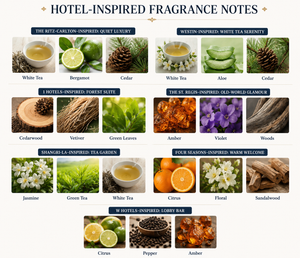
reed diffuser needs 24–72 hours to establish and suits a small lobby rather than a large waiting hall. Candles are not appropriate in a healthcare facility because an open flame is a fire-safety matter. SOSA does not make a room spray. The Hotel Collection scents are SOSA's own interpretations inspired by the world's finest hotels; SOSA is an independent Indian fragrance house, not affiliated with or endorsed by any hotel brand. A portion of every order supports girl-child education through Nanhi Kali.
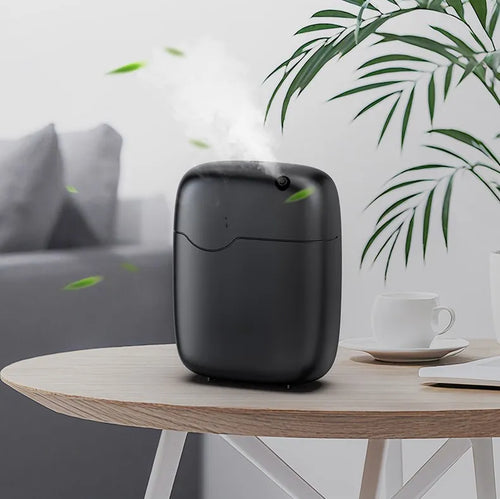
The machine, and the sentence we will put our name to
SOSA Vaayu ₹11,999
Here is the whole claim, in the form we will sign and send to your medical director. A SOSA Vaayu disperses fragrance into the air of a room. It does not purify, disinfect, clean or treat air. It does not treat, calm, soothe or affect any patient or any condition. It has no clinical or therapeutic effect of any kind. It is housekeeping and presentation, and clinical areas should be left fragrance-free. What it is, technically: waterless cold-air nebulisation with no standing water tank, up to 1000 cubic metres, a 400ml fill lasting about seventy-five days, app control with 1h/4h/8h/24h timers, under 38 dB, auto-stop, key-lock, four hotel-inspired scents included.
A note from Sonal
I learned to write this page in a meeting room in Hyderabad, sitting opposite a medical director who had been handed a scenting proposal by her own facilities team and who asked me, quite politely, to read out the first line of the brochure that had come with it. It said the system created a calming environment that helped reduce patient anxiety. She asked whether I would put that in a letter to her, signed, and I said no. She said that was the only reason the conversation was continuing, and then she spent forty minutes telling me what she actually needed, which was not a fragrance at all but a set of sentences her staff could use. Everything on this page came out of that forty minutes, and the vendor letter was her idea rather than mine. I have recommended it to every clinic since and it has cost me at least one sale a year, which seems about right.
What I have learned since is that the claims almost never come from the marketing department. They come from a receptionist who can see that somebody is frightened and wants to say something kind, and the sentence she reaches for is the sentence she heard in an advertisement, because nobody ever gave her a better one. That is why the induction line is read out rather than emailed, and why the front-desk sentence ends with an offer to switch the thing off: once staff know they are allowed to turn it off, they stop needing to explain why it is on. The other thing I have learned is that a veto register changes the temperature of the whole subject. A clinic where any clinician can switch off any zone without giving a reason does not have arguments about fragrance, because there is nothing to argue about, and the register quietly demonstrates that the clinical side was never overridden.
I would rather sell one machine to a clinic that has written its five sentences down than ten to clinics that are repeating mine, because the second kind will eventually have to defend a sentence I wrote and I would not want that for them. Everything is made and supported from Pune, and a part of every order funds girl-child education through Nanhi Kali. You get a space that smells like somewhere looked after; a girl gets a classroom. That equation has always felt right to me.
Frequently asked questions
How should a medical centre describe its scenting internally?
As a facilities and housekeeping consumable, with one sentence repeated in four places: the purchase order, the asset register, the head of the scenting page of the procedure, and the minute of the meeting that approved it. The wording is: ambient fragrance, public areas only; housekeeping and presentation; no clinical, therapeutic, air-treatment or air-purification claim is made or implied; clinical areas are maintained fragrance-free; any clinician may have any zone switched off without giving a reason. Put the budget code under facilities rather than patient experience.
What should the front desk say when a patient asks about the fragrance?
One trained sentence rather than an improvisation: that it is a light fragrance run in the entrance and waiting areas as part of the housekeeping, that the consultation and treatment rooms are kept fragrance-free, and that the patient can be seated away from it or it can be switched off if they would prefer. Three facts and an offer. No benefit, no reassurance and no defence of the purchase, because the desk's job is to act on an objection rather than to justify a decision.
Which words and phrases should a clinic never use about ambient fragrance?
Anything that asserts an effect on a person, a condition or the air. That rules out calming, relaxing, soothing, reduces anxiety, helps patients relax, aromatherapy, wellness, spa, purifies or cleans the air, antibacterial, antimicrobial, disinfects, sanitises, kills germs, hospital grade, therapeutic grade, clinically proven, aids recovery, improves sleep, helps patients breathe easier, and the softer versions such as patients feel calmer the moment they walk in or a stress-free environment. The permitted vocabulary is housekeeping, presentation, and smells of nothing in particular.
Should we put up a sign saying the reception is scented?
Most clinics should not, because a sign draws attention to the one thing you have taken trouble to keep unremarkable. Where there is a genuine case, such as regular attenders who are sensitive to fragrance, the wording is that fragrance is used in this reception area, that clinical rooms are fragrance-free, and that the desk can seat somebody away from it on request. Nothing further. A sign that states a purpose is a claim with a frame around it, fixed to a wall at eye height.
How do we check whether a scenting supplier is making a claim we would have to defend?
Ask for it in writing. After the presentation, write to the supplier quoting their exact words, name your medical director, and ask for that statement on their company letterhead, addressed to that person, signed by whoever at their company is accountable for it, with the evidence appended, and say you will keep it on file with the purchase. In practice one of three things follows: the claim is withdrawn in a phone call, an unsigned document with unresolvable references arrives, or nothing arrives at all. Apply the test to every supplier, including us.
Five sentences, one letter
Write the wording before the purchase order — and ask every supplier, including this one, to sign their claim
The Vaayu is ₹11,999, and here is the whole claim: it disperses fragrance into room air, it does not purify, disinfect, clean or treat air, and it has no clinical or therapeutic effect of any kind. Waterless cold-air nebulisation with no standing water tank, up to 1000 m³ or roughly 2,000–3,000 sq ft, a 400ml tank lasting about seventy-five days, Bluetooth app control with 1h/4h/8h/24h timers, under 38 dB, auto-stop and a key-lock for public areas, supplied with four hotel-inspired fragrances. The Aangan is ₹25,999 for 8,000–10,000 sq ft, and alcohol-free reeds from ₹749 suit an administrative cabin. Free shipping above ₹499, and a portion of every order supports girl-child education through Nanhi Kali.
See the Vaayu · ₹11,999 All commercial scenting
Continue the read
More from SOSA
Editorial standards & sources
Product facts used in this guide. SOSA Vaayu Rs 11,999: waterless cold-air nebulising diffuser, no water reservoir, coverage up to 1000m3 (approximately 2,000-3,000 sq ft), 400ml refillable tank lasting up to about 75 days per fill, Bluetooth app plus onboard control, 1h/4h/8h/24h timer scheduling, adjustable intensity, under 38 dB, DC 12V/1A at 5W, 165 x 80.5 x 215 mm and 0.9 kg, freestanding or wall or HVAC mounted, auto-stop and key-lock, CE, RoHS and SGS certified, supplied with four hotel-inspired fragrances. SOSA Aangan Rs 25,999: HVAC-connected or standalone commercial nebulising diffuser, coverage up to 3,000m3 (roughly 8,000-10,000 sq ft), 800ml reservoir, metal body, programmable schedules, under 42 dB. Ultrasonic machines are water-based, hold standing water and consume 30-50 ml of water an hour: Sukoon Rs 1,899 (500ml, 270-320 sq ft, 16-18 hours on low, three 15ml Hotel Collection scents included), Boond Rs 899 (300ml), Megh Rs 3,499 (6 litres). Hotel Collection water-based fragrance 15ml Rs 299, 100ml Rs 999, 300ml Rs 1,799. Alcohol-free reed diffusers from Rs 749, requiring 24-72 hours to reach their working level. Free shipping above Rs 499. Coverage arithmetic: cubic metres equal floor area in square feet divided by 10.76 and multiplied by ceiling height in metres, counting only the volumes that are actually scented. This guide makes no medical, therapeutic or clinical claim of any kind for fragrance: a diffuser does not purify, disinfect or clean air, and does not treat, calm or affect any patient or condition. Fragrance is housekeeping and presentation. Clinical areas should be left fragrance-free, and a persistent odour should be traced to its source and corrected rather than covered. SOSA is not affiliated with or endorsed by any hotel brand. Prices subject to change - see the live product pages.

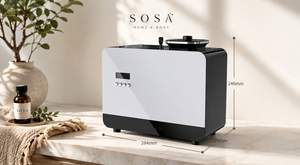
 Aangan · atrium or floor₹25,999Shop →
 Reeds · admin cabinfrom ₹749Shop →