Founder Diaries · Clinics & Medical Centres · Which Budget Line It Belongs In
By Sonal Sahani · ISIPCA Versailles 13 min read Updated November 2026
Facilities. Not marketing, not patient experience, not brand — facilities, in the same part of the ledger as mop heads, hand towels, air-conditioning filters and the drain-trap round. I know this reads as an accounting detail and I am going to argue that it is the single most consequential decision in the whole purchase, because the budget line a fragrance sits in determines the language the organisation is allowed to use about it. A facilities line needs a specification: which zones, which setting, which hours, who owns it. A marketing line needs a justification, a justification needs a return, a return needs a metric, and the only metric anybody ever reaches for is patient satisfaction — at which point your own internal paperwork is asserting an effect that fragrance does not have. That is how a housekeeping item acquires a clinical claim, and it does not happen because a vendor lied to you. It happens because of where somebody filed it. I will concede the part that is genuinely arguable: brand may well choose the scent, and should. Facilities owns the spend.
Quick answers — read this first
Where each cost belongs: the machine at ₹11,999, facilities, as low-value equipment or an expensed asset depending on your capitalisation threshold · refills at about ₹7,200 a year per machine, facilities, under housekeeping consumables next to mop heads and hand towels · electricity at roughly ₹150 a year, facilities utilities and not worth a line of its own · the four refills and the daily check, facilities labour inside rounds that already exist, so no incremental cost · choosing which of the four supplied scents, brand or the centre head, with no budget attached to the decision.
What belongs in a patient-experience budget, if you have one: seating, signage, drinking water, toilets, waiting-time management, the lift lobby light. Those are the items that change a patient's experience of your facility and they all cost more than the fragrance does. Fragrance is housekeeping, it is the smallest line in this conversation, and
it comes fourth.
The clause not to accept, wherever the money sits: a key performance indicator expressed as satisfaction, comfort or perception. If the budget approval says the system will improve a score, somebody has to report against it, and the only way to report against it is to claim an effect fragrance does not have. The deliverable is a stated level in stated zones during stated hours. Housekeeping and presentation, and no clinical claim of any kind.
The short answer
Short answer: fragrance belongs in the facilities budget, alongside housekeeping consumables, not in marketing or in a patient-experience line. The machine at Rs 11,999 is facilities equipment, refills at about Rs 7,200 a year per machine are facilities consumables, and the labour sits inside opening rounds that already exist. The reason is not accounting tidiness: a marketing line requires a justification, a justification requires a metric, and the metric reached for is always patient satisfaction, which forces the organisation's own paperwork to assert a clinical effect that fragrance does not have.
The split that settles the internal argument: brand or the centre head chooses which of the four supplied fragrances the facility uses, once, with no budget attached to that decision. Facilities owns the capital cost, the consumable, the setting, the schedule, the named owner, the procedure and the veto. Nobody attaches a satisfaction target to any of it. A group running four branches with centralised purchasing holds one line, one fragrance and one purchase order, which is the whole reason standardising is worth doing.
The numbers a budget needs, per machine: Vaayu Rs 11,999 capital, four 300ml refills a year at Rs 1,799 which is about Rs 7,200, and roughly Rs 150 of electricity at 5 W over a twelve-hour day across about 310 opening days - so roughly Rs 19,000 in year one and Rs 7,350 a year thereafter. For four branches at one machine each that is about Rs 77,000 in year one and about Rs 29,400 a year after. Aangan Rs 25,999 where the public volume exceeds 1000 m3. Free shipping above Rs 499.
Straight answer
Should fragrance be a facilities cost or a patient-experience cost in a clinic's budget?
1. Facilities, and the test is what the line has to be defended with. A facilities line is defended with a specification: these zones, this setting, these hours, this named owner, this many refills a year, this much a year. Every one of those is a fact about your building that can be checked by walking around it. A marketing or patient-experience line is defended with a return, and there is no honest return to state here, because fragrance in a medical facility is housekeeping and presentation and nothing else.
Put it in facilities and the hardest question you will be asked is whether ₹7,350 a year is worth it. Put it in marketing and the hardest question you will be asked is what it achieved, which is a question with no truthful answer that would satisfy the person asking.2. The mechanism by which the wrong line produces a claim is worth spelling out, because it is not obvious and it is not the vendor's doing. A marketing budget is approved against an expected effect. Somebody therefore writes an expected effect into the approval note. The only effects available in this category are perceptual - patients will feel more comfortable, the facility will feel more cared for, satisfaction will improve - and the moment any of those is written down by your own organisation, your organisation has made a claim about fragrance affecting patients.
It will then be repeated by whoever is briefed from that note: the agency that writes your website, the designer who makes your signage, the executive who presents the quarter. Nobody involved intended to assert a clinical effect, and the document set now does. How a clinic uses fragrance without making medical claims is the page that goes through the wording in detail.
3. The second thing the wrong line does is make the spend discontinuous, which is a practical problem rather than a reputational one. A marketing budget is reviewed in campaign cycles and reallocated when a cycle needs money. A fragrance in a public area is not a campaign; it is a continuity item, like hand towels and filters, and its entire value is that the level is the same on a Tuesday in March as it was in November.
A machine that is switched off for one quarter because a budget was reallocated has not saved anything meaningful - about ₹1,800 of refill - and has produced the one outcome you were trying to avoid, which is a facility that smells different from one month to the next.4. The third thing, and the one a quality lead will care about most, is that the wrong line has no veto route. A facilities item sits inside the facilities procedure, which means it sits inside the quality system, which means
a clinician or a pharmacist can remove a zone by writing one line in a veto register. A marketing-owned fragrance has no natural mechanism for that. A nursing in-charge who is uneasy about a corridor would have to object to a brand decision, which is a different and much more awkward conversation, and the usual outcome is that she says nothing and resents it. Fragrance-free is the default in clinical space, and that default needs an owner who can be overruled from inside the building.
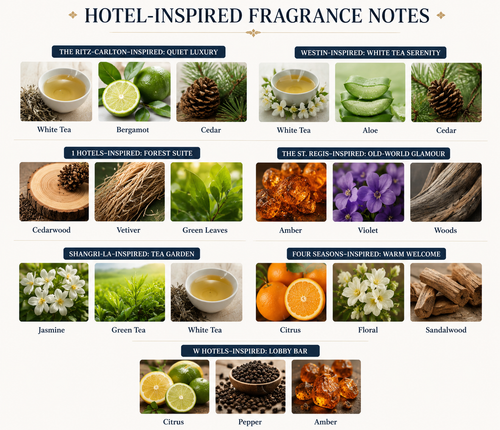
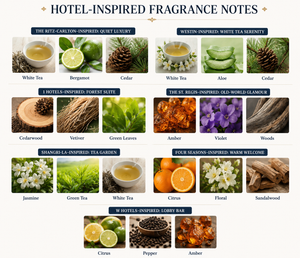
5. Now the concession, because the internal argument usually has a reasonable party on the other side of it. Brand should choose the fragrance. In a group with four branches and a single recognisable identity, which fragrance the facilities smell of is genuinely a brand decision and facilities has no particular competence to make it - the machine ships with four hotel-inspired scents, trialling them costs nothing, and the centre head or the brand lead picking one from four after a month is exactly the right process.
So the split that actually works is this: brand chooses the scent, once, with no budget attached to the choice. Facilities owns the capital cost, the consumable, the setting, the schedule, the named owner, the procedure and the veto register. And nobody attaches a metric to any of it. Whether a chain should run one signature fragrance across branches is the page that argues the brand side properly.
6. And if your organisation genuinely has a patient-experience budget, spend it on the things that are larger than this. Seating, signage, drinking water, clean toilets, waiting-time management, a working light in the lift lobby. Every one of those costs more than the fragrance and every one of them is noticed more. I sell the fragrance and I would still put it fourth:
housekeeping first, ventilation second, seating third, scent fourth, and if a line above it is outstanding this quarter, the correct budget decision is to spend nothing here. The
Vaayu at ₹11,999 with about ₹7,350 a year after it is a small, honest, boring facilities line, and that is the most useful thing I can say about it.
A portion of every order supports girl-child education through Nanhi Kali.
TL;DR: facilities, next to mop heads and filters. A marketing line needs a justification, a justification needs a metric, and the metric is always satisfaction — which forces your own paperwork to claim an effect fragrance does not have. A marketing line is also discontinuous and has no veto route for clinical staff. Brand may choose the scent, once, with no budget attached. Facilities owns the spend, the setting, the SOP and the veto.
The line it actually belongs on, next to mop heads
SOSA Hotel Collection refill ₹1,799
Four 300ml refills a year at ₹1,799 is about ₹7,200, which is an ordinary housekeeping consumable sitting between flat mop heads at ₹1,800 a year and the air-conditioning filters. That is the correct neighbourhood for it in a chart of accounts, and the correct neighbourhood is what keeps the vocabulary honest: nobody asks a mop head what it achieved. The
Vaayu at ₹11,999 is the equipment line above it, about ₹150 a year of electricity is the utilities line below it, and
the full-year cost for a medical centre does the arithmetic for several facility sizes. Housekeeping and presentation, never treatment, and no satisfaction target attached to any of it.
Why the marketing line acquires the claims
I have watched this happen in four or five organisations now and the sequence is always the same, which is why I think it is structural rather than a matter of anybody's carelessness. The purchase is small, so it needs a sponsor rather than a business case, and the sponsor who volunteers is usually marketing or brand, because fragrance sounds like their subject. The approval note therefore has to say what the money is for. “A low background fragrance in the entrance and waiting areas during opening hours” reads, to a marketing approver, like a description rather than a reason, so somebody adds the reason: patients will feel more comfortable. That sentence is now in an internal document. Six months later it is in a brief to an agency, and the agency writes it into web copy with a verb that is stronger than the one in the note. A year later a designer puts it on a standee in the waiting hall, and the standee is a published claim about fragrance affecting patients, standing in a healthcare facility, with your name on it. Nobody along that chain decided to make a medical claim. The claim was generated by the budget line, because the budget line demanded a justification and this category has no honest one to give. File it in facilities and the chain never starts: the approval note says which zones and which hours, and nobody briefs an agency from a facilities specification.
1
THE FIRST MECHANISM
A justification becomes a metric, and the metric becomes a claim
This is the one that does real damage, and it starts in your own paperwork rather than in a supplier's brochure. A facilities line is justified by a specification. A marketing line is justified by an expected effect, and the effects available in this category are all perceptual, so one of them gets written down. Then, because any organisation worth working for measures what it approves, somebody asks how the effect will be evidenced, and the answer is a satisfaction question added to a feedback form.
Now you have a metric, and a metric creates an obligation to report movement against it. The reporting is where the claim hardens: a slide that says satisfaction rose after scenting was introduced is a causal assertion about fragrance in a medical facility, made by you, with no method behind it. I have been shown that slide. The person presenting it was not dishonest and did not think they were making a clinical claim; they thought they were reporting on a project. The protection against all of it is upstream and it is one sentence in the approval: this is a housekeeping and presentation measure, the deliverable is a stated level in stated zones during stated hours, and no satisfaction or comfort target is attached.
A procurement team should refuse that clause from a vendor and should equally refuse to write it themselves. And if somebody insists on a measurement, the honest ones are available and free: whether the drain-trap round was signed every day, whether the four refill dates were met, how many objections were logged, whether anybody vetoed a zone.
2
THE SECOND MECHANISM
A campaign budget is discontinuous, and continuity is the entire value here
The second problem is operational and it is simpler. A marketing budget is built in cycles and raided when a cycle needs money. A fragrance in a public area has no value as a burst and considerable value as a constant: the whole point of a timed low level in the reception zone is that it is the same on a Tuesday in March as it was in November, which is what makes a facility read as looked after rather than as recently attended to. When the refill line is inside a campaign budget, the first quarter that needs money takes the ₹1,800, the machine runs dry, and for six weeks the building smells different. Nobody logs that as a decision. It arrives as a facilities surprise and gets fixed late. Worse, a reallocated fragrance budget is sometimes spent on a burst instead — a stronger bottle for an opening event, a spray at the counter for a VIP visit — which is the exact behaviour every page on this site argues against. A spray is a twenty-minute product in a twelve-hour building, and an event-driven increase in a clinic is how a waiting hall ends up with a level nobody chose. Facilities budgets are built for continuity items: filters, towels, consumables, mop heads. A 300ml refill four times a year belongs in that company, and the budget's own rhythm then protects the specification without anybody having to defend it.
3
THE THIRD MECHANISM
A brand-owned fragrance has no route for a clinician to veto a zone
The third one is the argument I would make to a medical director, and it is the one that usually ends the discussion.
Put the fragrance in facilities and it sits inside the facilities procedure, which sits inside the quality system. That means a nursing in-charge, a pharmacist, a laboratory lead or an infection-control lead can remove a zone from scope by writing one line in a veto register, same day, with no justification and no argument with anybody. Clause eleven of the SOP is the mechanism and it costs nothing.
Put the same fragrance in a brand budget and that mechanism has nowhere to attach. A clinician who is uneasy about the corridor outside her bench is now objecting to a brand decision, which is a conversation she will usually decline to have — and the outcome is not that the zone stays scented, it is that nobody tells you there was a problem. That matters more in a clinic than in a hotel because fragrance-free is the default in clinical space and the people best placed to know where the boundary should sit are the people working at it. A facilities owner can be overruled from inside the building, cheaply and without ceremony. A brand decision cannot, or at least not without a meeting that nobody wants. Keep the spend, the setting and the veto in one department, and let brand choose the bottle.
The instruction I would give a finance lead: approve it as facilities, with the specification as the deliverable and no satisfaction target of any kind. If a sponsor from marketing wants to choose the fragrance, that is reasonable and it is free — give them the choice of the four scents in the box and keep the budget where it is.
Every cost, and the line it belongs in
One row per cost, with the department, the reason and the approver. Print it for the meeting where this gets argued about, because the argument is usually about one or two rows rather than the whole table.
Print this
Which budget line each part of a scenting scheme sits in
| The cost |
The line it belongs in |
Why |
Who approves it |
| The machine, ₹11,999 ★ |
Facilities — equipment, capitalised or expensed against your own threshold |
It is a fixed building service with a specification, like an extract fan or a water cooler |
Facilities manager, with the quality lead signing the excluded-room list |
| Refills, about ₹7,200 a year per machine |
Facilities — housekeeping consumables |
Four 300ml bottles a year sits naturally between mop heads at ₹1,800 a year and the AC filters |
Facilities, on the same requisition as the rest of the consumables |
| Electricity, about ₹150 a year |
Facilities — utilities, and not worth a line of its own |
5 W over a twelve-hour day across roughly 310 days is some eighteen kilowatt-hours |
Nobody. It disappears into the utilities line |
| The four refills and the daily check |
Facilities labour, at no incremental cost |
The check is five seconds inside the existing T-60m opening round; the refills are four dated tasks |
The named owner and the housekeeping supervisor. Both names in the procedure
|
| Choosing which of the four scents |
Brand, or the centre head, with no budget attached to the decision |
Facilities has no competence here and the four scents arrive in the box, so trialling is free |
Brand or the centre head, once, and again only at the annual review |
| Replacement, spares and the annual verification |
Facilities — maintenance, alongside the air-conditioning scope |
It is a building service being maintained, and the verification is a walk rather than a contract |
Facilities, at the annual review of the procedure |
| Measuring the effect on patients |
Nowhere. Do not commission it |
There is no claimable effect to measure, and a survey designed to find one will be quoted as if it had |
Nobody. Measure the signed check sheet and the refill dates instead |
| Never |
Advertising and promotion, a campaign line, or a patient-experience line carrying a satisfaction target |
Never. A justification becomes a metric and a metric becomes a claim your own documents have made |
— |
Shop this guide
The equipment line, the consumable line, and the large-centre case
The SOSA principle
The budget line decides the vocabulary. A facilities line is defended with a specification; a marketing line is defended with a return, and there is no honest return to state here. That is how a housekeeping item ends up carrying a clinical claim, and no vendor had to say a word.
Brand may choose the scent, once, for nothing. Facilities owns the spend, the setting, the procedure and the veto.
The numbers, and the split that settles it
The numbers first, because they are small enough that the argument about where to file them costs more than the item does. Per machine: ₹11,999 of capital, four 300ml refills a year at ₹1,799 which is about ₹7,200, and roughly ₹150 of electricity at 5 W across a twelve-hour day and some three hundred and ten opening days. So about ₹19,000 in year one and about ₹7,350 every year after that, with no installation, no contractor, no shutdown and no maintenance contract, because there is nothing in a waterless machine for an annual maintenance contract to cover. For a group of four branches at one machine each, that is roughly ₹77,000 in year one and ₹29,400 a year thereafter, on one purchase order, with one fragrance across all four sites. Whether the ₹11,999 is capitalised or expensed depends on your own low-value asset threshold and your auditor's view of it rather than on anything I can tell you, but the consumable is unambiguously a consumable and it belongs under housekeeping with the mop heads and the hand towels. The annual cost worked for several facility sizes has the arithmetic for larger centres, and whether it is worth the cost at all is the page I would circulate before the meeting rather than after it.
Then the split, which is the part that actually settles the internal argument, because the argument is rarely about accounting and almost always about who gets to decide. Brand or the centre head chooses the fragrance. Once, from the four hotel-inspired scents that arrive with the machine, after a month of trying one a week in the lobby, with nothing attached to the decision except the decision. In a group running several branches this is genuinely a brand matter and facilities has no business holding it. Facilities owns everything else: the capital line, the consumable line, the siting, the intensity setting, the timer schedule, the named owner and deputy, the daily check, the procedure and the veto register. And nobody — not brand, not facilities, not the centre head, not finance — attaches a satisfaction, comfort or perception target to any part of it. I have found that writing the split down in two sentences in the procedure ends the argument permanently, because what each side wanted was never the whole thing: brand wanted the identity decision and facilities wanted not to be told to turn it up in June. The single-signature-fragrance question is where the brand case is made properly, and it is a good case.
And the honest version of the patient-experience argument, because there is one and it deserves better than a dismissal. If your organisation runs a patient-experience budget, the items that belong in it are larger and more noticed than this one: seating that can be wiped and does not hold an odour, signage somebody can read from the registration queue, drinking water that is available without asking, toilets that are checked hourly rather than cleaned twice, waiting-time management, a working light in the lift lobby. Each of those costs more than ₹7,350 a year and each of them changes a patient's experience of your building more than any fragrance does. I sell the fragrance and I will still tell you it comes fourth, behind housekeeping, ventilation and seating, and that if a line above it is outstanding this quarter then the correct budget decision here is zero. The order to spend in, costed is the page that puts that argument in full, and the list of free fixes is the one to work through before any of it. The thing I would not accept, wherever the money finally sits, is a patient-experience line that carries a measurement obligation. Move the ₹11,999 to whichever cost centre your organisation prefers if the politics require it — but keep the deliverable as a specification, keep the veto with the clinicians, and keep every number out of it except the four refill dates and the signed daily check.
The budget line is not an accounting detail here. It decides what your own documents are allowed to say about the product, and a marketing line has no honest sentence available to it.
— Sonal Sahani, SOSA
The SOSA edit
The same decision as five lines in a ledger plus the one line it should never be filed under, with amounts and approvers.
The SOSA edit
Five lines, one scent choice, and no metric anywhere
| Budget line |
What goes in it |
Who approves it |
Amount |
| 1. Facilities — housekeeping consumables ★ |
Four 300ml fragrance refills a year per machine, requisitioned with the mop heads, the towels and the filters |
Facilities, on the standing consumables requisition. No business case needed |
About ₹7,200 a year |
| 2. Facilities — equipment |
Vaayu at ₹11,999 per public volume, or Aangan at ₹25,999 where the volume sum exceeds 1000 m³ |
Facilities manager, with the quality lead signing the excluded-room list first |
₹11,999 once |
| 3. Facilities — utilities and labour |
5 W over a twelve-hour day; four dated refills and a five-second daily check inside the existing opening round |
Nobody. It disappears into lines that already exist |
About ₹150 a year |
| 4. Brand or the centre head — the scent choice |
One fragrance for the facility, chosen from the four supplied in the box after a month of trialling one a week |
Brand or the centre head, once, and again only at the annual review |
₹0 |
| 5. Patient experience — the items that are larger |
Wipeable seating, legible signage, drinking water, hourly toilet checks, waiting-time management, the lift lobby light |
Whoever holds that budget. All of them come before fragrance
|
More than this page costs |
| Not a line at any price |
Advertising and promotion, a campaign budget, or a patient-experience line carrying a satisfaction or comfort target |
Never. The same answer that disqualifies a vendor disqualifies your own approval note
|
— |
Honest notes for buyers: on this page specifically, the recommendation that fragrance sits in the facilities budget rather than in marketing or patient experience is a governance recommendation about the language a budget line obliges an organisation to use, not a tax or accounting opinion; whether ₹11,999 is capitalised or expensed is a matter for your own threshold and your auditor. In general, fragrance in a medical facility is housekeeping and presentation, never treatment. Nothing here claims that a fragrance reduces anxiety, aids recovery, improves sleep, cleans or disinfects air, or has any clinical effect whatsoever, because it does not and a diffuser is not an air purifier. Scenting belongs to the entrance, reception, shared waiting areas, inter-departmental corridors and administrative rooms. Consultation and examination rooms, treatment and procedure rooms, day-care surgery, dressing rooms, blood- and sample-collection rooms, laboratories, pharmacy dispensing, sterile stores, imaging rooms, oncology day-care and paediatric clinical areas should be left fragrance-free. A persistent smell is information about a dry drain trap, a bin, a soiled-linen route or an air-conditioning drain pan: find it and fix it rather than covering it. On the machines: the
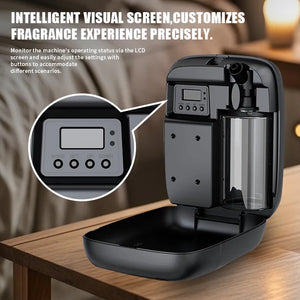
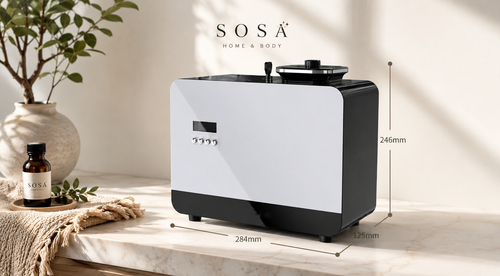
Vaayu at ₹11,999 is waterless cold-air nebulisation with no standing water tank, covering up to 1000m³ or roughly 2,000–3,000 sq ft, with a 400ml tank lasting about 75 days, app control, 1h/4h/8h/24h timers, under-38dB running, auto-stop and a key-lock for public areas. The
Aangan at ₹25,999 covers up to 3,000m³ and connects to HVAC for a whole floor or an atrium. The ultrasonic
Sukoon,
Boond and
Megh are water-based, hold standing water and add 30–50 ml of water an hour to the air, which suits a single administrative cabin with a named person emptying and drying the tank daily and is unsuitable for public clinical property. An alcohol-free
reed diffuser needs 24–72 hours to establish and suits a small lobby rather than a large waiting hall. Candles are not appropriate in a healthcare facility because an open flame is a fire-safety matter. SOSA does not make a room spray. The Hotel Collection scents are SOSA's own interpretations inspired by the world's finest hotels; SOSA is an independent Indian fragrance house, not affiliated with or endorsed by any hotel brand. A portion of every order supports girl-child education through Nanhi Kali.
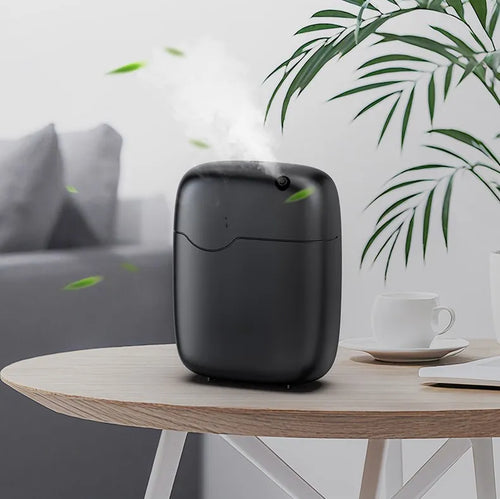
A facilities line, with a specification as its deliverable
SOSA Vaayu ₹11,999
Waterless cold-air nebulisation with no standing water tank, up to 1000 m³ or roughly 2,000 to 3,000 sq ft, 400ml lasting about seventy-five days so four refills a year, app plus 1h/4h/8h/24h timers, under 38 dB, 5 W, auto-stop and a key-lock. About ₹19,000 in year one and ₹7,350 a year after that, with no installation, no contractor and nothing for a maintenance contract to cover. The deliverable is a stated level in stated zones during stated hours — which is a specification a facilities budget can hold, and a sentence a marketing budget cannot use.
A note from Sonal
The reason I have an opinion about a budget line at all is a standee. I was in the waiting hall of a medical centre I had supplied, waiting to meet their facilities manager, and there was a printed standee beside the registration desk with a sentence on it about how the fragrance in the air helped patients feel calm. Nobody had asked me to write that, I would have refused if they had, and the machine had been sold with a specification sheet that said in terms that it makes no clinical claim. I traced it backwards over the next hour out of sheer curiosity. The approval note had been written by a marketing executive who needed a reason for a small spend, the reason had gone into a brief, the brief had gone to a designer, and the designer had done her job well. Four honest people and a claim at the end of it.
I asked the facilities manager afterwards why the purchase had sat in marketing, and his answer stayed with me: because facilities budgets are for things that break. That is a fair description of how a lot of Indian clinics run their money, and it is exactly the thing to argue with, because fragrance in a public area is a continuity item and continuity items belong with the towels and the filters, not with the campaigns. Since that afternoon I have sent the budget-line argument with every commercial quotation, and I have had it rejected perhaps a third of the time, usually by somebody who thinks I am being precious about an accounting code. I am not. A facilities line obliges you to say which zones and which hours. A marketing line obliges you to say what it did for patients. One of those sentences is true and the other one is a standee waiting to be printed. The page on using fragrance without making medical claims is the long version, and the page that puts this fourth in the queue is the one I would read first.
Everything is made and supported from Pune, and a part of every order funds girl-child education through Nanhi Kali. You get a space that smells like somewhere looked after; a girl gets a classroom. That equation has always felt right to me.
Frequently asked questions
Should fragrance be a facilities cost or a patient-experience cost in a clinic's budget?
Facilities, alongside housekeeping consumables. The machine is facilities equipment, the refills are facilities consumables sitting next to mop heads and air-conditioning filters, and the labour is four dated tasks a year plus a five-second check inside an opening round that already exists. A facilities line is defended with a specification - which zones, which setting, which hours, which named owner. A marketing or patient-experience line is defended with a return, and there is no honest return to state for a housekeeping measure.
Why is putting fragrance in the marketing budget a problem?
Because a marketing budget has to be justified by an expected effect, the only effects available here are perceptual, and the moment one is written into an approval note the organisation has made a claim about fragrance affecting patients. That sentence then travels into briefs, web copy and signage, and ends up published in a healthcare facility with your name on it. No vendor had to say anything. A marketing line is also discontinuous, and it offers clinical staff no route to remove a zone from scope.
Can brand still choose the fragrance if facilities owns the budget?
Yes, and it should. Choosing which of the four supplied scents a facility uses is a one-off identity decision with no budget attached, and in a group running several branches it is genuinely a brand matter. Facilities owns the capital cost, the consumable, the siting, the intensity setting, the timer schedule, the named owner and deputy, the daily check, the procedure and the veto register. Writing that split into two sentences in the procedure tends to end the internal argument for good.
What does a scenting line actually cost a clinic in a year?
Per machine, about Rs 19,000 in year one and about Rs 7,350 every year after that: Rs 11,999 of capital, four 300ml refills a year at Rs 1,799 which is around Rs 7,200, and roughly Rs 150 of electricity at 5 watts over a twelve-hour day across about 310 opening days. There is no installation cost on a freestanding machine, no contractor, no shutdown and nothing for a maintenance contract to cover. Four branches at one machine each is roughly Rs 77,000 in year one and Rs 29,400 a year after.
What belongs in a patient-experience budget instead?
The items that are larger and more noticed: wipeable seating that does not hold an odour, signage legible from the registration queue, drinking water available without asking, toilets checked hourly rather than cleaned twice, waiting-time management, and a working light in the lift lobby. Each costs more than the fragrance does. Fragrance comes fourth, behind housekeeping, ventilation and seating, and if any line above it is outstanding this quarter the correct budget for it is zero.
Facilities, next to the mop heads
File it in facilities and the claims never start — brand may choose the scent, and that choice is free
The Vaayu is ₹11,999: waterless cold-air nebulisation with no standing water tank, up to 1000 m³ or roughly 2,000–3,000 sq ft, a 400ml tank lasting about seventy-five days for four refills a year at ₹1,799 each, Bluetooth app control with 1h/4h/8h/24h timers, under 38 dB, 5 W, auto-stop and a key-lock for public areas, supplied with four hotel-inspired fragrances. About ₹19,000 in year one and ₹7,350 a year thereafter. The Aangan is ₹25,999 for up to 3,000 m³. Free shipping above ₹499, and a portion of every order supports girl-child education through Nanhi Kali.
See the Vaayu · ₹11,999 300ml refills · ₹1,799
Continue the read
More from SOSA
Editorial standards & sources
Product facts used in this guide. SOSA Vaayu Rs 11,999: waterless cold-air nebulising diffuser, no water reservoir, coverage up to 1000m3 (approximately 2,000-3,000 sq ft), 400ml refillable tank lasting up to about 75 days per fill, Bluetooth app plus onboard control, 1h/4h/8h/24h timer scheduling, adjustable intensity, under 38 dB, DC 12V/1A at 5W, 165 x 80.5 x 215 mm and 0.9 kg, freestanding or wall or HVAC mounted, auto-stop and key-lock, CE, RoHS and SGS certified, supplied with four hotel-inspired fragrances. SOSA Aangan Rs 25,999: HVAC-connected or standalone commercial nebulising diffuser, coverage up to 3,000m3 (roughly 8,000-10,000 sq ft), 800ml reservoir, metal body, programmable schedules, under 42 dB. Ultrasonic machines are water-based, hold standing water and consume 30-50 ml of water an hour: Sukoon Rs 1,899 (500ml, 270-320 sq ft, 16-18 hours on low, three 15ml Hotel Collection scents included), Boond Rs 899 (300ml), Megh Rs 3,499 (6 litres). Hotel Collection water-based fragrance 15ml Rs 299, 100ml Rs 999, 300ml Rs 1,799. Alcohol-free reed diffusers from Rs 749, requiring 24-72 hours to reach their working level. Free shipping above Rs 499. Coverage arithmetic: cubic metres equal floor area in square feet divided by 10.76 and multiplied by ceiling height in metres, counting only the volumes that are actually scented. This guide makes no medical, therapeutic or clinical claim of any kind for fragrance: a diffuser does not purify, disinfect or clean air, and does not treat, calm or affect any patient or condition. Fragrance is housekeeping and presentation. Clinical areas should be left fragrance-free, and a persistent odour should be traced to its source and corrected rather than covered. SOSA is not affiliated with or endorsed by any hotel brand. Prices subject to change - see the live product pages.

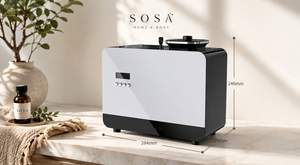
 Aangan · large centres₹25,999Shop →