Founder Diaries · Clinics & Medical Centres · Where Fragrance Does Not Belong
By Sonal Sahani · ISIPCA Versailles 11 min read Updated September 2026
No, and in a polyclinic the interesting part of the question is not the answer. It is that an examination room is usually the one clinical space in the building with no owner — four visiting consultants use it on four different days, none of them furnished it, none of them will be there tomorrow, and that is precisely how a plug-in, a desk reed or a bottle of scented sanitiser appears on a shelf in it without any decision ever being made. The rule is simple: nothing goes into the air of a room where a patient undresses. Holding that rule is about ownership, about four carryover routes, and about one of them that arrives on your laundry invoice rather than through a door.
Quick answers — read this first
The answer: no. An examination room is fragrance-free with the door shut — it is a room where a patient is asked to undress, lie down and be physically examined, and where a clinician is using what the room and the patient smell of.
The polyclinic problem: shared examination rooms have no owner, so objects appear in them. Count and locate every portable fragrance object in the building.
Four carryover routes: the corridor or lobby outside · the linen and gowns, washed with perfumed detergent · staff moving in from a scented area · and something somebody left on a shelf. The second is the one nobody costs, and it is on the laundry contract.
The short answer
Short answer: no. An examination room stays fragrance-free with the door shut, because a patient is asked to remove clothing and lie down in it, because a clinician is using what the room and the patient smell of, and because a patient may need to describe a symptom involving smell. No setting and no formulation changes that.
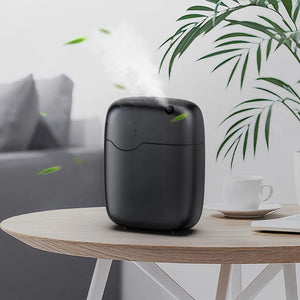
The pick: hold the machine a room further back than instinct suggests. In the usual polyclinic layout — a short internal lobby with three or four examination doors off it — leave the lobby alone and scent the waiting hall it opens off. One
Vaayu at ₹11,999, wall-mounted, key-locked, on the opening-hours timer.
Shop: the
Vaayu ₹11,999 (waterless, no standing water tank, up to 1000 m³ or roughly 2,000–3,000 sq ft, 400ml lasting about seventy-five days, app plus 1h/4h/8h/24h timers, under 38 dB, auto-stop, key-lock, four hotel-inspired scents included). An alcohol-free
reed diffuser from ₹749 belongs in an administrative cabin. Free shipping above ₹499.
Straight answer
Should examination rooms in a polyclinic be fragranced?
1. No. Fragrance-free, door shut, and it is the default rather than a concession. An examination room is the room where a patient is asked to remove clothing, lie down on a couch and be physically examined by somebody they met four minutes ago. Nothing goes into the air of that room.
2. Because the examination itself is a sensory act. A clinician is trained to register what a room and a patient smell of, and in an examination — a wound, a dressing that has been on for four days, a foot in a diabetic clinic, breath, a discharge — that registering is part of the work rather than incidental.
3. And because the patient may need the same vocabulary. People describe what has changed about them in terms of smell when they have no other language for it, and doing so is already difficult. Doing it in a room that smells of white tea is harder.
4. The polyclinic complication: the room has no owner. Four visiting consultants across four days, none of whom furnished it or will be there tomorrow. That is how a plug-in, a desk reed or a scented sanitiser bottle arrives on a shelf without a decision. Give the room to somebody — a named nurse or housekeeping supervisor — and count the portable objects.
5. Then close the four carryover routes. The corridor or lobby outside, which is geometry. The linen and gowns, which is your laundry contract and is the route nobody costs. Staff arriving from a scented area, which is mostly about their own products rather than yours. And an object somebody left on a shelf, which is an inventory.
6. If the room itself smells, that is information. A basin trap dried out over a weekend, a couch cover changed less often than the rota claims, a clinical waste bin past its collection, a room with no transfer air recirculating the same nine cubic metres since nine in the morning. Find it and fix it rather than covering it.
A portion of every order supports girl-child education through Nanhi Kali.
TL;DR: no. An examination room is fragrance-free with the door shut, because a patient undresses and is physically examined in it and because both people in the room may need to use their sense of smell. In a polyclinic the hard part is that the room has no owner, so objects appear in it — and the carryover route nobody costs is the laundry, because gowns and draw sheets washed with perfumed detergent scent the room from the linen shelf without any diffuser being involved.

The carryover nobody costs, and it is on the laundry invoice
SOSA · the exam room we do not sell to ₹0
Before you look at the corridor, pick up a folded gown from the shelf in your examination room and hold it to your face. If it smells of laundry fragrance, that room is scented already, it was scented by a contract nobody reviewed for this, and no diffuser was involved — the same is true of draw sheets, pillow covers and the curtain. Perfumed detergent and fabric conditioner on clinical linen put fragrance directly against the skin of a patient who has just undressed, for the whole length of the examination, at a dose no wall-mounted machine could reach. Ask your laundry for an unperfumed wash on clinical linen and write it into the next renewal. It is a procurement line rather than a purchase, and on most sites it costs nothing at all.
The room where the body is the subject
A consultation room is a room where two people talk and one of them writes. An examination room is a different proposition, even when it is the same nine square metres with a screen pulled across it. It is the room where a patient takes off clothing, lies down on a couch that somebody else has just used, and allows a stranger to touch them — and everything that makes that bearable is a matter of dignity, privacy and restraint rather than of comfort. The consultation-room case is made separately and reaches the same conclusion by a different road. Here the argument is about the body, about who owns the room, and about the four routes by which it gets scented even though nobody ever decided to scent it.
1
THE EXAMINATION
Both people in the room may need their noses, and one of them is undressed
Start with what actually happens in there over eight or nine minutes.
A patient is asked to remove some clothing, to lie on a couch, and to keep still while somebody looks at, listens to and touches a part of them — and a clinician conducting that examination is taking in what the room and the patient smell of as part of the work rather than as a side effect. A dressing that has been on for four days. A foot under a sock in a diabetic clinic. Breath. A discharge. A wound that a relative has already commented on at home. None of this is exotic; it is ordinary clinical practice in an ordinary polyclinic examination room, and putting a chosen background fragrance into that air means the clinician is now subtracting something you installed for presentational reasons.
Then the patient, whose case is at least as strong and who almost never gets mentioned. A great many people arrive having rehearsed a sentence about a smell — their own — because smell is what people reach for when they have noticed a change and have no technical language for it. Delivering that sentence is already an act of some courage. Delivering it while partly undressed, lying down, in a room that has a scent of its own, is measurably harder, and the failure mode is not that they say it badly. It is that they decide not to say it at all. Add to that the ordinary population of an examination room on any given morning — people who are nauseated, pregnant, in a migraine prodrome, mid-treatment cycle, asthmatic, or simply sensitive to fragrance and long since tired of explaining it — and you have a room where the person least able to leave is the person most likely to be affected.
That group deserves a policy rather than an apology, and the policy starts here.
2
NO OWNER
In a polyclinic this room belongs to nobody, which is how objects arrive in it
Then the structural problem that is specific to a polyclinic and that I find in about half the buildings I walk.
In a single-consultant practice the examination room is somebody's room. In a polyclinic it is a shared asset used by four visiting specialists across four different days, none of whom furnished it, none of whom will be in the building tomorrow, and none of whom regards its shelves as their responsibility. A room with no owner accumulates objects. I have found, in rooms that every policy in the building said were fragrance-free: a plug-in air freshener in the socket behind the couch, installed by a housekeeping contractor who was being helpful; a reed diffuser carried down from an administrative cabin because somebody thought that end of the corridor smelled; a heavily scented hand sanitiser standing next to the unscented one the clinic actually buys; a bowl of scented pot-pourri left over from an opening; and an air-freshener canister in a housekeeping trolley being used in there each morning as a matter of routine. Not one of those was a decision. Every one of them was somebody being pleasant in a room nobody owned.
The fix is ownership and an inventory, and both are free. Put a named person against every examination room — a nurse, a floor supervisor, whoever does the morning setup — and count every portable fragrance object in the building against a list, quarterly. Write the housekeeping trolley stock into that list too, because the aerosol in the trolley is the object that gets into the most rooms and the one nobody thinks of as a fragrance decision.
Enforcement is most of this subject and this is the version of it that belongs to a shared room.
3
THE LAUNDRY
The carryover route that arrives on an invoice rather than through a door
Which brings me to the route I have never seen written down anywhere and which is, in a surprising number of clinics, the largest single source of fragrance in an examination room. Pick up a folded gown from the shelf in your own examination room and hold it to your face. If it smells of laundry fragrance, that room is scented already — and it was scented by a contract nobody reviewed for this purpose, at a dose no wall-mounted machine in a corridor could approach. The same applies to draw sheets, pillow covers, the couch cover, the modesty screen curtain and the blanket. Perfumed detergent and fabric conditioner are standard in commercial laundry because domestic customers expect them, and unless somebody has specifically asked otherwise, your clinical linen is coming back scented. Then consider the geometry of it: that gown goes directly against the skin of a patient who has just undressed, for the entire length of the examination, inches from their own face. A corridor diffuser three rooms away is a rounding error beside it. The fix is a line in a contract rather than a purchase: ask your laundry for an unperfumed wash on clinical linen, confirm it applies to gowns, draw sheets and curtains, and write it into the next renewal. On most sites it costs nothing and on some it costs less, because conditioner is an added step. While you are there, deal with the two smaller versions of the same effect. A member of staff who has come from a scented area carries very little, but a clinician's own hand cream, sanitiser or perfume carries a great deal, and a polyclinic that has thought about this usually has a quiet convention rather than a rule. And check what your housekeeping team actually mops that floor with, because a heavily fragranced floor cleaner used at nine will still be the dominant smell in a small room at eleven.
The test for this page, and it takes ten seconds: hold a folded gown from the examination-room shelf to your face. If you can smell laundry fragrance, stop reading about diffusers and go and look at your linen contract, because that is where the scent in that room is coming from.
Four ways an examination room gets scented anyway
Nobody installs a diffuser in an examination room, and examination rooms are scented all the same. Here are the four routes in the order of how much fragrance each one actually delivers to a patient's face, with the check and the fix. The largest is the one that never appears in a facilities discussion because it arrives on a laundry invoice.
Carryover routes
How a fragrance-free examination room stops being one
| Route |
What is happening |
How much reaches the patient |
The check |
The fix |
| 1. The linen and the gowns ★ |
Perfumed detergent and conditioner on gowns, draw sheets, pillow covers and the screen curtain |
The most, by a wide margin. It is against the skin and inches from the face |
Hold a folded gown to your face |
An unperfumed wash on clinical linen, written into the laundry contract |
| 2. An object somebody left |
A plug-in behind the couch, a carried-in reed, a scented sanitiser, an aerosol in the housekeeping trolley |
A great deal, and continuously, because nobody removes what nobody owns |
Count every portable fragrance object against a list, quarterly |
Ownership of the room, plus an inventory. Both free |
| 3. The floor cleaner and the trolley stock |
A heavily fragranced mopping product used at nine in a nine-cubic-metre room |
Substantial until mid-morning in a room with no transfer air |
Read the label on what housekeeping actually uses in there |
A low-odour cleaner for clinical rooms, and mopping before the session |
| 4. The corridor or lobby outside |
A machine sited in a short internal lobby with three or four examination doors off it |
Less than people assume, but constant and entirely self-inflicted |
Stand in the open doorway and breathe once |
Move the machine a room further back. Do not turn it down |
| 5. Staff arriving from a scented area |
Clothing and hair carrying a little, hand cream and sanitiser carrying rather more |
Small from the building, larger from personal products |
Ask, quietly, rather than instruct |
A convention rather than a rule, and unscented sanitiser at the basin |
| Not a route: a low setting |
There is no intensity at which a fragrance product belongs inside this room |
The rule is the room rather than the dose |
— |
Fragrance-free with the door shut, every room, every day |
Shop this guide
What an examination room actually needs, in three products
The SOSA principle
Nobody decides to scent an examination room. It gets scented by a laundry contract, a plug-in behind the couch and a mop — and the gown against a patient's face beats any diffuser in the building.
Which makes this a contract, an inventory and an owner rather than a fragrance decision, and every one of those three is free.
Ownership, the laundry line, and where the machine goes
Start with ownership, because in a polyclinic it is the root of everything else on this page. Put a named person against every shared examination room — the floor nurse, the housekeeping supervisor, whoever does the morning setup — and make the room's contents their responsibility rather than the responsibility of whichever consultant happens to be using it on a Tuesday. Then take an inventory, once, and repeat it quarterly: every plug-in socket in the building checked, every reed bottle located and numbered against the standard operating procedure, every sanitiser and hand cream at every basin read for what it is, and the housekeeping trolley stock listed. That last one catches more rooms than all the others combined, because an aerosol in a trolley travels the whole floor every morning and nobody has ever classed it as a fragrance decision. Write the rule in the plainest possible form so that a new housekeeping contractor in April cannot misread it: nothing that smells of anything goes into a room where a patient undresses, including anything brought in with good intentions. And treat a bottle found in a clinical room as a process failure rather than as an individual's mistake, because the person who carried it in was almost certainly trying to help. The SOP is where this belongs, in the same paragraph as the zone map, so that the list of objects and the list of rooms are read together.
Then the laundry line, which is the cheapest real improvement on this page and the one almost nobody makes. Ask your laundry contractor for an unperfumed wash on clinical linen, confirm in writing that it covers gowns, draw sheets, pillow covers, couch covers and screen curtains, and put it into the next renewal. On most sites it costs nothing, and where it changes the price it usually changes it downward, because fabric conditioner is an added step and an added consumable. Check it the way I check it: pick up a folded gown from the shelf and hold it to your face, and repeat that at the start of every new contract, because laundries change products without telling anybody. While you are dealing with consumables, look at the floor cleaner your housekeeping team actually uses in the clinical rooms as opposed to the one on the purchase order, and ask for the least fragranced option in a small enclosed room with no transfer air. Then get the mopping time right, which is free: a clinical room mopped at nine and used at half past nine will smell of cleaning product for the first two patients, so mop before the session rather than during it. The question of covering cleaning-chemical odours has its own answer and it is the same one: change when the mopping happens rather than putting something over it.
Then the machine, which on this page is mostly a question of restraint, and the limits worth stating. The usual polyclinic layout is a short internal lobby with three or four examination doors off it and a nurse's counter at one end, and in a lobby that size the unit is within two metres of every door in the building — so the honest answer is to leave that lobby alone and scent the waiting hall it opens off instead. A machine held a room further back does more for how the place reads than one pushed in among the doors, and it costs exactly the same. Where there is a genuine corridor, mount at 1.8 to 2 metres on a blank stretch of wall, never opposite a door leaf, out of the throw of a supply grille pointing at one, and then apply the test: stand in the open doorway of the nearest examination room, breathe once, and if anything registers at all, move the machine rather than turning it down — the reasoning is set out in full on the enforcement page. Run it on the opening hours, key-locked, and never raise it at midday because the hall filled. On the products and their honest limits: the Vaayu at ₹11,999 and Aangan at ₹25,999 run their own undiluted oil rather than the water-based Hotel Collection bottles, which are for ultrasonics at three to six drops per tank. The Sukoon at ₹1,899, Boond at ₹899 and Megh at ₹3,499 hold standing water, add 30–50 ml of it to the air an hour and need emptying, rinsing and drying daily by a named person, which makes them an administrative-cabin product. An alcohol-free reed diffuser from ₹749 needs 24 to 72 hours to establish, is barely noticed past about a metre, and is portable, which on this page is its main risk. Candles are not appropriate in a healthcare facility because an open flame is a fire-safety and insurance matter. SOSA does not make a room spray. And if the room itself smells of something — a dry basin trap, a couch cover changed less often than the rota says, a bin past its collection, a room recirculating the same nine cubic metres since morning — that is information, and the answer is to find it and fix it rather than to cover it.
Nobody in your building decided to scent the examination room. A laundry contract decided it, a plug-in behind the couch decided it, and a mop decided it — which is why this is an inventory rather than a taste question.
— Sonal Sahani, SOSA
The SOSA edit
For a polyclinic with shared examination rooms, in the order the work actually happens. Four of the six rows cost nothing and one of them may save money. Only the fifth is a purchase, and it goes a room further back than you were expecting. The last row is what we do not sell for this room.
The SOSA edit
A shared examination room, in working order
| Do this |
What it is |
When it earns its place |
Cost |
| 1. Hold a gown to your face ★ |
The ten-second check that finds the largest fragrance source in most examination rooms, and it is on your laundry invoice rather than in your building |
First, before any other line on this list |
₹0 |
| 2. Ask the laundry for an unperfumed wash |
Gowns, draw sheets, pillow covers, couch covers and screen curtains, confirmed in writing and written into the next renewal |
Second. On most sites free, and sometimes cheaper, since conditioner is an added step |
₹0 or less |
| 3. Give every shared room a named owner |
A floor nurse or housekeeping supervisor responsible for the room's contents, rather than four visiting consultants who are not there tomorrow |
Third. A room with no owner accumulates objects |
₹0 |
| 4. Inventory every portable fragrance object |
Plug-ins, carried-in reeds, scented sanitisers, pot-pourri and the aerosol in the housekeeping trolley, counted quarterly against a list |
Fourth. The trolley reaches more rooms than everything else combined |
₹0 |
| 5. Vaayu in the waiting hall, not the lobby |
Waterless, up to 1000 m³, 400ml lasting about 75 days, app and 1h/4h/8h/24h timers, under 38 dB, auto-stop, key-lock |
Last, and held a room further back than instinct suggests. Then run the doorway test |
₹11,999 |
| Not sold here: anything for inside the room |
There is no discreet, low-output or clinical model for a room where a patient undresses, and we do not make one |
The answer does not change with intensity, formulation or the hour of the day |
— |
Honest notes for buyers: fragrance in a medical facility is housekeeping and presentation, never treatment. Nothing on this page claims that a fragrance reduces anxiety, aids recovery, improves sleep, cleans or disinfects air, or has any clinical effect whatsoever, because it does not and a diffuser is not an air purifier. Scenting belongs to the entrance, reception, shared waiting areas, inter-departmental corridors and administrative rooms. Consultation and examination rooms, treatment and procedure rooms, day-care surgery, dressing rooms, blood- and sample-collection rooms, laboratories, pharmacy dispensing, sterile stores, imaging rooms, oncology day-care and paediatric clinical areas should be left fragrance-free. A persistent smell is information about a dry drain trap, a bin, a soiled-linen route or an air-conditioning drain pan: find it and fix it rather than covering it. On the machines: the
Vaayu at ₹11,999 is waterless cold-air nebulisation with no standing water tank, covering up to 1000m³ or roughly 2,000–3,000 sq ft, with a 400ml tank lasting about 75 days, Bluetooth app control, 1h/4h/8h/24h timers, under-38dB running, auto-stop and a key-lock for public areas. The
Aangan at ₹25,999 covers up to 3,000m³ and connects to HVAC for a whole floor or an atrium. The ultrasonic
Sukoon,
Boond and
Megh are water-based, hold standing water and add 30–50 ml of water an hour to the air, which makes them suitable for a single administrative cabin with a named person emptying and drying the tank daily, and unsuitable for public clinical property. An alcohol-free
reed diffuser needs 24–72 hours to establish and suits a small lobby rather than a large waiting hall. Candles are not appropriate in a healthcare facility because an open flame is a fire-safety matter. SOSA does not make a room spray. The Hotel Collection scents are SOSA's own interpretations inspired by the world's finest hotels; SOSA is an independent Indian fragrance house, not affiliated with or endorsed by any hotel brand. A portion of every order supports girl-child education through Nanhi Kali.
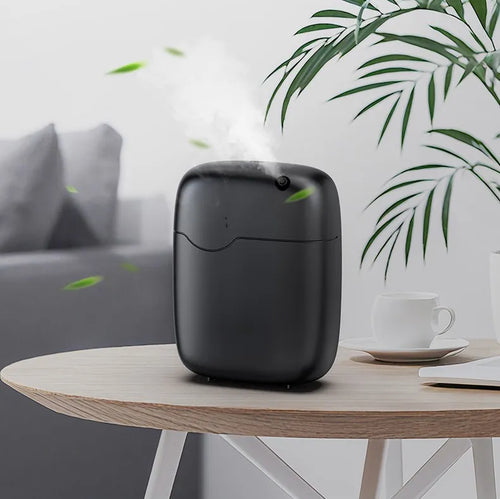
A lobby with four examination doors off it is one decision, not four
SOSA Vaayu · waterless, key-locked ₹11,999
The commonest examination-room layout in an Indian polyclinic is a short internal lobby with three or four doors off it and a nurse's counter at one end, and it is the layout that goes wrong most often. A single unit in a lobby that small is within two metres of every door in the building, which is why the honest answer is usually to leave that lobby alone and scent the waiting hall it opens off instead. One machine held back a room further will do more for how the place reads than one pushed in among the doors, and it costs the same. Up to 1000 m³, so reach is rarely the constraint; 400ml for about seventy-five days, app plus 1h/4h/8h/24h timers, under 38 dB, auto-stop, key-lock and no standing water anywhere in a clinical corridor.
A note from Sonal
I have walked a lot of examination rooms and the thing that changed how I think about them was not a diffuser at all. It was a folded gown on a shelf in a polyclinic in Vasai, which smelled so strongly of fabric conditioner that I could smell it standing at the door — in a building whose facilities manager had just spent twenty careful minutes explaining his fragrance-free clinical policy to me. He had done everything right on the part he could see. The largest source of fragrance in that room arrived once a week in a van, against a contract signed by somebody in accounts who had never been asked about clinical linen, and nobody in the building had ever thought of it as a fragrance decision.
So this is the page where I tell you to go and smell your own gowns before you read anything else I have written about siting, and where I say the other unpopular thing, which is that the machine usually belongs a room further back than you want it to be. A short lobby with four examination doors off it is not a place for a diffuser at any setting, and the honest answer is to scent the waiting hall it opens off and let the lobby be nothing at all. That sells exactly the same number of machines and puts them in the right place, which is the only version of this business I have ever been interested in.
Everything is made and supported from Pune, and a part of every order funds girl-child education through Nanhi Kali. You get a space that smells like somewhere looked after; a girl gets a classroom. That equation has always felt right to me.
Frequently asked questions
Should examination rooms in a polyclinic be fragranced?
No. An examination room is fragrance-free with the door shut. A patient is asked to remove clothing and lie down in it, a clinician is registering what the room and the patient smell of as part of the examination, and a patient may need to describe a symptom involving smell. No intensity or formulation changes that.
What is the biggest source of fragrance in an examination room?
Usually the linen. Gowns, draw sheets, pillow covers, couch covers and screen curtains washed with perfumed detergent and fabric conditioner put fragrance directly against a patient's skin, inches from their face, for the whole examination. Hold a folded gown to your face. If it smells of laundry fragrance, start there rather than with the corridor.
Why do shared examination rooms end up with plug-ins and reed bottles in them?
Because in a polyclinic nobody owns them. Four visiting consultants use the room across four days, none of them furnished it and none will be there tomorrow, so objects accumulate through kindness rather than through any decision. Give the room a named owner and count every portable fragrance object in the building quarterly, including the housekeeping trolley stock.
Can we scent the small lobby outside the examination rooms?
Usually not. In the common layout — a short internal lobby with three or four doors off it — a unit in that lobby is within two metres of every door. Leave it alone and scent the waiting hall it opens off. Then stand in the open doorway of the nearest examination room and breathe once; if anything registers, move the machine rather than turning it down.
Our examination room itself smells. What should we check?
A basin trap that has dried out, which takes a mug of water. A couch cover or pillow being changed less often than the rota claims, since paper roll is not a substitute for washing what is under it. A clinical waste bin past its collection time. And a room with no transfer air recirculating the same nine cubic metres all day. That smell is information. Find it and fix it rather than covering it.
The room with no owner
Nothing inside the door — and the machine a room further back
The Vaayu is ₹11,999: waterless cold-air nebulisation with no standing water tank, up to 1000 m³ or roughly 2,000–3,000 sq ft, a 400ml tank lasting about seventy-five days, Bluetooth app control with 1h/4h/8h/24h timers, under 38 dB, auto-stop and a key-lock so nobody adjusts it in passing, supplied with four hotel-inspired fragrances. It belongs in the waiting hall rather than in a lobby with examination doors off it. Free shipping above ₹499, and a portion of every order supports girl-child education through Nanhi Kali.
See the Vaayu · ₹11,999 The seven scents · from ₹299
Continue the read
More from SOSA
Editorial standards & sources
About this guide: Written by Sonal Sahani, ISIPCA Versailles-trained founder and perfumer at SOSA Home & Body, on why examination rooms in a polyclinic should be left fragrance-free — the room where a patient undresses and where both people may need their sense of smell — and on the four routes by which such a room gets scented anyway: a shared room that belongs to nobody and accumulates objects, the housekeeping trolley, the floor cleaner, and the largest source of all, gowns and clinical linen washed with perfumed detergent under a contract nobody reviewed.
Facts verified August 2026: Product facts used in this guide. SOSA Vaayu ₹11,999: waterless cold-air nebulising diffuser, atomises undiluted fragrance oil to a dry residue-free nano-mist with no water reservoir, coverage up to 1000m³ (approximately 2,000–3,000 sq ft), 400ml refillable tank lasting up to about 75 days per fill, Bluetooth app plus onboard control, 1h/4h/8h/24h timer scheduling, adjustable intensity, under 38 dB, DC 12V/1A at 5W, 165 × 80.5 × 215 mm and 0.9 kg, freestanding or wall or HVAC mounted, auto-stop and key-lock, CE, RoHS and SGS certified, supplied with four hotel-inspired fragrances. SOSA Aangan ₹25,999: HVAC-connected or standalone commercial nebulising diffuser, coverage up to 3,000m³ (roughly 8,000–10,000 sq ft), 800ml reservoir, metal body, programmable schedules, under 42 dB. Ultrasonic machines are water-based, hold standing water and consume 30–50 ml of water an hour: Sukoon ₹1,899 (500ml, 270–320 sq ft, 16–18 hours on low, 3–6 drops per tank, steady/2H/4H timers, three 15ml Hotel Collection scents included), Boond ₹899 (300ml), Megh ₹3,499 (6 litres). Hotel Collection water-based fragrance 15ml ₹299, 100ml ₹999, 300ml ₹1,799, Pack of 7 at 15ml ₹1,799 against ₹2,093 bought singly; the Vaayu and Aangan take their own undiluted oil rather than these water-based bottles. Alcohol-free reed diffusers from ₹749, requiring 24–72 hours to reach their working level. Free shipping above ₹499. Coverage arithmetic: cubic metres equal floor area in square feet divided by 10.76 and multiplied by ceiling height in metres, counting only the volumes that are actually scented. This guide makes no medical, therapeutic or clinical claim of any kind for fragrance: a diffuser does not purify, disinfect or clean air, and does not treat, calm or affect any patient or condition. Fragrance is housekeeping and presentation. Clinical areas should be left fragrance-free, and a persistent odour should be traced to its source and corrected rather than covered. SOSA is not affiliated with or endorsed by any hotel brand. Prices subject to change — see the live product pages.