


So what do you do tonight? Walk into one shop and buy one good thing rather than three thin ones. In order of how reliably they beat a mug: a plain scented candle from a home or lifestyle shop, whole coffee beans or loose-leaf tea from an actual roaster or tea shop, a well-made notebook with one decent pen, a small hardy plant, or something fresh from a real bakery.
Why a mug fails and a candle does not: a mug is a slogan and an office already has twelve. A candle goes into a room in their home, carries no taste guess and no gender guess, and is complete the moment it is unwrapped.
What to avoid at any price tonight: anything with a slogan on it, a desk gadget, a mass-market chocolate assortment bought as a default, a voucher for a brand you have not seen them use, and any perfume chosen for their body on a guess.
The honest alternative: message the organiser now and say you will hand yours over on the Monday. Said on the night before, that is organised. Said on the morning, it is a gap on the table.
2. Buy one good thing, not three cheap ones. The instinct under time pressure is to assemble — a small chocolate box plus a keyring plus a card, so that the parcel looks substantial. It does the opposite. Three thin objects read as a scramble; one considered object reads as a choice, and at any cap between ₹300 and ₹1,000 you can buy one considered object in most Indian cities tonight. This is the single highest-value instruction on the page and it costs nothing to follow.
3. Prefer something that goes into their home over something that goes on their desk or their body. It is the same rule that governs this whole guide and it works just as well in a shop as it does online: a thing for a room makes no guess about their taste, their gender or their size, and nothing has to be worn or displayed in front of colleagues. A plain scented candle is the most widely available object that satisfies this, which is why it is top of the list below. A perfume chosen for their body in a hurry is the worst thing you can do with this evening, and the page on personal perfume at work explains why at length.
4. The shortlist, in the order I would try the shops. A plain scented candle from a home or lifestyle shop. Whole coffee beans or loose-leaf tea from an actual roaster or tea merchant, not a supermarket shelf. A well-made notebook and one decent pen from a stationer. A small hardy plant from a nursery — a snake plant, a money plant, a ZZ — in a plain pot. Something fresh from a real bakery or a dry-fruit shop, named and boxed properly. Every one of those beats a mug, and none of them requires you to know anything about the person beyond the fact that they work in your office.
5. Then spend ten minutes on the hand-over, because it is free and it changes the gift. Plain paper rather than a printed bag. One line on a card naming the thing. No apology about the timing, no mention of what it cost, and no joke to cover the embarrassment you are feeling and nobody else can see. Hand it over in person rather than leaving it on a chair.
6. And if nothing near you is any good, say so tonight. Message the organiser this evening and tell them you will hand yours over on the Monday. On the night before, that is a person who has planned. On the morning of, it is an empty space with an explanation attached. The wider tomorrow page covers the same ground for readers who have not yet decided they want to beat a mug.
Why the mug fails, and what the replacement has to do
It is worth being precise about what is wrong with the two defaults, because the diagnosis tells you what to look for in a shop in twenty minutes. Neither a novelty mug nor a boxed chocolate assortment is a bad object. They fail because they are visibly the thing you buy when you have stopped deciding, and in a Secret Santa exchange that is unusually legible: forty people watch forty parcels being opened in a row, and the two or three that were clearly chosen stand out against the ones that were clearly acquired. So the replacement does not have to be expensive, clever or personal. It has to look decided. Below are the three tests I would apply to anything you pick up tonight, and they can all be run while standing in a shop without knowing a single thing about your recipient.
What is on the shelves near you tonight
This is the table I would want in my hand walking out of the office this evening. It is ordered by how reliably the category beats a mug rather than by price, because price is not the variable that is failing here. I have deliberately not put rupee figures against the local options, because what a candle or a bag of beans costs depends entirely on which shop you walk into — take your cap with you and buy the best single item inside it. The starred row is where I would go first.
| On the shelves near you tonight | Does it beat a mug? | Why | The caution |
|---|---|---|---|
| A plain scented candle, home or lifestyle shop ★ | Yes — the most reliable single answer | Goes into a room in their home, no taste guess, no gender guess, complete the moment it is unwrapped, and widely stocked | Single wick, a lid, one named scent, nothing printed on the glass. Say on the card that it should be attended while lit |
| Whole coffee beans from a real roaster | Yes, if you know they drink coffee | An ordinary daily thing at better quality than most people buy themselves, and it gets used up rather than stored | Whole bean rather than ground, and ask for a roast date. Useless to somebody who does not drink coffee, so only buy it if you have seen them with one |
| Loose-leaf tea from a tea merchant | Yes, and it travels better than coffee | Same logic, wider audience, and a good first-flush or a proper masala blend is a long way from an office teabag | Avoid anything sold as a wellness infusion with claims on the tin. Buy tea, not a promise |
| A well-made notebook and one decent pen | Yes | An office person writes something down every day and almost nobody buys themselves a good notebook. It is the most reliably used object on this list | Plain cover, no slogans, no motivational printing. One good pen, not a pack of five |
| A small hardy plant in a plain pot | Yes, and it is the one people remember | A living object for a desk or a windowsill, cheap, and it carries no message about the recipient at all | Snake plant, money plant or ZZ — things that survive neglect. Not a flowering plant, and not something that needs daily watering. Say what it is on the card |
| Something fresh from a real bakery or a dry-fruit shop | Yes — this is where food stops being a default | A named, fresh, local thing is the opposite of a mass-market assortment, even though both are technically edible | Check for nut allergies and observances before you buy food for a colleague you do not know. If you cannot check, buy something else |
| A boxed chocolate assortment from a supermarket shelf | No | Not because chocolate is bad, but because this specific object is what everybody buys when they have run out of time, and the room can tell | If you are buying food, buy it from somewhere that made it. The last-minute page covers the wider set of options |
| A novelty mug, a desk gadget, a slogan anything, a voucher | No, at any price | A mug is a slogan on a thing the office already has twelve of. A gadget is a landfill joke. A voucher for a brand you have not seen them use is an admission | The test is whether you can hand it over in one sentence without a joke or an apology. None of these passes it |
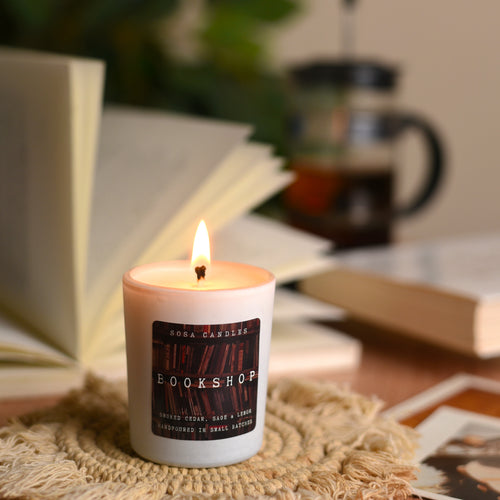
Bookshop candle · complete on arrival₹379Shop → 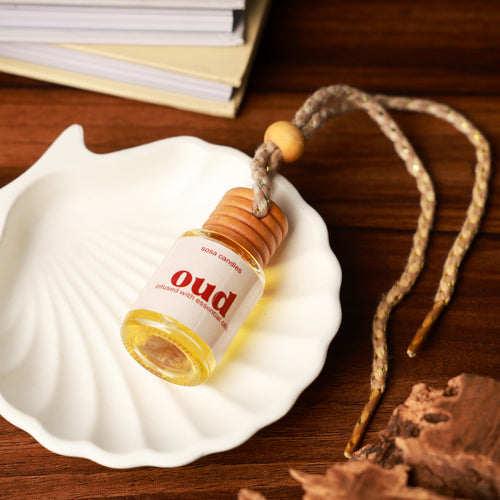 Oud car perfume · if they drive₹509Shop →
 Morning Freshness · the best of the three₹749Shop →
The cap, the wrapping and the hand-over
The cap is doing less work tonight than it normally would, because your constraint is geography rather than money. What matters at every cap from ₹300 to ₹1,000 is the same instruction: buy one thing, at the top of what the cap allows, from a shop that specialises in whatever it is. A ₹300 candle from a home shop beats a ₹300 assortment of three objects from a general store, and a ₹500 bag of beans from a roaster beats a ₹500 hamper of sachets. Spending under the cap is also fine and nobody audits it; spending visibly over it is the one monetary mistake worth avoiding, because it changes what the exchange is and it is especially unhelpful if the name you drew is senior to you — which the last-minute boss page goes into properly. For reference, if you are wondering what the equivalent purchase from us would have cost had the date been further off: candles ₹379 to ₹949, car perfumes ₹449 to ₹509 with combos from ₹899, attars ₹379 to ₹399 at 3ml, and reed diffusers ₹749 to ₹849. The under-₹500 page has that ladder in full.
Then the two things that are free and that most people skip at exactly the moment they matter most. The first is wrapping. Plain brown or plain coloured paper, one piece of tape done properly, and a real card rather than the shop's printed tag. It takes ten minutes and about ₹50, and it is the single most visible signal of intent in the entire exchange — a well-wrapped ordinary object reads better than a nice object in a crumpled printed bag. The second is the card itself, and the rule is one line naming the thing and what it is for. "Beans from a roaster near me — grind them fresh." "A candle for the evenings, it is sandalwood." "A snake plant, it survives being forgotten." What does not go on the card: an apology for the timing, a reference to the price, a joke inserted to cover your own discomfort, or any sentence beginning with "I didn't know what you liked". Every one of those transfers your anxiety to somebody who was not feeling any.
Then the hand-over itself, which takes about fifteen seconds and is the part people rehearse least. Hand it over in person at the exchange rather than leaving it on a desk or a chair, say the one sentence, and stop talking. Do not watch their face for a verdict, do not explain where you bought it, and do not downgrade your own gift pre-emptively, which is the commonest version of this and the one that makes everybody uncomfortable. If the object needs anything — a candle should be attended while lit, a plant needs water once a week, beans want grinding — say that, because it is information rather than apology and it reads as competence. And if, having read all this, the honest assessment is that there is nothing within reach of your office tonight that passes the three tests, then message the organiser this evening and tell them yours lands on the Monday. That is a planned hand-over rather than a missing one. It also opens the option that was closed at the top of this page: Metro addresses usually see two to four working days, and the rest of India longer. A Secret Santa exchange tomorrow morning is not a delivery problem any online order can solve, and no page here will pretend otherwise: if it is tomorrow, buy locally, or tell the organiser you will hand it over on the Monday. With the following week in hand, a reed diffuser at ₹749 is a materially better gift than anything you were going to find on a shelf at eight o'clock.
The SOSA edit
Six situations rather than six products, because tonight the situation is the whole decision and most of the rows do not point at anything we sell. Find the one that matches your actual date and address, and do the thing in it.
| Your situation | What I would do | Why | Cost |
|---|---|---|---|
| The exchange is tomorrow morning ★ | Buy locally tonight: one plain candle, or beans, or a notebook and pen, inside the cap | No online order arrives by tomorrow at any price. One considered object from one specialist shop beats three thin things from a general store | Whatever the cap is |
| Tomorrow, and nothing decent is near your office | Message the organiser tonight: yours lands on the Monday | Said the night before it is organised; said on the morning it is a gap. It also reopens the online option for something genuinely better | — |
| It is tomorrow evening rather than tomorrow morning | Still local. Use your lunch hour rather than tonight | A working day is not a delivery window. The extra twelve hours buys you better shops, not a faster parcel | Whatever the cap is |
| You have checked and it is actually four or more working days away | Morning Freshness reed diffuser ₹749, or Bookshop candle ₹379 at a lower cap | A reed diffuser is the strongest gift in the range for a colleague and needs 24 to 72 hours to settle, which four days covers. Free shipping above ₹499 | ₹379–₹749 |
| Two or three working days, metro address | Smoked Oudh candle ₹449, or a car perfume ₹449 to ₹509 if they drive | Both are complete the moment they are unwrapped, so they work on the night. Order in the morning rather than at midnight | ₹449–₹509 |
| Not worth doing at any point tonight | A novelty mug, a desk gadget, a voucher, or a perfume for their body chosen in a hurry | The first three cannot be handed over in one sentence without a joke. The last puts a taste guess on a colleague's body, which is the one thing this whole guide argues against | — |
Versailles
Every December I get a set of messages between about nine at night and midnight that all say the same thing in different words, and the honest answer to all of them is the one at the top of this page. No, we cannot get it to you by the morning, and I am not going to take the order and let you find that out from a tracking page on the day of your party. What I have learned is that people are not actually upset to be told. They are upset to be told at eleven the following morning. The thing they want from me at that hour is a decision, and "go to a shop" is a decision, so I would rather give them that and lose the sale than take ₹749 off somebody whose gift will arrive on the Tuesday.
The second half is what I tell them next, and it has very little to do with fragrance. The gifts that go wrong in an office are almost never the cheap ones — they are the undecided ones, and a mug is the purest form of undecided object there is. So the question I ask is not what their budget is, it is what shops are between their office and their house. There is nearly always a home shop with candles, a stationer with notebooks, a nursery, or somebody selling coffee by weight, and one good thing from one of those, wrapped in plain paper with a single line on the card, will be among the two or three parcels anybody remembers from the afternoon. It costs the same as the mug. The difference is twenty minutes of walking and the willingness to decide.
The part I would most like you to take seriously is the hand-over, because it is free and because almost everybody undercuts their own gift at the last second. Do not apologise for the timing, do not mention what it cost, and do not make it a joke to protect yourself. Name the thing, say what it is for, and stop. If you are reading this at ten at night with nothing bought, the whole plan is: one shop, one good object, plain paper, one line, hand it over in person. And if that is not possible where you are, tell the organiser tonight and hand yours over on the Monday — with a week in hand you can give something far better than anything on a shelf at this hour. Everything is made and supported from Pune, and a part of every order funds girl-child education through Nanhi Kali. Somebody gets a gift that was actually thought about; a girl gets a classroom. That equation has always felt right to me.
Frequently asked questions
- Secret Santa Is Tomorrow and I Haven't Bought Anything — What Should I Get? — the same deadline without the mug problem attached.
- I Forgot About Office Secret Santa — What Should I Buy? — for readers who have only just remembered the draw exists.
- Attar, Car Perfume or Reed Diffuser: Which Is Easiest for Last-Minute Office Secret Santa? — which fragrance format survives a short runway, ranked on time-to-usefulness.
- What Should I Gift My Coworker for Secret Santa? Complete Guide by Relationship, Budget and Lifestyle — the whole cluster in one page, by relationship, budget and lifestyle.
- Brand: the SOSA founder story.