



The reason: most of flavour is retronasal smell, so a scented room genuinely alters how the food tastes. Your guest is tasting the diffuser.
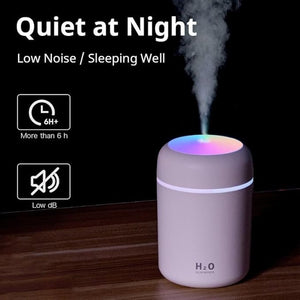
What to do instead: scent the room before people sit down, and stop the machine as the food comes out. The Sukoon at ₹1,899 has a 2H timer that does this without you remembering. A room holds its level for a long time after the mist stops.
Placement: the far end of the living area. Never on or near the dining table, and never in the kitchen. In an open-plan flat where the kitchen and the table share air, the discipline matters more rather than less.
2. Most of what you call taste is smell arriving from inside your mouth. The tongue supplies sweet, salt, sour, bitter and savoury and very little else. Everything that makes your dal taste of dal arrives retronasally at the back of the nose as you chew and swallow, using the same receptors that are currently receiving your diffuser.
3. So scent the room before people sit down, not during. Two hours before dinner, on low, at three drops. The room reaches a level, the guests walk into it, the impression is made in the first four seconds at the door — and then the machine stops and the food takes over.
4. The Sukoon at ₹1,899 has a 2H timer, and this is what it is for. Set it when you switch on and you will not have to remember anything at half past eight whilst carrying a hot dish. A room holds its scent level long after the mist has stopped, so nothing is lost by the machine going quiet.
5. Placement: the far end of the living area. Never on the dining table, never on a sideboard beside it, and never in the kitchen. Distance from the table is the difference between a background and an ingredient.
6. In an open-plan flat the discipline matters more, not less. When the kitchen, the sitting room and the table share one volume of air, there is no door to close and no boundary to hide behind, so the timing has to do all the work that walls would otherwise do.
A portion of every order supports girl-child education through Nanhi Kali.

Why a scented room changes the taste of the food
This page is going to argue against using our own product for a chunk of the evening, so it is worth explaining the mechanism properly rather than asking you to take it on trust. The tongue is a surprisingly crude instrument: it reports sweet, salt, sour, bitter and savoury, and almost nothing else. Everything else you experience whilst eating — the cardamom, the ghee, the burnt-sugar edge of a caramelised onion, the lemon, the smoke — arrives as smell, travelling up the back of the throat into the nasal cavity as you chew and swallow. It is called retronasal olfaction, it uses exactly the same receptors as ordinary sniffing, and it is the reason food tastes of nothing when you have a cold. Which leads somewhere inconvenient for a fragrance company: anything already occupying those receptors when the food arrives is competing for the same channel your dinner needs.
The evening in four phases, and what runs in each
The simplest way to hold all of this is as four phases with a clear instruction each, because on the night you will not be reasoning about receptors, you will be carrying dishes. The second column is what is actually in the air, and the third is what you should be doing about it.
| Phase | What is in the air | What to run | Why |
|---|---|---|---|
| Two hours before ★ | Cleared air, windows recently closed, kitchen mostly quiet | Diffuser on, three drops, low, 2H timer set. Far end of the living area | The room has twenty minutes to reach its level and ninety to distribute it evenly |
| Arrival, first half hour | The scent at its intended level, plus whatever the kitchen is finishing | Nothing new. The machine is still running out its timer | The whole impression of a home is formed in about four seconds at the door, and it is formed once |
| Food served | The meal, which is the loudest and best thing in the room | Machine off, or already stopped by the timer. Candles out | Flavour is mostly retronasal smell. Anything in the air is now an ingredient in the food |
| After the plates go | A declining background from earlier, the meal fading, the room warm | Optionally a second, warmer bottle at three drops, or a candle at the far end | The room is a sitting room again and can carry something plusher. Different bottle, not more of the same |
| Never, at any phase | — | A diffuser or candle on or beside the dining table itself | Distance from the table is what separates a background from a seasoning |
| Never, at any phase | — | A machine in the kitchen | It runs its mist into the food plume and puts fragrance where cooking oil is landing |

Placement, the timer, and the open-plan version of all this
Start with placement, because in an open plan it is the only spatial tool you have left. The machine goes at the far end of the living area from the table — physically as far as the room allows — at waist height or above, at the edge of the space rather than in the middle of it, and out of the direct path of a ceiling fan or an air-conditioning vent. Height matters because cool mist falls rather than rises, so a diffuser on the floor is scenting a rug and a diffuser on a low table is scenting the space under it. The edge rather than the centre matters because you want the room to receive a scent rather than to have a point source in it; a machine in the middle of a room produces a bright zone that people walk in and out of, which reads as artificial. And the draught rule matters more than people believe: moving air strips the light top notes off a composition and leaves the heavy end standing alone, which is how a well-chosen scent starts reading as thick or flat without the dose having changed at all. The two places it must never go are the dining table and the kitchen. On the table it is an ingredient. In the kitchen it is competing with the strongest plume in the flat and collecting oil at the same time. If your open plan is large, a Boond at ₹899 in a second corner beats turning one machine up, and a genuinely double-height or wall-free space is the case for the Megh at ₹3,499 with its six-litre tank.
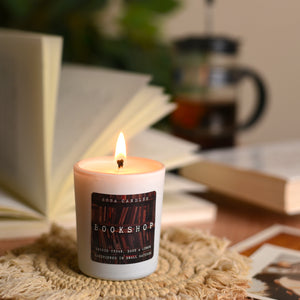
Then the running, which is deliberately unambitious. Three drops, not four, in a room that will have food in it — the Hotel Collection is composed at three to six drops per tank and the top half of that range belongs to an empty flat. The dose is per tank rather than per litre, since you are scenting the mist and not the water, so the 300ml Boond takes the same three drops as the 500ml Sukoon at ₹1,899. Start about two hours before dinner is served, on the low setting, and set the 2H timer immediately rather than intending to switch it off later, because at half past eight you will be holding a hot dish and thinking about something else. The Sukoon reaches a steady level in about twenty minutes from cold and runs 16 to 18 hours per fill on low at 30 to 50 ml/h against 9 to 12 on high, so a 2H run costs you almost nothing in fragrance and the room keeps the level for a good while after the mist stops. If you use a candle instead, the same discipline applies with an extra safety point: a Bookshop candle at ₹379 goes at the far end of the room, not on the table, and it gets blown out when you sit down. An open flame on a table where people are reaching across for dishes is a poor idea independent of anything to do with fragrance, and a candle burning through a meal is doing the same thing to your food that a diffuser would.
Then the two questions this always raises, both worth answering directly. The first: does this mean the fragrance is wasted? No, and the arithmetic is reassuring. The impression a home makes is formed at the door and in the first half hour, and after about fifteen minutes in a space every one of your guests has habituated to its smell and stopped registering it consciously anyway. A scent running through dinner is not being enjoyed by anybody; it is only being tasted. So stopping the machine costs you nothing you were actually getting, and it returns the meal to the person who cooked it. The second: what about afterwards? Once the plates have gone the room becomes a sitting room again, and it can carry something plusher than it could at seven — a warmer bottle at three drops, or a candle at the far end with the lamps low. That is a genuinely good reason to own two scents rather than one, and two 15ml bottles are ₹598, which is less than most single candles. Which one to put on after dinner is the subject of the living-room page for an Indian dinner, and the broader restraint argument is in how to make a home smell expensive without overpowering the food. A last constraint worth stating: the Hotel Collection is water-based and runs in the Sukoon, Boond and Megh only, never in a reed diffuser and never in the waterless Vaayu, and raw essential or carrier oils clog the 2.4MHz plate.
The SOSA edit
In buying order for a flat where the table sits beside an open kitchen. Note that the top row is a specification rather than a scent, which is unusual for one of these tables and is the honest reflection of what actually matters on this particular night.
| Buy | What it is | When it earns its place | Price |
|---|---|---|---|
| 1. Sukoon — for the timer ★ | 500ml, 270–320 sq ft, about 20 minutes from cold, 16–18h on low, steady/2H/4H timers, three 15ml scents included | First, and specifically because it stops itself. Set the 2H when you switch on, two hours before dinner | ₹1,899 |
| 2. Hotel Collection 15ml | Water-based ultrasonic fragrance, seven hotel-inspired scents, three to six drops per tank | Three drops in a room that will have food in it. ₹999 at 100ml, ₹1,799 at 300ml at about ₹6 per ml | ₹299 |
| 3. Boond | 300ml ultrasonic diffuser, same bottles, same three to six drops, less into the air per hour | In an open plan, two low distant sources beat one strong one near the middle. Entrance or far corner | ₹899 |
| 4. Bookshop candle 80g | 15–20 minutes to scent a room, around 15–18 hours of burn | After the plates go, at the far end, with the lamps low. Attended, and out before the room is left | ₹379 |
| 5. Megh | Six-litre ultrasonic diffuser for a genuinely open-plan or double-height space, same scents | Only when the volume is honestly large. A smaller machine run hard is the wrong answer, not a cheaper one | ₹3,499 |
| Not at all: fragrance at the table | No diffuser, no candle, no scent on or beside the dining table whilst people eat | Never. Most of flavour is retronasal smell, so anything in the air there becomes part of the meal | — |
Versailles
This is the page on this site that costs us the most money, and I have never been tempted to soften it. Somebody arrives asking how to scent their dining area and the honest answer is that they should not scent it at all whilst anybody is eating in it, which is not what a fragrance company is supposed to say. But I have cooked for a lot of people and I have eaten in a lot of rooms where somebody had left a strong diffuser running through the meal, and the food always came off worse. Not dramatically. Just slightly muddled, slightly less itself, in a way nobody at the table could name and everybody registered.
What I would rather sell is the discipline, and the machine that makes the discipline automatic. The 2H timer on the Sukoon is not a convenience feature on a dinner night. It is the whole product: it lets the room be scented for the arrival, which is when it matters, and then quietly removes the fragrance from the evening at exactly the point it would start interfering. Then, once the plates have gone and the room is a sitting room again, put something warmer on and let the place get comfortable. Scent the house around the meal rather than through it. That is the entire recommendation, and it happens to be the one that makes your cooking taste the way you intended.
Everything is made and supported from Pune, and a part of every order funds girl-child education through Nanhi Kali. You get a home that smells like somewhere you chose; a girl gets a classroom. That equation has always felt right to me.
Frequently asked questions
- Stopping the house smelling of cooking — and what changes when there is no kitchen door to shut.
- The living room during an Indian dinner — including the bottle to put on after the plates go.
- When to switch on the Sukoon when hosting dinner — the timer, worked into a real evening.
- Twelve people in a small 2BHK — the case for running less, not more.
- Brand: the SOSA founder story.
Facts verified August 2026: Timings in this guide: a scented candle puts noticeable fragrance into a normal room in roughly 15–20 minutes; a Sukoon ultrasonic diffuser reaches a steady level in about 20 minutes from cold; a reed diffuser needs roughly 24–72 hours for the oil to travel the reeds and the room to settle, so it is not a same-day solution. SOSA products and prices: Sukoon 500ml ultrasonic diffuser ₹1,899 (270–320 sq ft, 16–18h on low, 9–12h high, 30–50 ml/h, 2.4MHz cool mist, 7-colour LED, remote, steady/2H/4H timers, BPA-free, auto shut-off, includes three 15ml Hotel Collection scents of your choice); Boond 300ml ₹899; Megh 6-litre ₹3,499; waterless Vaayu ₹11,999 (up to 1000m³); Aangan ₹25,999; Meenar ₹38,500. Hotel Collection water-based fragrance 15ml ₹299, 100ml ₹999, 300ml ₹1,799, Pack of 7 at 15ml ₹1,799 / 100ml ₹5,999 / 300ml ₹10,799; dose 3–6 drops per tank. Reed diffusers (separate alcohol-free line): Morning Freshness from ₹749, Garden Bloom and Evening Calm from ₹799, Fresh Brew and Mountain Breeze from ₹849; 130ml from ₹1,249; duos from ₹1,498; 300ml refills ₹2,399. Scented candles: Bookshop 80g ₹379 (~15–18 hours), Bookshop + Cozy Corner ₹664 (~30–36 hours), Amber Rose 130g ₹599 (~25–30 hours) and 220g ₹799 (~40–50 hours), ceramic jar candles ₹949, Pure Calm wax melt set ₹854. Free shipping above ₹499. SOSA does not make a room or linen spray for the home — the sprays in the range are car perfumes. The Hotel Collection scents are SOSA's own interpretations; SOSA is not affiliated with or endorsed by any hotel brand. Prices subject to change — see the live product pages.