Founder Diaries · Clinics & Medical Centres · What a Facility Should Smell Like
By Sonal Sahani · ISIPCA Versailles 12 min read Updated September 2026
There is one rule underneath this entire question and it fits in six words: describe the cause, never the effect. You may say what you have installed and what you have done. You may not say what it does to a person, to a condition or to the air. Everything else on this page — the sentence your receptionist says, the line in your staff induction, the wording on your board and your website, the words you strike out of a vendor's quotation before you sign it — is that one rule applied. I have written it as sentences you can lift verbatim, because a policy nobody can quote at a desk at eleven in the morning is not a policy.
Quick answers — read this first
The rule: describe the cause, not the effect. “We keep a light fragrance in the entrance and waiting areas as part of housekeeping. Clinical rooms are kept fragrance-free.” That sentence is complete and nothing needs to be added to it.
Never say: that it reduces anxiety or stress, calms patients or children, improves sleep, aids recovery, is therapeutic, purifies, cleans or disinfects air, is antibacterial or kills germs, is hospital-grade or medical-grade, or is clinically proven. A diffuser is not an air purifier.
The vendor test: ask in writing what the product claims to do. If the answer contains a health word, have it removed from the quotation before you sign, and keep the corrected version.
The short answer
Short answer: describe the cause and never the effect. A clinic may say that it runs a light fragrance in its entrance and waiting areas as part of housekeeping, and that clinical rooms are kept fragrance-free. It may not say anything about what the fragrance does to a patient, to a condition or to the air. Everything patient-facing carries your clinic's name, not your supplier's.
The pick: one composition at a low setting in the public zones only — the
Westin-inspired White Tea Serenity is the default — on a
Vaayu at ₹11,999 with the setting written into the housekeeping SOP, one named owner, and a front-desk sentence everybody has been given. Nothing is claimed for any of it beyond housekeeping and presentation.
Shop: the
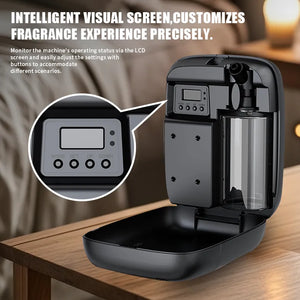
Vaayu at ₹11,999 is waterless with no standing tank, covers up to 1000m³, holds 400ml for about 75 days, runs under 38 dB with 1h/4h/8h/24h timers, app control, auto-stop and a key-lock. The
Aangan at ₹25,999 covers up to 3,000m³. Alcohol-free
reed diffusers from ₹749. Free shipping above ₹499.
Straight answer
How can a multi-speciality clinic use fragrance without making any medical claim?
1. Learn the rule: describe the cause, never the effect. What you installed, where, at what setting and during which hours is a description of a cause and it is always safe. What it does to a patient, to a condition, to recovery or to the air is an effect, and in a healthcare building it is a claim you cannot support and should not want to.
2. Use one sentence and give it to everybody. “We keep a light fragrance in the entrance and waiting areas as part of housekeeping. Clinical rooms are kept fragrance-free.” That is complete. It answers the question, it is true, and it closes rather than opens the conversation.
3. Keep a second sentence for the patient who says smells bother them. “Of course — I can seat you in the far bay, away from it, and I can switch it off now if you would prefer.” Then do it. The ability to switch it off inside thirty seconds is part of the purchase.
4. Write four lines into the housekeeping SOP. Which zones are scented; which zones are fragrance-free; which setting and which hours; who owns it and what the desk says. One page, reviewed annually, signed by whoever signs your other patient-facing procedures.
5. Strike the vendor's language out of the quotation before you sign it. Ask in writing what the product claims to do. If a health word comes back, ask for it to be removed and keep the corrected document. What is on your supplier's website is their problem; what is in your file is yours.
6. And remember whose name it sits under. A claim on your board, your website or your listing is your clinic's claim, made by your medical director, about a product in your building. Say housekeeping and presentation, and stop there.
A portion of every order supports girl-child education through Nanhi Kali.
TL;DR: describe the cause, never the effect. “We keep a light fragrance in the entrance and waiting areas as part of housekeeping. Clinical rooms are kept fragrance-free.” Nothing about anxiety, sleep, recovery, air quality or germs may be said by anybody in your building, and the vendor's wording comes out of the quotation before you sign it.
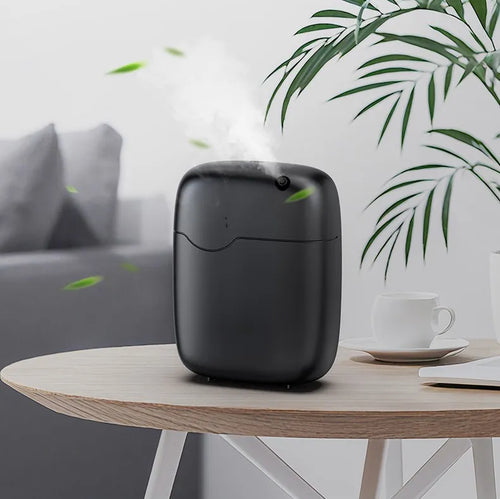
What you may honestly say about this machine
SOSA Vaayu · waterless cold-air diffuser ₹11,999
Everything in this description is a cause rather than an effect, which is how a specification should read. Waterless cold-air nebulisation with no water reservoir, so there is no standing tank in a public area and no daily emptying task. That is a housekeeping fact and it is not infection control, and I would correct any salesperson who told you otherwise. Up to 1000m³, about 2,000–3,000 sq ft. 400ml for roughly 75 days on clinic hours. Under 38 dB. 1h/4h/8h/24h timers, app and onboard control, auto-stop, key-lock, CE, RoHS and SGS. Nothing here treats, affects or alters any patient or condition, nothing here cleans air, and a diffuser is not an air purifier.
Describe the cause, never the effect
The reason clinics get into trouble here is almost never bad faith. It is that fragrance is sold with a vocabulary borrowed from an industry that does not have a medical director, and that vocabulary walks into a healthcare building inside a brochure and comes out again on a printed board at reception. The distinction that prevents all of it is between a cause and an effect. A cause is something you did: you installed a machine, in these zones, at this setting, during these hours, with this composition. An effect is something you are asserting happens to a person or to the air, and that is a claim. Keep every sentence on the first side of that line and there is no version of this conversation that can hurt you.
1
THE RULE
Causes are always safe. Effects are always claims
Take the two halves seriously, because the line is sharper than it looks. These are causes and all of them are safe to say, print, publish and put in a tender response: we run a light fragrance in the entrance, reception and waiting areas; the machine runs on a timer during opening hours and stops with the last appointment; it is set to its lowest intensity; clinical rooms are kept fragrance-free; housekeeping owns it and one named person maintains it; the composition is alcohol-free, or water-free, or IFRA-standard, or phthalate-free, if those things happen to be true. Every one of those is a description of what you have done. These are effects, and every one of them is a claim you must not make: that it helps anybody relax, that it makes patients comfortable, that it improves the mood of a waiting room, that it makes children easier, that it freshens or improves the air, that it deals with germs, that it is healthier, that it is hygienic. Note how mild most of those sound. That is the trap — an effect does not have to be dramatic to be a claim, and “patients settle better” is the same assertion as “reduces anxiety” wearing a softer coat. Do not write either. The third category is the one people miss: implication by placement. A fragrance mentioned in a paragraph about patient care, or on a page headed with a clinical word, or beside a photograph of a treatment room, has made the claim without a verb. Put it where it belongs — in housekeeping, facilities and presentation — and the implication goes away.
2
THE SENTENCES
What to say at the desk, to staff, and on your own board
Here are the sentences, to be used as written.
At the desk, when a patient asks what the fragrance is: “It is a light fragrance we run in the entrance and the waiting areas as part of our housekeeping. The consultation and treatment rooms are kept fragrance-free.” Stop there. Do not add a reason, because every reason anybody improvises at a desk is an effect.
When a patient says smells bother them: “Of course. I can seat you in the far bay, away from it, and I can switch it off now if you would prefer.” Then do it — a machine you cannot switch off in thirty seconds is the wrong machine, and
what to say to a patient who asks about the fragrance and
how to handle a patient who is sensitive to it go further into that conversation.
When a patient asks whether it is good for them: “No, it is not for anything like that. It is housekeeping — it keeps the entrance from smelling of cleaning products.” Honest, disarming, and it ends the exchange rather than extending it.
To staff, at induction: “We run a light fragrance in the public areas only. It makes no difference to anybody's health and we never describe it as though it did. If a patient asks, use the sentence on the desk card. If a patient objects, move them and switch it off.”
On your own board, website or listing, if you mention it at all: “Entrance and waiting areas are lightly fragranced. Clinical areas are fragrance-free.” Fourteen words, no verbs of effect, and there is nothing in it for anybody to take issue with. My own preference is not to mention it publicly at all — a fragrance a patient cannot name does not need a sign, and
the first ten seconds of arrival are not improved by being annotated.
3
THE NEVER LIST AND THE VENDOR TEST
Fifteen sentences to strike, and one question to ask in writing
The list, plainly, because a page that only gives you the principle leaves you doing the hard part alone.
Do not say it reduces anxiety or stress. Do not say it calms patients, calms children or settles nerves. Do not say it lowers blood pressure. Do not say it improves sleep. Do not say it aids recovery or helps anybody heal faster. Do not say it is therapeutic, and do not use any word ending in -therapy. Do not say it purifies, cleans, sterilises or disinfects air. Do not say it is antibacterial or antimicrobial, and do not say it kills germs, bacteria or viruses. Do not say it is hygienic. Do not say it is hospital-grade or medical-grade, which mean nothing. Do not say it is clinically proven or medically proven. Do not say it is recommended by doctors. Do not say it masks, neutralises or eliminates odour — and in this building do not use fragrance that way either, because a persistent smell is information about a drain trap, a bin or a drain pan and it wants finding and fixing rather than covering. Covering cleaning-chemical odour and
the fragrance-free zones are the operational half of that last one.
Then the vendor test, which takes one email: ask your supplier, in writing, what the product claims to do. If a health word comes back, ask for it to be removed from the quotation, the specification and any material that will sit in your file, and keep the corrected version. A supplier who will not put a plain answer in writing has told you something useful at no cost. And read the quotation the way your quality lead would: what is on a vendor's website is the vendor's problem, but what is in your procurement file, on your board and on your website is yours, signed by your medical director, about a product in your building.
The one-sentence test for anything you are about to print or say: could your medical director sign it without asking a single follow-up question? If the sentence describes only what you installed and where, the answer is yes. If it describes what happens to a person or to the air, the answer is no and no rewording will rescue it.
What the brochure says, and what you may write instead
A translation table, because this is the form the problem actually arrives in — a line from a supplier's deck, repeated in good faith into a clinic's own material six weeks later. The middle column is the reason, phrased the way it will be phrased back to you in a meeting. The right-hand column is a replacement you can use as written.
The translation table
Six claims you will be offered, and what to write instead
| What the brochure says |
Why it cannot go on your material |
What you may write instead |
| “Reduces patient anxiety in the waiting room” ★ |
Do not write it. It asserts a clinical outcome, it is unsupported, and it would be your medical director asserting it rather than the supplier |
“We keep a light fragrance in the entrance and waiting areas as part of housekeeping.” |
| “Purifies and cleans the air” |
Do not write it. A diffuser adds a trace of fragrance to air; it moves nothing through a filter and it is not an air purifier |
“Air quality in the public areas is handled by the ventilation system, which is serviced on schedule.” |
| “Antibacterial — kills 99 per cent of germs” |
Do not write it. That is a disinfectant claim and it belongs to a licensed product with data behind it, which this is not |
“Cleaning is carried out with the products and frequencies set out in the housekeeping schedule.” |
| “Therapeutic scenting for healthcare” |
Do not write it, and do not use any word ending in -therapy. It borrows clinical vocabulary for a housekeeping product |
“Fragrance is managed by housekeeping as part of presentation.” |
| “Calms patients and children” |
Do not write it. It is the same claim as the first row in gentler clothes, and paediatric clinical areas are fragrance-free in any case |
“Paediatric and all other clinical rooms are kept fragrance-free.” |
| “Hospital-grade fragrance system” |
Do not write it. The term means nothing, and a phrase that sounds regulated but is not is the worst kind to have in a file |
“A waterless diffuser on a timer, set to its lowest intensity during opening hours.” |
Shop this guide
What the policy actually buys
The SOSA principle
You may describe what you installed. You may not describe what it does to a person. Every difficult sentence in healthcare scenting sits on one side of that line or the other, and you can tell which in about two seconds.
Cause: a light fragrance, in these zones, at this setting, during these hours, with clinical rooms fragrance-free. Effect: anything at all about anxiety, sleep, recovery, germs or air quality. The first is a specification. The second is a claim.
Sign-off, the desk, and the annual review
Start with whose signature is on it, because that is the fact that changes how carefully everything else gets written. Anything patient-facing in your building — a printed board, a line on your website, a sentence in a listing, a paragraph in a patient information leaflet — is your clinic speaking, and in most practices your medical director is the person who ends up accountable for it. That is not a reason to be nervous; it is a reason to keep the wording so plain that sign-off takes twenty seconds. Route the fragrance wording through the same person who signs your other patient-facing text, at the same time, in the same email. If the sentence describes only what you installed and where, they will not have a question. If it describes what happens to a person, they will have several, and they will be right. Put it in the right budget line as well, because budget lines are arguments about meaning. Fragrance belongs in facilities alongside housekeeping rather than in anything clinical, and filing it there settles most internal disagreements before they start. The same goes for procurement paperwork: the specification should read like the machine's data sheet — waterless, up to 1000m³, 400ml for about 75 days, under 38 dB, 1h/4h/8h/24h timers, auto-stop, key-lock, CE, RoHS and SGS — and it should contain no adjective about patients at all.
Then the desk, which is where policy meets a real person at eleven in the morning. Print the three sentences on a card and tape it inside the reception drawer. The answer to “what is that smell”, the answer to “smells bother me”, and the answer to “is it good for you”. Nobody at a front desk should be improvising a reply to a question about a product, because improvisation is where effects get invented, and a well-meaning receptionist saying “it is meant to help people relax” has just made a clinical claim on your behalf in a room with forty witnesses. Then make the practical answer real: the person on the desk must be able to switch the machine off inside thirty seconds, and the seating plan must have a bay that is genuinely away from it. Zoning is the answer to an objection, not a different composition — asthma, allergies and where to scent works through that logic by zone. Log the exchanges in a line each: date, what was asked, what was done. Three entries in a year is a normal building. Fifteen entries in a year is a level problem and the page on a clinic that smells too strongly is the one to read next. And keep the zone map visible rather than filed. Scent the entrance, reception, shared and departmental waiting, inter-departmental corridors, lift lobbies, administration and the café corner. Leave consultation and examination rooms, treatment and procedure rooms, day-care surgery and recovery, dressing rooms, blood- and sample-collection rooms, the laboratory, pharmacy dispensing, sterile stores, imaging, oncology and chemotherapy day-care, paediatric clinical areas and any room where a patient undresses entirely alone.
Then the review, and the reason all of this is worth an afternoon. One page in the housekeeping SOP, four lines long, reviewed once a year with everything else: the scented zones, the fragrance-free zones, the setting and the hours, and the named owner with the desk script attached. A year is the right interval because the failure mode here is drift rather than a decision — a new supplier's deck, a new marketing agency writing website copy, a new front-office manager inventing a friendlier answer, a machine turned up by four people over two years. All four of those are caught by reading one page annually and walking the building with it. And the principle, which is smaller than the industry would like and is entirely defensible: fragrance in a medical facility is housekeeping and presentation. A room can smell of nothing in particular rather than of a cleaning cupboard, and a facility that smells looked after reads as a facility that is looked after. It does not treat, affect or alter any patient or any condition; it does not clean, purify or disinfect air, because a diffuser is not an air purifier; and it is never the answer to a smell that has a source, because a persistent smell is information and it wants finding and fixing. The pillar page for this group and how to describe scenting internally and to patients carry the same argument at different lengths. If you can say all of that to a patient, a colleague and a regulator without changing a word, you are using fragrance correctly.
If a sentence about your fragrance would need explaining to your medical director, it is not a sentence about housekeeping and it does not belong in your building.
— Sonal Sahani, SOSA
The SOSA edit
In order, for a centre putting this on a proper footing. Three of the six rows cost nothing and they come first, because the wording is the part that carries risk and the machine is the part that carries an invoice. The last row is the thing we will not supply at any price.
The SOSA edit
Fragrance without claims — in order
| Do |
What it is |
When it earns its place |
Cost |
| 1. The one sentence, on a card at the desk ★ |
“We keep a light fragrance in the entrance and waiting areas as part of housekeeping. Clinical rooms are kept fragrance-free.” |
Before the machine is switched on. Nobody at a front desk should ever improvise an answer about a product |
₹0 |
| 2. Four lines in the housekeeping SOP |
Scented zones; fragrance-free zones; setting and hours; the named owner and the desk script |
Week one, signed by whoever signs your other patient-facing procedures, reviewed once a year |
₹0 |
| 3. Strike the vendor's wording from the quotation |
Ask in writing what the product claims to do, remove every health word from the document, keep the corrected version |
Before you sign. What is on a supplier's website is theirs; what is in your file is yours |
₹0 |
| 4. SOSA Vaayu
|
Waterless with no standing tank, up to 1000m³, 400ml for about 75 days, under 38 dB, timers, app, auto-stop, key-lock |
Public zones only, lowest intensity, running the opening hours. A specification with no adjectives about patients in it |
₹11,999 |
| 5. Westin-inspired White Tea Serenity
|
White tea, aloe and cedar — the lightest of the seven hotel-inspired compositions |
A fragrance nobody can name generates no questions, which is a governance argument as much as a perfumery one |
from ₹299 |
| What we will not supply: a claim |
No clinical, therapeutic or air-cleaning benefit is offered for any SOSA product in a healthcare building, in writing or in conversation |
Ever. A diffuser does not treat, affect or alter any patient or condition, and it is not an air purifier |
— |
Honest notes for buyers: fragrance in a medical facility is housekeeping and presentation, never treatment. Nothing on this page claims that a fragrance reduces anxiety, aids recovery, improves sleep, cleans or disinfects air, or has any clinical effect whatsoever, because it does not and a diffuser is not an air purifier. Scenting belongs to the entrance, reception, shared waiting areas, inter-departmental corridors and administrative rooms. Consultation and examination rooms, treatment and procedure rooms, day-care surgery, dressing rooms, blood- and sample-collection rooms, laboratories, pharmacy dispensing, sterile stores, imaging rooms, oncology day-care and paediatric clinical areas should be left fragrance-free. A persistent smell is information about a dry drain trap, a bin, a soiled-linen route or an air-conditioning drain pan: find it and fix it rather than covering it. On the machines: the
Vaayu at ₹11,999 is waterless cold-air nebulisation with no standing water tank, covering up to 1000m³ or roughly 2,000–3,000 sq ft, with a 400ml tank lasting about 75 days, Bluetooth app control, 1h/4h/8h/24h timers, under-38dB running, auto-stop and a key-lock for public areas. The
Aangan at ₹25,999 covers up to 3,000m³ and connects to HVAC for a whole floor or an atrium. The ultrasonic
Sukoon,
Boond and
Megh are water-based, hold standing water and add 30–50 ml of water an hour to the air, which makes them suitable for a single administrative cabin with a named person emptying and drying the tank daily, and unsuitable for public clinical property. An alcohol-free
reed diffuser needs 24–72 hours to establish and suits a small lobby rather than a large waiting hall. Candles are not appropriate in a healthcare facility because an open flame is a fire-safety matter. SOSA does not make a room spray. The Hotel Collection scents are SOSA's own interpretations inspired by the world's finest hotels; SOSA is an independent Indian fragrance house, not affiliated with or endorsed by any hotel brand. A portion of every order supports girl-child education through Nanhi Kali.
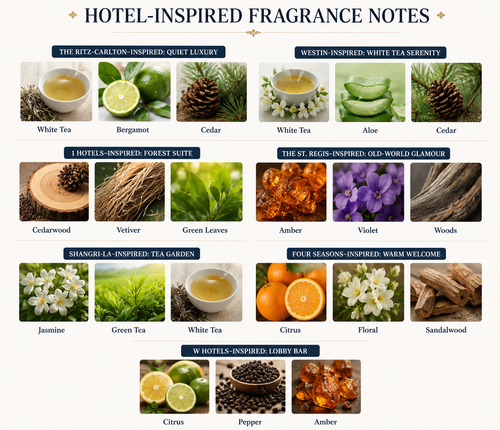
A composition chosen so that nobody has to explain it
Westin-inspired · White Tea Serenity ₹299 / 15ml
White tea, aloe and cedar — the lightest of the seven hotel-inspired compositions and the default in a medical facility. There is a governance argument for the lightest bottle as well as a perfumery one: the quieter the fragrance, the fewer conversations anybody has to have about it. A patient who cannot detect a composition does not ask what it is, does not ask what it is for, and is never in a position to be given an answer that somebody improvised. The seven are SOSA's own interpretations inspired by the world's finest hotels; SOSA is an independent Indian fragrance house and is not affiliated with or endorsed by any hotel brand, and that line belongs in your file too.
A note from Sonal
I have turned down two healthcare tenders for the same reason, and it was not price. Both asked us to supply wording about what our machines would do for patients, and there is no version of that sentence I am willing to write. Not because I am cautious by temperament, but because the sentence would end up on a board at a reception desk with somebody else's clinic name above it and somebody else's medical director accountable for it. A vendor who hands you that language is handing you their marketing risk and keeping the margin, and you would be astonished how routine the practice is in this category.
What we do make is a machine and a composition, and what they do is smaller and completely real. A room smells of nothing in particular instead of smelling of the cleaning cupboard, and a building that smells looked after reads as a building that is looked after. That is housekeeping and presentation, it is worth ₹11,999 and four refills a year, and it is the whole claim. If you take one thing from this page, take the card for the reception drawer: three sentences, printed, so that nobody in your building ever has to invent an answer. The wording is free and it is the most valuable part of anything I have written in this cluster.
Everything is made and supported from Pune, and a part of every order funds girl-child education through Nanhi Kali. You get a space that smells like somewhere looked after; a girl gets a classroom. That equation has always felt right to me.
Frequently asked questions
How can a clinic use fragrance without making a medical claim?
Describe the cause and never the effect. You may say that you run a light fragrance in the entrance and waiting areas as part of housekeeping, at a low setting, during opening hours, and that clinical rooms are kept fragrance-free. You may not say anything about what it does to a patient, a condition or the air.
What should a receptionist say when a patient asks about the fragrance?
“It is a light fragrance we run in the entrance and the waiting areas as part of our housekeeping. The consultation and treatment rooms are kept fragrance-free.” Then stop. Print it on a card in the reception drawer so that nobody improvises a reason, because an improvised reason is usually a claim.
What claims should a medical centre never make about a diffuser?
Do not say it reduces anxiety or stress, calms patients or children, lowers blood pressure, improves sleep, aids recovery, is therapeutic, purifies or cleans or disinfects air, is antibacterial or kills germs, is hygienic, is hospital-grade or medical-grade, or is clinically proven. A diffuser is not an air purifier.
How should a clinic check a scenting vendor's claims?
Ask in writing what the product claims to do. If a health word comes back, ask for it to be removed from the quotation and the specification, and keep the corrected version in the procurement file. What sits on a supplier's website is their problem; what sits in your file, on your board and on your website is yours.
Should a clinic mention its fragrance on its website or signage at all?
It does not need to, and my preference is not to. If you do, fourteen words are enough: entrance and waiting areas are lightly fragranced, and clinical areas are fragrance-free. Avoid placing it near clinical text or imagery, because implication by placement is a claim without a verb.
Six words, and a card in the drawer
Describe the cause — never the effect
The Vaayu is ₹11,999: waterless with no standing tank, up to 1000m³ or roughly 2,000–3,000 sq ft, a 400ml fill lasting about 75 days on a clinic's opening hours, under 38 dB, 1h/4h/8h/24h timers, app control, auto-stop and a key-lock, supplied with four hotel-inspired scents. The Aangan is ₹25,999 for up to 3,000m³ or an AHU tie-in. No clinical, therapeutic or air-cleaning claim is made for any of it, and a diffuser is not an air purifier. Free shipping above ₹499, and a portion of every order supports girl-child education through Nanhi Kali.
See the Vaayu · ₹11,999 All commercial scenting
Continue the read
More from SOSA
Editorial standards & sources
About this guide: Written by Sonal Sahani, ISIPCA Versailles-trained founder and perfumer at SOSA Home & Body, on the single rule that keeps clinic fragrance out of claim territory — describe the cause, never the effect — with the exact sentences to use at a reception desk, in staff induction and on a clinic's own signage, a translation table for the claims suppliers offer, the list of statements no medical centre should ever make about a diffuser, and the one-question test for a vendor's quotation.
Facts verified August 2026: Product facts used in this guide. SOSA Vaayu ₹11,999: waterless cold-air nebulising diffuser, atomises undiluted fragrance oil to a dry residue-free nano-mist with no water reservoir, coverage up to 1000m³ (approximately 2,000–3,000 sq ft), 400ml refillable tank lasting up to about 75 days per fill, Bluetooth app plus onboard control, 1h/4h/8h/24h timer scheduling, adjustable intensity, under 38 dB, DC 12V/1A at 5W, 165 × 80.5 × 215 mm and 0.9 kg, freestanding or wall or HVAC mounted, auto-stop and key-lock, CE, RoHS and SGS certified, supplied with four hotel-inspired fragrances. SOSA Aangan ₹25,999: HVAC-connected or standalone commercial nebulising diffuser, coverage up to 3,000m³ (roughly 8,000–10,000 sq ft), 800ml reservoir, metal body, programmable schedules, under 42 dB. Ultrasonic machines are water-based, hold standing water and consume 30–50 ml of water an hour: Sukoon ₹1,899 (500ml, 270–320 sq ft, 16–18 hours on low, 3–6 drops per tank, steady/2H/4H timers, three 15ml Hotel Collection scents included), Boond ₹899 (300ml), Megh ₹3,499 (6 litres). Hotel Collection water-based fragrance 15ml ₹299, 100ml ₹999, 300ml ₹1,799, Pack of 7 at 15ml ₹1,799 against ₹2,093 bought singly; the Vaayu and Aangan take their own undiluted oil rather than these water-based bottles. Alcohol-free reed diffusers from ₹749, requiring 24–72 hours to reach their working level. Free shipping above ₹499. Coverage arithmetic: cubic metres equal floor area in square feet divided by 10.76 and multiplied by ceiling height in metres, counting only the volumes that are actually scented. This guide makes no medical, therapeutic or clinical claim of any kind for fragrance: a diffuser does not purify, disinfect or clean air, and does not treat, calm or affect any patient or condition. Fragrance is housekeeping and presentation. Clinical areas should be left fragrance-free, and a persistent odour should be traced to its source and corrected rather than covered. SOSA is not affiliated with or endorsed by any hotel brand. Prices subject to change — see the live product pages.



 Public zones onlyfrom ₹749Shop →