
- The direct answer
- Why a spray and an oil handle freshness differently
- Three things that change once freshness moves into oil
- Spray versus oil, aspect by aspect
- How to apply Adaa so the freshness actually shows
- What to buy to test this for yourself
- A note from Sonal
- Questions about fresh attars and how they wear
2. The notes themselves are what make something read as fresh, not the format they're delivered in. Adaa's bergamot and green cardamom are genuinely bright, sharp, citrus-forward notes whether they arrive by spray or by oil. Format changes how and where you notice them — it doesn't change what they are.
3. An oil trades immediacy for closeness and gradual unfolding. Where a spray gives you the whole fragrance almost at once, an oil gives you the top notes first, then lets the jasmine sambac and white musk in Adaa emerge more slowly underneath — you notice the freshness differently over the course of wearing it, rather than all at once at the start.
4. This makes an attar read as a personal, close scent rather than a room-filling one. Because the oil stays nearer the skin, a fresh attar tends to be something you and people close to you notice, rather than something announced to a room the moment you apply it — a genuinely different experience of "fresh," not a lesser one.
5. The only way to know how this feels on you specifically is to actually wear it. Reading about the mechanism only goes so far — a 3 ml bottle of Adaa is sized exactly for finding out whether a fresh oil suits how you want to be smelled, without committing to a full-size bottle first.
An attar can absolutely smell bright and fresh — it just gets there by staying close and unfolding gradually, instead of flashing outward the way a spray does.
Why a spray and an oil handle freshness differently
An alcohol perfume is built around a carrier that evaporates quickly. The moment it's sprayed, the alcohol lifts the top notes into the air with it, which is exactly why a fresh citrus spray can feel like it fills a room almost instantly — that immediacy is the alcohol doing its job, not something inherent to the notes themselves. An attar has no such carrier. The fragrance is suspended in oil, applied directly to skin with a roller ball, and it simply doesn't have anything to flash it outward the way alcohol does.
That difference doesn't make the oil less fresh — it changes how the freshness reaches you. Bergamot and green cardamom in Adaa are still bright, sharp, genuinely fresh notes; what changes is that they warm gradually against your own skin rather than being carried into the air by a propellant. You notice them a little more slowly, and you notice them closer to you, rather than as an immediate cloud the moment the bottle is opened.
This is also why an attar tends to develop more gradually across the time you wear it. A spray's top notes tend to burn off in a fairly compressed opening phase before the heart notes take over; an oil's notes emerge in a more layered, unhurried way, because nothing is pushing them out ahead of schedule. The freshness in Adaa is genuinely there throughout — it just isn't front-loaded the way a spray's is.
Three things that change once freshness moves into oil
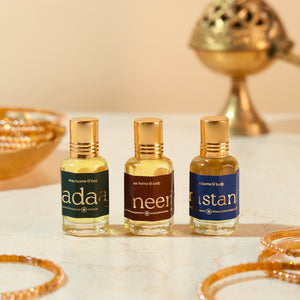
 Adaa₹379Because the oil doesn't get carried outward by alcohol, the freshness in Adaa reads as something close and personal rather than something announced the moment you walk in — a real difference in experience, not a smaller version of the same one.
Spray versus oil, aspect by aspect
Laid out side by side, the differences are about mechanism and experience, not about one format being a lesser version of the other.
| Aspect | Alcohol spray | Oil attar | What it means for you |
| How the top notes arrive | Carried into the air quickly by the alcohol | Warm gradually against the skin | An attar's freshness unfolds rather than announcing itself |
| Where it's noticed | Broadly, into the space around you | Close to your own skin and to people near you | A more personal read on the same fresh notes |
| How it develops over wear | Top notes tend to burn off in a fairly compressed opening | Notes layer in more gradually | You notice each stage of Adaa a little more distinctly |
| How you apply it | A spray across a wider area | A roller ball on specific pulse points | A more deliberate habit, not a lesser one |
| Neither format is described here with any figure for how long a scent lasts or how far it travels — that varies by skin and isn't something either format can be reduced to. | |||
Adaa · bergamot, cardamom, jasmine sambac, white musk₹379Shop →  Nawaab · for comparison, a dry non-fresh register₹399Shop →
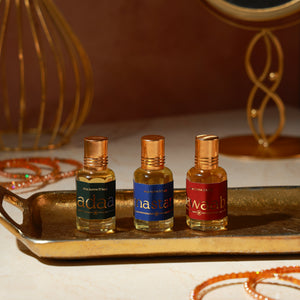
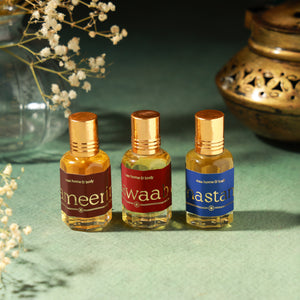
 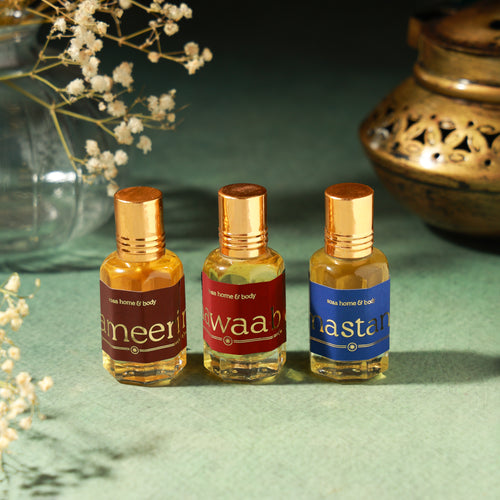 Attar Trio · to compare fresh against warmer registers₹1,055Shop →
How to apply Adaa so the freshness actually shows
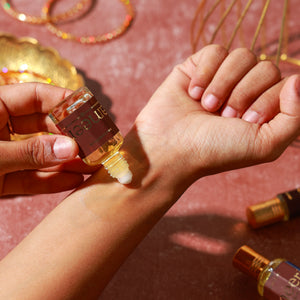
Apply Adaa to a pulse point with real warmth — the inner wrist or the side of the neck rather than the back of the hand — because the oil relies on your own skin's warmth to release the bergamot and cardamom opening. A cooler patch of skin will read the same fragrance as quieter, simply because there's less warmth doing the work a spray's alcohol would otherwise do.
Don't judge the freshness in the first moment the way you might with a spray. Give it a few minutes to warm against your skin before deciding whether the bergamot and cardamom are coming through — an attar's opening is more gradual by design, and comparing it to a spray's immediate burst isn't a fair test of either.
One or two roller passes on a single pulse point is a reasonable amount to start with if you're used to a spray habit — you can always add a second pulse point once you know how Adaa develops on your own skin specifically, since everyone's chemistry reads it a little differently.
What to buy to test this for yourself
Sized so you can genuinely compare a fresh oil against the rest of the range, rather than taking the mechanism on faith.
| Route | Best for | Why | What it costs |
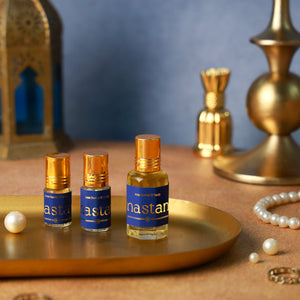
| Adaa, 3 ml | Anyone asking whether an oil can genuinely read as fresh | The direct test — bergamot and cardamom, worn close instead of sprayed | ₹379 |
| Adaa, 6 ml | A reader who's tested the 3 ml and knows Adaa suits them | The same fresh register, sized to last longer between reorders | ₹669 |
| Nawaab, 3 ml | A reader who wants to compare fresh against a dry, non-fresh register | Useful as a contrast — Nawaab shares the oil format but not the fresh notes | ₹399 |
| Attar Trio | A reader comparing fresh against the range's warmer registers at once | One size each of Ameeri, Nawaab and Mastani, priced as a set | ₹1,055 |
| Do nothing yet | A reader who wants to read further before trying anything | No purchase needed to keep researching how the oil format behaves | No purchase |
This is one of my favourite questions to answer, because it isn't really about attar at all — it's about a genuine misunderstanding of what "fresh" depends on. People assume freshness is a property of the spray, when it's actually a property of the notes. Bergamot is bergamot whether it's carried by alcohol or suspended in oil; what changes is how quickly and how far it travels from where you put it.
When I trained at ISIPCA, we worked with raw materials in both alcohol and oil bases specifically to understand this — the same bergamot behaves differently depending on what it's dissolved in, and neither behaviour is more "real" than the other. I built Adaa to prove this to a fresh-perfume lover directly: bergamot, green cardamom, and enough jasmine sambac and white musk underneath to hold the shape together as an oil.
What I ask people to do, every time, is give it a few minutes on skin before deciding. A spray trains you to expect an answer in seconds. An oil takes a little longer to introduce itself, and judging it on a spray's timeline is the single most common reason someone assumes an attar "isn't fresh" when it genuinely is — they just didn't wait for it.
Questions about fresh attars and how they wear
- I Love Fresh Perfumes — Which Attar Should I Try First? — this series's starting point, for a reader who hasn't picked an attar yet.
- I Usually Wear Fresh Citrus Perfumes — Which Perfume Oil Would Suit Me? — the same citrus-to-oil question, worked through from the notes rather than the format.
- I Like Fragrances That Change and Develop on Skin — Should I Explore Perfume Oils? — the gradual-development idea this post explains, taken further.
- Is Perfume Oil a Good Format for Someone Who Mostly Likes Fresh Aquatic Fragrances? — the same format question, asked from a taste this range can only bridge to honestly.
- Brand: the SOSA founder story.
SOSA attars & prices (verified September 2026): All four are alcohol-free roll-on attars in 3 ml, 6 ml and 12 ml. Adaa (bergamot, green cardamom, jasmine sambac, white musk) ₹379 · ₹669 · ₹1,149. Ameeri (Taif rose, Indian sandalwood, Persian saffron, soft oudh) ₹385 · ₹679 · ₹1,165. Mastani (night-blooming jasmine, Damask rose, oudh) ₹389 · ₹685 · ₹1,179. Nawaab (white royal oud, Mysore sandalwood, Kashmir saffron) ₹399 · ₹699 · ₹1,199. The Ameeri + Nawaab + Mastani trio is ₹1,055 · ₹1,859 · ₹3,189. Prices are the live store prices at the time of writing.