


Buy the size you will still be using in a year. The 300ml at ₹1,799 is the right call here, because consistency is the point.
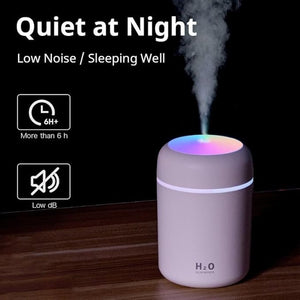
What to run it in? A Boond at ₹899 — guest rooms are small. Two drops, an hour before arrival, then off.
2. Buy the 300ml, not a different 15ml every season. Consistency is most of what makes a room feel hotel-grade. A guest who stays twice a year and finds the room identical both times has had the better experience. The 300ml at ₹1,799 is roughly ₹6 a millilitre and removes the temptation to keep changing.
3. Spend on the room before you spend on the scent. A working bedside lamp, a carafe or a bottle of water, four matching hangers, a luggage stand or a clear chair, a spare blanket, and a socket your guest can reach without moving furniture. Fragrance on top of those reads as thoughtfulness; instead of them, as staging.
4. The richer option, and why it is not this: The St. Regis-inspired Old-World Glamour. Amber, violet and woods — genuinely opulent, and the right answer in a master bedroom. In a small guest room it is the most persistent of the seven overnight, and richness is exactly the register that tips from generous into imposing when the person breathing it did not choose it.
5. The dose: two drops, run before arrival, then switched off. A Boond at ₹899 on the chest of drawers, forty-five minutes before your guest walks in. Leave the bottle beside it so they can add a drop or ignore it entirely.
Made in India, composed by an ISIPCA Versailles-trained perfumer — and a portion of every order supports girl-child education through Nanhi Kali.

Luxury in a guest room is infrastructure, not richness
The hotel industry worked this out long before home fragrance existed as a category. What guests report as "luxurious" almost never correlates with how much was spent on any single object in the room; it correlates with whether the room anticipated them. A hook where you need a hook. A light you can turn off from the bed. Enough plug sockets. Water without having to ask. Linen that matches its own pillowcases. These are unglamorous, inexpensive things, and together they produce the feeling that somebody thought about you before you arrived.
Scent belongs in that list, and this is the part most people get backwards. A hotel scent does not signal luxury because it is rich; it signals luxury because it is invariant. The Peninsula smells of the same thing in Hong Kong that it does in Tokyo, and it smelt of it last year. That reliability is the message — someone is maintaining this, on a schedule, whether or not you are here. At home the equivalent is buying one bottle, in a size that lasts, and refusing to change it because something new looked interesting. Your sister who visits every Diwali should walk into a room that smells the way she remembers — which is worth more than any amount of amber.
The three luxury registers, and which one a guest room can carry
 Quiet LuxuryFrom ₹299White tea · bergamot · cedar. This is the one that actually references the thing people mean when they say "I want it to smell like a hotel". Not a suite, not a spa — the lobby, the lift, the corridor at nine in the morning after housekeeping. White tea gives the papery cleanliness, bergamot the lift that stops it being flat, cedar the structure that makes it read as a building rather than a laundry.
In a guest room it has the right weight: present enough that the room is clearly prepared, light enough that it has thinned to almost nothing by the small hours. It is also the most repeatable of the seven — it does not date, and it smells the same in December as it did in June.
The reason it loses here is structural rather than aesthetic. Amber is the heaviest material in the collection and the slowest to leave the air, and a guest room is small, shut, and occupied by someone who cannot open a window in a house they do not know. Richness there stops being generous and starts being something the guest has to accommodate.
What it gives up is the sense of occasion. Quiet Luxury tells a guest that the room was prepared for them; White Tea Serenity tells them the room is clean, which is a smaller claim. Where you are aiming at luxury specifically, that difference is the brief. Choose it anyway if you would rather be invisible than impressive.
The luxury matrix
Four of the seven can reasonably be called luxurious; only two suit a small room with somebody else asleep in it. Read across for register rather than quality — none is better made than another, they simply say different things. A 15ml at ₹299 settles it more cheaply than a returned 300ml.
| Scent | Notes | Character | Best for |
|---|---|---|---|
|
The Ritz-Carlton-inspired ★ Quiet Luxury |
White tea · bergamot · cedar | Groomed, lifted, faintly formal — the lobby reference | The guest room you want to feel like a good hotel; the repeatable choice |
|
Westin-inspired White Tea Serenity |
White tea · aloe · cedar | Cool and quiet — spa luxury rather than hotel luxury | Paying guests, colleagues, anyone whose taste you cannot guess |
|
The St. Regis-inspired Old-World Glamour |
Amber · violet · woods | Plush amber and powdery violet — the richest of the seven | A large, well-aired guest suite; family who stay often. Not a small closed room |
|
Four Seasons-inspired Warm Welcome |
Citrus · floral · sandalwood | Citrus lifted over creamy sandalwood — warm and hospitable | A guest room used mostly in daytime, or a room that doubles as a study |
| Not in this family, for reference: 1 Hotels-inspired Forest Suite is a dry cedar-vetiver with no sweetness — excellent here, but its register is understated rather than luxurious; Shangri-La-inspired Tea Garden is green and floral; W Hotels-inspired Lobby Bar is a peppery evening scent for rooms with people awake. See all seven. | |||
Hotel Collection · the luxury pickFrom ₹299Shop →  Sukoon · for a larger guest suite₹1,899Shop →
 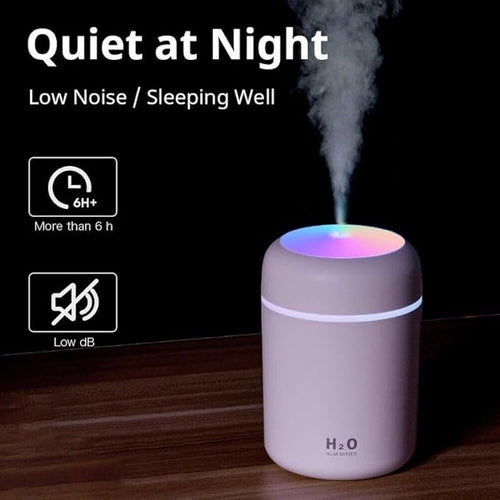 Boond · the guest-room machine₹899Shop →
Dose, timing, and the case for buying once
Two drops. A guest room is usually the smallest bedroom in the house, and the instinct with a scent you have chosen for its expensiveness is to use enough of it that the expensiveness is audible — which is precisely how a luxury blend turns into an announcement. Three drops if the room is unusually large or freshly aired; four is the ceiling, and only in a guest suite. The general three-to-six guidance assumes a room in daily use with the door open some of the time.
Run it for forty-five minutes to an hour before your guest arrives, then switch the machine off at the wall. The scent goes on settling for about twenty minutes after the mist stops, so a diffuser that finishes just as they ring the bell has timed itself correctly. Leaving it running through the night is the wrong move for a reason that has nothing to do with fragrance quality: you do not know whether the person in that bed has asthma, an allergy, a migraine pattern, or is pregnant, and none of those come up at the door. Air the room, change the linen, scent it lightly, then leave it alone. Put the bottle somewhere visible so your guest can add a drop or skip it — the choice being theirs is part of the hospitality.
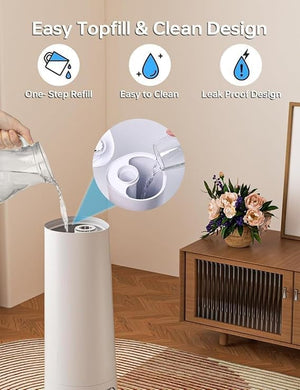
The size question is where the luxury argument becomes practical. If the point is that the room smells the same on every visit, buy the 300ml at ₹1,799 rather than a 15ml you will replace with something else in March. Roughly ₹6 a millilitre against ₹20 for the tester, and more importantly it commits you. Test first with a 15ml at ₹299 — I would rather you did — but once it has passed, size up and stop shopping. Rinse the tank when you change scents, use filtered water in hard-water cities, and never put raw essential oils into an ultrasonic.
Which diffuser to run it in
The temptation with a luxury brief is to buy the biggest machine, on the logic that more equipment equals more hospitality. It works the other way here — an oversized tank in a small closed room encourages an oversized dose, which is how an elegant white tea ends up smelling like a showroom.
| Diffuser | Best for | Drops | Price |
|---|---|---|---|
|
Boond 300ml, USB, night light |
The standard guest bedroom — small, shut most of the month. The correct choice here, not the budget one | 2 drops | ₹899 |
|
Sukoon ★ 500ml, remote, mood light |
A guest suite, or a spare room that doubles as a study and gets daytime use | 2–3 drops | ₹1,899 |
|
Megh 6 litre, large tank |
A guest annexe or terrace room, or a dry winter where humidity is welcome | 4 drops | ₹3,499 |
| Hotel Collection 15ml | Testing the scent in the empty room before you commit to the size that lasts | Many fills | ₹299 |
| Refills · 100ml & 300ml | The repeat purchase — the 300ml at ₹1,799 is what consistency actually costs | Months of use | from ₹999 |
Versailles
I stayed in a very expensive hotel in Bangkok some years ago and cannot remember a single thing about how it smelt. I can remember a small property in Coonoor where the bedside lamp had a proper switch, there was a torch in the drawer because the power goes, and the room smelt faintly of tea and cedar both times I stayed.
Quiet Luxury is named for an argument I keep having. People ask me for something that smells expensive and what they usually get sold is something that smells like money was spent on materials — heavy, sweet, insistent. That is not what the good hotels do. They pick something clean and slightly formal, then run it identically for a decade. The bergamot here keeps the white tea from going flat over repeated exposure — a boring technical problem, and exactly the one a room somebody returns to keeps presenting.
Before you buy the 300ml, buy the 15ml at ₹299 and live with it for a fortnight in the actual room. I would rather lose the larger sale than have you commit ₹1,799 to a description. A portion of whichever you buy funds a girl's classroom through Nanhi Kali.
Frequently asked questions
- Best subtle fragrance for a guest bedroom — the restraint argument, made properly.
- Best clean-smelling fragrance for a guest room — and the airing routine that comes before it.
- Best luxury fragrance for a master bedroom — where the rich option finally makes sense.
- The complete guest bedroom buying guide — all seven, three decisions, and what to buy first.
- Brand: the SOSA founder story.
SOSA products & prices (verified August 2026): Hotel Collection water-based ultrasonic diffuser fragrance 15ml ₹299 · 100ml ₹999 · 300ml ₹1,799 · Pack of 7 (15ml, all fragrances) ₹1,799; refills 100ml from ₹999. Seven scents: The Ritz-Carlton-inspired (white tea · bergamot · cedar), Westin-inspired (white tea · aloe · cedar), 1 Hotels-inspired (cedarwood · vetiver · green leaves), The St. Regis-inspired (amber · violet · woods), Shangri-La-inspired (jasmine · green tea · white tea), Four Seasons-inspired (citrus · floral · sandalwood), W Hotels-inspired (citrus · pepper · amber). Diffusers: Boond 300ml ₹899 · Sukoon 500ml ₹1,899 · Megh 6L ₹3,499. Water-based, phthalate-free, composed to IFRA standards for home diffusion; 3–6 drops per tank. Made in India, Pune. The Hotel Collection scents are SOSA's own interpretations inspired by the world's finest hotels; all hotel names are trademarks of their respective owners and are used only to describe the scent style — SOSA is an independent Indian fragrance house, not affiliated with or endorsed by any hotel brand. Prices and availability subject to change — see the live product pages.