


How do I keep it coherent? Give every sense the same brief; a single congruent signature ties them together. Audition Hotel Collection candidates at ₹299.
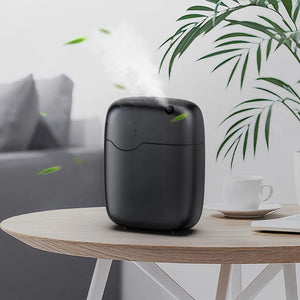
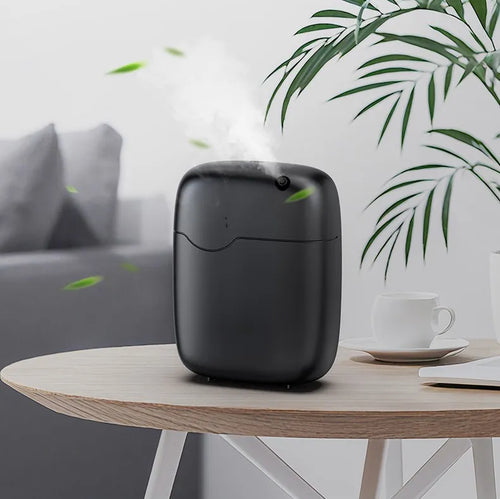
Same scent everywhere? One signature, many volumes — lighter in treatment rooms with a Boond at ₹799.
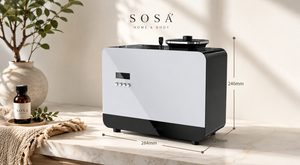
2. Let scent carry the eyes-closed stretch. A considered signature front-of-house on a SOSA Vaayu at ₹11,999 keeps playing when other senses recede.
3. One signature, many volumes. Full front-of-house; a light, therapist-adjustable trace in treatment rooms with a Boond at ₹799.
4. Keep the wet zones clean. Ventilated, unperfumed air in steam and sauna — scent the approach, not the heat.
5. Coherence, not clutter. The senses work as an ensemble; incoherence reads as cheap, not intensity. And a portion of every order supports girl-child education through Nanhi Kali.
The five channels of a spa
A guest never experiences your spa as a list of features. They experience it as a single feeling, assembled in the background from everything their senses report at once. That feeling is the product — more than any individual treatment on the menu — and it is built from five channels working together. Think of them as sections of an orchestra: each can play beautifully alone, but the performance only moves someone when they are in tune with one another.
Sight sets the key: the palette, the light, the order of the space. Sound holds the tempo: the music, the hush, the absence of a ringing phone. Touch is the texture the body meets: the warmth of the robe, the weight of a heated stone, the give of the table. Taste is the small grace notes: the tea at check-out, the infused water in the lounge. And scent is the section that plays in the dark — the one channel that keeps reaching the guest when their eyes are shut and their attention has turned inward. Neglect any section and the piece feels thin; conduct them together and a guest leaves moved without quite knowing why.
Why coherence beats intensity
Scent, the sense you can’t close
Here is the fact that should reorganise how you think about the five channels. For most of a treatment, the guest’s dominant sense — sight — is switched off. Eyes are closed, or the face is down in a cradle looking at the floor. Hearing softens as attention turns inward. Touch is now the therapist’s job. Taste is over until the lounge. But breathing never stops, which means scent is the one channel with an uninterrupted line to the guest for the full hour on the table. The olfactory section plays on, alone, through the quietest and most important part of the concert.
This is why fragrance is not a garnish on the multi-sensory experience but a load-bearing part of it — and why it must be handled with more care than any other channel, not less. It is also why the treatment room deserves restraint rather than reach: a guest breathing face-down through a cradle should meet a light, therapist-adjustable trace on a Boond at ₹799, so the treatment’s own aromatherapy oils lead and the ambient signature merely accompanies. Full voice belongs to the reception and lounge, where the eyes are open and the signature can introduce itself.
| Moment | Senses in play | Scent’s job |
|---|---|---|
| Arrival & reception | All five, eyes open | Signature at full voice on a Vaayu |
| On the table | Mostly touch & scent | A light trace leads; treatment oils front |
| Wet / heat areas | Touch & heat | Step back — clean, ventilated air |
| Relaxation lounge | All five, calm | Signature holds the calm; tea and water |
SOSA Vaayu — front-of-house₹11,999Shop →  Boond — treatment-room trace₹799Shop →
  Hotel Collection scentsfrom ₹299Shop →
Building the ensemble
Start by writing your mood in a single line — “a quiet forest at dusk,” say, or “a bright morning by clean water” — and audition every channel against it. For scent, do not guess: take two Hotel Collection candidates at ₹299 each, run one for a fortnight and then the other, and ask your therapists and regulars which one belongs to the mood you wrote down. The winner becomes the olfactory section, and you commit to it the way you would to a colour scheme, not the way you would to a playlist you shuffle.
Then hold it steady. A signature that drifts in strength from day to day pulls the whole ensemble out of tune, which is why the machine matters: waterless nebulising with app and timer keeps the note at the same level whatever the weather, and in humid coastal cities that consistency is hard-won. For a single reception or lounge, a Sukoon at ₹1,799 or a Vaayu at ₹11,999 conducts the section; for a whole centre where scent should travel with the lighting and sound design through every zone, an Aangan at ₹25,999 carries one coherent note through the ducting.
What the senses can’t do
Let me keep this honest, because a beautiful sensory scheme built over a weak foundation still fails. The effect of any single channel — scent included — is real but moderate, and the ensemble cannot cover for a cold reception, an unskilled treatment or a room that has not been aired since morning. Multi-sensory design compounds an already-good spa and rescues nothing. Get the fundamentals right first: cleanliness, ventilation, genuine warmth from the team, treatments worth returning for. Only then does the layering of the senses do its quiet, compounding work.
And respect the wet and heat zones as their own instruments. Heat and humidity amplify fragrance unpredictably, so steam rooms, saunas, hammams and hydrotherapy areas should be kept clean and ventilated rather than perfumed — scent the cool approach, not the hot cabin. Keep treatment rooms light and therapist-adjustable, respect allergies, and take the first “too strong” comment seriously. A multi-sensory spa is a conductor’s discipline, not a volume knob turned up.
The SOSA commercial edit
Choose the system that lets you conduct one coherent signature at the right level for each zone. Front-of-house wants the Vaayu; treatment rooms want the quiet Boond; a whole centre wants the Aangan carrying one note through the ducts alongside your lighting and sound.
| System | Best for | Why it works | Price |
|---|---|---|---|
| Boond | A light trace in treatment rooms | Low, therapist-adjustable output; treatment oils lead | ₹799 |
| Sukoon + Hotel Collection | A single reception or relaxation lounge | Compact front-of-house signature; ultrasonic, water-based | ₹1,799 |
| SOSA Vaayu ★ | The front-of-house olfactory section | Waterless, app + timer, under 38dB — steady by design | ₹11,999 |
| SOSA Aangan | One coherent note across a whole centre | HVAC nebulising, 8,000–10,000 sq ft, intensity-zoned | ₹25,999 |
| Refills | Running cost | 100ml / 300ml Hotel Collection refills | from ₹999 |
Versailles
I once sat through a treatment at a spa that had spent lavishly on everything I could see — and had scented the room so heavily that, face-down and unable to look away, I could think of nothing else. Every rupee they had spent on sight was undone by the one sense I could not close. The eyes shut; the nose does not.
That afternoon taught me how I now advise every spa: conduct the senses toward one feeling, give scent the restraint it deserves in the treatment room, and let it sing only where the eyes are open to meet it.
We make and support these signatures from Pune. Your spa becomes a single feeling a guest can recall; a girl earns a classroom through Nanhi Kali.
Frequently asked questions
Facts verified August 2026: ambient scent has a real but moderate effect on mood, perceived quality and recall; congruence across the senses beats intensity in any one; and no sensory layer improves an unclean or poorly run premises. SOSA system specs and prices — Boond ₹799, Sukoon ₹1,799, Vaayu ₹11,999, Aangan ₹25,999, Meenar ₹38,500, Hotel Collection from ₹299, refills from ₹999. The Hotel Collection scents are SOSA’s own interpretations inspired by the world’s finest hotels; SOSA is an independent Indian fragrance house, not affiliated with or endorsed by any hotel brand. Prices subject to change.