



Echo it, don’t fight it. Woods want sandalwood and vetiver; stone wants clean mineral notes; water wants fresh, translucent ones.
What runs it?
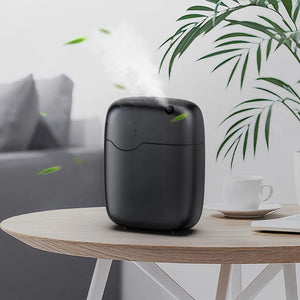
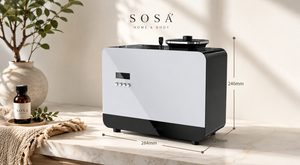
A waterless Vaayu (₹11,999) adds no humidity to warp wood or streak stone, or a Sukoon (₹1,799) for one room. Trial the Hotel Collection (from ₹299).
2. Echo, never contrast. Woods want woods: sandalwood, cedar, a thread of vetiver. Stone wants clean and mineral. Water wants fresh and translucent. Congruence is the whole game.
3. Match the temperature of the note to the temperature of the material. Warm materials take warm notes; cool materials take cool ones. A sweet, warm scent over cold stone reads as a mistake even to someone who cannot name it.
4. Protect the material with waterless delivery. A Vaayu (₹11,999) adds no humidity to swell timber or dull stone — the format matters as much as the note in a material-rich room.
5. Audition before you commit. Live with two Hotel Collection candidates at ₹299 each for a fortnight apiece and ask whether the room feels more, or less, itself.
6. Let the material lead, always. The scent’s job is to confirm the architecture, not to upstage it. A portion of every order supports girl-child education through Nanhi Kali.
Congruence: why the nose checks the material
There is a reason a cedar-lined sauna smells right and a plastic imitation of one smells wrong even in the dark. The brain does not process the senses in separate boxes; it fuses them into a single judgement about a place, and it does this fastest with smell, which wires almost directly into the parts of the brain that handle memory and emotion. So when a guest sees warm wood, a prediction fires before they have taken a full breath — this should smell warm and resinous — and the air either meets that prediction or breaks it. Meeting it is what we perfumers call congruence, and it is worth far more than raw strength.
Congruence is quiet and almost invisible when it works. Nobody walks out of a well-matched room saying the scent was wonderful; they say the whole place felt calm, considered, expensive. That is the material and the scent agreeing so completely that the guest reads them as one thing. It is also why chasing intensity is the wrong instinct in a material-rich spa. A loud fragrance draws attention to itself and away from the architecture you spent a fortune on. A congruent one disappears into the room and makes the architecture louder. Let me take the three great spa materials in turn.
Material-to-scent map
Here is the whole logic on one page — the dominant material, the congruent scent family, and what to avoid.
| Material | Congruent scent family | Avoid |
|---|---|---|
| Warm timber (teak, cedar, oak) | Sandalwood, cedar, vetiver — dry and resinous | Sweet, fruity or vanilla notes |
| Cool stone (marble, travertine, slate) | White tea, fig leaf, airy mineral freshness | Heavy, spiced or warm-amber notes |
| Water & hydrotherapy | Fresh, eucalyptus-adjacent, translucent | Scenting the wet zone itself; anything cloying |
| Woven fibre, linen, rattan | Soft white tea, clean neroli, gentle greens | Loud florals that overpower the softness |
| Lime plaster & earth tones | Dry, powdery-mineral, quietly earthy | Sharp synthetics that read as artificial |
SOSA Vaayu · kind to wood & stone₹11,999View →  Boond · water-zone transitions₹799View →
  Hotel Collection · the material matchfrom ₹299View →
When scent and material argue
The fastest way to understand congruence is to feel its opposite. Picture a spa clad in pale, cool travertine — serene, quarried, almost cold — and then imagine a warm, sweet, ambery fragrance pushed through it at strength. Nothing is technically wrong. The stone is beautiful; the scent, in isolation, might be lovely. But together they quarrel. The nose expects cool and receives warm-sweet, and the mismatch registers as a faint unease the guest will blame on anything but the real cause. They will say the room felt off, or that the scent was a bit much, and reach for the exit a little sooner than they meant to.
This is the single most common mistake I see in otherwise flawless spas: a signature chosen because the owner personally loves it, dropped into a room whose materials are telling a different story. Personal taste is exactly the wrong compass here. The material was chosen first, at great cost, and it has already set the temperature and mood of the room. The scent has to serve that decision. When a client is set on a note that fights their architecture, I do not argue about the note — I show them the material, and let the wood or the stone make the case for me.
And I keep the honesty in view. Getting this right does not transform a business; the effect of ambient scent on dwell time, perceived quality and recall is real but moderate, and it only compounds a spa that is already clean, well ventilated and well made. But congruence is the cheapest way to get the full value of that moderate effect, and dissonance is the fastest way to throw it away. When you have already spent on real timber and real stone, letting a mismatched scent undercut them is a small decision with an outsized cost.
The SOSA commercial edit
In a material-rich spa the delivery matters as much as the note — waterless keeps timber and stone unharmed. Here is the shortlist.
| System | Best for | Why it works | Price |
|---|---|---|---|
| Boond | The dry approach to a water or hydrotherapy zone | Compact; carries a fresh transition note without wetting the material | ₹799 |
| Sukoon + Hotel Collection | A single stone- or wood-led reception | Compact front-of-house scenting matched to one room’s material | ₹1,799 + from ₹299 |
| SOSA Vaayu ★ | Reception, lounge and corridors in a material-rich spa | Waterless — no humidity to warp wood or streak stone; carries woody and mineral notes faithfully | ₹11,999 |
| SOSA Aangan | A whole material-led centre on one signature | HVAC nebulising across 8,000–10,000 sq ft, wet zones kept separate | ₹25,999 |
| Hotel Collection refills | Keeping the matched signature running | 100ml / 300ml top-ups for steady, congruent output | from ₹999 |
Versailles
The first time I understood congruence properly, I was standing in a half-built spa in the Western Ghats, all local stone and rough teak, and the owner asked me to bring in a rose signature she adored. I asked her to close her eyes and just breathe the room as it was — damp stone, warm wood, green outside. Rose had no place in it, and she heard that the moment she stopped looking at a bottle and started listening to the building.
We built a sandalwood-and-vetiver signature instead, dry and quiet, and it vanished into the timber so completely that guests never mentioned it — they only said the place felt grounded. That is congruence doing its job: invisible, and worth everything.
We make our scents in Pune, and a portion of every order supports girl-child education through Nanhi Kali. Your spa gets a memory; a girl gets a classroom.
Frequently asked questions
- Fragrance for Minimalist Spa Interiors — the single-note discipline for pared-back material palettes.
- Luxury Spa Design Trends and Scent Marketing — where scent fits the 2026 design brief.
- SOSA Vaayu waterless diffuser — the delivery that leaves wood and stone unharmed, ₹11,999.
- Brand: the SOSA founder story — how an ISIPCA perfumer reads a room before a note.
Facts verified August 2026: ambient scent-marketing effects on dwell time, perceived quality and recall are real but moderate, congruence with the space matters more than intensity, and there is no measurable benefit on unclean or poorly ventilated premises. SOSA system specifications and prices as stated: Boond ₹799, Sukoon ₹1,799, Megh ₹3,499, Vaayu ₹11,999, Aangan ₹25,999, Meenar ₹38,500, Hotel Collection scents from ₹299, refills from ₹999. The Hotel Collection scents are SOSA’s own interpretations inspired by the world’s finest hotels; SOSA is an independent Indian fragrance house, not affiliated with or endorsed by any hotel brand. Prices subject to change.