
- The direct, honest answer
- What coffee actually gives a fragrance, and why oudh is the nearest thing here
- The three decisions before you buy
- Depth and darkness, across this range, next to real coffee
- How to test the partial match without disappointment
- What to buy, if the partial match is worth it to you
- A note from Sonal
- Questions from readers who love coffee fragrances
2. What coffee gives a fragrance is a dark, roasted, slightly bitter depth — and that quality has a distant cousin here. Coffee's darkness in perfumery often sits near other deep, resinous materials in a composition — the same territory oud occupies, though the two smell nothing alike up close. That's a real but limited overlap, not an equivalence.
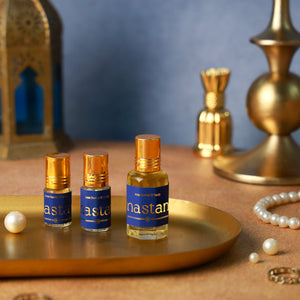
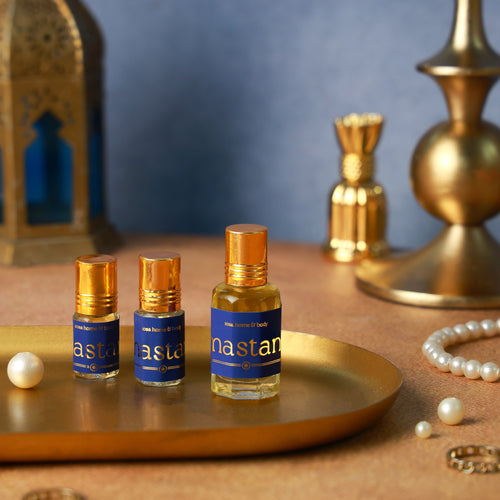
3. Mastani's oudh is the closest thing this range has to that dark register. Built on night-blooming jasmine, Damask rose and oudh, Mastani carries a genuinely dark, shadowed depth underneath its florals — roasted-adjacent in feeling, in the sense that it's dark and intense, never in the sense that it smells of coffee itself.
4. Be candid: this is a partial match, not a substitute. SOSA's attar range carries no vanilla, no gourmand and no coffee note, and Mastani's oudh will never taste like a cup of coffee or a coffee-forward perfume — what it shares is a dark, intense register, which is a real but modest overlap, and it should be presented as exactly that.
5. A 3 ml bottle at ₹389 is the low-cost way to find out if that modest overlap is worth anything to you. Some coffee lovers find Mastani's darkness genuinely satisfying as its own thing; others find the gap too wide to bother with, and that's a completely reasonable conclusion for a reader whose real love is a note this range simply doesn't carry.
This is the most honest 'no' in this whole range, and it's worth reading as one: Mastani is a genuinely good attar, but it is not, and will not become, a coffee fragrance.
What coffee actually gives a fragrance, and why oudh is the nearest thing here
Coffee is one of the more distinctive materials in modern perfumery — bitter, roasted, dark, with a warmth that reads as intense rather than sweet on its own. When it's used well, it usually sits alongside other dark, resinous or smoky materials — patchouli, dark woods, sometimes a leather accord — building a composition that feels dense and shadowed rather than bright. A coffee lover's taste, in other words, often runs toward darkness and intensity generally, not exclusively toward the literal flavour of coffee itself.
This range has no coffee in it anywhere, and it would be dishonest to suggest any blend here approximates it. What it does have is oudh — the material in Mastani that sits underneath night-blooming jasmine and Damask rose, giving the whole composition a genuine depth and shadow. Oudh and coffee are not related materials and do not smell alike in any direct comparison; what they share, loosely, is a place in a composition — both read as dark, dense, and intense rather than bright or sweet. That's a real overlap in feeling, and a genuinely limited one in substance.
It's worth being precise about the limit here, more than in almost any other post in this series. A vanilla lover can find real warmth in Ameeri; a warm-gourmand lover can find real richness in saffron and soft oudh. A coffee lover, by contrast, is not going to find coffee, or anything close to coffee's actual flavour profile, anywhere in this range — what's on offer is adjacency in mood, not a substitute in substance, and that distinction matters more here than almost anywhere else in this series.
The three decisions before you buy
 Mastani₹389If what you love about coffee fragrances is specifically their darkness and intensity, Mastani's oudh has something to offer. If it's coffee's actual roasted flavour you're chasing, no attar here will deliver it, and it's worth admitting that before spending anything.
Depth and darkness, across this range, next to real coffee
None of these attars contains coffee — this table shows how dark and intense each one reads, for a reader trying to find the nearest available register.
| Attar | Depth register | Any coffee note | Verdict for a coffee lover |
| Mastani | Dark, shadowed — jasmine, Damask rose, oudh | None — no coffee anywhere in this range | The closest available darkness, offered as a partial match only |
| Nawaab | Brighter, cleaner oud — white royal oud, sandalwood, saffron | None | Less dark than Mastani — a lighter register, not a coffee substitute |
| Ameeri | Warm and rounded — rose, sandalwood, saffron, soft oudh | None | Warm rather than dark — not the direction a coffee lover is usually after |
| Adaa | Bright, clean, citrus-led | None | The opposite of depth — skip first |
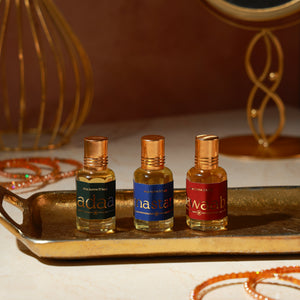
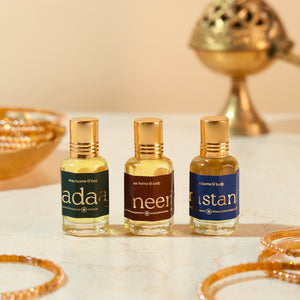
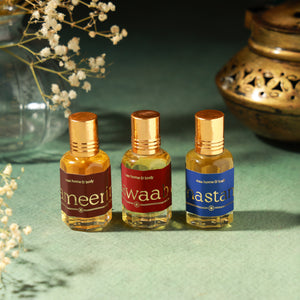
| The Attar Trio | Includes Mastani alongside Ameeri and Nawaab | None across all three | A reasonable way to compare depth registers once the honest limit is accepted |
Mastani · the darkest, most shadowed register here₹389Shop →  Nawaab · a cleaner, brighter oud, for contrast₹399Shop →
 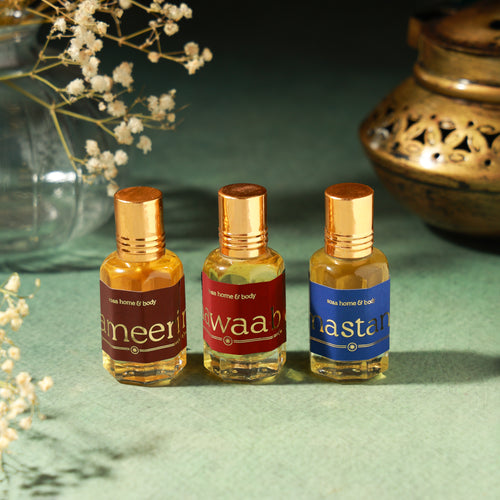 The Attar Trio · compare depth across three attars₹1,055Shop →
How to test the partial match without disappointment
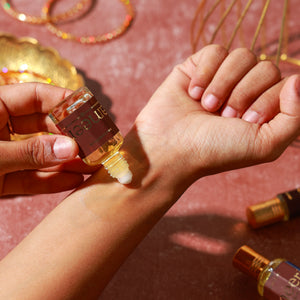
Apply Mastani to a clean wrist and let a full day pass before deciding anything — the night-blooming jasmine and Damask rose lead early, and the oudh's darker, more shadowed character comes forward later in the wear.
Judge it specifically as its own fragrance rather than against a mental image of coffee. Ask whether the darkness and intensity by evening feel satisfying on their own terms — that's the honest question, since the roasted, bitter specificity of coffee itself simply isn't present to compare against.
One wear on one wrist answers this. If the depth reads as genuinely rich and you're not missing coffee's actual flavour, the partial match has earned its place. If you spend the whole day aware of what's missing, that's a fair and useful result too — it means your coffee preference runs to the note itself, not to darkness generally.
What to buy, if the partial match is worth it to you
For a reader who's decided the darkness alone is worth exploring, even knowing coffee itself isn't here.
| Route | Best for | Why | What it costs |
| Mastani, 3 ml | The only reasonable first test for this reader | The darkest, most shadowed register in the range — a genuine, if partial, overlap with coffee's intensity | ₹389 |
| Nawaab, 3 ml | A reader curious how a cleaner, brighter oud compares to Mastani's darker one | White royal oud is a different register entirely — useful for contrast, not a closer coffee match | ₹399 |
| Mastani, 6 ml or 12 ml | Only once 3 ml confirms the darkness itself is satisfying, coffee or not | The same jasmine-rose-oudh profile, sized for regular wear | ₹685 / ₹1,179 |
| The Attar Trio | A reader who wants to compare Mastani's depth against Ameeri's warmth and Nawaab's dry register before deciding | One size each of all three | ₹1,055 |
| Adaa or Ameeri alone | Not recommended for this specific craving | Both are lighter or warmer than dark — neither addresses the depth a coffee lover is actually looking for | ₹379 / ₹385 |
I want to be more careful with this answer than almost any other in this series, because coffee lovers tend to have a genuinely precise nose for the thing they love, and I'd rather disappoint you honestly now than sell you a bottle that disappoints you in three weeks. There is no coffee in this range. Not a trace, not a background note, not a 'you might catch it on the dry-down.' It simply isn't a material I've used in any of these four attars.
What I can offer honestly is Mastani's oudh, which carries a real darkness and depth that sits in a similar emotional register to what coffee brings to a composition — intensity, shadow, a sense of weight rather than brightness. I trained around dark, resinous materials long enough to know that oudh and coffee are not remotely the same substance, and I won't tell you they are. What I will tell you is that if darkness itself, rather than coffee specifically, is what draws you in, Mastani has something real to offer.
If you try it and the absence of coffee is all you notice, that's not a failure of the test — it's the honest limit of this range showing itself, and I'd genuinely rather you know that clearly than keep hoping a future SOSA blend quietly adds it in. For now, this is candidly a partial match, and I'd rather sell you ₹389 of an honest partial match than a larger bottle on a promise I can't keep.
Questions from readers who love coffee fragrances
- I Love Vanilla Perfumes — Which Attar Should I Try? — this series's entry point, for the broader warmth question this reader's taste sits near.
- Which Perfume Oil Should I Try If I Like Dark Woody Fragrances? — more on Mastani's darker, shadowed register for a reader drawn to intensity.
- I Love Strong Dark Perfumes but Need Something Easier for Everyday Wear — Which Attar Should I Try? — how to wear Mastani's depth day to day, for a reader who liked the darkness.
- Which SOSA Attar Should a Vanilla and Gourmand Perfume Lover Try? — this series's short, direct answer for readers weighing several sweet or dark tastes at once.
- Brand: the SOSA founder story.
SOSA attars & prices (verified September 2026): All four are alcohol-free roll-on attars in 3 ml, 6 ml and 12 ml. Adaa (bergamot, green cardamom, jasmine sambac, white musk) ₹379 · ₹669 · ₹1,149. Ameeri (Taif rose, Indian sandalwood, Persian saffron, soft oudh) ₹385 · ₹679 · ₹1,165. Mastani (night-blooming jasmine, Damask rose, oudh) ₹389 · ₹685 · ₹1,179. Nawaab (white royal oud, Mysore sandalwood, Kashmir saffron) ₹399 · ₹699 · ₹1,199. The Ameeri + Nawaab + Mastani trio is ₹1,055 · ₹1,859 · ₹3,189. Prices are the live store prices at the time of writing.