


The second test: walk in from outside. Leave the building, go to the car park, stay out long enough for your nose to reset, and come back in the way a member does. That is the only valid reading anybody in the building can take, and it is free.
The third test: ask three people who have just arrived. Not staff — staff have been in it since seven in the morning and stopped registering it before opening. Ask a neutral question: does this room smell of anything. Never ask whether it is too strong, because the question supplies the answer.
What a weak-at-the-source result usually is: a reed bottle past its life, reeds clogged with dust, an ultrasonic tank that has run dry, or a nozzle on a waterless machine partly blocked. All four are maintenance, not procurement.
The honest gap: a great many clubs that run this test properly find they need to buy nothing at all — the answer is a refill, a repositioning, or a setting written down and locked. I will also not give you an adaptation time in minutes, because no such figure is published and anyone quoting one is guessing.
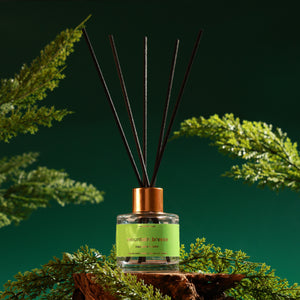
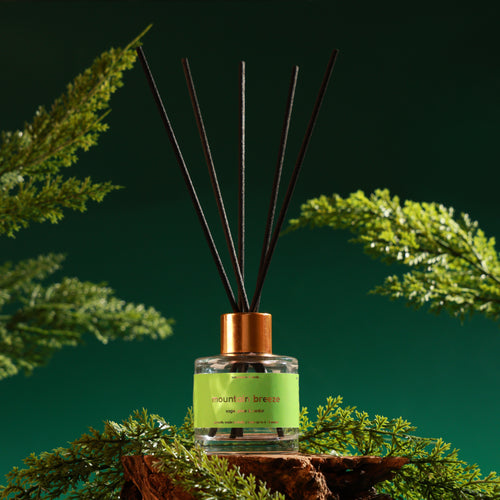
2. If it is weak at arm’s length too, you have a different fault, and it is usually free to fix. Four things account for most of these. A reed bottle past its life — a 50ml runs about 6–8 weeks and a 130ml about 14–18 weeks, and a bottle six months old is doing nothing however full it looks. Reeds clogged with dust or saturated at the tip, which stops the capillary action. An ultrasonic tank that has run dry, which is more common than anybody admits. Or a partly blocked nozzle on a waterless machine, which is what thick undiluted essential oils do to a fine orifice over time. None of those is a procurement decision.
3. Walk in from outside, because you cannot judge a room you are standing in. The nose reports change rather than constancy. An unvarying fragrance stops being reported while it is still physically arriving, so whoever has been in the building longest is the person least able to judge its level — and that is usually the person holding the dial. Leave, spend long enough outside for the nose to reset, and come back in through the front door as a member does. Take the reading in the first ten seconds and write it down before you have time to reason about it.
4. Ask three people who have just arrived, and ask them the right question. Three members or guests who have come in from the street, separately, within the first minute of arriving. Ask “does this room smell of anything to you” and stop there. Do not ask whether it is too strong or whether they like it, because both questions tell the person what answer you are hoping for. Two people in the same room genuinely perceive different intensities — dwell time, height, position relative to the airflow and what they were exposed to an hour ago all differ — so three readings is a sample and one is an anecdote.
5. Then act on the verdict, and accept that the commonest verdict costs nothing. A distribution verdict means buying transport: waterless cold-air nebulising, Vaayu ₹11,999 for a zone or Aangan ₹25,999 on the air system. A supply verdict means a refill, a clean or a service. A third verdict — a musty or stale base note under the fragrance — means it was never a fragrance question, and no machine will improve it. Alcohol-free, phthalate-free, paraben-free, IFRA-compliant, composed in Pune. A portion of every order supports girl-child education through Nanhi Kali.
The afternoon test, in five steps and no equipment
Do these in order, on a normal operating day, and write the result of each one down on the same sheet of paper before moving to the next. The writing matters more than it sounds: by the fourth reading your nose has been taught what to expect, and a note made in the moment is more honest than a memory reconstructed at the end. The whole thing takes an afternoon and the only cost is your own time.
 Vaayu₹11,999Take three readings from the same source: arm’s length, ten feet, and the far side of the connected volume. There are only three meaningful shapes to that result. Strong, gone, gone is a distribution problem, and the most common result by a wide margin. Weak, gone, gone is a supply or maintenance problem, and you should fix that before you consider anything else because a spent source tells you nothing about coverage. Strong, present, present means the delivery is working, and if members are still complaining then the complaint is about the composition or the level rather than the reach — two entirely different conversations. Note also whether the fragrance still smells like what you chose: a composition dosed very low is mostly its heart and base, because top notes are the first thing lost, so a fragrance selected at full strength on a blotter can be almost unrecognisable when it is quiet.
Aangan₹25,999Go out to the car park. Stay out long enough that the street has replaced the building in your nose — I will not put a number of minutes on that, because no such figure is published and any number I offered would be invented. Then walk in through the front door at a normal pace and note the first impression in the first ten seconds, in the order you receive it. Do this three times across the afternoon, at different hours, because the answer changes: a lounge at eleven in the morning and the same lounge at seven in the evening are different rooms once bodies, food service and a day’s accumulated load are in them. What you are also measuring here is the step between spaces. Perceived strength is set by the change between two volumes rather than by the absolute level in either, which is why a lobby reads as clearly fragranced when the street was not, and a lounge reads as calm when the corridor was louder.
Vaayu₹11,999Take three readings from the same source: arm’s length, ten feet, and the far side of the connected volume. There are only three meaningful shapes to that result. Strong, gone, gone is a distribution problem, and the most common result by a wide margin. Weak, gone, gone is a supply or maintenance problem, and you should fix that before you consider anything else because a spent source tells you nothing about coverage. Strong, present, present means the delivery is working, and if members are still complaining then the complaint is about the composition or the level rather than the reach — two entirely different conversations. Note also whether the fragrance still smells like what you chose: a composition dosed very low is mostly its heart and base, because top notes are the first thing lost, so a fragrance selected at full strength on a blotter can be almost unrecognisable when it is quiet.
Aangan₹25,999Go out to the car park. Stay out long enough that the street has replaced the building in your nose — I will not put a number of minutes on that, because no such figure is published and any number I offered would be invented. Then walk in through the front door at a normal pace and note the first impression in the first ten seconds, in the order you receive it. Do this three times across the afternoon, at different hours, because the answer changes: a lounge at eleven in the morning and the same lounge at seven in the evening are different rooms once bodies, food service and a day’s accumulated load are in them. What you are also measuring here is the step between spaces. Perceived strength is set by the change between two volumes rather than by the absolute level in either, which is why a lobby reads as clearly fragranced when the street was not, and a lounge reads as calm when the corridor was louder.
 Sukoon₹1,899Test three — ask three people who have just arrived. Members or guests, separately, within their first minute inside, one neutral question: does this room smell of anything to you. Write the answers verbatim. Do not ask staff; staff have been in the building since seven in the morning and stopped registering the fragrance before the first member arrived, which is a normal property of the nose rather than inattention. Test four — walk the volume with a floor plan and mark every point where you can and cannot detect it. Islands of fragrance around objects means passive zones and a distribution fault. A faint but genuinely even field across the whole volume means the delivery works and the level is simply set low, which is adjustable. Test five — close the doors and walk it again. A closed door is a real boundary; an open plan is one volume however irregular its shape. Half the apparent coverage failures in a club are a door that is propped open, or a lounge that is in fact one volume with a corridor and a stair.
Reading the result: four verdicts and what each one costs
Verdict A — delivery. Strong at the source, gone ten feet away. This is the commonest result and the one that justifies equipment. What you are buying is not a better smell; the fragrance can be identical in character to what is already in the bottle. What you are paying for is transport — getting a controlled quantity across a large volume continuously. The mechanism that does it is waterless cold-air nebulising, in which pressurised air shatters undiluted oil into a dry nano-mist carried by the room’s own airflow. Undiluted oil delivers far more fragrance per unit of mist than the same oil diluted in water, which is the whole reason commercial scenting went waterless. It is also why you can never find the diffuser in a well-scented building: the fragrance is introduced into moving air upstream, so there is no source to walk towards and no gradient to climb.
Verdict B — supply. Weak at the source as well. Work through four things before spending anything. Check the date on the reed bottle against its published life, 6–8 weeks for 50ml and 14–18 weeks for 130ml. Look at the reeds: dusty, or wet and saturated at the tip, both of which slow capillary flow — inverting or replacing them is free. Check whether an ultrasonic tank has run dry, and while you are there remember that an ultrasonic machine dilutes oil in water, so what reaches the room is mostly water and the perceived strength is limited by that dilution rather than by the oil. And if you have a waterless machine, check the nozzle: thick undiluted essential oils are not recommended in a fine nebulising orifice precisely because they clog it over time. Verdict C — over-dosed. Strong everywhere, and somebody has complained. That is a different page and the answer is downwards, not upwards; long-dwell rooms should sit below the level anyone would think to name, and the person who set the intensity is the one person who cannot judge it. Verdict D — not a fragrance question. A stale, closed or faintly sour note underneath everything. Fragrance over that produces a mixture judged worse than the original, because it reads as concealment. To be exact about our own claims, SOSA sells no air purifier and no dehumidifier, and a diffuser makes no health or air-quality claim of any kind. Fragrance adds fragrance.
Two refinements that come up almost every time a club runs this properly. First, run the test at more than one hour of the day, because the answer changes and the verdict can change with it. A lounge at eleven in the morning is an empty, cool, recently ventilated volume. The same lounge at seven in the evening holds forty bodies, a day of food service, cooking carry-over settled into the upholstery and an air-conditioning setting somebody adjusted at four o’clock. It is entirely normal for the morning reading to say “too faint” and the evening reading to say “quite enough”, and if you only take one of them you will set the machine for a room that exists for two hours a day. Where the two readings genuinely conflict, the resolution is a schedule rather than a compromise intensity — which is why a programmable machine is worth more in a club than a stronger one.
Second, be careful what a floor plan is telling you. Half the apparent coverage failures I have looked at were a single open door, a propped fire door on a service corridor, or a lounge that turned out to be one continuous volume with a stair and a mezzanine. Coverage is published in volume rather than floor area precisely because of this: a closed door is a real boundary and an open plan is one volume however irregular its shape, so before you conclude a machine is undersized, measure the height and settle which doors are genuinely shut during operating hours. A double-height entrance or a galleried stair consumes coverage that a square-foot figure hides entirely, and a lift shaft or open staircase behaves as a chimney, drawing warm air upward and delivering fragrance to a floor nobody meant to scent. Any of those three findings changes the verdict from “buy a bigger machine” to “this is a different volume from the one on the drawing”.
The diagnostic table
This is the sheet I would hand a club secretary before a supplier meeting. The right-hand column is the one that saves money, because three of these five rows are not purchases at all.
| What you observe | At arm’s length | Ten feet away | What it is | What to do, and what it costs |
|---|---|---|---|---|
| The classic complaint ★ | Clear and pleasant | Nothing at all | Distribution. The fragrance is fine; it is not being carried | Buy transport, not concentration. Vaayu ₹11,999 for a zone up to 1000 m³ |
| Faint everywhere including at the bottle | Weak or wrong-smelling | Nothing | Supply. Spent oil, dusty or saturated reeds, a dry tank, a clogged nozzle | A refill, new reeds, a clean or a service. No purchase decision — and re-test before you make one |
| Even but very faint across the whole volume | Present | Present, faintly | Delivery works; the level is simply set low | Raise the intensity one step, then re-test by walking in from outside. No purchase |
| Strong near the door, oppressive in the lounge | Strong | Strong | Over-dosed for a long-dwell room | Dose down, key-lock the setting, write it into the file. No purchase |
| Fragrance present, but something sour underneath | Present | Present, with a base note you did not choose | A building condition, not a fragrance deficit | Source, moisture, air change, cleaning — in that order, and only then fragrance. No purchase |
 Zone · Vaayu₹11,999See it → Air system · Aangan₹25,999See it → Larger property · Meenar₹38,500See it →
If it is delivery: what you are actually buying
It is worth being clear about the purchase, because the value is not where most committees assume. You are buying transport, not a better smell. A commercial machine can carry a composition very close in character to something you could buy in a bottle; what ₹11,999 pays for is a mechanism that keeps putting a controlled quantity of it into a large moving volume, continuously, with nobody carrying anything and nobody deciding anything on a given morning. That last part is most of the value in a club. Consistency is what members read as expensive, and consistency is a property of a schedule rather than of a fragrance.
The three mechanisms are genuinely different systems rather than grades of the same thing. A reed diffuser is passive capillary action: oil climbs six fibre reeds and evaporates, no energy, no air moved, a fragrant zone about a couple of metres across. Right for a cloakroom, a console or a secretary’s office; not a fragranced hall, and not a fault. An ultrasonic machine — Sukoon ₹1,899 at 270–320 sq ft, Boond ₹899 at up to about 150 sq ft — dilutes oil in water and throws a wet mist. It covers a real room, but it adds humidity and can leave a fine white mineral deposit on dark surfaces, and in an Indian club humidity is usually the enemy rather than the tool. Note as well that tank size is not coverage: Megh ₹3,499 holds six litres and covers only about 215 sq ft, less than the ₹1,899 Sukoon, so a bigger tank buys runtime and not reach. Waterless cold-air nebulising is the commercial answer, and the one that solves a distribution verdict.
On sizing, two things and one refusal. Coverage is stated in volume: Vaayu to up to 1000 m³ per unit, which is roughly 2,000–3,000 sq ft at ordinary ceiling height, and Aangan to up to 3,000 m³ when it is connected into the HVAC or air handling unit — roughly 8,000–10,000 sq ft. Meenar at ₹38,500 is the larger-property option and is specified on enquiry. And the refusal: I will not publish a machine count as a formula. The honest number depends on connected volume, ceiling height, where the closed doors are, whether the property sits on one air system or several, and how many hours each zone is genuinely occupied. Send those five things and a floor plan with heights on it to the contact page and the answer becomes specific instead of generic.
There is also a fourth possible answer to the original question that nobody expects, and it is worth naming because it accounts for a genuine share of cases. Sometimes the delivery is adequate, the level is adequate, and the composition is the wrong one for the concentration it is being used at. A fragrance dosed very low is mostly its heart and its base, because top notes are the first thing lost, so something selected on a blotter at full strength can be almost unrecognisable once it is quiet across a room. Dry, structured registers — tea, cedar, vetiver, bergamot — hold their outline at low concentration. Sweet and powdery ones lose their shape and read as a vague smell of perfume, which members then describe as weak when what they mean is shapeless. If your readings are even and present but nobody can tell you what they are smelling, that is the fault you have, and the remedy is a different composition at the same level rather than the same composition at a higher one.
Finally, write the outcome down whatever it turns out to be, because a test that is not recorded gets re-argued at the next committee meeting from memory. Note the fragrance, the position of each source, the intensity setting, the schedule, the refill cadence, the list of rooms that are deliberately unscented, and one named person who owns the whole of it. A fragrance only becomes a system when it exists on paper; until then it is a series of decisions taken by whoever happened to be on shift. And set the intensity once, turn the key-lock, and write the figure down — because the person most likely to change it is the person least able to judge it.
The order of work — and the two things SOSA does not publish
Written as a sequence, with the cost of each step. Note that the first four lines cost nothing whatsoever, and that a real proportion of clubs stop at line three because the test has already given them their answer.
| Step | What it is | Why it comes here in the order | Cost |
|---|---|---|---|
| 1. The arm’s-length reading ★ | Three readings from one source: arm’s length, ten feet, far side of the volume, written down | Because it separates a distribution fault from a supply fault, and those two have opposite remedies | Nothing |
| 2. Check the source is alive | Bottle age against its published life, reeds for dust and saturation, tank level, nozzle for clogging | A spent source tells you nothing about coverage, so every other reading is unreliable until this is cleared | Nothing to check; a refill from ₹749 if needed |
| 3. Walk in from outside, three times | Car park, reset, front door, first ten seconds noted — at three different hours of the day | Because nobody can judge a room they have been standing in, and the level that suits eleven in the morning rarely suits seven in the evening | Nothing |
| 4. Ask three people who just arrived | One neutral question, answers written verbatim, no staff in the sample | Three readings is a sample; two people in one room genuinely perceive different intensities | Nothing |
| 5. Vaayu, only on a distribution verdict | Up to 1000 m³, 400ml sealed tank, under 38 dB, DC 12V / 1A at 5W, 1h / 4h / 8h / 24h windows, auto-stop, key-lock | Because this is the step that costs money, and it should be the first step that does | ₹11,999 |
| 6. Aangan if the club is one air system | Up to 3,000 m³ on HVAC, 800ml reservoir, under 42 dB, DC 12V at 14W, programmable work and pause cycles and daily schedules | Only where the air handling genuinely serves the zones you want scented; otherwise it is a large machine feeding the wrong rooms | ₹25,999 |
| No adaptation figure, and no listed commercial refill: the honest gaps | SOSA publishes no adaptation time in minutes, so this page gives none — anybody quoting one to you is guessing. And no purchasable refill oil is listed for the waterless commercial machines; that fragrance is specified and quoted per property | Stated here rather than in a footnote, because a committee will look for both and because a quoted commercial fragrance is the norm in this trade rather than an evasion | Not published / quoted |
Versailles
A club secretary once told me, with some feeling, that the fragrance we had specified was far too weak and that the committee was losing patience. I asked him to do one thing before we discussed it: stand next to the bottle on the console and tell me what he could smell. He went quiet for a moment and said, well, it is actually rather lovely there. That was the whole diagnosis. The composition was doing exactly what it should and it was being asked to cross forty feet of lounge with no means of travelling, because a passive device moves no air at all.
Had we agreed to make it stronger, the console would have become unpleasant to stand beside and the far end of the room would not have changed by a perceptible degree. That is the trap, and it is expensive in both directions: you pay for more concentration, and you get a complaint from the members who sit nearest the source. The reason I wanted this page to exist is that the test which distinguishes the two faults costs nothing, takes an afternoon, and is more reliable than anything a supplier can tell you over the telephone.
One more thing about noses, because it governs everything above. The nose reports change rather than a steady state. Your staff stopped registering the club’s fragrance before the first member walked in, and that is not carelessness, it is how receptors behave. So never let the person who has been in the building all day be the person who decides the setting. Set it once, turn the key-lock, write the figure into the housekeeping file, and check it only by walking in from the car park with a member beside you — a visitor is a better instrument than any of us. Everything we make is composed in Pune, and a part of every order funds a girl’s classroom through Nanhi Kali.
Frequently asked questions
- What to fix first if the club smells stale — the family pillar: the full ordered checklist, with fragrance as the last line on it.
- Why the reed reaches the desk and not the door — the clearest single illustration of a distribution verdict.
- Why ten bottles do not add up to one field — the arithmetic behind the valleys between the hills.
- Why a spray vanishes in a lobby — an event rather than a system, and why SOSA sells no such product for interiors.
- Why it is worst at opening and why the lounge changes by evening — why you should run the walk-in test at more than one hour.
- What carpets, leather, curtains and timber hold — the absorbent mass that also decides how a room holds a fragrance once it is clean.
- Why old clubs turn musty and why the monsoon makes it worse — the verdict no diffuser answers.
- Brand: the SOSA founder story.
SOSA commercial scenting — facts verified August 2026: Vaayu ₹11,999, waterless cold-air nebulising, coverage up to 1000 m³ ≈ 2,000–3,000 sq ft, 400ml refillable sealed tank lasting up to about 90+ days depending on intensity and hours, Bluetooth app plus onboard buttons, run windows of 1h / 4h / 8h / 24h, day selection, adjustable intensity, auto-stop and key-lock, under 38 dB, freestanding, wall-mounted or HVAC-return mounting, DC 12V / 1A at 5W, CE, RoHS and SGS, black and white. Aangan ₹25,999, HVAC or AHU connection or standalone wall-mount or lay-flat, coverage up to 3,000 m³ ≈ 8,000–10,000 sq ft, 800ml reservoir, under 42 dB, DC 12V at 14W, intelligent PCB with programmable work and pause cycles and daily schedules, metal body 3.9 kg at 284 × 125 × 246 mm, black or white, one-year warranty, imported; it has no app and no Bluetooth, and no certifications are published for it. Meenar ₹38,500 is the larger-property option and is specified on enquiry; no coverage figure is published for it here. Ultrasonic machines: Sukoon ₹1,899 at 270–320 sq ft, Boond ₹899 at up to about 150 sq ft, Megh ₹3,499 with a six-litre tank and around 100 hours of runtime but only about 215 sq ft of coverage. Reed diffusers ₹749–₹849 for 50ml lasting 6–8 weeks and ₹1,249–₹1,349 for 130ml lasting 14–18 weeks, six fibre reeds, alcohol-free, phthalate-free, paraben-free, IFRA-compliant, 0 ppm formaldehyde, heat-stable CCT carrier, refillable glass bottle, tested at 45°C and 85% RH, composed in Pune. The Hotel Collection fragrance oils are water-based and ultrasonic-only at 15ml ₹299, 100ml ₹999 and 300ml ₹1,799; they are not for reed diffusers and not for the waterless commercial machines. No purchasable refill oil is listed for the waterless commercial machines — that fragrance is specified and quoted per property. SOSA publishes no leather fragrance in any format and no tobacco or smoky fragrance for any diffuser. SOSA sells no air purifier, no dehumidifier and no room spray for interiors, and makes no health, air-quality, VOC or mould claim; every SOSA spray is a car perfume. No digital integration of any kind is offered on any SOSA machine — the HVAC connection on Aangan is a mechanical one. No dealer programme, reseller margin, trade price, territory or service contract is published. Free shipping above ₹499. A portion of every order supports girl-child education through Nanhi Kali. SOSA is an independent Indian fragrance house; the Hotel Collection scents are SOSA’s own interpretations inspired by the world’s finest hotels, and SOSA is not affiliated with or endorsed by any hotel brand. Prices subject to change — see the live product pages.