



Day two: the isolation test. Every internal door shut for four hours, then opened one at a time from outside, taking the first breath of each.
Day three: the material tests. Bag a cushion cover, a curtain hem, a towel. Then remove the strongest suspect from the flat for forty-eight hours and repeat the walkthrough. That is proof.
2. Walk a fixed route and touch nothing. Come in and go through the flat in the same order every time — entrance, living room, kitchen, passage, each bedroom, each bathroom, utility. Do not open cupboards, do not lift bin lids, do not put your face into anything. Just note where the smell first registers and rank the top three rooms. Repeating the identical route on different days is what makes the comparison meaningful.
3. Isolate rooms before you judge them. In a flat with the doors open, every room smells of every other room. Close all internal doors for at least four hours — overnight is better — then open them one at a time from the outside and take the first breath of each. A room only reports what it is actually contributing when it has stopped mixing with the rest of the home.
4. Read at three heights, and work the wet list. Drain and P-trap smells sit low, so get down to floor level at every drain. Damp reads at skirting and lower wall. Cooking residue and warm fabric release read at head height and above. Then check the standard wet list in order of likelihood: unused drains, the washing-machine gasket, the bin lid and underside, the fridge drip tray, under the sink, damp cloths and mops, the AC filter and its drain.
5. Confirm by removal, not by conviction. The only proof is absence. Take the strongest suspect out of the flat entirely for forty-eight hours — the cushion, the rug, the shoe rack, the laundry basket — and repeat the cold walkthrough. If the reading changes, you have your answer. If it does not, put it back and move down the list. Do not add fragrance during any of this; it covers the signal you are measuring.
Made in India, composed by an ISIPCA Versailles-trained perfumer — and a portion of every order supports girl-child education through Nanhi Kali.
Why searching for it does not work, and what does
The single fact that governs this whole exercise is that you are the worst-placed person in the world to smell your own home. Olfactory adaptation is essentially complete within about twenty minutes: the nose is built to detect change, so a constant unchanging signal is filtered out within minutes and reported as nothing. That means the moment you begin searching, you have started a timer, and by the time you have worked your way to the third room you are no longer measuring anything. This is why people describe hunting a household smell for weeks, catching it occasionally and never pinning it down. It is not that the smell is elusive. It is that the instrument resets itself in twenty minutes and nobody told you.
The second problem is mixing. In a flat with the internal doors open, air moves between rooms continuously, so every room contains a diluted version of every other room's contribution. You can stand in a bedroom smelling something that originates in the utility area, conclude the bedroom is the problem, and wash the bedding for a month with no result. The answer to both problems is the same and it is not a better nose — it is control. Reset before each reading so the instrument is calibrated. Isolate rooms so each one reports only itself. Change one variable at a time. Confirm by removal rather than by conviction. Every technique below is just one of those four principles applied to a specific part of a flat.
The three techniques that actually locate a source
 After the fix50ml ₹849Leave the flat for at least thirty minutes — a walk, an errand, anything outdoors. Come back and go through the home in a fixed order, the same order every time, touching nothing and opening nothing. Note in one line per room what you get. Rank the top three. Then stop, because after about twenty minutes you are no longer measuring. You have roughly one honest reading per outing, so decide in advance what you are testing. A second person who does not live with you is worth even more: they are permanently calibrated to your home, and the question to ask them is simply "what does this smell of?" rather than "can you smell it?"
Symptom to cause: what the character of the smell tells you
Once you have a location, the character of the smell narrows it further. The confirmation column is the important one here — every row has a test that costs nothing and takes under a day.
| What you notice | Most likely cause | How to confirm it | What actually fixes it |
|---|---|---|---|
| Flat, closed, unplaceable, no specific character ★ | Stagnant air plus general re-release from soft furnishings | Cross-ventilate for ten minutes, leave for thirty, and judge the first breath back | Two air changes a day; wash curtains, covers and bedding on a schedule |
| Sharp, sour or faintly sewer-like, strongest near the floor | A dry P-trap or failed drain seal — plumbing, not an odour problem | Get down at each drain; pour a mug of water down every unused one and re-test tomorrow | Weekly water down unused drains; if it persists, this is a plumber's job. |
| Specifically of food, in rooms where nobody cooks | Aerosolised cooking oil that landed on and bonded to fabric and surfaces | Bag-test the curtain nearest the kitchen against one from a far bedroom | Chimney run longer, ventilate while cooking, wash curtains and covers |
| Warm and slightly sweetish, worst in a bedroom in the morning | Overnight occupancy stored in bedding, pillow and mattress | Bag-test the pillow against a fresh one; strip the bed and re-test in two days | Bedding weekly, pillows on a schedule, uncover the bed on waking, ventilate |
| Earthy, musty, does not shift with ventilation | Damp or mould — a health issue, not a fragrance problem | Inspect behind furniture on external walls, under sinks, at ceiling corners in daylight | Find and stop the moisture, remove the growth, and get help if it is structural. |
| Gas-like, or anything burning or electrical | Not an odour question at all — treat it as an emergency | Do not test, do not investigate, do not switch anything on or off | Ventilate, leave, and call the gas supplier or an electrician immediately. |
| If none of these fit: run the isolation test properly before concluding anything. In a flat with the doors open, every room smells faintly of every other room, and treating the wrong room for a month is the single commonest way this goes wrong. | |||
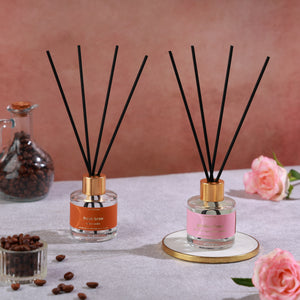
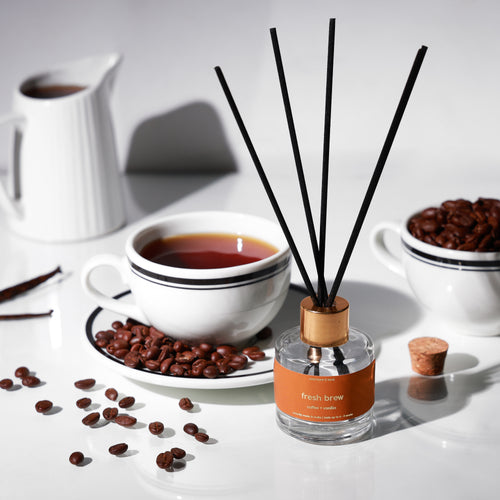
 Reeds · always-on roomsFrom ₹749Shop →
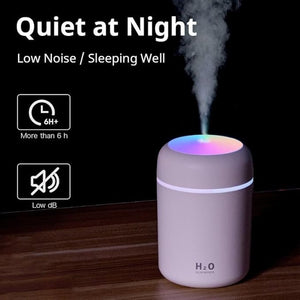
  Sukoon · when you want a switch₹1,899Shop →
  Hotel Collection · the scentFrom ₹299Shop →
The three-day protocol
Day one — the cold walkthrough and the wet list. Leave the flat for thirty minutes. Come back, walk a fixed route touching nothing, and write one line per room. Rank the top three. Then spend twenty minutes on the wet list, in this order: every drain you do not use daily gets a mug of water; the washing-machine door gasket gets peeled back, wiped and dried; the bin gets emptied and its lid and underside washed; the fridge drip tray is checked; the cabinet under each sink gets a torch; every cloth, mop and sponge is dried properly rather than folded damp; the AC filter is washed. In a large proportion of cases the answer is on that list and day one is the end of the exercise.
Day two — isolation. Close every internal door before you go to bed and leave them closed overnight. In the morning, go out for thirty minutes, come back, and open the doors one at a time from outside, taking the first breath of each room at the threshold. Do the same for the wardrobe, the shoe cabinet, the space under the sink and any storage cupboard. Then read at height: down at floor level beside every drain, at skirting level along external walls, and up at head height in the kitchen and living room. By the end of this you should have one room and usually one corner.
Day three — materials and proof. Bag-test the textiles in your suspect room: a cushion cover, a folded length of curtain hem, a towel, the pillow, sealed in a bag or box for an hour and then opened and compared against a clean equivalent from the cupboard. When you have a suspect, prove it by removal — take the item out of the flat entirely for forty-eight hours, air the room normally, and repeat the day-one walkthrough. A changed reading is proof; an unchanged one sends you back to the list. Only when the source is gone does anything from a shop belong in this process. At that point a reed diffuser from ₹749 gives a clean flat a continuous background with nothing to operate, or the Sukoon at ₹1,899 with a Hotel Collection scent from ₹299 gives you the same thing on a switch. Neither is part of the diagnosis, and running either one during it will hide exactly the signal you are following.
What to do, in order
The first three steps are the investigation and they cost nothing but attention. The fourth is only reached once the flat is genuinely clean, dry and aired — and it should be, or you are back at the start in a fortnight.
| Step | What to do | When | Cost |
|---|---|---|---|
| 1. Remove the source | Day one wet list: unused drains, washing-machine gasket, bin lid and underside, fridge tray, under-sink cabinet, cloths, AC filter | Before anything else | ₹0 |
| 2. Move the air | Ten minutes of cross-ventilation twice a day throughout — it also makes each test cleaner by resetting the room | Daily, five to ten minutes | ₹0 |
| 3. Deal with what holds it | Bag-test and then wash or air the suspect textiles: curtains, cushion covers, pillow, bedding, rugs in sunlight | Weekly to monthly | ₹0 |
| 4. Then the always-on layer ★ | A SOSA reed diffuser — a continuous background for a flat that is now genuinely clean — nothing to switch on and nothing to remember | 50ml 6-8 weeks · 130ml 14-18 | from ₹749 |
| 5. Or the on-demand layer | Sukoon with a Hotel Collection scent — the same thing on demand, for a living room where you want scent before people arrive; roughly 270–320 sq ft | Run it when you want it | ₹1,899 |
Versailles
The most useful thing I ever learned about household smells is that the search is the problem, not the smell. People walk around their flat sniffing for twenty minutes and then conclude it must be coming from everywhere. It is not. Their nose stopped working about eighteen minutes in, and nobody ever told them that was going to happen. Once you know it, the whole thing becomes a matter of budgeting your readings.
The isolation test is the one I would push hardest, because it is the one that resolves the cases people have given up on. Shut every internal door overnight. Go out. Come back and open them one at a time. I have had people write to me convinced the smell was in their bedroom who discovered in ten minutes that the bedroom was fine and the utility area behind the kitchen was not. Rooms talk to each other constantly, and you cannot judge one while it is still in conversation with the rest of the flat.
And please do not run a diffuser while you are looking. I know that is an odd thing for me to write. But fragrance is additive — it puts molecules in and takes none out — so all it does during a diagnosis is destroy the signal you are trying to follow, and it also removes the discomfort that was usefully telling you something needed attention. Find it, fix it, air the place properly, and then buy something because you want the flat to have a character. A portion of every order funds a girl's classroom through Nanhi Kali.
Frequently asked questions
- Why does my house smell stale even though I clean it every day? — the general case, in order.
- Musty but no visible mould — where should I check? — the damp checklist.
- Sofa or curtains? — isolating one textile from another.
- Keeping it fresh once the smell is gone — the maintenance routine.
- Brand: the SOSA founder story.
SOSA products & prices (verified August 2026): Hotel Collection water-based ultrasonic diffuser fragrance 15ml ₹299 · 100ml ₹999 · 300ml ₹1,799 · Pack of 7 (15ml, all fragrances) ₹1,799; refills 100ml from ₹999. Seven scents: The Ritz-Carlton-inspired (white tea · bergamot · cedar), Westin-inspired (white tea · aloe · cedar), 1 Hotels-inspired (cedarwood · vetiver · green leaves), The St. Regis-inspired (amber · violet · woods), Shangri-La-inspired (jasmine · green tea · white tea), Four Seasons-inspired (citrus · floral · sandalwood), W Hotels-inspired (citrus · pepper · amber). Diffusers: Boond 300ml ₹899 · Sukoon 500ml ₹1,899 · Megh 6L ₹3,499. Water-based, phthalate-free, composed to IFRA standards for home diffusion; 3–6 drops per tank. Made in India, Pune. The Hotel Collection scents are SOSA's own interpretations inspired by the world's finest hotels; all hotel names are trademarks of their respective owners and are used only to describe the scent style — SOSA is an independent Indian fragrance house, not affiliated with or endorsed by any hotel brand. Prices and availability subject to change — see the live product pages.