


It reaches the emotional brain almost directly, nudging a guest toward a parasympathetic state faster than sight or sound — a real but moderate effect.
What runs it?
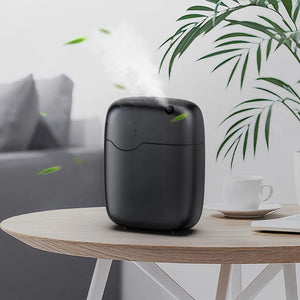
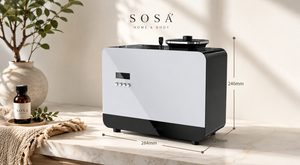
A steady, near-silent Vaayu (₹11,999) front-of-house, or a Sukoon (₹1,799) for one relaxation room. Trial the Hotel Collection (from ₹299).
2. Fix the loud levers first. Harsh light, hard acoustics and clutter keep a nervous system alert no matter what you spray. Quiet those before you reach for scent.
3. Add scent as the finishing layer. A familiar, grounding note reaches the emotional brain fast and eases a guest toward calm. Run it with a steady Vaayu (₹11,999) or a Sukoon (₹1,799) per room.
4. Choose grounding, not stimulating, notes. Sandalwood, vetiver, white tea, soft neroli. Sharp or sweet notes lift arousal — the opposite of what you want.
5. Keep it steady above all. A scent that surges and fades re-alerts the brain each time. An even, low, congruent output is what holds calm. Audition two Hotel Collection notes at ₹299 each.
6. Let design carry the weight. Scent compounds a calm room and rescues no one from a chaotic one. A portion of every order supports girl-child education through Nanhi Kali.
What calm actually is
It helps to be precise about what we are building. Calm is not a vague pleasantness — it is a measurable shift in the body away from the alert, sympathetic "ready" state toward the parasympathetic "rest" state. Heart rate settles, breathing slows and deepens, the shoulders drop. A guest arrives from traffic and email carrying the first state, and your spa’s entire promise is to move them into the second. Everything in the room is either helping that shift or fighting it. There is no neutral surface; a harsh downlight or a slammed door is a small vote for alertness whether you intended it or not.
This reframes design as nervous-system work. Every choice — the warmth of the light, the softness of the acoustics, the texture underfoot, the temperature of the air, the smell of the room — is a signal the body reads and responds to. Calm is what you get when those signals agree and all point the same way: you are safe, slow down, stay a while. When they conflict — beautiful room, jarring music; lovely scent, cold draught — the body stays half-alert and the guest never fully lets go, though they will struggle to tell you why. Coherence across the signals is the whole art.
The levers of a calm room
Think of calm as a mixing desk with several faders. No single one makes the room; together they do. Here is how each lever lowers arousal, and where scent sits among them.
| Lever | How it lowers arousal | The common mistake |
|---|---|---|
| Light | Warm, low, indirect light signals evening and safety | Bright, cool downlights that read as clinical |
| Sound | Soft acoustics and slow, quiet audio slow the breath | Hard surfaces; music with a driving beat |
| Material & texture | Natural, tactile surfaces reassure the body | Cold, hard, shiny finishes everywhere |
| Temperature | Comfortable warmth lets muscles release | Draughts and over-cooling that keep guests tense |
| Scent | A grounding, familiar note eases the emotional brain fast | Loud, sweet or surging fragrance that re-alerts |
SOSA Vaayu · steady front-of-house₹11,999View →  Sukoon · one calm room₹1,799View →
  Hotel Collection · grounding notesfrom ₹299View →
Why scent is the fastest lever
Among all those faders, scent has a peculiar advantage, and it is worth understanding why. Sight and sound are routed through the brain’s relay station and interpreted before they reach the emotional centres. Smell is not; the olfactory system connects almost directly to the amygdala and hippocampus — the seats of emotion and memory. This is why a scent can move your mood before you have consciously registered it, and why a smell can drop you into a memory more completely than a photograph. In a spa, that shortcut is a gift: a congruent, grounding note begins the shift toward calm at the threshold, before the guest has sat down, before the treatment has begun.
There is a second, slower mechanism that matters even more for a spa that keeps its guests. Scent and state get bound together by repetition. A guest who has settled into deep calm in your rooms three or four times, always with the same signature in the air, begins to associate that smell with letting go. On the next visit the scent itself becomes a cue — the body starts to soften on the inhale at reception, ahead of anything else. This is conditioned calm, and it is the quiet engine behind why regulars settle faster and rebook more readily. It is also why steadiness and consistency matter so much: the association only forms if the note is the same every time.
I will hold the line on honesty, as always. None of this is hypnosis. The effect of scent on arousal, dwell time and perceived calm is real but moderate, and it depends entirely on the room beneath it being genuinely calm — clean, quiet, well lit, well ventilated. Fragrance is the fastest lever, not the strongest; it finishes the work that light, sound and material have already done. Get those right and a congruent scent will pull the whole room a notch calmer for very little money. Get them wrong and no fragrance on earth will save the space. Design first, then scent — in that order, every time.
The SOSA commercial edit
Calm wants a steady, near-silent delivery and a grounding note. Match the system to the space you are settling.
| System | Best for | Why it works | Price |
|---|---|---|---|
| Boond | A single small relaxation nook or quiet room | Compact and low-output; easy to hold to a steady whisper | ₹799 |
| Sukoon + Hotel Collection | A single relaxation room or small lounge | Quiet front-of-house scenting for one settled space | ₹1,799 + from ₹299 |
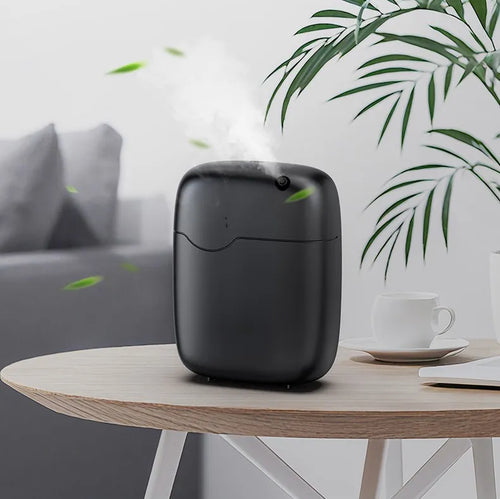
| SOSA Vaayu ★ | A whole calm front-of-house | Under 38dB, waterless, no surge; app + timer for an even, unwavering level | ₹11,999 |
| SOSA Aangan | A whole calm centre on one signature | HVAC nebulising across 8,000–10,000 sq ft, one grounding note everywhere | ₹25,999 |
| Hotel Collection refills | Keeping the calming note steady | 100ml / 300ml top-ups for consistent, unbroken output | from ₹999 |
Versailles
People assume a perfumer’s job is to make things smell good. In a spa, my real job is quieter than that: to help a stranger’s shoulders drop. The first time I watched it happen in real time — a guest walking in tense, breathing the room, and visibly softening within a few steps — I understood I was not decorating air. I was working on a nervous system.
That is why I am so insistent that scent comes last, after the light and the sound and the warmth. It cannot carry a calm on its own; it can only agree with one the room has already begun. But when it does agree, it is the fastest agreement a body ever makes. It reaches the feeling before the mind catches up.
We make our scents in Pune, and a portion of every order supports girl-child education through Nanhi Kali. Your guest gets a slower breath; a girl gets a classroom.
Frequently asked questions
- Spa Ambience: Lighting, Music, and Fragrance Together — the three ambience levers working as one.
- Fragrance for Minimalist Spa Interiors — restraint as its own kind of calm.
- SOSA Vaayu waterless diffuser — the near-silent, steady unit that calm relies on, ₹11,999.
- Brand: the SOSA founder story — how an ISIPCA perfumer works on a nervous system, not just a room.
Facts verified August 2026: ambient scent-marketing effects on dwell time, perceived quality and recall are real but moderate, congruence with the space matters more than intensity, and there is no measurable benefit on unclean or poorly ventilated premises. SOSA system specifications and prices as stated: Boond ₹799, Sukoon ₹1,799, Megh ₹3,499, Vaayu ₹11,999, Aangan ₹25,999, Meenar ₹38,500, Hotel Collection scents from ₹299, refills from ₹999. The Hotel Collection scents are SOSA’s own interpretations inspired by the world’s finest hotels; SOSA is an independent Indian fragrance house, not affiliated with or endorsed by any hotel brand. Prices subject to change.