



The consequence: surfaces that normally dry between showers now stay damp for eight weeks straight, and permanently damp surfaces grow.
What still works: mechanical water removal — squeegee, towel the walls, dry the mat elsewhere, and keep the fan running for the smell even though it is no longer drying much.
Mould is a health issue, not an odour.
2. Because permanently damp surfaces grow. This is the actual source of the smell. Biofilm establishes on any surface that does not dry, and mould follows on porous ones — grout, silicone edges, the underside of a bath mat, the ceiling above the shower. Both produce the earthy, musty compounds people describe as "monsoon smell". The room did not get dirtier in July; it got a longer wet period, and growth is a function of wet hours.
3. Because your extract fan has changed job. It still removes air, and removing air still removes smell. But in terms of drying, it is now swapping one lot of saturated air for another. This is the single most counter-intuitive thing about monsoon bathrooms and it is why people say "the fan stopped working" when nothing is wrong with the fan. Keep running it — for odour, for steam, for stopping condensation on the ceiling — but stop expecting it to dry the room on its own.
4. Because humidity also makes you perceive odour more strongly. A separate effect on top of the first three. Higher humidity raises perceived intensity, so a source that has not changed at all reads louder in monsoon. Some of what you are noticing in July is a real increase in production, and some of it is the same production being easier to smell.
5. And if there are dark patches, this is no longer an odour question. Visible mould on the ceiling, in the grout or up a wall is a health issue and a building issue. Find the moisture source, improve the extraction, remove the growth properly. Nothing from a fragrance company belongs anywhere near that decision.
Made in India, composed by an ISIPCA Versailles-trained perfumer — and a portion of every order supports girl-child education through Nanhi Kali.

Why a monsoon bathroom never gets back to dry
The useful way to think about a bathroom is as a cycle rather than a state. Water goes in twice a day, and between those events the room dries. How well it smells is decided by how complete that drying is: a room that returns to dry has short wet periods and very little growth, while a room that only half-dries starts each shower already loaded. In monsoon the second half of the cycle disappears. Evaporation is driven by the moisture difference between a wet surface and the air touching it, and when the surrounding air is already close to saturation there is almost no difference left to drive anything. The water you put in stays in. That single change explains most of what you notice — the towel that never feels properly dry, the mat that smells by Wednesday, the grout that darkens, the mirror that clears far more slowly than it did in February.
The second thing that changes is what ventilation buys you. For most of the year, opening a window or running the extract fan does two jobs at once: it carries odour out and it brings in drier air that then absorbs moisture from the room. In monsoon only the first job survives. You are still exchanging air, and that still helps with smell and with steam, but you are exchanging humid air for humid air and the net drying is small. This is why the standard advice — "just ventilate more" — underperforms so badly for eight weeks a year, and why the right monsoon strategy is different in kind rather than in degree. Water has to leave the room on a cloth, not in the air. Squeegeeing the shower walls, drying the glass, wringing the mat and hanging towels somewhere with moving air are not fussy extras in July; they are the primary drying mechanism, because the atmospheric one is temporarily unavailable.
What changes for eight weeks, and what to do about it
 Step fourFrom ₹749In monsoon, every drop you physically remove is a drop that does not have to evaporate into air with no capacity for it. Run a squeegee down the shower walls and glass after each use, then wipe the ledges and the tap bases with a dry cloth. Wring the bath mat properly and hang it outside the bathroom — flat on wet tiles it will not dry at all this season, and a wet cotton mat is one of the strongest smells in the room. Keep towels out of the bathroom entirely if you can, spread rather than folded. Thirty seconds of squeegee removes more water in July than an hour of extraction.
Symptom to cause: the monsoon bathroom
Monsoon exaggerates faults that are already there, so several of these rows are year-round problems that only became audible in July. Confirm before you act, and note which two rows are not fragrance problems at all.
| What you notice | Most likely cause | How to confirm it | What actually fixes it |
|---|---|---|---|
| Musty and earthy, worse each week of the rains ★ | Nothing dries between uses, so growth on grout, silicone and mat accelerates | Feel the grout and the mat four hours after a shower — both should be dry, and will not be | Squeegee and towel the walls; wash and dry the mat weekly; brush the grout weekly |
| Towels never feel properly dry | No drying gradient — the air cannot accept more moisture | Hang one towel in a room with the AC or a fan and compare after two hours | Dry towels outside the bathroom; spread rather than folded; wash more often |
| Fan runs but the room stays damp | Extraction is swapping saturated air for saturated air | Note whether the mirror clears more slowly than in dry months | Keep the fan for odour and steam; add mechanical drying and a dehumidifier or AC nearby |
| Same smell as always but noticeably stronger | Humidity raising perceived odour intensity, not a new source | Compare the room on a clear dry day in the same week | Deal with the existing source; expect it to read louder until the rains end |
| Sulphurous or eggy, and not related to weather | A failed water seal in a P-trap — plumbing, not humidity | Pour a mug of water into every drain and reassess after an hour | Refill the traps; if it recurs, get the stack and vent checked. |
| Dark patches spreading on ceiling, grout or wall | Mould — a health issue and a moisture issue | Look above the shower and in the corner furthest from the fan | Find the moisture source, improve extraction, remove the growth. Never scent it. |
| If none of these fit: take everything soft out of the bathroom for two days — mat, towels, curtain — and see what the room smells like empty. Very often the season's smell is concentrated in three washable objects rather than in the building, and that is a much easier problem to own. | |||
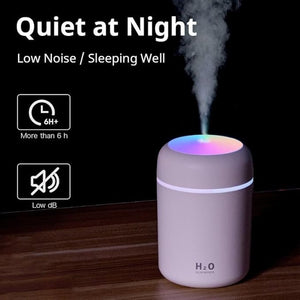
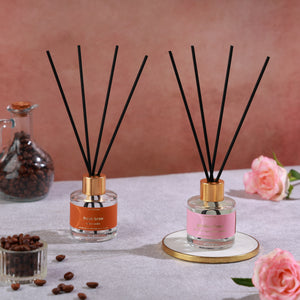
Reeds · always-on roomsFrom ₹749Shop →  Sukoon · when you want a switch₹1,899Shop →
  Hotel Collection · the scentFrom ₹299Shop →
The monsoon bathroom routine
First, shift drying from the air to your hands, because for eight weeks the air will not help. Keep a squeegee in the shower and use it every time: walls, glass, then the ledges and tap bases with a dry cloth. Wring the bath mat and hang it outside the bathroom, ideally where a fan can reach it, and wash it weekly rather than monthly. Move towel drying out of the room. Do not, under any circumstances, dry laundry in the bathroom in monsoon — it is the single fastest way to keep a small room saturated all day. If you have an air conditioner or a dehumidifier, run it in the adjoining room with the bathroom door open for an hour a day; that genuinely removes water, which the extract fan currently cannot.
Second, keep the fan running anyway, and raise the cleaning frequency rather than the effort. Fifteen to twenty minutes after every shower, door ajar so it has an inlet. It is still doing the odour and steam job even though it has stopped doing the drying job. Then move your normal cleaning cadence up a step for the season: grout brushed weekly, silicone wiped weekly, the floor-trap grating lifted and the pipe brushed monthly, the shower curtain washed. Growth is a rate, monsoon raises the rate, and the correct answer to a raised rate is a raised frequency, not a stronger chemical.
Third, deal with anything visible before you think about scent, and then scent lightly. If there are dark spreading patches on the ceiling, in the grout or on a wall, that is mould, it is a health issue rather than an odour one, and it needs the moisture source addressed and the growth physically removed — with better extraction to stop it returning. No fragrance product from us or anyone else belongs in that conversation. Once the room is clean and it dries between uses again, a reed diffuser from ₹749 gives a small bathroom a steady background at two or three reeds rather than six. One useful monsoon note: evaporation from the reeds slows in humid, still air just as it does everywhere else, so the throw reads quieter and the bottle lasts longer than the stated 6–8 weeks. Resist the urge to add reeds to compensate — the room will get louder again the moment the weather breaks. If the bathroom is large or opens onto a dressing area with a socket, the Sukoon at ₹1,899 with 3–6 drops of a Hotel Collection scent from ₹299 covers roughly 270–320 sq ft and gives you a switch.
What to do, in order
Monsoon changes which of these steps carries the weight. In dry weather step two does most of the work; in July it is step one and step three, and step two is running for a different reason entirely.
| Step | What to do | When | Cost |
|---|---|---|---|
| 1. Remove the source | Squeegee the walls and glass, wring and hang the mat outside the room, dry towels elsewhere, no laundry in here | Before anything else | ₹0 |
| 2. Move the air | Fan for fifteen to twenty minutes after every shower for odour and steam, door ajar; a dehumidifier or AC nearby | Daily, five to ten minutes | ₹0 |
| 3. Deal with what holds it | Grout brushed weekly, silicone wiped, mat and curtain washed weekly, floor-trap pipe brushed monthly | Weekly to monthly | ₹0 |
| 4. Then the always-on layer ★ | A SOSA reed diffuser — a low steady background once the room dries between uses; quieter and longer-lasting in humid air | 50ml 6-8 weeks · 130ml 14-18 | from ₹749 |
| 5. Or the on-demand layer | Sukoon with a Hotel Collection scent — a switch for a larger bathroom or an adjoining dressing area; covers roughly 270-320 sq ft | Run it when you want it | ₹1,899 |
Versailles
The monsoon question always arrives in the same form: nothing has changed, so why does it smell? Something did change, it just was not in your bathroom. The room lost its ability to dry, and every wet thing in it stayed wet for eight weeks instead of four hours. Growth follows wet hours, and that is the entire story.
What I would push back on is the instinct to clean harder. Scrubbing a grout line with more force in July does not help much, because you are removing a population that has ideal conditions to re-establish in. Cleaning more often does help, and drying more helps most of all. A squeegee costs almost nothing and is the highest-value object in an Indian bathroom between June and September.
And if there are dark patches spreading on the ceiling, please do not buy anything from us for that room. That is mould, it is a health matter and a moisture matter, and it wants a proper look at the extraction and the waterproofing rather than a nice smell laid over it. When the room is dry and clean again, two or three reeds will hold it beautifully — and you will find the bottle lasts longer in the rains, because everything evaporates more slowly, fragrance included. A portion of every order funds a girl's classroom through Nanhi Kali.
Frequently asked questions
- Musty even with an exhaust fan — the five ways extraction fails.
- A bathroom with no window — when the fan is the only ventilation there is.
- Still smells right after cleaning — the surfaces a cloth cannot reach.
- Keeping a bathroom good permanently — the routine, season by season.
- Brand: the SOSA founder story.
SOSA products & prices (verified August 2026): Hotel Collection water-based ultrasonic diffuser fragrance 15ml ₹299 · 100ml ₹999 · 300ml ₹1,799 · Pack of 7 (15ml, all fragrances) ₹1,799; refills 100ml from ₹999. Seven scents: The Ritz-Carlton-inspired (white tea · bergamot · cedar), Westin-inspired (white tea · aloe · cedar), 1 Hotels-inspired (cedarwood · vetiver · green leaves), The St. Regis-inspired (amber · violet · woods), Shangri-La-inspired (jasmine · green tea · white tea), Four Seasons-inspired (citrus · floral · sandalwood), W Hotels-inspired (citrus · pepper · amber). Diffusers: Boond 300ml ₹899 · Sukoon 500ml ₹1,899 · Megh 6L ₹3,499. Water-based, phthalate-free, composed to IFRA standards for home diffusion; 3–6 drops per tank. Made in India, Pune. The Hotel Collection scents are SOSA's own interpretations inspired by the world's finest hotels; all hotel names are trademarks of their respective owners and are used only to describe the scent style — SOSA is an independent Indian fragrance house, not affiliated with or endorsed by any hotel brand. Prices and availability subject to change — see the live product pages.