


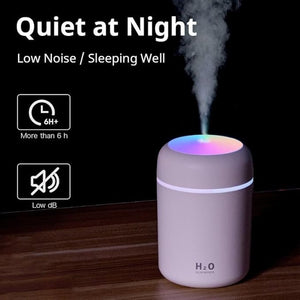
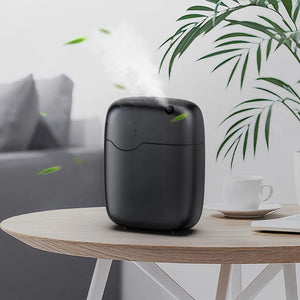
The kit: a Sukoon (₹1,899) on low with the 2H or 4H timer, plus one Hotel Collection scent you keep.
The detail most people miss: the same scent every day. Signature means unchanged.
2. Choose one signature scent and keep it. The reason a hotel feels like itself is that the scent is identical on every visit. Pick one Hotel Collection fragrance — Ritz-Carlton-inspired or Westin-inspired are the two I would start with — and run it as your default.
3. Low and continuous, never strong and occasional. A Sukoon on low with the 2H or 4H timer holds a level you stop consciously noticing. That is the target. If guests comment on the fragrance, it is slightly too high.
4. Get the entry moment right. Hotels invest in the first three seconds. In a studio that means the machine runs for a while before you get home, or a reed diffuser from ₹749 sits by the door.
5. Change the tank, not the volume, when you want a different mood. Evenings can be St. Regis-inspired; the flat becomes a different room for ₹299 rather than a louder version of the same one.
A portion of every order supports girl-child education through Nanhi Kali.

The four things hotels actually do
Hotel scenting is an operational discipline rather than a product, and almost all of it is copyable at home for under ₹2,000. Three of the four things below cost nothing at all. The fourth is the machine — and it is the least important of the four, which is not what most people expect to read on a page selling one.
The hotel habit versus the home habit
Six places where domestic instinct and hotel practice diverge. None of these require spending more money — most of them involve spending less, more deliberately.
| What hotels do | What most homes do | The fix in a studio | Cost |
|---|---|---|---|
| One signature scent, unchanged ★ | Three half-used bottles and a candle | Pick one Hotel Collection scent and buy it in 300ml | ₹1,799 |
| Low, continuous output | Strong bursts before guests arrive | Sukoon on low with the 2H timer, daily | — |
| Air handled before scent | Fragrance used to cover cooking | Extractor, window, bin out — then scent | — |
| Scent in the entry moment | Scent only where people sit | Run the timer before you get home, or a reed diffuser by the door | from ₹749 |
| Different scent zones by function | Same smell everywhere, or none | One machine, change the tank by time of day | ₹299 per scent |
| Bathrooms scented separately | Bathroom left to an aerosol | A Boond behind the door | ₹899 |
Sukoon · the whole studio₹1,899Shop →  Hotel Collection · 7 scentsfrom ₹299Shop →
 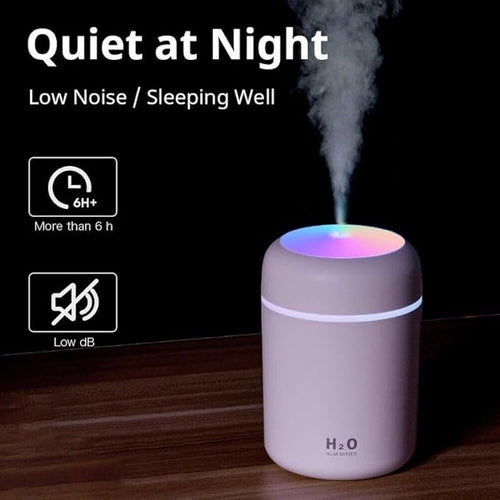 Boond · the bathroom gap₹899Shop →
The daily routine, in a studio
Here is what this looks like on an ordinary weekday, and it takes about a minute of actual attention. Morning: open a window for ten minutes while you make coffee — this is the single highest-value habit in the whole method and it costs nothing. Then start the Sukoon on low with the 2H timer. By the time you have showered the flat has taken the scent and the machine has switched itself off, which is the point of the timer: you are not trying to run fragrance all day, you are trying to set the level once.
Evening: cook with the extractor on and leave it running for a few minutes afterwards. Give the air five or ten minutes to clear before you restart the diffuser — running fragrance into cooking smells is what produces the muddled result people blame on the scent. Then a second 2H run takes you through the evening. If you want the flat to feel different after eight, this is the moment to change the tank rather than the setting: rinse, refill with St. Regis-inspired (amber, violet, woods), and the same 350 sq ft reads as somewhere you would pour a drink. That switch is the closest thing a studio has to walking into another room.
Before guests: do less than you think. Start the machine forty minutes before they arrive rather than five, on low rather than high, and let the room settle. Scent that is still visibly misting when someone walks in is scent they will notice as a product; scent that has been quietly holding for half an hour is one they will experience as the flat. And clean the plate occasionally — a wipe with a soft cloth every few refills, filtered or RO water if your city's supply is hard. Mineral build-up is the commonest complaint about any ultrasonic diffuser and it is almost always the water rather than the machine.
The SOSA studio edit
The hotel method, as a shopping list. Three of the four steps above are free, so this list is short — and the most expensive line on it is the one that buys consistency rather than intensity.
| Buy | What it does | When it earns its place | Price |
|---|---|---|---|
| 1. Sukoon ★ | 270–320 sq ft on low; 2H/4H timers hold a hotel-level output | Immediately — with three 15ml scents included | ₹1,899 |
| 2. 300ml refill | Your signature scent, in the size that makes consistency affordable | Once you have chosen the one you will keep | ₹1,799 |
| 3. Hotel Collection 15ml | The evening scent — a second mood in the same machine | When you want after-eight to feel different | ₹299 |
| 4. Reed diffuser | The entry moment, with no plug and no timer | If the front door opens straight into the room | from ₹749 |
| 5. Boond 300ml | The bathroom, scented separately as hotels do it | If the door stays shut most of the day | ₹899 |
| Not yet: Vaayu | Waterless nebuliser, up to 1000m³ — genuine commercial-grade scenting | When you move somewhere with corridors | ₹11,999 |
Versailles
I have specified scent for hotels and for houses, and the difference is not the fragrance — several of the notes are the same. It is the operating discipline. Hotels run low, run constantly, and never change the scent. Homes run high, run rarely, and change the scent every few months. That is the entire gap.
So when someone tells me their flat does not feel like a hotel, my first two questions are never about the product. They are whether the window gets opened, and whether they have used the same fragrance for more than six weeks. In a studio, where the air is one small volume and habits show up immediately, those two answers usually explain everything.
Everything is made and supported from Pune, and a part of every order funds girl-child education through Nanhi Kali. You get a home that smells like somewhere you chose; a girl gets a classroom. That equation has always felt right to me.
Frequently asked questions
- Where should you place Sukoon in a studio apartment? — placement decides the coverage.
- Best hotel-inspired fragrance for a studio apartment — choosing the signature.
- Which Sukoon + Hotel Collection combination is best for a studio? — the exact combination to order.
- The complete SOSA buying guide for studio apartments — the pillar guide.
- Brand: the SOSA founder story.
Facts verified August 2026: SOSA Sukoon — 500ml tank, 2.4MHz ultrasonic cool mist, 270–320 sq ft coverage, 16–18 hours runtime on low and 9–12 on high, 30–50 ml/h mist output, 7-colour LED, remote and steady/2H/4H timers, BPA-free ABS with auto shut-off and overheat protection, ~17cm high — ₹1,899, including three 15ml Hotel Collection fragrances of your choice. Boond 300ml ₹899; Megh 6-litre ₹3,499. Hotel Collection water-based fragrance 15ml ₹299, 100ml ₹999, 300ml ₹1,799, Pack of 7 × 15ml ₹1,799; 100ml and 300ml refills from ₹999. Seven scents: The Ritz-Carlton-inspired (white tea, bergamot, cedar), Westin-inspired (white tea, aloe, cedar), 1 Hotels-inspired (cedarwood, vetiver, green leaves), The St. Regis-inspired (amber, violet, woods), Shangri-La-inspired (jasmine, green tea, white tea), Four Seasons-inspired (citrus, floral, sandalwood), W Hotels-inspired (citrus, pepper, amber). Waterless systems for larger and connected spaces: Vaayu ₹11,999 (up to 1000m³), Aangan ₹25,999 (8,000–10,000 sq ft), Meenar ₹38,500 (12,000–18,000 sq ft). The Hotel Collection scents are SOSA's own interpretations; SOSA is not affiliated with or endorsed by any hotel brand. Prices subject to change — see the live product pages.