



The fresh-passenger check, which is the only reliable verdict: somebody who has just got in from outside is the one instrument in the car that has not adapted. Ask them before you speak, in the first seconds, and ask them what they notice rather than whether they can smell it — the second question gets you a polite yes regardless.
The reset-and-return check, when you are alone: you cannot assess a space you are sitting in. Leave the car, spend long enough outside doing something else, and come back as a visitor does. A motorway stop, a shop, half an hour in an office car park all count. Perceived strength is set by the step between two spaces rather than by the level inside either, so the step back in is the measurement.
The three genuine faults, all findable by hand: a spray bottle that is empty or nearly so; a hanging unit that has reached the end of its life, which is when a passive source is at its quietest; and a wick that is saturated, dried out or furred with the dust a cabin always carries. None of those is diagnosed from the driver’s seat, and all three are ten-second checks with the door open.
Specify: Oud Car Perfume (Assam Oudh) ₹509, under the option “Car freshener form” with the values “Spray (Strong scent-throw)” and “Hanging (Mild scent-throw)” at the same price either way. Hanging units are 12ml and the Car Hanging Freshener Refills are 15 ML at ₹399–₹449. Free shipping above ₹499.
The honest gaps, and they bear directly on this question: no adaptation time in minutes is published anywhere in the range, so nobody can tell you at which hour of your day your own reading stops being trustworthy. No consumption rate and no longevity figure is published for either car format, so I cannot tell you when a unit is spent — which is precisely why the hand check and a written date do the work a specification would have done. And not one of the sixteen waterless oils is this family, so the one car product whose battery and timer at least tell you whether it is running cannot carry oud at all.
- The straight answer, in five parts
- Why this family hides from its owner more than the others do
- The three checks, in the order you should run them
- Three causes that feel identical from the driver’s seat
- What a credible test would record — and what it would not
- What I would do, in order — and the gaps
- A note from Sonal
- FAQs
2. Then confirm with somebody who has just got in, because that is the only verdict worth having. You cannot judge a space you are sitting in; the only valid test is to leave it, spend long enough outside, and come back as a visitor does. A passenger collected from a building has satisfied that condition without trying. Three rules make the check work instead of producing a courtesy. Ask in the first few seconds, before conversation starts, because they adapt too and faster than you expect. Do not ask “can you smell the fragrance” — that question has one socially available answer; ask “what do you notice about the car” and let them volunteer it. And ask more than one person across a fortnight rather than treating a single reaction as data, because two people in one cabin genuinely receive different intensities, since dwell time, seat position, height and proximity to a vent all differ, and a single polite answer from one seat is not a reading.
3. Only now look for a genuine fault, and look with your hands rather than your nose. There are three, they are specific, and each takes seconds. An empty or nearly empty spray bottle: look at it in daylight rather than guessing, and test it well away from the car and away from your own clothing, because a press into the cabin you are standing in is the one place you cannot evaluate it. A hanging unit at the end of its life: the published units are 12ml and finite, and a passive source is at its most generous when new and its quietest at the end — so a slow decline over weeks that a fresh passenger also reports is the normal end of a consumable rather than a defect. A wick that has stopped working properly: a car is a dusty environment, and a wick can dry out, sit saturated against a surface, or become furred with the fine dust a cabin always carries, all of which slow release. Also check the obvious things nobody admits to: a membrane never opened, a cap left on, a unit wedged somewhere it is pressed flat, or a unit somebody relocated. A fault confirmed by hand is the only one of the three causes that justifies spending money.
4. Keep the three causes separate, and expect two of them to be running at once. The reason this question is hard is not that the causes are subtle; it is that they feel identical from the driver’s seat and they overlap. A long day in a sealed cabin produces adaptation. A car that stood in the sun and then cooled hard on recirculation produces a changing cabin. A unit three weeks old produces a genuine decline. All three can be true on the same afternoon, which is why the answer is a sequence of checks rather than a single explanation, and why “it feels weaker” must never be treated as a single diagnosis with a single remedy. The order matters too: run the near-source check first because it is instant and it eliminates the most expensive mistake, then the fresh passenger, then the hand check on the hardware. And never run any of them in the first few minutes of a car that has just stood through a hot afternoon, because that cabin is at the top of its range and tells you nothing about an ordinary journey.
5. What to specify, and what is not published — which matters here more than on most pages. SOSA publishes one oud for a car, Oud Car Perfume (Assam Oudh) at ₹509, under the option “Car freshener form” with the values “Spray (Strong scent-throw)” and “Hanging (Mild scent-throw)” at the same price in either form, so moving between them is a change of scent-throw rather than an upgrade. Hanging units are 12ml and the Car Hanging Freshener Refills are 15 ML at ₹399–₹449; the 50 ML Car Perfume Spray is ₹1,499 and the Car Perfume Sprays Discovery Set is ₹699–₹899 for a trio or ₹2,999 for a pack of 9. Now the gaps, stated plainly because they are the reason this page is a protocol rather than a table. No adaptation time in minutes is published anywhere in the range, and I will not invent one — so nobody can tell you at what hour of a long day your own reading stops being trustworthy, only that it does. No consumption rate and no longevity figure is published for either car format, so nobody can tell you how many weeks a 12ml unit lasts in your cabin; that is why a written date and a hand check replace a specification. Not one of the sixteen waterless oils is oud, so the one car product with three speed settings, a 1 / 2 / 3-hour auto shut-off and a battery that at least tells you whether it is running cannot carry this family, and no coverage figure of any kind is published for it either. No amber car fragrance is published in any format, and rose is not published as a car fragrance at all. Everything is alcohol-free where applicable, phthalate-free, paraben-free and IFRA-compliant, composed in Pune. Free shipping above ₹499, and a portion of every order supports girl-child education through Nanhi Kali.

Why this family hides from its owner more than the others do
Every page in this cluster says that the driver’s nose is the worst instrument in the car. On this page I want to go further and say something specific to oud, because it is the reason your question is harder than it looks and because nobody tells buyers this at the point of sale.
Adaptation is a response to constancy, and this family is the most constant thing in the range. The nose is a change detector. An unvarying stimulus stops being announced while the molecules are still arriving, which is why you cannot smell your own home and why the person who has been in a room longest is the least able to describe it. Now compare two registers in the same cabin. A bright citrus has a short, volatile leading part that is loud at the beginning and clearly gone by the second hour, and that movement is itself a change — so the fragrance keeps intermittently re-announcing itself, and you keep receiving fresh information about it. A dense woody-resinous composition does almost none of that. Its materials are heavy and slow, its character is mostly heart and base, and it is chosen precisely because it sits still. It arrives, it establishes, and then it offers the nose nothing new for four hours. That is the quality you are paying for, and it is also what makes it the easiest register in the cluster to stop noticing.
There is a second effect layered on top, and it is psychological rather than physiological. Because oud feels dense and permanent, owners hold two contradictory expectations about it at once: that it must still be there, because something that substantial surely does not simply vanish; and that it ought to be unmissable, so that if they cannot detect it something must be wrong. Both expectations produce bad decisions. The first stops a genuinely exhausted unit from being replaced for weeks. The second produces the much more expensive error — a generous extra press, in a sealed cabin, to correct something that was never wrong — and because this family is tenacious, that error is not easily undone.
Which brings us to the thing that makes the mistake costly rather than merely annoying. Soft mass takes odour up and gives it back later, and a car is full of it: carpet, headlining, the fabric parts of the seats, the cargo lining. A fortnight of small corrections is not reversed by removing the source; the vehicle goes on supplying the fragrance for days afterwards. So in this family the asymmetry is unusually sharp: under-dosing is a mild, self-correcting error, and over-dosing is a slow one to undo. That asymmetry is the practical argument for running the checks before you act, rather than after.
And one more property, which is the quiet reason owners misread the cabin at the end of a long drive. A single source at a low steady level produces a plateau, while generous applications on a short cycle produce peaks — and people describe peaks as “too strong” even when the daily total is identical. A plateau is what this family is for, and a plateau is also the shape a nose adapts to most completely. If you have set your car up well, you should expect to stop noticing it. Not noticing your own well-judged cabin is the system working, not failing.
 Oud₹509Park, open a door, and bring your face within arm’s length of the source. You are not asking whether the cabin smells of it; you are asking whether the source is still producing. A clear, recognisable fragrance close up tells you the product is fine and the problem is somewhere between the source and the seat — which in a three-row vehicle is nearly always the answer. Work through the delivery before you touch the dose: where the source sits, whether it is in or out of the direct path of a vent, whether the rear climate zone is on, how the fan is set, which rows are occupied, whether a window has been open in traffic. If the source is quiet close up, you have a genuine fault and the next check is a hand on the hardware. One caution about running this test honestly. Do it with the door open and your own nose coming from outside if you can, rather than leaning across from the driving seat after two hours in the car — and never immediately after a hot afternoon of standing, when the whole cabin is at the top of its range and everything, including the source, will read strong.
 AskFreeSomebody getting in from a building or a street is taking the largest step between two spaces that anybody takes all day, and perceived strength is set by that step rather than by the absolute level inside either space — which is why their first impression is worth more than your whole afternoon of impressions. Run it properly. Ask within the first few seconds, before any conversation, because they begin adapting immediately. Ask an open question — what do you notice about the car — rather than a closed one, because “can you smell the fragrance” has exactly one polite answer and it is useless. Note the answer somewhere rather than relying on memory, and collect three or four across a fortnight before you conclude anything. Expect disagreement between seats and do not try to reconcile it: different positions genuinely receive different intensities, so a front passenger saying “plenty” and a third-row passenger saying “barely” is one consistent finding about distribution rather than two contradictory ones about strength. If you are alone, you can substitute the reset-and-return version: leave the car, spend long enough outside on something else, come back and read the first two seconds.
 15 ML refill₹449Now stop using your nose and use your eyes and fingers. An empty or nearly empty spray bottle is the commonest fault of all and the easiest to miss, because a bottle feels similar across most of its life; look at it in daylight, and test the spray well away from the car and away from your clothes, since a press into a cabin you are standing in is the one place you cannot judge it. A hanging unit at the end of its life is the second: 12ml is finite, and a passive source is at its quietest in its final stretch, so a steady decline over weeks that a fresh passenger confirms is a consumable finishing rather than a defect. A wick that has stopped releasing properly is the third, and it is the one people never look for — dried out, sitting saturated and flattened against a surface, or furred with the fine dust a cabin inevitably collects. Check the unheroic possibilities too: a membrane never fully opened, a cap still on, a unit wedged shut, a unit relocated by somebody who found another position more convenient. And since no longevity figure or consumption rate is published for either car format, write the fitting date on a card in the glovebox; a date is the only evidence in this whole question that was not produced by a nose.
The three checks, in the order you should run them
Order matters more than people expect, because running them in the wrong sequence invites the exact purchase this page is trying to prevent. Near-source first, fresh passenger second, hardware third. The near-source check is instant and it rules out the costly error immediately: if the source is still producing, no amount of buying will improve the cabin and the work to be done is about position and airflow. The fresh-passenger check gives you the only verdict that is not contaminated by your own exposure. The hardware check is last because it is the only one that might end in a replacement, and you want it to be the step you reach after the cheaper explanations have been eliminated rather than the step you start with.
Two refinements make the sequence considerably more reliable, and both are free. The first is to always run it on an ordinary cabin. Judge intensity only after the car has reached normal conditions: a vehicle that has stood for hours in strong sun is at the top of its range with every soft surface releasing, and a car ten minutes into hard cooling on recirculation is somewhere else again. Neither is the journey you actually make. Give the cabin a few minutes of ordinary running before any check, and if it has been standing in heat, ventilate it first. The second refinement is to separate the asking from the acting, particularly if somebody else drives the car. The person with the longest exposure is the best placed to notice a hardware fault and the worst placed to judge a level, so ask them to report and to check by hand, and keep the decision to change anything with somebody whose exposure is short.
There is a fourth cause that belongs in this list even though your question did not mention it, and it is the one I would check before any of the three if the car has been in a workshop recently. Interior-care products, a shampooed carpet that has not fully dried, a conditioner on leatherette, a glass cleaner or a gel freshener left behind by a service centre all carry days of their own scent, and they do not merely add to your fragrance — they change how it is read. A familiar register can seem thin, odd or displaced for a week after detailing, and the correct response is to wait rather than to adjust. In the same category: a warm woody interior is already running a woody accord of its own, and a dense woody fragrance beside it duplicates rather than complements, which the nose reads as density rather than as two things. SOSA publishes no interior-care range of any kind, scented or unscented, so I have no product interest in telling you this.
And last, the cause that is not about the fragrance at all. If the cabin seems wrong rather than merely quiet — muddled, stale, hard to place — look for an odour source before you look at the source of the fragrance. Food and takeaway, bottles in the door bins, gym kit, shoes, wet umbrellas and raincoats, third-row mats, cargo carpet and luggage behind a folded third row all contribute, and the cargo area shares cabin air with all three rows, so a damp or loaded boot reaches the front seat as surely as the back. A pleasant odour laid over an unwanted one produces a mixture, and the mixture is reliably judged worse than either part because it reads as concealment. Empty the car first. SOSA sells no car air purifier and no dehumidifier and makes no air-quality claim of any kind, so there is nothing of mine to sell you at that step.
| Sensory adaptation ★ | The cabin’s condition | A genuine fault | |
|---|---|---|---|
| What is happening | A steady stimulus has stopped being reported while it is still arriving. In this family it is the overwhelming favourite, because a dense register offers the nose almost no change to detect | Hours parked and in what, ventilation mode, fan setting, humidity, which rows are occupied, recent detailing, something in the boot | An empty bottle, a hanging unit at the end of its 12ml life, or a wick that is dry, saturated or furred with dust |
| What the near-source check gives | Clearly strong at arm’s length | Strong at arm’s length, and variable from day to day | Quiet at arm’s length — the one result that confirms a fault |
| What a fresh passenger says | Notices it immediately and often calls it plenty | Different answers on different days in the same car | Also finds it faint, and consistently so across a fortnight |
| How it behaves over time | Returns after time away from the car, then fades again within the journey | Tracks the weather, the parking and the route rather than the calendar | A steady one-way decline over weeks that never recovers |
| The right response | Nothing at all. Ventilate, take a break from the cabin, and re-read it on arrival | Note the conditions, give the cabin a few minutes of ordinary running, and judge later | Replace the unit or the bottle, and write the new date down |
| The wrong response | Adding more, into a cabin that is already at the level you chose | Treating weather, a heat-soaked car or fresh detailing as a product failure | Adding a second source alongside the failing one, which makes two concentrations with a dip between them |
| What is not published | No adaptation time in minutes, anywhere in the range — so no hour can be given at which your reading stops being safe | No air-change rate, per-row concentration or humidity correction of any kind | No consumption rate and no longevity figure for either published car format, which is why a written date replaces a specification |
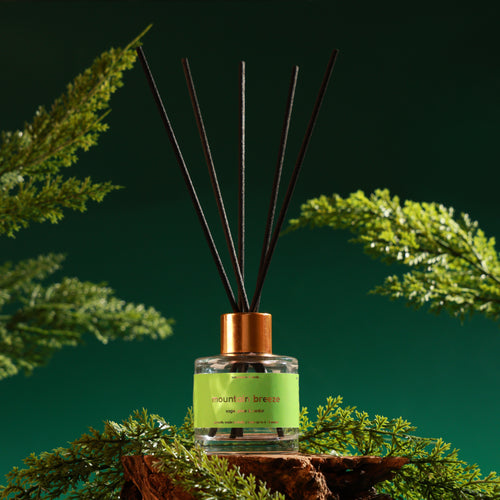 Oud Car Perfume · Assam Oudh₹509See it → 15 ML hanging refills₹399–₹449See it →
  Tell us what the source check gaveFreeWrite to us →
What a credible test would record — and what it would not
Readers occasionally ask for something more rigorous than a protocol — a figure, a curve, an hour at which a nose gives up. I will be exact about why there is none here. No experiment of this kind has been run at SOSA, so no result, no measurement and no conclusion appears anywhere on this page or in the range. What I can give you is the design of a test worth running in your own car, and the variables worth writing down, which is genuinely useful because it stops you drawing conclusions from one unrepresentative afternoon.
A credible version would hold the cabin constant and vary one thing at a time, which in practice means recording rather than controlling. For each journey, note the published form in use and its fitting date; the exact position of the source; the length of the journey and roughly how much of it was closed and recirculating; where the car had been parked beforehand and for how long; the weather and whether the air was dry or damp; which rows were occupied; whether anything was in the boot; and whether the interior had been cleaned or treated in the previous week. Then record the one measurement that matters: the first impression of somebody who has just got in, captured in their own words in the first few seconds. Collect eight or ten of those across a fortnight. The pattern across them is your evidence, and a single journey never is.
Two refinements make such a log much harder to fool. First, alternate deliberately: run a fortnight with the source in one position and a fortnight with it in another, rather than changing things whenever the car seems quiet, because reactive changes are always triggered by the least representative moments. Second, ask the fresh passenger before you tell them anything about what you have changed. A fragrance judged from a bottle, a cap or a committee of one tells you almost nothing about how it behaves as a thin vapour across a large cabin hours later, and the same is true of a passenger who has been told what to expect.
What such a log will not yield, and must not be made to yield, is a number. It cannot give you an adaptation time, because that is a property of a nose on a particular day rather than of a product, and no adaptation time in minutes is published anywhere in this range. It cannot give you a consumption rate or a longevity figure for a 12ml unit, because none is published and a cabin’s temperature and airflow would change it anyway. And it cannot give you a coverage figure for any car format, because none exists. A protocol that returns a pattern is honest; a protocol that returns a specification would be invented. Where a number would genuinely help — is the unit spent, has the wick stopped releasing — the answer is a hand and a date rather than a measurement.
What I would do, in order — and the gaps
Here is the sequence for a reader who has spent several hours in the car and is no longer sure what they are smelling. Four of the five steps cost nothing, and the fifth is only reached if the third one confirms a fault.
| Step | What it is | Why it comes here in the order | Cost |
|---|---|---|---|
| 1. Run the near-source check first ★ | Park, open a door, bring your face within arm’s length of the source, and ask only whether the source is still producing — not whether the cabin smells of it | Because it is instant and it eliminates the expensive mistake immediately. Strong at the source means the fragrance is fine and the delivery is not, and most complaints of weakness are distribution complaints | No purchase |
| 2. Ask somebody who has just got in | In the first few seconds, before conversation. An open question — what do you notice about the car — never “can you smell it”. Three or four answers across a fortnight, written down | It is the only verdict in the vehicle that has not adapted. Expect different seats to disagree, and read that as a finding about distribution rather than a contradiction about strength | No purchase |
| 3. Check the hardware by hand, not by nose | An empty or nearly empty bottle, tested away from the car; a 12ml hanging unit at the end of its life; a wick that is dry, saturated or furred with dust; a membrane never opened, a cap left on, a unit wedged or relocated | These are the only genuine faults, and all three are visible or tangible in seconds with the door open. A fault confirmed here is the single thing on this page that justifies spending money | No purchase |
| 4. Rule out the cabin and the workshop | Hours parked and in what, ventilation mode and fan, humidity, which rows are occupied, anything in the boot, and whether the interior has been cleaned or treated in the past week | A heat-soaked car, a hard-cooling cabin and fresh interior-care residue all read as a changed fragrance. Wait rather than adjust, and empty the car before perfuming over a real source | No purchase |
| 5. Only now replace, and write the date on a card | Oud Car Perfume (Assam Oudh) ₹509 in either published form at one price under the option “Car freshener form”; hanging units 12ml; the 15 ML Car Hanging Freshener Refills ₹399–₹449; the 50 ML Car Perfume Spray ₹1,499 | Replacement is the remedy for exactly one of the three causes. The date matters as much as the purchase, because it is the only evidence you will ever hold that was not produced by a nose sitting in the cabin | ₹399–₹509 |
| The honest gaps: no adaptation figure, no longevity figure, and no dial for this family | No adaptation time in minutes is published anywhere in the range, so nobody can tell you at what hour of a long day your own reading stops being trustworthy. No consumption rate and no longevity figure is published for either published car format, so nobody can tell you how long a 12ml unit lasts in your cabin. Not one of the sixteen waterless oils is oud, so the one car product with three speed settings, a 1 / 2 / 3-hour auto shut-off and a battery that would at least tell you whether it is running cannot carry this family, and three values marked “Refill” in its own option list have no live variant and no price. No coverage figure of any kind is published for it. No amber car fragrance is published in any format, and rose is not published as a car fragrance at all | Said plainly, because the reason this page is a protocol rather than a table is that the numbers a table would need do not exist | Not published |
Versailles
At Versailles the first discipline anybody learns is not composition, it is knowing when to stop trusting yourself. You are taught to work in short passes, to leave the bench, to come back; to distrust the opinion you hold after forty minutes with a single accord in front of you. The reason is exactly what this page is about. The nose reports change, so an evaluator who stays in the room with a material becomes the least qualified person to describe it, while remaining the most confident.
I have found that dense woody registers are where this is hardest, and where it catches even people who should know better. A bright composition keeps moving, so it keeps giving you new information and keeps reminding you that it is there. A dark, resinous, structured one does not move much — that steadiness is its whole appeal and the reason somebody chooses it for a car rather than a department-store counter. But a thing that does not change is a thing the nose stops announcing, and so the register people most often describe as unmissable is in practice the one that disappears most completely from the person sitting inside it. I think that is the single most useful fact in this family, and it is almost never said out loud.
So the two checks I actually use are deliberately unglamorous, and neither of them requires a trained nose. Put your face next to the source: if it is strong there, the fragrance is fine and the argument is about delivery. Then ask the next person who gets into the car what they notice, in the first few seconds, before you say anything at all — and believe them over yourself, even when it is inconvenient. For the hardware, use your hands and a date on a card, because no longevity figure is published for either car format and a date is the only evidence in this question that was not produced by somebody sitting in the cabin. I would far rather you ran three free checks and spent nothing than bought a bigger bottle to solve a problem your own nose invented. Everything we make is composed in Pune, and a part of every order funds a girl’s classroom through Nanhi Kali.
Frequently asked questions
- A rich register in a large shared cabin — yes with conditions, and the condition is the people rather than the car.
- Does a large cabin justify maximum strength — no, and the volumetric intuition belongs to buildings rather than cars.
- Two hours of closed air conditioning — why the opening and the final stretch differ most in this family.
- A restrained oud as an executive signature — yes, and arguably the most distinctive one available, with conditions.
- The chauffeur who has stopped noticing it — the same mechanism as this page, with the dial in somebody else’s hands.
- Reducing it for family road trips — a solo preference is a preference about your own exposure.
- Oud in an Indian summer — preference is legitimate and “a winter scent” is a label rather than a constraint.
- Buying for exposure rather than for strength — the purchase-decision version of the same argument.
- The pillar page for this family — every variable in one order of operations, ranked by how much each genuinely changes the answer.
- Brand: the SOSA founder story.
SOSA car scenting — facts verified August 2026: the published oud for a car is Oud Car Perfume (Assam Oudh) at ₹509, available in both published forms under the option “Car freshener form” with the values “Spray (Strong scent-throw)” and “Hanging (Mild scent-throw)” at the same price on every scent, plus “50 ML Car Perfume Spray” at ₹1,499; neither published form has a setting, a timer or a lock of any kind. Published combinations include Oud + Lemon at ₹949 and the Sandalwood & Oud Saver at ₹949. Hanging units are 12ml and the Car Hanging Freshener Refills are 15 ML at ₹399–₹449; the Car Perfume Sprays Discovery Set is ₹699–₹899 for trios and ₹2,999 for a pack of 9. The wider spray and hanging range is nine scents — Jasmine ₹449, Lavender ₹479, Sandalwood ₹479, Icy Mint ₹489, Lemon ₹499, Sea Breeze ₹509, Vetiver (Khus) ₹509, Oud Car Perfume (Assam Oudh) ₹509 and Mysore Orange Blossom ₹549 for 10 ML or ₹1,499 for 50 ML, the last of which is spray-only with no hanging format. Rose is not published as a car fragrance in any format, and SOSA publishes no amber car fragrance in any format. SOSA Safar waterless car perfume diffuser, ₹3,999 for the three house trios and ₹4,499 for the three hotel-inspired trios, 3 speed settings described as light to intense, a 1 / 2 / 3-hour auto shut-off, up to 10 hrs continuous and up to 30 hrs intermittent per charge, 2000 mAh rechargeable lithium, Type-C USB with cable included, fully cordless, approximately 6.9 cm, 20 ml bottle, cold diffusion of pure undiluted oil with no water, no heat and no residue, supplied with diffuser, 20ml bottle, Type-C cable and manual, imported; the published wording is aroma only — does not humidify, which states what the machine adds to a cabin and is not a claim that it dries a cabin or corrects damp. No coverage figure of any kind is published for it — no floor area, no volume and no passenger count — no intensity scale or numeric setting is published for its three speeds, no app, Bluetooth, scheduling, stored preset or key-lock is published for it or for any other SOSA car format, and three “Refill” values appear in its option list with no live variant and no price, so none of those is buyable. The waterless oils are shared with the larger Vaayu machine and sold by weight in two sizes across sixteen scents: Vetiver, Neelakurinji, Malabar Lemon, Sage & Cedar, Mahogany, Japanese Cherry Blossom, White Jasmine, Tobacco Vanilla and Mysore Sandalwood at ₹1,049 / ₹1,849, and seven hotel-inspired interpretations at ₹1,099 / ₹1,899. Not one of those sixteen is oud, and there is no lavender and nothing marine among them either, so the waterless diffuser cannot run those three families at all and the intensity control for each of them is the choice between the two published car formats rather than a speed setting. Beyond the published runtime of up to 10 hrs continuous and up to 30 hrs intermittent per charge, no consumption rate, longevity figure, air-change rate, per-row concentration or adaptation time in minutes is published anywhere in the range. SOSA publishes no interior-care range of any kind, scented or unscented. SOSA publishes no claim that any fragrance reduces stress, relieves anxiety, improves sleep, calms a person, lifts a mood or improves concentration, and makes no health, air-quality or VOC claim; SOSA sells no car air purifier, no dehumidifier and no room spray of any kind — every SOSA spray is a car perfume. No vehicle-safety or driving guidance is offered on any SOSA page. No dealer programme, trade price, minimum order or bulk rate exists; commercial enquiries are answered individually through the contact page. All fragrances are alcohol-free where applicable, phthalate-free, paraben-free and IFRA-compliant, composed in Pune. Free shipping above ₹499. A portion of every order supports girl-child education through Nanhi Kali. SOSA is an independent Indian fragrance house; the hotel-inspired scents are SOSA’s own interpretations and SOSA is not affiliated with or endorsed by any hotel brand. Prices subject to change — see the live product pages.